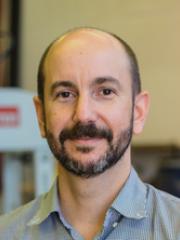
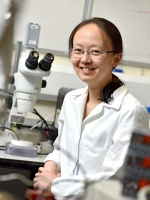
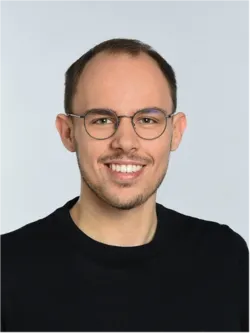
Dr. Christopher Leonardi is an Associate Professor and Director of Teaching and Learning at the School of Mechanical and Mining Engineering, The University of Queensland (UQ). He is affiliated with the Centre for Multiscale Energy Systems and has extensive industry experience as an engineering consultant with Rockfield Technologies Australia. PhD in Computational Mechanics, University of Wales, Swansea BE(Hons) in Mechanical Engineering, James Cook University (First Class Honours, University Medal) Research Interests focus on computational models for fluid-solid interactions, including: Suspension Transport Porous Media Flow Multiphase Flows Poromechanics Applications in Coal Seam Gas (CSG) and Hydrogen Production His work spans unconventional reservoirs, mineral extraction, and hydrogen formation via methane pyrolysis, utilizing methods like Lattice Boltzmann, Discrete Element, and Finite Element Analysis. Collaborations include Pawsey Supercomputing Centre. Scientific Awards include: Australian Awards for University Teaching (AAUT) Citation, 2019 UQ Citation for Outstanding Contributions to Student Learning, 2018 Advance Queensland Industry Research Fellowship (Mid-Career) Teaching involves coordinating MECH3780 Computational Mechanics and lecturing ENGG1001 Programming for Engineers . His team includes postdoctoral and postgraduate researchers, with significant industry partnerships.
Romain MONCHAUX is an Associate Professor at ENSTA Paris, Institut Polytechnique de Paris, affiliated with the Mechanics Unit (UME) and Fluid Dynamics and Acoustics (DA) laboratory. His research focuses on experimental modeling of fundamental mechanisms in fluid mechanics, particularly developed turbulence, transition to turbulence, and particle-laden flows. Expertise : Turbulence dynamics, fluid-structure interactions, laboratory-scale modeling of complex flows Projects : Investigates turbulent flow instabilities and multiphase flow behaviors through controlled experiments Laboratory : Fluid Dynamics and Acoustics (DA), a key research group within the Mechanics Unit (UME)
Antonio Jose Lozano Palacio is a Contracted Professor at the University of Huelva's Higher Technical School of Engineering, working in the Department of Integrated Sciences within the Applied Mathematics area. His academic career spans over three decades with publications dating from 1988 to the present, demonstrating sustained scholarly activity in both theoretical and applied mathematics. Lozano Palacio earned his PhD from the University of Seville in 2006 with a thesis titled "Localización con criterios tipo k-centrum" supervised by Dr. Juan Antonio Mesa López-Colmenar and Dr. Frank Plastria. His educational background established the foundation for his dual research focus in mathematical optimization and fluid mechanics. His primary research interests center around Operations Research and Mathematical Programming, particularly in Location Theory where he has made significant contributions to median problems, centrum problems, and facility location optimization. His work bridges theoretical mathematics with practical applications in transportation and network design. Complementing this, he maintains an active research program in Fluid Mechanics, focusing on liquid sheet instabilities, multiphase flows, and fluid dynamics phenomena. This interdisciplinary approach connects computational geometry with physical fluid behavior. Analysis of his publication record reveals a clear evolution from foundational work in graph theory and computational complexity in the early 1990s toward increasingly sophisticated optimization models in location theory throughout the 2000s and 2010s. His more recent work demonstrates integration of these mathematical frameworks with engineering applications, particularly in transportation network design and robust optimization techniques. Lozano Palacio has established productive collaborations with researchers across Europe, notably with Juan-Antonio Mesa and Frank Plastria, resulting in numerous joint publications that have been cited 58 times across 48 documents according to zbMATH Open. His work appears in reputable journals including Discrete Applied Mathematics, Physics of Fluids, and the Journal of Fluid Mechanics. While specific grant information isn't detailed in the available records, his sustained publication record across multiple research domains suggests successful acquisition of research funding to support his work. His research has influenced scholars in both mathematics and engineering disciplines, as evidenced by citations from researchers in fluid dynamics, operations research, and computer science.
Cordula Jakob, M.Sc., is a researcher at the GeoZentrum Nordbayern (GeoCenter Northern Bavaria) within the Faculty of Sciences at Friedrich Alexander University Erlangen-Nuremberg. She works in the Department of Mineralogy under the Chair of Mineralogy led by Prof. Dr. Göbbels. Her office is located in Room NG 2.003 at Schloßgarten 5a, 91054 Erlangen, where she conducts research on cement chemistry and construction materials. Her primary research interests focus on cement chemistry , particularly the development of phase composition, kinetics and rheology during early hydration of Ordinary Portland Cement (OPC) pastes. She investigates how inorganic additives and polycarboxylate-based superplasticizers (PCEs) affect the kinetics and rheological behavior of cementitious systems. Her work has significant implications for construction materials engineering, 3D concrete printing technology, and understanding fundamental hydration processes. Analysis of Jakob's publication record from 2019-2025 reveals a strong focus on cement hydration mechanisms, with particular attention to ettringite formation, rheological properties, and the effects of various additives. Her research combines experimental approaches including XRD analysis, rheometry, and novel testing methods to understand the complex interactions in cement systems during early hydration stages. Recent work has expanded into applications for 3D concrete printing and advanced material characterization. Jakob has been actively involved in the DFG SPP 2005 priority program "Opus Fluidum Futurum – Rheology of reactive, multiscale, multiphase construction materials," contributing to reference material characterization and advancing understanding of construction material rheology. Her collaborative approach is evident in her numerous co-authored publications with researchers across multiple institutions.
Peter Howell is a Professor of Applied Mathematics at the Mathematical Institute, University of Oxford. He is affiliated with the Oxford Centre for Industrial and Applied Mathematics and serves as the Pye Fellow in Mathematics at University College, Oxford. His research interests focus on mathematical and physical challenges in fluid dynamics, including: Mathematical Modelling of Complex Systems Fluid Dynamics in Industrial and Natural Settings Perturbation Methods for Nonlinear Problems Thermoelastic Contact Mechanics Surfactant and Multiphase Flow Analysis Convection and Pattern Formation Howell’s recent publications highlight his work on elastic capsule deformation, Hele-Shaw cell dynamics, viscous sheet buckling, and Rayleigh–Bénard convection. His studies often bridge theoretical mathematics with practical applications in materials science, geophysics, and industrial processes. He collaborates with researchers such as Emiliya Yariv, David Booth, and Howard Stone on problems involving bubble motion, droplet evaporation, and fluid instabilities. His methodological approach emphasizes asymptotic analysis, numerical simulations, and experimental validation.
Sarah Waters is a Professor of Applied Mathematics at the University of Oxford, with a Tutorial Fellowship at St Anne's College. Her research focuses on physiological fluid mechanics, tissue engineering, biomechanics, and mathematical modeling in medicine and biology. She holds a prominent position at the Mathematical Institute, where she contributes to both academic research and institutional leadership. Research Interests: Waters' work bridges applied mathematics and biomedical engineering, particularly in modeling fluid dynamics in physiological systems and tissue engineering applications. Her recent studies explore multiscale problems, microfluidic devices, and fluid-structure interactions in bioreactor environments. Recent publications highlight her expertise in fluid dynamics across diverse scenarios—from developing fluid-structure interaction design frameworks for shunt systems to analyzing capsule sorting in microfluidic devices . Her 2024-2025 publications demonstrate ongoing innovation in mathematical approaches to biomedical challenges.
Matthijs de Winter is a Researcher in the Hydrogeology department within the Geosciences school at Utrecht University. With over 10 years of specialized experience, he focuses on advanced microscopy techniques, particularly cryo-Focused Ion Beam - Scanning Electron Microscopy (FIB-SEM), and is actively involved in the Pathways to Sustainability research theme. Dr. de Winter completed his doctoral thesis in 2015 titled 'Focused Ion Beam - Scanning Electron Microscopy Applied to Electrically Insulating Materials' through Utrecht University's Department of Earth Sciences. His expertise spans Cryo Electron Backscatter Diffraction, Electron-Ion Interactions, Energy Dispersive X-Ray Spectroscopy, Focused Ion Beam, Cathodoluminescence, Scanning Electron Microscopy, Transmission Electron Microscopy, Fluorescence Microscopy, and Porous Materials analysis. His research centers on the correlation between nano/micro-world phenomena and macroscopic behavior, particularly regarding matter transport through porous media across different length scales. He has applied his microscopy expertise across diverse scientific fields including Life Sciences, Structural Geology, Heterogeneous Catalysis, and Nanomaterials research. Recently, he has expanded his work to Confocal Laser Scanning Microscopy (CLSM) for investigating fluid behavior in porous media. Analysis of his recent publications reveals a strong focus on porous media characterization, advanced microscopy techniques, and transport phenomena. His work bridges multiple disciplines including geoscience, materials science, and fluid dynamics, with particular emphasis on 3D imaging, nanoscale characterization, and mathematical modeling of transport processes in complex media. Dr. de Winter serves as Editor-in-Chief of the InterPore Newsletter, demonstrating his active engagement with the international porous media research community. His laboratory work appears to center around advanced microscopy facilities, particularly FIB-SEM and cryo-microscopy instrumentation, supporting interdisciplinary research across multiple scientific domains.
Prof. Dr.-Ing. Thomas Rung is a Professor of Computational Fluid Dynamics at the Hamburg University of Technology (TUHH), where he leads research at the Institute for Fluid Dynamics and Ship Theory (M8). He has been with the university since 2005 and maintains an active research program focusing on advanced computational methods for fluid dynamics problems. His academic background includes: 1993: Dipl. Ing. in Aeronautical Engineering from TU Berlin 2000: Dr.-Ing. in Mechanical Engineering from TU Berlin Prof. Rung's research spans multiple domains within fluid dynamics, with particular expertise in computational methods for engineering applications. His work combines theoretical developments with practical implementations for real-world problems in naval architecture, aerospace engineering, and biomedical applications. He has pioneered approaches using emerging computing paradigms including GPU acceleration and quantum computing for fluid dynamics simulations. His research group develops advanced numerical methods for multiphase flows, shape optimization, and high-fidelity simulations of complex engineering systems. His recent publications demonstrate a strong focus on integrating machine learning techniques with traditional computational fluid dynamics, exploring quantum computing applications for fluid simulation, and advancing methods for biomedical flow analysis. The research shows consistent innovation in numerical methods while maintaining relevance to practical engineering challenges across multiple industries. Prof. Rung has supervised numerous research projects related to ship hydrodynamics, vehicle aerodynamics, and urban area simulations. His work has applications in naval architecture, aerospace engineering, and biomedical device design. His research group maintains strong connections with industry partners in transportation and engineering sectors. At the Institute for Fluid Dynamics and Ship Theory, Prof. Rung leads a research team that utilizes advanced computational facilities including high-performance computing resources for large-scale fluid dynamics simulations. The team develops and applies both mesh-based (FV, FD) and particle-based (LBM, SPH) methods to tackle challenging fluid dynamics problems across multiple scales and applications.
Dr. Amin Sharifi is a Senior Lecturer at the School of Engineering, University of Aberdeen. He holds a PhD and MEng in Engineering from the University of Calgary and focuses on experimental and theoretical fluid dynamics in porous media and narrow channels, with applications in energy recovery, hydrogen storage, and mineral extraction. Education: PhD, Engineering, University of Calgary (2017); MEng, Engineering, University of Calgary (2013) Research Interests: His group investigates fluid flow in complex channels, non-Newtonian fluids (colloidal suspensions, foams, polymer solutions, nanofluids), and chemistry of ionic transport for energy transition. Key projects include FUSim (Fracture Upscaling Simulator), foam/emulsion dynamics in energy systems, and nanofluid applications for multiphase transport. Publications: His recent work spans lithium extraction from brines, CO2 absorption using nanofluids, foam stability in reservoir conditions, and hybrid thermal/chemical fluid flow in porous media. Articles reflect interdisciplinary collaboration with European/Indonesian/US institutions and industry. Awards & Grants: Recipient of the 2017 College of Physical Sciences Teaching Award. Secured over £500k in grants from EPSRC, CONACyT, Royal Society, British Council, and industry partnerships for projects on hydrogen transport, geothermal mineral extraction, methane containment, and foam dynamics. Leadership & Teaching: Deputy Examinations Officer (2023-present), Programme Leader for MSc Subsurface Energy Engineering (2024-present). Teaches Enhanced Oil Recovery, Drilling, and Production Engineering at undergraduate and postgraduate levels.
Dr. Yukie Tanino is a Senior Lecturer in the School of Engineering at the University of Aberdeen, where she has been employed since 2012. She leads the Subsurface Flow and Transport Laboratory and holds multiple leadership roles including Chair of the School of Engineering Health & Safety Committee and Manager of the Materials Teaching and Petroleum Engineering Laboratory. Her academic journey began at MIT where she earned her BS, SM, and PhD in environmental engineering disciplines. Education: PhD in Environmental Fluid Mechanics (2008, Massachusetts Institute of Technology) SM in Civil and Environmental Engineering (2004, Massachusetts Institute of Technology) BS in Environmental Engineering Science (2003, Massachusetts Institute of Technology) Dr. Tanino's research focuses on fluid dynamics and mass transport in obstructed flows through soil, groundwater, geological reservoirs, flood plains, and subsea wells. Her work spans environmental engineering, petroleum engineering, and fluid mechanics with particular emphasis on porous media flow under various wetting conditions. She employs advanced techniques including corefloods, microfluidics, X-ray microtomography, scanning electron microscopy, and various imaging methods to investigate subsurface flow phenomena at multiple scales. Analysis of her recent publications reveals a clear progression from fundamental fluid mechanics in vegetated flows toward increasingly complex subsurface systems, with recent work integrating AI methods with digital rock technology. Her research has evolved from studying simple cylinder arrays to investigating microplastics transport, fractured sandstone properties, and mixed-wet reservoir systems, reflecting both expanding scope and growing technical sophistication in experimental and computational approaches. Scientific Recognition: Associate Editor, Water Resources Research (2022-2025) Topic Editor, Frontiers in Energy Research (2021-2022) Lifetime Member, Society of Core Analysts Chapter Affiliate, Society of Petrophysicists and Well Log Analysts Tau Beta Pi Scholar (2002-03) Member, UK Royal Society International Exchanges Committee (2024-2026) Dr. Tanino actively supervises numerous PhD and MSc students working on diverse projects related to subsurface flow, including microplastics transport, grain roughness effects, and fractured media flow. Her research has been supported by substantial funding from NERC, BBSRC, Royal Society, EU programs, industry partners including COREX and CNOOC, and various student funding bodies. She collaborates extensively across disciplines with researchers in Biological Sciences, Chemistry, and international institutions in France, China, and the US. As laboratory manager and principal investigator, she oversees the Subsurface Flow and Transport Laboratory and the Materials Teaching and Petroleum Engineering Laboratory, directing technical staff and maintaining advanced experimental facilities for porous media flow research. Her team employs cutting-edge imaging and simulation techniques to investigate fluid behavior at pore and Darcy scales.
Matteo Icardi is an Associate Professor in Applied Mathematics at the University of Nottingham's School of Mathematical Sciences, appointed in October 2017. His research bridges numerical methods, mathematical modeling, and engineering applications with emphasis on complex flow systems and computational frameworks. Education: BSc and MSc in Engineering Mathematics from Politecnico di Torino PhD in Chemical Engineering from Politecnico di Torino (2012) with thesis on 'Computational models for turbulent poly-dispersed flows: LES and QBMM' Research Interests: Professor Icardi specializes in multiphase flow modeling, porous media transport, multiscale methods, uncertainty quantification, and computational fluid dynamics. His work leverages OpenFOAM-based solvers for applications in environmental fluid dynamics, lithium-ion battery simulation, and industrial transport processes. Current research focuses on model reduction techniques and physics-informed neural networks for complex systems. Publication Trends: Recent work (2023-2025) demonstrates strong focus on homogenization methods (HiPhom), topological data analysis for infrastructure resilience, and multiscale modeling of peatlands, bubble dynamics, and electrochemical transport. The research consistently addresses heterogeneous porous media using advanced computational frameworks with applications spanning environmental systems and energy storage. Scientific Awards: No scientific awards mentioned in source material Advising and Grants: Professor Icardi advises PhD students and collaborates with postdoctoral researchers. He participates in the MultiForm research group and Multiscale Modelling Research Theme, though specific grant details are not provided in the source material. Labs and Teams: Co-founder of the MultiForm research group (Multiscale Fluid Dynamics and Porous Media) and initiator of the Multiscale Modelling and Heterogeneous Media Research Theme at Nottingham, fostering interdisciplinary collaboration between Mathematics and Engineering departments.
Julian Brotz serves as a Research Associate at the Professorship of Simulation for Additive Manufacturing, Technical University of Munich (TUM), Germany. His dual Master of Science degrees in Computational Science and Engineering and Aerospace Engineering were both completed at TUM in 2024, following a Bachelor of Science in Aerospace Engineering from the University of Stuttgart in 2021. His educational qualifications include: 2024: Master of Science (M.Sc.), Computational Science and Engineering, Technical University of Munich 2024: Master of Science (M.Sc.), Aerospace Engineering, Technical University of Munich 2021: Bachelor of Science (B.Sc.), Aerospace Engineering, University of Stuttgart Brotz specializes in computational methodologies for metal additive manufacturing processes, with core expertise in computational fluid dynamics and immersed boundary methods. His research addresses fluid-particle interactions in laser powder bed fusion (LPBFAM), high-performance computing infrastructure development, and multi-physics simulations of cohesive metal powders. He investigates thermo-solid-mechanics phenomena and microstructure evolution during additive manufacturing, integrating complex multiphase flow modeling with materials science principles to advance process predictability and quality control. His 2024 publication in Additive Manufacturing demonstrates a computationally efficient framework for predicting microstructure evolution in Ti-6Al-4V components at part-scale, reflecting his focus on bridging high-fidelity physics with practical manufacturing constraints. The work emphasizes thermo-mechanical modeling and computational optimization for industrial-scale additive manufacturing applications. No scientific awards or major grants are documented for Brotz in the available records. He has no listed advisees or student supervision activities. As part of Prof. Christoph Meier's research team at TUM, Brotz contributes to the ERC-funded research group focused on simulation-driven additive manufacturing, developing specialized software for multi-physics problems in powder bed fusion processes through high-performance computing solutions.
Professor Arun Ramchandran, holding the Canada Research Chair in Engineered Soft Materials and Interfaces at the University of Toronto's Faculty of Applied Science and Engineering , leads the Laboratory of Complex Fluids . His research bridges fundamental and applied studies of particulate suspensions, with applications spanning industrial processes and biomedical systems. B. Chem. Eng. (Institute of Chemical Technology, Mumbai) Ph.D. (University of Notre Dame) Post-doctoral scholar (University of California, Santa Barbara) His work focuses on understanding and predicting macroscale properties of suspensions through microscale interactions, with projects in oil sands extraction , drug delivery systems , microvascular occlusion models , and polymer blending . All projects integrate analytical modeling , numerical simulations , and experimental device fabrication . Recent publications highlight his expertise in drop coalescence , interfacial transport phenomena , and hydrogel behavior under confinement . His group has developed innovative techniques for microfluidic droplet generation and mass transfer analysis in complex flows . Humboldt Research Fellowship (2021-2022) NSERC Discovery Accelerator Supplement (2018-2020) Ontario Early Researcher Award (2014) North American Mixing Forum Early Career Award (2013) As Associate Chair for Graduate Studies, he actively mentors students and maintains a diverse research team working on suspension dynamics , particle-surface interactions , and soft matter engineering . Current projects include creating polymer-drug microparticles and studying CO₂ dissolution in switchable solvents .
Dr. Eng. Waldemar Szaferski is a researcher at the Institute of Chemical Technology and Engineering , Poznań University of Technology , specializing in Department of Chemical Engineering and Equipment . His work focuses on mechanical mixing innovations, cosmetic emulsions, food emulsions, and industrial fluid systems. Education: Doctor of Technical Sciences (2005), Poznań University of Technology, thesis: "Studies on aeration of complex systems in mechanical mixers" Master of Science (2001), Poznań University of Technology, thesis: "The influence of geometric parameters of solid particles on the production of 'light suspensions' in a mixer" Research Interests center on mechanical mixing process optimization, cosmetic formulation technologies, and industrial applications including metalworking and automotive fluids. He has developed novel mixer geometries and membrane diffusers. Recent Publications (2018-2025) demonstrate expertise in hydraulic mixing analysis, cosmetic emulsion stability, titanium dioxide safety in sunscreens, and membrane system design. Collaborations include institutions like Opole University of Technology and companies such as SERPOL-COSMETICS. Additional Roles include membership in the Faculty Council of Chemical Technology, Social Labor Inspector at the Faculty of Chemical Technology, and supervision of student scientific clubs.
Will Pazner is an Assistant Professor in the Fariborz Maseeh Department of Mathematics and Statistics at Portland State University, with research affiliations at Lawrence Berkeley National Laboratory. His work bridges applied mathematics and high-performance computing, focusing on developing advanced numerical methods for scientific applications. Dr. Pazner's research interests center on numerical analysis and scientific computing, with particular expertise in high-order finite element methods, discontinuous Galerkin methods, fast solvers, and GPU-based supercomputing. His work addresses fundamental challenges in computational fluid dynamics and related fields, developing methods that balance accuracy, efficiency, and robustness for extreme-scale computing environments. His recent publications reveal strong trends in developing preconditioners for high-order methods, advancing GPU-accelerated solvers, and creating novel techniques for conservation laws and multiphysics problems. The research spans applications from fluid dynamics to optimal transport, with increasing focus on heterogeneous computing architectures and exascale-ready algorithms. Sigma Xi Columbia-Willamette Outstanding Faculty Researcher Award (2024) $1M NSF regional cyberinfrastructure award (2024) Ralph E. Powe Junior Faculty Enhancement Award (2023) Sidney Fernbach Postdoctoral Fellowship (2018) First Place, AIAA Student Paper Competition (2017) Dr. Pazner maintains active collaborations with national laboratories, particularly through the Exascale Computing Project, and has secured significant research funding. His teaching portfolio includes advanced numerical analysis courses that integrate cutting-edge research with computational practice. At Lawrence Berkeley National Laboratory, he contributes to the Mathematics Group's efforts in developing next-generation computational algorithms.