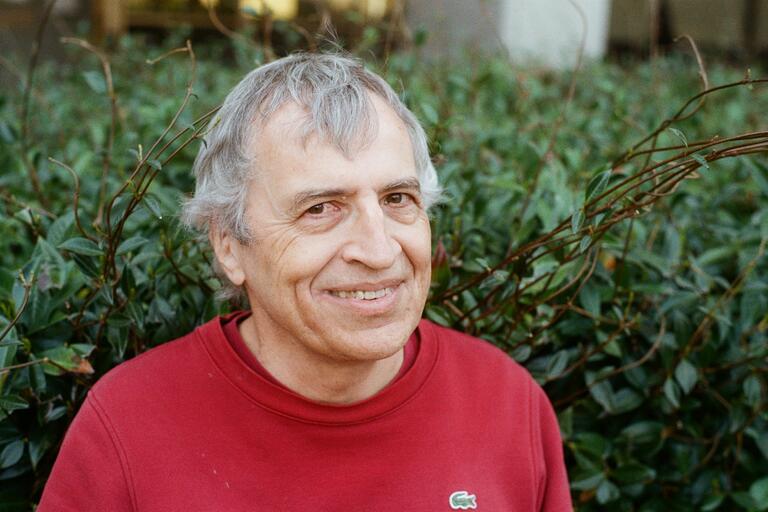
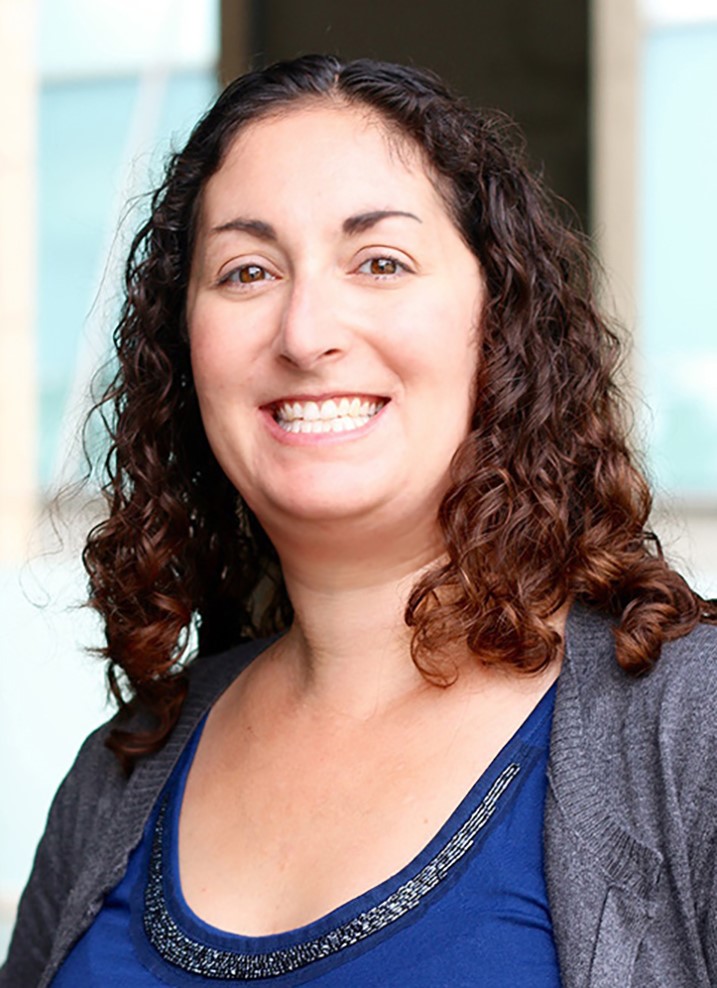
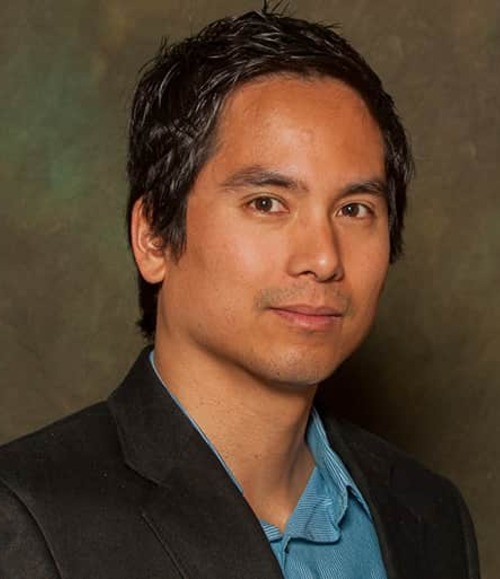
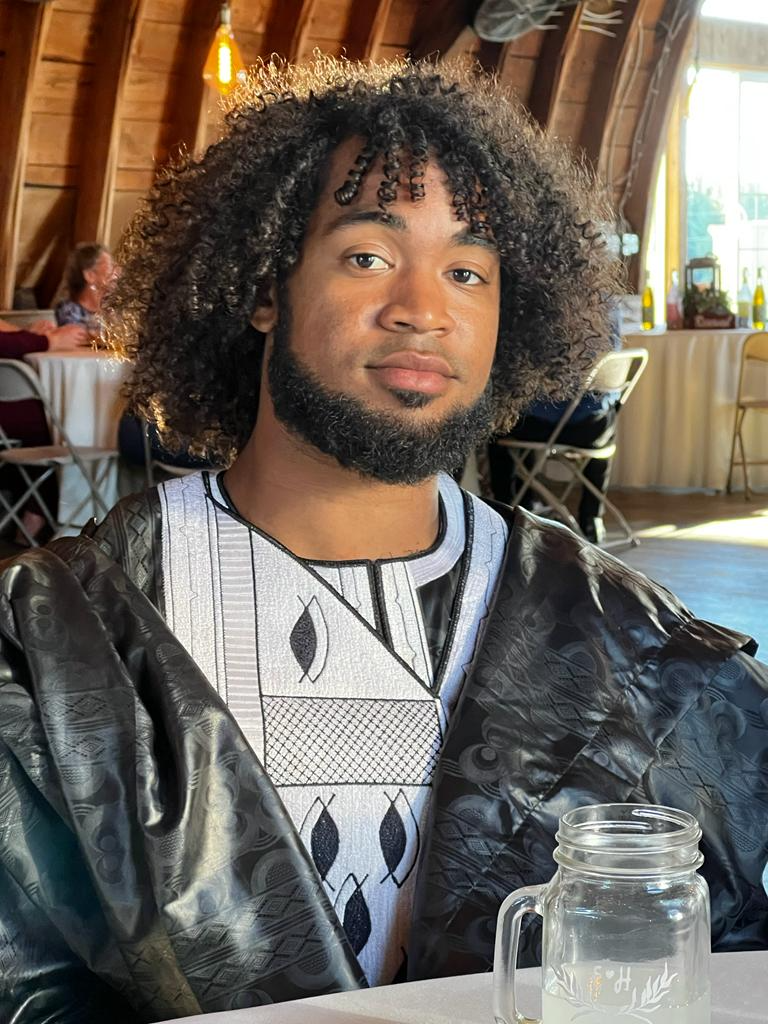
Magnus Bakke Botnan is an Assistant Professor at the Department of Mathematics, Vrije Universiteit Amsterdam, holding a VIDI career grant (€850,000) since 2018. His research bridges pure and applied mathematics within topological data analysis (TDA), focusing on multiparameter persistence, computational topology, and applications to sciences. PhD in Mathematics, Norwegian University of Science and Technology (NTNU), 2015 Postdoc at TU Munich, 2016-2018 His research group includes postdocs Hannah Rocio Santa Cruz Baur and Rui Dong, and PhD student Enes Devecioğlu. Recent work involves signed barcodes, rank decompositions, and stability of persistence modules. He co-authored the first comprehensive tutorial on multiparameter persistence with Mike Lesnick. Notable contributions include proving the NP-hardness of computing interleaving distance, establishing universality of bottleneck distance for extended persistence diagrams, and developing computational methods for non-branching complexes. Publications span journals like Foundations of Computational Mathematics , Discrete & Computational Geometry , and conferences SoCG, NeurIPS, and ICRA. Scientific Awards: VIDI Career Grant (€850,000) He has taught courses including Complex Analysis, Calculus, Topological Data Analysis, and seminars on analysis and dynamical systems. Actively organizes Applied Topology Days and collaborates on projects integrating TDA with physics, computer science, and statistics.
John Lott is a Professor in the Department of Mathematics at the University of California, Berkeley, specializing in Differential Geometry , Geometric Analysis , and Optimal Transport since his appointment in 2008. His research explores the interplay between Ricci curvature , metric-measure spaces , and geometric flows , with notable contributions to Ricci flow and noncommutative geometry . He has supervised multiple PhD students including Thunwa Theerakarn and Patrick Wilson , and maintains an active publication record with over 40 research papers. Selected Research Areas : Differential Geometry, Geometric Analysis, Optimal Transport, Mathematical Physics, Noncommutative Geometry Recent Publications (2020-2025) focus on Kähler manifolds , collapsing geometry , and quasilocal mass in general relativity. His work on Ricci curvature via optimal transport with Cédric Villani has become foundational in the field. Academic Affiliation : Position: Professor Institution: University of California, Berkeley Department: Mathematics
David L. Henann serves as the James R. Rice Associate Professor of Solid Mechanics in the Department of Engineering at Brown University's School of Engineering. His research focuses on continuum-level constitutive modeling of engineering materials, with particular expertise in granular materials, viscoelastic foams, and bubble dynamics in soft solids. Henann leads an active research group developing computational frameworks for material behavior prediction through numerical simulation. PhD, Massachusetts Institute of Technology (2011) SM, Massachusetts Institute of Technology (2008) BS, State University of New York at Binghamton (2006) Henann's research spans constitutive theory development and computational implementation for complex material systems. His group pioneers nonlocal continuum models for granular flows, large-deformation viscoelastic theories for elastomeric foams, and high-strain-rate characterization of microcavitation phenomena. Current projects include modeling size segregation in granular media, bubble dynamics in viscoelastic hydrogels, and electromechanical instabilities in dielectric elastomers. His publication record reveals consistent focus on material instability phenomena , constitutive model validation , and experimental-computational synergy . Henann frequently collaborates with experimental groups to validate theoretical frameworks, particularly in soft matter mechanics and cavitation dynamics. Eshelby Mechanics Award for Young Faculty (2020) NSF CAREER Award (2016) Pi Tau Sigma Gold Medal (ASME, 2016) Brown University Teaching Awards (2015-2016) Henann maintains an active teaching portfolio covering continuum mechanics, solid mechanics, and plasticity at both undergraduate and graduate levels. His research group operates a computational mechanics laboratory with extensive Fortran-based simulation capabilities, evidenced by multiple open-source repositories on GitHub for granular rheology, foam modeling, and dielectric elastomer analysis. Current work focuses on extending nonlocal granular models to industrial applications and developing predictive frameworks for soft material failure under extreme loading conditions.
Dr. Yanqing Hu is an Associate Professor at the Department of Statistics and Data Science, School of Science, Southern University of Science and Technology (SUSTech). With a Ph.D. in Systems Theory from Beijing Normal University (2011) and postdoctoral experience at the Levich Institute, City University of New York (2011-2013), his work focuses on big data analysis of complex systems, particularly in social media dynamics, network resilience, and graph neural network applications. Ph.D.: Beijing Normal University (Systems Theory, 2011) Postdoctoral: Levich Institute, CUNY (2011-2013) Research spans complex network analysis, information spreading mechanisms, and predictability of network structures. His work combines theoretical frameworks with real-world applications in social networks, infrastructure systems, and brain connectivity. Recent publications explore information percolation in social media, resilience quantification in interdependent networks, and intrinsic structure predictability. These studies appear in high-impact journals like Nature Human Behaviour (IF: 24.3), Nature Communications (IF: 17.7), and PNAS (IF: 10). World AI Conference Youth Outstanding Paper Nomination Beijing Outstanding Doctoral Dissertation Award Guangdong Special Support for Young Talents Guangdong Outstanding Youth Fund Collaborations include leading researchers from Boston University, King's College London, and Shenzhen-Hong Kong Institute of Microelectronics. His work informs network defense strategies and efficient navigation mechanisms in complex systems.
Dr. Rebecca Berlow is an Assistant Professor in the Department of Biochemistry and Biophysics at the UNC School of Medicine , University of North Carolina at Chapel Hill. Holding a PhD from Yale University, her research focuses on intrinsically disordered proteins , protein dynamics and allostery , and NMR spectroscopy to study disease-associated macromolecules. PhD – Yale University Affiliation: UNC School of Medicine, University of North Carolina at Chapel Hill Research Interests include understanding how protein conformational changes and dynamic behavior mediate stress response pathways. The lab employs interdisciplinary approaches combining biophysics , structural biology , and complementary biochemical techniques to identify novel therapeutic strategies for diseases linked to dynamic macromolecular dysfunction. Publication Trends across 2007–2024 highlight consistent focus on protein dynamics , allosteric regulation , and biophysical characterization of disordered systems. Key topics include multivalency , redox-dependent structural changes , and therapeutic targeting of dynamic protein interactions. Training & Environment : Lab members engage in collaborative research across biophysical , structural , and chemical disciplines , with emphasis on professional development, conference participation, and inclusive scientific training.
Prof. Dr. Mike Martin is a leading researcher at the University of Zurich's Center for Gerontology . His work spans cognitive aging, social development in old age, and life-span developmental psychology, with a focus on ecological validity in aging research. Professor, University of Zurich Director, Zurich Longitudinal Study on Cognitive Ageing Co-editor, Journals of Gerontology series Key research areas include: Healthy aging and quality of life Cognitive-emotional interactions in aging Dyadic adaptation in dementia caregiving Mobile sensing of aging-related behaviors Participatory research methodologies Language use as a biomarker of aging His recent publications analyze: GPS mobility and cognitive function Machine learning in reminiscence detection Prospective memory trajectories Emotion regulation in couples Digital interventions for cognitive health Neuroimaging correlates of aging
Bruno Takahashi is the Brandt Endowed Professor of Environmental Communication at Michigan State University, holding a joint appointment in the School of Journalism and AgBioResearch. He serves as Research Director of the Knight Center for Environmental Journalism and maintains affiliations with the Health and Risk Communication Center, the Environmental Science and Policy Program, and the Center for Latin American and Caribbean Studies at MSU. Born and raised in Lima, Peru, Dr. Takahashi earned his bachelor's degree in communication from Universidad de Lima, followed by M.S. and Ph.D. degrees in Environmental Science from SUNY ESF. Bachelor's in Communication, Universidad de Lima, Peru M.S. in Environmental Science, SUNY ESF Ph.D. in Environmental Science (specializing in environmental communication and participatory processes), SUNY ESF Dr. Takahashi's research program focuses on news coverage of environmental issues, environmental journalism practices in Latin America and U.S. Latino media, and identity in science communication. His work emphasizes counter-hegemonic environmental discourses in Latin American contexts, examining complex networks of actors, media, and communication processes embedded in post-colonial and social and environmental justice dynamics. He has conducted extensive field research in Peru, Bolivia, and Puerto Rico, with particular attention to environmental communication during disasters and in Indigenous communities. His recent scholarly output reveals a strong trend toward examining climate change communication through diverse cultural lenses, with significant attention to Latin American perspectives, immigrant experiences in the United States, and identity factors in science communication. His publications frequently address decolonial approaches to environmental communication and the need for more inclusive international scholarship that centers Global South perspectives. Scientific awards and recognitions include: 2024 AEJMC First Place in Latin American Communication Research 2021 Fellow of the Institute for Diverse Leadership, AEJMC 2019 Knudson Latin America Book Prize Multiple top paper awards from ICA and AEJMC conferences Dr. Takahashi actively mentors a diverse research team of Ph.D. students, post-doctoral associates, and MA students, with former students now holding positions at universities including University of Nevada, University of Minnesota, and Emory University. His research is supported by significant grants including a $2.8 million NSF grant for the SciComm Identities Project, funding from the Climate and Land Use Alliance, and multiple State Department and Embassy grants for environmental journalism training in Latin America. He has developed and led education abroad programs to Peru (2018, 2024) and the Netherlands/Belgium (2022), providing experiential learning opportunities for students in environmental communication. As Research Director of the Knight Center for Environmental Journalism, Dr. Takahashi leads initiatives supporting environmental journalists globally. His current projects include examining environmental discourses in the Peruvian Amazon related to oil spills affecting Indigenous communities, studying decolonial environmental journalism practices in Bolivia and Peru, and co-leading Working Group 5 on Public Engagement and Governance for The Lancet Countdown Latin America, which has generated significant media coverage in outlets like CNN and El País.
Ben Seiyon Lee is an Assistant Professor in the Department of Statistics at George Mason University's College of Science. His work bridges computational statistics, climate modeling, and environmental risk assessment. Education: PhD in Statistics, Pennsylvania State University (2020) Lee specializes in computational methods for high-dimensional spatiotemporal data and uncertainty quantification in climate models. His research explores climate change impacts on extreme hydrological events, wildfire emissions, and medical decision-making. Recent publications focus on Bayesian spatiotemporal frameworks for extreme precipitation analysis, zero-inflated spatial models, and multisector uncertainty quantification. His work addresses challenges in flood risk assessment, agricultural yield projections, and healthcare compliance metrics.
Olumakinde Adesijibomi Ogunnaike is a President’s Postdoctoral Fellow at the Department of Physics, University of California, Berkeley. His research focuses on the quantum theory of strongly interacting and open systems, particularly symmetry, entanglement dynamics, and emergent properties in quantum systems. He actively bridges physics with poetry and philosophy, and is dedicated to mentoring underrepresented students in STEM. Education: PhD in Physics (MIT), MSc in Philosophy of Physics (Oxford), BSc in Physics and Mathematics (Harvard). Ogunnaike investigates quantum systems where fundamental particles exhibit unintuitive collective behaviors due to quantum correlations. His work spans topics like composite atom formation, measurement-induced phase transitions, and symmetry’s role in entanglement spread. He also explores interdisciplinary intersections, notably through the Poetry of Science project. His recent publications address quantum many-body stability, hydrodynamics, and graphene-based material properties. These works emphasize symmetry, long-range interactions, and measurement effects, reflecting both theoretical rigor and interdisciplinary curiosity. Award: President’s Postdoctoral Fellowship (UC Berkeley). Ogunnaike has organized MIT’s Directed Reading Program, co-founded National Society of Black Physicists chapters, and taught courses in general relativity and introductory laboratory physics. His outreach efforts highlight his commitment to inclusive education and community engagement.
Miriam Wilhelm is a Full Professor of Sustainable Supply Chain Management at the Vienna University of Economics and Business (WU), where she contributes to Sustainability and Purchasing modules. She previously held a Full Professor position at the University of Groningen (2010-2022) and served as Academic Director for MSc programmes. Her research focuses on multi-tier supply chains, governance of sustainability, and human rights in global supply networks. She has published in top journals like Journal of Operations Management and Organization Science , and currently serves as Associate Editor at the Journal of Supply Chain Management . Her recent work explores forced labor mitigation via social intermediaries, plural sourcing for CSR, and mandatory due diligence legislation. She has received multiple Best Paper awards at Academy of Management Conferences (2016, 2018, 2020). Key Research Themes : Governance of supply chain sustainability Decent work and human rights Multi-tier supply chain complexity Education : Doctoral degree from Freie Universität Berlin; visiting researcher at University of Tokyo, Meiji University, and University of Melbourne. Activities : Regular speaker at Academy of Management Annual Meetings and other global conferences.
Minh Hue Nguyen is a Senior Lecturer in EAL/TESOL Teacher Education at Monash University's School of Curriculum, Teaching and Inclusive Education within the Faculty of Education. She holds a PhD in Education (TESOL focused) from Monash University and has taught at Vietnam National University, Deakin University, and the University of Melbourne. Her educational background includes: PhD in Education (TESOL focused), Monash University (2015) MA in Applied Linguistics, Victoria University of Wellington (2008) BA in English Language Teaching, Vietnam National University (2003) Nguyen's research centers on teachers' professional learning, curriculum, and pedagogy in TESOL and EAL contexts, with specific focus on emotional experiences, identity development, mentoring, agency, and collaboration. She explores sociocultural contexts of teacher development through activity theory and sociocultural perspectives, examining how institutions support teachers' learning journeys from preservice to in-service stages. Recent work investigates professional learning for teacher educators and implementation of the Victorian EAL Curriculum. Her 15 most recent publications (2024-2025) reveal a strong thematic focus on language teacher agency, identity negotiation, and multilingual pedagogies. The research increasingly examines emotional dimensions of teaching, cross-cultural identity tensions, and collaborative models between EAL and content teachers, with significant contributions to understanding how teachers navigate complex educational contexts while developing professional identities. Her scientific recognition includes: Penny McKay Award Special Commendation Monash Education Research Community's Publication Award ATEA/Kay Martinez Award for Best Paper Monash Dean of Education’s ECR Project Award Advancing Women's Research Success Grant Vietnamese Government Merit-based Scholarships Nguyen actively supervises PhD research in TESOL teacher professional learning, teacher identity, and curriculum development, though is currently unavailable for new PhD students until 2027. She contributes to editorial boards for Teaching and Teacher Education, Second Language Teacher Education, and System journals, and serves on the Australian Teacher Education Association. Her work supports UN Sustainable Development Goal 4 (Quality Education) through inclusive pedagogical frameworks. She leads research projects including 'Elucidating practices to assist EAL learners to acquire specialised science vocabulary' and 'Establishing an online community-of-practice model for learner agency during work placements,' demonstrating commitment to practical educational innovations.
Benoît Mahault serves as a Group Leader and Researcher at the Max Planck Institute for Dynamics and Self-Organization (Göttingen, Germany) within the Department of Living Matter Physics, where he directs the Motile active matter research group. His work bridges theoretical physics and biological complexity through nonequilibrium statistical mechanics. His academic background includes a Ph.D. from Université Paris-Saclay (2018) under Hugues Chaté, followed by a postdoctoral position at the University of Tokyo in Prof. Masaki Sano's group. He joined the Max Planck Institute in 2019 as a postdoc and was promoted to Group Leader in 2021. Dr. Mahault's research centers on emergent self-organization in active matter systems , with focus areas including: Transition mechanisms to collective motion Bose-Einstein-like condensation via motility inhibition Topological defect dynamics in active nematics Navigation strategies for microswimmers in complex environments His theoretical framework reveals universal principles governing both synthetic and biological active systems. Analysis of his 15 most recent publications (2022–2025) shows a cohesive trajectory exploring nonreciprocal interactions , quorum sensing , and energy-accuracy tradeoffs in active matter. Key themes include phase separation in driven mixtures, defect-mediated pattern formation, and hydrodynamic optimization of microswimmer locomotion—demonstrating consistent innovation at the physics-biology interface. The Motile active matter group employs advanced theoretical modeling to dissect self-organization principles, contributing foundational insights through collaborations with experimental teams at the Max Planck Institute. Current projects investigate non-equilibrium steady states in confined active systems and topological constraints in collective navigation.
Tobias Hermann serves as an Associate Professor at the University of Oxford's Department of Engineering Science, where he leads research within the Oxford Thermofluids Institute and holds a prestigious UKRI Future Leaders Fellowship. Affiliated with St. Hilda's College as an Associate Research Fellow, his work centers on experimental hypersonics and advanced diagnostic development for extreme aerospace environments. Hermann earned his Dipl.-Ing. in Aerospace Engineering from the University of Stuttgart (2012) followed by a Dr.-Ing. degree (2017), with doctoral research focused on spacecraft re-entry phenomena and aerothermochemistry during atmospheric entry. His thesis involved developing optical diagnostics including Vacuum Ultraviolet spectroscopy and tomographic emission systems. His research program emphasizes experimental hypersonics and plasma flows , with core expertise in spacecraft re-entry physics , high-temperature material-flow interactions , and optical diagnostic innovation . Hermann pioneered analytical methods for transpiration cooling in porous media and developed system engineering tools for thermal protection systems. His current work bridges fundamental fluid dynamics with practical aerospace applications, particularly in hypersonic vehicle design and re-entry simulation through facilities like the T6 expansion tube. Analysis of Hermann's publication record reveals consistent focus on high-enthalpy flow diagnostics and thermal protection systems , with recent work advancing expansion tube capabilities for boost-glide re-entry simulation, integrated arc-jet facilities for ablating models, and vacuum ultraviolet spectroscopy for plasma flow characterization. His research demonstrates strong integration of experimental validation with analytical modeling across hypersonic testing regimes. Hermann's scientific recognition includes: UKRI Future Leaders Fellowship (2021-present) As an educator, Hermann supervises 4th-year undergraduate projects and DPhil (PhD) students in hypersonics while teaching Thermodynamics and Fluid Mechanics. His current research portfolio—primarily funded through his UKRI Fellowship—comprises three major thrusts: development of high-enthalpy wind tunnels (including the multi-mode T6 facility), pre-heating of hypersonic models using plasma flows, and advancement of measurement techniques like spatially resolved UV-nIR spectroscopy. These projects address critical gaps in hypersonic testing infrastructure and instrumentation. Hermann directs experimental efforts at Oxford's Southwell Laboratory within the Oxford Hypersonics group, operating facilities including the T6 Stalker tunnel, OPG1 plasma wind tunnel, and specialized arc-jet systems. His team develops cutting-edge instrumentation such as vacuum ultraviolet spectroscopy systems, high-speed focused Schlieren, and pressure-sensitive paint diagnostics to investigate complex phenomena in hypersonic boundary layers and re-entry flows.
Professor Steve G Burrow is a faculty member at the School of Civil, Aerospace and Design Engineering at the University of Bristol. His research focuses on energy harvesting, vibration control, and environmental sensing, particularly in aerospace and glaciological contexts. Professor of Aircraft Systems Member of the Cabot Institute for the Environment Active in Dynamics and Control research themes His work in energy harvesting emphasizes electromagnetic transducers and nonlinear resonant structures, while environmental sensing involves deploying sensors under ice sheets to study glacial hydrology. Recent articles highlight inerter-based suspension systems, vibration absorber optimization, and broadband energy harvesting techniques. Collaborations span nonlinear mathematics, glaciology, and structural dynamics. No scientific awards were explicitly mentioned, but his research outputs demonstrate extensive contributions to power electronics and sustainable technologies.
Giuliano Di Baldassarre is a Professor of Hydrology and Environmental Analysis at the Department of Earth Sciences, Uppsala University , Sweden. He serves as Head of Division for LUVAL (Air, Water and Landscape Sciences) and directs the Centre of Natural Hazards and Disaster Science (CNDS) (2016–2025). His work bridges water, environment, and society through interdisciplinary methods , focusing on disaster risk reduction, climate adaptation, and sustainable development. Education : Details not explicitly provided in the text. His research examines feedbacks between human activities and hydrological processes , including floods, droughts, and reservoir management . Key themes include social-ecological systems , inequalities in water crises , and policy implications of hydrological extremes . He has pioneered sociohydrology and human-water system modeling . Recent articles highlight global drought-flood interactions , urban water inequality , climate service maladaptation , and sociohydrological modeling . His work spans Nature Sustainability , Science Advances , and Hydrological Sciences Journal . Scientific Awards : International Hydrology Prize (Volker Medal) Plinius Medal (EGU) Witherspoon Lecture Award (AGU) European Research Council Consolidator Grant He led Panta Rhei - Everything Flows (2013–2022), IAHS’s global initiative on water-society interactions. Current efforts include transdisciplinary praxis and climate risk reduction frameworks .