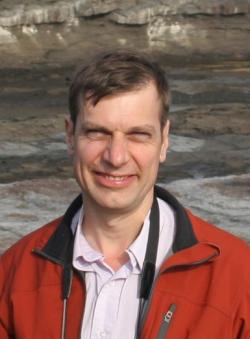
Marco Panesi is a Professor in the Department of Aerospace Engineering at the University of Illinois at Urbana-Champaign and Director of the Center for Hypersonics and Entry Systems Studies (CHESS). His research focuses on non-equilibrium phenomena in high-enthalpy flows, plasma dynamics, and uncertainty quantification. He holds a Ph.D. from the von Kármán Institute for Fluid Dynamics (2009) and M.S. degrees from Università di Pisa (2003) and VKI (2005). Roles: Faculty Member, Research Director, Principal Investigator Key Affiliations: CHESS, University of Illinois, VKI Research Interests: Hypersonic flow modeling, non-equilibrium plasmas, radiation effects, machine learning applications in aerothermodynamics, ablation processes, and state-to-state chemistry. His work bridges computational fluid dynamics with experimental validation in facilities like the Plasmatron X wind tunnel. Publications: Over 100 peer-reviewed articles on topics ranging from plasma kinetics to thermal protection systems. Recent work emphasizes adaptive neural operator models and Bayesian uncertainty quantification. Awards: Includes the Vannevar Bush Faculty Fellowship (2021), NASA Groundbreaker Award (2021), and multiple early-career recognitions from AFOSR, NASA, and ESA. Grants & Leadership: Secured funding from NSF, NASA, and DOD. Leads multidisciplinary teams on projects like the CHyPS material response solver and hypersonic entry modeling. Labs & Facilities: Principal investigator for the UIUC Plasmatron X facility, a key resource for studying high-enthalpy plasma flows.
Evan Davies is a Professor in the Civil and Environmental Engineering Department at the University of Alberta's Faculty of Engineering. He has been a Full Professor since July 2021, following his promotion from Associate Professor (2015-2021) and Assistant Professor (2009-2015) positions at the same institution. Education: Ph.D. (Civil and Environmental Engineering), The University of Western Ontario, London, Ontario (2003-2007) M.E.S. (Environment and Resource Studies), The University of Waterloo, Waterloo, Ontario with field research in China and India (2001-2003) B.A.Sc. (Systems Design Engineering), The University of Waterloo, Waterloo, Ontario, including a year-long exchange at Technical University of Hamburg-Harburg, Germany (1995-2001) Evan Davies' primary research focuses on water resources planning and management, systems thinking and modeling, and sustainable development. His work develops and applies hydrological, water use, and water quality models to understand complex feedbacks among water availability, use, and quality within their social, economic, and environmental contexts. His research spans municipal to global spatial scales and daily to decadal time scales, aiming to provide decision-makers with tools to compare structural, management, and policy alternatives for sustainable water planning. His recent projects include global and regional-scale modeling of water security and the water-energy-food nexus, irrigation reservoir management, municipal water demand projections, flood risk management, and chloramine dissipation in stormwater pipes. Recent research trends show a strong focus on: Integrated assessment modeling of water-energy-food systems Climate change impacts on water resources Machine learning applications in hydrology Water security under decarbonization scenarios Flood risk assessment and management Sustainable urban water systems Scientific Awards: Faculty of Engineering Graduate Teaching Award, University of Alberta (2020-2021) Faculty of Engineering Undergraduate Teaching Award, University of Alberta (2018-2019) Doctoral Fellowship (CGS), Natural Sciences and Engineering Research Council (2005-2007) University of Western Ontario Graduate Tuition Scholarship (2005-2007) Ontario Graduate Scholarship in Science and Technology (2004-2005) Masters/Doctoral Fellowship (PGS A/B), Natural Sciences and Engineering Research Council (2002-2004) Davies has supervised numerous graduate students working on projects related to water resources planning and management. His research has been supported by various grants, including funding from the Natural Sciences and Engineering Research Council. He collaborates extensively with researchers at the Joint Global Change Research Institute (JGCRI) in College Park, MD, and with government agencies and industry partners on water management projects across Canada, particularly in Alberta's Bow River basin. Davies leads a research group focused on water resources systems modeling, which employs system dynamics, optimization techniques, and machine learning approaches to address complex water management challenges. His team collaborates with decision-makers and stakeholders to ensure research outcomes are directly applicable to real-world water management problems.
Susanne Sahlin is a Senior Lecturer at Mid Sweden University's Department of Education in Sundsvall, Sweden. She holds a Doctor of Philosophy (PhD) degree and has established herself as a prominent researcher in educational leadership and school administration. Dr. Sahlin's research primarily focuses on school leadership development, with particular emphasis on principal preparation, leadership identity formation, and professional development for educational leaders. Her work examines how school principals navigate their roles through various lenses including: Novice principals' professional confidence and identity development Peer mentoring as a mechanism for professional socialization Adaptive leadership during crises, particularly the COVID-19 pandemic Collaboration between schools and external partners for school improvement Cross-national comparisons of leadership preparation programs Her extensive publication record demonstrates a clear trajectory of research examining leadership practices from multiple perspectives. Recent work increasingly addresses contemporary challenges facing school leaders, including crisis management, equity considerations, and technological integration in educational leadership. Dr. Sahlin frequently collaborates with researchers both within Sweden and internationally, particularly with colleagues Styf, Lund, and Sjöstrand, as well as international partners in England and Australia. Dr. Sahlin completed her doctoral thesis in 2019 titled "Moving Beyond Internal Affairs: Making Sense of Principals' Leadership Practices in Collaboration for School Improvement" at Mid Sweden University. Her ongoing research continues to explore how school leaders develop their professional identities and navigate complex educational landscapes.
Nina Schwarz is Assistant Professor of human-environment interactions in cities at the Department of Urban and Regional Planning and Geo-Information Management, ITC—University of Twente. Holding a Diploma in Environmental Sciences (University of Lüneburg, 2003) and a PhD in Social and Economic Sciences (University of Kassel, 2007), she spent a decade as senior scientist at the Helmholtz Centre for Environmental Research – UFZ before joining ITC. Her interdisciplinary research integrates urban land-use science, ecosystem-service evaluation and advanced modelling techniques—especially agent-based models—to explore sustainable urban development under global change. Research interests revolve around three interconnected themes: (i) urban land-use change —understanding how residential, commercial and green-space dynamics co-evolve; (ii) urban ecosystem services —quantifying both supply and demand of services such as local climate regulation, recreation and biodiversity; and (iii) behavioural modelling —formalising human decision-making to simulate policy scenarios ranging from slum-upgrading to vineyard management. She actively links these themes to UN Sustainable Development Goals, notably SDG 11 (Sustainable Cities) and SDG 15 (Life on Land). Recent publications (2022-2025) reveal a methodological breadth spanning citizen-science impact assessment in Suriname, cooling effects of urban water bodies in Chinese mega-cities, European wine-growers’ adaptive behaviour, and methodological advances in upscaling and validating agent-based land-use models. Across these studies, Schwarz consistently combines empirical field data, geospatial analytics and participatory approaches to produce policy-relevant insights for cities in both the Global North and South. She has (co-)authored >80 peer-reviewed works, accumulating c. 5 900 citations and an h-index of 28 (Scopus). While specific honours are not itemised in the supplied text, her sustained citation impact and invited contributions to major conferences (e.g., iEMSs 2020, IAHR 2025) underscore scientific recognition. Schwarz frequently engages with societal stakeholders: her projects have generated open datasets on urban green-space monitoring in Paramaribo, e-learning modules for Latin-American universities, and interactive dashboards for sustainable water management. Within ITC she contributes to capacity-building programmes for emerging economies, supervises graduate researchers and maintains active collaborations across Europe, Latin America, Africa and Asia. No explicit lists of PhD students or personal grants are provided in the current corpus, but her leadership of externally funded projects (e.g., citizen-science evaluation, vineyard decision-making database) indicates ongoing acquisition of research funding.
Professor Ray Dixon Ray Dixon is a Research Professor and Project Leader at the Department of Molecular Microbiology, John Innes Centre, and co-Director of the CAS-JIC Centre for Excellence in Plant and Microbial Sciences in Beijing/Shanghai. He has been an Honorary Professor at the University of East Anglia's School of Biological Sciences since 1998. His career spans over four decades in bacterial nitrogen fixation research. Education: B.Sc. (Microbiology, University of Reading, 1969), D.Phil. (Microbial Genetics, University of Sussex, 1973). Research Focus: Regulation of biological nitrogen fixation by environmental signals (oxygen/nitrogen/metal availability). His lab pioneers synthetic biology approaches to engineer nitrogen fixation into plants, aiming to enhance sustainable agriculture. Achievements: Elected Fellow of the Royal Society (1999), EMBO Member (1987), recipient of the Adam Kondorosi Award (2019) and Fleming Award (1983). Over 30 years of leadership in international scientific committees and funding panels. Key Contributions: Pioneered understanding of nif gene regulation, discovered novel nitrogenase systems, and developed polyprotein strategies for synthetic biology applications. Collaborates globally through initiatives like CEPAMS and UBNFC.
Stefano CAMPOSTRINI is a Full Professor in the Department of Economics at Ca' Foscari University of Venice, specializing in Social Statistics (STAT-03/B). He serves as a Member of the technical-scientific Committee of the Ca' Foscari Challenge School and the Department of Economics' Committee. His research activities are supported by affiliations with the Research Institute for Social Innovation and the Research Institute for Innovation Management. Professor CAMPOSTRINI's research spans the intersection of statistical methodology, public health, and social policy. His work demonstrates expertise in advanced statistical techniques including Bayesian modeling, spatial analysis, and complex survey methodology. His primary focus areas include healthcare systems analysis, social innovation, public administration, and the economic aspects of health policy. He frequently addresses issues related to comorbidity patterns, healthcare service accessibility, and the application of artificial intelligence in healthcare settings. His publication record from 2021-2025 reveals significant trends in healthcare innovation, with particular emphasis on virtual hospital systems, AI applications in medicine, sustainable healthcare practices, and the statistical analysis of social services like early childhood education. His methodological contributions include novel approaches to analyzing regional health disparities and developing web-based tools for disease prevalence estimation. His research often employs expert consensus methods like Delphi techniques to address complex healthcare organizational challenges. Professor CAMPOSTRINI maintains active involvement in research initiatives through the Research Institute for Social Innovation and the Research Institute for Innovation Management. His work bridges advanced statistical methodology with practical applications in healthcare policy and social service delivery, making significant contributions to evidence-based decision making in public health and social policy domains across Italy and European contexts.
Dr. Massimo Iorizzo is a Professor in the Department of Horticultural Science at North Carolina State University, specializing in plant genetics and genomics. His research focuses on improving small fruit and vegetable crops through genetic approaches, with particular emphasis on phytochemical content and fruit quality traits. He holds a PhD and MS from the University of Naples 'Federico II' in Italy. His work integrates genomic tools, machine learning, and sensory science to enhance crop traits like texture, nutrient content, and bioactive compound accumulation. Recent projects include developing high-throughput phenotyping systems for cranberry and blueberry, mapping genes controlling carotenoid and anthocyanin pathways, and creating standardized ontologies for blueberry breeding. He collaborates on initiatives like VacciniumCAP and VacCAP to advance genetic resources for berry crops. Key contributions span improving flavor compounds in sweetpotato, understanding epigenetic stress responses, and optimizing protein-based delivery systems for plant nutrients. His research bridges basic genetics with applied breeding, aiming to create consumer- and grower-preferred varieties through interdisciplinary approaches.
Min Peng is a Professor at Wuhan University's School of Computer Science. His research focuses on artificial intelligence, machine learning, natural language processing, and knowledge graphs. He has collaborated extensively with institutions like Hefei University of Technology and the University of Chinese Academy of Sciences. His work bridges theoretical advancements in AI with practical applications in finance, social media analysis, and network optimization. Recent contributions include neural-symbolic reasoning frameworks, contrastive learning for knowledge graphs, and financial benchmarking with large language models. Research interests emphasize scalable machine learning models for complex reasoning tasks, explainable AI, and domain-specific applications in finance and social networks. Over 100 publications span venues like WWW, ACL, and NeurIPS, highlighting interdisciplinary impact. Notable projects include SymAgent (neural-symbolic agent frameworks), PIXIU (financial LLM benchmark), and DTC (commonsense machine comprehension). Key technical trends include integrating large language models with structured data, temporal knowledge graph reasoning, and transfer learning across domains. His work often addresses real-world challenges in data efficiency, interpretability, and cross-domain scalability. Current efforts explore financial LLMs, agent-based reasoning systems, and multimodal applications. While no specific grants or awards are listed in the provided data, his prolific publication record indicates sustained research excellence. Collaboration networks include teams in computer science, electrical engineering, and finance disciplines.
Samory Kpotufe is an Associate Professor of Statistics at Columbia University's Faculty of Arts and Sciences, affiliated with the Data Science Institute (DSI) as a Foundations of Data Science Co-Chair. He holds additional affiliations in Cybersecurity, Health Analytics, and Smart Cities. His academic journey includes a PhD in Computer Science from UC San Diego (2010), followed by research roles at the Max Planck Institute, Toyota Technological Institute at Chicago, and Princeton University's ORFE department. His research focuses on nonparametric methods and high-dimensional statistics, emphasizing adaptive procedures that self-tune to unknown data structures (e.g., manifolds, sparsity) while addressing modern application constraints like computational efficiency and labeling costs. Key themes include transfer learning, active learning, and online algorithms. Notable contributions span theoretical guarantees for nearest-neighbor methods, covariate shift adaptation, and contextual bandits. His work often bridges statistical theory and practical machine learning challenges, with applications in IoT, cybersecurity, and anomaly detection. He has led collaborative grants, such as the NSF CPS project on data augmentation for IoT systems. As a DSI member and Foundations Co-Chair, he contributes to advancing data science foundations through interdisciplinary collaboration. His lab's research frequently explores the interplay between algorithmic performance and intrinsic data properties.
Jayadev Acharya is an Associate Professor in the School of Electrical and Computer Engineering at Cornell University, with graduate field memberships in Computer Science and Operations Research and Information Engineering. His research focuses on the intersection of information theory, statistical inference, algorithms, and machine learning. He explores trade-offs between data, memory, time, and robustness in learning problems, including quantum information and machine unlearning. Education: B.Tech in Electronics and Communication Engineering from Indian Institute of Technology, Kharagpur (2007) M.S. in Electrical and Computer Engineering from University of California, San Diego (2009) Ph.D. in Electrical and Computer Engineering from University of California, San Diego (2014) Research Trends: His recent work (2020-2022) emphasizes information-constrained inference, differential privacy, quantum entropy estimation, and distributed learning. Key subfields include communication complexity, local privacy, and adaptive gradient processing. His publications span NeurIPS, ICML, COLT, and IEEE Transactions on Information Theory. Awards: Kenneth A. Goldman ’71 Excellence in Teaching Award (Cornell, 2022) MIT Energy Initiative Fellowship (2014) Shannon Graduate Fellowship (UCSD, 2012) Jack Keil Wolf Student Paper Award (ISIT, 2010) Advising and Grants: He advises Sourabh Bhadane, Saravanan Kandasamy, Yuhan Liu, Ziteng Sun, and Huanyu Zhang. Research funded by NSF-CAREER, NSF-CRII, NSF-CIF small grants, and Google Faculty Research Award.
Lorena REBECCHI is a Full Professor in the Department of Life Sciences at the University of Modena and Reggio Emilia. Her research focuses on tardigrade biology, particularly their survival mechanisms under extreme conditions such as desiccation, temperature extremes, and radiation. She explores phylogenetic relationships, symbiotic microbiota, and evolutionary adaptations of these organisms. REBECCHI's work integrates morphological, molecular, and physiological approaches, contributing to understanding anhydrobiosis, stress responses, and tardigrade ecology. Key research areas include tardigrade phylogeny (e.g., resolving their position within Panarthropoda), environmental adaptations (e.g., thermal tolerance and acid resistance), and astrobiology applications (e.g., space flight experiments). She has described multiple new species and revised taxonomic classifications within Tardigrada. REBECCHI collaborates internationally, evidenced by conferences like the 2024 IADCI meeting hosted at her institution. Publications emphasize comparative transcriptomics, symbiont evolution, and the structural basis of tardigrade feeding mechanisms. Her lab's work on Antarctic tardigrades highlights climate change impacts and genetic diversity. REBECCHI's research has practical applications in biotechnology (e.g., space food systems) and environmental monitoring.
Dr. Mary E. Power is a Professor of the Graduate School at the University of California, Berkeley. She specializes in river ecology, focusing on algal-based food webs and their interactions with hydroclimatic regimes. Her research integrates field experiments and long-term monitoring in the South Fork Eel River, examining how flow variations and environmental conditions drive ecosystem state transitions. Primary Research Site: Angelo Coast Range Reserve (Mendocino Co., CA) Key Methodologies: In situ incubations, stable isotope probing, nanoSIMS analysis Current Focus: 2024- study of three alternative algal food web states during summer low flows Her work reveals critical thresholds where reduced summer flows and warming pools shift nutritious algal ecosystems toward toxic cyanobacterial dominance, impacting salmon and cross-ecosystem linkages. Selected Research Trends: Hydrological control of food web structure Cyanotoxin dynamics in river networks Climate change impacts on freshwater ecosystems Long-term ecological reconstructions via sediment cores Top-down and bottom-up regulation of river communities Her lab employs cutting-edge techniques to analyze microbiome elemental exchanges and successional patterns in Cladophora glomerata, a dominant green macroalga in the Eel River system.
Charles R. Marshall is the Philip Sandford Boone Chair in Paleontology and Professor in the Department of Integrative Biology at the University of California, Berkeley. He serves as Director of the University of California Museum of Paleontology (UCMP) and Chair of the Berkeley Natural History Museums (BNHMs). His research focuses on deep-time evolutionary biology, integrating fossil and genomic data to understand life's evolution, extinction dynamics, and morphological innovation. He holds a joint appointment in Earth and Planetary Sciences. Research Interests: Dr. Marshall explores processes shaping long-term evolution, including mass extinctions, biodiversity dynamics, and the origins of animal body plans. His work combines epistemological tools with interdisciplinary approaches, such as molecular phylogenetics and fluid dynamics analysis of fossilized structures. He emphasizes collaboration across institutions and disciplines, leveraging museum collections and computational models. Key Contributions: Notable projects include quantifying Tyrannosaurus rex population size, analyzing extinction pulses, and evaluating timetree methodologies. He co-authored influential studies on the Cambrian Explosion and the Red Queen hypothesis in mammalian extinctions. His work bridges paleobiology with conservation science to address modern ecological challenges. Awards: Recipient of the 2023 Paleontological Society Pojeta Award. His leadership roles include directing major initiatives like the Eastern Pacific Invertebrate Communities of the Cenozoic (EPICC) project, advancing global biodiversity documentation.
Sara Aton, Ph.D., is an Affiliate Professor in the Department of Molecular, Cellular, & Developmental Biology at the University of Michigan, and an affiliate of the Michigan Neuroscience Institute. Her research focuses on understanding how sleep and waking states influence memory consolidation through synaptic plasticity in neural circuits. She employs behavioral, biochemical, electrophysiological, and optogenetic techniques to study rodent models, particularly examining the roles of acetylcholine and interneurons in memory processing. Key research interests include the dynamics of sleep states (NREM and REM), synaptic plasticity mechanisms, and the impact of sleep disruption on memory formation. Her work addresses how neuronal activity during sleep reactivates learning-related ensembles and regulates biosynthetic processes critical for memory stabilization. Aton has received prestigious awards such as the NIH New Innovator Award (2013) and Alfred P. Sloan Fellowship (2013). Her lab investigates translational applications, including therapeutic interventions for sleep-related cognitive impairments in conditions like Fragile X syndrome. The Aton Lab is a hub for interdisciplinary research, combining molecular, cellular, and systems neuroscience approaches. Her publications emphasize sleep-dependent memory consolidation, synaptic plasticity, and the neural circuits governing these processes. Collaborative efforts span neuropharmacology, optogenetics, and computational modeling to unravel the complex interplay between brain states and cognition.
Xin Ning is an Assistant Professor in the Department of Aerospace Engineering at the University of Illinois at Urbana-Champaign (UIUC), where he also holds appointments in the Materials Research Laboratory. Previously, he served as an Assistant Professor at Pennsylvania State University from 2018 to 2023. His academic journey includes postdoctoral research at UIUC and California Institute of Technology (Caltech). Educated at Caltech, he earned a Ph.D. in Aeronautics in 2015 and an M.S. in Aeronautics in 2010. His research focuses on soft electronics for aerospace engineering , bio-inspired aerospace structures , in-space manufacturing and assembly , and multifunctional space structures . These interests drive innovations in lightweight, adaptive, and multifunctional materials and systems for aerospace applications. For instance, his work explores bio-inspired cellular materials for aircraft wings and bistable composite booms for deployable structures. He has been recognized with several honors, including the 2022 Young Investigator Award from the Office of Naval Research, 2019 Haythornthwaite Foundation Research Initiation Award, 2015 William F. Ballhaus Prize from Caltech, and the 2012 Dow-Resnick Fellowship. In addition to research, Professor Ning teaches courses such as AE 323: Applied Aerospace Structures and AE 498: Space Structures . While specific grants are not detailed here, his work has been supported through awards like the ONR Young Investigator grant. He collaborates with the Materials Research Laboratory at UIUC and engages in interdisciplinary projects involving soft electronics and bio-inspired engineering.