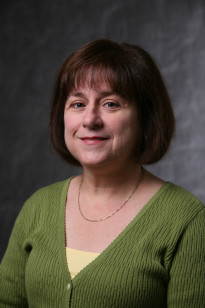
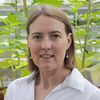
Karin Burghardt is an Assistant Professor in the Department of Entomology at the University of Maryland's College of Agriculture and Natural Resources. Her research integrates entomology, urban ecology, and biodiversity science, with a focus on how human-altered landscapes influence insect-plant interactions and ecosystem functions. Research interests span: Urban ecosystem dynamics : Impacts of urbanization on insect behavior, soil carbon cycles, and socio-ecological equity (e.g., redlining legacy on street trees). Forest biodiversity : Tree diversity effects on herbivory, predator-prey relationships, and microbial communities. Agricultural ecology : Sustainable pest management via living mulches and rhizobial interactions in crops. Her recent publications (2020-2025) emphasize experimental approaches to tree-herbivore interactions, urban habitat management, and environmental justice. Trends include: Field experiments quantifying biodiversity effects on ecosystem processes. Analysis of historical policies on contemporary ecological patterns. Multitrophic interactions mediated by plants, insects, and microbes.
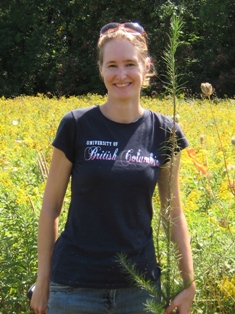
Kate Tully is an Associate Professor at the University of Maryland in the Department of Plant Science and Landscape Architecture, affiliated with the College of Agriculture and Natural Resources. She leads the Agroecology Lab and co-founded the non-profit Farm the District in Washington, DC. PhD in Ecology, University of Virginia (2011) MS in Ecology, University of Virginia (2007) BA in English, Spanish, and Biology, Kenyon College (2004) Kate’s research focuses on the intersection of agriculture and ecology, particularly managing agroecosystems under climate change. Her work addresses sea-level rise and saltwater intrusion , climate-smart agricultural practices , cover crops for ecosystem services , and urban farming for food security . She investigates sustainable strategies in regions with limited land, water, and input access, such as East Africa and coastal zones. Her publications span salinization impacts , soil nutrient dynamics , cover crop modeling , and climate change adaptation . Notable collaborations include studies on coastal agricultural resilience and agroecosystem carbon cycling , funded by USDA, NSF, and other agencies. Research Impact Fellow (2024-2025) US Fulbright Scholar (2023-2024) Dean’s Grantsmanship Award (2021, 2024) Earth Institute Postdoctoral Fellowship (2011-2014) Kate co-developed a multi-university cover crops course and teaches Global Food Systems , Agroecology , and Independent Study in Agroecology . Her lab collaborates with farmers and interdisciplinary teams to test sustainable technologies in field settings.
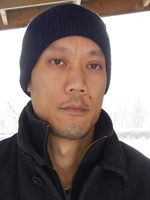
Dr. Jonas Hein is a Senior Researcher in the Environmental Governance department at the German Institute of Development and Sustainability (IDOS) in Bonn. His work focuses on the intersection of environmental justice, political ecology, and climate governance, with regional expertise in Indonesia and Colombia. He holds a PhD in Geography from Georg-August University Göttingen (2016) and has held positions at Kiel University and IPB University in Indonesia. His research explores: Conflicts around conservation policies (REDD+, protected areas) Coastal/marine spatial justice and governance Agrarian transformations in tropical landscapes Ontological dimensions of environmental disputes Recent publications emphasize justice frameworks in ocean access, political ecology of conservation, and socio-ecological trade-offs in commodity frontiers. He has received the DenkRaum Fellowship (2021-2022) for interdisciplinary sustainability research and co-founded the EnJust Network for Environmental Justice. He contributes to multiple collaborative projects including RethinkBlue and CRC 990, examining socio-ecological transformations in Indonesia.
Dr. Kasper Kok is an Assistant Professor at Wageningen University & Research, affiliated with both the Department of Soil Geography and Landscape and the Department of Environmental Systems Analysis. With 242 publications and significant research impact, his work focuses on developing integrated, multi-scale scenarios related to climate mitigation and adaptation. His academic journey includes: Current position as Assistant Professor at Wageningen University & Research (January 2013 - present) Visiting Research Associate at the University of Oxford's Environmental Change Institute (July 1993 - July 1996) Dr. Kok's research interests span environmental systems analysis, with particular emphasis on climate change scenarios, land use change modeling, and sustainability assessment. His work frequently employs participatory approaches, especially fuzzy cognitive mapping, to understand complex social-ecological systems and develop future scenarios that inform policy decisions. He has made significant contributions to adapting the Shared Socio-economic Pathways (SSPs) to European contexts, bridging global scenario frameworks with regional decision-making processes. His recent publications demonstrate strong focus on regional climate scenario perspectives, land use mapping for environmental planning, One Health approaches integrating human-animal-environment health, transformative change for sustainability, and participatory methods for climate adaptation across multiple continents. Dr. Kok's research impact is evident through 14,044 citations, reflecting substantial contributions to environmental science. His interdisciplinary approach combines geography, environmental science, and systems analysis to address complex sustainability challenges across multiple scales. His research group focuses on developing methodological approaches for scenario development and environmental assessment, with ongoing projects related to climate adaptation and land use planning across Europe and Latin America. Dr. Kok maintains extensive international collaborations, contributing to major research initiatives that address pressing environmental challenges.
Dr. Anthony Alexander is an Associate Professor (Management) at the University of Sussex Business School, where he works at the intersection between operations and supply chain management and sustainable and responsible business. He serves as Recruitment and Admissions Tutor at the University of Sussex (since September 2021) and is an External subject advisor for City, University of London (since March 2018). Additionally, he is a member of the Peer Review College UKRI (since May 2017). His educational background includes: PhD in Sustainable Supply Chain Management from Cardiff University (2012-2016) MBA from University of Warwick (2010-2011) MA from University of Leeds (1994-1995) BA (Hons) from University of Bradford (1991-1994) Dr. Alexander's research focuses on sustainable supply chain management, with particular interest in decision-making around sustainable supply chains and operations, integration of business activities with the Sustainable Development Goals, and the interplay between voluntary policies and regulations in supply chain management. His methodology is primarily qualitative with interview-led data collection, and he has led externally funded research projects worth approximately £650k. His recent work examines the relationship between deforestation, rural poverty, and agricultural production, and how buyer procurement policies relate to this. His publication record shows a strong trend toward sustainability-focused supply chain research, with particular emphasis on deforestation, food systems, and the Sustainable Development Goals. His most recent work (2023-2024) continues to explore zero-deforestation supply chains, stakeholder engagement in sustainable palm oil production, and innovative services for sustainable supply chain management. Dr. Alexander has received several research grants: ESA Sustainable supply chains software project (£234k, Sept 2020 to Sept 2022) ESRC Global Challenge Research Fund (£181k, Oct. 2019 to Nov 2021) ESRC Impact Acceleration Award (£12k, Sept 2018 to July 2019) SSRP-International Development Challenge Fund (£25k, March to July 2021) Sussex Sustainability Research Programme (£53k, June 2017 to Dec 2019) Knowledge Impact and Engagement Fellowship (£6k, Jan 2024 to July 2024) As an educator, Dr. Alexander has convened and taught undergraduate modules for business and management cohorts (around 400+ students) and postgraduate modules on the MSc Management and MSc in Global Logistics and Supply Chain Management programs (up to 60 students). He has supervised PhD students including Dr. Helen Beney and numerous undergraduate and postgraduate dissertations. He has developed courses such as 'Circular and Sustainable Logistics module' (2022), 'Logistics Management' (2017), and 'Managing Operations and Quality' (2017). Dr. Alexander is actively engaged in professional activities, serving on the editorial review board for the International Journal of Operations and Production Management, and as a former member of the organizing committee of the European Association for Operations Management (EUROMA). His research has had policy impact, with participation in events at the UK Parliament and input to government consultations on supply chain traceability and sustainability.
Dr. Andrés Gerique is a Professor in the Department of Geography and Geosciences at Friedrich-Alexander University Erlangen-Nuremberg, where he conducts research on biodiversity conservation, climate change impacts, and sustainable resource management. His work spans multiple institutional contexts through collaborations with DFG Research Units, FLACSO Ecuador, and various international working groups including the German Society for Geography and the German Latin American Research Association. Dr. Gerique's research focuses on political ecology of conservation, particularly examining biosphere reserves governance, nature conservation conflicts, and indigenous knowledge systems. His regional expertise centers on Latin America, with extensive fieldwork in the Andean region, Western Amazon, Patagonia, and the Galapagos Islands, supplemented by research in Spain and Tanzania. His current Volkswagen Stiftung-funded project (2025-2029) investigates philanthropy and ecotourism in the Global South. Analysis of his recent publications reveals a strong emphasis on practical conservation challenges combined with theoretical contributions to human geography and political ecology. His work consistently addresses the complex interplay between human societies and environmental systems, particularly focusing on power dynamics in conservation, indigenous rights, and sustainable development pathways in vulnerable regions. Dr. Gerique has supervised over 50 theses across diverse topics including biodiversity conservation, climate change adaptation, tourism impacts, and land use conflicts. His supervision approach appears to emphasize critical thinking, field-based research, and engagement with real-world conservation challenges, particularly in Latin American contexts. His research program demonstrates significant funding success through DFG, DAAD, Volkswagen Stiftung, and other sources, supporting both individual scholarship and collaborative international research teams focused on pressing environmental challenges in the Global South.
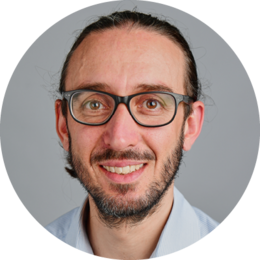
Professor Magnus Karlberg serves as Professor and Head of Department within the Department of Engineering Sciences and Mathematics at Luleå University of Technology. He leads the Division of Product and Production Development and focuses his research on machine design and autonomous systems for forestry applications. His work bridges engineering sciences with practical forestry solutions, positioning him at the forefront of robotics innovation in natural resource management. Professor Karlberg's research interests center on autonomous forestry operations, with particular emphasis on machine vision, path planning algorithms, and virtual environment simulation for training autonomous systems. His work explores how virtual training data can be effectively transferred to real-world forestry applications, addressing challenges in object detection, navigation, and task execution in complex forest environments. This research has significant implications for developing sustainable, efficient, and safe forestry practices through advanced robotics and machine learning. His recent publication record demonstrates a strong trajectory in autonomous forestry systems, with multiple high-impact publications between 2024-2026. These works show a consistent focus on solving practical challenges in forestry automation, with increasing technical sophistication from basic feasibility studies to advanced path planning and species-specific regeneration techniques. The research spans computer vision, robotics, and sustainable forestry, indicating a multidisciplinary approach that integrates engineering principles with environmental considerations. Professor Karlberg's work is supported by significant funding from multiple sources including Norrbotten County Council, Interreg Aurora, Vinnova, and The Kempe Foundations. His research projects, particularly SAMHand (Sustainable Autonomous Material Handling) and AutoPlant, focus on developing practical autonomous systems for forestry operations. These projects involve collaboration with multiple researchers and institutions, reflecting the interdisciplinary nature of modern forestry technology development. While specific laboratory information isn't provided in the available materials, Professor Karlberg's research appears to involve substantial work with virtual environments, digital twins, and real-world forestry equipment testing. His publications suggest access to both simulation environments and physical forestry machinery for hardware-in-the-loop validation, indicating a well-equipped research infrastructure capable of bridging theoretical development with practical field testing.
Professor Koen Bostoen (born 1975) is a distinguished scholar of African Linguistics and Swahili at Ghent University, where he has held a professorship since 2011. He leads the BantUGent - UGent Centre for Bantu Studies and maintains affiliations with Modyco in Paris Nanterre. His research integrates linguistic, archaeological, and genetic evidence to reconstruct the history of Bantu speakers, particularly their expansion south of the Congo rainforest. Professor Bostoen's research interests focus on the historical-comparative study of Bantu languages and interdisciplinary approaches to the African past. His work examines language contact phenomena, lexical reconstruction, and the relationship between language spread and human migration. He investigates how linguistic evidence can inform our understanding of early farming practices, climate change impacts, and interactions between Bantu speakers and indigenous populations in Central Africa. His research spans multiple Bantu language groups including Kikongo, Kirundi, Kiswahili, Luganda, and numerous other Central and Southern African languages. His recent publications reveal a consistent pattern of interdisciplinary scholarship that bridges linguistic analysis with archaeological and genetic evidence. Professor Bostoen's work increasingly emphasizes the integration of multiple lines of evidence to reconstruct complex historical processes, particularly focusing on the Bantu expansion and its implications for understanding African prehistory. His research demonstrates sophisticated methodological approaches that combine traditional comparative linguistics with cutting-edge interdisciplinary techniques. ERC Starting Grant for KongoKing project (2012-2016) ERC Consolidator's Grant for BantuFirst project (2018-2022) Professor Bostoen maintains an active supervision portfolio, having recently promoted PhD students including Lorenzo Maselli (2024), Mandela Kaumba Mazanga (2022), Michel Onokoko Onyumbe (2022), and Heidi Goes (2022). His current research funding includes multiple major projects running through 2028, demonstrating sustained research excellence and productivity. His work continues to shape scholarly understanding of Bantu languages and African history through innovative interdisciplinary approaches. As director of the BantUGent Centre for Bantu Studies, Professor Bostoen oversees a vibrant research environment that brings together linguists, archaeologists, and geneticists to tackle complex questions about African history. The center facilitates fieldwork in Central Africa, language documentation projects, and collaborative research that advances our understanding of linguistic diversity and historical processes in Africa.
Dr. Jean C. Mangun serves as Professor and Department Head of Environmental Studies and Sciences at Siena University, concurrently holding the position of Associate Dean of Science since 2011. Her interdisciplinary expertise bridges chemical engineering and natural resource management, shaping her approach to environmental problem-solving and education. Her academic foundation includes: Ph.D. in Forestry and Natural Resources, Purdue University (1991) M.S. in Forestry and Natural Resources, Purdue University (1985) B.S. in Chemical Engineering, Columbia University (1972) Dr. Mangun's research centers on human-environment interactions, examining public perceptions of wildlife management, climate change impacts on recreation, and community-driven conservation. She integrates social science methodologies—including public opinion surveys, focus groups, and qualitative analysis—into environmental frameworks to address complex resource challenges. Her work emphasizes collaborative solutions that balance ecological integrity with social needs, particularly in watershed planning and forest ecosystem management. Recent publications reveal a consistent focus on stakeholder engagement in wetland restoration, community responses to ecological changes, and GIS applications for conservation planning. These works demonstrate her signature interdisciplinary approach, blending spatial analysis with social science to inform policy and management decisions across diverse contexts from Illinois wetlands to Panama Canal watersheds. Her scholarly contributions have earned recognition through: SIUC College of Agricultural Sciences Outstanding Advisor Award (2008) Southern Illinois University Carbondale 'Excellence through Commitment' Teaching Award (2007) As an educator, Dr. Mangun cultivates critical thinking through active learning strategies, designing group projects that develop leadership and cross-disciplinary integration skills. She prioritizes mentoring future environmental professionals through courses like Wildlife Conservation in Forested Ecosystems and The Adirondack Environment, maintaining close connections with students in Siena's intimate academic environment. Her research program actively engages community stakeholders in southern Illinois wetlands and watershed projects, fostering partnerships that translate academic insights into practical conservation outcomes through participatory planning and outreach initiatives.
Brian Leung is an Associate Professor at McGill University with dual appointments in the Department of Biology and the Bieler School of Environment. He holds the prestigious UNESCO Chair for Dialogues on Sustainability and serves as Director of the McGill-STRI Neotropical Environment Option, a collaborative program between McGill University and the Smithsonian Tropical Research Institute. His academic career spans over two decades of research on ecological modeling and invasive species management. PhD in Biology, Carleton University, Ottawa, ON, Canada (1999) B.Sc (Honours) in Biology, University of British Columbia, Vancouver, BC, Canada (1993) Professor Leung's research program focuses on large-scale ecological predictions and environmental decision-making, with particular emphasis on biological invasions as a major driver of biodiversity change. His work bridges mathematical, statistical, and computational modeling with empirical data across terrestrial, aquatic, and marine biomes at regional, national, and global scales. He has pioneered approaches to integrate socio-economic and ecological phenomena in understanding invasion dynamics. His current research includes leading the Panama Research and Integrated Sustainability Model (PRISM), a multidisciplinary effort to develop sustainability science templates for the Global South. Analysis of his recent publication record reveals a strong trend toward addressing global challenges in biological invasions through collaborative, interdisciplinary research. His work spans ecological theory, economic analysis, policy implications, and practical management solutions. Key themes include quantifying invasion costs, developing predictive models for species spread, assessing global monitoring capabilities, and creating scenario-based management frameworks. His research increasingly emphasizes the socioeconomic dimensions of invasions alongside ecological impacts, reflecting the complex nature of sustainability challenges. Professor Leung actively supervises graduate students, with Morgane Henry currently pursuing doctoral research under his guidance. His research program has attracted significant funding to support fieldwork, modeling efforts, and international collaborations focused on understanding and managing biological invasions. As Director of the Neotropical Environment Option, Professor Leung oversees an important international research and training platform that connects McGill University with the Smithsonian Tropical Research Institute in Panama. This program supports field research, student exchanges, and collaborative projects addressing sustainability challenges in tropical environments.
Annick St Denis is a Researcher at the University of Quebec in Montreal (UQAM), Faculty of Science, Department of Biological Sciences. She works as a Research Professional in Christian Messier's laboratory and coordinates research work for the ArbrenVil Chair. Her academic journey includes a Postdoctorate in Natural Sciences from the University of Quebec in Outaouais (2022), a Doctorate in Biology from UQAM (2016), a Master's degree in Biology from UQAM (2008), and a Baccalauréat in Environmental Geography from the University of Montreal (2003). Her research interests focus on urban forestry, forest ecology, and ecological restoration. She specializes in urban forest resilience, tree-soil interactions, and climate change adaptation strategies. Her work particularly emphasizes functional diversity in urban forests, precision restoration techniques for abandoned lands, and the development of decision-making tools like SylvCiT to improve urban forest planning. She has conducted extensive research on biotic interactions in forest restoration, including tree-herbaceous, tree-rodent, and tree-soil microorganism relationships. Her recent publications demonstrate a strong trend toward urban forestry applications, with increasing focus on AI-based decision support systems, climate change adaptation, and equitable urban greening strategies. The research spans from fundamental ecological questions about forest restoration to practical applications for municipal forest management, reflecting her ability to bridge theoretical and applied research. Prix René-Pomerleau, Mérite arboricole de la Société internationale d'arboriculture du Québec (SIAQ), 2024 Bourse Mitacs Accélération (en collaboration avec Habitat), 2021 Bourse UFor (CREATE), 2021 Bourse Robert Moreau, Fondation de l'UQAM, 2015 Lauréate du Concours de vulgarisation de la recherche de l'ACFAS, 2007 Dr. St Denis has supervised multiple Master's students in computer science working on the SylvCiT project and has been involved in numerous research grants including Mitacs Acceleration, UFor CREATE, and BMP Innovation. Her current research projects include coordinating the experimental planting of 360 urban trees in Saint-Bruno-de-Montarville and developing SylvCiT, an AI-based decision-making tool to increase functional diversity in urban forests. She has also worked on municipal urban forestry master plans for cities like Rosemère and Montréal, demonstrating strong connections between academic research and practical urban forest management.
Dr. Mariana Fonseca Braga is a design researcher and educator at the School of Arts, Media and Creative Technologies, University of Salford, affiliated with the Design Against Crime Solution Research Centre. Her work focuses on socially responsible design practices that contribute to building respectful, just and sustainable worlds through community-centered approaches that address health and wellbeing challenges. Her research interests include: Socially Responsible Design Community-Led Design Collaborative Design Transdisciplinary Design Research Public Health Innovation Community Empowerment Health and Wellbeing Dr. Fonseca Braga utilizes design principles to identify and analyze communities' tacit knowledge, challenges, and strategies for addressing health and wellbeing problems. Her work spans multiple continents, with projects in Brazil, Southeast Asia, and Sub-Saharan Africa, focusing on developing solutions that respect the diversity of disadvantaged and underrepresented communities. She emphasizes that community-based resources in health and wellbeing are often poorly documented despite their significant contribution to preventing and tackling health challenges. Her recent publications (2022-2025) demonstrate a consistent focus on community empowerment, equitable policy design, and the role of design in addressing complex public health challenges. She has explored topics ranging from community-led governance and pluriversal design frameworks to practical applications like the Healthier Fleetwood program that helped residents break through loneliness and reconnect with community life. Her work bridges theory and practice, offering concrete methodologies for implementing community-centered design approaches in diverse cultural contexts. Dr. Fonseca Braga's research has addressed critical issues including community empowerment during the COVID-19 pandemic (particularly in Brazilian informal settlements), antimicrobial resistance across One Health contexts, water and sanitation in sub-Saharan Africa, and conflict intersections in Southeast Asian forest management. Her transdisciplinary approach involves working with local communities alongside stakeholders from private, not-for-profit, and public sectors, as well as experts from diverse knowledge areas.
Dr. Sam Van Holsbeeck is a Research Fellow at the Forest Research Institute (FRI) and Forest Industries Research Centre (FIRC) at the University of the Sunshine Coast in Queensland, Australia. Originally from Belgium, he moved to Australia in 2016 to pursue a career in forest research. After completing his PhD in 2021 on "Determining the potential of forest biomass resources for bioenergy production in Queensland, Australia," he became a Research Fellow at UniSC, where he has developed a diverse research profile focused on sustainable forest management solutions. Dr. Van Holsbeeck's educational background includes: Bachelor of Bio-Medical Laboratory Technology from University College Ghent Master of Science in Bioscience Engineering from Ghent University PhD in Forest Studies from the University of the Sunshine Coast His research spans multiple interconnected domains with a focus on practical applications for the forestry industry. Dr. Van Holsbeeck is particularly known for his work in forest biomass utilization for bioenergy production, bushfire hazard assessment and modeling through the NOBURN app project, forest pest and disease management through the Forest Pest Management Research Consortium, and sandalwood plantation management. His interdisciplinary approach combines spatial analysis, citizen science, and optimization techniques to address complex forestry challenges across Australia. Analysis of Dr. Van Holsbeeck's publication record reveals a strong progression from fundamental forest ecology research to applied solutions for sustainable forestry practices. His work demonstrates increasing sophistication in integrating GIS technology with optimization methods, particularly for resource management and bioenergy supply chain design. Recent publications show expanding focus areas including wildfire management, pest control, and innovative applications like robotic pruning equipment. Dr. Van Holsbeeck's research excellence has been recognized through several prestigious awards: AFPA Blue Sky Young Researcher Innovation Award 2022 Winner 2020 Three Minute Thesis Competition at Forestry @ USC research showcase European Biomass Conference & Exhibition (EUBCE) 2019 Student Award Excellence in HDR Leadership Award University of the Sunshine Coast 2018 Bioenergy Innovation Awards 2018 - Australian Biomass for Bioenergy Assessment As an active researcher and project manager, Dr. Van Holsbeeck has secured significant funding from multiple sources including Forest and Wood Products Australia Ltd ($468,500 for the Forest Pest Management Research Consortium), AusIndustry Citizen Science Grants ($498,426 for bushfire resilience research), and internal university grants. His current projects address critical challenges in forestry including integrated pest management, biomass utilization, and wildfire preparedness through innovative approaches that combine academic research with industry applications. Dr. Van Holsbeeck plays a key role in developing FRI's research capacity, particularly through the NOBURN project that uses citizen science and artificial intelligence for bushfire resilience, and the Forest Pest Management Research Consortium that represents one of the largest and most successful research collaborations in the Australian forest industry. His work bridges academic research with practical industry applications through close collaboration with forest industry partners across Australia.
Armin Bischoff is a Professor at the University of Avignon, affiliated with the Mediterranean Institute of Biodiversity and Ecology (UMR 7263 IMBE) within the Department of Biological Engineering at the Institute of Agrosciences, Environment and Health, University Institute of Technology of Avignon. His academic career spans multiple European institutions including the University of Halle (Germany), University of Fribourg (Switzerland), and Agrocampus Ouest (France). His research focuses on Plant Ecology, Population Ecology, Plant-Insect Interactions, Agroecology, Ecological Restoration, and Evolutionary Ecology . Bischoff's work examines ecological processes in agricultural landscapes, particularly Mediterranean ecosystems, with emphasis on vineyards, grasslands, and recently, solar parks. His research investigates biodiversity patterns, species interactions, and sustainable management practices that enhance ecosystem services. Bischoff's recent publications (2023-2025) reveal a strong focus on Ecological interactions in Mediterranean vineyards and their management Effects of solar energy infrastructure on plant communities and soil functions Biological pest control mechanisms in agricultural systems Grassland restoration techniques and priority effects Impacts of irrigation and vegetation management on biodiversity His work consistently addresses practical ecological applications while contributing to theoretical understanding of community ecology. Bischoff has extensive collaborative networks across European research institutions, particularly evident in his multi-author publications addressing complex ecological questions. His research bridges fundamental ecological theory with practical applications for sustainable land management.
Research Professor Laura E. Rose leads evolutionary genetics research at the Institute of Population Genetics, Heinrich Heine University Düsseldorf. Her work bridges population genetics, phylogenetics, and plant-microbiome interactions to decode complex adaptations in plant systems. Her research program centers on reconstructing evolutionary histories of adaptive traits through: Quantitative analysis of natural genetic variation under controlled and field conditions Investigation of plant-microbiota metabolic networks and edaphic adaptation Synthetic biology approaches for plant performance optimization Theoretical modeling of plant development-metabolism interfaces Current projects include the Plant Metabolism and Metabolomics Facility and Imaging Platform development. Analysis of her 2016-2023 publications reveals a strategic evolution from foundational population genomics toward integrated plant-microbiome systems biology. Her work demonstrates increasing methodological sophistication in combining field phenotyping with multi-omics approaches, particularly in protist microbiome characterization and defense metabolite pathway analysis across monocot/dicot systems. Key thematic progression shows movement from single-species genetics toward complex community-level interactions. No scientific awards were documented in the provided materials. Mentoring activities and grant funding details were not specified in the source texts.



 Magnus Karlberg2.jpg)