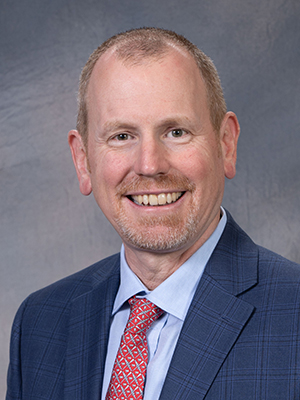
Daniel A. McAdams is the Robert H. Fletcher Professor in Mechanical Engineering at Texas A&M University and serves as the NSF Program Director of Convergent Activities. His research develops design theory and methodology with focus on functional modeling, bio-inspired design, and technology evolution. Educational Background: PhD in Mechanical Engineering from University of Texas at Austin MS in Mechanical Engineering from California Institute of Technology BS in Mechanical Engineering from University of Texas at Austin His research investigates innovation in concept synthesis through computational methods, bio-inspired design approaches, and technology evolution applied to product development. Current projects include function-sharing principles in biological systems, digital twin architectures, and patent mining for technology forecasting. Recent publications explore applications of speculative fiction in design ideation, graph-theoretic approaches for digital twins, and automated assessment in engineering education, demonstrating cross-disciplinary innovation across design science. Awards and Honors: ASME Design Theory and Methodology Award Distinguished Achievement Award for Student Relations Multiple Faculty Fellow awards Design Studies Best Paper Award Outstanding Faculty Mentor Award He leads the Product Synthesis Engineering Lab, advancing design methodologies for complex engineered systems through computational approaches and biological analogies.
Ian Gilby is an Associate Professor at the School of Human Evolution and Social Change, Arizona State University. His research focuses on the social behavior, ecology, and cognition of wild chimpanzees, particularly within the context of long-term studies at Gombe National Park, Tanzania. Gilby investigates topics such as cooperative hunting, dominance hierarchies, social bonding, and the influence of ecological factors on primate behavior. His work bridges primatology, evolutionary biology, and conservation science, with a strong emphasis on understanding the adaptive strategies of chimpanzees in complex social environments. Key themes in Gilby’s research include the evolution of cooperation, reproductive strategies, and the ecological drivers of social behavior. He has contributed significantly to studies on chimpanzee aggression, hunting tactics, and the role of vocal communication in group coordination. His findings highlight the intricate relationship between social structure, ecological conditions, and individual success in primate communities. Notably, Gilby is involved in the Gombe Chimpanzee Project, analyzing long-term datasets to address questions about data sharing in conservation science and the impacts of environmental changes on wildlife. While no formal awards or grants are explicitly mentioned in the provided texts, his extensive publication record underscores his expertise in primate behavior and ecology.
Rimjhim Aggarwal is a Professor at the School of Sustainability, Arizona State University (ASU). Her research focuses on sustainability governance, climate risks, and the food-energy-water nexus, with emphasis on urban systems, social-ecological dynamics, and policy design. She explores how institutions and governance structures adapt to environmental challenges, particularly in rapidly urbanizing regions. Her work integrates interdisciplinary approaches, combining policy analysis, systems modeling, and participatory methods. Notable contributions include frameworks for nexus governance in Phoenix and Cape Town, studies on circular economy solutions for waste management, and analyses of climate adaptation strategies in agriculture. She also emphasizes education innovation through virtual field experiences to democratize geoscience learning. Key research themes include institutional fit in governance systems, climate risk integration in development goals, and equitable resource management in urbanizing contexts. Her publications span over three decades, reflecting deep engagement with global sustainability challenges such as biodiversity loss, water scarcity, and socio-environmental justice.
Valeriy Vyatkin is a Professor at the Department of Electrical Engineering and Automation, Aalto University. His research focuses on advancing industrial automation, control systems, and their integration with emerging technologies like machine learning and digital twins. He specializes in standards such as IEC 61499, addressing interoperability, formal verification, and performance optimization in distributed automation systems. Key research interests include: Physics-informed machine learning for industrial processes (e.g., steel rolling, reservoir engineering) Formal methods for control system validation and safety-critical applications Development of adaptive automation frameworks for Industry 5.0 challenges, including human-robot collaboration and energy systems Interoperability between legacy and modern industrial standards (OPAS, OPC UA) Recent work emphasizes real-time simulation, FPGA-based control prototyping, and AI-driven solutions for energy efficiency and sustainability in manufacturing, horticulture, and process industries. Publications span topics like robotic walker design, probabilistic model checking, and decentralized learning management systems. He collaborates on EU and industry-funded projects, focusing on digital twin implementation, edge computing, and virtual commissioning. His team develops tools for automated code generation, system migration, and anomaly detection in complex industrial settings.
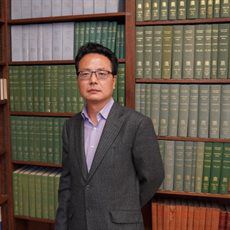
Professor Chengang Wang is Chair in International Business and Director of Research at the Department of Strategy and International Business, Birmingham Business School, University of Birmingham. He previously held academic positions at the University of Bradford, University of Surrey, and the University of Manchester, with over 17 years of service at Bradford where he served as Head of Research Centre and Director of PhD Programme. PhD in Economics, Aston University, 2003 Postgraduate Certificate in Higher Education Practice, University of Bradford, 2006 His research centers on the intersection of international business and innovation , particularly examining how firm internationalization influences innovation, knowledge spillovers, and green technology adoption. His recent work investigates eco-innovation in emerging markets, the role of digital economy policies, and institutional effects on innovation performance. He frequently studies Chinese and BRICS firms, focusing on outward FDI, intellectual property, and technology transfer. The analysis of his recent publications reveals a strong trend toward sustainability-driven innovation , with increasing emphasis on green innovation, environmental regulation, and digital policy impacts. His work combines international business theory with innovation economics, often using empirical methods to study real-world firm behavior in emerging economies. Key themes include knowledge spillovers from MNCs, the role of IPR regimes, and the interplay between institutional environments and firm strategy. His scientific recognition includes: Fellow of the Higher Education Academy (FHEA) He has contributed to major research projects funded by the UK’s DFID and China’s Natural Science Foundation and Ministry of Science and Technology. He has served on the editorial boards of Management and Organization Review and International Business Review . His teaching includes International Business Strategy, Business Economics, and Research Methods. Professor Wang leads research in his department and mentors PhD students in international business and innovation. He has published in top journals including Journal of International Business Studies , Research Policy , and Technological Forecasting and Social Change . He is actively involved in scholarly communities and contributes to advancing knowledge on international business dynamics in emerging economies, particularly China. His departmental leadership as Director of Research underscores his influence in shaping research strategy and academic excellence.
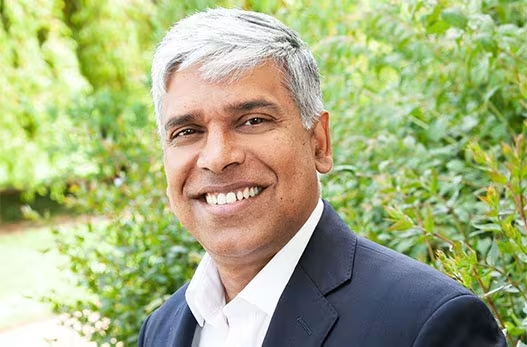
Sendil Ethiraj is a Professor of Strategy and Entrepreneurship at London Business School (LBS) and serves as Deputy Dean (Faculty). Originally from India, he earned his PhD in Management from The Wharton School at the University of Pennsylvania. Prior to joining LBS, he spent over a decade as faculty at the Ross School of Business, University of Michigan. His research focuses on strategic management, covering innovation processes, competitive strategy, organizational design, human capital management, and technology-driven industry transformation. He has extensively studied innovation in complex systems across sectors like oil and gas, mutual funds, and healthcare insurance. His work addresses organizational structures for capability development, employee goal alignment, and platform governance in digital ecosystems. At LBS, he contributes to academic leadership as a member of the Governing Body since 2022. His initiatives emphasize designing reward systems to attract global research faculty and advancing diversity, inclusion, and belonging through the LBS Advisory Board. He teaches core courses in LBS's Master's, Executive Education, and PhD programs. Key research areas: Innovation in unconventional industries Human capital dynamics Platform governance Strategic response to technological disruption Organizational design for complex systems Contact: sethiraj@london.edu
Aryeh Kontorovich is a Professor in the Computer Science Department at Ben-Gurion University. His research primarily focuses on theoretical machine learning, with expertise in probability, statistics, Markov chains, and metric spaces. His research interests span theoretical machine learning, with particular emphasis on: Probability theory and concentration inequalities Statistical learning theory Markov chains and mixing time estimation Metric space learning Kernel methods Sample compression schemes Professor Kontorovich's recent publications (2021-2025) demonstrate a continued focus on theoretical foundations of machine learning. His work shows strong trends in statistical estimation for Markov processes, distribution learning, metric space analysis, and sample compression. Many papers explore the intersection of probability theory and machine learning, particularly examining concentration inequalities, minimax optimality, and theoretical guarantees for learning algorithms. His research consistently bridges abstract mathematical theory with practical machine learning applications. Scientific awards and recognitions: Distinguished contribution award at MLG 2007 for "A Universal Kernel for Learning Regular Languages" Professor Kontorovich has advised numerous students and collaborated extensively with researchers in theoretical machine learning. His work spans both theoretical foundations and practical applications, with significant contributions to understanding the mathematical limits of learning algorithms. While specific grant information isn't provided in the source material, his extensive publication record in top venues suggests successful funding for his research programs. He maintains active collaborations with researchers worldwide, including prominent names like L. Gottlieb, D. Berend, and S. Hanneke.
Alina Ene is an Associate Professor in the Department of Computer Science at Boston University. Her research focuses on theoretical computer science, algorithms, optimization, and theoretical machine learning, with recent work emphasizing submodular optimization and convex/non-convex optimization techniques. Key research areas include Submodular optimization Convex and non-convex optimization Stochastic gradient methods Streaming and parallel algorithms Her recent publications analyze high-probability convergence in optimization, adaptive gradient methods, and submodular function applications in machine learning and network design. Current advisees include PhD students Fabian Spaeh and Ta Duy Nguyen. She has previously mentored students and postdocs such as Andrew Suh, Adrian Vladu, and Rafael da Ponte Barbosa. Alina has taught courses like CS 237 (Probability in Computing), CS 531 (Advanced Optimization Algorithms), and CS 591 E2 (Convex Optimization Algorithms) at Boston University, and earlier courses at the University of Warwick.
Dr. Iris Seidemann is a Senior Research Fellow at the Chair of Organization Studies, Department of Social Economics, Faculty of Economics and Social Sciences, University of Hamburg. She joined the chair in October 2019 as a doctoral researcher and has since become a key contributor to research on organizational legitimacy, paradox theory, and grand challenges. Research Interests: Her scholarly focus lies in the critical examination of organizational tensions and paradoxes, particularly in the context of legitimacy repair and societal grand challenges such as climate-induced disasters. She investigates how workforce homogeneity in the public sector emerges and persists, using systematic literature reviews and critical theoretical analysis. Her work challenges the normative assumptions in paradox theory and advocates for more reflexive and context-sensitive approaches in organization studies. Publication Trends: Her recent publications reveal a strong trajectory in critical organization studies, combining institutional theory, paradox research, and public sector governance. She frequently publishes in top-tier outlets like Organization Theory and Public Management Review , and presents at premier conferences including the Academy of Management and EGOS. Her work is characterized by theoretical depth, methodological rigor, and a commitment to responsible research. Scientific Awards: Best Paper in the 83rd AOM Proceedings (2023) Nomination for OMT Responsible Research Award (2023) Nomination for EGOS Best Student Paper Award (2020) Teaching and Advising: Dr. Seidemann teaches courses at both bachelor’s and master’s levels, including Grundkurs Organisation, Qualitative Methods, International Organizations, and Philosophy of Science. While no formal advisees are listed, she contributes to academic training through supervision in research methods and thesis guidance. She has also been involved in projects funded under the CLARE Initiative, indicating active grant engagement. Labs and Teams: She is a core member of the REBUMAA project team at the University of Hamburg, working under the CLARE Initiative. The team focuses on multi-actor dynamics in addressing complex societal challenges, reflecting an interdisciplinary and collaborative research environment.
Guido Perboli is a Full Professor in the Department of Management and Production Engineering (DIGEP) at the Polytechnic University of Turin, where he also serves as Logistics Coordinator and Project Coordinator for activities supporting relationships with government bodies. He is a member of the Interdepartmental Center CARS@PoliTO (Center for Automotive Research and Sustainable Mobility) and serves as Director of the ICT for City Logistics and Enterprises (ICElab@Polito) research center, which he founded in 2016. His research interests span a broad range of topics including Operations Research, Logistics, Last-mile Delivery, Sustainable Logistics, Combinatorial Optimization, Stochastic Programming, Business Development, and Lean Business methodologies. His work particularly focuses on City Logistics, Green Logistics, and the application of emerging technologies like Blockchain and AI in supply chain management. He has developed GUEST, a Lean Business methodology for innovation processes from early idea definition to implementation. Professor Perboli's recent publications demonstrate a strong focus on urban logistics, last-mile delivery optimization, blockchain applications in supply chains, and the integration of AI techniques in transportation systems. His work shows an increasing trend toward interdisciplinary research that combines optimization methods with emerging technologies to address sustainable urban mobility challenges. Professional Recognition: CASE Best Paper award from IEEE Conference on Automation Science and Engineering (2011) Effective member of INFORMS (2019-present) Effective member of EURO (1995-present) Effective member of AIRO (1995-present) Associate Editor for Journal of Applied Research and Technology (2020-present) Associate Editor for Sustainability (2018-present) Professor Perboli actively advises PhD students and has supervised numerous research projects, including EU-funded initiatives like SINFONICA, HESTER, and 5G-LOGINNOV. He serves as Scientific Director for multiple commercial research projects focused on blockchain, IoT, and AI applications in logistics. Beyond academia, he is Chief Scientific Officer of Arisk S.p.A., a fintech company specializing in business crisis prediction using AI and machine learning. His research group, ICElab@Polito, focuses on two main areas supporting urban growth: logistics and enterprises. The center collaborates with numerous companies including Amazon, DHL, and FCA, addressing real-world challenges in urban logistics and supply chain management through innovative research approaches.
Rastko Sknepnek is a Chair of Biological Physics at the University of Dundee , affiliated with both the School of Science and Engineering (Physics department) and the School of Life Sciences (Computational Biology). His research focuses on pattern formation in complex geometries, physics of biological/artificial membranes, active matter systems, and computational biophysics. PhD in Physics (2004, Missouri S&T) Postdoctoral training at McMaster, Iowa State/Ames Lab, Northwestern, and Syracuse University Joined University of Dundee in 2013 as Lecturer and Dundee Fellow Current work explores cellular homeostasis , actomyosin dynamics , and collective cell behavior , with recent publications analyzing epithelial monolayers, active matter models, and developmental mechanics. His 2025 projects include AI applications for drug resistance and cell shape quantification. Scientific Awards : Distinguished University Postdoctoral Fellowship (Syracuse, 2012) Dundee Fellow (2013) He leads the Computational Soft Condensed Matter and Biophysics Group , collaborating with institutions like University of Oxford, UCL, and University of Bristol. Grants include £2.1 million from UKRI for embryonic self-organization research and BBSRC funding for cell dynamics studies.
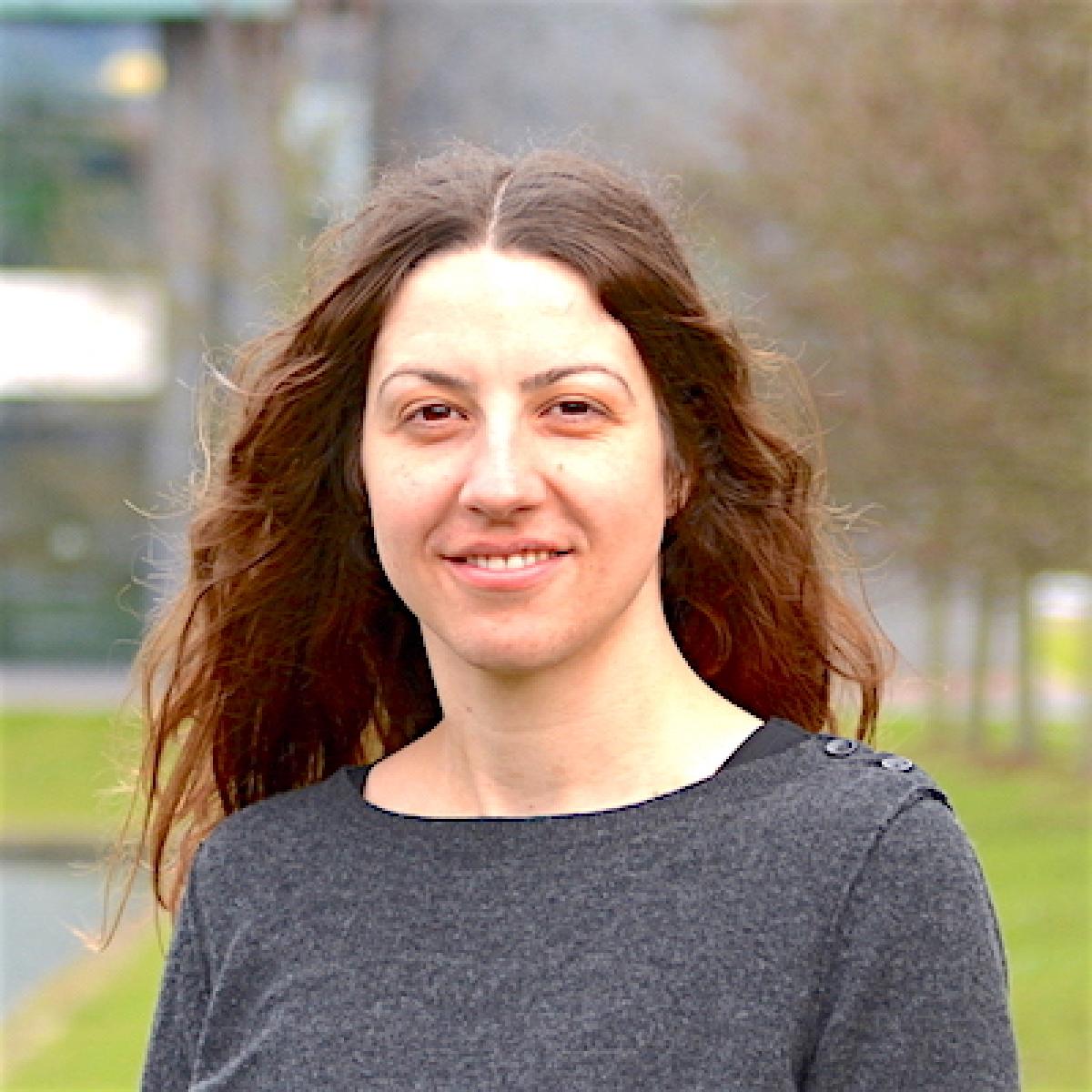
Dr. Lida Derevnina is a leading researcher in plant-pathogen interactions and immune receptor networks at the University of Cambridge , affiliated with the School of Biological Sciences and the Department of Plant Sciences . She heads the Crop Pathogen Immunity Group at the Crop Science Centre , focusing on NLR (Nucleotide-binding and Leucine-Rich Repeat) immune receptor networks and pathogen effector functions to engineer durable crop resistance. Education: PhD in Plant Pathology and Phytopathology, University of Sydney (2008-2012) BSc in Agricultural Science, University of Sydney (2004-2007) Her research explores how pathogens evade plant immunity through effector proteins and how NLR networks can be bioengineered to counteract these mechanisms. This work bridges molecular biology, evolutionary genetics, and sustainable agriculture, with recent advances in resistosome activation models and effectorome characterization. Scientific awards include the Crop Science Centre Fellowship (2022) , Marie Skłodowska-Curie Individual Fellowship (2016) , and the Jeanie Borlaug Laube Women in Triticum Award (2012) . Her work has been published in top journals such as Science , Nature , and PLoS Biology . Dr. Derevnina is actively engaged in public outreach, including the Talking Biotech podcast and a YouTube video explaining plant immunity . Her laboratory collaborates on projects related to global food security and pathogen genomics.
Birger Lindberg Møller is a Professor in Plant Biochemistry at the Department of Plant and Environmental Sciences, Faculty of Science, University of Copenhagen. He also serves as Director of the Carlsberg Laboratory (since 2014) and Head of the VILLUM Research Center for Plant Plasticity (since 2013). His research spans plant biochemistry, synthetic biology, and natural products chemistry with applications in sustainable production systems. His educational background includes: M.Sc. (1972) Ph.D. (1975) D.Sc. (1984) D.Sc. h.c. (honoris causa) Professor Møller's research focuses on bio-active natural products , particularly the biosynthesis, transport, storage and degradation of cyanogenic glucosides . His work elucidates how plants communicate with their environment and defend themselves against herbivores, pests and abiotic stresses. A promising application of his lab's research involves engineering microalgae, mosses and plant cells into production units for high value natural products . His engagement in synthetic biology represents a logical extension of his plant research activities, with work targeted towards forming new combinations of membrane proteins for harvesting sunlight energy to synthesize valuable natural products or degrade toxic compounds. Analysis of Professor Møller's recent publications reveals a strong focus on plant specialized metabolism, particularly cyanogenic glucosides and related compounds. His work spans genomics, transcriptomics, metabolomics, and synthetic biology approaches to understand plant defense mechanisms and engineer plants for improved traits. Key themes include sorghum and cassava metabolism, diterpenoid biosynthesis, and the application of synthetic biology for sustainable production of high-value compounds through photosynthetic systems. His notable scientific awards include: Villum Kann Rasmussen Research Prize (2007) - Denmark's largest research award (2.5 mil DKK or 350,000 €) The Academy of Future Research's "The Future Prize" (2004) Societas Physiologia Plantarum Scandinavica "Popularization Prize" (2003) Knight of the Dannebrog (1995) Carlsberg Research Prize Award (1994) Hans Gram Medal from the Royal Danish Academy of Sciences and Letters (1985) Appointed Honorary Doctor at the University of Umeå, Sweden (2009) Professor Møller has served as the main advisor for 43 PhD students (with 8 ongoing in Denmark and 3 in Australia) and numerous BSc and MSc students. He has secured significant research funding throughout his career, including an ERC Advanced Grant (2.5 million €), Villum Foundation grants, and participation in major research centers with multi-million euro budgets. His current funding includes projects related to synthetic biology, plant plasticity, and cyanogenic glucoside metabolism. He leads the Plant Biochemistry Laboratory and is deeply involved with the Center for Synthetic Biology at the University of Copenhagen. His laboratory focuses on understanding plant specialized metabolism and applying this knowledge through synthetic biology approaches to engineer plants and microorganisms for sustainable production of high-value compounds. His team collaborates extensively with international partners across Europe, Australia, and beyond, and he actively promotes cross-disciplinary collaboration to address complex global challenges in energy, sustainability, and medicine.
Professor Riikka Rinnan (University of Copenhagen) is a leading expert in ecosystem-atmosphere interactions, focusing on volatile organic compounds (VOCs) in Arctic environments. Her groundbreaking discovery of VOCs in permafrost has advanced climate prediction models, revealing complex interactions between climate warming, insect herbivory, microbial activity, and vegetation shifts. Current position: Professor, Department of Biology, University of Copenhagen Major research themes: Permafrost VOCs, Arctic climate feedbacks, plant-insect-microbial interactions International collaborations: China, Germany, Russia Her work combines field expeditions in extreme Arctic conditions with laboratory experiments and advanced VOC analysis. Climate warming experiments show VOC emissions could increase 40-fold with combined warming and insect attacks, while Arctic soils may act as unexpected VOC sinks. Key publications appear in Nature Communications , Nature Geoscience , and Global Change Biology . Riikka Rinnan has received prestigious awards including the EliteForsk Award, European Research Council Consolidator Grant, and Sapere Aude Research Leader. She leads international research teams, advises five PhD candidates, and supervises four postdocs (including two Marie Curie fellows). Her Siberian expedition plans demonstrate commitment to real-world scientific challenges.
Nidhi Singal serves as Professor of Disability and Inclusive Education at the University of Cambridge's Faculty of Education and holds the position of Vice President at Hughes Hall. Her academic leadership extends to roles as Trustee of the Cambridge Trust and UKFIET, alongside significant contributions to global education initiatives through the World Bank, UNESCO, and UNPRPD. Her educational background includes a PhD and MPhil from the University of Cambridge, complemented by an M.A. and B.A. (Honours) in Applied Psychology from the University of Delhi. This clinical psychology foundation informs her distinctive approach to educational research. Singal's research centers on educational equity for marginalized groups in Southern contexts, with particular emphasis on children with disabilities in South Asia and Africa. She pioneers culturally-sensitive methodological frameworks that challenge power imbalances in North-South research partnerships and prioritize ethical knowledge dissemination. Her work critically examines classroom teaching quality, schooling impacts, and the complex interplay between disability, poverty, and development. Analysis of her recent publications reveals consistent focus on inclusive education measurement (2024), pandemic impacts on disabled learners (2021-2022), and Southern perspectives on disability-inclusive schooling. Her scholarship bridges rigorous academic research with actionable policy development, evident in her leadership of the Global Disability Summit's International Statement of Action. Fellow of the Academy of Social Sciences (2022) President of the British Association for International and Comparative Education Technical Advisory Council member for World Bank's Inclusive Education Initiative Contributor to UNESCO's Foundations of Disability-Inclusive Education Sector Planning Course Singal mentors a vibrant cohort of postgraduate researchers through the Cambridge Network for Disability and Education Research (CaNDER) and South Asian Approaches to Researching Education (SaareNetwork). Her grant portfolio demonstrates exceptional partnership with international agencies including the World Bank, UNESCO, and MasterCard Foundation, focusing on projects like the Girls Education Challenge Fund evaluation and Ethiopia's Inclusive Education Resource Centres. Current initiatives explore teacher effectiveness in African secondary schools and disability-inclusive education during humanitarian crises. Her research infrastructure includes CaNDER, which connects Global South stakeholders to advance disability-inclusive education scholarship, and active collaboration with international networks like UKFIET and UNPRPD to shape policy frameworks that center lived experiences of disabled learners.