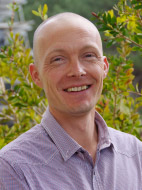
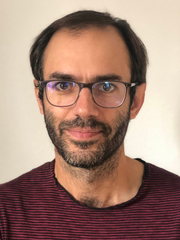
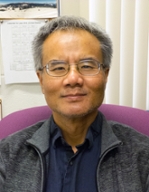
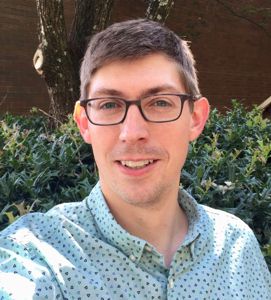
Katie Kerr is a Visiting Assistant Professor at the Centre for Public Health , School of Medicine, Dentistry and Biomedical Sciences , Queen's University Belfast. Her research focuses on rare diseases , epigenetics , and whole genome sequencing , with a particular emphasis on kidney transplantation and public health applications. 2020 : Crystal Award for Poster Presentation at Rare Disease Day 2019 : PhD Student Bursary at Genomics of Rare Disease Conference 2018 : Emily Sarah Montgomery Travel Scholarship As a key contributor to the 100,000 Genomes Project , she has conducted epigenome-wide analyses and developed frameworks for multi-omic disease research . Her work has been published in high-impact journals like Kidney International Reports and Genes , with recent research (2025) providing global insights into rare disease definitions . She actively organizes and participates in rare disease research workshops and STEAM-powered public engagement events to promote translational research.
Dr. Claus Christophersen is an Associate Professor in Nutrition and Associate Dean (Research) at Edith Cowan University's School of Medical and Health Sciences. He also serves as Post-Graduate Coordinator for Public Health, Occupational Health & Safety, and Allied Health disciplines. With a MSc from the University of Copenhagen (2003) and a PhD from the University of Western Australia (2008), his career includes post-doctoral research at CSIRO and leadership roles in molecular gut microbiology. His research focuses on the gut microbiome's role in health and disease, including obesity, inflammatory bowel diseases (UC/IBS), autism, and athlete health. He has published extensively in journals like GUT and led projects funded by organizations such as the Crohn's & Colitis Foundation and the National Health WA. Education: PhD, University of Western Australia (2008); MSc, University of Copenhagen (2003) Professional Roles: Associate Dean (Research), Post-Graduate Coordinator, Principal Investigator in multiple grants Research Interests His work integrates in vitro models, animal studies, and human trials to explore diet-microbiome-host interactions. Key areas include microbiome modulation via dietary interventions (e.g., resistant starch), gut-brain axis in autism, and microbiome dynamics in athletes. He employs 16S rRNA sequencing, multivariate statistics, and biochemical analysis to bridge gaps in translational microbiology. Grants & Projects $996,364 Shantou Cooperative Research (2024–2029) $534,799 Ateria Health Australia (2020–2023) $192,806 Crohn's & Colitis Foundation (2016–2017) Lab/Teams Leads the Molecular Gut Microbiology team at ECU, collaborating with institutions like Monash University and CSIRO. Supervises PhD/Master's students in areas like gestational diabetes, probiotic effects, and gut microbiome in athletes.
Manuel Gomez Rodriguez is a Professor at the Max Planck Institute for Software Systems, specializing in machine learning, social information systems, and human-AI collaboration. His research bridges algorithmic fairness, counterfactual reasoning, and decision-making systems, with applications in public health, refugee resettlement, and language model evaluation. He leads projects developing frameworks for human-aligned AI systems and mitigating counterfactual harms in algorithmic decisions. Research Focus His work spans the development of novel methods for evaluating large language models, designing decision support systems with counterfactual guarantees, and modeling human-AI collaboration dynamics. Key innovations include prediction-powered ranking systems, coupled token evaluation techniques, and computational models of responsibility attribution. Awards and Recognition ERC Consolidator Grant (2024) Best Paper Award at ICML Workshop on AI and HCI (2023) ELLIS Fellow (2019) Outstanding Paper Award at NIPS (2013) Leadership He leads the ERC-funded project on Counterfactuals in Minds and Machines and supervises doctoral students on topics at the intersection of machine learning and social good. His lab maintains collaborations with global institutions to tackle real-world challenges through algorithmic innovations.
Hieu Nguyen is a Professor of Mathematics at Rowan University, affiliated with the College of Science & Mathematics. He holds a Ph.D. from the University of California, Berkeley, and a B.S. in Mathematics and Electrical Engineering from the University of Minnesota-Minneapolis. His research focuses on Experimental Mathematics, Coding Theory, and Frames, with applications in AI-driven Precision Agriculture and autonomous drone systems. Notable projects include mitigating Blueberry Scorch Virus using AI drones and developing error-correcting codes for communication systems. Education: Ph.D., Mathematics, UC Berkeley (1996); B.S., Mathematics & Electrical Engineering, University of Minnesota (1990) Research Interests: Smart Drones, Deep Learning, Precision Agriculture, Coding Theory, Frames, and Experimental Mathematics Grants/Projects: NJ Department of Agriculture-funded Blueberry Scorch Virus project (2022–2025), Precision Agriculture Using AI Drones (2023–2024) His work includes over 20 publications, emphasizing ensemble learning, error-correcting codes, and mathematical modeling. He leads the eXperimental Mathematics Laboratory (XML) and has advised numerous students in interdisciplinary research. Professional memberships include the Mathematical Association of America and New Jersey Big Data Alliance.
Professor Jennifer Seberry is a renowned academic in computer science and mathematics, affiliated with the University of Wollongong's School of Computer Science and Software Engineering. She holds the rank of Professor and has made significant contributions to cryptography, computer security, and combinatorial design theory. Her research focuses on Hadamard matrices, orthogonal designs, and their applications in coding theory and cryptographic systems. She has supervised over 30 PhD students and authored/co-authored numerous papers and books in her field. Education: B.Sc. (1966), M.Sc. (1969), PhD (1971) from Australian universities Key Roles: Director, Centre for Computer Security Research at UOW Former Head of Computer Science at University College, ADFA Editor of multiple journals, including Designs, Codes and Cryptography Awards & Memberships: Fellow of Australian Computer Society (FACS), IEEE (SMIEEE), and Institute of Combinatorics Recipient of numerous grants and research awards Research Highlights: Her work spans cryptographic algorithms, secure protocols, and combinatorial matrices. Notable contributions include advancements in Hadamard matrix constructions and applications to secure communication systems. She pioneered the AUSCRYPT/ASIACRYPT conference series and has advised on national security protocols. Labs & Teams: Leads the Centre for Computer Security Research, collaborating on projects in cybersecurity, cryptographic protocol design, and secure distributed systems.
Jody Wheeler serves as an Adjunct Professor in the Department of General Education at Pacific Oaks College, Pasadena, California. His interdisciplinary background bridges academic theory with creative practice across multiple domains. His educational foundation includes: M.Ed. in Counseling Psychology and Human Development from George Mason University M.F.A. in Film and Television Writing and Production from UCLA B.A. in Political Science from James Madison University Wheeler's research centers on narrative structures as the unifying thread across human disciplines. He examines how individuals construct meaning through ordered sequences of emotions, ideas, and events—whether in personal identity formation (Counseling Psychology), societal organization (Political Science), or artistic expression (Film). His teaching philosophy emphasizes message refinement: "Everyone has something to say... explore the best way to say it, then revise and polish your message to the point it shines as bright and clear as it can." This approach manifests in both classroom instruction and creative media production. Professional activities extend beyond academia into active creative practice: Feature film writing, producing, and directing Consulting on narrative development and communication strategies Artisanal bread-making as complementary creative expression
Andrea M. Pülz serves as an Academy Scientist at the Austrian Archaeological Institute (OeAI), part of the Austrian Academy of Sciences in Vienna. She holds the academic title Privatdozent (Priv.-Doz.) following her 2023 habilitation, and has been continuously engaged in FWF-funded research since 1997. Her primary institutional affiliation centers on the long-term project The Artemision of Ephesus , where she leads investigations into archaic and Byzantine material culture. Her educational background includes doctoral studies (completed 2003) and habilitation (2023) at the University of Vienna, where she specialized in Classical Archaeology alongside complementary studies in Prehistory, Ancient History, and History. This interdisciplinary foundation underpins her methodological approach to material analysis. Pülz's research concentrates on two interconnected domains: the archaic-period material evidence within Ephesus' Artemis sanctuary, and broader material culture studies of Late Antiquity and the Byzantine era. Her work demonstrates particular expertise in small finds—especially metal, bone, and glass artifacts—from urban and religious contexts. Through meticulous cataloging and technological analysis, she traces cultural continuity and transformation across Ephesus' transition from pagan to Christian center, with additional fieldwork extending to Upper Egyptian monastic sites like the Theban Paulos Monastery. Her publication trajectory reveals consistent focus on Byzantine material culture, evolving from early gold appliqué studies (2003-2006) toward comprehensive small finds cataloging (2017-2020). Recent work integrates scientific analysis with contextual archaeology, examining artifact production techniques and cultural symbolism across Mediterranean trade networks. Key projects include FWF/DFG collaborations on Theban monastic artifacts (2017-2020) and ongoing Artemision stratigraphy analysis. Pülz maintains active research partnerships with institutions including the Römisch-Germanisches Zentralmuseum Mainz (2007-2009 gold jewelry project) and international excavations at Ephesus. Her work receives primary funding through Austrian Science Fund (FWF) mechanisms, with recent German Research Foundation (DFG) collaboration for Egyptian fieldwork. Current efforts focus on synthesizing decades of small finds data into comparative frameworks for Eastern Mediterranean urban transformation.
Dr Khui Hung (Claire) Lee is a Researcher at the University of Western Australia's School of Biomedical Sciences and affiliated with the Marshall Centre. She holds a PhD in Public Health from Curtin University and combines expertise in healthcare data analytics, microbiome research, and immunology. Education: PhD in Public Health (2021), Curtin University External Roles: Project Officer (Data) at Department of Health (Western Australia) since 2023; Sessional Academic at Edith Cowan University since 2021 Her research focuses on host-microbe interactions through transcriptomic and microbiome analysis, with applications in infection prevention, antimicrobial resistance, and Helicobacter pylori studies. She also conducts systematic reviews and meta-analyses in complementary therapies like acupuncture. Recent publications highlight her work in H. pylori biofilm analysis , acupuncture efficacy for depression , and primary dysmenorrhea treatments . Her methodology spans bioinformatics, microscopy techniques, and evidence-based policy development. Collaborations include Department of Health (Western Australia) and Edith Cowan University engagements, with technical expertise in Scanning Electron Microscopy, Transmission Electron Microscopy, and Confocal Microscopy.
Vincent G. Martinson serves as an Assistant Professor in the Department of Biology within the College of Arts and Sciences at the University of New Mexico. His office is located in CAST 243 with laboratory space in CAST 247. Dr. Martinson's research focuses on the complex relationships between insects and their microbial communities. His work sits at the intersection of organismal biology, ecology, and microbiology, with particular emphasis on host-microbiota interactions , microbial community ecology , genomics , and the evolution of microbial symbiosis . His primary model systems include honey bees, bumble bees, native Drosophila, mosquitoes, and beetles. Methodologically, his research integrates three complementary approaches: (1) environmental DNA sampling methods (16S rRNA, metagenomics) to observe microorganisms in their natural environments; (2) culturing microbes and genome sequencing to identify metabolic capabilities; and (3) experimental manipulation of both microbes and their hosts to determine the functional consequences of these associations. Dr. Martinson leads the "BUGS IN BUGS" research initiative, which investigates how microbial communities assemble within insect hosts and how these microbes influence host biology. His work has significant implications for understanding terrestrial ecosystem ecology, agricultural systems (where insects serve as both pests and pollinators), and human health (as insects can be disease vectors).
Dr. Mathew Garnett is a Group Leader in Translational Cancer Genomics at the Wellcome Sanger Institute, where he was appointed to the Faculty in 2014. His research focuses on understanding how genetic alterations in cancer cells impact responses to anti-cancer therapies, with the goal of developing more precise cancer treatments. He leads the Garnett Group within the Cancer, Ageing and Somatic Mutation Programme and is a key member of the Cancer Dependency Map initiative. Dr. Garnett's educational background includes: BSc. in Biochemistry (Hons.) from the University of British Columbia, Canada (1999) PhD from The Institute of Cancer Research, London, UK (2005), where he worked on BRAF as a human cancer gene Postdoctoral research at the University of Cambridge with Prof. Ashok Venkitaraman, supported by a Canadian Institute of Health Research fellowship Dr. Garnett's research spans four complementary areas: the genomics of drug sensitivity, synthetic-lethal dependency mapping, organoid cancer models, and tumor-immune cell interactions. His lab performs high-throughput drug sensitivity screens across >1000 cancer cell models, genome-wide CRISPR-Cas9 screens to identify new drug targets, and develops next-generation organoid models that better capture tumor heterogeneity. His work integrates molecular cell biology, high-throughput screening, and cancer genomics to identify biomarkers that predict drug response and discover new therapeutic targets. His team has developed three major public resources: the Genomics of Drug Sensitivity in Cancer (GDSC), Project Score database, and Cell Model Passports. Analysis of Dr. Garnett's recent publications (2024-2025) reveals a strong focus on precision cancer medicine through genomic approaches. His work spans cancer dependency mapping using CRISPR screens, development of advanced cancer models including organoids, and identification of novel therapeutic targets and drug combinations. Key themes include synthetic lethality in microsatellite unstable cancers (particularly targeting WRN helicase), mechanisms of drug resistance, tumor-immune interactions, and computational approaches to integrate multi-omic data for precision oncology. Dr. Garnett's research has generated widely used reference datasets for the scientific community and has directly contributed to the development and testing of new cancer therapies. His work on identifying Werner Syndrome helicase as a synthetic-lethal target in microsatellite unstable cancers has led to the development of novel WRN Helicase Inhibitors. His team's databases (GDSC, Project Score, and Cell Model Passports) serve as critical resources for cancer researchers worldwide. Dr. Garnett leads a multidisciplinary team of researchers and has fostered numerous collaborations, including with the Open Targets partnership, Cancer Research UK, and the Human Cancer Models Initiative. His lab has developed innovative methods for cancer modeling and drug screening that have advanced the field of precision oncology. He is also a member of the scientific leadership team for Open Targets and the Cancer Research UK drug discovery small molecule expert review panel. The Garnett Lab maintains state-of-the-art facilities for robotics, acoustic dispensing, high-content microscopy, and CRISPR screening, enabling high-throughput approaches to cancer research. Through international collaborations like the Human Cancer Models Initiative, his team is generating and characterizing new patient-derived cancer models that better capture tumor heterogeneity for therapeutic development.
Joachim Markard is a Senior Researcher at the Zurich University of Applied Sciences (ZHAW), School of Engineering, where he works with the Team Sustainable Energy Systems. His research focuses on sustainability transitions, innovation systems, and energy policy, with particular attention to how technological, political, and organizational factors interact in the context of the energy transition. Dr. Markard specializes in the study of technological innovation systems (TIS), particularly examining how these systems evolve through different life cycle stages from formation to potential decline. His work investigates the role of policy in accelerating low-carbon transitions, the dynamics of multi-sector transitions, and the political dimensions of phase-out processes. He has made significant contributions to understanding architectural changes in energy systems, the development of hydrogen technologies, and the challenges of integrating complementary technologies in the energy transition. His extensive publication record demonstrates a consistent focus on advancing transition theory while addressing practical policy challenges. Markard's research has evolved to examine not only the emergence of sustainable technologies but also the decline of unsustainable ones, recognizing that successful transitions require attention to both aspects. His recent work explores the acceleration of low-carbon transitions, unsustainabilities like SUVs and space tourism, and the complex dynamics of multi-system transitions. Web of Science Highly Cited Researcher (2022) As a senior researcher, Dr. Markard collaborates extensively with international scholars and contributes to major research networks in the field of sustainability transitions. His work bridges theoretical advancement with practical policy implications, making substantial contributions to both academic understanding and real-world transition processes.
David Buckeridge is a Professor in the Department of Epidemiology, Biostatistics and Occupational Health at McGill University's Faculty of Medicine and Health Sciences. He serves as a Senior Scientist at the Research Institute of the McGill University Health Centre (RI-MUHC), where he is affiliated with both the Metabolic Disorders and Complications Program and the Centre for Outcomes Research and Evaluation (CORE). Additionally, he is associated with the Department of Medicine, Division of Clinical Epidemiology at the MUHC. Dr. Buckeridge's research focuses on the informatics of public health surveillance, particularly the development and evaluation of methods for surveillance systems that use clinical and administrative data. His work includes the development of statistical methods for outbreak detection and the use of simulation modeling to evaluate surveillance systems. His research interests span public health, medical informatics, biosurveillance, epidemiology, and the application of machine learning to health surveillance. His publication record shows consistent contributions to the field, with recent work focusing on SARS-CoV-2 serosurveillance, machine learning applications in public health, opioid risk assessment, and frameworks for evaluating public health surveillance systems. His research demonstrates a strong emphasis on methodological rigor and practical applications for improving population health monitoring. Dr. Buckeridge has been actively involved in developing tools and frameworks for public health surveillance, including the SeroTracker global dashboard for SARS-CoV-2 seroprevalence and knowledge-based platforms for population health data integration and analysis. His work bridges the gap between theoretical methodology development and practical public health applications.
Luisa Warchavchik Hugerth serves as Assistant Professor in the Department of Medical Biochemistry and Microbiology at Uppsala University's Faculty of Medicine, specializing in the Infection and Immunity research section. Her work bridges clinical medicine and microbial ecology through advanced DNA sequencing techniques to decode host-microbe communication failures underlying human disease. Her research prioritizes the human microbiome's 99% genetic contribution to health, with dual focus on pregnancy/neonatal outcomes and vaginal microbiome dynamics. She investigates how maternal microbiome optimization could prevent preterm birth—the leading cause of infant mortality—and examines vaginal ecology through menstrual cycle fluctuations, bacteriophage interactions, and recurrent infection pathways. Methodologically, she integrates cohort design, molecular biology, and bioinformatics to ensure robust translational insights from basic science to clinical applications. Analysis of her 2023-2025 publications reveals three converging trends: (1) Microbiome-mental health connections during pregnancy using multi-country cohorts, (2) Vaginal microbiota's role in cervical dysplasia and infection susceptibility through daily transition mapping, and (3) Cross-species pathogen surveillance via wastewater epidemiology. This work consistently employs high-throughput sequencing with complementary clinical data to establish causal microbiome-disease relationships. As an active member of Uppsala's Infection and Immunity group, she collaborates with clinical teams to minimize the basic-to-applied science gap, maintaining rigorous standards where 'crap in, crap out' dictates methodological precision from sample collection through statistical analysis.
Associate Professor Nicholas Fuller is a prominent obesity researcher at The University of Sydney, serving as Clinical Trials Director within the Department of Endocrinology at Royal Prince Alfred Hospital and as a member of the Boden Initiative. His work bridges academic research and practical applications in weight management, with a focus on developing sustainable approaches to obesity treatment and prevention that consider the complex biological, psychological, and economic factors involved. Dr. Fuller's research interests center on preventing weight regain after dieting, a critical challenge in obesity management. He has developed the scientifically-proven Interval Weight Loss (IWL) program, which addresses the body's evolutionary resistance to sustained weight loss by incorporating strategic maintenance periods between weight loss phases. His work spans clinical trials, health economics, dietary interventions, and behavioral approaches to obesity treatment, with particular emphasis on translating research into real-world applications that improve population health. Analysis of his recent publications reveals a strong focus on evidence-based approaches to weight management, with significant contributions to understanding the effectiveness of dietary supplements, clinical assessment protocols for obesity, and economic factors influencing weight loss success. His research consistently appears in top medical journals including The Lancet, JAMA Network Open, and American Journal of Clinical Nutrition, with six of his top 10 publications ranking in the top 5% of all research outputs scored by Altmetric. Wentworth medal - The University of Sydney Accepted into the prestigious Incubate program - The University of Sydney Awarded the 'People's Choice Award' - Genesis, The University of Sydney University of Sydney Genesis Prize Awards from the Chancellor's Committee at the University of Sydney for research impact Dr. Fuller has secured significant funding for investigating diverse obesity interventions including dietary & exercise programs, complementary medicines, commercial weight loss programs, pharmaceutical drugs, medical devices, bariatric surgery, satiety hormones, and obesity economics. His work has resulted in policy changes in obesity management and has been featured in over 1,000 media appearances across television, radio, and print media. As a consultant for industry and government organizations, he provides expert guidance on obesity treatment approaches and has been ranked as the number 1 author on The Conversation in 2024. As Clinical Trials Director at the Charles Perkins Centre, Dr. Fuller leads research initiatives that combine cutting-edge technology with clinical expertise to develop innovative obesity treatments. His team provides comprehensive clinical analysis services from study design through to media dissemination, working with a broad portfolio of clients to evaluate emerging obesity treatments and technologies.
Gregory Hudalla, Ph.D., is an Associate Professor and Integra LifeSciences Term Professor in the J. Crayton Pruitt Family Department of Biomedical Engineering at the University of Florida. He also serves as the Graduate Coordinator. His research focuses on developing functional nanomaterials through molecular self-assembly for therapeutic and diagnostic applications. Key projects include glycosylated nanofibers targeting galectins and catalytic nanomedicines anchored to tissues via extracellular carbohydrates. Education: B.S., Chemical Engineering, Illinois Institute of Technology, 2004 M.S./Ph.D., Biomedical Engineering, University of Wisconsin, 2006/2010 NIH NRSA Postdoctoral Fellow, Surgery, University of Chicago, 2013 Research Interests: Dr. Hudalla designs peptides that self-assemble into nanofibers to organize biologically active molecules. His work targets immune modulation for autoimmune diseases and inflammation, with applications in nanomedicine and biomaterials. Recent advancements include glycomaterials for immunotherapy and enzyme-retaining hydrogels. Awards: Integra LifeSciences Term Professor (2023–2025) NSF CAREER Award (2015) Teaching Excellence Award (2015) Advising & Grants: As Graduate Coordinator, he oversees doctoral training. His lab has secured funding from the NIBIB and NSF, supporting research on supramolecular biomaterials and immune engineering. Labs: The Hudalla Lab, located in the Biomedical Sciences Building, focuses on translating peptide-based nanomaterials into clinical therapies.