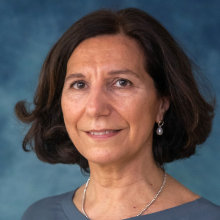
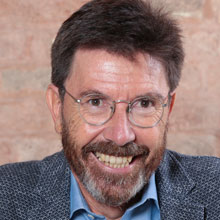
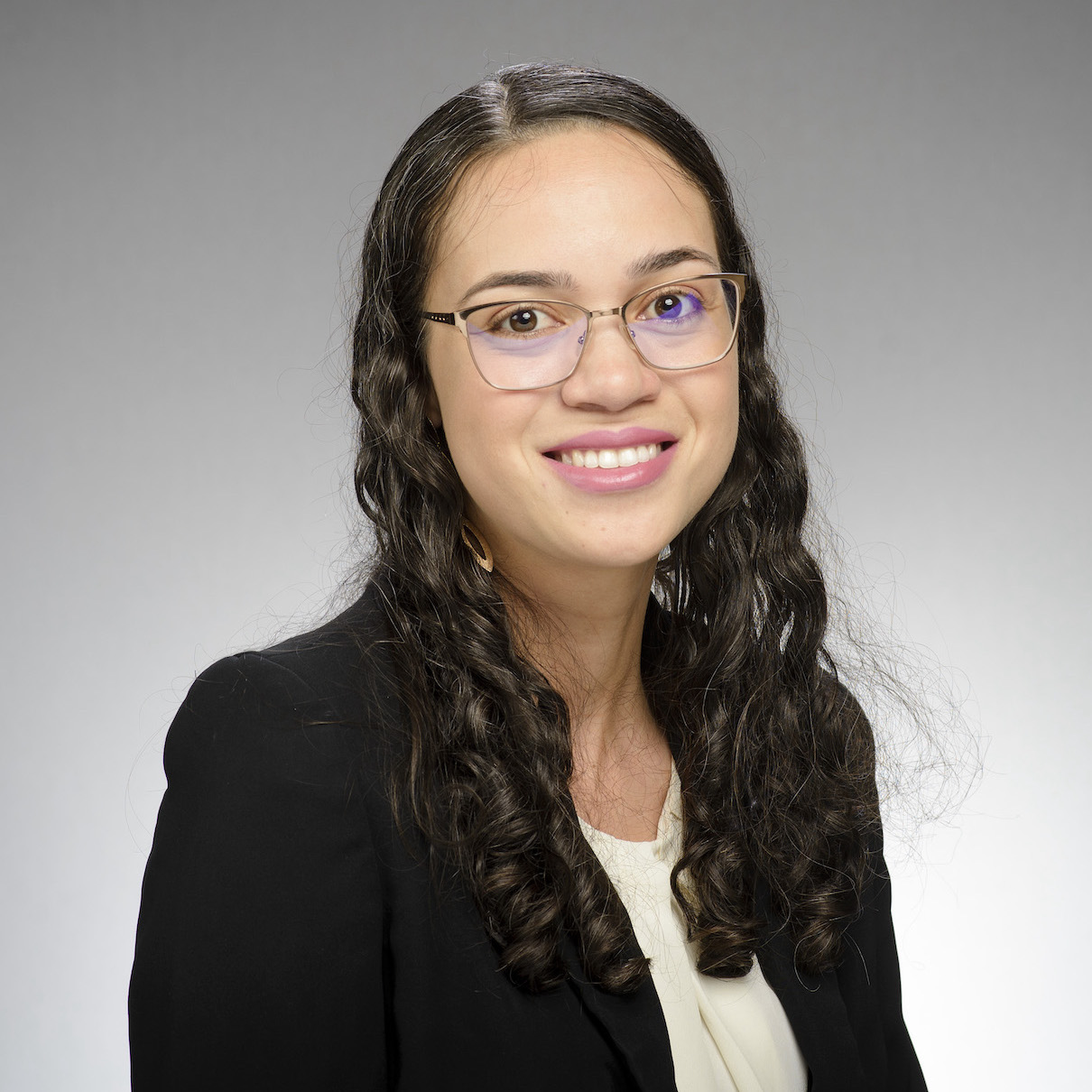
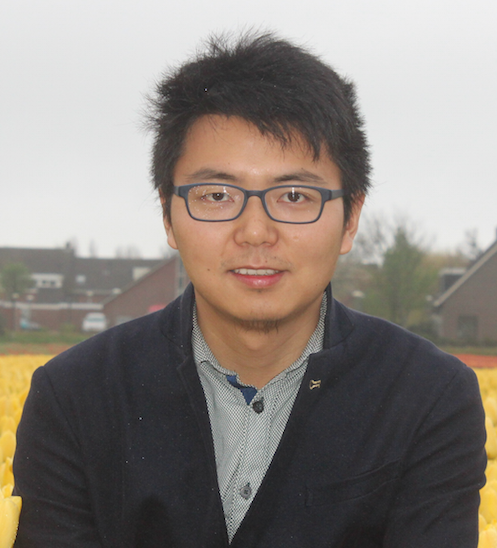
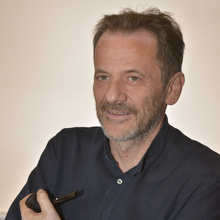
Luciano Lavagno is a Full Professor at the Department of Electronics and Telecommunications, Polytechnic University of Turin, with over two decades of academic and research contributions. His work bridges hardware acceleration, low-power electronics, and intelligent system design. Research Focus: Hardware-accelerated machine learning, high-level synthesis (HLS) for FPGA/ASIC, heterogeneous CPU/GPU/FPGA platforms Key Projects: SPACE (predictable acceleration), REBECCA (secure AI acceleration), HPC-National Center (quantum computing), and oral history preservation via "Ti racconto una storia" initiative His recent publications analyze CNN inference optimization, subgraph isomorphism, and superword-level parallelism exploitation. Lavagno supervises multiple PhD students working on FPGA acceleration, neural network hardware, and embedded systems. As Principal Investigator for national and EU-funded projects (PRIN, JTI-ECSEL, PNRR), he drives advancements in sustainable computing infrastructure. His patented technologies include MIx&Latch timing methodology, capacitive sensing innovations, and 5G acceleration frameworks.
Alberto Viglione is an Associate Professor at the Politecnico di Torino , Department of Environment, Land and Infrastructure Engineering (DIATI), and a member of the Interdepartmental Center SmartData@PoliTO. He has been a faculty member since 2019, following a decade as a Research Fellow at the Vienna University of Technology. University: Politecnico di Torino Department: DIATI – Department of Environment, Land and Infrastructure Engineering Rank: Associate Professor Email: alberto.viglione@polito.it His research focuses on flood hydrology, water resources, and hydro-meteorological extremes , integrating statistical analysis, climate change impacts, land use dynamics, and socio-hydrological modeling. He investigates the spatio-temporal dynamics of climatic, hydrological, and human processes in river basins and their implications for extreme event risks. His work emphasizes data integration, conceptual modeling, and risk assessment across scales. The recent publications highlight a strong trend in analyzing European flood dynamics , the impacts of climate change , and the development of socio-hydrological frameworks that incorporate human behavior and societal memory into flood risk modeling. His research spans from statistical hydrology in ungauged basins to large-scale assessments of climate-flood interactions. Scientific Awards and Honors: AMGA Award for best PhD thesis on water resources (2009) Editorial and Professional Service: Associate Editor, Water Resources Research (2014–present) Associate Editor, Hydrological Sciences Journal (2012–2018) Associate Editor, WIRES Water (2012–2020) Associate Editor, Journal of Hydrology and Hydromechanics (2019–present) Scientific Committee Member, European Geosciences Union (2019–2023) Secretary, International Commission on Water Resources Systems, IAHS (2015–present) Teaching and Advising: He teaches courses such as Bayesian Inference , Applied Hydrology , Fundamentals of Environmental Geosciences , and Hydro-meteorological Risk Assessment . He is a PhD supervisor and member of multiple PhD colleges in Civil and Environmental Engineering at Politecnico di Torino. He currently advises PhD students including Tsion Ayalew Kebede , Emanuele Mombrini , Luigi Cafiero , Luca Lombardo , and Matteo Pesce . His research is supported by grants from national (PRIN), EU, and commercial sources, including projects like Clim2FlEx , RETURN , and ATO4WATER . Research Labs and Teams: He is affiliated with the SmartData@PoliTO laboratory, focusing on big data and data science applications in hydrology and environmental systems.
Giovanna Turvani is an Associate Professor at the Department of Electronics and Telecommunications (DET) at Politecnico di Torino, with affiliations in both the College of Electronic, Telecommunications and Physics Engineering and the College of Computer, Film, and Mechatronics Engineering. Scientific Branch: IINF-01/A - Electronics ERC Sectors: PE7_4, PE7_11, PE6_1, PE6_14, PE7_3 SDG Goals: Quality Education, Gender Equality, Affordable Energy, Industry Innovation Her research focuses on advanced electronics and quantum technologies, including: Logic-in-memory computing Quantum computing architectures Microwave imaging for medical and agricultural applications CAD tools for emerging nanotechnologies Embedded systems for bee health monitoring IoT solutions for bio-waste valorization Publications show strong expertise in quantum computing, nanocomputing, and microwave imaging, with recent trends emphasizing quantum optimization frameworks, in-memory architectures, and IoT-based agricultural technologies. She supervises PhD students in areas like quantum machine learning algorithms, predictive on-board systems, and quantum hardware design. Collaborations span multiple disciplines, including medical device development and agricultural electronics. Patents include innovations in microwave imaging, racetrack memory logic functions, and in-memory computing devices.
Rolandino De’ Passaggeri (c. 1215–1300) was a prominent notary, politician, and academic figure in medieval Bologna. He served as a notary for influential guilds, including bankers and money changers, and authored foundational legal texts such as the Summa totius artis notariae (the Rolandina), which became a cornerstone of European notarial practice. In 1251, he founded a notarial school at the University of Bologna, shaping legal education for generations. Born to Rodolfino, an innkeeper and tax collector, Rolandino’s career began in 1234 with the notary’s guild. He played a pivotal role in Bologna’s resistance to imperial authority, notably responding to Frederick II’s threats with a civic manifesto. His legal reforms included drafting statutes for guilds and co-authoring the Liber Paradisus (1257), which emancipated serfs to expand tax bases. Rolandino’s works span notarial practices, rural legal frameworks, and contractual law, reflecting his dual focus on practical jurisprudence and civic governance. His legacy lies in institutionalizing notarial education and advancing Bologna’s legal autonomy amid political turmoil.
Bianca Basciano is an Associate Professor at the Department of Asian and North African Studies , Ca' Foscari University of Venice, where she has held the Director's Delegate for Research role since 2023. Her work focuses on Chinese linguistics , particularly Mandarin morphology, syntax, and second language acquisition. Research Areas: Chinese compounding, reduplication, causative constructions, resultative compounds, and language teaching methodologies. Teaching: Offers BA/MA courses in Chinese language and linguistics at Ca' Foscari University. Editorial Roles: Member of the editorial boards for Sinica Venetiana and Lingue e Linguaggio . Research Projects: Principal investigator for the PRIN 2020 project on Italian learners' acquisition of Chinese resultative verbs, with extensive corpus-based analysis. Collaborates with Giorgio Arcodia and other international scholars. Key Themes: Event structure delimitation, Vendlerian verb classes, micro-parametric syntactic variation. Publications: Over 40 works including monographs with Oxford University Press and Bologna University Press. Her methodological approach combines theoretical linguistics with corpus analysis, contributing to the understanding of Chinese as both a linguistic system and a second language acquisition challenge. She has also organized international conferences like the 31st IACL Annual Meeting.
Bryan DE NOTARIIS is a Research Fellow in the Department of Asian and North African Studies at Ca' Foscari University of Venice. His research focuses on ancient Indian and Buddhist literature, Gandhāran culture, and the ritual use of wine in South Asian religious traditions. He is actively involved in interdisciplinary projects bridging philology, history, and religious studies. His research interests include: Philology of Pāli and Gandhāri Buddhist texts Hellenistic-Indian cultural interactions The role of wine in ancient Gandhāran rituals Comparative studies between Buddhist and Hellenistic philosophical traditions Cross-cultural transmission of religious ideas The Milindapañha and its textual variants across languages The most recent publications reflect a strong trend in comparative and philological scholarship, particularly in the areas of Buddhist textual criticism, ritual symbolism, and ancient cross-cultural exchange. His work often combines close reading of primary sources with historical and anthropological analysis, especially in the context of the Gandhāran region. He frequently collaborates with scholars like Claudia Antonetti and Marco Enrico on wine in ancient South Asia. Scientific contributions include: Co-editing and contributing to Wine Cultures. Gandhāra and Beyond (2024) Curating the Wine in Gandhara Bibliography (2023) Authoring multiple peer-reviewed articles in journals such as Journal Asiatique and Annali di Ca’ Foscari Providing scholarly prefaces to major works on Buddhism Bryan DE NOTARIIS is involved in the MALIWI research project, funded by Ca' Foscari University of Venice, which investigates the social, ritual, and ceremonial use of wine in Gandhāra from the Achaemenid to the Kushan periods. He collaborates with Claudia Antonetti and Marco Enrico. While no formal students are listed, his editorial and research leadership suggest mentorship roles. No grants beyond MALIWI are detailed, but his project indicates institutional funding support. He is associated with the research group focused on: Languages and literatures of the Indian subcontinent History of ancient civilizations Sanskrit studies The MALIWI project website is publicly accessible at https://mizar.unive.it/venicepigraphy/maliwi/public/ .
Flavia Zorzi Giustiniani is an Associate Professor of European Union Law at Link Campus University in Rome, specializing in International Law and Disaster Law. She teaches at multiple institutions including Uninettuno University and eCampus University, focusing on courses like 'The EU approach to cross-border health threats' (2023-2026). She is affiliated with organizations such as the Italian Red Cross's Scientific Committee on International Humanitarian Law, the International Law Association (ILA), and AISDUE. Her research centers on international legal frameworks addressing disasters, human rights in crisis contexts, and cultural heritage protection. Notable works include monographs on the UN and humanitarian assistance (2008), international law in disaster scenarios (2021), and the Routledge Handbook of Human Rights and Disasters (2018). She contributes to leading law journals globally. Her publications from 2021-2020 emphasize interdisciplinary legal analysis of disaster response, civil-military coordination, and mixed disaster-conflict scenarios. Earlier works explore accountability in international criminal tribunals and African IDP protections. She actively participates in academic networks and policy dialogues on global governance challenges.
Mariagrazia Russo is a full professor of Portuguese and Brazilian Language and Translation at the University of International Studies of Rome (UNINT), where she also serves as Rector and Scientific Director of the University Language Center. Previously, she held roles at the University of Tuscia, including Associate Professor and coordinator of international doctoral programs. Her research focuses on medieval Portuguese philology, intercultural relations, Lusophone literary and historical studies, and missionary linguistics. She has extensively studied documents from Vatican archives, Portuguese diplomatic missions, and Italian-Portuguese cultural exchanges across centuries. Educated at Sapienza University of Rome and the Sorbonne, Russo leads research groups in Italy and Portugal, including roles in the CLEPUL and CHAM centers. She has coordinated over 20 international research projects, published critically edited works on figures like Vasco da Gama and António Vieira, and organized conferences on topics ranging from colonial diplomacy to gender studies in Lusophone literature. A key member of organizations like the Italian Association of Portuguese and Brazilian Studies (AISPEB), she chairs the Vasco da Gama Institute (Camões Institute) and directs editorial series in Lusophone studies. Russo’s work bridges philology, history, and cultural studies, emphasizing linguistic contact, toponymic analysis, and the role of language in identity formation. Her projects often involve archival discoveries, such as unpublished documents on the expulsion of Jesuits from Portugal and the diplomatic missions of Alexandre Metelo to China. She has advised doctoral theses on topics like Portuguese naming conventions and 16th-century song culture.
Emma Sdegno is an Associate Professor of English Literature (L-LIN/10) at the Department of Comparative Linguistic and Cultural Studies , Ca' Foscari University of Venice . She is also affiliated with the Interdepartmental School of Economics, Languages and Entrepreneurship for International Exchanges (SELISI). Academic Background : 1989: Degree in Foreign Languages and Literatures, Ca' Foscari University 1991-1992: MA in Literature and the Visual Arts (1840-1940), University of Reading Research Focus : Her work centers on John Ruskin , his influence on Victorian and Modernist art criticism , and his reception in France and Italy . She explores travel literature through the lens of Venetian and Alpine mythmaking , examines the intersections between literature and visual arts (especially Ruskin's critiques of Jacopo Tintoretto ), and investigates Victorian biblical exegesis . Her projects include Enacting Fors: Ruskin and 21st Century Venice , collaborating with English artists The Poly-Technic. Academic Contributions : She co-organized international conferences on Ruskin (2008, 2019), Dickens (2012), and Victorian culture (2013). She serves on the editorial board of Scritture Migranti and as a referee for The Eighth Lamp: Ruskin Studies Today . Her institutional roles include Erasmus coordinator for four universities and leadership in academic committees since 2008. Teaching Portfolio : Courses on Victorian essays , Victorian novel , Romantic poetry , travel literature , Modernist novel , and literary translation .
Agostino Cortesi is a Full Professor at Ca' Foscari University of Venice , affiliated with the Department of Environmental Sciences, Informatics and Statistics. He serves as Rector's Delegate for Research Quality Assessment and Deputy Coordinator of the Scientific Committee for the Innovation Ecosystem Project. His academic career includes a PhD in Applied Mathematics and Informatics from the University of Padova (1992), a postdoctoral fellowship at Brown University, and visiting professor roles at institutions such as the University of Illinois and École Normale Supérieure Paris. Research interests focus on software engineering , static analysis , security applications , and abstract interpretation . He has pioneered techniques for formal verification of software systems and explored cybersecurity in e-Government and robotics. His work spans over 200 publications in top journals and conferences (e.g., ACM TOPLAS, IEEE TSE, POPL, PLDI). Key contributions include advancements in abstract domains for behavioral property verification and security-oriented analysis frameworks. He has held leadership roles including Vice-Rector at Ca' Foscari, Dean of Computer Science programs, and Chair of the Department of Computer Science. Cortesi coordinates EU Horizon 2020 projects (e.g., Families_Share €1.6M) and regional initiatives like CEVID (€360K). He founded Factors , a university spin-off focused on robotic systems verification, which won the 2020 Veneto SmartCup ICT Prize. Education: PhD in Applied Mathematics and Informatics (1992, University of Padova) Editorial Roles: Co-Editor-in-Chief of Springer’s 'Services and Business Process Reengineering', and member of editorial boards for 'Computer Languages' and others Grants: Over €3M in EU and regional funding for projects in cybersecurity, Industry 4.0, and digital innovation Teaching includes courses on Software Correctness , Data Programming , and Computer Networks across Computer Science and Management programs. His research lab actively engages in industrial partnerships with Cisco, Leonardo, and AGID (Italy’s Digital Agency).
Joanna Cecilia da Silva Santos is an Assistant Professor in the Department of Computer Science and Engineering at the University of Notre Dame , where she leads the Security and Software Engineering research lab (S 2 E) . She earned her Ph.D. and M.Sc. in Computing and Information Sciences from Rochester Institute of Technology (RIT) and a B.Sc. in Computer Engineering from Federal University of Sergipe (UFS) . Research Interests: Her work focuses on the intersection of Software Engineering and Software Security , with specific emphasis on Code Generation , Program Analysis , Software Architecture , and Quantum Software Engineering . Recent projects include evaluating large language models for code generation, detecting regular expression denial-of-service vulnerabilities, and creating taint-based analysis tools for Java security. 2025: Code generation benchmarks, LLM performance in programming assignments 2024: Frameworks for secure code generation, ReDoS analysis, static analysis of deserialization 2023: GitHub Copilot complexity prediction, vulnerability characterization 2022: Transformer-based code smell detection, security evaluation datasets Scientific Awards: 2017 Best Paper Award at ICSA 2020 JOBS Workshop Research Pitch Competition Winner 2023 Distinguished Reviewer at ESEC/FSE 2014 CAPES Scholarship for Masters at RIT 2013 3rd Place Paper at XIII ERBASE Her research group engages in empirical studies of code vulnerabilities, automated security tools, and educational applications of language models, with funding reflected in multiple peer-reviewed publications.
Li Li is a Professor of Software Engineering at Beihang University , China. Previously, he served as an ARC DECRA Fellow and Senior Lecturer at Monash University , leading the SMart software Analysis and Trustworthy computing (SMAT) research lab at the Department of Software Systems and Cybersecurity. His academic journey includes a Ph.D. in Software Engineering from the University of Luxembourg (2016), supervised by IEEE Fellow Prof. Yves Le Traon and Dr. Jacques Klein. Research Interests Li's research focuses on Mobile Software Engineering (Mobile Security, Quality Assurance) and Intelligent Software Engineering (SE4AI, AI4SE). He applies static code analysis , dynamic program testing , and machine/deep learning to enhance software security and reliability. Key areas include Android API evolution, automated patch validation, and multi-language code analysis frameworks like Scalpel for Python. Scientific Recognition ARC DECRA Fellowship Rising SE Research Star Top-5 Most Impactful Early Career SE Researchers (2020, 2017) 5 Best/Distinguished Paper Awards across PLDI, WWW, ASE, MSR, and SANER Academic Contributions He has contributed to foundational Android analysis tools (e.g., AndroZoo++, DroidRA) and developed scalable systems for distributed program analysis (Seads). His work appears in top venues like ICSE, ESEC/FSE, ASE, ISSTA, POPL, and TSE.
Mauro Maggi is a Full Professor of Iranian Philology (L-OR/14) at Sapienza University of Rome since 2019, affiliated with the Italian Institute of Oriental Studies. Born in Como, he studied in Milan, Naples, and Hamburg, previously serving as Associate Professor at the University of Naples L'Orientale and as a librarian at the Italian Institute for Africa and the East in Rome. His research focuses on Khotanese language/texts, Central Asian Buddhism, Iranian language history, and New Persian development. Key Publications: The Khotanese Karmavibhaṅga (1995), Pelliot chinois 2928 (1997), and edited volumes like Buddhism among the Iranian peoples of Central Asia (2013) and A turquoise coronet (2020). Research Trends: His 2019-2023 articles analyze Khotanese Buddhist texts (e.g., Pradakṣiṇasūtra ), lexical evolution (e.g., maṇḍvaï- etymology), and scriptural parallels between Khotanese and Indian sources. He also investigates orthographic history, manuscript restoration, and Indo-Iranian linguistic borrowings. Collaborations: Frequent co-editor with scholars like Mohsen Ashtiany, Matteo De Chiara, and Alessandro Del Tomba.
Franco GATTI is an Associate Professor at the Department of Asian and North African Studies, Ca' Foscari University of Venice. His research focuses on Chinese and Southeast Asian languages and literatures, with particular emphasis on classical Taoist literature, modern Chinese linguistic studies, and business language applications. He teaches courses in advanced Chinese language for business and academic contexts. GATTI is fluent in Italian, Chinese, English, and has basic Japanese proficiency. Research & Publications Specializes in Tang Dynasty literature, Taoist texts, and cross-cultural communication strategies. Authored/co-edited works on classical Chinese poetry, linguistic corpora, and cultural studies. Contributes to editorial boards of Annals of Ca' Foscari, Oriental Series and Sinica venetiana . Teaching & Engagement Teaches Chinese language courses with a focus on business and professional communication. Supervises students in language studies and literary analysis. Notable Works 2022: Analyzed Buxuci poetry of Wei Qumou. 2020: Co-edited linguistic research on modern Chinese. 2015: Studied narrative techniques in the Xuanshi zhi .
Marco Aldinucci is a Full Professor and Head of the Parallel Computing group at the University of Torino's Computer Science Department. He leads the HPC Key Technologies and Tools (HPC-KTT) national lab under CINI, involving 38 Italian universities. His expertise spans parallel programming models, HPC systems, federated learning, and energy-efficient computing. Aldinucci has secured over €10M in EU research funding, contributed to frameworks like Fastflow and Streamflow, and pioneered initiatives like the HPC4AI lab and the CINI HPC-KTT lab. His research focuses on advancing exascale computing, cloud-HPC integration, and AI-driven medical solutions. Notable projects include the Gaia AVU-GSR solver for exascale systems and the DeepHealth Toolkit for medical AI. He has held governance roles in EuroHPC and chairs the Observatory on Trends and Applications of Supercomputing in Italy. Aldinucci’s publications (150+) address parallel algorithms, distributed learning, and sustainable HPC infrastructure. His work has been recognized with awards from HPC Advisory Council, NVIDIA, IBM, and Autodesk. Current initiatives include the Software & Integration lab at the Italian National HPC Centre (ICSC) and leadership in the OpenScience working group at Torino. His advising includes Iacopo Colonelli, whose thesis won CINI’s 2023 best award. He actively engages in EU projects, workflow systems, and standards for hybrid computing environments. Aldinucci’s labs and collaborations drive innovations in HPC portability, energy efficiency, and AI scalability.