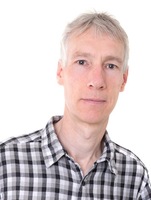
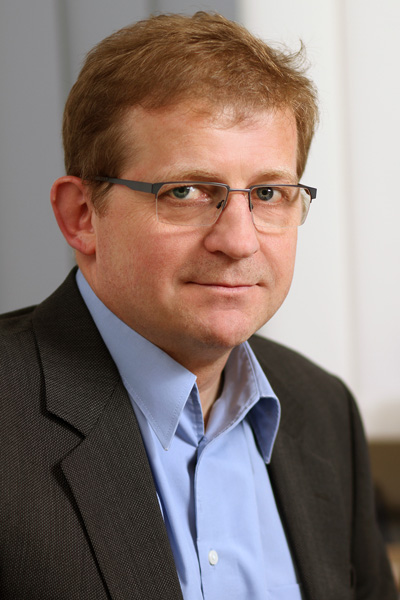
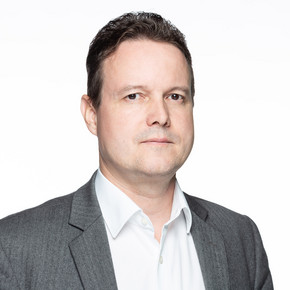
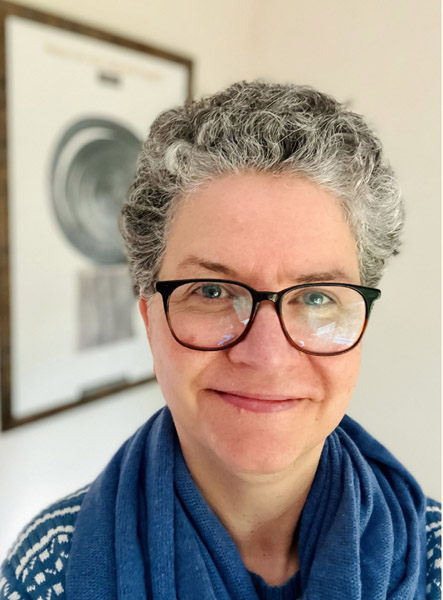
Christoph Koch is a Full Professor in the School of Computer and Communication Sciences at EPFL (Ecole Polytechnique Federale de Lausanne) , Switzerland. He has held academic positions at Cornell University (2007-2010, 2006), Saarland University (2005-2007), and TU Vienna (2001-2005). His research focuses on database systems, logic, programming languages, and data management.
Ian Horrocks is a Professor of Computer Science at the University of Oxford and a Fellow of Oriel College. His research focuses on knowledge representation, description logics, automated reasoning, and semantic web technologies. He has held academic positions at the University of Manchester (2003–2007) and served as Chief Scientist at Cerebra Inc. (2001–2006). Horrocks earned his BSc (1st class), MSc, and PhD in Computer Science from the University of Manchester (1981–1997). His work includes foundational contributions to ontology languages (e.g., OWL) and reasoning systems such as HermiT and ELK. He has supervised over twenty doctoral students and postdoctoral researchers. His honors include Fellowships from the Royal Society (2011), ECCAI (2009), and the British Computer Society (2005). He serves as Editor-in-Chief of the Transactions on Graph Data and Knowledge and leads initiatives in semantic web standards and knowledge graph applications. Key Roles: Editor-in-Chief (Journal of Web Semantics), Co-Chair (W3C OWL Working Group) Grants: EPSRC Senior Research Fellowship (2005), numerous international collaborations Labs: Oxford Semantic Technologies, involvement in projects like RDFox and PAGOdA
Wolfgang Kunz is a Full Professor (C4, W3) and Chair of Electronic Design Automation at the Technische Universität Kaiserslautern since 2001. His academic career spans multiple prestigious institutions, including Goethe-University Frankfurt/Main and the University of Massachusetts, Amherst. He has held leadership roles such as Dean (2005-2007) and Vice-Dean (2007-2009) at TU Kaiserslautern. Habilitation (Dr. rer. nat. habil.), Computer Science, University of Potsdam (1996) Doctoral degree (Dr.-Ing.), Electrical Engineering, University of Hannover (1992) Dipl.-Ing. degree, Karlsruhe Institute of Technology (1989) His research focuses on hardware verification, security, and optimization, particularly in embedded systems and processors. His work on formal verification methods has been commercialized by companies like Synopsys, Mentor Graphics, and Siemens EDA. His 2016-2021 publications address critical security issues such as Spectre/Meltdown and introduce innovative verification frameworks adopted by industry leaders like Infineon and OneSpin Solutions. Scientific awards include the IEEE Fellow (2006), German IT Society Award (2005), and TU Kaiserslautern Distinguished Teaching Award (2016). He has served on editorial boards of major journals and coordinated the Erasmus Mundus European Master Program in Embedded Computing Systems since 2010. Key students: Jörg Bormann, Raik Brinkmann, Tobias Ludwig Collaborations: Siemens EDA, Infineon, AbsInt, Intel SCAP Spin-offs: LUBIS EDA, OneSpin Solutions
Gerald Reiner serves as Head of the Institute for Production Management at the Vienna University of Economics and Business (WU), within the Department of Information Systems and Operations Management. He holds a Magister Degree, doctorate, and Habilitation in Business Administration from WU. His academic career includes positions as full professor in Production Management and Logistics at the University of Neuchatel (Switzerland, 2007-2014) and Universitaet Klagenfurt (Austria, 2014-2018), where he also served as head of the department of Operations, Energy, and Environmental Management. Dr. Reiner has held visiting professorships at Aston Business School (UK), HEC Lausanne (Switzerland), University of Bergamo, and Università Cattolica del Sacro Cuore in Milan (Italy). His research spans several critical areas including Industry 4.0 implementation, integrated capacity and inventory management, humanitarian logistics operations, circular supply chains, and operations management for base of the pyramid contexts. His work particularly focuses on practical applications addressing food waste reduction, sustainable manufacturing, and blockchain technology in supply chains. His publication portfolio demonstrates a clear evolution toward digital transformation in operations, with recent focus on hydrogen production systems, AI integration in manufacturing, and blockchain applications for food supply chain transparency. The research shows increasing emphasis on sustainability integration within traditional operations management frameworks, particularly addressing European manufacturing challenges and food system inefficiencies. Publication Excellence Award 2021 (2023) Researcher of the month (January 2023) Highly Commended paper in the 2017 Emerald Literati Network Awards for Excellence ISIR Service Award (2014) Emerald Outstanding Paper Award (2013) Dr. Reiner coordinates multiple significant international research projects including EU-project 'Keeping Jobs in EU', EU/Ecsel-project 'Power Semiconductor and Electronics Manufacturing 4.0', 'Integrated Development 4.0', and 'Artificial Intelligence in Manufacturing leading to Sustainability and Industry 5.0'. His current projects focus on FOODIS (cross-border ecosystem for innovation in food supply chains), Circular Design implementation, and blockchain applications for banana supply chains. He actively supervises research teams working on food waste reduction, sustainable packaging systems, and AI applications in operations management.
Catherine Grant is an Honorary Professor at Aarhus University, Denmark, and Visiting Senior Research Fellow at the University of Reading, UK. She previously served as Professor of Digital Media and Screen Studies at Birkbeck, University of London (2017–2020), and held academic roles at institutions including the University of Sussex and University of Kent. Her research focuses on videographic criticism, essay filmmaking, Latin American cinemas, and screen studies methodologies. Grant earned a PhD in Mexican literature and feminist theory from the University of Leeds (1991) and a First Class B.A. in Modern Languages (1986). She pioneered the use of audiovisual essays in film studies, co-founding and editing the award-winning [in]Transition: Journal of Videographic Film and Moving Image Studies until 2024. Her work explores film authorship, found-footage techniques, and digital media practices. Her research interests span essay filmmaking, world cinema, and the intersection of theory and practice in film studies. Over 200 of her video essays have been showcased globally, emphasizing experimental methodologies and critical engagement with cinematic form. Grant has received the Society for Cinema and Media Studies Award of Distinction (2014–2015). She co-edited significant volumes on world cinema, Latin American cinema, and videographic criticism, and maintains influential platforms like Audiovisualcy and Film Studies For Free .
Manolis G.H. Katevenis is a Professor at the Department of Computer Science, University of Crete, and Deputy Director and Head of the Computer Architecture and VLSI Systems (CARV) Laboratory at the Institute of Computer Science (ICS), Foundation for Research & Technology - Hellas (FORTH). He co-founded the European Research Center on Computer Architecture (EuReCCA) and is a founding partner of the European Network of Excellence on High-Performance and Embedded Architecture and Compilation (HiPEAC). PhD in Computer Science from University of California, Berkeley (1983) Co-founder of EuReCCA (2011) Contributed to RISC architecture (1980-1983), interconnection networks (1985-2011), and parallel computing (1993-2010) His research spans Scalable Multicore Systems , Interconnection Network Architecture , Packet Switch Design , Computer Architecture , and VLSI Systems . He has made foundational contributions to per-flow queueing, backpressure mechanisms, and wormhole IP over ATM, with applications in internet routers, data centers, and supercomputers. His publications focus on high-radix crossbar switches, flow control algorithms, and explicit interprocessor communication. Notable scientific awards include: ACM Doctoral Dissertation Award (1984) David J. Sakrison Memorial Prize (1983) IBM PhD Fellowship (1981-1983) Greek State Fellowship (1973-1978) He has supervised 40 graduate theses and participated in 22 R&D projects totaling €9M, including HiPEAC (coordinator of interconnection networks), SARC (FPGA prototype design), and ENCORE (cache-optimized remote DMA). His work has received over 2000 citations, with an h-index of 23.
Prof. Dr. Carlos Spoerhase is a leading academic in Modern German Literature, currently holding the Chair of Modern German Literature at the Ludwig Maximilian University of Munich . His research spans literary theory, sociology of literature, and historical methods, focusing on the intersection of aesthetics and social theory. PhD in Modern German Literature (2006, Humboldt University of Berlin) Habilitation in Modern German Literature (2016, Humboldt University of Berlin) Academic guest stays at Princeton, Cologne, and Stanford His research explores scaling phenomena in aesthetics , the social dimensions of literary practices , and the history of philological methods . Recent projects include analyses of the Nobel Prize's role in global literary evaluation and the cultural implications of text compression. Notable awards include the Feodor Lynen Research Fellowship (2014) and Honorary Lifetime Membership at the Goethe Society of North America (2021). He co-edits Deutsche Vierteljahrsschrift für Literaturwissenschaft und Geistesgeschichte and serves on editorial boards for journals like The German Quarterly .
Dirk Geeraerts is a full Professor of Linguistics at the University of Leuven (KU Leuven), where he has held a faculty position since 1993. He studied Germanic languages (Dutch and English) and holds a bachelor's degree in Philosophy, earning his PhD in 1981. His academic career includes professorships at the Kortrijk campus of the University of Leuven (1986–1993) and the University of Leiden (1985–1986), as well as foundational research at the Instituut voor Nederlandse Lexicologie (1977–1985). Research Focus : Geeraerts specializes in lexical semantics , lexicology , and cognitive linguistics , particularly examining social variation , diachronic change , and empirical semantic methods . His work bridges theoretical and applied lexicography, notably through his editorial role in the Van Dale Groot woordenboek van de Nederlandse taal (1995–2005). Scientific Contributions : Founded the international journal Cognitive Linguistics Co-editor of The Oxford Handbook of Cognitive Linguistics Managing editor of the Cognitive Linguistics Research monograph series Honors and Awards : 1978: L.K. Engels Award 1992: Flemish Government Award for Wat er in een woord zit 2003: Member of the Royal Academy for Dutch Language and Literature (KANTL) 2020: Matthias de Vries Medal for Dutch lexicology contributions Labs and Teams : Established the Quantitative Lexicology and Variational Linguistics (QLVL) research group at the University of Leuven, advancing empirical approaches to lexical and semantic studies.
Jürgen Teich is a Professor at the Department of Computer Science of Friedrich-Alexander University Erlangen-Nuremberg since 2003, holding the Chair for Hardware/Software Co-Design. He has held academic positions at ETH Zurich (Lecturer, 1995-1998), University of Paderborn (Full Professor in Computer Engineering, 1998-2002), and UC Berkeley (Postdoctoral Fellow, 1994). Current coordinator of DFG-funded Collaborative Research Center 89 'Invasive Computing' (2010-present) Former coordinator of DFG Priority Program 1148 'Reconfigurable Computing Systems' (2003-2009) Senior IEEE Member and author of two Springer textbooks on Co-Design (2007, 2010) Research Interests : Embedded systems and hardware/software co-design Massively parallel computing architectures Design automation and optimization techniques Reconfigurable computing systems Scientific Recognition : 5+ Best Paper Awards (2002-2010) HiPEAC Paper Awards at DAC and FCCM (2009-2010) Elected reviewer for DFG (2004-2008, 2007-2011) Prof. Teich supervises over 30 PhD students and participates in interdisciplinary DFG projects and industrial collaborations. He has served on multiple program committees of leading conferences in computer architecture and embedded systems.
Dr. Ana Echevarria Arsuaga is a leading scholar in Medieval History at Universidad Nacional de Educación a Distancia (UNED), Madrid. She serves as Head of the Department of Medieval History and Paleography since 2020, following academic progression from Assistant Professor (2003-2008) to Tenured Associate Professor (2008-2020). Her international experience includes fellowships at the Ruhr-Universität Bochum (2011) and University of Constance (2015). Current: Full Professor & Department Head at UNED Previous: Academic posts at U. Constance, Ruhr-Universität Education: Degree in Geography and History from Universidad Complutense de Madrid, specializing in Medieval History. PhD in Medieval History from University of Edinburgh on 'The Perception of Muslims in Fifteenth Century Spain' (supervised by Angus MacKay). Postdoctoral research at UNED under José Luis Martín Rodríguez. Research Focus: Specializing in Iberian religious minorities (Mudejars, Moriscos, Mozarabs) and queenship studies. Her work examines legal frameworks for minority communities, interfaith dynamics in medieval Mediterranean, and cross-cultural knowledge transmission. Key projects include EU-funded 'Islamic Legacy' network and Gerda Henkel-funded 'Christian Society under Muslim Rule'. Academic Leadership: Serves on editorial boards of Medieval Encounters , Al-Masaq , and Anales de la Universidad de Alicante . Organized major conferences like the Society for the Medieval Mediterranean (2022) and RELMIN-ERC Advanced Grant Project (2014). Collaborates with leading scholars across Europe and Israel on religious minorities and queenship. Scientific Awards: 2023: Principal Investigator, 'Religious Minorities and Specialized Labour' (Spanish Ministry of Science & Innovation) 2020: Gerda Henkel Stiftung Grant for Canon Collections research 2018: International Recognition for 'Religious Boundaries' publication 2008: Al-Babtain Foundation Award for al-Andalus research Academic Contributions: Supervised 4 completed PhD theses and mentored 9 researchers. Co-organized 7 major international conferences. Peer reviewer for 15+ international journals. Elected member of the Academy of Europe (2023).
Wolfgang Sandberger (b. 1961) is a Professor of Musicology and Director of the Brahms-Institut at Musikhochschule Lübeck. Specializing in German music history from the 17th to 19th centuries, he focuses on composers like Brahms, Bach, and Handel, as well as music philology and reception history. He has secured over €1 million in grants from DFG and Schleswig-Holstein for digitization projects, advancing musicological research accessibility. Education: Master's in Musicology, Philosophy, and History (Münster/Hamburg); PhD in Musicology His research integrates interdisciplinary approaches, including iconography, performance practice, and editorial methodologies. He leads major editorial projects such as the Brahms-Briefwechsel-Verzeichnis and Göttinger Händel-Beiträge. Sandberger holds leadership roles in organizations including the Göttinger Händelgesellschaft and the International Dieterich Buxtehude Society, fostering collaborative scholarly initiatives. Awarded the Joachim Jungius Society of Sciences Award (1996), he emphasizes outreach through radio collaborations and public engagement with Brahms' legacy. His work bridges academic rigor with public dissemination, making complex musicological research accessible to broader audiences.
Roberto Tottoli is a Full Professor of Islamic studies at the University of Naples Oriental, leading the Department of Asia, Africa and the Mediterranean. He has held academic positions since 1999, progressing from Lecturer to Full Professor. His research focuses on Quranic studies, Islamic literature, and historical religious interactions between Europe and the Islamic world. Education: PhD in Islamic Studies, University of Naples Oriental (1996) Bachelor's Degree (Laurea) in Oriental Studies, University of Venice Ca’ Foscari (1988) Research Interests: Quranic textual history and translations Hadith and Sunna interpretation Islamic eschatology in Aljamiado literature European scholarly engagement with Islamic texts (16th-17th centuries) His work bridges historical analysis with contemporary cultural studies, emphasizing textual transmission and interfaith dynamics. Awards: 2018: Principal Investigator for the €9.8M Horizon 2020 ERC-Synergy Project 'The European Qur’an' 2015: King Abdullah International Translation Award for translating Mālik’s Al-Muwatta’ 2015: Elected Member of the Accademia Ambrosiana (Milan) Grants & Fellowships: Institute for Advanced Study (Princeton) Member (2016-17) Visiting Professorships at École des hautes études en sciences sociales (Paris) and Harvard University His research funding includes major European grants and international collaborations. Publications: Tottoli has authored/edited over 30 books and 50 articles, focusing on Quranic manuscripts, European Islamic scholarship, and Morisco cultural heritage. Key works include Introduzione all’Islam (2018) and co-authored studies on Ludovico Marracci’s Quran translations.
Roman Krivko is an Associate Professor at the Department of Slavonic Studies , University of Vienna. His research focuses on Old Church Slavonic , Byzantine hymnography , and historical linguistics of Slavic languages. Specializes in medieval Slavic epigraphy and liturgical text analysis Key contributor to studies on Christian traditions in Slavic contexts Active editor and researcher in international Slavic studies Research Themes include: Quantitative analysis of loanwords in Slavic Gospels Textological studies of service menaia and kontakia Historical development of Old Bulgarian language Linguistic networks in Central/Eastern Europe Scientific Contributions span Editorial work on Slověne journal Notable publications on the Temnić inscription and Samuil's epigraph Collaborations with institutions like Vinogradov Russian Language Institute
M. Anton Ertl is an Associate Professor at TU Wien's Faculty of Informatics, Department of Compilers and Languages. His roles include teaching courses such as 'Compilers,' 'Efficient Programs,' and 'Stack-based languages.' He specializes in compiler back-ends, Forth, interpreters, programming languages, operating systems, and computer architectures. Ertl's research focuses on optimizing interpreters, compiler design, and hardware security, particularly addressing vulnerabilities like Spectre. His research interests span interpreter performance, compiler optimization, and Forth language evolution. Recent work includes exploring hardware-based Spectre mitigation, decompilers for Gforth, and stack-based language efficiency. He actively contributes to the EuroForth conferences as an editor and presenter. Ertl supervises students on topics like compiler construction, reverse engineering, and interpreter optimization. His academic contributions include over 50 publications, with a focus on virtual machine performance, compiler back-ends, and Forth-related advancements. He is a key figure in the Gforth project and regularly teaches advanced courses on programming languages and computer systems.
Dr. Vincenzo De Maio is a PostDoc Researcher at the Department of Computational Sustainability, Faculty of Informatics, Technische Universität Wien. His research spans quantum computing, edge computing, distributed systems, and sustainable computing, with a focus on hybrid quantum-classical systems and edge AI applications. Current projects: HPQC (2023–2025), ThEMIS FWF (2024–2027), TRITON FWF (2023–2027) Previous projects: RUCON (2016–2023), SWAIN (2021–2024) His research explores the integration of quantum computing with classical systems, particularly in software engineering, workflow decomposition, and hyperparameter optimization. He also works on edge computing for smart cities, environmental monitoring, and traffic safety applications. Recent publications analyze quantum compilation bottlenecks, hybrid quantum-classical workflow orchestration, and quantum neural network optimization. He supervises master's theses on topics like quantum edge benchmarking and hyperparameter tuning. Key collaborations with Prof. Ivona Brandic and others Active in IEEE/ACM conferences and Springer publications