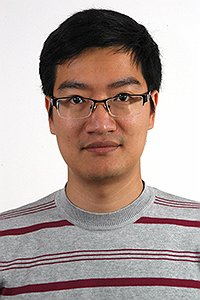
Tuan Phong Ngo is a Researcher in Computer Science at Uppsala University , Sweden, affiliated with the Department of Information Technology under the Disciplinary Domain of Science and Technology . He specializes in formal methods and software verification.
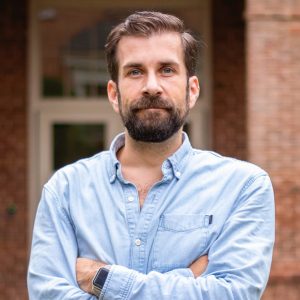
Björn Lötters, M.Sc., is a Lecturer and research associate at the Technical University of Central Hesse (THM) within the Department of Mathematics, Natural Sciences and Computer Science. He is also a doctoral student in collaboration with the Justus Liebig University. His primary teaching responsibilities include courses on functional programming, compiler construction, and programming language design, with a focus on empowering students to explore advanced topics like dependent types and syntax abstraction. Education: Studied computer science at THM until 2019. Career: Worked as a software engineer until 2021, then transitioned to academia as a research associate and lecturer at THM. Research Focus: Programming languages (design & implementation) Type systems and type theory Metaprogramming tools Software architecture and design His ongoing research projects include a doctoral thesis on the application of intuitionistic type theory in programming languages and a study on syntax abstraction mechanisms. He actively supervises bachelor's and master's theses, offering topics related to dependent type elaborators, reference management systems, and educational LISP platforms.
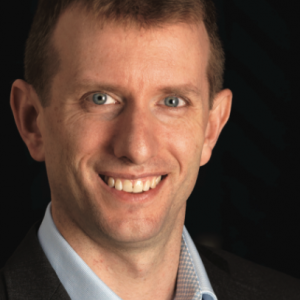
Dr. Gergely Mezei is an Associate Professor and Deputy Head of the Department of Automation and Applied Informatics at the Budapest University of Technology and Economics (BME) , Hungary. He is affiliated with the Applied Computer Science Group within the department and is actively involved in research and education in model-driven engineering and formal methods. His research interests lie at the intersection of multi-level modeling , formal verification , and model transformation systems . He has contributed extensively to the development of modeling languages and tools, particularly in the context of DMLA (Deep Multi-Level Architecture) and Melanee , focusing on enabling rigorous, scalable, and verifiable modeling practices. Dr. Mezei's work emphasizes performance optimization in model transformations, visual modeling frameworks , and domain-specific languages . His research spans both theoretical foundations and practical tool implementations, with a strong focus on bridging the gap between formal semantics and usable modeling environments. His recent publications reflect a consistent focus on advancing the state-of-the-art in multi-level modeling and formal verification , with contributions to international workshops such as MULTI and MPM . These works explore challenges in model validation, transformation correctness, and the usability of modeling tools in complex systems engineering. Contact: Email: gmezei@aut.bme.hu Office: Q.B228, Budapest University of Technology and Economics, 1117 Budapest, Magyar tudósok krt. 2., Hungary Phone: +36 (1) 463-3491
Bryan Koronkiewicz serves as Associate Professor of Spanish Linguistics within the Department of Modern Languages & Classics at the University of Alabama. His academic profile bridges theoretical linguistics and practical language education with specialized expertise in bilingual speech phenomena. His educational trajectory includes: PhD in Hispanic Studies (Linguistics), University of Illinois at Chicago (2014) MA in Hispanic Studies (Linguistics), University of Illinois at Chicago (2010) BA in Spanish / Communication Arts, University of Wisconsin-Madison Dr. Koronkiewicz's research centers on Spanish-English code-switching through experimental and quantitative lenses, examining syntactic constraints in heritage speakers' language production. His work interrogates phenomena like preposition stranding, adverb placement, and inalienable possession while addressing methodological challenges in bilingualism research. This interdisciplinary approach connects theoretical syntax with second language acquisition and heritage language pedagogy, emphasizing empirical validation of linguistic constraints. Analysis of his 13 publications (2013-2023) reveals consistent focus on experimental code-switching research using acceptability judgments and corpus methods. Key trends include systematic investigation of syntactic boundaries in bilingual speech, methodological innovations in data collection, and expansion into language pedagogy through studies of social media integration and writing assessment. His work demonstrates strong alignment with contemporary debates in bilingual syntax while maintaining practical relevance for heritage language education. No scientific awards or fellowships were documented in the source material. Dr. Koronkiewicz teaches across the curriculum from first-year language courses to graduate seminars in bilingualism, syntax, and second language teaching methods. While departmental highlights reference French PhD students (Awodirepo, Lambon, Dafong), no specific advisees in Spanish linguistics are identified. The text contains no mention of grant funding or research team leadership. No dedicated laboratories or research collectives are associated with his profile in the available documentation.
Dr. Richard W Sharp is a Research Fellow at the University of Cambridge , with expertise in virtualization, computer security, and hardware synthesis. His work bridges foundational research in programming languages and practical applications in cloud computing and secure systems. BA, Computer Science (1999, Robinson College, University of Cambridge) PhD, Computer Science (2003, University of Cambridge) MBA (2012, Judge Business School) Dr. Sharp's research spans virtualization environments , operating systems , and security policy enforcement . He has pioneered techniques for network policy implementation , storage optimization , and VM migration , with a focus on heterogeneous systems and resource allocation. His publications highlight trends in functional programming applications, secure mobile computing, and hardware/software co-design. Dr. Sharp also contributes to functional programming in industrial contexts and security frameworks for web applications. Despite no formal awards listed, his work in virtualization and security synthesis remains influential.
Dominik Walter is a Researcher at the Department of Computer Science 12 (Hardware-Software Co-Design) at the University of Erlangen-Nuremberg (FAU), where he has been working since 2019. His research focuses on innovative approaches to hardware-software integration, particularly in the domain of processor array architectures and embedded systems design. Walter completed his educational journey at the University of Augsburg, earning a B.Sc. in Computer Science and Multimedia (2013-2016) followed by an M.Sc. in Computer Science (2016-2019). This strong foundation in both theoretical and applied computer science has informed his current research direction. His primary research interests center around Hardware-Software Co-Design, with particular expertise in Tightly Coupled Processor Arrays and Invasive Computing paradigms. Walter's work explores how to optimize resource allocation in parallel computing environments, improve energy efficiency in embedded systems, and develop novel approaches for real-time data processing. His research bridges theoretical computer architecture concepts with practical implementation challenges. Walter's publication record from 2020-2025 reveals a consistent research trajectory focused on processor array architectures and their applications. His work spans both theoretical foundations and practical implementations, with contributions to sustainable computing, real-time systems, and hardware acceleration techniques. A notable pattern in his research is the application of invasive computing principles to solve complex parallel processing challenges across various domains. As a researcher at FAU's Department of Computer Science 12, Walter is part of a vibrant research community focused on cutting-edge hardware-software integration problems. His work contributes to the department's reputation in processor architecture and embedded systems design, with potential applications in high-performance computing, embedded AI, and energy-efficient computing systems.
Jana Kapelová is an Associate Professor and Studio Manager at the Department of Intermedia, Academy of Fine Arts and Design in Bratislava. Her practice bridges intermedia art, institutional critique, and civic activism. Academy of Fine Arts and Design, Bratislava (2009-2013, ArtD.) Faculty of Fine Arts, Banská Bystrica (2004-2006, MFA) University of Trnava (2000-2004, MA in Slovak Language & Art Education) Her research interrogates: Social resistance strategies through performance and participatory projects Temporal dynamics of labor and leisure in bureaucratic systems Institutional critique of Slovak cultural policy Oral history and polyphonic narratives in art practice Urban space alienation and reclamation Intergenerational identity transmission through art Major works include the Kunsthalle documentary project (2011-2012), which compiled 18 expert testimonies about Slovakia's failed contemporary art institution campaign, and Free Working Time (2011), analyzing creative acts during labor hours through Michel de Certeau's 'tactics' theory. She employs video installations, mail art, and public interventions as primary mediums. Scientific recognition includes: 2014 Oskár Čepan Award for emerging Slovak artists 2014 Tatra Tiger Award for innovative art projects 2013 Essl Art Award CEE Finalist 2005 Egoart Award Finalist She has completed international residencies at ICPA New York (2015) and Oberliht Moldova (2013), while co-founding Artyčok TV (2009-2015) – Slovakia's first art-focused online television platform.
Thomas P. Jensen is a Directeur de recherche (Research Director) at INRIA, the French National Institute for Computer Science and Applied Mathematics. He has been affiliated with INRIA since 2010, previously serving as a researcher at CNRS (French National Center for Scientific Research) from 1993 to 2010. Currently, he leads the Epicure project-team on semantic analysis and compilation for secure execution platforms, and since 2022, he serves as director of the Laboratoire d'Excellence CominLabs. His educational background includes a Cand. scient. in Computing and Mathematics from the University of Copenhagen (1990), a PhD from Imperial College, University of London (1992), and a Habilitation à diriger des recherches from Université Rennes 1 (1999). Dr. Jensen's research focuses on program analysis and software security , with particular expertise in static program analysis based on abstract interpretation theory, language-based security, information flow control, and Software Fault Isolation. His work bridges theoretical foundations with practical applications in secure compilation and program verification. His recent publications reveal a strong trend toward formally verified security mechanisms, particularly in the integration of Software Fault Isolation with verified compilers like CompCert. His research spans both theoretical aspects of program semantics and practical security applications, with increasing emphasis on algebraic data types, relational analysis, and formal verification of program transformations. Best paper award at GPCE 2018 for Verification of High-Level Transformations with Inductive Refinement Types Editor of Strategic research and innovation roadmap for the SPARTA cybersecurity competence network (2022) Dr. Jensen has been actively involved in numerous research projects including JavaSec, Decert, Seccloud, AJACS, Anastasec, SPARTA, and SecurEval. His leadership roles in research teams and projects demonstrate his significant contributions to both academic research and practical cybersecurity applications. His work often involves collaboration with researchers across Europe on large-scale cybersecurity initiatives. He maintains strong connections with the international programming languages and security research communities, regularly publishing in top venues including PLDI, POPL, ICFP, SAS, ESOP, and CSF, and participating in program committees for major conferences in these fields.
Ningning Xie is a researcher affiliated with the University of Toronto, specializing in functional programming, type systems, and logics. Their work spans applications in compilers, code generation, and machine learning, with a focus on compositional programming and effect handling. Research interests include: Functional programming Type systems Logics Compiler design Multi-stage programming Effect handlers Recent publications demonstrate expertise in type-level programming, staged compilation, and effect systems. Key areas include distributive disjoint polymorphism, parallel algebraic effect handlers, and macro systems for OCaml and Haskell. Their work bridges theoretical formalisms with practical language implementations. Contributions to academic service include organizing and reviewing for conferences like POPL, PLDI, ICFP, and Haskell workshops. Notable roles include Publicity Chair for POPL 2026 and Co-chair for PLMW and Artifact Evaluation committees.
Dr. Stephanie Balzer is an Assistant Professor in the Principles of Programming Group at Carnegie Mellon University's School of Computer Science. Her research focuses on enabling failure-free software through formal methods like type systems and verification logics. She emphasizes compositional proofs for scalability and practical validation via software artifacts. Programming Languages Type Theory Program Verification Concurrency & Security Her recent work explores timed protocols, disentanglement logic, and multiparty session types. Articles demonstrate semantic logical relations for termination (2025), deadlock freedom in Rust embeddings (2022), and information flow control (2024). Key collaborative papers address cyclic process networks and separation logic frameworks. Scientific recognition includes: NSF CAREER Award (2025) ACM SIGPLAN Distinguished Paper (2022) ECOOP Distinguished Paper (2022) She supervises PhD candidates Yue Yao, Yinsen Zhang, and Zak Kent (with Guy Blelloch), plus Master's student Sonya Simkin. Former advisee Jules Jacobs received Cum Laude distinction at Radboud University. Active in academic service, Balzer chairs PLMW@POPL workshops and co-organizes Oregon Programming Language Summer School. She serves on program committees for LICS, POPL, and ICFP.
Frank Pfenning is a Professor in the Department of Computer Science at Carnegie Mellon University's School of Computer Science. With decades of active research and service in programming languages and logic communities, he maintains a significant presence across major conferences including POPL, ICFP, and ESOP. His research spans foundational work in Programming Languages , Logic and Type Theory , Logical Frameworks , Automated Deduction , and Trustworthy Computing . Recent publications reveal a strong focus on session types, substructural logics, and their applications to concurrency and distributed systems. His work bridges theoretical foundations with practical implementations for reliable communication protocols. Analysis of his publication trends shows a consistent evolution from foundational type theory toward practical applications in concurrent and distributed systems. The integration of logical frameworks with session types represents a signature research trajectory, increasingly addressing real-world challenges in protocol verification and deadlock freedom. As an active community member, Pfenning has served on numerous program committees including POPL (2016-2025), ICFP (2015-2022), and ESOP. His mentoring activities include PLMW@POPL presentations, demonstrating commitment to training next-generation researchers. His technical contributions are primarily disseminated through premier venues in programming languages research. The absence of explicit grant information in available sources suggests focus on theoretical contributions rather than large-scale funded projects, though his sustained conference participation indicates stable institutional support.
Magnus Levin is a Professor at the Department of Languages, Faculty of Arts and Humanities, Linnaeus University. His primary teaching role is within the Non-fiction Translation Master Programme, and he is actively involved in interdisciplinary research initiatives such as the Linnaeus University Centre for Data Intensive Sciences & Applications (DISA) and the Linnaeus University English-German-Swedish Corpus (LEGS). His research spans two core areas: (1) language change and variation in English grammar and phraseology, including studies on tense formation, progressive aspect, collective noun agreement, and phraseological patterns like echoic binomials; and (2) corpus-based translation analysis , focusing on light verb constructions, complex modifiers, and punctuation across English, German, and Swedish. He has pioneered the use of virtual reality for corpus visualization and real-time social media data analysis through the Nordic Tweet Stream project. Recent publications highlight his expertise in cross-linguistic complexity (2024), acronym translation (2021), non-fiction translation (2019), and discourse markers in digital contexts (2016-2021). His work often intersects with Nordic English variation Multilingual corpus design Translation of phraseological units Language change in real-time data Levin collaborates extensively with researchers like Johan Ström Herold, Mirja Laitinen, and Joseph Tyrkkö, contributing to scientific publications in venues such as Languages in Contrast , World Englishes , and Corpus Linguistics and Changing Society . He has also co-edited volumes on contrastive linguistics and sports language analysis.
Rochelle Wigley is a Lecturer and Project Director for Nippon Foundation/GEBCO projects at the University of New Hampshire. With a Ph.D. in sedimentology and geochemistry from the University of Cape Town, she bridges geological research with advanced ocean mapping technologies. Her work focuses on integrating geochemical analysis with bathymetric data to enhance continental shelf evolution understanding, particularly in southern Africa. Education Ph.D., Geology/Earth Science, University of Cape Town M.S., Geochemistry, University of Cape Town B.S., Geology/Earth Science, Rhodes University B.S., Chemistry, Rhodes University Her research spans marine authigenic minerals (phosphorites, glauconite), deep ocean bathymetry, and autonomous mapping systems. She pioneered projects like the Indian Ocean Bathymetric Compilation and contributed to the Shell Ocean Discovery XPRIZE through AUV-USV integration. She teaches courses such as Marine Geosci for Hydrography and Ocean Mapping Internships . Recent publications emphasize global bathymetry challenges, programming education for ocean mappers, and collaborative data processing networks. Although no awards are explicitly listed, her leadership in international mapping programs underscores her influence in marine geoscience and policy. As part of the Center for Coastal & Ocean Mapping, Wigley manages the Chase Ocean Engineering Lab, fostering innovation in unmanned seafloor mapping. She maintains a global alumni network for GEBCO, advancing remote data workflows and training future ocean mappers.
Benjamin Pierce is the Henry Salvatori Professor in the Department of Computer and Information Science at the University of Pennsylvania. His research spans programming languages, formal verification, and sustainable computing, with a focus on practical applications in software reliability and security. He leads initiatives like Carbon Connect (NSF Expedition in Sustainable Computing) and serves on climate-focused committees such as Penn's Faculty Senate Select Committee on the Climate Emergency. Research Interests Pierce's work integrates theoretical and applied computer science, emphasizing: Programming Languages : Type systems, language-based security, and compiler verification Formal Methods : Computer-assisted verification, proof automation, and property-based testing Sustainability : Reducing computing's environmental impact through algorithmic efficiency and policy Recent Publications His 2023-2025 publications demonstrate a strong focus on enhancing software testing (e.g., Tyche for property-based testing), advancing formal verification tools (e.g., Coq deautomation), and pioneering sustainable computing frameworks. Climate-related research is a growing theme. Awards and Honors 2024: Distinguished Paper Award (ICSE) 2020: Best Paper Award (POPL) 2015: Most Influential Paper Award (ACM SIGPLAN) 2013: LICS Test of Time Award 2012: ACM Fellow Advising and Grants He advises 8 PhD students on topics ranging from type systems to verified compilation. Notable projects include: NSF-funded Carbon Connect expedition SHF grant for usable property-based testing Development of verification tools (VERSE, Unison) Professional Activities Serves on editorial boards for Journal of Functional Programming and Logical Methods in Computer Science , and organizes major conferences (PLDI, POPL, OOPSLA). Advocates for low-carbon virtual conferences.
Nada Amin is an Assistant Professor of Computer Science at Harvard University's John A. Paulson School of Engineering and Applied Sciences (SEAS), where she leads the metareflection lab . Her research combines programming languages (PL) and artificial intelligence (AI), focusing on neuro-symbolic systems that are correct by construction, with applications in program synthesis, verification, and precision medicine. Harvard John A. Paulson School of Engineering and Applied Sciences (2019–Present) University Lecturer in Programming Languages at University of Cambridge (2017–2019) Doctoral and postdoctoral work at EPFL (2011–2017) Her research spans three core themes: Safer : Type systems and formal verification (Coq, Dafny, Frama-C) Faster : Multi-stage programming and interpreter collapsing techniques Easier : Neuro-symbolic AI for program manipulation and biological reasoning Key publications include: 2025: Modular Imperative with LLMs (LMPL), Multi-stage Relational Programming (PLDI) 2024: Persimmon for extensible variant types (OOPSLA) 2023: LURK for recursive knowledge (ICFP), Dolorem language growth pattern (ECOOP) Scientific honors include: Teaching Assistant Team Award (EPFL, 2015) Michigan Cambridge Research Initiative Grant (2018) ArsDigita Prize (1999) She has served on program committees for GPCE (co-chair), ICFP, PLDI, and organized workshops in metaprogramming and logic programming. Her teaching portfolio includes graduate courses on neurosymbolic programming, program synthesis, and advanced PL theory.