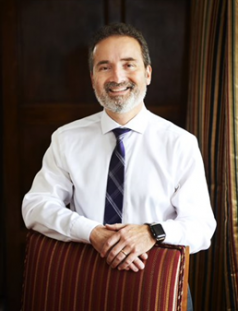
Dr. Natasha Kuhrt is a Senior Lecturer in International Peace and Security at King's College London's Department of War Studies, housed within the School of Security Studies. Her academic affiliations include membership in BISA, Chatham House, ISA, ASEN, and BASEES. She holds a PhD from UCL and has taught extensively on international law, intervention, and security studies. Her research focuses on Russian foreign policy in Asia, regionalism in Eurasia/Asia-Pacific, nationalism, and the Responsibility to Protect (R2P). Education: BA (Hons) in Russian & German from School of Slavonic and East European Studies (UoL), MA in Soviet Studies (SoSlavonic), PhD (UCL) on Russian policy toward China/Japan. Research interests span Russian security policy, international law applications in conflict zones, and the nexus between memory discourse and foreign policy. She co-leads the BISA Working Group on Russian & Eurasian Security and collaborates on ESRC UK-Japan projects on populism. Current book projects include co-authored volumes on Russian foreign policy and Russia-China relations. Her work appears in outlets like Journal of Global Faultlines , Asian Survey , and Australian Journal of Defence and Strategic Studies . She advises multiple PhD students and engages in public commentary via BBC, Al Jazeera, and academic conferences on Ukraine-Russia dynamics, China-Russia relations, and UN peacekeeping. Labs/Teams: Co-director of War Crimes Research Group and Centre for Grand Strategy, focusing on historical conflict analysis and strategic diplomacy.
Alexandre De Streel is a Professor at the Faculty of Law, University of Namur, with affiliations to research entities including the Namur Digital Institute (NADI), Centre for Research in Regional Economics and Economic Policy (CERPE), and the Centre de Recherche Information, Droit et Société (CRIDS). He holds a Doctorate in EU Law from the European University Institute and a Master's in Economics from the Catholic University of Louvain. His research focuses on the regulation of digital industries , European competition policy , Big Data and Artificial Intelligence Law , and the governance of the European Union . He explores the intersection of law, economics, and digital innovation, with particular interest in the Sharing Economy and Network Industries . Recent publications analyze EU Digital Markets Act (DMA) , Antitrust , and Platform Regulation , reflecting his expertise in Competition Law and EU Institutional Law . He has served as Visiting Professor at SciencesPo Paris, European University Institute, and Barcelona GSE. De Streel is actively involved in teaching European Union Law , Competition Law , and Foundations of Law courses (DRHDB307, DROIB210, ECGEB130). He contributes to policy discussions as Academic Co-Director of CERRE and member of the Belgian Competition Authority's Scientific Committee.
Douglas Laney is an Adjunct Clinical Assistant Professor of Accountancy at the University of Illinois at Urbana-Champaign's Gies College of Business, where he teaches courses in infonomics and business analytics. He also serves as the Data & Analytics Strategy Innovation Fellow at West Monroe Partners, advising leaders on data-driven value creation. Laney holds a BS in Liberal Arts & Sciences from the University of Illinois (1986). His research focuses on infonomics, data valuation, and strategic data use. He authored the seminal book Infonomics: How to Monetize, Manage, and Measure Information as an Asset for Competitive Advantage and pioneered the field of infonomics. Laney's work spans academic, corporate, and public-sector applications, including high-profile collaborations with Highways England and Mars Inc. Key achievements include three Gartner Annual Thought Leadership Awards and contributions to data monetization frameworks. His recent articles address flawed supply chain metrics, digital transformation, and data's role as a strategic asset. Laney frequently publishes in Forbes and industry journals, emphasizing actionable insights for C-suite executives.
Joseph Mahoney is a Professor of Business Administration and Caterpillar Chair of Business at the University of Illinois at Urbana-Champaign, holding dual appointments as Associate Director of the Illinois Strategic Organizational Initiative (ISOI). He holds a Ph.D., M.S., and B.A. in Economics from the University of Pennsylvania (1989, 1984, 1980). His academic roles include Director of Graduate Studies (2008-2012) and leadership in strategic management education. Research Interests: Corporate Governance & Organizational Economics Transaction Cost Economics & Property Rights Theory Stakeholder Theory & Behavioral Firm Theory Dynamic Capabilities & Strategic Responses to Shocks Supply Chain Efficiency & Value Creation Publications Highlight: Recent work explores organizational misconduct's impact on performance (e.g., Astros scandal), corporate personhood, resource redeployment dynamics, and Penrose's growth theories. Articles frequently appear in top journals like Strategic Management Journal and Academy of Management Review . Awards: Strategic Management Society Fellow (2013), Academy of Management Fellow (2012), and 2021 Dean's Impact Award. Active in editorial roles for Strategic Management Review and Strategic Management Journal . Teaching: Leads undergraduate Business Policy, PhD seminars on strategic theory, and philosophy of science in management. Courses emphasize integration of functional areas and societal roles of firms.
Sonika Singh is a Senior Lecturer at the University of Technology Sydney (UTS) Business School and serves as the Marketing Postgraduate Program Director. She holds a PhD in Management Science from the University of Texas at Dallas. Her research focuses on Digital Marketing, Marketing Analytics, and Retail Strategy, with emphasis on AI applications, consumer information search, and sustainability. She has been recognized with awards including the 2020 UTS Learning and Teaching Team Citation Award and Top Teaching List 2023. Education: PhD in Management Science (UT Dallas, 2012) Industry Experience: Market research roles at Sandvik Asia, Kirloskar Oil Engines, and Premier Automobiles Her research explores topics such as Google search advertising, social media marketing, and AI-driven recommendation systems. She has presented at international marketing conferences and published in journals like Journal of Retailing and Customer Needs and Solutions . Recent funded projects include examining geographic disparities in aged care access and evaluating domestic violence support programs. She actively engages in social impact initiatives, including volunteering for Survivor Vision Australia. Awards: UTS Teaching Citation (2020), Social Impact Grant (2023) In teaching, she combines industry insights with research expertise, delivering courses in Digital Marketing, Marketing Analytics, and Business Statistics. She supervises PhD students in areas like predictive analytics in fast fashion and social media brand analysis.
Professor David Macdonald CBE, FRSE is a leading academic in wildlife conservation, currently serving as the Professor of Wildlife Conservation at the University of Oxford and founding director of the Wildlife Conservation Research Unit (WildCRU). He holds a visiting professorship at Imperial College and chairs key committees including the Darwin Advisory Committee and Natural England’s Science Advisory Committee. His research integrates behavioral ecology with interdisciplinary approaches, addressing human-wildlife conflict through ecological, economic, and social science lenses. Notable areas include carnivore conservation (e.g., lions, tigers, and Ethiopian wolves) and the impacts of resource distribution on social structures. Awards include the CBE and FRSE. His work emphasizes policy-relevant science, leveraging long-term datasets and innovative tools like CARACAL acoustic monitoring. He advises on global conservation strategies, including responses to illegal wildlife trade and habitat loss. Education details are not explicitly stated, but his academic trajectory reflects advanced training in biological sciences. Research interests span from felid behavior to the socio-economic dimensions of conservation. Key collaborators include Earthwatch and the Wildfowl and Wetlands Trust. Students include Adjany Costa (Graduate Student). His contributions extend to policy via roles in advisory boards and advocacy for evidence-based conservation.
B. Pablo Montagnes is an Associate Professor of Political Science and Quantitative Theory and Methods at Emory University. He holds a Ph.D. in Managerial Economics and Strategy from the Kellogg School of Management, Northwestern University (2010). Before joining Emory in 2015, he was an Assistant Professor at the Harris School of Public Policy, University of Chicago. His research focuses on formal political theory and political economy, with a particular emphasis on strategic behavior in legislative settings, regulatory policy, and public opinion dynamics. Key topics include partisan approval rates, legislative bargaining, and the design of organizational and market mechanisms. Montagnes has published in leading journals such as the Journal of Politics , American Economic Review , and Proceedings of the National Academy of Sciences (PNAS) . Education: Ph.D. in Managerial Economics and Strategy, Kellogg School of Management, Northwestern University (2010) Previous Affiliation: Harris School of Public Policy, University of Chicago (Assistant Professor) Teaching: QTM 110 (Scientific Methods), QTM 315 (Game Theory) Montagnes’ work addresses questions like how regulatory uncertainty affects firm investment, the strategic implications of sequential voting in legislatures, and the reliability of survey-based partisan approval metrics. His recent projects explore polarization incentives, internal labor markets, and the role of lobbyists in policy gatekeeping. He currently holds an office at 311 Tarbutton Hall, Emory University, and can be contacted via email . No awards are explicitly listed in the provided materials.
Chen Zhi is an Assistant Professor in the Department of Analytics and Operations at the NUS Business School, National University of Singapore, where he has been employed since July 2020. His academic work focuses on operational challenges in innovation-driven value chains, with particular expertise in new product development, innovation sourcing, AI economics, and wisdom of crowds methodologies. Dr. Chen received his Ph.D. in Management (Decision Sciences) from INSEAD (2014-2020) and his B.E. with First Class Honors in Industrial and Systems Engineering from the National University of Singapore (2009-2013). During his academic journey, he completed an overseas exchange at the Georgia Institute of Technology and a research internship at École Polytechnique in France. Chen's research spans two primary streams. The first addresses R&D phase challenges in new products, examining how firms can optimally design supplier bases and informational policies to procure innovation from suppliers, with recent focus on policy impacts on AI-based product development such as autonomous vehicles. The second stream investigates demand forecasting for new products, exploring how to aggregate diverse expert insights into consensus forecasts and quantify underlying uncertainty through obtained forecasts. His publication record demonstrates a strong trajectory in top-tier operations and management journals, with recent work appearing in Management Science, Manufacturing & Service Operations Management, and International Journal of Forecasting. Chen's research shows increasing focus on AI development challenges, uncertainty quantification in forecasting, and strategic approaches to innovation sourcing in complex technological environments. At NUS Business School, Chen teaches Managerial Operations and Analytics for the MBA program and Decision Analytics Using Spreadsheets for undergraduate students. Previously at INSEAD, he taught tutorials for Uncertainty, Data and Judgment, and Production and Operations Management courses.
Mariya Grinberg is an Associate Professor of Political Science at the Massachusetts Institute of Technology (MIT), where she is also a core faculty member in the Security Studies Program. She joined MIT as an Assistant Professor in 2021 and was promoted to Associate Professor in 2025. Her academic journey includes postdoctoral fellowships at Stanford University's Center for International Security and Cooperation (2019-2020) and Dartmouth College's Dickey Center for International Understanding (2020-2021). Dr. Grinberg earned her PhD in Political Science from the University of Chicago in 2019, with a dissertation titled "Planning for the Short Haul: Explaining Wartime Trade between Enemies." Her educational background also includes an MA from the University of Chicago's Committee on International Relations and dual undergraduate degrees (BA in International Relations and BS in Business Administration) from the University of Southern California, all earned with honors. Her research focuses on how time and uncertainty shape strategic decisions of states, examining economic statecraft, military planning, and questions of state sovereignty. Dr. Grinberg's groundbreaking work challenges conventional wisdom about the relationship between economic interdependence and conflict, demonstrating that states frequently engage in trade with their enemies even during wartime. Her research spans international security, political economy of security, wartime trade, order formation, sovereignty, and state decline. Dr. Grinberg's scholarly contributions reveal important patterns in international behavior, particularly the "denial-escalation dilemma" in economic statecraft and the inherent trade-offs in strategies for managing state decline. Her work shows that economic ties between states may be insufficient to prevent war, as states balance competing imperatives of preventing enemies from gaining military advantage while maintaining economic security. Committed to Caring Honoree, MIT Office of Graduate Education, 2024 Nuclear Security Research Grant, Stanton Foundation, 2025-26 Junior Faculty Research Grant, Smith Richardson Foundation, 2025-26 Hans J. Morgenthau Fellowship, Notre Dame International Security Center, 2020-21 As an advisor, Dr. Grinberg is renowned for her commitment to students' intellectual growth, providing both incisive criticism and staunch advocacy. She maintains one of the largest advising loads in the department while delivering prompt, discerning feedback. Students describe her as someone who can be "both your most incisive critic and staunchest advocate." She teaches courses including "How to Theory," "Introduction to International Relations," and "Political Economy of International Security." Dr. Grinberg is actively engaged in professional communities, regularly presenting her research at major conferences including the International Studies Association (ISA) and the American Political Science Association (APSA). Her work has particular relevance to contemporary security challenges including the Russia-Ukraine conflict, where she has provided expert analysis on the limitations of economic sanctions.
William A Pasmore is a Professor of Practice in the Social-Organizational Psychology Department at Teachers College, Columbia University. With a unique background spanning academia and consulting, he focuses on complex organizational change, digital transformation, and leadership development. His work bridges theoretical rigor with practical application through roles at the Center for Creative Leadership, Oliver Wyman Delta consulting, and his own firm, Pasmore Advisors. Education: Ph.D. in Administrative Sciences (Purdue University, 1976), B.S. in Aeronautical Engineering/Industrial Management (Purdue University, 1973) His research spans organizational change, digital transformation, and future organizational models, with recent publications emphasizing networked organizations and continuous change frameworks. Collaborative action research and board effectiveness are recurring themes in his work with global corporations. Scientific Awards: European HRM association's HR Influential Thinker recognition Academy of Management co-recipient of collaborative research award Pasmore co-founded STARLabs - a consortium with Google, Microsoft, Shell, and other Fortune 500 companies studying digital transformation. He previously served as tenured professor at Case Western Reserve University (1976-1997) and visiting professor at INSEAD and Stanford.
Kate Whitefoot is an Associate Professor in Mechanical Engineering and Engineering and Public Policy at Carnegie Mellon University, with a courtesy appointment in the Heinz College. She leads the Whitefoot Research Group, focusing on sustainable technology development, adoption, and policy. Her roles include Associate Director of the Critical Technology Initiative and Fellow of the Wilton E. Scott Institute for Energy Innovation. She holds joint appointments in two departments and has affiliations with the NextManufacturing Center and the Manufacturing Futures Institute. Education: Ph.D., Design Science (Mechanical Engineering & Economics), University of Michigan (2011) M.S., Mechanical Engineering, University of Michigan (2008) B.S., Mechanical Engineering, University of Michigan (2006) Research Focus: Her work bridges engineering design and economics to address challenges in sustainable transportation, energy systems, and advanced manufacturing. Key areas include product design optimization, policy analysis for decarbonization, and the labor impacts of technological change. She collaborates with industry leaders in automotive, energy storage, and aerospace sectors. Awards & Recognition: Fellow of the Wilton E. Scott Institute for Energy Innovation National Academy of Engineering Frontiers of Engineering Program awardee Advising & Grants: Supervises a team of doctoral researchers and has advised numerous students now in academia and industry. Her grants include seed funding for clean hydrogen production and AI hardware efficiency. She leads initiatives on decarbonizing transportation and advises federal agencies like the Department of Energy. Labs & Partnerships: Director of the Whitefoot Research Group and a thrust leader at the NextManufacturing Center. Partners with AVL AST for advanced simulation technologies, enhancing research in automotive design and manufacturing systems.
Professor Michael Naef is the Head of the Department of Economics and a Professor at Durham University's Business School. His research focuses on Experimental and Behavioral Economics and Neuroeconomics , exploring topics such as trust dynamics, cultural influences on cooperation, and neurochemical effects on decision-making. He leads the Department of Economics within a triple-accredited business school, emphasizing academic excellence and global connections. Key research interests include investigating how dopamine receptors modulate trust behavior, the origins of cooperative behavior in rice-farming cultures, and the role of testosterone in social interactions. His work combines experimental economics with neuroscience and psychology, often employing pharmacological interventions and neuroimaging techniques. Publications highlight contributions to understanding volatility in trust beliefs (2023), the neurobiological basis of social learning (2019), and testosterone's influence on competitiveness (2017). He advises PhD students Angel Li and Zekun Lin, focusing on advancing behavioral economic theory and applications. Prof. Naef's research has implications for understanding cultural economic differences, mental health impacts on decision-making, and the biological underpinnings of social preferences. His work bridges disciplines, fostering interdisciplinary collaborations in economics, neuroscience, and endocrinology.
Prof. Zoltán Károly Lakner is a Professor at the Hungarian University of Agriculture and Life Sciences, affiliated with the Department of Agricultural and Food Economics. His research focuses on applying dynamic systems theory, econometrics, and artificial intelligence to analyze food supply networks, agricultural policy, and socio-economic systems in Africa and Central Asia. Key areas include big-data modeling of complex systems, game-theory applications, and open-source intelligence tools in innovation policy. He leads the SafeConsume H2020 project, developing strategies to mitigate foodborne illness risks through consumer education and prototype tools. His work spans food policy analysis, climate change impacts on agriculture, and ethical food consumption behaviors. Education details not explicitly provided in text. Research interests emphasize quantitative methods in agricultural economics, econometrics-driven policy analysis, and interdisciplinary approaches to global food challenges. Recent publications explore bioenergy expansion effects, water tax policy implications, and post-Paris Agreement green finance trends. No scientific awards explicitly stated in the text. Grants include the Horizon 2020 SafeConsume project. Active in advising and mentoring, though specific student names are not listed. Affiliated with the Szént István Campus in Gödöllő, contributing to institutional research and policy initiatives.
Rene Van Acker is a Professor in the Department of Plant Agriculture at the Ontario Agricultural College (University of Guelph). Currently serving as Interim President of the University of Guelph, he previously held the Dean and Associate Dean External positions at OAC, and chaired the Department of Plant Agriculture. With a B.Sc. and M.Sc. from University of Guelph and a PhD from University of Reading , his leadership has transformed OAC through strategic initiatives like Our Shared Priorities and OAC Space Visioning Plan . Co-founded Arrell Food Institute and Guelph Centre for Urban Organic Farming Established over 20 externally funded chairs and raised $90M+ for OAC Led creation of B.Sc. in Indigenous Environmental Science and other innovative programs His research focuses on agroecology , organic farming systems , weed science , and temperate forest garden systems . Recent publications examine herbicide effects on crops, microbial community dynamics in agroforestry, and novel crop establishment methods. Key projects include evaluating compost applications and woodchip mulching impacts on apple orchard productivity and soil microbial abundance . As an active faculty member, he supervises graduate students , co-teaches OAC capstone courses , and serves on university committees including Budget Committee and Micro-credentials Committee . Externally, he contributes to Rural Ontario Institute and leads the Deans Council (Agriculture, Food & Veterinary Medicine).
Brenda V. Ortiz is a Professor and Extension Specialist in Precision Agriculture at Auburn University's College of Agriculture, Department of Crop, Soil & Environmental Sciences. Her work focuses on integrating artificial intelligence, sensor technologies, and precision farming techniques to enhance agricultural productivity and sustainability. She leads initiatives such as the Envisioning 2050 in the Southeast: AI-Driven Innovations in Agriculture Conference , which explores cutting-edge solutions for modern farming challenges. Her research emphasizes climate- and water-smart irrigation practices, soil sensor implementation, and optimizing crop management through data-driven approaches. Key projects include improving center pivot irrigation systems, promoting adoption of precision irrigation tools, and conducting farmer competitions to evaluate profit-optimizing strategies in corn production. Brendra's extension efforts bridge academic research with practical applications, including workshops on soil moisture monitoring, irrigation scheduling algorithms, and digital farming platforms like DigitalAG@Farms . She collaborates closely with Alabama farmers and agricultural stakeholders to address regional challenges in sustainable agriculture. No scientific awards are listed, but her contributions to applied agricultural research are highlighted through her extensive extension publications and conference leadership. Grants and advising details are not explicitly mentioned in the provided text.