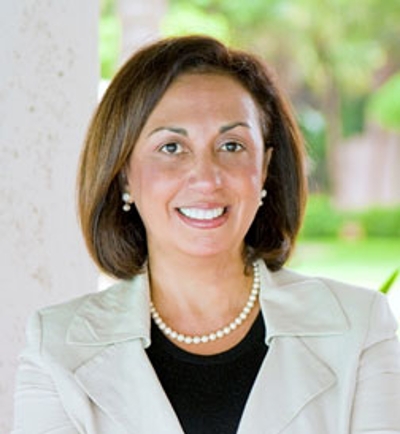
Silvia Mitchell is an Associate Professor in the Department of History at Purdue University, specializing in early modern European history with a focus on the Spanish Monarchy and women's roles in dynastic governance. She teaches undergraduate and graduate courses in history, research seminars, and communication. Education : Ph.D. in History (University of Miami), M.A. & B.A. in History (Florida International University) Her research explores the political, cultural, and dynastic dimensions of the Spanish Habsburg court during the late 17th century. She has published extensively on Mariana of Austria's regency, diplomatic alliances, and the intersection of gender and statecraft. Recent publications highlight her focus on transnational interactions, including Anglo-Spanish literary influences, Spanish-Dutch collaborations, and Ibero-Dutch geopolitical entanglements. These works examine shifting alliances in Europe and the Caribbean, emphasizing Spain's role in international politics. As guest editor for The Court Historian , she has contributed to discussions on the Spanish Habsburg court during Carlos II's reign. Her work bridges court studies, cultural transfer, and gender analysis in early modern Europe.
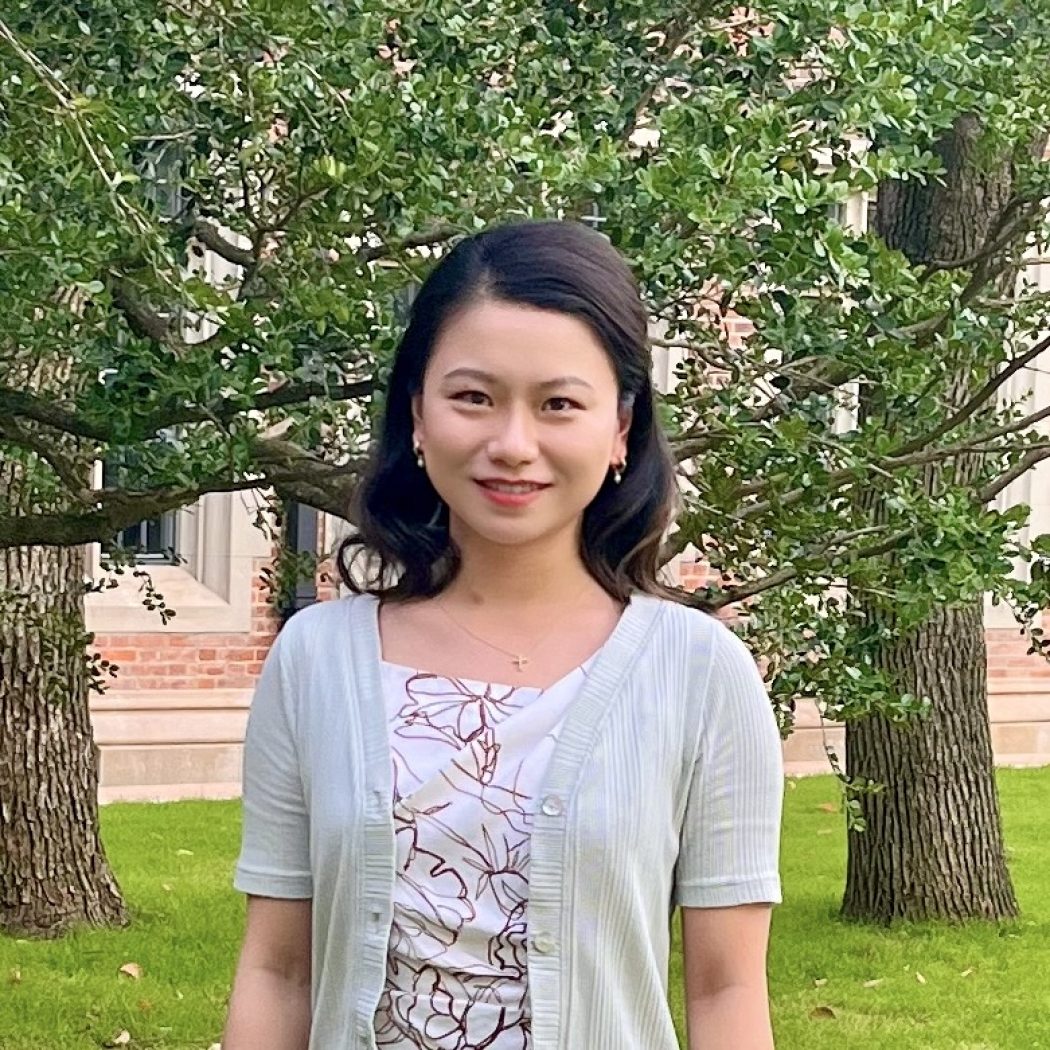
Gloria Xiong is an Assistant Professor in the Department of Government at Colby College and holds a non-resident research associate position at the Fairbank Center for Chinese Studies, Harvard University. Her academic work bridges international political economy and international security, with a concentrated focus on economic statecraft in the context of rising great power tensions. Her research centers on the strategic use of economic coercion, particularly in China's foreign policy behavior. She investigates the drivers and consequences of China’s coercive economic statecraft, analyzing how economic tools are leveraged for geopolitical influence. This includes examining the domestic and international conditions under which such strategies are deployed and their broader implications for global order. Gloria Xiong has published in prominent venues such as the Journal of Contemporary China , The Washington Post’s Monkey Cage , H-Diplo ISSF , and Brookings . While specific article titles are not listed, her body of work reflects a consistent engagement with themes of political economy, security, and Chinese foreign policy, suggesting a strong interdisciplinary approach grounded in political science. Global Political Economy Project (GPEP) Pre-doctoral Fellow (2023–2024) Hans J. Morgenthau Fellow at the Notre Dame International Security Center (2023–2024) She advises students in political science and government, though no current or past advisees are listed. There is no mention of specific research grants she has led or co-led. Her academic journey includes a recent PhD from Cornell University, positioning her as an emerging scholar in her field. While not detailed in the text, her affiliations suggest active collaboration with research centers focused on international security and East Asian studies. Her role at the Fairbank Center further underscores her specialization in Chinese politics and foreign policy.
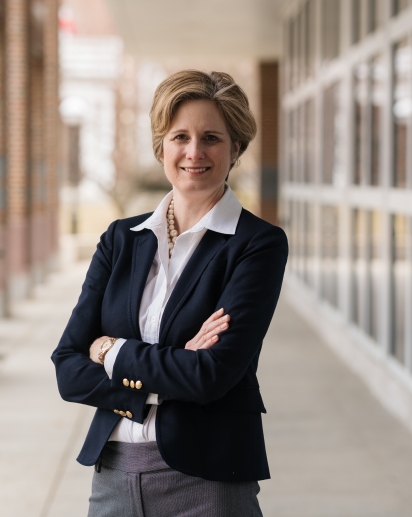
Edward Alden is a senior fellow at the Council on Foreign Relations (CFR), specializing in U.S. economic competitiveness, trade, and immigration policy. He holds visiting academic positions at Western Washington University as the Ross Distinguished Visiting Professor and is affiliated with the Washington Campus as faculty. He also serves on the advisory council of the Clayton Yeutter Institute of International Trade at the University of Nebraska-Lincoln. Bachelor’s in Political Science, University of British Columbia Master’s in International Relations, University of California, Berkeley Pursued doctoral studies (no degree completed) His research spans international trade, immigration policy, border security, and U.S. foreign economic policy . His recent work critically examines pandemic-era border closures, Trump’s trade tariffs, and the future of U.S. global competitiveness. He is a co-author of When the World Closed Its Doors and author of Failure to Adjust and The Closing of the American Border . His recent publications and commentary focus on the instability of U.S. trade policy, the human costs of restrictive border regimes, and the erosion of multilateral trade norms. He frequently analyzes the economic implications of protectionist policies and the strategic use of tariffs in foreign policy. Mellon Fellowship in the Humanities MacArthur Foundation Graduate Fellowship Lukas Book Prize Finalist (2009) Alden has advised on several CFR Independent Task Forces on trade and immigration. He is a monthly columnist for Foreign Policy and has contributed to Foreign Affairs , New York Times , and Wall Street Journal . His media appearances include BBC, CNN, NPR, and PBS NewsHour. He leads public webinars and podcasts on trade and immigration, engaging both academic and policy audiences. He is affiliated with research teams at CFR’s Greenberg Center for Geoeconomic Studies and contributes to initiatives like RealEcon and the CFR Fellows’ Book Launch series.
Saadia M. Pekkanen is the Job and Gertrud Tamaki Endowed Professor of International Studies at the University of Washington’s Henry M. Jackson School of International Studies. She also holds adjunct professorships in Political Science and Law. As a leading scholar in space policy, international law, and East Asian studies, she directs the Space Law, Data, and Policy Program (SPACE LDP) at the Law School and the Program on Strategy, Policy, and Diplomacy Research (SPDR) at the Jackson School. Her research bridges international relations and legal frameworks, focusing on space security, Japan’s foreign policy, and global governance. Education: Ph.D. in Political Science, Harvard University (1996) Masters in International Affairs, Columbia University (1988) Master of Studies in Law, Yale Law School (2004) Research Interests: Prof. Pekkanen examines the intersection of commercial, legal, and security policies in outer space, emphasizing Japan and Asia. Her work analyzes industrial strategy, alliances, and governance in the world order. She contributes to debates on space law, technological diplomacy, and grand strategy. Awards and Memberships: Lifetime member of the Council on Foreign Relations (CFR), member of the International Institute of Space Law (IISL), and recipient of the endowed professorship at UW. Leadership and Grants: Founded SPACE LDP, SPDR, and the Space Policy and Research Center (SPARC). Her work connects academic research with policy through initiatives addressing space security and strategic diplomacy. Labs/Teams: Directs the SPACE LDP, SPDR, and SPARC, fostering interdisciplinary collaboration on space policy, diplomacy, and security strategies.
Jennifer M. Lind is an Associate Professor of Government at Dartmouth College and a Faculty Associate at Harvard University’s Reischauer Institute for Japanese Studies. She holds affiliations with Chatham House in London and has been a visiting scholar at Waseda University and SOAS, University of London. Her research focuses on international relations, East Asian security, and U.S. foreign policy toward East Asia. Lind earned her B.A. from UC Berkeley, M.I.A. from UC San Diego, and Ph.D. from MIT. Her work explores how authoritarian regimes like China adapt and innovate, challenging conventional views on their limitations. Notable publications include *Sorry States: Apologies in International Politics* (2008) and her forthcoming *Autocracy 2.0: How China’s Rise Transformed Tyranny* (2025). Lind’s research also addresses Japan’s security evolution, U.S.-China competition, and strategic dynamics in East Asia. She frequently contributes to outlets like *Foreign Affairs* and serves as editor-in-chief of the Substack *Blue Blaze*. Lind teaches courses on international politics, great power dynamics, and U.S.-China relations. Her grants and consultancy include work with RAND Corporation and the U.S. Department of Defense. She co-founded the Security Studies Faculty Network to foster collaboration among security scholars.
Audrye Wong is an Assistant Professor of Political Science and International Relations at the University of Southern California (USC) Dornsife College of Letters, Arts and Sciences. Her research focuses on Chinese foreign policy, economic statecraft, and authoritarian governance, with a particular emphasis on how domestic politics influence international strategies. She explores themes such as Sino-US relations, coercive economic diplomacy, environmental governance in authoritarian systems, and the role of subnational actors in shaping foreign policy. Her work bridges comparative politics and international relations, analyzing case studies ranging from China’s engagement with Australia and Ukraine to the geopolitical dynamics between Japan, South Korea, and China. Wong’s studies often highlight the interplay between economic tools, public accountability, and strategic narratives in advancing national interests. Wong’s publications demonstrate a consistent focus on understanding how states leverage economic instruments for geopolitical influence, with a critical eye toward the effectiveness of such strategies in authoritarian contexts. Her research contributes to broader debates on global power transitions, regional stability, and the evolving norms of international economic diplomacy.
Tamar Gutner is Professor at American University's School of International Service (SIS), where she previously served as Associate Dean for Faculty Affairs and Graduate Education and directed the MAIR, GGPS, and IER MA programs. Her leadership extends to program development and faculty mentorship, recognized by the 2017 Outstanding Faculty Mentor award. Education: Ph.D. in Political Science, Massachusetts Institute of Technology M.A. in International Relations, Johns Hopkins University School of Advanced International Studies (SAIS) B.S. in Radio/TV/Film, Northwestern University Professor Gutner's research examines the performance and effectiveness of international organizations, particularly international financial institutions. Her work analyzes institutional collaboration between the IMF and World Bank, the design of the Asian Infrastructure Investment Bank (AIIB), and environmental governance in multilateral development banks. She employs theoretical frameworks from agency theory and institutional analysis to investigate mandate-performance gaps in global governance structures, with regional expertise in Central and Eastern Europe and emerging economies. Her publication trends reveal deepening focus on inter-organizational dynamics since 2020, shifting from single-institution analyses to collaborative mechanisms between multilateral entities. Recent work emphasizes evaluation methodologies for IO collaboration, with increasing attention to China's role in reshaping global financial governance through institutions like the AIIB. Scientific Awards: American University William Cromwell Award for Outstanding Teaching (2025) Darrell Randall Award for Outstanding Service (2014, 2024) Council on Foreign Relations International Affairs Fellowship (2019) Multiple AU SIS Faculty Research and Curriculum Development Grants Professor Gutner has secured significant research funding from the Council on Foreign Relations, Brookings Institution, MacArthur Foundation, and International Studies Association. As a mentor, she has guided numerous graduate students through AU's international relations programs, with former advisees now working in international organizations and policy institutions. Her 2019 fellowship at the IMF's Independent Evaluation Office informed both her scholarly work and practical contributions to institutional evaluation frameworks. Her professional engagement includes regular participation in major conferences like the American Political Science Association and International Studies Association, where she presents on MDB collaboration strategies and global governance innovations. Current projects examine evolving corporate strategies in multilateral development banks as accountability mechanisms.
Evelyn Goh is the Shedden Professor of Strategic Policy Studies and Research Director at the Strategic & Defence Studies Centre, Australian National University (ANU). She holds academic leadership roles including Deputy Director (Research) at the Coral Bell School of Asia-Pacific Affairs and co-Managing Editor of the Cambridge Studies in International Relations series. Her research focuses on U.S.-China relations, East Asian security dynamics, and the evolving regional order. Education includes a Doctorate and Masters in International Relations from the University of Oxford (1996–2001), an MSc in Environment & Development from the University of Cambridge (1997), and prior faculty roles at Royal Holloway University of London, University of Oxford, and the Rajaratnam School of International Studies in Singapore. Key research interests span East Asian international relations, Cold War history, and the interplay between security and economic strategies. Notable works include *The Struggle for Order* (Oxford, 2013) and co-authored *Re-thinking Sino-Japanese Alienation* (Oxford, 2020). She has secured major grants such as the Australian Research Council Discovery Grant (2019–2022) and UK Economic & Social Research Council Fellowship (2011–12). Her leadership extends to initiatives like the Women in International Security (WIIS) at ANU and the *Graduate Research and Development Network on Asian Security* (GRADNAS). She also contributes to global policy discussions through her roles in the World Economic Forum’s Global Future Council on International Security and strategic diplomacy projects addressing 21st-century complexity.
Stephen B. Kaplan is an Associate Professor of Political Science and International Affairs at Georgetown University, with affiliations to the Institute for International Economic Policy. His research focuses on international political economy, particularly the political economy of global finance, China’s foreign investment strategies, and Latin American political economy. He has authored award-winning books, including *Globalizing Patient Capital* (2021) and *Globalization and Austerity Politics in Latin America* (2013), and has published in leading journals like *The Journal of Politics* and *World Development*. His work has been featured in major media outlets such as *The Atlantic*, *Foreign Policy*, and *The Washington Post*. Education: PhD from Yale University, MS from Georgetown University, and a BA from Tufts University. Prior to academia, he was a senior economic researcher at the Federal Reserve Bank of New York, focusing on global finance and emerging markets. His honors include the 2023 Luciano Tomassini Book Award, Wilson Center Fellowship, and APSA Mancur Olson Award. Research interests span China’s state-led finance, international indebtedness, and the political economy of macroeconomic policymaking. Current projects include a book on China’s financial statecraft in Latin America and analysis of the Federal Reserve’s mandate trilemma. He teaches courses like International Political Economy and Political Economy of Latin America. Grants and awards include the Minerva Research Initiative Grant (2015–2021), Smith-Richardson Fellowship (2014–2021), and Princeton University post-doctoral fellowship. His research bridges theoretical frameworks with empirical studies, emphasizing global financial governance and development finance.
William Akoto is an Assistant Professor of Global Security in the Department of Foreign Policy & Global Security at the School of International Service, American University, and serves as Director of Research at the Center for Security, Innovation, and New Technology (CSINT). Previously, he taught at Fordham University, the University of South Carolina, and Nelson Mandela University in South Africa. Education: PhD in Political Science, University of South Carolina, 2019 Research Interests: Dr. Akoto's work centers on interstate cyber conflict dynamics , examining how states weaponize cyber capabilities for national security objectives. His research extends to the political economy of aid and trade , analyzing debt relief mechanisms and trade-sanction interactions, and military coups , investigating coup triggers and consequences through complex systems theory. He develops microfounded theoretical models to explore institutional and preference-based drivers of state behavior. Publication Trends: His 2020-2024 publications reveal a decisive shift toward cyber conflict research, with 80% of recent work focusing on state-sponsored cyber attacks, economic espionage, and cyber-proxy warfare. This builds on earlier expertise in trade-politics linkages (2013-2020), demonstrating consistent application of political economy frameworks across security domains. His methodology increasingly integrates complex systems science to analyze large-scale behavioral patterns. Scientific Awards: SIS Collaborative Research Award (June 2024) Outstanding Graduate Student Teacher Award (April 2019) Adam Smith Fellow, Mercatus Center (August 2016–July 2017) Thurmond-Atwater Fellowship (July 2015–May 2016) IAAR Research Fellow (August 2014–July 2015) Advising and Grants: Dr. Akoto has secured competitive research funding including the 2024 SIS Collaborative Research Award and Mercatus Center fellowship. His teaching excellence was recognized with the 2019 Outstanding Graduate Student Teacher Award. While specific advisees aren't documented, his course designs emphasize analytical skill development through constant feedback mechanisms, debate, and current events integration across undergraduate international relations curricula. Labs and Teams: As CSINT Director of Research, he leads interdisciplinary initiatives examining emerging technology-security intersections, with current focus on cyber warfare economics, satellite cybersecurity, and AI governance frameworks through structured collaboration between academic researchers and security practitioners.
John Lee is a senior fellow at the Hudson Institute and an adjunct professor at the University of Sydney, with prior adjunct roles at the Australian National University. He is a leading expert on the Chinese political economy and Indo-Pacific strategic affairs, having served as senior national security adviser to Australia’s Foreign Minister. Based in Sydney, he holds a doctorate in international relations from the University of Oxford and law and arts degrees from the University of New South Wales. Education: PhD and MA in International Relations, University of Oxford; LLB and BA (First Class, Philosophy), University of New South Wales Current Affiliations: Senior Fellow, Hudson Institute; Adjunct Professor, University of Sydney; Senior Fellow (Nonresident), United States Studies Centre Former Role: Senior National Security Adviser to Australian Foreign Minister Julie Bishop (2016–2018) Dr. Lee’s research centers on Indo-Pacific security, defense strategy, US-China rivalry, and global trade policy. He is particularly focused on China’s political economy, strategic deterrence, alliance burden-sharing, and the implications of American reindustrialization. His work critically examines the evolving global economic order, the role of tariffs, and the challenges posed by state-led industrial policies, especially in China. He frequently analyzes the AUKUS pact, US alliance dynamics, and the strategic implications of China’s growing influence in the Global South and Middle East. His recent publications demonstrate a strong trend toward policy-relevant analysis of US trade and defense strategy under the Trump administration, with recurring themes of economic statecraft, national security, and the need for allies to increase defense spending and industrial resilience. He emphasizes the strategic logic behind tariffs as tools for reindustrialization and views alliances through a transactional lens of burden-sharing and strategic contribution. Scientific Awards: No awards explicitly mentioned in the text. Dr. Lee is an active advisor and commentator on national security and economic policy. He has not been mentioned as supervising formal students, but his influence is evident through his extensive media contributions and participation in high-level policy discussions. He has co-authored reports, such as on deterring China through nonmilitary costs, indicating collaborative research. His work is frequently cited in major media outlets like The Australian , Financial Review , and The Interpreter . He is associated with research teams and events at the Hudson Institute, regularly participating in panels and conferences on US-China rivalry, Middle East policy, and Indo-Pacific strategy. His work is central to ongoing policy debates about American global leadership, the future of globalization, and the strategic competition with China.
Dr. Ngeow Chow Bing serves as a Nonresident Scholar at Carnegie China and Director of the Institute of China Studies at the University of Malaya. His academic career centers on China's relations with Southeast Asian nations, with particular expertise in the South China Sea dispute, Belt and Road Initiative, and U.S.-China rivalry dynamics in the Indo-Pacific region. His research interests span China-Southeast Asia Relations , Maritime Security , and Military Diplomacy , examining how ASEAN navigates great power competition. Ngeow analyzes Southeast Asian perspectives on China's rise through both strategic security lenses and softer dimensions of people-to-people exchanges, education, and soft power. His work reveals the paradoxes and contradictions in regional engagement with China, highlighting how countries balance economic opportunities against security concerns. Ngeow's recent publications demonstrate consistent focus on ASEAN's role in moderating U.S.-China competition and military education as soft power . His analysis tracks evolving regional attitudes toward China's Pinglu Canal project, Taiwan conflict scenarios, and post-pandemic geopolitical shifts. The scholarship shows increasing emphasis on Southeast Asian agency within China's neighborhood diplomacy framework. As an active contributor to academic discourse, Ngeow has published in leading journals including Cold War History , Journal of Contemporary China , and Contemporary Southeast Asia , while providing policy-relevant analysis through platforms like East Asia Forum and ThinkChina. His multilingual capabilities (Mandarin, Cantonese, English, Malay) facilitate deep engagement with primary sources and regional stakeholders. Current research investigates ASEAN's potential role in stabilizing U.S.-China rivalry through innovative frameworks like ASEAN Plus Two.
Xue Gong is an Assistant Professor and Coordinator of the Master of Science in International Political Economy program at the S. Rajaratnam School of International Studies , Nanyang Technological University, Singapore. She is also a Nonresident Scholar at Carnegie China , focusing on contemporary China's strategic, economic, and ideological interactions with Southeast Asia and the Global South. PhD, Nanyang Technological University MS, Nanyang Technological University BS, Nanjing Normal University Her research explores China's economic statecraft, regional governance in the Indo-Pacific, geoeconomics, and the intersection of development and security cooperation. Recent work analyzes the Belt and Road Initiative, Chinese biotech expansion, and bilateral relations amid U.S.-China competition. Her publications highlight trends in China's engagement with Southeast Asia, emphasizing local adaptations and evolving strategies under global supply chain pressures. She contributes to leading journals and think tanks, with a focus on policy-relevant analysis. Areas of expertise include economy, East Asia, and Indo-Pacific studies. She is fluent in English and Mandarin Chinese.
Dr. Giulio Pugliese is a Lecturer in Strategic Communications at King's College London, part-time Professor at the European University Institute (on EU-Asia Studies), and Senior Fellow at the Istituto Affari Internazionali (IAI). He specializes in great power politics in the Asia-Pacific, focusing on Japan, China, and the U.S., with expertise in EU-Asia relations, Indo-Pacific strategy, and security policy. His academic roles include editorial/advisory board memberships at The International Spectator , Asia Major , and others. Educations: PhD from the University of Cambridge; M.A. in International Economics and East Asian Studies (Johns Hopkins SAIS). Visiting Scholarships: GRIPS (Tokyo), Oxford, George Washington University, and Johns Hopkins SAIS. His research emphasizes Japan’s foreign policy, Sino-Japanese relations, and the EU’s role in the Indo-Pacific. Recent work explores EU security engagement, the Belt and Road Initiative’s impact, and Japan’s strategic responses to geopolitical shifts. He received the Nakasone Incentive Award (2023) for research on Japanese diplomacy. Teaching focuses on Japanese politics, East Asian security, and strategic communications. He advises on policy and contributes to global research networks, including King’s Lau China Institute and the Department of War Studies. Key Research Themes: Indo-Pacific strategy, Sino-Japanese competition, EU-Asia relations, and multilateral security frameworks. Grants & Collaborations: Collaborates with institutions like the IAI, Oxford, and Johns Hopkins SAIS on policy-oriented projects. His work bridges academia and policy, addressing contemporary challenges in Asian geopolitics and transnational security cooperation.
Sharad Joshi is a Professor at the Middlebury Institute of International Studies, specializing in terrorism and nuclear security in South and Southeast Asia. He joined the Institute as a postdoctoral fellow at the James Martin Center for Nonproliferation Studies in 2006 and transitioned to full-time faculty in 2011. He also served as a research associate and interim director of the Monterey Terrorism Research and Education Program. Ph.D. in International Affairs, University of Pittsburgh M.A. in Politics, Jawaharlal Nehru University B.A. (Honors) in Economics, University of Rajasthan His research focuses on terrorism, nuclear weapons, and WMD proliferation, with emphasis on South Asian nuclear rivalry, CBRN terrorism, and transnational extremist networks. His courses include Global Politics , Great Power Competition , and specialized seminars on terrorism and nuclear issues. Recent publications analyze U.S.-India relations, China-Pakistan nuclear deals, and WMD security challenges. He leads the International Strategic Crisis Negotiation Exercise (ISCNE) , simulating Central Asian geopolitical crises involving China, India, Russia, and regional states.