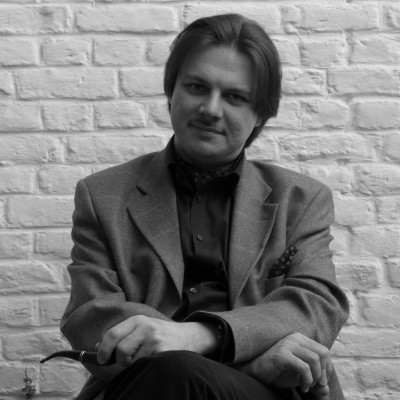
Victor Chestopal serves as Professor of Piano and Chairman of the Keyboard Section at the Royal Conservatory of Brussels since 2020, with concurrent professorship at Italy's Accademia Perosi. A globally recognized performer, he has collaborated with orchestras including the Moscow Philharmonic and Helsinki Philharmonic, and performed at venues like Brussels' Palais des Beaux-Arts and Moscow Conservatoire. His educational background includes: Early training at Moscow's Gnessin Music School and Central Music School of the Tchaikovsky Conservatoire Master's degree from Sibelius Academy (2001) Doctor of Music from Sibelius Academy (2010) with thesis "Temporal correlation in the Goldberg Variations" Studies at Imola's Accademia Pianistica (1992-1997) and Weimar's Hochschule für Musik (1995-1997) Chestopal's research integrates performance practice with musicological analysis, focusing on structural interpretation of Baroque and Romantic repertoire. His scholarly work examines temporal relationships in canonical piano works, while his artistic output spans Early Music, Contemporary Theatre, and Jazz Education. As a multilingual poet publishing in Russian, Italian, and French, he bridges musical and literary arts through collections like "Anno" (2014) and "Poeticheskie dnevniki" (2018). His honors include: First Prize at the “Carlo Soliva” International Competition (1990) As an educator since 2007, Chestopal conducts annual masterclasses in Liège and serves on international competition juries. He actively mentors students across European conservatories while leading charity initiatives for organizations including "Save the Children" and "Mary's Meals", often performing benefit concerts for humanitarian causes.
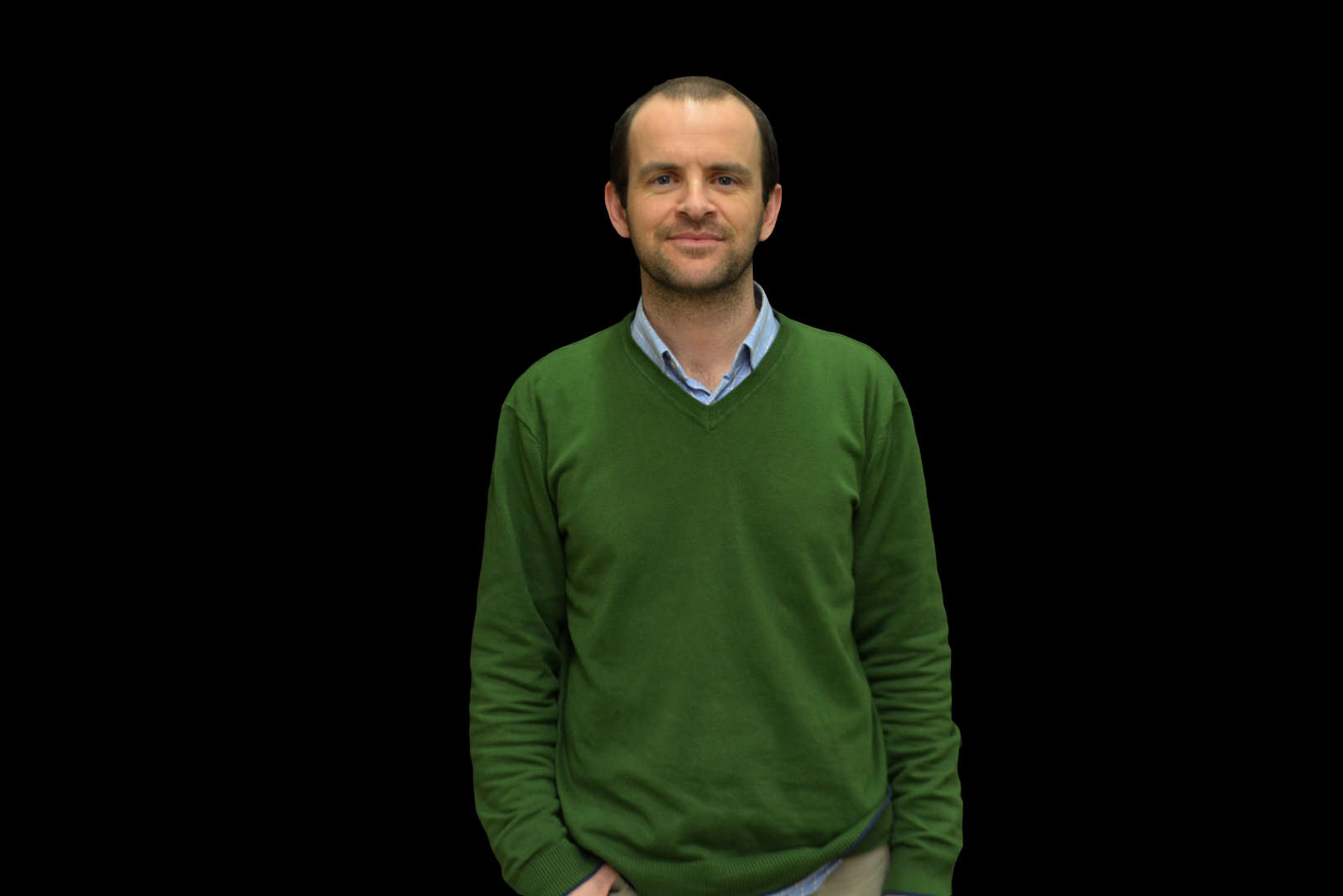
Dr. Thijs Broekhuizen is an Associate Professor at the University of Groningen's Faculty of Economics and Business, specializing in Innovation Management & Strategy. He currently serves as Scientific Director of the University of Groningen Business School, Coordinator of the Northern-Netherlands Innovation Monitor, and Programme Director of the Executive MBA. His research focuses on digital transformation, value creation in innovation, and digital business models, with interdisciplinary insights bridging strategy, innovation, and digitalization. Education: PhD in Marketing (University of Groningen, 2006) MSc in Marketing (University of Groningen, 2001) Research Interests: Broekhuizen explores value appropriation in technology-driven contexts, digital business models, and strategic responses to disruptive technologies. His work emphasizes SMEs' digital transformation challenges, organizational identity during technological change, and AI-driven innovation management. Key areas include digital platforms, motion picture industries, and social media dynamics. Grants & Projects: TALENT4S3 (€165K, Interreg 2024-2028) SIRM (€189K, Interreg 2023-2027) NWO-funded studies on construction industry profitability and online customer journeys Awards: Best Paper Award at ISoF 2021 Best Short Paper Award Nomination 2021 Teaching & Leadership: Broekhuizen teaches strategy and digitalization in executive programs and has led the MScBA and EMBA initiatives. His educational roles include Programme Director of the Executive MBA (Energy Transition, Health, Sustainable Business Models tracks) and member of the Groningen Digital Business Centre. Labs/Teams: He coordinates the Northern-Netherlands Innovation Monitor (surveying 10,000+ SMEs) and collaborates with the Groningen Digital Business Centre to advance digital strategy research.
Professor Dinusha Mendis is a leading academic in Intellectual Property and Innovation Law at Bournemouth University, where she serves as Director of the Centre for Intellectual Property Policy and Management (CIPPM). Her expertise bridges copyright law with emerging technologies like 3D printing, AI, blockchain, and the Metaverse, informed by extensive research and consultation with entities such as the European Parliament, UKIPO, and corporations like HP and Chanel. She holds a PhD from Edinburgh University and has authored seminal works on the intersection of technology and IP. BSc in Law from Aberdeen University LLM and PhD from Edinburgh University Called to the Bar of England and Wales Her research focuses on copyright challenges in immersive environments , AI-generated content regulation , and blockchain/NFTs . She led major studies for the European Commission and UKIPO , including the first peer-reviewed work on 3D printing and IP. Her 2019 co-edited book with Stanford and QUT scholars established foundational frameworks for additive manufacturing legal analysis. Recent publications highlight AI copyright disputes (2024 The Conversation ), NFT legal ambiguities (2022), and pandemic-era 3D printing (2020). Trends show increasing emphasis on decentralized IP systems and machine learning's impact on creative industries . Scientific Awards & Grants JSPS Visiting Professorship (2023) Daiwa Anglo-Japanese Foundation Grant (2024) EU Commission Research Funding (2020) AHRC Grant for 3D Jewellery Study (2017) As a PhD supervisor, she mentors researchers on AI copyright (Benjamin White), crypto-art (Bahar Dagli), and music creation law (Elizabeth Bailey). She contributes to global IP policy through the World Economic Forum's Metaverse Governance Team and EU IPR Enforcement Projects .
Jaime S. Cardoso is an Associate Professor with Habilitation at the Faculty of Engineering of the University of Porto (FEUP) and a Senior Researcher in the 'Information Processing and Pattern Recognition' Area at INESC TEC's Telecommunications and Multimedia Unit. He has been serving as Research Coordinator since September 15, 1998, and is a Senior Member of IEEE as well as co-founder of ClusterMedia Labs. His educational background includes a Licenciatura in Electrical and Computer Engineering (1999), an MSc in Mathematical Engineering (2005), and a Ph.D. in Computer Vision (2006), all from the University of Porto. Cardoso's research focuses on three major areas: computer vision, machine learning, and decision support systems. His work spans medical image analysis, explainable AI, semantic audio-visual analysis, and pattern recognition. He has co-authored over 150 papers, with more than 50 published in international journals, and has accumulated over 6,500 citations. His recent publications demonstrate expertise in cell nuclei segmentation, ordinal regression for CNNs, semantic segmentation with ordinal relationships, face recognition using synthetic data, and explainable vision language models for medical applications. Honorable Mention in the Exame Informática Award 2011 for 'Semantic PACS' First Place in the ICDAR 2013 Music Scores Competition Cardoso has supervised numerous graduate students at UP-FEUP, with recent theses focusing on multimodal explanations, autonomous driving, medical diagnosis, and explainable AI. His research group works at the intersection of computer vision, machine learning, and practical applications in healthcare and autonomous systems.
Yves-Alexandre de Montjoye is an Associate Professor of Applied Mathematics and Computer Science at Imperial College London, where he leads the Computational Privacy Group. He holds a joint affiliation between the Department of Computing and the Data Science Institute. His roles include serving as a Special Adviser on AI and Data Protection to the EC Justice Commissioner Didier Reynders, a Parliament-appointed Commissioner for the Belgian Data Protection Agency, and a Special Adviser to EC Competition Commissioner Margrethe Vestager, co-authoring the 'Competition Policy for the Digital Era' report. He earned his PhD from MIT in 2015 under Alex 'Sandy' Pentland. His master's degrees include an M.Sc. in Applied Mathematics from UCLouvain, an M.Sc. (Centralien) from École Centrale Paris, and an M.Sc. in Mathematical Engineering from KU Leuven. He also holds a B.Sc. in Engineering from UCLouvain. His research interests focus on computational privacy, anonymization techniques, AI safety, and machine learning attacks. He develops methods to 'red team' AI systems and create privacy-preserving mechanisms. His work addresses vulnerabilities such as membership inference, attribute inference, and re-identification risks in datasets, with applications to location tracking, synthetic data, and LLMs. His articles analyze adversarial attacks against privacy systems, emphasizing robustness and practical guarantees. He advocates for privacy-by-design approaches in big data analytics and has explored ethical AI, competition policy in digital markets, and humanitarian uses of mobile data. While no scientific awards are explicitly listed, his contributions have been widely covered in media. He is currently recruiting motivated PhD students for his group at Imperial College. His advising and grants narrative includes work on privacy-preserving technologies and policy implications of AI, with collaborations across academia and public institutions. He is affiliated with the Computational Privacy Group and contributes to platforms like OPAL for privacy analytics. His office is in the ACE Extension building (ACEX 259), accessible via Exhibition Road.
Christos Gatzidis serves as Executive Dean of Bournemouth University's Faculty of Science and Technology since October 2023, overseeing six departments including Computing and Informatics, Creative Technology, and Psychology. Previously Deputy Dean (2021-2023) and Head of Creative Technology Department (2016-2021), he was appointed Professor in Creative Technology in November 2019. The Faculty leads five REF Units of Assessment and secures funding from AHRC, NIHR, and Innovate UK for research spanning digital healthcare, gaming technologies, and cultural heritage applications. His educational qualifications include: PhD in Information Science, City University London (2010) PG Cert in Research Degree Supervision, Bournemouth University (2010) MA in Computer Animation, Teesside University (2003) BSc (Hons) in Computer Studies (Visualisation), University of Derby (2002) Professor Gatzidis specializes in computer graphics with research spanning virtual reality, serious games, and digital healthcare applications. His work bridges technical innovation and practical implementation, particularly in mindfulness prototypes for healthcare and stroke rehabilitation systems. Current projects focus on the multidisciplinary application of gaming technologies in medical contexts, emphasizing user experience and therapeutic outcomes through collaborations with industry partners. His publication record (2014-2025) demonstrates evolving expertise from foundational computer graphics research in terrain generation and deformation to applied work in healthcare, cultural heritage, and music education. Key trends include virtual reality for therapeutic mindfulness, usability studies in mobile gaming, and digital cultural presentation techniques, reflecting a trajectory toward socially impactful technological solutions with strong industry translation. No scientific awards are documented in the provided information. He has supervised PhD students and secured competitive research funding, including two Innovate UK Knowledge Transfer Partnerships. His principal investigator role in a virtual reality mindfulness prototype project exemplifies his approach to translating academic research into practical industry solutions, with current focus on expanding knowledge exchange activities to support the University's civic engagement mission. As Executive Dean, he leads faculty-wide research strategy across six departments, fostering interdisciplinary collaborations particularly in digital healthcare and cultural heritage. His personal research integrates computer graphics expertise with clinical applications through partnerships with healthcare providers and technology companies, driving innovation in therapeutic VR systems and educational gaming platforms.
Chris Palmer is Head of Voice and Senior Lecturer at the Guildford School of Acting (GSA), University of Surrey, where she leads vocal training for BA and MA programmes. She is also a personal tutor and staff mentor for SFHEA, contributing significantly to pedagogical development. Education: BA from Rose Bruford College of Speech and Drama PGDip in Advanced Voice Studies from Central School of Speech and Drama SFHEA (Senior Fellowship of the Higher Education Academy) Her research and teaching focus on voice and speech in musical theatre and actor training, with an emphasis on vocal excellence and communication skills. She has pioneered the integration of voiceover and radio training at GSA, expanding the scope of vocal education. Her work bridges performance practice with pedagogical innovation, influencing training methodologies in drama schools. The recent publications reflect a strong focus on vocal techniques for musical theatre and actor development. These works contribute to the evolving discourse on voice pedagogy, emphasizing practical training frameworks and performance readiness. Professional Experience Highlights: Coached vocal performance for West End production of Mamma Mia! Winner of the BBC Carlton Hobbs competition (2011) International coaching for World Economic Forum in Norway and Geneva Communications examiner for the Royal College of Surgeons Published with VASTA and BVA Chris Palmer has played a pivotal role in advancing voice training at GSA, leading the groundbreaking MA Practice of Voice and Singing. She mentors both students and staff, fostering a culture of excellence in vocal performance and education. While no formal grants are listed, her leadership in course development and competition success indicates strong institutional and external engagement. She leads a dynamic voice department that integrates traditional and contemporary vocal practices, including voiceovers and broadcast media, positioning GSA at the forefront of vocal performance training.
Mark C. Johnson is a Senior Lecturer at the Elmore Family School of Electrical and Computer Engineering at Purdue University, West Lafayette. He serves as Director of Instructional Laboratories and Associate Director for Design - Semiconductor Degree Program , overseeing laboratory infrastructure, CAD software administration, and curriculum development for courses like ECE337, ECE437, and ECE364. Education: Ph.D. in Electrical Engineering (1998), Purdue University M.S. in Electrical Engineering (1991), Wichita State University B.S. in Electrical Engineering (1983), Purdue University - Calumet His research focuses on electrical and computer engineering laboratory curriculum innovation , digital systems design , and CAD for VLSI . Over 15 recent publications highlight his work in SoC prototyping , low-power circuit design , and educational technology , spanning projects like FPGA filter optimization, dual-core processor experiments, and active learning strategies. Leadership Roles: Proceedings Chair (2003), MSE Program Chair (2005), MSE General Chair (2007), MSE Steering Committee Member, MSE & European Workshop on Microelectronics Education Chair, ECE Instructional Innovation Group (2004-2012) Secretary/Webmaster, ASEE Illinois/Indiana Section (2002-2011) He directs the ECE437 Computer Architecture Prototyping Lab and System on Chip Extension Technologies (SoCET) team , and co-advises the STARS semiconductor readiness program. Outside academia, he is an organist at Faith Presbyterian Church and composes keyboard music.
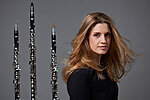
Prof. Nicola Jürgensen is a distinguished German clarinetist and Professor of Clarinet at Faculty 1 of Folkwang University of the Arts in Essen, Germany. She also serves as Dean of Faculty 1 and is a Confidential Lecturer for the German Academic Scholarship Foundation. Her career seamlessly integrates performance, education, and artistic leadership. She is the Artistic Director of WDR 3 Campus Concerts and a board member of the Folkwang University Foundation. Professor of Clarinet, Folkwang University of the Arts (2018–present) Dean, Faculty 1 Artistic Director, WDR 3 Campus Concerts Board of Directors, Folkwang University Foundation Principal Clarinet (former), WDR Symphony Orchestra Cologne (2001–2018) Regular coach, German National Youth Orchestra (2020–present) Nicola Jürgensen's research and artistic interests center on clarinet performance, chamber music, and contemporary repertoire. She is deeply committed to historical performance practice, evidenced by her recordings on basset clarinet, and to expanding the global reach of classical music through international masterclasses and festivals. Her work bridges traditional European repertoire and modern experimental works, including performances in avant-garde operatic productions. She has collaborated with leading orchestras and ensembles worldwide, from Berlin and Leipzig to New York, Bangkok, and Auckland. Her recent artistic output reveals a strong focus on rediscovered works (e.g., Wilms' concerto), contemporary compositions (e.g., Kancheli, Zwilich), and cross-cultural collaborations (e.g., German Masters Music Festival in Thailand). She emphasizes pedagogical innovation and performance excellence, mentoring students who now hold principal roles in Germany’s top orchestras. Her recordings and performances consistently highlight expressive depth, technical mastery, and scholarly engagement with historical instruments and arrangements. Scientific and Artistic Awards: Mozart Prize, Wiesbaden Mozart Society German Music Competition Soloists' Prize (1999) Germany Radio Promotion Prize (2002) Nicola Jürgensen has been instrumental in guiding numerous students into prestigious orchestral positions and leads the ensemble 'Folkwang Clarinets' with her students. She holds multiple leadership roles in academic and artistic institutions and continues to perform as a guest principal clarinetist with major orchestras like the Mahler Chamber Orchestra and NDR Elbphilharmonie Orchestra. Her involvement in grants and funding appears indirect through institutional roles and festival organization. She is actively involved with several artistic initiatives, including the 'Spannungen' festival, WDR 3 Campus Concerts, and international masterclass programs. Her ensemble collaborations and educational outreach reflect a sustained commitment to excellence, innovation, and accessibility in classical music.
Michael J. Spivey is a Professor of Cognitive Science at the University of California, Merced, affiliated with the School of Social Sciences, Humanities and Arts. His research focuses on understanding human cognition through embodied and dynamic systems approaches, with particular expertise in eye-tracking methodologies and real-time language processing. As a faculty member in the Cognitive and Information Sciences department, he contributes to interdisciplinary research that bridges psychology, linguistics, and neuroscience. Dr. Spivey's educational background includes: Ph.D. in Brain and Cognitive Sciences from the University of Rochester (1996) M.A. in Brain and Cognitive Sciences from the University of Rochester (1995) B.A. from the University of California, Santa Cruz (1991) His research interests span psycholinguistics, visual perception, sensorimotor processing, embodied cognition, and dynamical systems theory. Dr. Spivey investigates how cognitive processes unfold in real-time through eye movements and other behavioral measures, challenging traditional modular views of cognition. His work emphasizes the continuous interaction between perception, action, and cognition, demonstrating how language processing is deeply embedded in our sensorimotor experiences. He has made significant contributions to understanding the time course of language comprehension, the role of visual context in linguistic processing, and the dynamic nature of cognitive representations. Analysis of Dr. Spivey's recent publications reveals a strong focus on embodied and dynamic approaches to cognition. His work spans diverse areas including eye-tracking and mouse-tracking methodologies, team cognition, creativity research, bilingual language processing, and the application of foraging theory to cognitive processes. A recurring theme across these publications is the investigation of real-time cognitive dynamics using continuous behavioral measures. His research increasingly incorporates ecological approaches, examining cognition in more naturalistic contexts while maintaining experimental rigor. The interdisciplinary nature of his work is evident in collaborations across psychology, linguistics, neuroscience, and even music cognition. Dr. Spivey is affiliated with the Center for Human Adaptive Systems and Environments and collaborates with researchers at Western University, Northwestern University, Brown University, and UCLA. His work with students likely focuses on training in advanced methodologies for measuring real-time cognitive processes.
Professor Irene Scopelliti holds the position of Professor of Marketing and Behavioural Science at Bayes Business School (formerly Cass) within the Faculty of Management at City St George's, University of London. She leads the Marketing Group and co-directs the Behavioural Research Lab. Her research focuses on consumer psychology, judgment, and decision-making, with notable contributions to areas such as social norms, cognitive biases, and behavioral interventions. She has a PhD from Bocconi University and has held positions at Carnegie Mellon University and various visiting roles internationally. Education: BA in Music, Conservatorio di Musica, Italy MSc in Economics and Management, University of Calabria, Italy PhD in Management (Marketing), Bocconi University, Italy Research interests span consumer behavior, decision theory, and organizational behavior. Notable work includes studies on food consumption norms, gamification in savings goals, and gender differences in self-promotion. Her findings have been featured in outlets like Psychological Science , Management Science , and media like BBC News and Forbes . Awards include the Academy of Management Best Paper Proceeding (2016), Cass Business School Research and Enterprise Prize (2015), and recognition from the AMA Sheth Doctoral Consortium (2009). She has also contributed to academic leadership roles, including REF lead for the Faculty of Management and Behavioral Research Pool Director. Her teaching includes analytical methods for marketing at the MSc level and experimental design in the PhD program. She collaborates with institutions such as the University of Klagenfurt and University of Calabria, emphasizing interdisciplinary approaches to behavioral science.
Yung-Hsiang Lu is a Professor of Electrical and Computer Engineering at Purdue University's Elmore Family School of Electrical and Computer Engineering. His research focuses on mobile/cloud computing, energy-efficient computing, and image/video processing. He holds a BSEE from National Taiwan University (1992), an MSEE (1996), and a PhD (2002) from Stanford University. Dr. Lu's academic background includes significant contributions to VLSI and circuit design, with primary emphasis on computer engineering. His work spans theoretical and applied domains, including optimizing neural networks for edge devices, securing deep learning models, and leveraging large language models for software development. Recent research trends in his articles emphasize energy efficiency in AI systems, interdisciplinary applications of transformers (e.g., music analysis), and challenges in model interoperability and security. His publications also highlight innovations in global camera networks and real-time visual data analysis. While no specific grants or awards are explicitly mentioned, his extensive list of publications reflects sustained academic engagement. His educational contributions include developing C programming resources and teaching large-scale image processing using global camera networks. Dr. Lu's professional address is at Purdue's Materials and Electrical Engineering Building in West Lafayette, Indiana, where he maintains an active research lab focused on embedded systems and low-power computing innovations.
Christof Weiß is a Professor for Computational Humanities at the CAIDAS / Institute of Computer Science, Julius-Maximilians-Universität Würzburg (JMU), Germany. He serves as Head of the DFG-funded Emmy Noether group on Computational Analysis of Music Audio Recordings: A Cross-Version Approach. His academic journey includes previous positions as Visiting Researcher at University Télécom Paris (2021), Visiting Lecturer at Karlsruhe University of Music (2020, 2021), and Research Assistant at International Audio Laboratories Erlangen (2015-2022) and Fraunhofer Institute for Digital Media Technology (2012-2015). His educational background encompasses a PhD in Media Technology from University of Technology Ilmenau (2017), Concert Diploma in Composition from Würzburg University of Music (2012), Physics Diploma from University of Würzburg (2012), and Music Diploma in Composition from Würzburg University of Music (2011). This unique combination of technical and artistic training forms the foundation of his interdisciplinary research approach. Weiß's research operates at the critical intersection of computer science and musicology, developing novel computational methods for analyzing musical structures in audio recordings. His work bridges technical audio processing with musicological insights, creating methodologies for tonal analysis, key estimation, and cross-version comparison of musical performances. His approach combines deep learning techniques with music theory to extract meaningful patterns from large music corpora, enabling new forms of musicological corpus studies that were previously impossible. His recent publications reveal a clear research trajectory toward integrating advanced machine learning with fundamental musicological questions. The consistent theme across his work involves analyzing classical music structures through computational lenses, with particular emphasis on cross-version consistency in performances, tonal complexity measurement, and developing datasets that support computational musicology. His publications span both highly technical audio processing journals and musicology-focused venues, demonstrating his commitment to bridging these disciplines. Best paper award at the 4th conference on Computational Humanities Research (CHR), 2023 KlarText award for science communication of the Klaus Tschira Foundation, 2018 2nd prize at Festival Pablo Casals composition competition, Prades (France), 2013 Youth Cultural Advancement Award (Kulturförderpreis) of the city of Amberg, Germany, 2011 As principal investigator of the DFG Emmy Noether group, Weiß leads a multidisciplinary research team investigating computational analysis of music audio recordings through a cross-version approach. His research has secured significant funding including the prestigious Emmy Noether program, supporting doctoral and postdoctoral researchers working on various aspects of music information retrieval and computational humanities. His collaborative network spans institutions across Europe, including University Télécom Paris, Queen Mary University of London, and multiple German research centers. Weiß leads the Computational Humanities research group at CAIDAS, which focuses on developing computational methodologies for music analysis with particular emphasis on classical repertoire. The lab creates specialized datasets (including the Wagner Ring Dataset and Schubert Winterreise Dataset), develops algorithms for structural music analysis, and applies these tools to address musicological questions that require computational scale and precision. Their work bridges the gap between technical audio processing capabilities and humanities research questions, creating new pathways for understanding musical structure and evolution.
Callen Anthony is an Assistant Professor of Management and Organizations at the Leonard N. Stern School of Business, New York University, where she has been a faculty member since 2018. Her research bridges strategy and organizational theory, focusing on innovation, cognition, and the role of analytical technologies in shaping knowledge and competition. Education: PhD in Organization Studies, Boston College MSc in Social Anthropology, University of Oxford BA in Business Administration, Ivey Business School at Western University Her research explores how new technologies influence interpretation, identity, and innovation in nascent industries, with empirical contexts ranging from finance and music to transportation. She employs field research methods to investigate the social and cognitive dynamics underlying technological change. Her recent publications examine the impact of AI on workforce development and the systemic implications of human-AI collaboration in organizations. These works highlight trends in knowledge work, automation, and evolving skill requirements in modern industries. Scientific Service: Editorial Board Member, Administrative Science Quarterly Editorial Board Member, Organization Science Professor Anthony teaches courses in strategic analysis and corporate strategy. She advises on research related to competitive dynamics, team performance, and technology-driven innovation. Her work is supported by her interdisciplinary training and deep engagement with real-world organizational challenges. She is actively involved in research exploring the future of work, particularly how intelligent systems reshape learning, collaboration, and organizational hierarchies. Her projects span sectors including financial services, information technology, investment banking, and the music industry.
Dr. Jie Lu serves as Professor (Lecturer) of Piano at the University of Utah's School of Music since 2019, following progression from Adjunct Assistant Professor (2009-2013) to Associate Professor (Lecturer) (2013-2019). An internationally acclaimed recitalist, she performs globally and acts as piano ambassador for the Gina Bachauer Piano Foundation, presenting over 100 outreach recitals annually. Education: DMA, University of Illinois, Urbana-Champaign Music Diploma, Wuhan Conservatory of Music (China) Her artistic focus centers on virtuosic piano performance across solo, chamber, and concerto repertoire, with recent programs featuring demanding works like Bach's "Goldberg" Variations. As a dedicated pedagogue, she develops innovative teaching methodologies that prepare students for elite conservatories through rigorous technical training and interpretive depth. Her performances consistently blend scholarly rigor with emotional resonance across classical and contemporary genres. Artistic Output: Dr. Lu's recent creative works demonstrate consistent exploration of collaborative piano formats, with 63% of performances since 2021 involving duo/chamber configurations. Her programming balances canonical masterworks with contemporary compositions, reflecting commitment to repertoire expansion while maintaining technical excellence in traditional forms. Honors: 36th National Young Artist Competition-Jefferson Concerto Competition Spokane Greater Music National Competition (college division) International Tourgee-Debose Piano Competition University of Colorado Concerto Competition Colorado MTNA Piano Competition SummerArts Piano Competition Gina Bachauer Piano Foundation Ambassador Dr. Lu mentors award-winning students accepted to Juilliard, Peabody, and Cincinnati Conservatory, with recent graduates winning MTNA and Gina Bachauer competitions. Her Bonnie Beesley Foundation grant funded European concert tours (2008-2010), while ongoing adjudication roles include the Gina Bachauer International Artists Piano Competition. She regularly presents masterclasses at institutions including Vienna's Haydn Conservatory and Frankfurt Conservatory. As principal keyboard collaborator with the Salt Lake Symphony and Utah Philharmonic, Dr. Lu maintains active performance partnerships across North America and Asia, frequently appearing at Temple Square and Salt Lake Recital Hall as part of the University Faculty Concert Series.