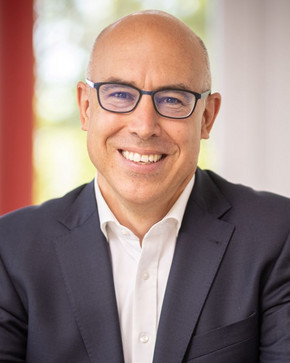
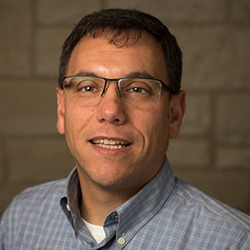
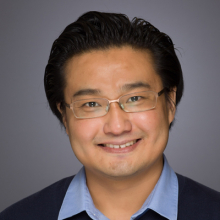
Gabriel Felbermayr is a Professor of Economics at Vienna University of Economics and Business (WU) and Director of the Austrian Institute of Economic Research (WIFO) since 2021. He holds a PhD in Economics and has held academic positions at the University of Munich (ifo Center for International Economics), Kiel University (Chair in Economics), and the University of Tübingen. University Professor: WU Vienna (2021–) Director: WIFO Vienna (2021–) President: Kiel Institute (2019–2021) Research Interests include international trade theory, labor markets in open economies, European integration, migration economics, and climate-trade intersections. His work combines theoretical models with empirical policy analysis, focusing on globalization challenges, supply chain disruptions, and economic sanctions. Current Projects Trump 2.0 Transatlantic Tariff Scenarios Scientific Awards include recognition for his research contributions, though specific award names are not detailed in the text. He has led major projects for institutions like the Austrian Economic Chamber and the Foundation for Family Businesses. Education includes studies at the University of Linz and University of Florence (PhD). His publications span journals like Journal of International Economics , Review of World Economics , and World Development .
Stefania Garetto is an Associate Professor in the Department of Economics at Boston University. She specializes in international trade and macroeconomics, focusing on foreign direct investment, multinational corporations, and structural dynamic modeling. Her research explores the creation of multinational firms via mergers and acquisitions, their spatial expansion, and the interplay of real and financial factors in global markets. She is a Research Associate at the National Bureau of Economic Research (NBER) and a Research Fellow at the Centre for Economic Policy Research (CEPR). Education: PhD in Economics from the University of Chicago. Research interests include global banking, firm heterogeneity, risk-return dynamics in multinational production, and policy analysis. Her recent work combines empirical analysis with quantitative models to study topics like shock transmission in global banking systems and the origins of multinational premiums. Articles have been featured in Journal of International Economics , Quarterly Journal of Economics , and American Economic Journal: Macroeconomics . Teaching includes PhD-level International Trade (EC 791), master’s Globalization Economics (EC 598), and undergraduate courses in International Trade and Microeconomics. She has advised on numerous working papers and contributed to discussions at major conferences such as NBER ITI Summer Institutes and the Women in Macro Conference. Her current projects include analyzing the Cuban Embargo’s welfare impacts, real options in international economics, and long-run risks of FDI. She maintains an active presence in academic discussions, providing commentary on seminal papers in trade and financial integration.
Overview Prof. Harris Kyriakou is an Associate Professor and Chair Holder of the Media & Digital Chair at ESSEC Business School. His research focuses on leveraging artificial and collective intelligence to enhance organizational value creation, digital strategy, and data-driven decision-making. He has advised multinational firms like Airbnb, Facebook, and Yelp, and his work is supported by grants from NSF and the Spanish government. Education Ph.D. in Management Sciences (Stevens Institute of Technology, 2016) M.S. in Engineering & Technology Innovation Management (Carnegie Mellon University, 2010) B.Sc. in Digital Systems (University of Piraeus, 2007) Research Focus His research explores intersections between AI/collective intelligence, blockchain, sharing economy regulations, and platform governance. Key themes include data network effects, algorithmic regulation, and digital transformation. Recent work on ChatGPT vs. Google examines AI-driven competitive dynamics in search markets. Recognition Awarded the 2024 Case Centre Triple Award, 2022 Early Career Award (AIS), and multiple best paper awards (AoM, INFORMS). Recognized as a 40-Under-40 MBA Professor by Poets & Quants. Teaching & Leadership Co-leads the 'Algorithmic Governance in Platform Economy' thesis Teaches courses on AI, digital strategy, and IT management at ESSEC and IESE Former Assistant Professor at IESE Business School (2016–2021) Professional Contributions Serves as a European Commission advisor on digitalization, reviewer for top journals (MIS Quarterly, Academy of Management Review), and mentor for doctoral candidates.
Professor Sebastian Hiller is a Full Professor at the Biozentrum of the University of Basel, Switzerland, where he leads a research group focused on structural biology and biophysics. His laboratory specializes in using nuclear magnetic resonance (NMR) spectroscopy to elucidate the structures and functions of proteins and their interactions at the atomic level. His research spans several key areas including molecular chaperones and protein folding mechanisms, outer membrane protein biogenesis in bacteria, and kinase signaling pathways. Notably, his group has made significant contributions to understanding how chaperones like trigger factor function, the mechanisms of outer membrane protein assembly through the Bam complex, and dynamic kinase interactions. Their work has direct implications for neurodegenerative diseases and antibiotic development. The Hiller lab's recent publications demonstrate a strong focus on NMR methodology development, protein folding dynamics, and structural mechanisms of antibiotic action. Their research on darobactin's mechanism of action against Gram-negative bacteria represents a significant advance in antibiotic discovery. The group frequently publishes in high-impact journals including Nature, Science, and Nature Communications. ICMRBS Founder's Medal (2018) EMBO Young Investigator (2014) ERC starting grant (2011) SNSF professorship (2010) SNSF scholarship for young researchers (2008) Professor Hiller supervises numerous PhD students and postdoctoral researchers, with many alumni having secured prestigious positions in academia and industry. His laboratory maintains strong collaborations across multiple institutions and has received significant funding through ERC grants and other competitive mechanisms. The Hiller group also operates advanced NMR facilities that serve the broader research community at the University of Basel.
Yan Huang is an Associate Professor of Business Technologies at the Tepper School of Business, Carnegie Mellon University. She holds a Ph.D. in Information Systems and Management from Carnegie Mellon University (2013) and a B.Sc. (with honors) in Information Systems and Management from Tsinghua University, Beijing, China (2009). Prior to joining Carnegie Mellon University, she served as an Assistant Professor of Technology and Operations at the University of Michigan–Ann Arbor, Ross School of Business (2013-2018). Her educational background includes: B.Sc. (with honors) in Information Systems and Management, Tsinghua University, Beijing, China (2009) Ph.D. in Information Systems and Management, Carnegie Mellon University, Pittsburgh, United States (2013) Dr. Huang's research examines the economic and social impacts of technologies and identifies effective designs and policies for technology-enabled markets and platforms. She employs economic theories, structural modeling, statistical modeling, machine learning methods, and an understanding of the underlying technologies in her research. Her recent work focuses on the economics of artificial intelligence (AI) and machine learning (ML), with particular attention to algorithmic fairness, transparency, and collusion. She is among the first to bring economic and social perspectives to research on fair ML. Additionally, she studies digital platforms and online markets, examining how firms can leverage data-driven strategies to optimize pricing, personalization, and user engagement. Her recent publications demonstrate a strong focus on the intersection of AI/ML with economic principles, particularly in areas like algorithmic bias, pricing strategies, and platform regulation. A significant portion of her work examines how machine learning algorithms impact financial lending decisions, housing markets, and content creation platforms. Her research methodology frequently combines structural econometric modeling with empirical analysis of real-world data, providing both theoretical insights and practical implications for platform design and policy. Dr. Huang has received several prestigious awards for her scholarly contributions: AIS Senior Scholar Best Publication of 2023 Award for "Algorithmic Transparency with Strategic Users" Runner Up, Best Paper Published in Information Systems Research for 2021 for "Crowds, Lending, Machine, and Bias" INFORMS Information Systems Society Sandy Slaughter Early Career Award Finalist, Best Student Paper Award, CIST 2021 for "Human-Algorithmic Bias: Source, Evolution, and Impact" Pounds Fellowship As an active member of the academic community, Dr. Huang serves on various committees at CMU including the MSBA Curriculum Review Committee and the Tepper School Strategic Plan Task Force. She has also held editorial positions for Management Science, Information Systems Research, and the International Conference on Information Systems. Her teaching portfolio includes courses on Human and Algorithmic Bias, Modern Data Management, and PhD-level instruction at the Tepper School.
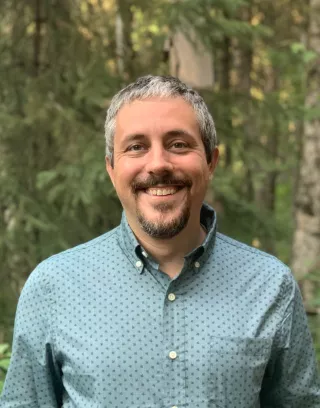
Dr. Jonathan Cale is an Assistant Professor in the Department of Forest Ecology and Management at the University of Northern British Columbia, affiliated with the NRES Graduate Program. His research program merges basic and applied approaches to investigate fungal ecology and forest pathology, focusing on how fungus-tree interactions influence forest health challenges. Specializes in forest fungi roles across disturbance stages: development, impact, and recovery Key interests: emerging forest diseases, climate change impacts on fungi, bark beetle-fungus interactions, chemical defense mechanisms Supervises graduate students in Biology and Forestry (MSc NRES) and serves as a media-contactable expert in Forest Pathology His recent publications address topics such as fungal community dynamics in disturbed forests, chemical defense responses in pines, and bark beetle-fungus coevolutionary mechanisms. No scientific awards are mentioned in the provided text.
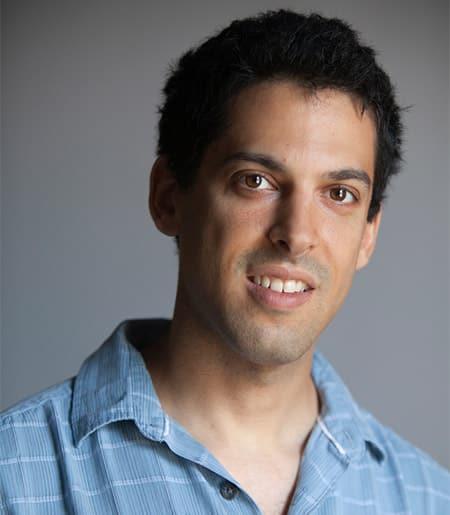
Federico Toschi is a Full Professor at Eindhoven University of Technology (TU/e), holding joint appointments in Applied Physics and Mathematics and Computer Science departments. His research focuses on multi-scale transport phenomena, combining statistical physics, fluid dynamics, and computational methods. He leads projects in the 4TU Centre for Multiscale Phenomena and EAISI. Education: PhD in Physics (University of Pisa, 1998) and academic background at Scuola Normale Superiore di Pisa. Interdisciplinary expertise in fluid dynamics turbulence, Lagrangian turbulence, crowd dynamics, and Lattice Boltzmann methods. Recipient of APS Fellow (2015), Euromech Fluid Mechanics Fellow (2012), and Ig Nobel Prize for Physics (2021). Research emphasizes turbulence modeling, pedestrian dynamics, and active matter, with applications in environmental flows and crowd management. His work bridges computational innovations with experimental validations. Recent articles explore kinetic data-driven turbulence modeling, pedestrian flow optimization, and turbulence effects in biological systems. Projects include digital twins for seismicity modeling and rarefied gas dynamics. Teaches fluid mechanics, computational physics, and chaos theory courses. Founded Flow Matters Holding BV, applying research to practical solutions.
Jeeyeon Kim is a Lecturer in the Department of Management and Marketing at La Trobe Business School, La Trobe University. Prior to this, she served as an Assistant Professor at National Sun Yat-sen University in Taiwan. Her research focuses on digital marketing, omnichannel retailing, social media/influencer marketing, and digital healthcare. She holds a PhD and MA from Yonsei University, South Korea, and has held visiting roles at Yonsei University and IE University. Her work emphasizes empirical data analysis and statistical modeling to address marketing challenges. Jeeyeon has secured multiple research grants, including AUD 82,500 from Taiwan's Ministry of Science and Technology (MOST) for projects on big data-driven marketing and digital transformation. She also coordinates grants with Yonsei University and AACSB initiatives. Her editorial roles include serving on the Asia Marketing Journal and Korean Scholars of Marketing Science boards. Her research spans topics such as virtual influencers' impact on social media, omnichannel strategies, and healthcare consumer behavior. Teaching awards include the 'Outstanding Course Teaching Award' and 'Excellent Mentor Award.' She actively reviews for journals like the Asian Pacific Journal of Marketing and Logistics and conferences like the Global Fashion Management Conference.
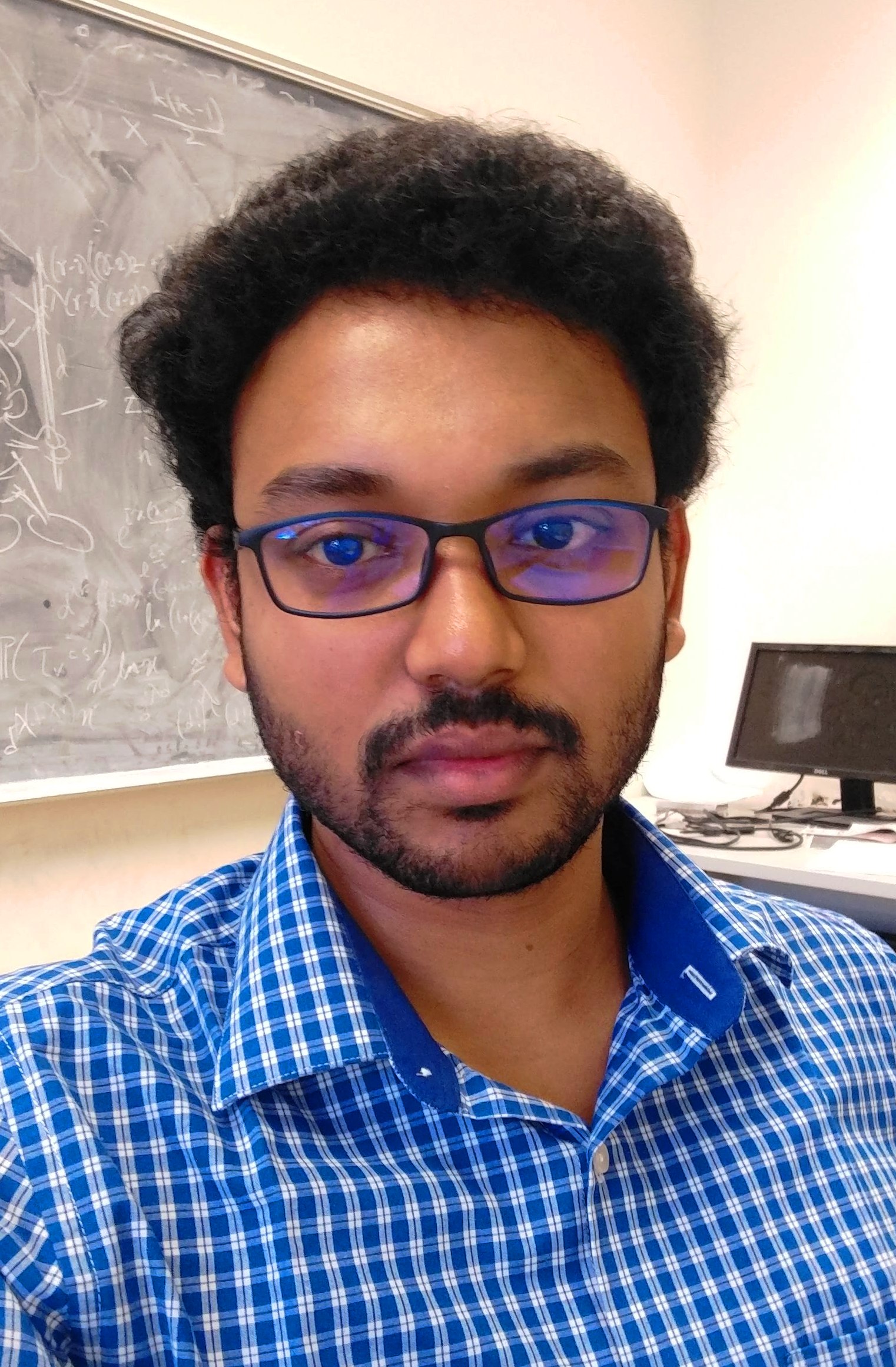
Sourav Sarkar is a University Associate Professor in Probability at the Department of Pure Mathematics and Mathematical Statistics (DPMMS), University of Cambridge (since July 2024) and a Fellow of Trinity Hall. Previously, he held positions as an Assistant Professor at DPMMS (2021–2024), Postdoctoral Fellow at the University of Toronto (2019–2021), and completed his Ph.D. in Statistics at UC Berkeley (2019) under Prof. Alan Hammond. His education includes a BSc (2013) and MSc (2015) in Statistics from the Indian Statistical Institute, Kolkata, advised by Prof. Parthanil Roy. Research Interests : Probability theory with a focus on KPZ universality class, random growth models (e.g., last passage percolation, exclusion processes), Coulomb gas, and percolation theory. His work bridges stochastic processes, mathematical physics, and statistical mechanics. Teaching : Teaches advanced courses in Probability and Stochastic Calculus at the University of Cambridge, including Part II courses on Applied Probability and Probability & Measure. Previously taught at UC Berkeley, where he received the Outstanding Graduate Student Instructor Award (2019). Publications : Focuses on KPZ fixed point, geodesic properties, and phase transitions in interacting particle systems. Recent work includes studies on the directed landscape, stable random fields, and competitive erosion dynamics. Awards : Recognized for exceptional teaching at Berkeley and sustained contributions to probability theory research.
Lionel Levine is a Professor in the Department of Mathematics at Cornell University, affiliated with the College of Arts and Sciences. His academic research focuses on abelian networks, interacting particle systems, and the emergence of complex patterns from simple rules. He has held prestigious fellowships, including the Simons Fellowship and Sloan Research Fellowship, and has been honored with an endowed professorship. Levine's work bridges probability theory, combinatorics, and statistical physics, with notable contributions to the study of sandpile models and internal diffusion-limited aggregation (IDLA). Education: Ph.D. in Mathematics (2007), University of California, Berkeley. Research Interests: Applied Mathematics, Combinatorics, Probability, Abelian Networks, Sandpile Models, and their intersections with computer science and statistical physics. His research explores how local rules generate large-scale structures, such as in abelian networks and sandpile models. Awards and Honors: Simons Fellowship, Sloan Research Fellowship, Endowed Professorship in the College of Arts and Sciences. Teaching: Courses include Probability Theory (MATH 6710/6720), Topics in Probability: Math for AI Safety (MATH 7710), and undergraduate mathematics courses like Strategy, Cooperation, and Conflict (MATH 1340). Grants and Funding: Supported by the National Science Foundation (NSF), Simons Foundation, Sloan Foundation, and Institute for Advanced Study. Collaborations: Collaborates with prominent researchers such as Yuval Peres, Cris Moore, and Jim Propp. His work has been published in leading journals like the Annals of Probability and Duke Mathematical Journal. Future Work: Continues investigating AI safety, causal models, and multi-agent learning, including research on mathematical frameworks for transformer circuits and hidden incentives in AI systems.
Pablo Durango-Cohen is an Associate Professor of Civil and Environmental Engineering at Northwestern University, located in Evanston, IL. He holds a Ph.D. in Industrial Engineering and Operations Research from UC Berkeley, following an M.S. from the same program and a B.S. in Industrial and Systems Engineering from the University of Southern California. His research focuses on developing and analyzing optimization and econometric models for transportation infrastructure systems, integrating environmental design, life-cycle assessment, and policy analysis to address decarbonization challenges in freight systems. He also explores dynamic segmentation models for nonprofit fundraising strategies. Education: Ph.D. Industrial Engineering and Operations Research, University of California, Berkeley (2006) M.S. Industrial Engineering and Operations Research, University of California, Berkeley B.S. Industrial and Systems Engineering, University of Southern California Research Interests: Prof. Durango-Cohen’s work bridges transportation engineering, environmental science, and operations research. He emphasizes infrastructure management through data-driven frameworks, including statistical process control for condition monitoring and predictive maintenance. His recent projects address decarbonization of freight rail systems, electric vehicle impacts on road infrastructure, and optimal auction designs for road concessions. He also applies mathematical models to analyze donor behavior and fundraising efficiency in universities, aiming to improve nonprofit resource allocation strategies. Awards: NSF Faculty Early CAREER Development Award (2006) Young Author Prize, 2007 World Congress on Transport Research Matthew G. Karlaftis Best Paper Awards (2020–2025) Advising & Grants: He advises current PhD candidates including Jing Yu, Adrian Hernandez, and Callahan Skiles, while mentoring former students across sustainability, infrastructure, and fundraising analytics. His research is supported by agencies like the National Science Foundation, Department of Energy (through ARPA-E), and Department of Transportation. He co-leads the LOCOMOTIVES project with ANL researchers, focusing on decarbonizing rail networks, and founded the Virtual Inter-university Symposium on Infrastructure Management (VISIM) to foster academic collaboration. Labs & Teams: As Principal Investigator (PI) on major initiatives like LOCOMOTIVES and VISIM, he collaborates with multidisciplinary teams at Northwestern and Argonne National Laboratory. His group develops tools such as the Locomotives interactive dashboard and a computational framework for input-output lifecycle assessments, accessible via repositories like CivEnv304 .
Francesco Antonio Perotti is a PhD Alumni in Business and Management from the University of Agder, Norway, and the University of Turin, Italy. He holds a Lecturer position at the School of Management and Economics, University of Turin. His primary research focuses on Circular Economy, Knowledge Management, Innovation, and Digital Transformation. He contributes to high-impact journals and serves on editorial boards. His work bridges theoretical insights with practical applications, emphasizing sustainable business practices and organizational leadership. Perotti is also a member of national and international research groups and engages in academic dissemination through conferences and teaching. His research explores topics like open innovation in sustainability, digital transformation leadership, and mitigating knowledge sabotage in organizations. He has published in journals such as Innovation: Organization and Management , Creativity and Innovation Management , and Journal of Business Research . His recent studies analyze SMEs' adaptation to circular economy models and AI-driven leadership strategies. Perotti’s work addresses strategic drivers for business survival in sustainability transitions and the implementation of digital tools in circular enterprises.
Dongyoung Lee is an Associate Professor of Accounting and Desautels Faculty Scholar at McGill University's Desautels Faculty of Management. He holds a PhD in Business Administration from the University of Utah, an MSc in Accounting from the University of Hawaii at Manoa, and a BA in Business Administration from Hanyang University, Korea. His research focuses on corporate social responsibility (CSR), capital markets, international business strategies, and disclosure practices. Key areas include CSR ratings, technological innovation disclosure, global supply chain dynamics, tax haven implications for U.S. firms, and labor market interactions with corporate governance. Recent articles highlight trends in linking CSR with firm innovation, analyzing how successful technological innovations influence corporate transparency, and cross-country comparisons of manufacturing strategies. His work often bridges accounting practices with broader business strategies. Grants: SSHRC Partnership Engage Grant (2024), SSHRC Insight Development Grant (2022, 2019), FRQSC New Academics Grant (2018) He teaches courses in financial and management accounting. His research is featured in top journals including Strategic Management Journal and The Accounting Review .
Assoc Prof Haoming Liu is an Associate Professor in the Department of Economics at National University of Singapore. His research focuses on applied economics, econometrics, and labor economics, with a particular emphasis on labor and demographic economics, health, education, and welfare, as well as economic development and technological change. His work often examines the intersections between environmental factors (e.g., heat, pollution) and economic outcomes, such as labor productivity, crime rates, and educational attainment. He has also contributed to studies on minimum wage policies, housing markets, and fertility-education trade-offs in developing economies. Education: PhD in Economics from the University of Western Ontario, Canada. Research highlights include analyzing the impact of heat on economic activity in tropical cities like Singapore, the effects of air pollution on labor productivity in China, and the role of discount rates in long-term housing market decisions. His teaching interests span labor economics, income distribution, and applied econometrics. Key contributions include demonstrating how heat influences workplace attendance and student performance in air-conditioned versus non-air-conditioned environments, and how minimum wage increases reduce urban crime disparities between low- and high-income communities. His articles frequently employ innovative econometric methods to address policy-relevant questions, such as optimal contest design, microgrid energy trading mechanisms, and urban density pricing in housing markets.
Professor Laura Empson is a leading academic in the field of professional service firms, holding dual professorial roles at Bayes Business School (University of London) and Copenhagen Business School. She also serves as a Research Fellow at Harvard Law School and the Judge Business School, University of Cambridge. Her research focuses on leadership, governance, organizational culture, and professional service firm dynamics, with over 30 years of contributions to the field. Education: PhD, London Business School (UK) MBA, London Business School (UK) BSc Econ, University College London (UK) Her work emphasizes bridging research and practice, with notable projects on mergers & acquisitions, knowledge management, and diversity in professional firms. Empson has secured over £1 million in external funding, split equally between research councils and corporate partners. She established and directed the Centre for Professional Service Firms at Bayes (2008-2024) and contributed to influential publications like the Oxford Handbook of Professional Service Firms . Awards & Recognition: Keynote Address at British Academy of Management Conference (2020) Founder Member of the Strategic Advisory Board for Journal of Management Studies (2020) Shortlisted for Thinkers 50 Leadership Award Member of ESRC's Peer Review College Leadership & Grants: Secured £1M+ in funding (50% research councils, 50% corporate) Advised UK's Financial Reporting Council and Competition & Markets Authority Contributed to BBC Radio Four's documentary on professional overachievers Labs & Teams: Founded and led the Centre for Professional Service Firms at Bayes Business School, fostering interdisciplinary research on professional service industries.