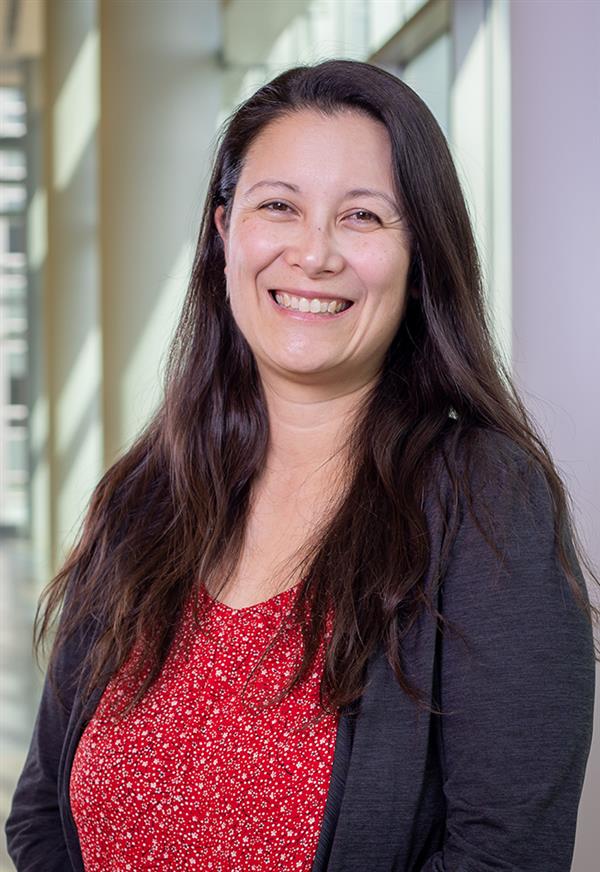
Kim Talus is a Professor of European Energy Law at the Law School, University of Eastern Finland , with concurrent appointments as Professor of Energy Law at the University of Helsinki and Partner at Energy and Regulation Partners, Zug, Switzerland. His work focuses on EU energy law , climate change regulation , and international energy disputes , particularly in hydrogen, LNG, and renewable energy sectors. Research Trends: Talus’s recent articles (2024–2025) analyze Hydrogen Market Regulation (EU and Australia) State Aid in renewable energy LNG Market Evolution in Asia and EU Climate Legislation (methane regulation, carbon capture) Cross-Border Energy Trade complexities. His work frequently addresses tensions between climate policy and economic freedoms like investor protection. Leadership: Talus directs the Center for Climate Change, Energy and Environmental Law (CCEEL) and contributes to edited volumes such as Elgar Research Agendas and Edward Elgar Handbooks . He collaborates with institutions like the European Commission and University of Oslo.
Maurizio MUZZUPAPPA is a Full Professor at the Department of Mechanical, Energy and Management Engineering (University of Calabria) since 2018. His roles include Rector's Delegate for Technology Transfer, Academic Delegate for Education at DIMEG, and Head of the Physical Prototyping Laboratory at the MaTeRiA Center (UNICAL-CNISM collaboration). He supervises the Unical Racing Team in Formula SAE competitions and co-founded three university spin-offs: 3DResearch, Tech4Sea, and Q-BOT. As Scientific Director of projects like TECH4YOU (climate change adaptation technologies) and GROWN IN THE BLUE (Mediterranean reef conservation), he integrates research in industrial design, augmented reality, and underwater cultural heritage. He has authored over 200 publications (h-index 27) and holds 10 patents. His teaching includes Tools and Methods for Industrial Design and Formula SAE LAB . His research focuses on: Industrial design methodologies with parametric and sustainable approaches 3D prototyping and additive manufacturing User-Centered Design for product ergonomics Virtual/Augmented Reality applications in engineering and cultural heritage Underwater robotics and artifact restoration Recent publications highlight trends in AR for industrial maintenance, generative design tools, and mechatronic solutions for underwater heritage. He has supervised over 300 theses and 10 Ph.D. students while leading technology transfer initiatives.
Katherine L. Milkman is the James G. Dinan Endowed Professor at The Wharton School of the University of Pennsylvania, with secondary appointments in the Perelman School of Medicine and School of Arts and Sciences. She co-founded and co-directs the Behavior Change for Good Initiative , focusing on harnessing behavioral economics and psychology for societal benefit. Education: PhD in Computer Science and Business, Harvard University Undergraduate degree (summa cum laude) in Operations Research and American Studies, Princeton University Her research bridges behavioral economics , decision-making , and health psychology , with applications in education, finance, and public health. Recent studies explore quantification fixation , streak incentives , and diversity interventions using megastudy methodologies. Scientific awards include Thinkers50 Top 50 Management Thinker (2021, 2023) APS Fellow (2020) FABBS Early Career Award (2015) Wyss Award (Harvard, 2008) She teaches courses in decision-making and judgment research , including OIDD9950 (Dissertation) and OIDD2990 (Judgment & Decision Making Research). Media outlets like The New York Times and Nature regularly feature her work, while her podcast Choiceology disseminates behavioral economics insights to a broader audience.
Prof. Dr. Jörg Budde is a faculty member at the University of Bonn , affiliated with the Department of Economics . His academic rank is Professor , and he is actively engaged in research related to managerial accounting, performance measurement, and incentive contracts. Institute: Institute for Applied Microeconomics Email: joerg.budde@uni-bonn.de Contact: +49 228 73-9247 Budde’s research focuses on incentive design and performance evaluation in agency models, particularly under conditions of limited liability and distorted metrics. His work explores topics such as bonus pools , rank-order tournaments , and contractual frameworks that balance risk and incentive alignment. His publications span journals like Journal of Economics , Management Accounting Research , and Journal of Mathematical Economics , with a thematic emphasis on agency theory , information systems , and organizational behavior .
Andrew W. Lo is the Charles E. and Susan T. Harris Professor and a Professor of Finance at the MIT Sloan School of Management. He serves as Director of the Laboratory for Financial Engineering and is a principal investigator at the MIT Computer Science and Artificial Intelligence Laboratory (CSAIL). His academic affiliations include the American Finance Association, Academia Sinica, American Academy of Arts and Sciences, Econometric Society, and Society of Financial Econometrics. As an external faculty member at the Santa Fe Institute and research associate at the National Bureau of Economic Research, Lo bridges finance, AI, and healthcare. BA in Economics, Yale University AM and PhD in Economics, Harvard University His research focuses on evolutionary models of investor behavior , AI in financial technology , healthcare finance , and impact investing . Recent work includes adaptive market frameworks, AI-driven financial advice systems, and statistical tools for clinical trial prediction. His 2025 articles explore applications of Bayesian analysis in healthcare, endowment risk management, and market innovation dynamics. Lo has received prestigious awards including the Guggenheim Fellowship , TIME 100 recognition, and multiple teaching and research honors. He co-founded asset management and biotech companies and serves on healthcare organization boards. MIT Sloan Executive Education courses highlight his leadership in AI and machine learning for business applications.
Frédéric Robert-Nicoud is Full Professor of Political Economy at the Geneva School of Economics and Management (GSEM) , University of Geneva. He has held academic positions at HEC Lausanne and the London School of Economics (LSE), with visiting roles at CEMFI, CERAS, CORE, Princeton, and other institutions. His research focuses on Economic Geography, Urban Economics, and International Trade , with significant contributions to agglomeration theory, trade liberalization, and spatial sorting. Education: PhD in Economics, London School of Economics (2002) Master's in Econometrics and Mathematical Economics (Summa Cum Laude, 1999) Master's in International Relations (HEID, 1996) Bachelor's in Economics (University of Geneva, 1994) His research interests explore the interplay between trade liberalization, urban inequality, tech clusters, and labor market dynamics. Recent work analyzes climate change's geographic implications and structural transformation in cities. He has developed frameworks for understanding highway impacts on spatial sorting, agglomeration effects, and trade's role in unemployment. Key scientific awards include: CEPR Fellow Affiliated with Spatial Economic Research Centre (SERC) Former Editor of Journal of Economic Geography (6 years) Former Associate Editor of Review of International Economics (4 years) Member of Conseil scientifique des économistes His grants and fellowships span NBER, CEPR, and SERC affiliations. He has presented at major conferences including the Urban Economics Association Annual Meetings, European Economic Association Congress, and World Trade Institute seminars.
Elisa Maarit Lähde serves as an Assistant Professor in the Department of Architecture at Aalto University, where she advances sustainable urban design through interdisciplinary research at the intersection of landscape architecture, ecology, and planning. Her work focuses on transforming urban environments through biodiversity integration and socio-ecological innovation. Dr. Lähde's research centers on urban biodiversity mainstreaming, regenerative design frameworks, and landscape architectural storytelling. She pioneers approaches for integrating ecosystem services into urban planning, with particular emphasis on climate adaptation, green-blue infrastructure, and human-nature connection building. Her methodologies frequently employ co-creative processes with stakeholders to develop context-specific socio-ecological solutions. Recent publications (2024-2025) demonstrate a cohesive research trajectory examining practical applications of biodiversity principles across diverse urban contexts. Key thematic clusters include: (1) ecological assessment frameworks for built environments; (2) regenerative design strategies for Anthropocene challenges; (3) maritime spatial planning innovations; and (4) narrative techniques for enhancing ecological literacy. Her work bridges theoretical rigor with Finnish and international case studies, reflecting strong commitment to both scholarly contribution and real-world implementation. Dr. Lähde's scholarly contributions have been recognized through significant professional accolades: First prize in the Elielinaukio architectural competition (December 2021) for Helsinki Central Railway Station surroundings renewal Finalist in Ericsson Innovation Awards for FoodGrid project (June 2017) addressing Future of Food challenges First prize in International Stormwater Innovation Competition (November 2014) for urban furniture with water detention Honorary mention in Hiedanranta ideas competition (January 2017) for "There’s a New Town in the City" proposal While specific advising relationships and grant funding details aren't documented in available materials, her research portfolio demonstrates substantial collaborative engagement through multi-institutional publications and competition participations that likely involve student mentorship and research team leadership.
CHIEN-WEI CHEN is Professor and Chairman of the Department of International Business at National Chengchi University's College of Commerce. With over two decades of service at NCCU, he progressed from Assistant Professor (2000) to Associate Professor (2012) and full Professor (2019), concurrently serving as Department Chair (2023-2026). His research specializes in marketing strategy, international business, and competitive analysis, with particular focus on technology product launches and consumer behavior dynamics. Education: Ph.D. in Business Administration, University of Warwick (1996-2000) M.S. in Business Administration, National Taiwan University (1988-1990) B.S. in Electrical Engineering, National Taiwan University (1983-1987) Research Focus: Dr. Chen's work bridges marketing strategy and behavioral economics, examining how technological disruption influences consumer decisions (e.g., smartphone upgrades), how firms signal value through product preannouncements, and how co-branding strategies shape market perceptions. His research consistently applies empirical methods to high-technology contexts in international markets. Publication Trends: His 15 most recent articles (2002-2023) reveal three dominant themes: 1) Strategic signaling in product launches and financial markets, 2) Psychological drivers of technology adoption/upgrading, and 3) Cross-border marketing efficiency. Methodologically, they combine behavioral experiments, event studies of stock reactions, and empirical analyses of firm strategies. Awards & Honors: 20-Year Outstanding Teacher Award (NCCU, 2020) 10-Year Outstanding Teacher Award (NCCU, 2010) International Research Excellence Award (NCCU, 2006) Research Leadership: As Principal Investigator for 10+ National Science and Technology Council projects (2013-2021), he secured funding for studies on consumer technology adoption patterns, signaling theory applications in marketing, and service innovation frameworks. Projects include 'Fear of Product Obsolescence' (2013-2015) and 'Upgrade Decisions for High-Tech Durables' (2015-2017).
Lea Hannola is a researcher at the LUT School of Engineering Sciences (Lappeenranta–Lahti University of Technology LUT) focusing on digital twins, sustainable manufacturing, and Industry 5.0. Her work bridges technological innovation with eco-conscious business practices. Academic Rank: Researcher Contact: Lea.Hannola@lut.fi Hannola's research emphasizes digital twin applications for sustainability, including circular manufacturing, smart energy systems, and human-centric industrial design. She explores competencies required for Industry 5.0 adoption, workforce empowerment through digital tools, and integration of environmental and data-driven strategies in manufacturing. Her publications span topics like smart building management , quantum computing challenges , and supply chain sustainability , with a recurring focus on simulation, interoperability, and lifecycle value creation. Key trends include AI-driven sustainability, green HRM, and digital ecosystems. As a scholar, Hannola contributes to advancing digitally extended product-service systems and addressing sociotechnical challenges in industrial digitalization. Her work impacts manufacturing competitiveness, energy efficiency, and organizational transformation.
Moïse Blanchard is an Assistant Professor and Tennenbaum Early Career Professor at the H. Milton Stewart School of Industrial and Systems Engineering at Georgia Institute of Technology, having joined in August 2025. Previously, he was a Postdoctoral Fellow at Columbia University Data Science Institute. His academic journey includes a Ph.D. in Operations Research from MIT (2024), and M.Sc. and B.Sc. degrees in Applied Mathematics from École Polytechnique. Blanchard's research focuses on the intersection of machine learning theory, statistics, and optimization. His work addresses fundamental questions in universal learning, online algorithms, and convex optimization under memory constraints. His research program explores learnability under minimal assumptions, query complexity/memory tradeoffs, and decision-making in adversarial environments. This work has significant implications for theoretical computer science, operations research, and statistical learning theory. His publications reveal a strong emphasis on foundational aspects of learning theory and optimization. Recent work demonstrates expertise in universal learning frameworks, memory-constrained optimization, and probabilistic analysis of combinatorial problems. His research often bridges theoretical computer science with practical optimization challenges, particularly in contexts where traditional i.i.d. assumptions don't hold. Columbia DSI postdoctoral fellowship, 2024 INFORMS Transportation Science & Logistics (TSL) best student paper award, 2023 Air Force Office of Scientific Research Grant (AFOSR), with Prof. Patrick Jaillet, 2023 COLT 2022 Best student paper runner-up Bronze medal, Alibaba Global Mathematics Competition, 2022 Blanchard has received significant research funding including an Air Force Office of Scientific Research Grant. His work has been recognized with multiple prestigious awards, including the INFORMS TSL best student paper award for his research on the k-Traveling Salesman Problem. His extensive publication record in top venues demonstrates a strong research trajectory with impactful contributions to theoretical machine learning and optimization.
Professor Damian Grimshaw is Professor of Employment Studies at King's College London's King's Business School, where he serves as Associate Dean for Research Impact. He is also London & South Forum Co-Lead for the Productivity Institute. Previously, he was Director of the Research Department at the International Labour Organisation (Geneva, 2018-19) and Professor at the University of Manchester, where he served as Head of the HR and Employment Relations and Law group and Director of the European Work and Employment Research Centre. Professor Grimshaw's research spans multiple disciplines including labour market analysis, comparative employment relations, feminist economics, sociology of work, and management. His work focuses on international comparisons of low-wage labour markets, outsourcing and HRM, technology and the future of work, precarious work, collective bargaining, and gender inequality. His research has strong policy impact across UK, European and international arenas. Recent publications reveal a clear trend toward examining the future of work through multiple lenses: collective bargaining structures, digital labor platforms, gendered impacts of pandemic policies, and regional approaches to decent work. His work consistently addresses how institutional frameworks shape employment outcomes across different national contexts and sectors. Professor Grimshaw has received significant research funding from major organizations including the British Academy, ESRC, European Commission, International Labour Organisation, Leverhulme Trust, Low Pay Commission, OECD, and Russell Sage Foundation. He coordinates a major UKRI research programme on human capital and productivity and leads the Regional Productivity Forum for London and the South alongside Marcela Miozzo and Mario Gruber. His ongoing research projects include precarious work in Europe and the gender inequalities of the Covid-19 pandemic and recession. During 2021-22, he taught 'Globalisation and Employment' on the MSc in HRM and Employment Relations and 'International HRM' to undergraduates. His research team is actively engaged in projects examining automation in knowledge-intensive business services and artificial intelligence's impact on occupations, with particular focus on the UK and US contexts.
Leah Schubert, PhD is an Associate Professor in the Department of Radiation Oncology at the University of Colorado Anschutz Medical Campus School of Medicine. She serves as Director of the Medical Physics Residency Program, leading educational initiatives in medical physics training. Her professional focus centers on improving safety, quality, and educational standards in radiation oncology physics. Dr. Schubert earned her PhD from the University of Wisconsin - Madison in 2009 and completed her undergraduate studies with a BS from the University of California–San Diego in 2003. She is board certified in Therapeutic Medical Physics by the American Board of Radiology (2012). Her research spans medical physics education, radiation safety, quality assurance, and functional imaging applications in radiation therapy. She has pioneered work in physics plan review training, safety checklist implementation, and 4DCT-ventilation imaging for functional avoidance radiation therapy. Her educational research focuses on concept inventories, virtual interviewing for residency matches, and cross-institutional residency training frameworks. Analysis of her recent publications reveals a consistent focus on improving safety culture in radiation oncology through systematic approaches including failure modes and effects analysis, simulated error training, and safety checklist development. Her work increasingly incorporates cross-institutional collaboration and educational innovation in medical physics training. ABR Volunteer Services Award, American Board of Radiology (2023) Board Member at Large, Society of Directors of Academic Medical Physics Programs (2022) AAPM Fellow, American Association of Physicists in Medicine (2022) Excellent Patient Safety Role Model, University of Colorado Hospital (2021) ABR Volunteer Services Award, American Board of Radiology (2020) IAEA Competition Towards a Strong Safety Culture in Radiation Medicine, International Atomic Energy Agency (2019) As Director of the Medical Physics Residency Program, Dr. Schubert oversees comprehensive training for future medical physicists, implementing innovative approaches to curriculum development and assessment. Her leadership extends to national committees including the AAPM Work Group on Periodic Review of Medical Physics Residency Training and various SDAMPP committees. She has secured funding for educational initiatives focused on improving residency training standards and safety culture development. Dr. Schubert collaborates extensively with multi-institutional research teams, particularly in the area of 4DCT-ventilation imaging and its clinical applications for functional avoidance radiation therapy. Her work bridges clinical practice, safety initiatives, and educational innovation in medical physics.
Tālis Laizāns serves as a practical assistant professor and researcher at the Institute of Economics and Entrepreneurship, Riga Technical University (RTU), leveraging dual master's qualifications in economics and engineering to bridge academic theory with real-world business applications. His work significantly advances RTU's research in entrepreneurship, innovation, and economic policy development. His educational credentials include: Master of Economics (Mg.oec.) Master of Engineering (Mg.ing.) Laizāns specializes in venture capital, SME development, and social innovation financing, with strong emphasis on artificial intelligence applications and EU research frameworks. His interdisciplinary approach integrates economic analysis with engineering principles to address contemporary challenges in Latvian and European business ecosystems, particularly focusing on practical implementation pathways for startups and established enterprises. His 2019 publications analyze social innovation through multiple lenses: societal participation dynamics, international financing models, EU research project structures, and critical success factors. These works synthesize Latvia-specific case studies with broader European experiences, highlighting actionable insights for policymakers and business stakeholders in scaling social innovation initiatives. Professional recognition stems from substantial project leadership rather than formal awards, evidenced by his selection as Latvia's representative in high-impact EU initiatives. Laizāns actively secures and executes research funding across diverse domains: Latvia-Cambridge Venture Camp (2024) : Cultivating next-generation entrepreneurship through experiential learning in the UK. Shadow Economy Assessment in Construction (2024-2025) : Quantifying informal economic activities to inform regulatory frameworks. OpenFin Hackathon (2024) : Driving fintech innovation through international competition platforms. Learning and Research Academic Group (2024) : Advancing pedagogical methodologies and collaborative research practices. Post-Pandemic Economic Framework Project (2020) : Designing resilience strategies for Latvia's economic recovery. Climate Knowledge and Innovation Community (2016-2023) : Leading EIT-funded climate action through knowledge transfer. His earlier Horizon 2020 contributions include Bio-Based Industries JIT representation (2013-2017) and COPA-COGECA working group leadership on agricultural innovation (2010-2017). At RTU, Laizāns operates within the Innovation Economic Research Center while co-founding the 'Learning and Research' academic collective. His project portfolio demonstrates consistent engagement with interdisciplinary teams tackling societal challenges through evidence-based innovation, particularly in economic policy design and sustainable business model development.
Ram Mudambi is the Frank M. Speakman Professor of Strategy at Temple University’s Fox School of Business and Management. He holds a central role in strategic management and international business research, with prior faculty appointments at the University of North Carolina, Case Western Reserve University, and the University of Reading (UK). His work bridges economic geography, innovation studies, and global strategy. Research interests focus on the geography of innovation, emphasizing migration, ethnicity, gender dynamics, and global value chain governance. He has contributed to understanding how spatial factors influence innovation ecosystems, multinational enterprise strategies, and regional development. Mudambi’s interdisciplinary approach integrates microeconomic theories with macro-level institutional analysis. He serves as a Consulting Editor for the Journal of International Business Studies and the Journal of World Business, and as Area Editor for the Journal of International Business Policy. His research appears in top-tier outlets like the Journal of Political Economy, Management Science, and Strategic Management Journal, alongside practitioner-focused articles in Harvard Business Review and Sloan Management Review. Awards: Fellow of AIB (20XX), Fellow of EIBA (20XX) Teaching: Courses include Strategic Management, International Business Strategy, and Global Research Methodologies Media Engagement: Featured in The New York Times, The Atlantic, and NPR His recent work explores digitalization’s impact on globalization, global value chain resilience, and the strategic implications of restrictive immigration policies. Mudambi’s research also addresses sustainability linkages in global cities’ innovation systems.
Dr. Carla Riverola is a Senior Lecturer in the Department of Management at Griffith University's Griffith Business School. Her research focuses on disruptive innovation for sustainable development, particularly in plant-based foods and AI-driven educational strategies. She holds a Ph.D. in Information Technologies and Management from Ramon Llull University, Barcelona. Professional roles include Deputy Director of the Griffith Business School (2023-2024) and International Lead (2022-2023). She is affiliated with the Centre for Work, Organisation and Wellbeing and Social Marketing@Griffith. Education: Ph.D., Information Technologies and Management, Ramon Llull University M.Sc., IT Management, Ramon Llull University B.Eng., Computer Science, Ramon Llull University Affiliations: Centre for Work, Organisation and Wellbeing Social Marketing@Griffith Climate Action Network International Educators Her research bridges entrepreneurship, sustainable innovation, and AI applications. Recent work examines plant-based food adoption and AI's role in organizational decision-making. She has received the Group Award for Excellence in Teaching (2024) and the Knut Holt Best Paper Award (2017). Her articles span innovation diffusion, food sustainability, and technology networks. Dr. Riverola advises on policy and industry partnerships, contributing to initiatives like the Catapult Program Roadmap (Logan City Council). She actively collaborates with international stakeholders to advance sustainable development goals, particularly Climate Action (SDG 13) and Responsible Consumption (SDG 12).