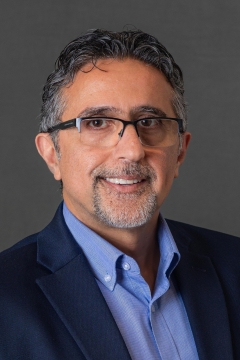
Massimo Figari is a Full Professor at the University of Genoa , affiliated with the Department of Naval, Electrical, Electronic, and Telecommunications Engineering (DITEN) . He serves as the Course Coordinator for the Maritime Science and Technology course and teaches a range of subjects including naval systems reliability, military ship design, and maritime economics. His research spans naval architecture , maritime safety , autonomous shipping , and decarbonization technologies . He is actively involved in developing battery energy storage systems for naval applications, certification frameworks for autonomous ships, and simulation-based training for maritime education. His work emphasizes sustainability, safety, and innovation in marine engineering. Recent publications reflect a strong focus on emission reduction , alternative marine fuels like methanol, and autonomous navigation systems . These contributions position him at the forefront of maritime engineering research and education. Contact: He is available via email at massimo.figari@unige.it and holds office hours on Fridays from 4–5 PM at Villa Cambiaso, Office No. 322.
Jae Hoon Lim is a Professor in the Department of Educational Leadership/Educational Research, Measurement, and Evaluation at the Cato College of Education, The University of North Carolina at Charlotte. She serves as Program Director for the Post-Master's Certificate in Qualitative Research and teaches qualitative research methods at both introductory and advanced levels. Ph.D., University of Georgia (2002), Elementary Education with Certificate in Interdisciplinary Qualitative Studies M.A., Korea University (1995), Education with focus on Educational Philosophy B.Ed., Seoul National University of Education (1990), Elementary Education Dr. Lim’s research focuses on intersectionality and equity in STEM education , particularly examining identity construction and systemic barriers faced by underrepresented groups including student veterans, Asian international female students, and African American girls. Her work addresses cultural barriers in educational transitions and critiques social/ethical dimensions of engineering education. Recent publications analyze racial disparities in veteran transitions to STEM careers , gender tightropes in transnational STEM education , and pedagogical strategies for marginalized student groups . Themes across her work include qualitative methodologies, educational equity, and intersectional analyses of race, gender, and class. Principal Investigator for $1.6M NSF grant on veteran education Co-PI for Department of Defense grants supporting student veterans Recipient of UNC Charlotte Faculty Research Grant for women veterans study Dr. Lim actively contributes to academic communities as an Associate Editor for the Journal of Women and Minorities in Science and Engineering and as former President/Chair of the Korean American Educational Researchers Association (KAERA). Her work bridges educational theory with practice through collaborations with institutions like Oxford University Press and Teachers College Press.
Dr Orin Chisholm is a program director at the Sydney Pharmacy School (University of Sydney), an Adjunct Associate Professor at UNSW Sydney, and teaches at Arizona State University. Her work focuses on regulatory science, pharmaceutical policy, and capacity-building in the therapeutics industry. BSc (Hons) in Biochemistry , University of Sydney PhD in Molecular Biology , University of Sydney Graduate Certificate in University Learning and Teaching , UNSW Sydney Her research explores regulatory frameworks for emerging therapeutics, horizon scanning of medical technologies, and competency-based education in pharmaceutical sciences. Recent projects include NHMRC Partnership Grant (2025-2028) for horizon scanning and national medicines policy reviews. Her publications analyze regulatory reforms, benefit-risk methodologies, and educational transformations in pharmaceutical medicine. Key themes include precision medicine , clinical research , and medical device regulation . TOPRA Award for Excellence in Regulatory Education (2017) Senior Fellow of the Higher Education Academy (SFHEA) (2018) Fellow of the Regulatory Affairs Professionals Society (FRAPS) (2021) Fellow of ARCS Australia (FMPP) (2025) She supervises higher-degree research students, including Owen Smith (AAV gene therapies) and Matthew Britland (Medical Affairs and Quality Use of Medicines). Grants include funding for nanoparticle immunotherapy platforms and peptide-drug conjugate manufacturing.
Dr. Donald Osborn is an Assistant Professor and Program Director of the Graduate Addictions Counseling Division at Indiana Wesleyan University. With over three decades of experience, he serves as a licensed clinical addictions counselor, mental health professional, and ordained minister in the Christian Church/Church of Christ. His career spans roles as a Psychiatric Case Manager, Clinical Supervisor, and Medical Administrative Officer in community mental health and government sectors. Education includes a PhD in Guidance and Psychological Services (Indiana State University, 2013), Master of Arts in Theology (Saint Mary-of-the-Woods College, 1987), and a Bachelor of Arts in Christian Ministries (Lincoln Christian University, 1979). He holds certifications as a National Board Certified Counselor and Master Addiction Counselor. Research interests focus on ethics in behavioral sciences, integration of psychology and theology, addictions education, clinical supervision, and licensure standards. He has authored articles on addiction policy, curriculum development, and professional practice. Notable leadership roles include National President of NAADAC and Chair of the Indiana Behavioral Health Licensure Board. Professional Memberships: NAADAC, ACA, AAMFT, ACES Awards: Senior Fulbright Scholar in Addictions Presentations: Over 20 national and international talks on addiction counseling, licensure, and clinical supervision (2006–2016). Dr. Osborn’s work bridges clinical practice, education, and policy, emphasizing ethical standards and professional development in addiction counseling.
Dr. Wanju Huang is a Clinical Assistant Professor in the Learning Design and Technology program at Purdue University , where she focuses on enhancing online learning experiences through innovative instructional design and emerging technologies. Prior to joining Purdue in Fall 2016, she served as an instructional design manager at Teaching and Learning Technologies and spent six years as a lecturer and instructional designer at Eastern Kentucky University. Education: Ph.D. in Curriculum & Instruction (Technology concentration) from University of Illinois at Urbana-Champaign Her research interests center on technology-mediated online communities, instructor presence in digital learning, augmented reality applications, and faculty development programs. She has published extensively on these topics, including studies on multimedia interventions for teaching presence, immersive technologies in ESL education, and adaptive cyber training platforms. Dr. Huang's publications reflect a strong focus on EdTech innovation , with trends spanning AI integration in K-12 , model-based systems engineering , and microlearning strategies . Her work bridges theoretical frameworks like social constructivism with practical implementations in professional education. Professional memberships include the American Educational Research Association, Association for Educational Communications and Technology, and Quality Matters. She teaches courses on learning design foundations, e-learning systems, and professional competency demonstrations in LDT.
Viktoriya Olari is a researcher at the Didactics of Computer Science department, Freie Universität Berlin. Her work focuses on artificial intelligence literacy, data literacy, and digital education frameworks for K-12 and teacher training programs. She contributes to projects like ENKIS, DigiProMIN, and TrainDL, emphasizing interdisciplinary approaches to computer science education. Key Projects: ENKIS, AMI, Digi4All, siMINT, AI@IT2School Her recent publications address pedagogical methods for AI/data literacy integration, teacher professional development, and physical computing in education. She holds weekly consultation hours for students and maintains research partnerships across Germany. Research Themes: AI education in schools, data-driven pedagogy, digital transformation of teacher training
Dr. Chang Pu is a Professor of Teacher Education and Coordinator of the ESOL endorsement program at Berry College. She specializes in TESOL, bilingual education, and heritage language education, teaching both undergraduate and graduate courses including Multicultural Education and ESOL endorsement classes. Her work emphasizes preparing educators to support culturally and linguistically diverse students through collaborations with schools in Georgia (e.g., New Comer Academy) and China. Education: Ph.D. in Culture, Literacy, and Language (University of Texas, San Antonio) M.A. in TESOL (St. Cloud State University) B.A. in English (University of Electronic Science & Tech. of China) Instructional Technology Certificate (St. Cloud State University) Research Focus: Dr. Pu's research centers on heritage language education, virtual exchange methodologies, and equitable practices for linguistically diverse learners. She investigates how bilingual and bicultural competence can be fostered in K-12 settings and teacher preparation programs. Publications: Her work spans topics like at-risk Latino student success, global teacher education collaboration, and Chinese heritage language instruction. Recent contributions include analyses of biliteracy development and innovative pedagogical strategies in multicultural contexts. Awards: 2019 Longview Foundation Global Teacher Educator Fellow Dr. Pu actively engages in community partnerships, co-designing programs with international schools and bilingual immersion initiatives to bridge educational gaps. Her advising focuses on preparing teachers for multicultural classrooms through service-learning and cross-cultural exchanges.
Ronald Gleich has been Professor of Management Practice & Control at Frankfurt School of Finance and Management since August 2020. In December 2020 he founded the Centre for Performance Management & Controlling together with Prof. Dr. Matthias Mahlendorf. His research centres on management control, innovation management, performance measurement and digital transformation, and he co-authors the leading German-language controlling textbook (14th edition). Education & Career Path Apprenticeship as banker Studies in technically-oriented business administration, University of Stuttgart Doctorate and habilitation, University of Stuttgart Deputy professorship, University of Hohenheim Professor of Industrial Management, EBS University (2003–July 2020) Research Interests Ronald Gleich investigates practical and current issues in controlling, innovation management, performance measurement and cost management. He focuses on how organisations can design effective control systems to steer innovation, improve cost efficiency and master digital transformation (Industrie 4.0) and crisis situations such as COVID-19. His work bridges rigorous research with direct applicability for manufacturing firms and executive practice. Publication Profile Across more than 250 publications—spanning journal articles, monographs, edited volumes and practitioner guides—Gleich explores themes such as advanced budgeting, performance measurement systems, innovation controlling, supply-chain controlling and integrated reporting. His recent output (2020–2024) emphasises agility, crisis management, digital technologies and the evolution of controller roles. Industry Engagement & Leadership Founder and Co-Director, Centre for Performance Management & Controlling, Frankfurt School Co-Director, ICV-Ideenwerkstatt (think-tank of the International Controller Association) Partner, Horváth & Partners (2001–2005) Managing Partner & Shareholder, Horváth Academy (2012–2018) Advisor to leading German manufacturing companies Teaching & Executive Education Professor Gleich teaches internal accounting, controlling and a variety of executive-education seminars and certificate programmes aimed at finance leaders and controllers.
Reza Taheri is a Professor and Senior Associate Dean of Pharmacy Education at Chapman University School of Pharmacy. His expertise spans leadership development, curriculum design, strategic planning, and programmatic accreditation in pharmacy education. Previously, he served as Chief Strategy Officer at RxPrep Inc., founding Associate Dean at West Coast University, and held faculty and leadership roles at Western University of Health Sciences and Loma Linda University School of Pharmacy. Education: Doctor of Pharmacy (University of Minnesota), Executive MBA (University of Southern California) Current Role: Department of Pharmacy Practice, Chapman University His research focuses on pharmacy education , emphasizing emotional intelligence coaching , interprofessional collaboration , and virtual learning modalities . Recent studies examine mock-trial simulations for teaching-assessment, supplemental instruction efficacy, and interprofessional virtual simulations for leadership and patient advocacy. Publications highlight technology integration in pharmacy curricula and resilience measurement in educational contexts. Taheri collaborates extensively on interprofessional education (IPE) interventions, analyzing their impact on patient outcomes like length of stay , medical errors , and mortality . He is a certified Emotional Intelligence Coach and trainer with Crucial Learning and The Table Group.
Dr. Payam Sheikhattari is a tenured Professor of Public Health in the School of Community Health & Policy at Morgan State University with nearly two decades of experience in community-based participatory research. He is the founder of the Morgan CARES network and former director of the Prevention Sciences Research Center, fostering sustainable collaborations between academia and community organizations to address health disparities in underserved communities. His educational background includes a Post-Doctoral Fellowship from Johns Hopkins Bloomberg School of Public Health, an MD from Uromia University of Medical Sciences in Iran, and an MPH from Tehran University of Medical Sciences. This diverse training informs his approach to public health research and practice. Dr. Sheikhattari's research focuses on advancing health equity through community engagement, with particular emphasis on tobacco cessation programs, health disparities in marginalized populations, and innovative community-academic partnerships. His work consistently centers on community-based participatory research methods that empower communities to be active partners in the research process. His publication portfolio demonstrates expertise across tobacco control, health disparities, and community engagement, with recent work examining gender differences in quit rates, electronic cigarette use among youth, and intersectional approaches to tobacco advertising exposure. His 2022 book "Practitioner Research for Social Work, Nursing, and the Health Professions" represents a significant contribution to methodological approaches in community health. $41 million (over 10 years) NIH U54 award for ASCEND Training Model $18 million (over 5 years) NIH U54 award for RCMI@Morgan $749k (over 4 years) AHA funding for IMPACT project $226k (over 2 years) Morgan State University funding for Community & Stakeholder Engagement Certificate Program As a dedicated mentor, Dr. Sheikhattari has supervised numerous undergraduate research students through programs like ASCEND and has been instrumental in developing training models to enhance biomedical research opportunities for underrepresented minorities. His leadership extends to establishing physical infrastructure for community engagement through the Morgan CARES initiative, which has become a model for academic-community partnerships in public health research.
Dr. Linda D. Grooms is a Professor of Educational Leadership at Regent University's School of Business and Leadership. With over three decades of experience, she specializes in integrating faith-based principles into educational systems. Her leadership spans university teaching, international training, and longitudinal research in online pedagogy, computer-mediated communication, and virtual leadership development. Education: BM in Music Theory, Furman University (1976) MA in Educational Administration, Regent University (1984) Certificate of Advanced Graduate Studies & PhD in Organizational Leadership, Regent University (1997 & 2000) Research Interests: Dr. Grooms focuses on distance learning innovation, constructivist online education models, leadership resilience in cross-cultural contexts, and the intersection of ethical leadership with educational equity. Her work emphasizes leveraging technology to democratize education and foster global leadership. Awards & Grants: Regent Professor of the Year (2015-16) Recipient of multiple faculty research grants Certified Master Instructor (2003) Over $15,000 in external grants for educational initiatives Professional Contributions: She serves on editorial boards for journals like International Journal of Leadership Studies and has reviewed for publishers including Sage and Rowman & Littlefield. Her work appears in prestigious encyclopedias and peer-reviewed journals, with a focus on bridging theory and practice in educational leadership. Future Focus: Continues advocating for faith-infused education systems, cross-cultural leadership development, and expanding access to quality education through digital innovation.
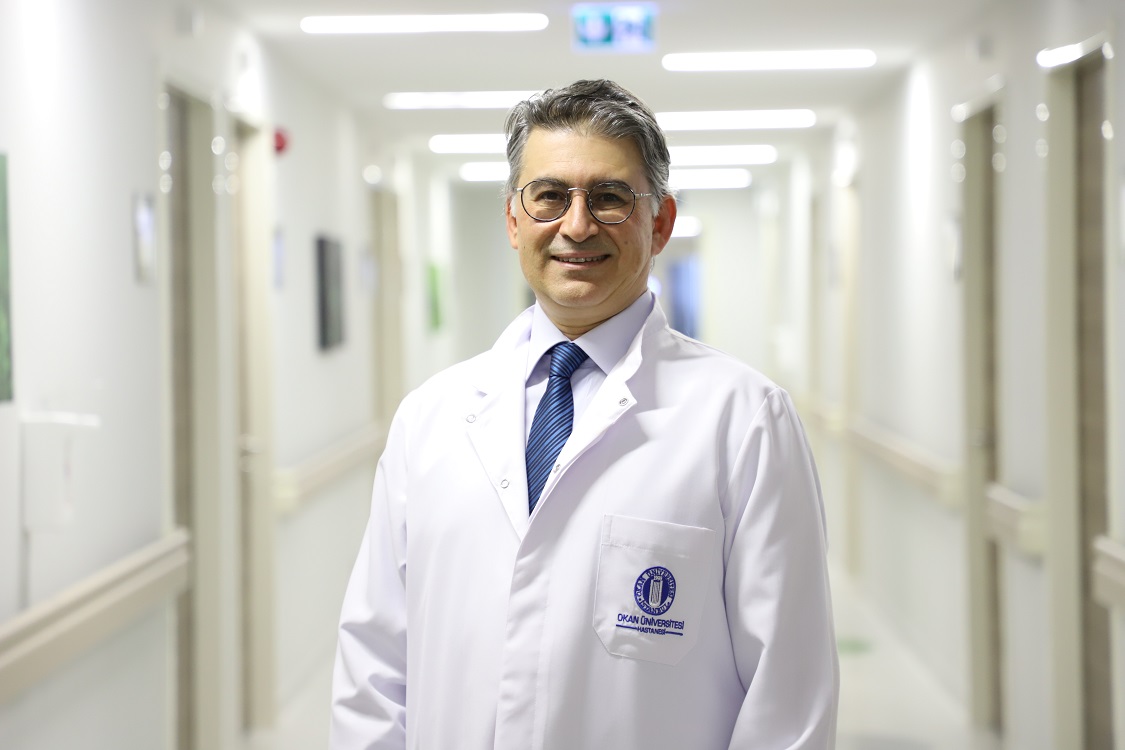
Prof. Dr. Ozan Seymen Sezen is an Associate Professor specializing in Ear, Nose, and Throat (ENT) Diseases with dual affiliations at Istanbul Okan University Hospital since 2019 and Kartal Dr. Lütfi Kırdar Training and Research Hospital since 2001. He earned his medical degree from Istanbul University Cerrahpaşa Faculty of Medicine in 1993, completed his ENT specialization in 2000 after training at the University of Michigan Medical School, and achieved associate professorship status in 2012. His educational background includes: Master's Degree from Istanbul University Cerrahpaşa Faculty of Medicine Medical Specialization in ENT at SB Dr. Lütfi Kırdar Kartal Training and Research Hospital Associate Professorship in ENT at the same institution Prof. Sezen has developed specialized expertise in facial aesthetic and plastic surgery, particularly rhinoplasty, with additional focus on snoring and sleep apnea surgery, ear diseases and surgery, and sinus diseases and surgery. His clinical practice significantly exceeds typical volumes in endoscopic sinus surgery, sleep apnea procedures, rhinoplasty, and head and neck cancer surgeries. His research spans surgical innovations, pathological studies, and interdisciplinary connections between ENT and other medical specialties. His publication record demonstrates consistent scholarly contributions over two decades, with recent emphasis on sleep apnea treatment techniques, rhinoplasty innovations, and physiological impacts of ENT interventions. The research shows strong translational focus from laboratory studies to clinical applications. Key professional recognitions include: European Otorhinolaryngology Head and Neck Surgery Certificate of Competency (2012) Fellow of the European Board of Otorhinolaryngology Head and Neck Surgery As an educator, Prof. Sezen has continuously provided scientific, practical, and surgical training to resident doctors and medical students throughout his career. He has participated in over 20 national and international courses and congresses between 2010-2018, with specialized focus on facial plastic surgery techniques. His research collaborations span multiple institutions with emphasis on advancing ENT surgical practices through evidence-based approaches. Professional affiliations demonstrate his commitment to interdisciplinary collaboration, including membership in the Turkish Otorhinolaryngology Head and Neck Surgery Association, Facial Plastic Surgery Association, Turkish Sleep Research Association, European Academy of Facial Plastic Surgery, and American Academy of Cosmetic Surgery.
Dr. Chanel Watson is a Senior Lecturer and Programme Director in the School of Nursing and Midwifery at the Royal College of Surgeons in Ireland (RCSI), where she also serves as Deputy Director of Academic Affairs and coordinates Erasmus activities. She holds a Doctorate in Higher and Adult Education from Maynooth University (2020) and has additional postgraduate qualifications in Healthcare Ethics and Health Professions Education. Her research focuses on nursing education and prescribing practices, employing qualitative methodologies. She currently co-supervises 3 PhD students and is the primary supervisor for an additional 3. Dr. Watson has held roles in research ethics committees, including appointment to the National Research Ethics Committee for clinical trials in 2024, and has led national initiatives in nurse prescribing education frameworks. She has secured grants totaling over €1.6M for projects including nurse prescribing programs, gerontology education, and clinical trial coordination. Dr. Watson is an external examiner at multiple universities and actively reviews submissions for journals like Nursing Ethics and Journal of Nursing Education and Practice . Her professional engagements include leadership in national healthcare education reforms and international conference speaking engagements. Education: MSc in Healthcare Ethics and Law, RCSI (2004–2006) Post Graduate Diploma in Health Professions Education, RCSI (2014–2015) Doctorate in Higher and Adult Education, Maynooth University (2016–2020) Research Interests: Dr. Watson’s work emphasizes advancing nurse and midwife prescribing education, healthcare ethics, and clinical trial coordination. She has pioneered programs such as Ireland’s first Professional Certificate in Musculoskeletal Casting and Splinting. Her qualitative research explores nurse-patient interactions in acute care settings and the impact of burnout on pediatric nursing outcomes. She advocates for evidence-based practices in pain management and patient safety. Grants & Awards: €968,830 National Tender for PGDip Gerontology (2024) €450,000 Sexual Assault Forensic Nurse Examiner Education (2025) €225,180 Residential Care Education (2024) Fellowship of the Faculty of Nursing and Midwifery Committees & Leadership: National Lead for Nurse/Midwife Prescribing Competency Framework (HSE/NMBI) Member of National Research Ethics Committee CT-D External Examiner for University of South Wales and University College Cork
Reynaldo Romero serves as Associate Professor in the Department of History, Humanities and Languages at the University of Houston-Downtown, where he has maintained active teaching and research since at least 2012. His academic foundation spans linguistics, public health, and translation studies across multiple institutions. His educational background includes: Ph.D. in Spanish Linguistics from Georgetown University (Dissertation: Structural Consequences of Language Shift: Judeo-Spanish in Istanbul) M.P.H. in Community Health Practice from UTHealth (Dissertation: Beliefs on COVID-19 vaccination among Hispanic day laborers) M.A. in Translation from Kent State University Multiple B.A. degrees in French, General Linguistics, and Spanish Language/Linguistics from Rice University Romero's research creates critical intersections between linguistic theory and real-world applications. His work on Spanish for the Professions establishes frameworks for medical and legal interpreting while addressing systemic language access barriers. The scholarship on endangered languages—particularly Judeo-Spanish and Afro-Hispanic varieties—combines rigorous documentation with urgent revitalization efforts. His healthcare access research directly engages Houston's linguistic minorities through community-based projects like the Medical Translation Project with HISD. Recent publications reveal three dominant trajectories: (1) advancing methodologies in Afro-Hispanic linguistics through collaborative edited volumes; (2) developing social justice frameworks for marginalized language communities; and (3) documenting endangered linguistic varieties with innovative digital approaches. These threads converge in his community-engaged scholarship that bridges academic research and practical language access solutions. Professional recognition includes: Certified Translator status from the American Translators Association Advanced Professional Analytic Linguist certification Specialized medical and legal interpreter credentials Online teaching certification with digital tools specialization Romero's grant activity demonstrates sustained commitment to practical applications of linguistic research. Current projects include 'Promoting the Critical and Responsible Use of Digital Tools and AI in Written Tasks' (2024-2025), while past work developed medical interpreter training during disaster relief and language access protocols for healthcare settings. His service learning initiatives—like the Medical Translation Project with Houston ISD—create tangible community impact while advancing pedagogical innovation. Through the Medical Translation Project and language access advocacy, Romero cultivates collaborative spaces where academic research directly serves Houston's linguistic minorities. His work with heritage speakers and endangered language communities establishes frameworks for linguistic empowerment beyond traditional academic boundaries.
Dr. Laurel Young is a Professor in the Department of Creative Arts Therapies at Concordia University, specializing in music therapy with a focus on gerontology, palliative care, and neurodiverse populations. She holds certifications in the Bonny Method of Guided Imagery and Music (FAMI) and has over 23 years of clinical experience across geriatrics/dementia, oncology, HIV care, and developmental disabilities. Her roles have included Professional Leader of Creative Arts Therapies at Sunnybrook Health Sciences Centre and teaching positions at Wilfrid Laurier University and Temple University. Dr. Young’s research spans multicultural competence in therapy, ethical frameworks, and the intersection of music with health and well-being. Key themes include end-of-life care for dementia patients, singing groups for autistic adults, and bereavement support through music. She has published extensively in peer-reviewed journals and books, including editorial leadership for Barcelona Publishers’ Qualitative Inquiries in Music Therapy Monograph Series (2012–2013). Her work emphasizes bridging research and clinical practice, with a focus on marginalized groups such as older adults, individuals with disabilities, and those facing chronic illnesses. Awards include the 2014 CAMT Research & Publications Award and teaching accolades from Wilfrid Laurier and Temple Universities. Current projects explore AI-assisted therapeutic technologies and community-based music interventions.