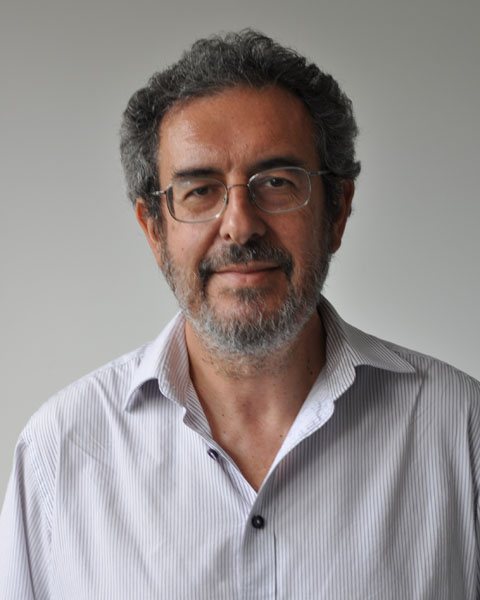
João F. Mano is a Full Professor at the Department of Chemistry, University of Aveiro, and Director of the Doctoral Program on Biotechnology. He leads the COMPASS Research Group and serves as Vice-Director at CICECO - Aveiro Institute of Materials. His academic appointments include Invited Professor at University of Lorraine (France), Visiting Professor at KAIST (South Korea), and Adjunct Professor at Ajou University (South Korea). Education: PhD in Chemistry (1996, Technical University of Lisbon); D.Sc. in Tissue Engineering, Regenerative Medicine and Stem Cells (2012, University of Minho) Research Interests focus on Biomaterials for Regenerative Medicine , integrating Nanotechnology , Microtechnology , and Biofabrication . His group develops Bioinspired Materials using polymer chemistry, Decellularized Extracellular Matrix , and 3D Bioprinting to engineer Cell Microenvironments for therapeutic applications. Recent Publications highlight advancements in Human-Derived Hydrogels , Photopolymerizable Scaffolds , Magneto-Responsive Biomaterials , and Programmable Bioinks . Trends show emphasis on Organ-on-a-Chip integration, Smart Living Materials , and Green Bioprinting methodologies. Scientific Awards include: European Research Council Advanced Grants (2015, 2020) Fellow at IUPAC, European Academy of Sciences, and American Institute of Medical and Biological Engineering ERC Proof of Concept Grants Doctor Honoris Causa from University of Lorraine and Utrecht UNESCO Chair on Biomaterials George Winter Award (European Society for Biomaterials) Supervisions & Collaborations encompass 74+ MSc, 26+ PhD students, and 40+ postdocs. He co-founded METATISSUE and CELLULARIS Biomodels , and serves as Editor-in-Chief of Materials Today Bio .
Marino Zerial is a leading academic and researcher in molecular cell biology, serving as Director of the Max Planck Institute of Molecular Cell Biology and Genetics (MPI-CBG) and Honorary Professor at the Medical Faculty of Technische Universität Dresden. He obtained his biology degree from the University of Trieste (Italy) in 1982 and conducted postdoctoral research at the Institut Jacques Monod (Paris) and EMBL (Heidelberg). His work has focused on understanding endocytosis mechanisms, particularly the role of Rab GTPases in membrane fusion and organelle biogenesis. Zerial has pioneered translational research in liver disease, 3D tissue modeling, and drug delivery systems. He leads the Zerial Group, which integrates molecular biology, biophysics, and computational modeling to study cellular organization at multiple scales. Education: Biology (University of Trieste, 1982) Postdoctoral Training: Institut Jacques Monod, EMBL Affiliations: MPI-CBG (Director), TU Dresden (Honorary Professor) His research interests span endocytic pathways, liver tissue biophysics, and molecular motor mechanisms. Zerial has received prestigious awards, including the Gottfried Wilhelm Leibniz Prize (2006) and election to the American Academy of Arts and Sciences (2021). The Zerial Group collaborates on projects like LiSyM (liver cancer research) and ENDOSCAPE (gene delivery technology), emphasizing interdisciplinary approaches to biological challenges.
Alberto Luini is a Research Professor at the National Research Council (CNR) in Italy and serves as a Principal Investigator at the Telethon Institute of Genetics and Medicine in Naples. His career spans multiple prestigious institutions, including the Mario Negri Sud Institute and the Weizmann Institute of Science. Education: MD from the University of Milan, 1973 Research Interests: Dr. Luini's work focuses on membrane trafficking, signal transduction, and bioimaging technology. He pioneered correlative video-electron microscopy and proposed the compartment maturation-progression model, transforming understanding of intracellular transport. His lab identified novel transport vesicles, characterized homeostatic signaling circuits in constitutive pathways, and applied findings to transport-related diseases. Publications: His 15 most recent articles highlight advancements in ER-Golgi dynamics, membrane fission mechanisms (e.g., CtBP/BARS protein), Golgi structure regulation, and disease implications of trafficking defects. These span disciplines including Cell Biology, Genetics, and Biochemistry. Scientific Service: Dr. Luini has received the Emilio Trabucchi Foundation Medal (2000) and has been an EMBO Member since 2004. He contributes to leading European science infrastructures as a delegate to EuroBioImaging, member of the X-ray and Neutron Sources Committee (CNR), and National Coordinator of the ESFRI European Imaging Infrastructure EuroBioImaging. Labs & Teams: Dr. Luini leads research at the Institute of Protein Biochemistry (CNR) and Telethon Institute of Genetics and Medicine, focusing on membrane transport regulation and bioimaging applications.
Judith Sleeman is a Senior Lecturer at the University of St Andrews, affiliated with the School of Biology, Centre for Biophotonics, Biomedical Sciences Research Complex, and Institute of Behavioural and Neural Sciences. Her research focuses on RNA processing in mammalian cells and its impact on human disease, with particular expertise in neuromuscular disorders. Dr. Sleeman's research interests center on the physical organization of RNA processing in mammalian cells and its implications for human disease. Her work spans from fundamental cellular organization of splicing snRNP maturation to cytoplasmic transport of mRNA and the effects of triplet repeat disorders on cellular structure. Current projects investigate the cellular and molecular basis of Spinal Muscular Atrophy, Myotonic Dystrophy Type 1, and Amyotrophic Lateral Sclerosis using advanced techniques including live-cell and high-resolution microscopy and proteomics. Analysis of Dr. Sleeman's publication record reveals a strong focus on RNA biology, nuclear organization, and neuromuscular disorders. Her research demonstrates a progression from fundamental studies of nuclear bodies to disease mechanisms, with increasing emphasis on therapeutic applications for genetic neuromuscular conditions. Recent work shows particular attention to stress granules, RNA metabolism in disease contexts, and molecular mechanisms underlying triplet repeat disorders. Scientific awards include: British Society for Cell Biology 'Young Cell Biologist of the Year' (1995) FRSB (Fellowship of the Royal Society of Biology) (2014) Oxford Gene Technologies 'Proof of Principle Micro-array Study' competition (2005) Dr. Sleeman has supervised multiple students and researchers, with five supervised works documented. She has secured significant grant funding from prestigious organizations including The Wellcome Trust, Motor Neurone Disease Scotland, and BBSRC. Her projects include 'Protein methylation as a mechanism for cellular damage in motor neurone disease' (£136,298), 'Judith Sleeman Studentship ISSF3' (£35,000), and 'Advanced integrative mass spectrometer' project with BBSRC funding. The Sleeman lab operates within the Biomedical Sciences Research Complex at St Andrews, utilizing advanced microscopy and proteomics facilities. The lab has attracted visits from prominent figures including Diana, Countess Lindsay, and has generated media coverage for breakthroughs in understanding genetic causes of infant death. Research in the lab contributes to UN Sustainable Development Goals related to health and well-being.
Noah Freeman Shroyer, Ph.D. is an Associate Professor in the Department of Medicine, Section of Gastroenterology and Hepatology at Baylor College of Medicine in Houston, Texas. He also holds an Adjunct Associate Professor position in the Department of Pediatrics Division of Gastroenterology, Hepatology & Nutrition at Cincinnati Children's Hospital, University of Cincinnati. Additionally, he is a Member of the Dan L Duncan Comprehensive Cancer Center at Baylor College of Medicine and serves as Core Director of the Digestive Diseases Center at Texas Medical Center. Education: BS in Microbiology and Biochemistry from Louisiana State University, Baton Rouge PhD in Cell and Molecular Biology from Baylor College of Medicine, Houston Post-Doctoral Fellowship in Molecular and Human Genetics at Baylor College of Medicine, Houston Dr. Shroyer's research primarily focuses on understanding the mechanisms that control intestinal development and homeostasis, with particular emphasis on epithelial transcription factors such as Atoh1 (Math1), Gfi1, and Spdef. His laboratory has made significant contributions to understanding how these factors regulate intestinal development and differentiation, and how their dysfunction relates to diseases like inflammatory bowel disease and colorectal cancer. He has pioneered the development of organ culture methods to direct differentiation of human pluripotent stem cells into intestinal tissue, creating valuable models for studying intestinal development, disease mechanisms, and potential therapeutic approaches. Analysis of Dr. Shroyer's recent publications (2022-2025) reveals a strong focus on intestinal organoid models, vitamin D signaling in the gut, stem cell biology, and colorectal cancer mechanisms. His work increasingly integrates enteric nervous system components with intestinal epithelium in organoid models, examines sex differences in intestinal biology, and explores metabolic pathways in intestinal stem cells and cancer. The research demonstrates a progression from basic developmental mechanisms toward more translational applications, including therapeutic targeting of pathways like Wnt/β-catenin and metabolic regulators in colorectal cancer. Dr. Shroyer's laboratory has established itself as a leader in intestinal stem cell and organoid research, with significant contributions to understanding transcriptional regulation in intestinal development and disease. His work bridges basic science with clinical applications, particularly in the areas of colorectal cancer and intestinal regeneration. While specific grant information is not detailed in the provided text, Dr. Shroyer's extensive publication record spanning from 1997 to the present suggests sustained research funding. His work likely involves collaborations across multiple institutions, including Baylor College of Medicine, Cincinnati Children's Hospital, and other research centers focused on gastrointestinal diseases and cancer. His laboratory appears to focus on both fundamental developmental biology questions and translational applications for gastrointestinal diseases. Dr. Shroyer's laboratory maintains a strong focus on developing and utilizing human intestinal organoid models to study development, disease mechanisms, and potential therapeutic interventions. The lab's work with human pluripotent stem cell-derived intestinal tissue represents a cutting-edge approach to modeling human intestinal biology and disease in vitro.
Anthony J. Trimboli is an Assistant Professor in the Department of Pathology & Laboratory Medicine at the Medical College of Wisconsin. His research focuses on cancer biology, particularly the role of stromal cells and signaling pathways such as PTEN, p53, and E2F in breast cancer development, metastasis, and therapeutic response. He investigates tumor microenvironment dynamics, stromal-epithelial interactions, and molecular mechanisms underlying cancer progression. Key research areas include breast cancer metastasis to the brain, immune landscape modulation, and the impact of stromal PTEN on mammary stem cell behavior and radiotherapy outcomes. Collaborative studies involve interdisciplinary approaches to understand oncogene-specific tumor responses and stromal regulation of tumor growth. Publications reflect a consistent focus on stromal signaling, cancer stem cells, and molecular pathways critical to tumor progression. His work bridges basic research and translational insights, contributing to advancements in cancer therapeutics and diagnostic strategies. No scientific awards are listed, though his extensive publication record underscores active research contributions. No formal advisees are explicitly mentioned in the provided data, but he collaborates with research teams across multiple institutions. His lab’s work integrates molecular biology, cell biology, and mouse models to study cancer mechanisms.