Mustafa Aksu is a Professor at Istanbul University's Faculty of Law, Department of Civil Law. His research spans Civil Law , Intellectual Property Law , Information Law , and EU Legal Harmonization . He has advised 26 theses and published extensively on digital rights, family law, and obligations law. Research Interests: Focus on AI and law, copyright exhaustion in digital markets, EU-Turkey legal alignment, domain name regulation, and protection of computer programs. Publications: Recent works include AI's legal frameworks (2023), medical informatics law (2021), and digital exhaustion doctrine (2016). His research emphasizes cross-border IP enforcement and EU court precedents. Contact: Email aksum@istanbul.edu.tr | Office: Hukuk Fakültesi Binası, İkinci Kat, Oda No: 38, Beyazıt, Istanbul, Turkey.
Assoc. Prof. Dr. Volkan İpek serves as a faculty member at Yeditepe University's Faculty of Economics and Administrative Sciences within the Department of Political Science and International Relations. Holding a PhD from Bilkent University, he has been actively teaching courses including African Society and Politics, Turkish Foreign Policy, and Political Ethics since 2017, contributing significantly to international relations scholarship with a focus on Africa-Turkey dynamics. Dr. İpek completed his undergraduate studies in International Relations at Bilkent University (1999-2004) followed by an integrated PhD in Political Science at the same institution (2004-2015), where his doctoral thesis examined Morocco's quest for European Community membership through post-colonial theory. His research centers on African Studies and Turkish Foreign Policy, particularly analyzing Turkey's diplomatic engagement with Sub-Saharan Africa, migration governance, and EU-Africa relations. He employs interdisciplinary and post-colonial frameworks to investigate political identity formation, humanitarian responses, and emerging power dynamics, with notable contributions to understanding Turkey's soft power expansion in Africa. Analysis of his 2018-2024 publications reveals intensifying focus on contemporary African challenges including pandemic response (Ebola), counterterrorism strategies, sports diplomacy (FIFA World Cup), and Sahel region politics. His works demonstrate methodological diversity spanning theoretical analyses, case studies on Somalia and Ethiopia, and multi-volume regional assessments. Dr. İpek has supervised four master's theses on migration patterns, humanitarian aid comparisons, and counterterrorism approaches in Africa. He has contributed as researcher to three externally funded projects: Supporting Capacities of the Presidency of Migration Management (2023), Supporting Development of Return Counselling Capacities in Türkiye (2022), and Türkiye's Migration Management Support Project (2019-2020), all addressing EU-Turkey migration cooperation.
Professor Michael J. Gill is Associate Professor of Organisation Studies at the Saïd Business School , University of Oxford, and Tutorial Fellow in Management at St Edmund Hall . He previously served as Assistant then Associate Professor at the University of Bath’s School of Management. Education MA – University of Warwick DPhil – Jesus College, University of Oxford (funded by a scholarship from the Centre for Professional Service Firms) Research Interests Michael’s research centres on the causes and consequences of individuals’ suffering in the workplace , exploring how organisations threaten workers’ mental health and erode their sense of self. He employs qualitative, phenomenological methods to study accountants, chefs, lawyers, consultants, doctors, nurses, police officers and other occupational groups. His work also addresses identity regulation —how organisations shape, constrain and re-define personal identity—and the ethical and methodological challenges of organisational research. Publication Trends Between 2015 and 2025 Michael has produced a steady stream of articles focusing on three broad themes: (1) identity regulation and the phenomenology of self in organisational settings, (2) digital innovation, stigma and professional regulation in healthcare and low- and middle-income countries, and (3) qualitative methodology , including interview design, covert research ethics and phenomenological approaches. Scientific Awards & Fellowships Scholarship from the Centre for Professional Service Firms (doctoral funding) Governing Body Fellow, St Edmund Hall, University of Oxford Tutorial Fellow in Management, St Edmund Hall, University of Oxford Advising & Grants While no specific doctoral students are named, Michael’s roles as Tutorial Fellow and Associate Professor imply active supervision and teaching responsibilities within the Oxford Saïd Business School and St Edmund Hall. Grant funding details beyond his doctoral scholarship are not provided. Laboratories & Teams Michael is affiliated with the Centre for Professional Service Firms and collaborates through the Saïd Business School research community. No dedicated laboratory is mentioned.
Carol Bakhos is a Professor at the University of California, Los Angeles (UCLA), affiliated with the Departments of Jewish Studies and Near Eastern Languages and Cultures under the College of Letters and Science. Her work bridges Scriptural Interpretation, Ancient Judaism, and Comparative Religions (Judaism, Christianity, and Islam). Education: Ph.D. in Talmud and Rabbinics (Jewish Theological Seminary, 2000); MTS in Theology, Scripture and Interpretation (Harvard, 1992); B.A. in English Literature and Philosophy (Boston College, 1988). Her research explores intertextual connections between Jewish, Christian, and Islamic scriptures, with a focus on Midrashic literature, Rabbinic texts, and Quranic exegesis. She investigates topics like the transmission of apocryphal works across religious boundaries, the portrayal of biblical figures (e.g., Abraham, Ishmael, Esau) in Abrahamic traditions, and the intersection of orality, writing, and animal ethics in ancient contexts. Carol Bakhos' publications reveal a scholarly emphasis on Abrahamic comparative studies , narrative migration , and methodological approaches to Midrash. Her recent peer-reviewed articles (2006–2017) span disciplines including Religious Studies, Literary Criticism, and Ancient History, with subfields in Quranic Interpretation, Rabbinic Humor, and Intertextual Ethics. She has contributed extensively to edited volumes, encyclopedias, and book reviews, while teaching courses on Judaism, Abraham and Ishmael in comparative perspectives, and Religion and Critical Thought at both undergraduate and graduate levels.
Dr. Katie Gaddini serves as Associate Professor in Sociology at University College London's Social Research Institute, where she leads research within the Thomas Coram Research Unit (TCRU). She maintains dual affiliations as Affiliate Researcher with UCL's Sarah Parker Remond Centre and Research Associate at the University of Johannesburg's Department of Sociology. Currently (2022-2026), she holds a prestigious UK Research and Innovation fellowship hosted jointly by UCL and Stanford University, investigating Christian women's engagement with conservative politics in the United States. Her academic foundation includes master's degrees from Boston College and the London School of Economics, culminating in a PhD in Sociology from the University of Cambridge. Her ethnographic expertise spans five years of immersive fieldwork with single evangelical women, documented in her critically acclaimed book The Struggle to Stay: Why Single Evangelical Women are Leaving the Church (2022). Gaddini's research program centers on the sociology of religion through four interconnected lenses: (1) Lived religion approaches to evangelical Christianity; (2) Intersectional analysis of race, class, and gender within religious belonging; (3) Comparative studies of Christianity and politics across the Americas; and (4) Identity theory examining the co-constitution of racial-religious-national identities. Her methodological preference for ethnography extends to previous work on gendered violence in Mumbai and Johannesburg. Her scholarly output reveals consistent thematic evolution toward analyzing Christian nationalism's digital transformation, gendered religious experiences during political upheavals (Brexit/Trump), and the crisis of evangelical identity in contemporary Western societies. The publications demonstrate methodological rigor in ethnographic data collection coupled with sophisticated theoretical engagement across sociology, gender studies, and political science. Awards: Betty Scharf Award for Research on Gender & Religion (London School of Economics) British Higher Education Academy Fellowship Gaddini's current UKRI-funded fellowship represents significant grant acquisition, focusing on longitudinal analysis of American Christian women's political engagement. While her mentorship activities aren't explicitly detailed, her position at TCRU suggests involvement in guiding doctoral candidates within UCL's graduate programs. Her research infrastructure includes collaborations through the Politics of Religion study (2020-2022), producing influential infographics and digital resources that bridge academic research and public discourse. She operates within UCL's Social Research Institute ecosystem, particularly through the Thomas Coram Research Unit's interdisciplinary framework and the Sarah Parker Remond Centre's focus on race and equality. Her Johannesburg affiliation indicates ongoing transnational research partnerships, while her active Twitter presence (@katiegaddini) demonstrates commitment to public scholarship and academic communication.
Jo-Marie Burt is an Associate Professor at the Schar School of Policy and Government at George Mason University. She holds affiliations with the Carter School for Peace and Conflict Resolution, Women and Gender Studies, and serves as a Senior Fellow at the Washington Office on Latin America (WOLA) . Her work spans comparative politics, transitional justice, and political violence in Latin America, with a focus on Peru and Guatemala. Education: Ph.D. in Political Science, Columbia University (1999); B.A., College of the Holy Cross (1986) Burt’s research examines post-conflict accountability, including high-profile trials in Peru (Fujimori) and Guatemala (Ríos Montt). She co-edited Politics in the Andes and authored Silencing Civil Society (2007), which analyzes state and insurgent violence in Peru. A 2011 recipient of Peru’s Award in Merit (Grand Official) , she advocates for victim rights and serves on advisory boards for human rights organizations in Guatemala and Uruguay. Her 15 most recent publications focus on transitional justice, perpetrator prosecutions, gender-based violence, and civil society activism in post-authoritarian regimes. Supported by grants from Fulbright, Open Society, and the MacArthur Foundation, she is completing a book titled In Pursuit of Justice in Post-Genocide Guatemala . Burt also contributes to media outlets like The New York Times and BBC World , blending academic rigor with public engagement. Scientific Awards: Honorable Mention, WOLA-Duke Book Award (2007) Award in Merit (Grand Official), Government of Peru (2011) Burt’s career bridges academia, advocacy, and policy, with a focus on dismantling systems of impunity and advancing human rights through judicial and societal mechanisms.
Ari Jantunen is a Professor in Strategy Research at the LUT Business School, LUT University, Lappeenranta, Finland. He is affiliated with the Department of Business Studies and has been actively contributing to academic research in strategic management and organizational behavior. University: LUT University School: LUT Business School Department: Business Studies Position: Professor, Strategy Research Email: Ari.Jantunen@lut.fi He earned his D.Sc. (Econ.) from Lappeenranta University of Technology in 2005, establishing a long-standing academic career focused on strategic change and innovation. Ari Jantunen’s research centers on strategic change and renewal, organizational cognition, dynamic capabilities, dominant logic, and industry dynamics . His work explores how managerial cognition influences strategic decisions and organizational performance, particularly in industries undergoing transformation such as media, energy, and forest sectors. He also investigates sustainability strategies, the circular bioeconomy, and corporate social performance. His recent publications reflect a strong trend in using cognitive mapping, qualitative comparative analysis (fsQCA), and simulation modeling to understand strategic phenomena. Articles on dominant logic, strategic renewal, and cognitive diversity highlight his focus on the cognitive underpinnings of strategic management. Among his notable works are studies on the bioeconomy transition in the pulp and paper industry, innovation races in high-tech sectors, and the interplay between corporate social and financial performance. Jantunen has collaborated extensively with researchers such as Anni Tuppura, Satu Pätäri, Kalevi Kyläheiko, and Anssi Tarkiainen, often co-authoring studies in journals like European Management Journal , Journal of Business Research , and Futures . Ari Jantunen is actively engaged in research and supervision, though no specific students are listed in the provided sources. He does not appear to have received any explicitly mentioned scientific awards, but his consistent publication record in high-impact journals underscores his academic contributions. He has been involved in interdisciplinary research projects, particularly those examining the interface between the energy and forest sectors, the diffusion of energy services, and innovation in cleantech firms. His work often combines theoretical rigor with practical insights, contributing to both academic discourse and industry applications.
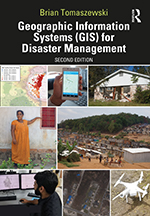
Brian Tomaszewski is a Professor at the Rochester Institute of Technology (RIT) within the School of Interactive Games and Media , Golisano College of Computing and Information Sciences. He also holds an Adjunct Professor position at the Centre for Disaster Management and Mitigation, Vellore Institute of Technology, India. Education : BA (University at Albany), MA (University at Buffalo), PhD (Pennsylvania State University) Research Interests focus on Geographic Information Science applications for Disaster Management , Forced Displacement , and Geovisual Analytics . His work bridges Spatial Thinking with Serious Games for crisis response and mitigation. Recent Publications (2023-2014) emphasize LLM-driven refugee camp analysis , geospatial resilience modeling , and serious games for disaster education , with fieldwork spanning Rwanda, Jordan, and Poland. Scientific Awards : Fulbright Scholar (2018) Grants & Collaborations include US National Science Foundation (NSF) funding for international projects and partnerships with UNHCR and IEEE . He leads the RefuGIS project and the Center for Geographic Information Science and Technology at RIT.
Dr. Andrew D. Eaton is an Assistant Professor at the University of Regina’s Faculty of Social Work (Saskatoon Campus) and holds a Status-Only Assistant Professorship at the Factor-Inwentash Faculty of Social Work, University of Toronto. He earned his PhD and MSW from the University of Toronto and his BSW from Toronto Metropolitan University. His research focuses on HIV/AIDS, mental health crises, aging populations, sexual health, and harm reduction, with a commitment to community-based participatory research. Eaton’s work addresses complex comorbidities affecting marginalized groups, particularly sexual and gender minorities. He leads projects such as the '3 Infections, 1 Fight Study' using geospatial tools to reduce harm from injection drug use, and the 'ReportNeedles.ca' initiative to map needle disposal hotspots. His studies also explore cognitive remediation therapies for aging HIV-positive populations and crisis mental health response models. He holds grants from CIHR, SSHRC, CTN, and OHTN. His publications emphasize innovative interventions, including cognitive training programs, civilian-led crisis response systems, and global comparative studies on sexual identities. Eaton’s lab (eaton-lab.com) fosters collaboration between academics, practitioners, and communities to translate research into actionable health policies and practices.
Dr. Simon Griffiths is a Senior Lecturer in the Department of Politics and International Relations at Goldsmiths, University of London. He joined the department in 2008 after roles as a Senior Policy Advisor at the British Academy, a parliamentary researcher, and work at a think tank. He holds a PhD in Political Science from the London School of Economics (2006), an MSc in Political Theory (2001), and a BA in Politics, Philosophy, and Economics from Oxford (1998). Griffiths focuses on contemporary British politics, political ideologies, and public policy, with a particular interest in political parties, the history of political thought, and post-New Labour ideology. PhD, London School of Economics, 2006 MSc in Political Theory, London School of Economics, 2001 BA (Hons) in Politics, Philosophy, and Economics, Wadham College, Oxford, 1998 His research spans political ideologies, public services, and British politics. He has supervised PhD students on topics like New Labour, post-war Conservatism, and trade unionism. Griffiths co-authored the textbook British Politics (2018) and contributed to debates on austerity, the Labour Party, and the Conservative-Liberal coalition. He is a Senior Fellow of the Higher Education Academy (2025) and has served as a media commentator on British politics. His recent publications (2025) analyze Keir Starmer’s electoral strategy and Kenneth Minogue’s critique of ideology. Earlier works examine austerity’s impact on public services, rhetorical ethos in Labour leadership, and the legacy of the Cameron-Clegg government. Griffiths emphasizes the intersection of ideology, policy, and governance, particularly in UK contexts. Scientific Awards: Senior Fellow of the Higher Education Academy, 2025 Griffiths has advised on UK public services through reports and edited collections. He has taught modules on British politics and public policy at Goldsmiths, including a third-year work placement course. His 2025 British Politics article applies ‘politics of support’ frameworks to Labour’s 2024 victory, while his Society article critiques ideological paradigms.
Raffael N. Fasel is a SNSF Ambizione Senior Researcher at the University of Zurich , with affiliations as an Affiliated Lecturer at the University of Cambridge and Visiting Scholar at NYU Law School . His work bridges animal rights law , constitutional theory , and comparative jurisprudence . Education: Dr. iur. from University of Cambridge, LL.M. from Yale, MA from University College London. Current research focuses on nonhuman legal personhood , direct democracy , and constitutional constraints in global contexts. His publications analyze intersections between legal philosophy and practical governance , including forthcoming work on Animal Rights Law and peer-reviewed articles on topics like Sieyès' constitutional theory and Swiss primate rights cases . He has collaborated with artists on public legal education projects, such as an installation on the monkey selfie case (Naruto v. Slater) in Aarhus Courthouse (2020). Scientific awards: SNSF Ambizione Fellowship Key thematic areas: animal rights law , constitutional self-determination , judicial reasoning , and democratic legitimacy .
Jonathon L. Earle is an Associate Professor of African History at Centre College, where he has been a faculty member since 2012. He serves as Co-Chair of the Uganda Studies Group within the African Studies Association and as Senior Editor of the Oxford Research Encyclopedia of African History. His academic appointments span the History Department, International Studies Program, and African & African American Studies program. Dr. Earle specializes in the intellectual history of modern Africa, with particular expertise in Uganda and the Buganda Kingdom. His research focuses on decolonizing knowledge production, religious thought in colonial contexts, and political imagination during the end of empire. He has developed a creative pedagogy incorporating community-based learning and regularly leads study abroad programs to eastern Africa and the United Kingdom. His scholarly output demonstrates significant contributions to African intellectual history, with particular emphasis on how African thinkers navigated colonial epistemologies. His publications reveal a consistent exploration of how religious frameworks, historical consciousness, and political imagination shaped anti-colonial thought and postcolonial state formation in East Africa. Finalist for the Bethwell A. Ogot Book Prize (2018) Centre Scholar (2016, 2019) Stodghill Research Professorship (2017) Delta Delta Delta Professor of the Year (2016) Special Project Award of the Kentucky Historical Society (2020) Dr. Earle has maintained an active research agenda, presenting at or organizing at least 16 conferences or workshops since 2013, including events at Cambridge, Makerere, Yale, and Oxford universities. He has also supervised undergraduate research projects, notably a student-led podcast series on the assassination of Kentucky Governor William Goebel. His work with students extends to field research in Uganda and the United Kingdom, reflecting his commitment to experiential learning. His scholarly leadership includes co-organizing significant workshops such as 'Terrorism in Africa' at Oxford (2016) and 'Emerging Approaches in Uganda Studies' at University College London (2017). He is currently leading major editorial projects including the Cambridge History of African Political Thought and African Histories of the Holocaust.
Dana Minbaeva is Professor of Strategic Human Capital at King's Business School, King’s College London, UK, and holds a part-time appointment at Copenhagen Business School, Denmark. She is a leading scholar in International Human Resource Management and Strategic Human Capital, with extensive contributions to top-tier journals and global academic leadership. Professor, King's Business School, King’s College London Part-time Faculty, Copenhagen Business School Associate Editor, Academy of Management Review Her research centers on strategic HRM, talent management, knowledge transfer, and institutional dynamics in multinational enterprises, particularly in emerging markets. She explores how human capital is leveraged across borders, the role of informal networks, and the impact of crises like COVID-19 on HR practices. Her work integrates micro-foundational perspectives with macro-level institutional contexts. Recent publications highlight evolving themes in HR analytics, diversity and inclusion, and the disruption of traditional HR models through digital transformation and global crises. Her research consistently appears in premier journals such as Academy of Management Review , Journal of International Business Studies , and Human Resource Management . Fellow of the Academy of International Business (AIB) Recipient of the JIBS Decade Award 2013 Dana Minbaeva actively supervises research, leads funded projects such as the ESRC study on diversity management transfer in Pakistan, and contributes to executive education and MBA teaching across Europe. She is also the founder of Nordic Human Capital Advisory ApS, bridging academic insight with practical application. Her work engages with UN Sustainable Development Goals related to decent work and economic growth, and she has led initiatives on diversity, inclusion, and workforce analytics.
Reynaldo Romero serves as Associate Professor in the Department of History, Humanities and Languages at the University of Houston-Downtown, where he has maintained active teaching and research since at least 2012. His academic foundation spans linguistics, public health, and translation studies across multiple institutions. His educational background includes: Ph.D. in Spanish Linguistics from Georgetown University (Dissertation: Structural Consequences of Language Shift: Judeo-Spanish in Istanbul) M.P.H. in Community Health Practice from UTHealth (Dissertation: Beliefs on COVID-19 vaccination among Hispanic day laborers) M.A. in Translation from Kent State University Multiple B.A. degrees in French, General Linguistics, and Spanish Language/Linguistics from Rice University Romero's research creates critical intersections between linguistic theory and real-world applications. His work on Spanish for the Professions establishes frameworks for medical and legal interpreting while addressing systemic language access barriers. The scholarship on endangered languages—particularly Judeo-Spanish and Afro-Hispanic varieties—combines rigorous documentation with urgent revitalization efforts. His healthcare access research directly engages Houston's linguistic minorities through community-based projects like the Medical Translation Project with HISD. Recent publications reveal three dominant trajectories: (1) advancing methodologies in Afro-Hispanic linguistics through collaborative edited volumes; (2) developing social justice frameworks for marginalized language communities; and (3) documenting endangered linguistic varieties with innovative digital approaches. These threads converge in his community-engaged scholarship that bridges academic research and practical language access solutions. Professional recognition includes: Certified Translator status from the American Translators Association Advanced Professional Analytic Linguist certification Specialized medical and legal interpreter credentials Online teaching certification with digital tools specialization Romero's grant activity demonstrates sustained commitment to practical applications of linguistic research. Current projects include 'Promoting the Critical and Responsible Use of Digital Tools and AI in Written Tasks' (2024-2025), while past work developed medical interpreter training during disaster relief and language access protocols for healthcare settings. His service learning initiatives—like the Medical Translation Project with Houston ISD—create tangible community impact while advancing pedagogical innovation. Through the Medical Translation Project and language access advocacy, Romero cultivates collaborative spaces where academic research directly serves Houston's linguistic minorities. His work with heritage speakers and endangered language communities establishes frameworks for linguistic empowerment beyond traditional academic boundaries.
Lena Roxell is a Lecturer at the Department of Criminology, Stockholm University, where she conducts research on prison systems, recidivism, and criminal networks. She is an active member of the Quantitative Criminology Research Group, established in 2022, which focuses on the possibilities and limitations of quantitative methods in criminology. Her primary research interests include prison research, with particular focus on long-term sentenced prisoners, prison networks, and recidivism patterns. Dr. Roxell examines how prison experiences affect reintegration outcomes and studies the structural aspects of co-offending networks. Her work often employs quantitative methods to analyze large datasets related to criminal behavior and prison administration. Analysis of her recent publications reveals a consistent focus on prison governance, recidivism timing, and the social dynamics within correctional facilities. Her research spans comparative studies (particularly between Sweden and other countries), methodological approaches to criminological research, and specialized topics like faith-based units in prisons and hate crime patterns. The publications demonstrate a sophisticated use of quantitative methods and longitudinal data analysis throughout her career. Dr. Roxell teaches thesis work and supervises students in prison research. Her current research project focuses on analyzing reduced recidivism after prison sentences based on client composition, prison services, labor market connections, and substance abuse. She is actively involved in the Quantitative Criminology Research Group at Stockholm University, contributing to methodological developments in the field and applying these approaches to understand complex prison dynamics and criminal behavior patterns.