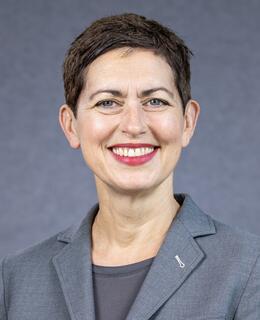
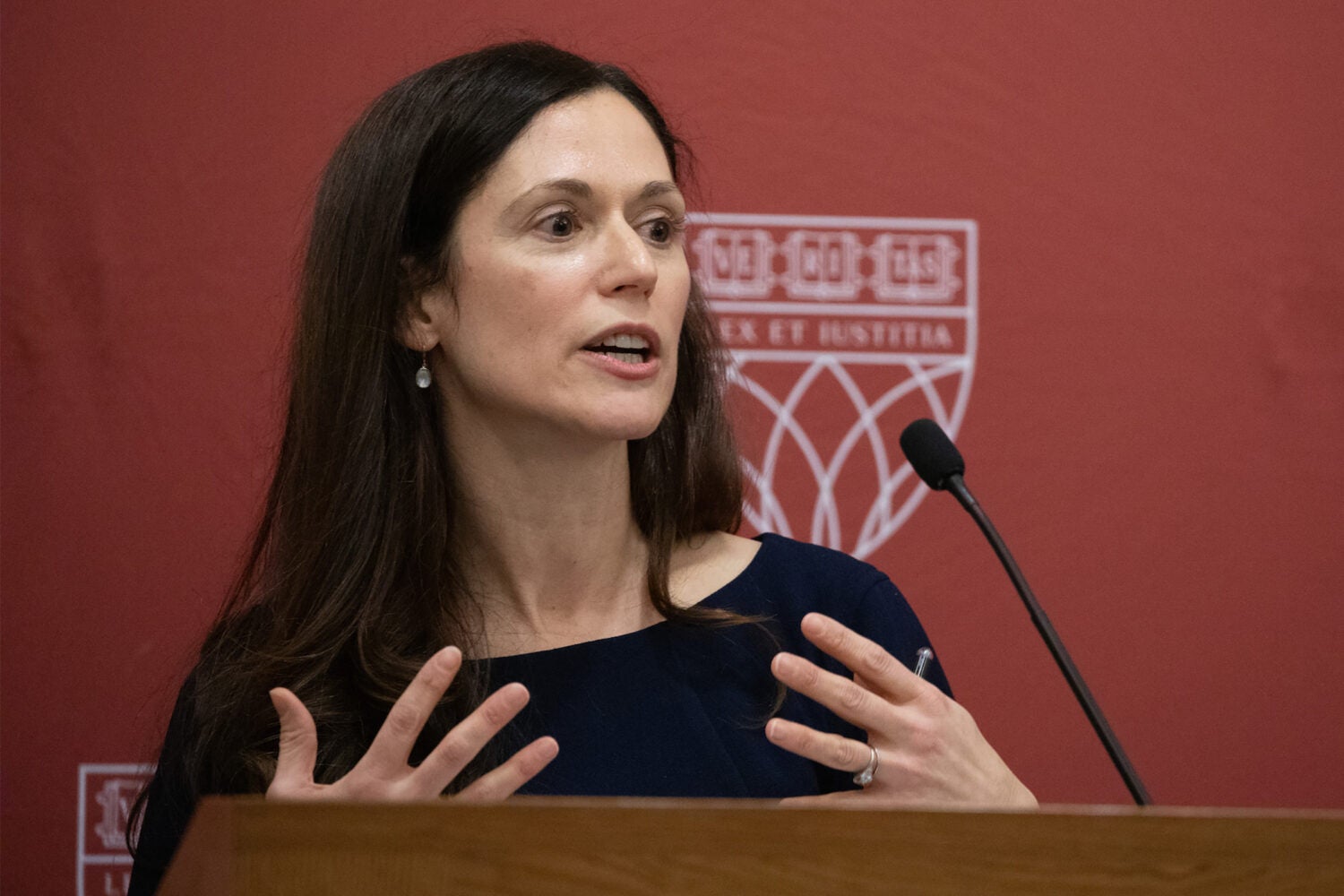
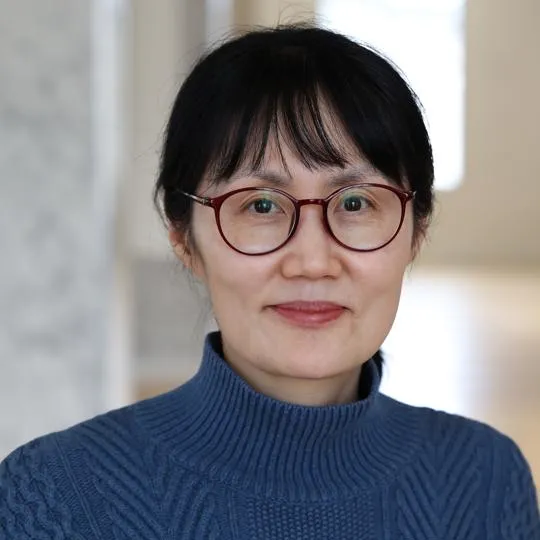
Bee-yan Roberts is a Professor of Economics and Asian Studies at the Pennsylvania State University, affiliated with the Department of Asian Studies within the College of the Liberal Arts. She holds a Ph.D. from the University of Wisconsin - Madison (1980). Her research focuses on development economics, international economics, and industrial organizations, particularly analyzing firm-level dynamics in Asian economies. She has conducted extensive studies on Taiwanese firms' productivity, export strategies, R&D investments, and global competitiveness. Dr. Roberts' work explores topics such as the impact of R&D investments on firm productivity, the role of exports in shaping labor markets, and the comparative productivity of Taiwanese and South Korean manufacturers. Her recent publications examine Taiwanese multinational firms' foreign location decisions, the relationship between exports and technological upgrading, and the productivity evolution of small and medium enterprises in Taiwan. Her research trends emphasize firm heterogeneity, global market participation, and the interplay between innovation, exports, and economic growth. She collaborates frequently with scholars like Mark J. Roberts and Yi Lee, focusing on empirical analyses of Asian manufacturing sectors. No scientific awards are explicitly listed, but her prolific publication record reflects significant academic contributions. Additional details on grants, labs, or teams are not provided in the text.
Professor Keita Takayama is a prominent academic in education studies at the University of South Australia’s UniSA Education Futures. His work focuses on global education policy, comparative education, and teacher education methodology. He actively engages with transnational policy processes, decolonial research frameworks, and critical analyses of international assessments like PISA. As editor of the Asia-Pacific Journal of Teacher Education (APJTE), he emphasizes rethinking teacher subjectivity and pedagogical practices. His research critiques the politics of knowledge production and advocates for methodological innovations like 'Asia as Method.' Recent work addresses contradictions in education export policies, linguistic imperialism in scholarship, and the role of education in resisting authoritarianism. Education Background: Doctorate in Education (focus on comparative policy studies) Advanced training in decolonial methodologies and policy analysis Research Interests: Professor Takayama’s work bridges global and local educational contexts. Key themes include: Policy mobilities & transnational education governance Reimagining comparative education through 'negative' comparative frameworks Ethics of academic publishing and knowledge dissemination Teacher education’s role in shaping democratic societies Labs/Teams: Leads the APJTE editorial collective and co-founded the iTKNe transnational knowledge exchange platform for teacher educators. Active in global academic networks addressing East Asian education stereotypes and postcolonial educational research.
Sian Lazar is a Professor of Social Anthropology at the University of Cambridge, serving as Head of the Department of Social Anthropology and a Fellow at Clare College. Her research focuses on labor politics and social movements across Latin America, particularly within trade unions in Buenos Aires, Argentina, and collective mobilizations in El Alto, Bolivia. Research Interests include political anthropology, ethics and kinship in collective action, citizenship studies, and the anthropology of Latin America. She explores themes of labor agency, urban rebellion, and the interplay between state and non-state forms of political engagement. Recent Publications demonstrate a strong focus on labor organization in precarious economies, moral dimensions of political outrage, and comparative analyses of citizenship practices. Her work spans ethnographic studies of trade unions, indigenous movements, and the evolving role of infrastructure in political subjectivities. Teaching & Supervision at Cambridge includes courses on Social Anthropology, with a particular emphasis on labor, citizenship, and political movements. She supervises postgraduate students and contributes to the academic community through editorial and research leadership roles.
Wendy W Wolford is the Robert A. and Ruth E. Polson Professor of Global Development at Cornell University, affiliated with the College of Agriculture and Life Sciences. She also serves as Vice Provost for International Affairs, overseeing global partnerships including the Global Hubs and Grand Challenges initiatives. Her research focuses on land governance, social movements, and agrarian societies, with extensive fieldwork in Brazil, Ecuador, and Mozambique. Key projects include analyses of the Brazilian MST landless movement and colonial legacies in Mozambican agriculture. Wolford earned her PhD from UC Berkeley (2001) and has authored/co-edited seminal works like This Land is Ours Now (2010) and The Social Lives of Land (2024). She has held prestigious fellowships, including a Fulbright (2016–17), and her work addresses critical issues like global land grabbing, participatory democracy, and environmental justice. Teaching spans undergraduate and graduate levels, emphasizing critical analysis in development theory and political ecology. Recognition includes awards for internationalizing curricula and advancing global development research. Her outreach includes curricula development on Brazilian rural development and multimedia case studies on sustainable food systems. Current research explores the Plantationocene framework and Mozambique’s agrarian histories.
Hakan Özkan is a Privatdozent and Research Associate at the Institute of Arabic and Islamic Studies, Department of Middle Eastern Studies, University of Münster, where he has been working since 2007 in various capacities. He was awarded his Venia Legendi (Habilitation) in November 2019 for Arabic and Islamic Studies with his thesis 'History of Eastern Zajal – Dialectal Arabic Verse Poetry from the East of the Arab World.' His academic background includes a Franco-German doctorate completed in 2006 from Université de Provence and University of Cologne, supervised by Claude Audebert and Monika Gronke, with external reviewers including Wolfhart P. Heinrichs from Harvard University. His educational background includes: 2019: Venia Legendi for Arabic and Islamic Studies, University of Münster 2002-2006: Franco-German Doctorate in Arabic Studies and Narratology (Université de Provence and University of Cologne) 1995-2000: Master of Arts in Islamic Studies, Oriental Languages and Literatures (University of Cologne) 2000-2001: Course program in Modern Standard Arabic and Syrian-Lebanese dialect at Institut Français d'Etudes Arabes de Damas Özkan's research focuses on premodern Arabic dialect poetry, particularly zajal and muwashshaḥ forms, narratology, prosimeter literature, socio-literary history, and diachronic dialectology. His interdisciplinary approach bridges linguistic analysis with literary criticism, examining how dialectal forms evolved within Arabic literary traditions across different historical periods and geographical regions. He has conducted extensive field research in Arab countries including Syria, Egypt, Lebanon, Tunisia, and Morocco, with particular emphasis on the historical development of poetic forms from the Mamluk through Ottoman periods. His publication history demonstrates consistent scholarly contributions to Arabic literary studies, with his 2020 monograph 'History of Eastern Zajal' representing a landmark study in the field. His recent work has expanded to include analyses of religious poetry praising the Prophet Muhammad in zajal form, wine poetry in Arabic literary traditions, and the integration of dialects into Arabic language teaching methodologies. His scholarly output spans monographs, critical editions, encyclopedia entries, journal articles, and book chapters across multiple languages including German, English, French, and Turkish. Among his academic recognitions: 2018: Second place on shortlist for W2 Professorship for Arabic Language and Translation Science, University of Leipzig 2008: Offered Junior Professorship at American University in Cairo (declined) 2007: Second place on shortlist for maître de conférence position at University of Nancy 2007: Official Qualification from National University Council (CNU) for positions as maître de conférence at French universities Özkan has served on numerous academic committees, including appointment committees for professorships in Sinology and Arabic and Islamic Studies at the University of Münster. He has been a juror for the Sheikh Hamad Award for Translation and International Understanding in Doha and has served on the steering committee for the 'Translation for Dialogue' program of the Anna Lindh Foundation. His editorial work includes reviewing for Mamluk Studies Review, Die Welt des Islams, and Middle Eastern Literatures since 2012. His scholarly activities extend to linguistic fieldwork on Pontic Greek dialects in Turkey and organizing significant academic conferences including 'The Race Course of Literature – An-Nawāǧī and His Contemporaries' in 2018 at the University of Münster. His multilingual capabilities (Arabic, Turkish, German, French, English, Persian, Ottoman Turkish, and knowledge of Modern Greek) enable his comparative work across multiple linguistic and cultural traditions in the Mediterranean region.
Nicoline Frølich is Professor and Director of the Centre for Learning and Education (LINK) at the University of Oslo, Norway. She also holds part-time Professor II appointments at the Department of Government, University of Bergen and at NIFU – Nordic Institute for Studies in Innovation, Research and Education. Education 2002 – PhD in Comparative Politics, University of Bergen 1994 – Master in Comparative Politics, University of Bergen 1992 – Pedagogy, Norwegian School of Economics (NHH) 1989 – Master in Economics and Business Administration, Norwegian School of Economics (NHH) Research Interests Frølich’s research focuses on governance, management and organisation of higher education systems, institutional reforms, knowledge policies, and public administration. She employs institutional theory to examine how universities and colleges respond to policy pressures, merger processes, quality assurance mechanisms, and leadership communication during change. Recent Publication Trends Between 2018 and 2025 her work has concentrated on three interconnected themes: leadership and communication within university mergers, gendered career trajectories in academia, and the tension between quality assurance systems and institutional autonomy. Empirically, her studies draw on Nordic and European cases, combining survey data with qualitative analyses of policy enactment. Scientific & Professional Appointments 2023–present – Academic Chair, Circle U alliance 2023–present – Member, SIKT advisory board (Norway) 2021–present – Editorial board member, TEAM – Tertiary Education and Management 2021–2022 – Chair, EAIR – The European Higher Education Society 2019–present – Advisory Board member, UKÄ (Swedish Higher Education Authority) 2019–2021 – Co-Editor-in-Chief, TEAM – Tertiary Education and Management Research Groups & Projects Frølich leads the research group Knowledge, Learning and Governance: Studies in higher education and work (HEDWORK) and participates in the Policy, Bureaucracy, and Organization (PBO) group. She is currently directing the project Re-Structure , which investigates the effects of structural reforms on Norwegian higher education institutions.
Claudia Acciai is a Guest Researcher at SODAS (Sociology Department) at the University of Copenhagen, where she works on the research project "Quantifying institutional and country-related Matthew effects in science." She holds a PhD in Political Science and Sociology from the Scuola Normale Superiore, with a dissertation focused on policy design in the Research and Innovation sector. Her academic journey includes research visits at Alliance Manchester Business School, Science Po Paris, and Copenhagen Business School. Her research interests lie at the intersection of comparative public policy, innovation studies, and science of science. She combines computational and experimental methods with qualitative content analysis techniques to examine policy design, institutional effects in science, and research evaluation. Her work frequently addresses how policy instruments function in complex governance environments and investigates gender-related differences in academic publishing. Analyzing her recent publications reveals a strong focus on the science of science, with particular attention to bibliometrics, policy instrument effectiveness, and gender dynamics in academic careers. Her work spans multiple disciplines including political science, sociology of science, and innovation studies, often employing mixed-methods approaches that combine quantitative analysis with qualitative insights. Acciai is an active member of the Knowledge, Organization and Politics research group at the Department of Sociology. Her collaborations span multiple countries and institutions, reflecting the international nature of her research on comparative policy and science studies. She has conducted significant work for research projects funded by the Italian Ministry of Education, including analyses of policy analysis capacity in Italian policymaking and governance changes in higher education systems.
Silvia Pedraza is a Professor of Sociology and American Culture at the University of Michigan, Ann Arbor. She holds a joint appointment in the Departments of Sociology and American Culture, and is an affiliate of the Latina/o Studies Program. Her research focuses on international sociology, inequalities, politics, and historical approaches, with particular emphasis on immigration, race, ethnicity, revolutions, and refugees. Her studies center on the United States, Cuba, Venezuela, Mexico, Puerto Rico, and Spain. Education: Ph.D., University of Chicago M.A. and B.A., University of Michigan, Ann Arbor Her research explores migration as a transformative process for nations, examining political disaffection in revolutionary contexts and the role of refugee movements. Key works include Political Disaffection in Cuba's Revolution and Exodus and Revolutions in Cuba and Venezuela: One Hope, Two Realities . She also investigates transnationalism, gender, and the sociopolitical dynamics of immigration policies. Her articles analyze topics such as Cuban immigrant transnationalism, the sociocultural future of Cuba, and the intersection of race, migration, and identity. Recent work addresses contemporary crises in Cuba and U.S.-Cuba diplomatic relations. Affiliations & Leadership: Associate Editor, Social Science History Former Chair of ASA Sections (Latina/o Sociology, Race and Ethnic Minorities) Former President, Association for the Study of the Cuban Economy (ASCE) Executive Committee Member, Social Science History Association (SSHA) Teaching & Academic Contributions: She teaches courses on American immigration history, Latinas/os in the U.S., and sociological perspectives on transformative migration. Her work bridges historical and contemporary analyses, emphasizing comparative methodologies. She has organized interdisciplinary initiatives, such as a Cuban Studies dossier on Cuba's transitional dynamics.
Laura Spitz is Dean and Professor at the University of Calgary Faculty of Law, with a concurrent Visiting Professorship at Université Paris 1 Panthéon-Sorbonne Law School. Her academic and professional journey spans multiple institutions, including Seattle University, University of New Mexico, Cornell University, and Thompson Rivers University. Educational Background: JSD, Cornell University JD, University of British Columbia BA, University of Toronto Spitz's research interrogates the legal construction of borders and identities, blending contracts, commercial law, and critical analyses of personhood in corporate and environmental contexts. Her work explores the limits of subject-object dichotomies in law and society. Notable awards include multiple Graduation Hooding Professor distinctions at the University of New Mexico and Colorado Law School, alongside teaching accolades. She contributes to constitutional pluralism debates and has co-authored influential works on legal personhood. A nonpracticing member of the Law Society of British Columbia, Spitz serves as a legal expert in contracts and business law, with experience in First Nations economic development and nonprofit law. She has advised on Supreme Court cases and held leadership roles in global engagement and international affairs.
Daphna Renan is the Peter B. Munroe and Mary J. Munroe Professor of Law at Harvard Law School. Her work focuses on the U.S. presidency and the design of American democracy from the perspective of administrative and structural constitutional law. She has published extensively in leading law journals including the Columbia Law Review, Harvard Law Review, Stanford Law Review, Virginia Law Review, and Yale Law Journal. Renan received her B.A. in East Asian Studies from Yale College in 2000, summa cum laude. She earned an M.A. in International and Comparative Legal Studies from the University of London's School of Oriental and African Studies in 2001, and her J.D. from Yale Law School in 2004, where she served as an articles editor of the Yale Law Journal. Professor Renan's research centers on constitutional theory, particularly the relationship between judicial supremacy and democratic governance. She argues for 'a more political constitutionalism' that would distribute constitutional authority beyond the Supreme Court to democratically elected bodies. Her work explores presidential powers, the separation of powers, and how constitutional meaning is developed through political contestation rather than judicial finality. She contends that constitutional rights are 'only as secure as our politics can make them,' emphasizing the role of Congress and the executive in shaping constitutional interpretation. Renan's publications reveal a consistent focus on the provisional nature of constitutional order and the role of political institutions in constituting constitutional meaning. Her scholarship spans from historical analyses of political abolitionism's constitutional theories to contemporary critiques of judicial supremacy. A recurring theme is how unwritten norms and practices shape constitutional governance, particularly regarding presidential power. Her recent work with Nikolas Bowie examines the historical roots of judicial supremacy and advocates for congressional reclamation of constitutional authority. Professor Renan has held significant government positions, having served from 2009-2012 in the U.S. Department of Justice as a Counsel to the Deputy Attorney General and then as an Attorney Advisor in the Office of Legal Counsel. She also served on President-Elect Obama's Justice Department transition team. Prior to her government service, she clerked for Justice Ruth Bader Ginsburg of the U.S. Supreme Court and Judge Harry T. Edwards of the U.S. Court of Appeals for the District of Columbia Circuit.
Deborah Kent is Senior Lecturer in History of Mathematics at the University of St Andrews' School of Mathematics and Statistics. Her research focuses on historical astronomy expeditions, material mathematics, and underrepresented contributions in scientific history. She has received multiple awards including the Paul R. Halmos-Lester R. Ford Award for expository writing excellence. Current projects include STFC-funded research on solar eclipse histories and analyses of early 20th century mathematical collaborations. Recent publications highlight forgotten contributors to British astronomy expeditions and interdisciplinary work between mathematicians and biologists. Awards: Paul R. Halmos-Lester R. Ford Award (2017) Teacher of the Year (2018) Academic Innovation and Leadership (2017)
Dr. Jonathan Lenoir is a CNRS Researcher at the Ecology and Dynamics of Anthropized Systems (EDYSAN) laboratory, University of Picardie Jules Verne , France. His work bridges Ecology and Biostatistics , focusing on ecological dynamics under spatial and temporal global changes, particularly biotic responses to climate change. His research spans broad-scale biodiversity patterns, species distribution modeling, and microclimate ecology, with special attention to forest systems. Dr. Lenoir leads and contributes to multiple research projects including MaCCMic (Impact of forest Management and Climate Change on understory Microclimate) and IMPRINT (Impacts of Microclimatic Processes on forest Biodiversity redistribution under macroclimaTe warming). These projects utilize advanced technologies like LiDAR and microclimate sensors to model understory temperature dynamics and predict biodiversity responses to climate change. His recent publications analyze microclimate buffering in forests ( 2024 ), species thermophilization ( 2024 ), and the application of deep learning to habitat identification ( 2024 ). His work also explores interdisciplinary connections like eco-oncology , comparing invasion dynamics in ecology and medicine. Dr. Lenoir actively mentors researchers and supervises fieldwork campaigns, emphasizing rigorous data collection ( 180 monitoring plots across French forests ) and advanced statistical analyses in R . He collaborates with European institutions and participates in large-scale initiatives like ReSurveyEurope , a database of resurveyed vegetation plots.
Prof. M. Danish Shakeel is a Professor and Director of the E. G. West Centre for Education Policy at The University of Buckingham, UK. He is also a Research Fellow at Harvard University's Program on Education Policy and Governance. His research focuses on K-12 education policy, particularly in the U.S., with expertise in systematic reviews, meta-analyses, and the political economy of education. Key areas include civic outcomes of private schooling, social capital, charter schools, and non-cognitive traits. His work has been featured in prestigious journals like Journal of School Choice and Education Next , and widely cited in media outlets such as Wall Street Journal and Washington Post . He collaborates globally, presenting at conferences like the American Political Science Association and Association for Education Finance and Policy. Prof. Shakeel advises prospective doctoral students on rigorous quantitative methods and policy-oriented research. His guidance includes structured abstracts, empirical methodology focus, and policy implications. Students pursuing a PhD must demonstrate advanced econometric skills and secure their own funding. His research has influenced philanthropic investments and policy discourse, highlighting gains in U.S. student achievement and the role of charter schools in improving outcomes for marginalized groups.
Professor Hye-Kyung Lee is Professor of Cultural Policy at King's College London's Department of Culture, Media & Creative Industries. She obtained her PhD from the University of Warwick and specializes in state policies for culture, arts, and creative industries, with particular expertise in Korean cultural policy and East Asian cultural flows. Her research examines institutional frameworks of cultural policy, de-Westernization of cultural policy paradigms, and new justifications for cultural subsidies. Current investigations focus on the impact of generative AI on cultural labor and creativity. Professor Lee recently led the UK-Japan collaborative project 'Sustainable Cultural Futures' examining digital transformations in the cultural sector. Recent publications analyze venture capital approaches in cultural industries, pandemic-era cultural policy responses across East Asia, and the reformulation of cultural work in the AI era. Her extensive body of work includes foundational studies of the Korean Wave's policy implications and comparative analyses of creative industries governance. Professor Lee teaches cultural policy and creative industries courses in CMCI's BA and MA programs and welcomes PhD candidates researching cultural policy, creative industries, and cultural labor.
Eileen A. Lacey is the Class of 1933 Chair in Biological Sciences and Professor in the Department of Integrative Biology at UC Berkeley. She leads the Lacey Lab based at the Museum of Vertebrate Zoology, focusing on vertebrate social behavior and population biology. Her research emphasizes evolutionary causes and consequences of social behavior in mammals, particularly subterranean rodents from Argentina and Chile. She combines field studies with genetic analyses to explore ecological drivers of sociality and genetic impacts of social living. Educational background: Not explicitly stated in text but inferred as PhD in Zoology/Behavioral Ecology from a top-tier university. Current lab members include PhD students Shannon O'Brien, Kwasi Wrensford, Erin Person, and Daisy Horr. Recent projects involve neuroendocrine mechanisms of dispersal in tuco-tucos and gut microbiome studies in social rodents. Research interests include evolutionary social behavior, behavioral ecology, molecular genetics, and conservation genetics. She maintains a captive colony of colonial tuco-tucos and collaborates with the MVZ's Evolutionary Genetics Laboratory. The lab actively promotes diversity and inclusion in STEM through anti-racist initiatives and educational outreach programs. Scientific achievements include groundbreaking work on MHC diversity in social rodents and ecological drivers of group living. Recent recognition includes NSF postdoctoral fellowships for lab members and awards like the Ford Foundation Dissertation Fellowship. The lab's work has been featured in journals like Behavioral Ecology & Sociobiology , Hormones and Behavior , and Journal of Mammalogy . Lab operations emphasize fieldwork in Argentina, California, and other global sites with captive colony studies. Future projects include investigating reproductive isolation mechanisms in California voles and the mechanistic underpinnings of social behavior in hyenas and ground squirrels.