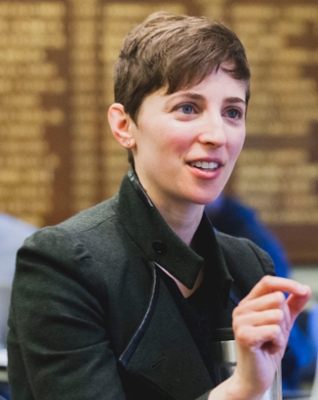
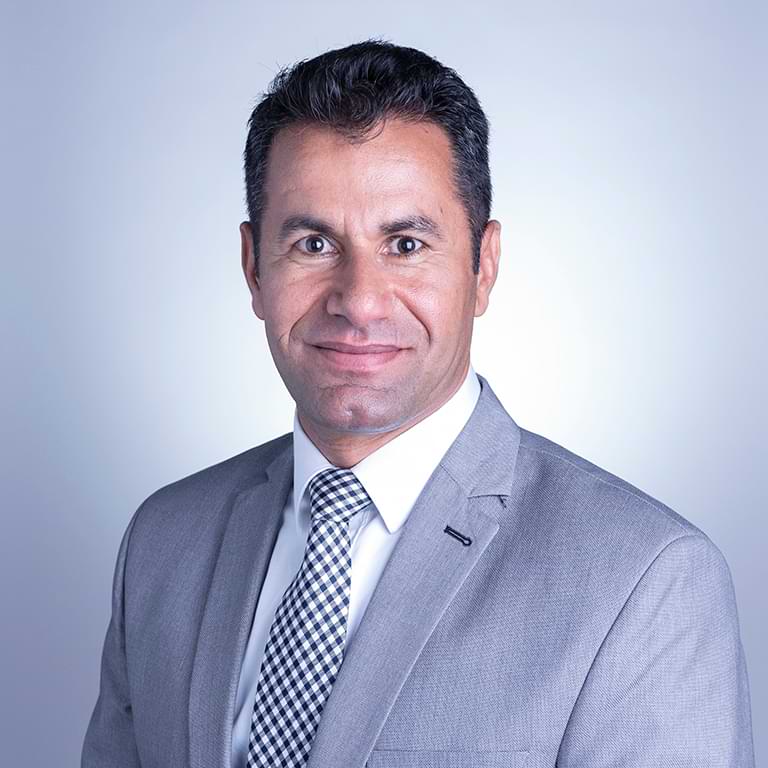
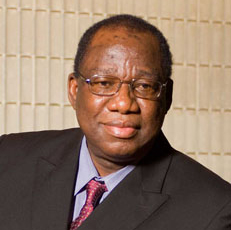
Malick W. Ghachem serves as Professor of History and Head of the History Faculty at MIT, with additional affiliation as a Research Affiliate at the Center for International Studies. His scholarship focuses on legal and constitutional history, particularly slavery, abolition, and revolutionary movements in the Atlantic world. Education: PhD in History, Stanford University JD, Harvard Law School BA, Harvard College Research Focus: Comparative slavery law in colonial Haiti Constitutional developments during revolutions Historical connections between slavery and contemporary legal systems Academic freedom and university governance His influential book 'The Old Regime and the Haitian Revolution' received the American Historical Association's J. Russell Major Prize and the Caribbean Studies Association's Gordon K. and Sybil Lewis Prize.
Dr. Joseph J. García is an Adjunct Professor at the University of New Mexico (UNM), specializing in interdisciplinary environmental justice and historical sociology. His research focuses on natural resource policy development through the Cuban and Mexican Revolutions, global energy policy impacts, and civil/social justice advocacy in the Americas. He holds a Ph.D. in Latin American Studies from UNM, dual master’s degrees in Community & Regional Planning and Latin American Studies (College of Architecture and Planning), and BS degrees in Secondary Science Education and Geography/Environmental Studies from Texas A&M University. Education: Ph.D., Latin American Studies, University of New Mexico Dual Master’s, Community & Regional Planning and Latin American Studies, UNM College of Architecture and Planning B.S., Secondary Science Education (6-12), Texas A&M University B.S., Geography/Environmental Studies, Texas A&M University Research Interests: Dr. García examines historical and contemporary struggles over natural resources, revolutionary leadership trajectories, and the intersection of environmental justice with civil rights activism. His work bridges Latin American revolutionary movements (Cuba/Mexico) with U.S. civil rights struggles, emphasizing transnational solidarity and grassroots organizing. He has conducted fieldwork in Paraguay, Mexico, and Texas, focusing on water rights, voting rights, and community empowerment. Publications Overview: His recent work analyzes revolutionary leadership (Castro/Cárdenas comparisons), Paraguayan water struggles, and Chicano voting rights litigation. Upcoming projects include studies on natural resource nationalization and Chicano veterans' roles in civil rights movements. Engagement & Advocacy: With 20+ years of community organizing, Dr. García has worked on environmental justice campaigns, voting rights initiatives, and cultural preservation. He served in the Peace Corps (Paraguay, 1997-1999) and is fluent in Spanish, Portuguese, and Guarani. His musical expertise in Latin American genres enriches his cultural research. Courses Taught: Online courses include Advanced Chicana/o Studies, Global Latinx Societies, and Race & Class in New Mexico.
Emma Spary is Professor of the History of Modern Knowledge at the University of Cambridge's Faculty of History and Fellow of Corpus Christi College. She served as Chair of the History and Modern Languages Tripos (2021-2023) and directs studies in History. After earning her PhD from Cambridge in 1993 as a Research Fellow at Girton College, she held positions at the University of Warwick, Max-Planck-Institut für Wissenschaftsgeschichte (Berlin), and Wellcome Trust Centre for the History of Medicine (UCL) before returning to Cambridge in 2010. Her research explores the intersection of science, culture, and society in 18th-century Europe, with specializations in: History of food, diet, and culinary practices in Enlightenment France Natural history collections and scientific networks Material culture and knowledge circulation Colonial botany and global knowledge exchange Medical entrepreneurship and scientific reputation Her publications demonstrate consistent focus on Enlightenment epistemologies, particularly through studies of scientific collections, food systems, and colonial encounters. Recent work examines drug experimentation in Louis XIV's France and historical entomophagy, reflecting her innovative approach to cultural history. As Director of Studies and Tutor, she teaches undergraduate courses including 'The Global Eighteenth Century', 'Early Medicine', and 'The Material Culture of the Early Modern World'. She currently leads research on drug consumption patterns in pre-revolutionary France.
Dr. Hein van den Berg is an Assistant Professor of Philosophy at the University of Amsterdam and VU University, affiliated with the Faculty of Humanities and the Capaciteitsgroep Philosophical Tradition in Context . His work focuses on the history of philosophy, particularly Kant's philosophy and its intersections with life sciences, epistemology, and scientific methodology. He has published extensively on topics including Kantian systematicity, the philosophy of biology, and the historical development of scientific thought in the Enlightenment era. Van den Berg’s research explores how eighteenth-century life sciences influenced Kant’s transcendental philosophy, notably in his critique of Jennifer Mensch’s Kant’s Organicism . He also investigates the systematic unity of physics in Kant’s Opus postumum , emphasizing the role of empirical and metaphysical foundations in natural science. His interdisciplinary approach bridges philosophy, history of science, and digital humanities, as seen in projects like GlamMap for visualizing library metadata. Key themes in his work include teleology, scientific hypothesis formation, and the philosophical foundations of psychiatry. Though no awards are explicitly listed, his contributions to Kant studies and the history of life sciences have been recognized through peer-reviewed publications and academic engagements. His research also addresses contemporary debates on animal cognition and the validity of animal models in mental disorder studies.
Anne Lambright is the Paul Mellon Distinguished Professor of Hispanic Studies and Department Head at Carnegie Mellon University's Dietrich College of Humanities and Social Sciences. She specializes in Andean literature, Indigenous studies, and human rights, with a focus on Peru's cultural and social dynamics. Her research integrates critical theory and decolonial perspectives, emphasizing the role of art and literature in advancing social justice. Education: Ph.D. and M.A. in Latin American and Iberian Literatures from the University of Texas, and a B.A. in Spanish, History, and Latin American Studies from Southern Methodist University. Research Interests: Race and ethnicity in Andean culture, transnational Indigenous networks, translation studies, and contemporary Latin American literature. Current projects include studies on Chickasaw storyteller Te Ata Thompson and Quechua cultural networks. Publications: Award-winning books include Andean Truths (2015, MLA prize) and Creating the Hybrid Intellectual (2007). She has co-edited volumes on women's urban narratives and contributed to pedagogical Spanish textbooks. Awards: Recognitions include the Katherine Singer Kovacs Prize, Charles A. Dana Professorship, and National Endowment for the Humanities Fellowships. Service: Leadership roles in academic initiatives like the Hospitality Initiative at CMU’s Center for the Arts in Society and editorial boards for PMLA and Chasqui . Labs/Teams: Engaged with interdisciplinary collaborations exploring Indigenous cultural production and global indigeneity.
Arthur Spirling is the Class of 1987 Professor of Politics and Director of Graduate Studies. His career includes previous roles at Harvard University and New York University. He specializes in quantitative methods, political behavior analysis, and text-as-data techniques, with recent work exploring intersections between data science, AI, and social science. Education: Bachelor's and Master's from the London School of Economics Master's and PhD from the University of Rochester Research Interests: Spirling's research focuses on advancing computational and statistical methods in political science. He emphasizes machine learning, ethical AI adoption, and applying text analysis to historical and institutional studies. His work often bridges methodological innovation with substantive areas like comparative politics and British parliamentary systems. Articles Trends: His recent publications highlight ethical challenges in using proprietary language models, the benefits of open-source alternatives, and improving replication standards. He also explores model complexity and its implications for applied research, alongside topics like legal equality in historical political thought and measuring linguistic patterns in parliamentary discourse. Scientific Awards: Teaching and Mentoring Awards at Harvard and NYU Emerging Scholar Prize from the Society for Political Methodology Advising & Grants: As Director of Graduate Studies, Spirling supports PhD and Master’s students through structured research programs. His grants and funding align with his methodological work in text-as-data and AI ethics. He has advised on courses such as Applied Quantitative Analysis and Responsible Conduct of Research in Political Science .
Professor Bob Harris is a Professor of British History at Worcester College, University of Oxford. He joined the faculty in 2006 from the University of Dundee, where he held a personal chair in British history. His research focuses on 18th-century British and Scottish political, cultural, and social history, with particular emphasis on urban development, Enlightenment culture, and the cultural history of gambling. His work has been recognized with the Saltire Society’s Scottish Book of the Year Prize (2014) for his study of Scottish towns during the Enlightenment. Research Interests: Political and cultural history of 18th-century Britain/Ireland Urban transformation in Scottish towns (1740–1820) Social and cultural history of gambling in the British Empire (1660–1850) Awards: Saltire Society’s Scottish Book of the Year Prize (2014) Teaching and Supervision: Current DPhil students: Tier Blundell, Estella Chen, Pat Flood, Eleanor Kerfoot, Philip Smith Teaches courses including Prelims FHS , HBI V , and Historiography Current Projects: Investigating gambling and risk attitudes in Britain and its empire, and continuing research on Edinburgh’s urban development in the 1780s.
Dr. Aliyah Khan is an Associate Professor jointly appointed in the Department of Afroamerican and African Studies and the Department of English Language and Literature at the University of Michigan. She serves as Director of the Global Islamic Studies Center and holds affiliations with multiple research centers including the Center for South Asian Studies, Arab and Muslim American Studies Program, and Center for World Performance Studies. Her research specializes in postcolonial Caribbean literature and contemporary Muslim/Islamic literatures, with particular focus on intersections of race, gender, and Islam across the Americas. She examines these themes through diverse mediums including literature, music, and graphic novels. Dr. Khan's monograph Far from Mecca pioneered academic study of Caribbean Islam across Guyana, Trinidad, and Jamaica. Research Focus Postcolonial literary traditions of the Caribbean Representations of Muslim identities in diaspora Gender and sexuality in Islamic contexts Indo-Caribbean cultural history Graphic novel representations of Muslim experiences Honors & Recognition American Association of University Women Postdoctoral Fellowship (2017-2018) American Comparative Literature Association First Book Award (2018-2019) Editorial Board: Bloomsbury Critical Guides in Comics Studies Fellow, Center for World Performance Studies
Dr. Steven Pfaff is a Professor of Sociology at Chapman University's Wilkinson College of Arts, Humanities, and Social Sciences. He holds a Ph.D. from New York University, with prior degrees from SUNY Albany (B.A.) and UNC Chapel Hill (M.A.). His research focuses on revolutions, political ideology, historical sociology, and institutional change. Pfaff’s recent work examines how ideological commitments shape revolutionary outcomes and historical diffusion processes, as seen in studies of witch hunts in Central Europe and political dynamics in public education. He has published in journals like Rationality & Society and Theory & Society , and reviews books on historical and political topics. His office is listed under the Institute for the Study of Religion, Economics, and Sciences at Chapman.
Eli Zaretsky is a Full-time Professor of History at The New School for Social Research, part of The New School. He has taught at Lang College since 1999, focusing on 20th-century cultural history, capitalism's sociocultural dimensions, and family history. His influential works include Political Freud (2015) and Why America Needs a Left (2012), alongside edited volumes like The Polish Peasant in Europe and America . He holds a PhD from the University of Maryland (1978). His research bridges psychoanalytic theory with historical analysis, exploring themes like Freudian legacies, cultural modernity, and political economy. Recent scholarship examines the interplay between psychoanalysis and capitalism, as well as the role of memory in ideological frameworks. Zaretsky has been honored with the Robert J. Stoller Foundation Award (1995), and held fellowships at the Australian National University and Vienna's Institut für die Wissenschaften vom Menschen. His pedagogical contributions include courses on imperialism, modern German history, and independent research supervision. His writings frequently engage with contemporary political issues, appearing in venues like London Review of Books and Public Seminar . Key themes in his work include the critique of neoliberalism, the evolution of left-wing thought, and the cultural dimensions of psychological concepts.
Meghan Roberts serves as Associate Professor of History and Chair of the History Department at Bowdoin College in Brunswick, Maine. Her scholarship centers on eighteenth-century France, specializing in cultural history, the history of science and medicine, and women and gender studies. Roberts has established herself as a leading scholar in Enlightenment studies through her monograph and interdisciplinary research. Her academic credentials include: PhD in History from Northwestern University (2011) MA in History from Northwestern University (2006) BA in History from the College of William and Mary (2004) Roberts' research explores how family structures, gender dynamics, and medical authority shaped Enlightenment intellectual culture. Her acclaimed book Sentimental Savants (2016) demonstrated how philosophical families served as knowledge-producing units while cultivating public virtue. Current work investigates medical practitioners' strategies for establishing authority amid media revolutions and colonial exploitation, revealing connections between scientific credibility and imperial power structures. Her publication trajectory (2012-2024) shows deepening engagement with Enlightenment France's intersections of gender, science, and colonialism. Early work examined philosophical families and women astronomers, while recent scholarship analyzes race construction, spontaneous combustion controversies, and revolutionary marriage politics. This evolution reflects growing attention to how marginalized bodies and colonial contexts challenged Enlightenment universalism. No scientific awards were documented in the source materials. While specific advising details and grant histories aren't provided, Roberts' active publication record and departmental leadership suggest robust mentorship of undergraduate researchers at Bowdoin. Her collaborative projects, like the 2017 comparative marriage study with European scholars, indicate international academic partnerships. No dedicated laboratories or large research teams are mentioned, consistent with humanities scholarship practices. Roberts' work appears primarily individual though occasionally collaborative, leveraging archival research and interdisciplinary frameworks without institutional lab infrastructure.
Asaad Alsaleh is an Associate Professor and Chair of the Middle Eastern Languages and Cultures Department at Indiana University Bloomington, affiliated with the Hamilton Lugar School of Global and International Studies. He serves as Director of Graduate Studies and is based in the Global and International Studies Building. His research focuses on Modern Arabic literature, comparative cultural studies, and the intersection of autobiography with political movements like the Arab Spring. Alsaleh’s work critically examines themes of displacement, cultural identity, and political discourse in the Arab world, with a particular emphasis on Syria. His notable publications include Historical Dictionary of the Syrian Revolution and Civil War (2021) and Voices of the Arab Spring (2015), which analyze revolutionary narratives and cultural responses to political upheaval. His articles explore topics ranging from pre-modern Arabic textual practices to contemporary issues like ISIS deradicalization and Syrian cultural policy. Alsaleh’s research trends emphasize interdisciplinary approaches to cultural production, conflict analysis, and the role of literature in articulating marginalized voices. His work consistently bridges historical analysis with contemporary socio-political contexts, offering insights into the complexities of identity formation in the Arab world. He holds no explicitly listed scientific awards, though his extensive publication record indicates significant academic contribution. Advising and grant activities are not detailed in the provided text, but his role as Director of Graduate Studies suggests mentorship of doctoral candidates in Middle Eastern Studies. Alsaleh’s affiliations include the Hamilton Lugar School’s Global and International Studies programs, positioning him at the intersection of regional expertise and global policy analysis.
Christopher Hammons is a Professor of Government and founding director of the Morris Family Center for Law and Liberty at Houston Christian University. He holds a PhD in Political Science from the University of Houston, with prior degrees from the University of Houston (MA) and the University of Texas at Austin (BA in Government). His teaching and research focus on American political thought, constitutional history, and the American Founding. He has received multiple teaching awards, including the university’s highest honor multiple times and a 2023 national award from the Daughters of the American Revolution. His scholarly work includes the book Constitutionalism of the American States (nominated for a national APSA award) and edited volumes on founding principles. He is currently writing a book on the Federalist Papers. Dr. Hammons promotes civic education through the Morris Family Center, emphasizing foundational ideals. His publications span prestigious journals like the American Political Science Review and Albany Law Review , as well as public outlets like the Houston Chronicle .
Dr. Osita Afoaku serves as Clinical Professor at Indiana University's Paul H. O'Neill School of Public and Environmental Affairs since 2003, specializing in U.S.-African/Third World relations, democratization, and sustainable development in Africa. His interdisciplinary expertise bridges public policy, comparative politics, and international relations with regional focus on Sub-Saharan Africa. His educational background includes: Ph.D. from Washington State University (1991) M.A. from Washington State University (1986) B.A. from University of IFE (1980) Professor Afoaku investigates the tension between state-centric security paradigms and human security ideals like democracy and sustainable development. Current research examines bilateral U.S.-Third World relations through a book project on patron-client dynamics and analyzes Boko Haram's implications for Nigerian state legitimacy, arguing security force ineptitude reflects systemic state failure. His scholarship consistently addresses democratization challenges and foreign policy interventions in African contexts. Publication trends reveal evolving focus from Cold War-era U.S. clientelism (1999-2000) toward contemporary African security crises (2017-2018). Core themes include political violence in Nigeria, democratization obstacles in the Democratic Republic of Congo, and UN Security Council reform debates, all framed within sustainable development and governance challenges across post-colonial African states. No scientific awards were documented in the provided information. As faculty advisor at SPEA, Professor Afoaku mentors students in African political economy and global governance though specific advisees aren't listed. His administrative roles include Director of Indiana University's African Studies Outreach Program and service on Nigeria's Holy Ghost University Board of Trustees, but no research grants are referenced. He leads the African Studies Outreach Program and Advisory Committee while organizing over two dozen professional workshops on African studies. His editorial role with the International Journal of African Studies and trustee position at Holy Ghost University demonstrate active engagement in transnational academic networks bridging U.S. and Nigerian institutions.
Dr. Robert K. Batchelor is a Professor of History and Director of Digital Humanities at Georgia Southern University, serving as Department Chair of the Department of History within the College of Arts and Humanities. He holds a B.A. from Cornell University (1990), and M.A. and Ph.D. from UCLA (1992, 1999). His research focuses on comparative world history, environmental history, early modern Britain/Ireland, East Asia/Pacific studies, digital humanities, history of games, and cartography. He teaches upper-division courses including Modern European Thought, Environmental History, and experimental digital humanities projects like 'Experimental Historical Games.' His work bridges traditional historical scholarship with innovative digital methods, exemplified in publications like London: The Selden Map and the Making of a Global City (2014) and the 'Fujian Trader' boardgame (2016). His research emphasizes early modern global interactions, maritime networks, and the role of maps in shaping knowledge systems. Award-winning scholar, Batchelor has received the Imago Mundi Nebenzhal Award (2015) and Imago Mundi Prize for Best Article (2013-2014). His grants include the Georgia Humanities Council Project Grant for the Waddie Welcome Digital Archive (2009). He leads digital humanities initiatives and collaborates internationally on projects like the Hong Kong Maritime Museum's Mapping Ming China's Maritime World . Batchelor's interdisciplinary work connects historical analysis with modern digital tools, fostering innovative teaching through courses like HUMN 3731 (Digital Humanities Internship) and HUMN 4631 (Experimental Historical Games). His lab and team focus on digital archives, historical gaming, and open-access scholarship.