Julie Yujie Chen is an Assistant Professor at the Institute of Communication, Culture, Information, and Technology (ICCIT) at the University of Toronto Mississauga, with a graduate appointment at the Faculty of Information. She holds a PhD in American Studies from the University of Maryland, College Park, and previously served as a Lecturer at the University of Leicester's School of Media, Communication, and Sociology. Her research focuses on the intersection of culture, digital technologies, and economic structures in shaping work experiences, particularly in China's platform economy. Key areas include ride-hailing and food-delivery sectors, worker resistance in digital capitalism, and the sociocultural impacts of platforms like WeChat. She is the lead author of *Super-sticky WeChat and Chinese Society* (2018), the first academic work analyzing WeChat's societal and political influence. Research interests: Digital labour, platform capitalism, AI-driven work, global labour patterns, and socio-technological change. Current supervision: Hiu-Fung Chung and Mathew Iantorno. Her recent work examines platform labour dynamics, national employment policies in China, and comparative studies of global digital economies. Articles often explore themes like worker agency, algorithmic management, and socio-technical resistance strategies.
Michael O'Dea is a Senior Lecturer in the Department of Computer Science at the University of York, United Kingdom. He has held previous academic positions at York St John University, Beijing University of Technology, University of Hull, and Waikato Institute of Technology, bringing extensive international experience in computer science education. He is actively engaged in pedagogical scholarship and leadership in higher education innovation. Senior Lecturer, Department of Computer Science, University of York Senior Lecturer in Computer Science, York St John University Lecturer in Software Engineering, Beijing University of Technology, China Lecturer in Computer Science, University of Hull Lecturer in Information Technology, Waikato Institute of Technology, NZ Dr. O'Dea earned his Ed.D. in Computer Based Learning from the University of Leeds. His research centers on the integration of artificial intelligence into educational practices, with a strong emphasis on AI literacy, the effectiveness of generative AI in teaching and learning, and the evolving landscape of technology acceptance in higher education. He investigates how AI tools can enhance student learning, faculty development, and institutional policy. His recent publications span topics such as AI literacy assessment, the future of online and blended learning, the application of machine learning in earthquake prediction, and international study abroad effectiveness. These works reflect a broad interdisciplinary approach, combining computer science, educational theory, and policy analysis. His scholarship is increasingly focused on the transformative potential of generative AI in academic settings, as evidenced by his leadership in special journal issues and funded research projects. Dr. O'Dea holds significant editorial responsibilities as Associate Editor and Lead Guest Editor for the Journal of University Teaching and Learning Practice and as Guest Editor for a special issue in Education Sciences on generative-AI-enhanced learning. He is also an Invited External Academic Affiliate at the King's Institute for Artificial Intelligence, King's College London. Associate Editor - Special Issues, Journal of University Teaching and Learning Practice Lead Guest Editor, Special Issue on Technology Acceptance Models, JUTLP (2024) Guest Editor, Special Issue on Generative-AI-Enhanced Learning, Education Sciences Principal Investigator, QAA Collaborative Enhancement Project on Graduate Attributes in the Era of GenAI (2025) He has delivered numerous invited talks and workshops at institutions such as the University of York, Queen Mary University of London, and international conferences including the Academy of Management and the International Conference on Artificial Intelligence in Education. His work bridges research, practice, and policy in higher education, with a strong commitment to inclusive and innovative teaching methodologies.
William W. Burke-White is Professor of Law at the University of Pennsylvania Carey Law School , where he is a leading scholar at the intersection of international law and international relations. He also serves as Non-Resident Senior Fellow at the Brookings Institution and Senior Advisor to White & Case LLP , bridging academic research with policy and legal practice. He previously held leadership roles as Inaugural Director of Perry World House (2014–2019) and Deputy Dean of Penn Law (2011–2014). Harvard University – A.B., J.D. University of Cambridge – Ph.D. in International Relations (Fulbright Scholar) Burke-White’s research focuses on global governance, multilateral institutions, U.S. foreign policy, human rights, and international economic law . His work examines how shifting power dynamics affect international legal structures and how sub-state actors influence global norms. He has significant regional expertise in Russia, Eastern Europe, and Latin America . His current book project explores the new geography of global governance . His recent scholarly output reveals a consistent trend toward analyzing institutional reform, legal pluralism, and the interplay between domestic and international law . He frequently publishes in top journals on topics such as investor-state arbitration, complementarity in international criminal law, and the legitimacy of global legal regimes. His work often combines doctrinal legal analysis with political science theory. A. Leo Levin Award (2008) Robert A. Gorman Award for Excellence in Teaching (2007) Burke-White has advised governments, law firms, and investment funds on sanctions, sovereign debt, and international litigation. He has served as an expert witness in international arbitrations and currently advises sovereign states on cases before the International Court of Justice . He is also active in media commentary, contributing to The Hill, CNN, The Atlantic , and others. He has taught as a visiting professor at institutions including Harvard Law, Hebrew University, and Moscow State Institute of International Relations .
Femi Amao is a Professor of Company Law & Sustainability at University College Cork (UCC), Ireland. He previously held academic roles including Reader in Law at Sussex Law School (2019-2023) and Senior Lecturer at Brunel University (2015-2019). His research focuses on law's role in regulating emerging social phenomena, particularly in the areas of corporate sustainability, business & human rights, and African Union Law. He holds a Senior Fellowship of the Higher Education Academy (SFHEA) and won the University of Sussex Teaching Award in 2021. Education: PhD and PG Cert, University College Cork (2009) LLM, University of Warwick (2005) LLM, University of Ibadan (2003) LLB, Obafemi Awolowo University (1997) BA, University of Ilorin (1991) His research explores corporate governance, ESG frameworks, and legal mechanisms to address multinational corporations' impact in developing countries. Notable publications include African Union Law: The Emergence of a Sui Generis Legal Order (2018) and co-editing The Emergent African Union Law (2021). His articles frequently analyze comparative legal systems, corporate accountability, and human rights obligations. Research Grants: Lead Investigator for the Arts and Humanities Research Council (AHRC)-funded African Union Law Research Project (2017-2020) Awards: Senior Fellowship of the Higher Education Academy (UK) University of Sussex Teaching Award: Transformative Technology (2021) His work bridges legal theory and practice, addressing contemporary challenges in corporate law, sustainability, and African regional legal frameworks.
Luisa Sotomayor is an Associate Professor in the Faculty of Environmental and Urban Change at York University, where she also serves as the Director of the City Institute. Her academic work bridges urban planning, governance, and socio-spatial justice, with a strong focus on inequality, housing, informality, and participatory planning. She is actively engaged in research across Latin America and Canada, contributing to critical debates on urban policy and citizenship. Education: PhD in Planning, University of Toronto MSc in Planning, University of Toronto BA in Sociology, National University of Colombia Her research interests center on urban inequality, housing precarity, socio-legal exclusions, and the formation of informal urban peripheries. She critically examines how state and non-state actors, community activism, and legal frameworks shape urban planning agendas. Her work questions the capacity of planning to address socio-spatial injustices and foster more equitable, democratic cities. The recent publications reflect a strong engagement with judicialization of urban planning in Bogotá, student housing precarity in Toronto, sanctuary city policies, and the impacts of social urbanism in Medellín. Collectively, her scholarship reveals a transnational, interdisciplinary approach that connects urban theory with grassroots realities, emphasizing legal mobilization, policy mobility, and the lived experiences of marginalized populations. Scientific Awards and Recognitions: MITACS Accelerate (2023-2024) EUC Dean’s Service Award (2021-2022) York University Academic Innovation Fund Award (2020-2021, 2021-2022) SSHRC Insight Grant (2022-2025) MITACS Global Link (2019) MITACS Accelerate (2021, 2022) SSHRC Partnership Engage Grant (2020-2021) SSHRC Connections Grant (2018-2019) SSHRC Doctoral Award (2011-2015) International Development Research Centre, Doctoral Award (2011) Luisa Sotomayor supervises graduate students in Environmental Studies, Geography, and Planning programs. She has led major funded research projects including SSHRC Insight and Partnership Engage Grants, focusing on issues such as vertical peripheries in Colombia, policy mobility in Latin American cities, legal mobilizations in urban planning, and student housing affordability in Toronto. Her collaborative work with institutions across Canada and Latin America underscores her commitment to engaged, interdisciplinary scholarship. She is involved in research labs and teams through the City Institute at York University and leads multi-institutional collaborations such as StudentDwellTO, which brings together faculty and students from OCAD University, Toronto Metropolitan University, University of Toronto, and York University to address student housing challenges. Her work continues to influence urban planning theory and practice in both the Global North and South.
Michael E. Heyes is Associate Professor of Religion and Chair of the Department at Lycoming College, where he teaches courses on religion, literature, and the history of Christianity. He received his Ph.D. in Religious Studies from Rice University (2015) and an M.A. in Comparative Religion from the University of Washington (2008). Previously, he held a visiting instructorship at the University of South Florida – Tampa. Education: Ph.D., Religious Studies, Rice University, 2015 M.A., Comparative Religion, University of Washington, 2008 Heyes' research interests span both medieval and modern religious phenomena. His work explores religion and literature , monstrosity and demonology , saints’ lives , gender and race in religious narratives , and American civil religion . He has published extensively on how religious identities are constructed through narratives of the monstrous, from medieval hagiography to contemporary film and conspiracy theories like QAnon. His teaching includes introductory religion, theory-driven courses, religion in fiction and film, and western esotericism. His scholarly output includes two monographs— Demons in the USA (2024) and Margaret's Monsters (2020)—and an edited volume, Holy Monsters, Sacred Grotesques (2018). His articles analyze themes such as demonic corporeality, the racialization of monsters in film, and the gendered dynamics of sainthood. The publications reveal a strong interdisciplinary trend, blending religious studies with literary analysis, cultural criticism, and film theory, particularly focusing on how media shapes spiritual imagination. Scientific Awards: No awards listed in the provided text. Heyes is actively involved in academic service, including co-editing The Journal of Gods and Monsters and organizing special issues on displacement and monstrosity. He has also issued calls for book chapters, such as on Lovecraftian horror in Japan, indicating ongoing research leadership. There is no mention of advising students or receiving grants in the provided material. He maintains a scholarly presence on Academia.edu and has presented at various academic forums. Labs and Research Teams: Co-editor, The Journal of Gods and Monsters Organizer of academic panels and symposia on religion and monstrosity
Dr. Elisabeth (Lies) Wesseling is an Associate Professor in the Department of Literature and Art at the Faculty of Arts and Social Sciences, Maastricht University. She serves as Director of the Centre for Gender and Diversity and leads the international research network PLACIM (Platform for a Cultural History of Children's Media). Her interdisciplinary work bridges literature, cultural history, and the humanities' engagement with science and identity. Her educational background includes MA degrees in English Language and Literature and Comparative Literature (both cum laude) and a PhD in Comparative Literature, all from Utrecht University. Dr. Wesseling’s research focuses on the cultural construction of childhood, particularly through narrative forms in fiction, life writing, and film. She investigates how global adoption narratives forge kinship across cultural boundaries, drawing on postcolonial theory, literary anthropology, and life writing studies. Her work critically examines implicit cultural assumptions about parenthood, orphanhood, and identity, aiming to enrich ethical discourse on transnational adoption. Her recent publications (2020–2023) reflect a strong trajectory in children’s literature, narrative theory, and cultural critique, with a particular emphasis on mermaid myths, adoption memoirs, and postcolonial family formations. These works span edited volumes and journals, demonstrating sustained scholarly engagement. She is actively involved in academic service as congress convenor of the 21st Biennual IRSCL Conference and board member of the International Research Society for Children's Literature. She also belongs to several learned societies including the International Society for Cultural History and the Society for Literature, Science, and Art. Dr. Wesseling has supervised multiple PhD candidates and coordinates research programs funded by the Dutch Science Foundation (NWO). Her teaching spans BA, MA, and MPhil levels, focusing on arts and culture, postcolonialism, and problem-based learning. She has led major educational innovation projects such as ForUM and TAC, enhancing pedagogical practices across institutions. She leads the externally funded research program Emergent Cultural Literacy: Assimilating Children's Literature and directs the Centre for Gender and Diversity, fostering interdisciplinary collaboration on gender, identity, and cultural inclusion within the faculty.
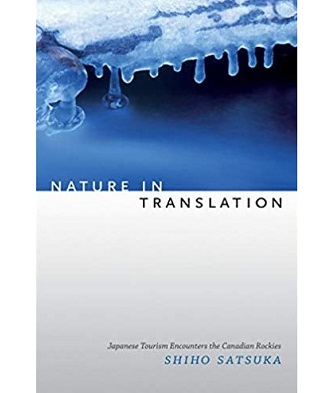
Shiho Satsuka is an Associate Professor of Anthropology at the University of Toronto, Canada, specializing in sociocultural anthropology with regional expertise in East Asia and North America. Her research focuses on the politics of knowledge production , cultural translation of nature , and capitalism-environment relations . She is currently developing a book project titled The Charisma of Wild Mushrooms: Undoing the Long Twentieth Century , examining how mushroom science can destabilize industrial modernity. Ph.D. in Anthropology (University of California, Santa Cruz, 2004) Her ethnographic work spans: Transnational translation of ecological knowledge in Japanese tourism (book: Nature in Translation , Duke 2015) Satoyama forest revitalization movements Matsutake mushroom's role in reimagining interspecies coexistence Comparative studies of Canadian multiculturalism and Japanese coexistence models Publications demonstrate trends in: Multispecies entanglements Environmental knowledge pluralism Decolonizing scientific frameworks Ontological multiplicity in cultural analysis Anthropocene ethnography Collaborative research methodologies Awards and grants include: SSHRC Insight Grant (2016-2022) for Matsutake Worlds research Carson Fellowship (2012) at Rachel Carson Center She supervises graduate students in areas of environmental anthropology and science studies while maintaining a collaborative research network across Japan, North America, and Europe.
Taylor Perron is the Cecil and Ida Green Professor of Earth, Atmospheric and Planetary Sciences at Massachusetts Institute of Technology (MIT), where he also serves as the EAPS Undergraduate Officer. His research program at MIT spans multiple interdisciplinary areas within Earth and planetary sciences, with strong connections to the MIT-WHOI Joint Program in Oceanography/Applied Ocean Science and Engineering. Dr. Perron's academic background includes an AB in Earth and Planetary Sciences and Archaeology from Harvard University (1999) and a PhD from the University of California, Berkeley (2006), followed by postdoctoral work at Harvard. His leadership roles at MIT have included serving as chair of the Program in Geology, Geochemistry, and Geobiology, and as Associate Department Head for Education. His research focuses on three interconnected areas: Landscape Evolution, Planetary Surfaces, and the Human Landscape. Within Landscape Evolution, he investigates dynamic river networks, climate-landscape interactions, grain-scale sediment transport mechanics, and the connections between landscape evolution and biological diversification. His Planetary Surfaces research examines river systems on Mars and Titan, using spacecraft data to understand extraterrestrial hydrological processes. The Human Landscape component explores archaeological applications of geomorphology, particularly in the Amazon basin. Analysis of his recent publications reveals a strong emphasis on comparative planetary hydrology, with significant work on Earth, Mars, and Titan. His research increasingly integrates field observations, mathematical modeling, and remote sensing to address questions about landscape evolution across different planetary environments and timescales, with growing attention to anthropogenic impacts on Earth's surface processes. Scientific Awards & Honors: MacArthur Fellowship (2021) James B. Macelwane Medal, American Geophysical Union (2014) Fellow, American Geophysical Union (2014) Editorial Committee Member, Annual Review of Earth & Planetary Sciences (2017-present) Dr. Perron has established a productive research group that collaborates across disciplines and institutions, including significant partnerships with WHOI, NASA missions, and archaeological teams. His work bridges fundamental questions about planetary evolution with practical implications for understanding climate change impacts on Earth's surface systems.
Alec Morton is an Associate Professor (Practice) at the National University of Singapore (NUS) Saw Swee Hock School of Public Health and concurrently holds a Professor of Management Science position at the University of Strathclyde in Glasgow, UK. His career spans multidisciplinary roles across engineering, social science, business, and public health, focusing on evidence-based decision-making in healthcare. Education: PhD in Management Science (University of Strathclyde, 2000), MSc in Operational Research (University of Strathclyde, 1997), BSc in Mathematics and Philosophy (University of Manchester, 1995) Morton’s research integrates decision analysis , health economics , and operations research to address critical questions in health technology assessment , priority-setting in healthcare , and global health governance . His work on antimicrobial resistance, antibiotic reimbursement models, and health system strengthening has influenced international policy frameworks. His recent publications explore economic evaluations for global health challenges, including antimicrobial resistance , assisted dying policies , and health system equity . He is a Fellow of the Royal Society of Public Health and serves as Departmental Editor of Healthcare Management Science . Morton has held advisory roles for organizations such as the UK National Audit Office , NICE , GAVI , and the WHO Global Malaria Programme , with research funded by entities like the Health Foundation and UK Medical Research Council .
Ariella Aïsha Azoulay is a Professor of Comparative Literature and Modern Culture and Media at Brown University. Her work interrogates the intersections of photography, political philosophy, and decolonial praxis. She holds a PhD from Tel Aviv University (1997) and an MA from Université Paris VIII Saint Denis (1986). Her research focuses on photography’s political ontology, colonialism, and human rights discourses. Key works include Potential History: Unlearning Imperialism (2019), Civil Imagination: The Political Ontology of Photography (2012), and The Civil Contract of Photography (2008). She has curated exhibitions such as The Natural History of Rape (2022) and Enough! The Natural Violence of the New World Order (2016). Research Interests: Colonial archives, visual politics, decolonial methodologies, Palestinian liberation, and anti-imperial frameworks. Awards: Infinity Award (2002). Her teaching spans courses on colonialism, migration, and anti-colonial thought, including COLT 1815J: 1492 – Unlearning Single World Order and MCM 2100R: Potential History of Photography . She also directs film essays like Un-Documented: Undoing Imperial Plunder (2019) and The World Like a Jewel in the Hand (2022).
Mark Bailey is a Professor of Late Medieval History at the University of East Anglia's School of History and Art History, working part-time. He previously taught at the University of Cambridge. His research focuses on late medieval England's economic and social history, particularly the socio-economic impact of the Black Death and the decline of serfdom. He is an award-winning scholar, recognized as Ford Lecturer in British History (2019) and a Visiting Fellow at All Souls College, Oxford (2018). Teaching includes organizing the module 'The Catastrophic Fourteenth Century' and contributing to the Medieval History Masters program. His research interests span urban governance, agricultural history, and demographic shifts. He actively participates in professional networks, serving as President of the Suffolk Institute of Archaeology and History and on the Economic History Society's board. Key publications include After the Black Death (2021) and The Decline of Serfdom in Late-Medieval England (2014). His recent work explores labor legislation post-Black Death and gender dynamics in servile migration. He holds leadership roles in academic organizations, shaping policy on manorial documents and medieval archives.
Dr Anthony Faramelli is a Lecturer in Visual Cultures at Goldsmiths, University of London, serving as Programme Leader for the BA in Fine Art and History of Art, and co-Leader of the PhD in Visual Cultures. He holds a PhD in Critical Humanities from The London Graduate School, Kingston University (2014). His research focuses on psychosocial studies, coloniality, institutional analysis, digital cultures, and psychotherapy aesthetics, with notable works including Resistance, Revolution and Fascism: Zapatismo and Assemblage Politics (2018) and The Mass Psychology of Fascism in the Age of Machines (forthcoming). He is affiliated with the Goldsmiths Centre for Migrant Futures and the Psychosocial Studies Association. Faramelli also consults for mental health and housing organizations, applying institutional psychotherapy principles in practice. Education: PhD in Critical Humanities (2014), The London Graduate School, Kingston University Research Interests: Coloniality, institutional psychotherapy, digital surveillance, micro-fascist movements, Fanon’s ethico-aesthetic paradigm, Zapatismo, and decolonial mental health practices. His work bridges psychoanalytic theory, political philosophy, and postcolonial critique. Recent Projects: Refugee Cartographies (mapping Latin American diaspora networks), and critical analyses of the Alt-Right and algorithmic fascism. He has presented at conferences such as the IV Jornadas Deleuze in Buenos Aires and the Université Le Havre-Normandie. Professional Roles: Editor of Deleuze and Guattari Studies , Executive Board member of the Psychosocial Studies Association, and consultant for Southwark Council’s Housing Solutions.
Dr Bhishna Bajracharya is an Associate Professor of Urban Planning at Bond University's Faculty of Society & Design. He previously taught at Queensland University of Technology (QUT) for over 12 years and worked as a post-doctoral fellow at the Australian National University. His research focuses on urban sustainability, disaster resilience, and master-planned communities. Education: PhD in Urban Planning, University of Hawaii (200?) MURP in Urban Planning, University of Hawaii BArch in Architecture, Delhi University Research Interests: Smart cities and infrastructure Disaster management and community resilience Transit-oriented development Climate change adaptation Sustainable campus design Knowledge-based regional economies Recent Research Trends: His recent work emphasizes cross-border planning (e.g., Gold Coast Airport integration), megaproject governance, and innovative disaster management frameworks. He frequently collaborates with governments and NGOs to bridge research and policy gaps. Awards & Grants: Australian Research Council (ARC) Linkage Grant for community narratives in urban planning Emergency Queensland grant for disaster governance research Advising & Partnerships: Supervising PhD students in urban planning Collaborations with QUT's Creative Industries faculty Member of Bond University's Sustainability Committee Labs & Teams: Affiliated with the Centre for Comparative Construction Research at Bond University, focusing on global urban challenges.
Prof. Alexander Geissler holds the position of Full Professor of Health Care Management at the School of Medicine (Med-HSG) within the University of St. Gallen. His research focuses on health systems research, health economics, and health policy, with particular emphasis on digital transformation in healthcare and patient-reported outcomes. He has contributed extensively to studies on healthcare quality improvement, public reporting systems, and the integration of artificial intelligence in medical diagnostics and screening programs. His work spans topics like optimizing hospital digital maturity (e.g., German DigitalRadar project), analyzing surgical outcomes (robotic vs. open prostatectomies), and evaluating patient empowerment through quality information. He has pioneered methodologies for interpreting patient-reported outcomes (e.g., EQ-5D-3L) and designing clinical dashboards to enhance care delivery. Recent research highlights include investigating AI applications in breast cancer screening and cost-effectiveness of remote patient monitoring post-joint replacement surgery. Geissler’s publications demonstrate a strong focus on healthcare policy implications, such as hospital capacity planning, payment systems for specialized care, and cross-country comparisons of healthcare transparency initiatives. His work frequently bridges academic rigor with practical policy recommendations, particularly in Switzerland and Germany. Notably, he has addressed low-value care reduction, price sensitivity in healthcare demand, and the socio-demographic factors influencing healthcare utilization. While no specific awards are listed, his prolific research output reflects sustained leadership in health systems analysis. His academic contributions are disseminated through the Alexandria Research Platform and international peer-reviewed journals.