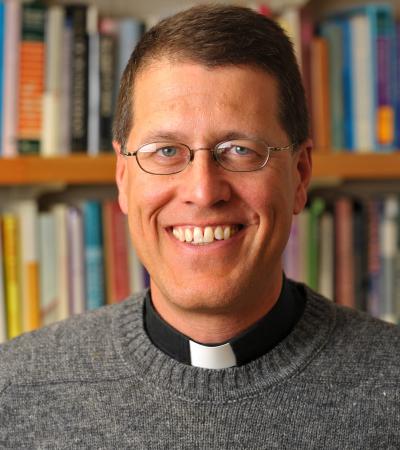
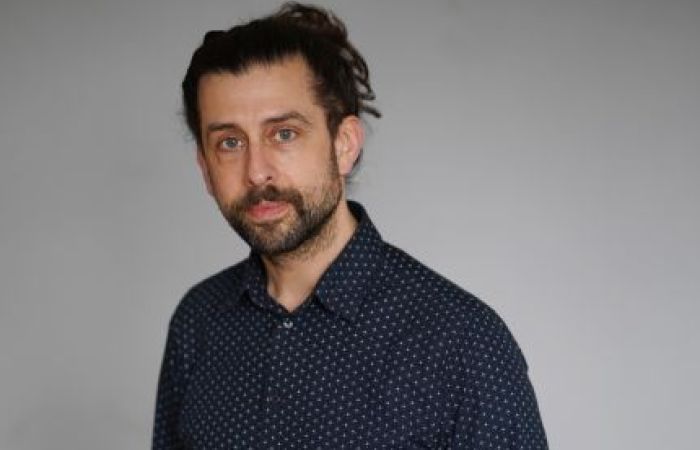
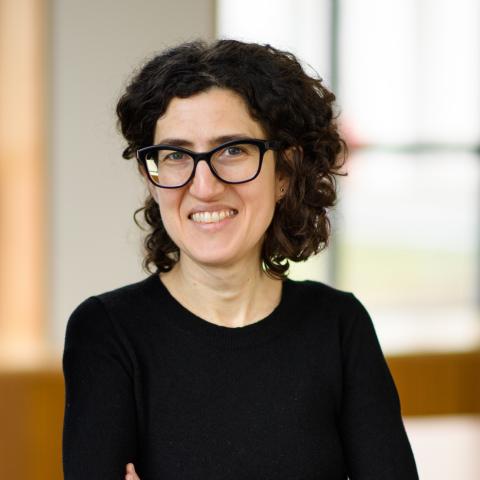
Rev. Paul V. Kollman, CSC is an Associate Professor in the Department of Theology at the University of Notre Dame and has been a faculty fellow at the Kellogg Institute since 2002. His academic work focuses on the history of Christianity and World Religions/World Church, with extensive field research conducted in Uganda, Kenya, Tanzania, and archival research in Europe and the US. Previously, he taught at Catholic Theological Union in Chicago and the Philosophy Centre in Jinja, Uganda. Kollman's research examines African Christianity, mission history, and world Christianity through interdisciplinary lenses including sociology, anthropology, and history. His work explores religious transformation, inter-religious dialogue, and the cultural dimensions of faith communities in global contexts. His publications demonstrate consistent focus on missiology, African religious practices, and global Christianity trends. Recent works analyze contemporary challenges in religious life, historical developments in African Catholicism, and theoretical frameworks for understanding religious change across cultures. Honors and Awards: President, International Association of Mission Studies (2016-2020) Kellogg Institute's Undergraduate Mentoring Award (2008-09) Erasmus Institute Fellowship Lilly Fellowship for Theological Education Kollman mentors students through programs like the Kellogg International Scholars Program, advising research projects including translation of missionary journals and studies of African religious history. His work has been supported by fellowships from multiple institutions.
Lawton Robert Burns is the James Joo-Jin Kim Professor and Professor of Healthcare Management at the Wharton School, University of Pennsylvania . He serves as Co-Director of the Roy and Diana Vagelos Program in Life Sciences and Management and Chairperson of the Health Care Systems Department since 2008. His career spans academic roles at the University of Chicago, University of Arizona, and University of Wisconsin. Education: PhD in Sociology, University of Chicago (1981) MBA in Health Administration, University of Chicago (1984) MA, University of Chicago (1976) BA, Haverford College (1973) Dr. Burns specializes in healthcare organization design , strategic change , and supply chain dynamics . His work examines hospital-physician relationships , integrated delivery systems , and market forces in healthcare. His recent publications analyze Pharmacy Benefit Managers (PBMs) , Group Purchasing Organizations (GPOs) , and strategic implementation failures. Notable awards include the Arthur Anderson Distinguished Visitor (2001), Edwin Crosby Memorial Fellowship (1992-93), and Udall Fellowship (1990-91). His research has been featured in Knowledge at Wharton , LDI News , and American Political Science Review . Dr. Burns co-authors works with experts like David Dranove and Stephen Shortell , focusing on clinical integration , retail supply chains , and global healthcare models (India, China).
Cesla Amarelle serves as Full Professor and Chairholder of Public Law and Migration Law at the University of Neuchâtel's Faculty of Law. Her academic leadership extends to co-directing the Swiss Center for Migration Law (CDM) and contributing to national research initiatives including the National Center of Competence in Research (NCCR) 'On the Move'. She concurrently holds significant public appointments as Chair of the Institute of European Law at the University of Fribourg and Federal Commissioner for Women's Issues, with recent expert designation to the Federal Round Table on signature collection integrity for 2024. Her academic foundation includes a law degree from the University of Lausanne (1996), LL.M. in European and International Economic Law from the University of Fribourg, and doctoral thesis from the University of Lausanne (2004). Her career progression at the University of Neuchâtel spans assistant professor (2009-2014), extraordinary professor (2015-2016), and full professor positions since 2016, complemented by earlier research roles at Swiss National Science Foundation and University of Fribourg. Professor Amarelle's research centers on migration law frameworks, human rights protections in asylum systems, and constitutional dimensions of European integration. Her work critically examines the intersection of migration governance with digital technologies, climate change impacts, and gender equality. Current projects analyze temporary protection regimes, non-refoulement principles in technological contexts, and the evolving relationship between Swiss migration law and European legal frameworks. Her scholarship consistently bridges theoretical legal analysis with practical policy implementation challenges. Her extensive publication record demonstrates evolving focus from foundational migration law codification toward contemporary challenges including digital discrimination, child rights in emergency contexts, and sustainable finance frameworks. Recent scholarship reflects increasing engagement with technological impacts on migration governance and the humanitarian dimensions of temporary protection systems, while maintaining rigorous analysis of constitutional and European law interfaces. Professor Amarelle actively contributes to academic and public discourse through leadership in the Swiss Center for Migration Law and participation in the NCCR 'On the Move' consortium. Her public service includes significant political roles as Vaud State Councilor for Education (2017-2022) and National Councilor (2011-2017), where she chaired key committees on political institutions and finance while representing Swiss higher education interests nationally. She maintains active engagement with professional associations including the Swiss Conference of Higher Education Institutions and Conference of Directors of Public Education.
Sergio Carrera serves as Senior Research Fellow and Head of the Justice and Home Affairs Unit at the Centre for European Policy Studies (CEPS), a prominent Brussels-based think tank. Additionally, he holds the position of Adjunct Professor at the Paris School of International Affairs (PSIA) in SciencesPo, France, where he contributes to academic teaching and research in international affairs. Dr. Carrera's academic background includes a Ph.D. on immigration and citizenship from Maastricht University (The Netherlands), an LL.M. in European, Comparative and International Law from the University of Maastricht, and a Law Degree from Universidad de Salamanca in Spain. His extensive educational foundation in European and international law underpins his expertise in EU justice and home affairs policy. His primary research interests focus on EU justice and home affairs (JHA) law and the Area of Freedom, Security and Justice policy, with particular emphasis on migration, asylum, citizenship, and Schengen policies. Dr. Carrera's expertise also extends to EU criminal justice law and police cooperation, examining their impacts on data protection, privacy, and the rights of the defense. His work consistently addresses the intersection between security measures and fundamental rights within the European context. Dr. Carrera has produced an extensive body of scholarly work, with over 190 published publications according to the available information. His recent research has particularly focused on EU-US data transfers, rule of law challenges in the context of migration management, global asylum governance, and the evolving landscape of EU security policy. His publications demonstrate a consistent concern with ensuring that security and migration policies uphold fundamental rights and the rule of law. Among his notable contributions are policy analyses on the European Green Deal's implications for climate policy, assessments of the EU's response to the Ukraine crisis, and examinations of the impact of the Trump administration on EU security policy. His research often bridges academic analysis with practical policy recommendations for EU institutions. Dr. Carrera leads and participates in numerous research projects addressing critical issues in EU policy. Current initiatives include "Reclaiming our past, rebuilding our future: new approaches to fighting antigypsyism" (2024-2026) and the "Study on Mapping Civil Dialogue Practices in the EU Institutions" (2024-2025). Previous significant projects include "Global Asylum Governance and European Union's Role" (ASILE, 2019-2023), "Pan-European Response to the ImpactS of COVID-19" (PERISCOPE, 2020-2023), and "IT tools and methods for managing migration FLOWS" (ITFLOWS, 2020-2023). His work has been commissioned by various EU institutions, including the European Parliament's Policy Department for Citizens' Rights and Constitutional Affairs, demonstrating the policy relevance and impact of his research. Dr. Carrera's expertise is frequently sought for task forces addressing timely issues such as EU-US data transfers, digital justice, and cross-border cooperation in criminal matters.
Jasmina Lukic is a Professor in the Department of Gender Studies at Central European University (CEU). She serves as the Principal Investigator for the HORIZON TMA MSCA Doctoral Network project EUTERPE (2022-2026), focusing on European Literatures and Gender in Transnational Perspective. Her academic work spans transnational feminism, post-Yugoslav literature, and interdisciplinary research methodologies. Education: Ph.D. in Comparative Literature, University of Belgrade. Research Areas: Gender Studies, Transnational Literature, Post-Yugoslav Societies, Interdisciplinary Methods. Projects: EUTERPE (2022-2026), STINT (2016-2019), Research Integration (2004-2006). Courses: Traveling Concepts in Gender Studies, Narrating Worlds, Feminism and Community, Strategies of Reading. Her recent publications explore themes such as feminist transnational convergences, literary transduction, memory politics in Dasa Drndić’s work, and gendered approaches to realism. Articles like The Transnational Turn and Scherezade in Exile (forthcoming, 2023) emphasize cross-border solidarity and feminist reinterpretation of literary genres. Her work bridges feminist theory, comparative literature, and post-conflict analysis. Notable affiliations include co-editing Times of Mobility: Literature and Gender in Translation (2019) and contributing to debates on War, Literature, and Ethics (2019). She actively engages in academic events like the book launch Soul, Body, and Gender in Late Antiquity (2024) and feminist conferences.
Senior Lecturer Christoffer Dahl is a faculty member at Kristianstad University within the Faculty of Teacher Education and the Department of Subject Teacher Education . He specializes in Swedish with a didactic focus and is an active member of the Learning in Language and Literature (LiLL) research group. Since 2015, he has contributed significantly to both teaching and research in literature education, particularly in the areas of textbook analysis, multimodal discourse, and literary didactics. Research Focus: Theoretical and methodological intersections between linguistics , literary studies , and didactics Reception theory, genre theory, and discourse analysis in educational contexts Multimodal analysis of literature textbooks Comparative Nordic textbook studies (Denmark, Norway, Sweden) Intersectionality in literature education His current major project is a comparative study that builds on his doctoral thesis, Litteraturstudiets legitimeringar , analyzing how Nordic literature textbooks legitimize the study of literature through writing and images, with a focus on intersectionality. Teaching & Collaboration: Christoffer teaches text analysis and children's literature . He has collaborated since 2013 with Mikael Nordenfors (University of Gothenburg) on the Swedish National Agency for Education’s website, contributing to the SMDI network (Swedish with a didactic orientation). Supervision & Academic Service: Supervised 75 student works Active peer reviewer for journals and publishers (e.g., Routledge, Taylor & Francis) Organizer and participant in multiple academic conferences and workshops Consultant and expert reviewer for educational agencies
Vinod M. Vokkarane is a Professor in the Department of Electrical and Computer Engineering at the University of Massachusetts Lowell, where he serves as Director of the Center for Smart Cyber-Physical Systems (SCyPS) and Director of Advanced Computer Network Labs. Previously, he was an Associate Professor at University of Massachusetts Dartmouth from 2004 to 2013 and a Visiting Scientist at MIT's Research Laboratory of Electronics from 2011 to 2014. His extensive research portfolio spans multiple domains of advanced networking and cyber-physical systems. Dr. Vokkarane earned his educational foundation with a B.S. from University of Mysore, India (1999), followed by an M.S. (2001) and Ph.D. (2004) in Computer Science from the University of Texas at Dallas. His dissertation focused on optical burst-switched networks, establishing the foundation for his future research trajectory. His research interests center on Cyber-Physical Systems, Network Optimization, Reliability, Smart Grids, and Cyber-Security, with particular expertise in the design, analysis, and modeling of architectures, protocols, and algorithms for ultra-high speed networks including Optical networks, Grid/Cloud networks, and Big-data networks. His work bridges theoretical foundations with practical implementations, often addressing critical challenges in network reliability, security, and efficiency. His research has received significant recognition through numerous best paper awards and substantial external funding. Analysis of his recent publications reveals a clear evolution toward increasingly sophisticated integration of cyber-physical systems with power infrastructure, particularly in the areas of grid resilience and observability. His work has expanded from fundamental optical networking research to address critical infrastructure challenges, with a growing emphasis on machine learning applications for network optimization and power system monitoring. The recent focus on PMU networks, disaster resilience, and cyber restoration demonstrates his strategic pivot toward addressing national security and critical infrastructure protection challenges. UMass Dartmouth Scholar of the Year Award (2011) UMass Dartmouth Chancellor's Innovation in Teaching Award (2010-11) University of Texas at Dallas Computer Science Dissertation of the Year Award (2003-04) Multiple Best Paper Awards including IEEE GLOBECOM 2005, IEEE ANTS 2010, ONDM 2015, ONDM 2016, and IEEE ANTS 2016 Texas Telecommunications Engineering Consortium Fellowship (2002-03) Dr. Vokkarane has successfully mentored numerous graduate students who have contributed significantly to his research projects, with several going on to successful careers in academia and industry. His research has been consistently supported by major funding agencies including NSF, DOE, and USMC, with recent projects totaling over $5 million in funding. Current projects include Unified Post-Disaster Restoration Planning for Cyber-Physical Power Distribution Systems (ONR, $550K), CyberCARE: Northeast University Cybersecurity Center (DOE, $3.5M), and Flexible Spectrum Allocation in Next-Generation Optical Networks (NSF, $350K). He leads the Center for Smart Cyber-Physical Systems (SCyPS) and Advanced Computer Network Labs at UMass Lowell, where his research teams work on cutting-edge problems in network architecture, cyber-physical security, and infrastructure resilience. His labs collaborate extensively with national laboratories and industry partners to translate theoretical advances into practical solutions for real-world infrastructure challenges.
Michael Ellis is an Associate Professor in the Department of Mechanical Engineering at Virginia Tech since 2012, with prior roles as Associate Professor and John R. Jones Faculty Fellow (2007–2012). His work spans fuel cell systems, energy modeling, and sustainable technologies. Ph.D. , Mechanical Engineering, Georgia Institute of Technology (1996) M.S. , Mechanical Engineering, Georgia Institute of Technology (1993) B.S. , Mechanical Engineering, University of Tennessee (1985) Research interests include fuel cell systems for building cogeneration, energy consumption modeling, industrial process analysis, and optimal hybrid energy system design. Recent work focuses on battery recycling processes, microbial fuel cells, and thermal stress characterization of membranes. His 15 most recent publications highlight trends in battery recycling scalability , fuel cell durability , microbial energy conversion , and nanomaterials for energy applications . Key subfields include membrane stress modeling, microbial adhesion mitigation, and hybrid gas/electric system optimization. Excellence in Architecture Award (2006) Woodruff Teaching Fellowship (1995) Tau Beta Pi Member Multiple teaching awards at Virginia Tech (2000–2003) As faculty advisor for the award-winning Solar Decathlon team (2002), he contributed to interdisciplinary energy projects. His work connects mechanical engineering with sustainable energy systems, focusing on practical implementations and material innovations.
Ananya Kabir is a Professor of English Literature in the Department of English Language & Literature. She holds an ORCID identifier (0000-0003-1895-8412) and has been active in research networks spanning India, Vietnam, France, and the Indian Ocean Rim. British Academy Fellowship (2023) Humboldt Research Prize (2019) Infosys Prize for Humanities (2017) Her research focuses on archipelagic memory frameworks across postcolonial spaces, particularly examining connections between India, Vietnam, and the Caribbean through literary and cultural analyses. She explores how decolonial imaginaries emerge from fragmented geographies and multidirectional memory practices. Recent publications analyze archipelagic intimacy, échos-monde resonance, and memory-making in Indian Ocean spaces. Her collaborative works with Luca Raimondi demonstrate interdisciplinary approaches combining literary theory, cultural history, and oceanic studies. Alegropolitics: Connecting on the Afromodern Dance Floor (British Academy, 2022-2023) IATIO Project: India and Indian Ocean in Decolonial Period (EU Commission, 2021-2024) MODERNMOVES: Afro-Diasporic Rhythms (EU Commission, 2013-2018)
Maria Monica Wihardja serves as a Visiting Fellow and Co-coordinator of the Media, Technology and Society Programme at ISEAS–Yusof Ishak Institute while holding an Adjunct Assistant Professor position at the National University of Singapore. Her career bridges academic research and high-impact policy engagement, including former roles as World Bank Economist in the Poverty and Equity Global Practice and senior advisor to Indonesia's Presidential Executive Office on strategic economic reforms. Her educational background features: PhD in Regional Science, Cornell University MPhil in Economics, Cambridge University BA in Applied Mathematics-Economics, Brown University Wihardja's research integrates economic analysis with sociotechnical systems, focusing on digital transformation's impact on labor markets, food security, and democratic processes. She examines how technological disruption creates both opportunities for inclusion and risks of inequality, particularly through studies of platform economies, electoral disinformation, and sustainable agro-food systems. Her methodology combines quantitative econometrics with policy-oriented field research, often leveraging large-scale datasets from government and private sector partnerships. Analysis of her recent publications reveals three dominant research trajectories: (1) Digital economy effects on labor market polarization and inclusion, (2) Food system resilience through agricultural modernization, and (3) Geopolitical dimensions of supply chain reconfiguration. These intersect with her policy engagement in ASEAN economic integration frameworks and Indonesia's G20 presidency initiatives. Her scientific recognition includes: Nikkei Asian Scholar 2023 award Wihardja actively shapes regional discourse through editorial roles at East Asia Forum and Center for Indonesian Policy Studies. Her grant-funded work frequently involves World Bank partnerships and Indonesian government collaborations, particularly on stunting prevention and food policy reforms. Current projects examine deepfake impacts on electoral integrity and sustainable financing mechanisms for green transitions. She leads the Media, Technology and Society Programme at ISEAS, coordinating interdisciplinary research on digital governance and Southeast Asian technology policy. The programme partners with regional think tanks, government agencies, and private sector stakeholders to develop evidence-based policy responses to technological disruption.
Joseph W. Glannon is a Professor of Law at Suffolk University Law School , where he has been a faculty member since 1980. He holds degrees from Harvard University, including a B.A., M.A.T., and J.D. Civil Procedure Conflict of Laws Torts Public Tort Liability in Massachusetts His academic work focuses on Massachusetts Tort Claims Act, governmental liability, and legal education. Recent publications highlight trends in Tort Law, Conflict of Laws, and Civil Procedure, with subfields ranging from Statute of Limitations to Legislative Reform . Selected for Phi Beta Kappa, he co-authored the widely used Civil Procedure: A Coursebook and pioneered the Practice Perfect online review series. He previously worked as a stage carpenter and Assistant Dean of Students before entering academia.
Laura Hengehold is a Professor of Philosophy at Case Western Reserve University, holding the endowed Beamer-Schneider Professorship in Ethics. Her research focuses on intersections of language, embodiment, and political conflict, drawing on 20th-century French philosophy (Foucault, Deleuze), feminist theory, and African-European political dialogue. She explores how knowledge systems shape women’s bodily experiences, emphasizing ethical and political implications. Key works include Simone de Beauvoir’s Philosophy of Individuation and The Body Problematic . She co-edited African Philosophy for the 21st Century and translated works by Seloua Luste Boulbina. Her scholarship bridges existentialism, post-structuralism, and transnational feminism. Research Interests: Feminist philosophy, continental philosophy, political theory, embodiment studies, decolonial thought. Awards: Beamer-Schneider Professorship in Ethics (2017–present). Teaching: Courses on social/political philosophy, feminist theory, African political thought, and Deleuze. Recent talks include engagements on Simone de Beauvoir’s ethics, African political thought, and Foucault’s influence. She collaborates with the Women and Gender Studies and World Literature Programs at CWRU.
Nora Freeman Engstrom is the Ernest W. McFarland Professor of Law at Stanford Law School and Co-Director of the Deborah L. Rhode Center on the Legal Profession. She holds leadership roles in the American Law Institute (ALI), serving as a Reporter for multiple Restatement projects and Adviser to initiatives on AI and civil liability. Her research focuses on tort law, legal ethics, access to justice, and complex litigation. Engstrom co-authors leading casebooks in Legal Ethics and Tort Law. Her expertise includes the tort system’s role in transparency, medical malpractice, and 'settlement mills.' She has pioneered studies on secret settlements, multidistrict litigation integrity, and legal technology’s impact on civil justice. Engstrom’s work bridges theoretical scholarship and practical reform, advocating for equitable legal systems. Awards : William L. Prosser Award (2025, AALS) R. Ammi Cutter Reporter’s Chair (2022, ALI) 2024 Lifetime Achievement Award (UC Berkeley) Grants & Advising : Engstrom advises governmental entities and law firms on ethics, including recent work with U.S. prosecutors and federal judges. Her ALI contributions modernize tort law principles. She previously served as Stanford Law’s Associate Dean for Curriculum and chairs AALS’s Torts Section. Labs/Teams : Co-directs the Rhode Center, advancing civil justice transparency through tools like the MDL Toolkit. Collaborates with interdisciplinary teams on projects like Common Benefit Fees and AI liability frameworks.
Andrew Neal is a Professor of International Security and Director of Postgraduate Research Programmes at the University of Edinburgh’s School of Social and Political Science. His research focuses on critical security studies, parliamentary security politics, and the evolution of security discourse. He leads the National Security and Defence Documents Dataset (1987–2024), analyzing global security priorities across 119 countries. Education: BA (Hons) in Politics from Lancaster University PhD in Politics from Keele University Research Interests: Security policy communication and transparency Non-traditional security threats Global North-South security dynamics Parliamentary roles in security governance Grants & Projects: Funded by the Scottish Council on Global Affairs, BA/Leverhulme, and FCDO Current projects include a history of security threats and green energy transition challenges Labs/Teams: Directs the National Security and Defence Documents Dataset project, a collaborative open-access resource.
Rocío Titiunik is a Professor of Politics at Princeton University and Director of the Data-Driven Social Science Initiative. She holds affiliations with the School of Public and International Affairs, the Department of Operations Research and Financial Engineering, the Center for Statistics and Machine Learning, the Program in Latin American Studies, the Center for the Study of Democratic Politics, and the Research Program in Political Economy. Her work bridges quantitative methodology, political economy, and statistical analysis, focusing on causal inference and program evaluation through regression discontinuity (RD) designs. She earned her undergraduate degree at the Universidad de Buenos Aires and a Ph.D. in Agricultural and Resource Economics from UC-Berkeley (2009). Before joining Princeton, she served as faculty at the University of Michigan’s Department of Political Science, where she was affiliated with the Center for Political Studies and the Michigan Institute for Data Science. Rocío’s research emphasizes the application of quasi-experimental methods to study political institutions, democratic accountability, and party systems in developing democracies. Her methodological contributions include advancements in RD designs, synthetic controls, and uncertainty quantification. Recent substantive work investigates charismatic leaders’ impact on democratic stability and the effects of voter registration reforms on public safety. Her scholarly achievements include the 2016 Emerging Scholar Award from the Society for Political Methodology and 2020 fellowship in the same society. She currently serves as an associate editor for Science Advances and a Board member for Science, while previously holding roles at the American Journal of Political Science and the NSF’s Social, Behavioral, and Economic Sciences Directorate. Rocío’s advising and grant activities include co-leading the EITM Summer Institute and securing federal research funding for projects on political methodology and democracy. She teaches advanced quantitative analysis courses and collaborates across disciplines to strengthen empirical research practices. Her work is anchored in collaborative initiatives like the Center for Statistics and Machine Learning, which integrates computational tools with social science inquiry, and the Program in Latin American Studies, reflecting her commitment to regional and methodological innovation.