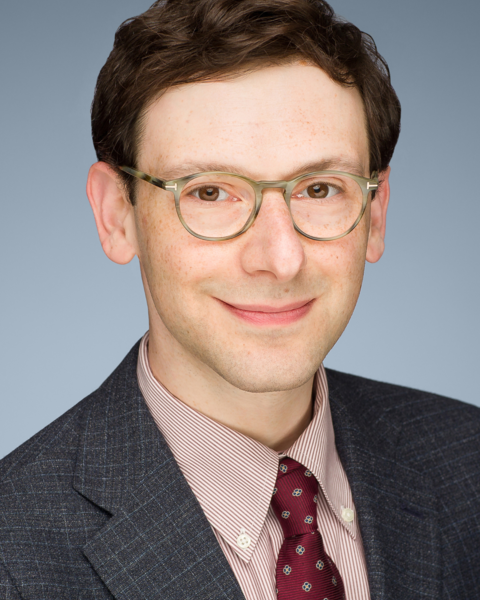
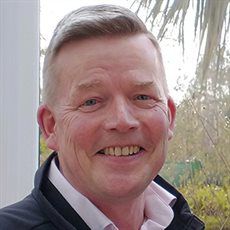
Professor Dr. Eckhardt Fuchs serves as Director of the Leibniz Institute for Educational Media | Georg Eckert Institute since 2015. He holds a W3 Professorship in Historical and Comparative Educational Research at Technical University of Braunschweig since 2011, and previously served as deputy director (2009-2015) and research coordinator (2007) at the Georg Eckert Institute. Education : University of Leipzig (PhD 1992) Key Affiliations : Leibniz Institute, Technical University of Braunschweig, International Standing Conference for the History of Education (President 2012-2015) Research Focus spans globalization of education, transnational textbook revision, educational policy analysis, and historiography. His work examines international organizations in education, European educational history, and the evolution of teaching materials. Recent Trends : Transnational textbook analysis Curriculum development Postcolonial memory politics Scientific cooperation history History of educational media Global educational governance Leadership Roles include editorial board memberships (Comparativ, Paedagogica Historica) and organizing scientific conferences. Active in policy advisory through UNESCO collaborations and research projects.
Professor Guido Bonsaver serves as Professor of Italian Cultural History at the University of Oxford's Faculty of Medieval and Modern Languages, holding fellowships at Pembroke College while tutoring at Merton, Queen's, and Wadham Colleges. His academic career spans contemporary Italian cultural studies with particular expertise in 19th-21st century historical intersections. His research trajectory reveals significant evolution from early work on Fascist-era censorship ( Censorship and Literature in Fascist Italy , 2007) through contemporary immigration narratives in cinema to current investigations of Italian-American cultural exchange ( America in Italian Culture: The Rise of a New Model of Modernity, 1861-1943 , 2023). Key thematic threads include political history's relationship with narrative forms, transnational cultural flows, and cinematic representations of social transformation. Professor Bonsaver's publications demonstrate remarkable interdisciplinary range across monographs, edited volumes, and scholarly articles examining censorship mechanisms, literary adaptations, migration narratives, and historical memory. His work consistently bridges literary analysis, film studies, and socio-political history while maintaining rigorous archival foundations. American Association of Italian Studies Book Prize (2007) for Censorship and Literature in Fascist Italy Extensive media collaborations including BBC World News, BBC 4, Radio 4, Corriere della Sera, and educational platform MASSOLIT Regular contributions to major reference works including The Oxford Handbook of Italian Literature His teaching encompasses undergraduate instruction in Italian history, literature and cinema from the 19th century to present, graduate supervision for MSt programs in Medieval and Modern Languages and Film Aesthetics, and DPhil guidance in modern Italian cultural history. Professor Bonsaver actively participates in public scholarship through video presentations and international media commentary on Italian cultural developments.
Manolis S. Patedakis serves as an Assistant Professor of Byzantine Philology in the Department of Byzantine and Modern Greek Philology at the University of Crete, with office 106 contactable via telephone (28310-77283) and email (patedakis@uoc.gr). His academic foundation was established at the University of Crete for undergraduate and initial postgraduate studies, culminating in a DPhil from the University of Oxford. His doctoral research centered on Athanasios I Patriarch of Constantinople (1289-1293, 1303-1309), producing a critical edition with commentary of unpublished works. Dr. Patedakis specializes in Palaeologan period literature, Cretan manuscript culture across medieval and early modern eras, and the theological corpus of Symeon the New Theologian. His scholarly methodology integrates textual criticism, epigraphic analysis, and historical contextualization to illuminate Byzantine intellectual traditions. His publication trajectory reveals sustained focus on patriarchal writings, theological controversies, and Cretan cultural identity, with significant contributions to Symeon the New Theologian studies and Byzantine-Latin relations. Recent work extends into modern literary analysis (notably Orhan Pamuk) while maintaining core philological rigor. Prior to his current position, he held a Research Fellowship at Dumbarton Oaks (Trustees for Harvard University) from September 2007 to May 2008, advancing his expertise in Byzantine material culture.
Hugh Cagle is an Associate Professor in the Department of History at the University of Utah, where he also serves as Director of the Diplomacy and International Studies program. His research spans Latin American history, comparative colonialism (particularly Portuguese colonialism in Brazil, India, and Goa), and science and technology studies (STS). He explores how scientific knowledge shaped colonial projects and how medical concepts influenced the construction of 'the tropics' as a geopolitical category. Education: PhD in History from Rutgers University Expertise: Latin American history, Portuguese empire, STS, comparative colonialism Languages: Portuguese, Spanish, Catalan, Latin His award-winning book Assembling the Tropics (2018) redefines the history of the concept of 'tropics' through Portuguese colonial experiences. His current projects examine animal classification under Portuguese rule and Amazonian indigenous technologies. Scientific Awards: Leo Gershoy Award (2019) Rising Star in the Humanities (2018) National Endowment for the Humanities Recipient (2012) His ORCID profile documents further publications and collaborations.
Roxana Banu serves as an Associate Professor and Fellow in Law at Lady Margaret Hall, University of Oxford, and is affiliated with the Faculty of Law. She teaches Conflict of Laws, Land Law, and Torts, having previously held academic positions at Queen Mary University Faculty of Law and Western Law School in Canada. Her educational achievements include: Law degree from Freie Universität Berlin (awarded DAAD Prize for outstanding results of a foreign student) LL.M. magna cum laude from Fordham Law School (recipient of Edward J. and Elizabeth V. Hawk award) Doctorate from the University of Toronto (awarded Alan Marks Medal for best graduate thesis and Strauss Fellowship in International Law) Banu's research integrates private and public international law with legal history and feminist theory. She has pioneered studies on nineteenth-century intellectual history of private international law, League of Nations-era developments, and colonial contexts. Her feminist scholarship examines relational approaches to conflict of laws and gender dynamics in legal theory, including uncovering the role of female social workers in historical frameworks. Current projects explore colonial history of private international law and social history of interwar cross-border family maintenance conventions. Her recent publications (2023-2024) reveal a pronounced shift toward philosophical foundations of conflict of laws, conceptual history (e.g., 'comity'), and critical analyses of race, gender, and colonialism. She co-edits the Philosophical Foundations series with Oxford University Press while producing book chapters on forgotten historical figures and League of Nations jurisprudence. This body of work demonstrates a cohesive trajectory merging historical rigor with theoretical innovation and feminist critique across international law domains. Her scholarly recognition includes: DAAD Prize for outstanding results of a foreign student Edward J. and Elizabeth V. Hawk award for outstanding results Alan Marks Medal for best graduate thesis Strauss Fellowship in International Law 2016 ASIL Private International Law Interest Group Award Banu's academic leadership is evidenced by her Supreme Court of Canada citation in Nevsun Resources Ltd. v. Araya (2020) and editorial direction of foundational philosophical works. While specific grant details are unlisted, her sustained output across historical, theoretical, and feminist dimensions indicates robust research infrastructure. Her teaching methodology emphasizes historicizing legal concepts to reveal contemporary frameworks' evolution and limitations.
Philip Kaisary is Professor of Law and Professor of English & Comparative Literary Studies at Carleton University, cross-appointed between the Department of Law and Legal Studies, the Department of English Language and Literature, and the Institute for Comparative Studies in Literature, Art, and Culture. His work integrates Caribbean and Latin American studies, critical legal theory, human rights, and world literary studies. Education: M.A. (Hons.) English Literature, University of Edinburgh M.A. Postcolonial Studies, University of Sussex Ph.D. English & Comparative Literary Studies, University of Warwick Graduate Diploma in Law, Oxford Brookes University Graduate Diploma in Legal Practice, Oxford Institute of Legal Practice Admitted as Solicitor of England & Wales (non-practising) Research & Teaching: Kaisary’s scholarship interrogates law, literature, and film to foreground histories of slave resistance, the Haitian Revolution, and Black radical thought. Recent courses include Directions and Dead Ends in the Law & Literature Movement , The Haitian Revolution and Rights , and Critical Theory for Legal Studies . Publications Trend: His recent articles (2020-2025) cluster around cinematic representations of slavery, the Haitian Revolution’s legal and cultural legacies, and materialist critiques of human rights discourse, evidencing a sustained engagement with visual culture and radical political thought. Awards & Fellowships: Ruth and Mark Phillips Professor of Cultural Mediations, 2023–2025 Fulbright Fellowship, Vanderbilt University Lord Haldane Scholarship, Lincoln’s Inn Attorney General Award for Pro Bono activities Graduate Supervision: He welcomes prospective students interested in materialist approaches to law & literature, critical legal studies, world literature, and Black Atlantic cultures.
Karin Peters is a Full Professor of Romance Literature and Cultural Studies with a Focus on Ibero-Romania at the University of Bonn since 2023. Her academic journey includes a habilitation at Johannes Gutenberg University Mainz (2021-2022), a doctorate from LMU Munich (2010), and a Magister Artium from the same institution (2006). Her research spans transnational literary history, affect theory, pastoral poetry, and intersections of gender and politics in Spanish and Argentinian literatures. Key projects include co-editing The Face as Scene. Virtuality and Embodiment of Affect and leading the network 'Comic Literacies. Cultural Techniques of the Comic' at KWI Essen. She has supervised doctoral work on Iberoamerican Baroque theater and published extensively on Roland Barthes, Georges Bataille, and contemporary Latin American narratives. Her recent publications analyze the European myth of the emotional subject, pastoral masks in Cervantes, and affective economies in 18th-century literature. She has received scholarships from DAAD, Studienstiftung des deutschen Volkes, and e-fellows.net, and actively contributes to academic organizations including the Romanistenverband and the Bonn Center for Dependency Studies.
Thomas Skouteris is a Greek/Dutch jurist serving as Associate Professor and Chair of the Department of Law at the American University in Cairo's School of Global Affairs and Public Policy. He also directs the Ibrahim Shihata Memorial LLM Program in International and Comparative Law and serves as general editor of the Leiden Journal of International Law. His academic career spans multiple prestigious institutions including Leiden University, Central European University, and Harvard Law School. Skouteris received his LLB in law from Democritos University in Greece (1993) followed by an LLM cum laude (1996) and PhD (2008), both from Leiden University in the Netherlands. His educational background reflects a strong foundation in both Greek and European legal traditions. His research centers on public international law with particular emphasis on the history and theory of international law, international dispute settlement, and international criminal law. Skouteris critically examines notions of progress, normativity, and historical development within international legal discourse. His work often challenges traditional narratives and explores alternative historical perspectives that reveal the ideological underpinnings of international law. Skouteris's publications demonstrate a consistent focus on historical approaches to international law, with particular attention to interwar period scholarship, critical historiography, and the examination of progress narratives. His recent work includes the influential monograph "Retrials: The New Histories of International Criminal Law" (2019) which calls for critical reexamination of historical narratives in international criminal law. His scholarship spans book publications, edited volumes, journal articles, and contributions to major reference works like the Oxford Handbook series. As a founding member and first secretary-general of the European Society of International Law and the Foundation for New Research in International Law, Skouteris has significantly contributed to institutional frameworks supporting international legal scholarship. His editorial work with the Leiden Journal of International Law and the London Review of International Law has shaped contemporary discourse in the field. Skouteris maintains active research collaborations across international institutions, particularly through his work with the Periphery Series which examines international law from non-Western perspectives. His ongoing projects include the Oxford Handbook on International Law and the Arab World, demonstrating continued scholarly productivity and engagement with contemporary legal challenges.
Linda J. Richards serves as the Chair of the Department of Neuroscience and Edison Professor of Neuroscience at Washington University School of Medicine. Her career spans decades of groundbreaking research in brain development, particularly focusing on interhemispheric connections of the mammalian brain. She leads the Brain Development and Disorders Laboratory, which investigates both normal brain wiring and conditions where this wiring is altered. Professor Richards earned her Bachelor of Science (Honours) from The University of Melbourne in 1990, followed by her PhD from the same institution between 1991-1994. Her educational background laid the foundation for her pioneering work in developmental neurobiology. Her research interests center on the development, plasticity, and function of long-range connections in the cerebral cortex, with particular focus on the corpus callosum - the largest fiber tract connecting the brain's hemispheres. She investigates how cellular and molecular mechanisms regulate brain wiring during development and how these processes are altered in congenital corpus callosum dysgenesis (CCD), which occurs in approximately 1 in 4,000 people. Her work explores the underlying causes of CCD, the mechanisms of long-range axonal plasticity, and how structural changes in brain wiring impact cognition and behavior. Analysis of Professor Richards' recent publications reveals a consistent focus on corpus callosum development and disorders across multiple model systems. Her work spans from basic molecular mechanisms involving transcription factors like the Nuclear Factor I (NFI) family to human clinical studies of corpus callosum disorders. She employs diverse methodologies including genetic analysis, neuroimaging, behavioral assessments, and comparative studies across mammalian species. A notable trend is her increasing focus on translating basic science findings into understanding human conditions, particularly through genetic studies of CCD patients and their families. 2020: Cajal Club, Krieg Cortical Kudos Discoverer Award, Pinckney J Harman Memorial Lecture 2019: Appointed Officer (AO) of the Order of Australia for distinguished service to medical research and education in developmental neurobiology 2016: Elected Fellow of the Australian Academy of Health and Medical Sciences 2015: Elected Fellow of the Australian Academy of Science 2017-2018: President of the Australasian Neuroscience Society 2010: Nina Kondelos Prize from the Australasian Neuroscience Society 2004: Charles Judson Herrick Award from the American Association of Anatomists Professor Richards is deeply committed to neuroscience advocacy and mentorship. She has contributed significantly to establishing major international neuroscience initiatives including the International Brain Initiative, the Australian Brain Alliance, and the Australian Brain Bee Challenge. As a board member of the International Brain Bee and member of the Dana Alliance for Brain Initiatives, she actively promotes neuroscience education and public engagement. Her lab provides training opportunities for numerous graduate students, postdoctoral fellows, and research staff who contribute to her diverse research programs. Professor Richards leads the Brain Development and Disorders Laboratory, which focuses on three primary research areas: activity-dependent mechanisms of early brain wiring, cellular and molecular mechanisms of early brain wiring (particularly involving NFI transcription factors), and human corpus callosum disorders. Her lab employs innovative approaches including studies of the fat-tailed dunnart (a marsupial model with postnatal brain development), advanced imaging techniques, and partnerships with individuals who have corpus callosum disorders to understand how brain wiring impacts cognitive, social, and emotional function.
David Chioni Moore is Professor of International Studies, English, African Studies and Critical Theory at Macalester College in Saint Paul, Minnesota. His work focuses on literary and cultural interactions across the African and Afro-diasporic worlds, with particular attention to long-distance connections and the African American poet Langston Hughes. Moore's educational background includes: Ph.D. in Literature from Duke University (1996) Studies at Université de Dakar, Senegal (1986-87) B.A. magna cum laude from Brown University (1986) with triple major in Comparative Literature/Literary Translation, Semiotics, and Applied Mathematics Moore's research spans postcolonial theory, post-Soviet studies, literary translation, and Black Atlantic studies. He examines how literary and cultural interactions shape global understanding, with particular focus on Africa, the Caribbean, and African America. His work often addresses the intersections of race, empire, and globalization, challenging traditional academic frameworks to develop more inclusive global perspectives. His extensive publication record demonstrates a consistent engagement with transnational literary connections, particularly between Africa and its diasporas. Moore has made significant contributions to understanding Langston Hughes's global travels and writings, as well as comparative analyses of postcolonial and post-Soviet contexts. His work frequently explores how translation shapes literary reception across linguistic and cultural boundaries, with special attention to Ferdinand Oyono's Une vie de boy and its fourteen-language translations. Throughout his career, Moore has held leadership positions including Chair of the International Studies Department (2006-2012 and Fall 2022), Director of the Critical Theory Program (2021-2023), and Director of the African Studies Program (2005-2007 and 2015-2019). His teaching encompasses courses on postcolonial theory, Langston Hughes, global food studies, and world literature, reflecting his commitment to interdisciplinary and global approaches to literary and cultural studies.
Daniela Margareta Chiorean serves as University Professor in the Graphics Department at the University of Art and Design Cluj-Napoca, where she has held academic positions since 2000 and currently serves as Prorector responsible for quality assurance (2023-2024). She previously served as Dean of the Faculty of Plastic Arts (2012-2015) and Department Director for Graphics (2015-2023). Concurrently, she maintains an active legal practice as an attorney specializing in civil law and intellectual property at the Cluj Bar Association since 2007. Her educational background includes a PhD in Visual Arts (2007) from UAD Cluj-Napoca with thesis 'Man - Media. Traditional and new media in graphics,' a Master's in Civil Law (2005-2007), Law degree (2001-2005), and dual Master's degrees in Visual Arts (2001-2003). She completed specialized training in intellectual property at WIPO (2002) and cultural management/multimedia in Germany (2002-2003). Chiorean's research bridges graphic design, digital media, and intellectual property law, examining how traditional media interacts with contemporary digital environments. Her work explores symbolic dynamics in advertising, the evolution of typography from Gutenberg to virtual publications, and the legal frameworks governing creative works in digital spaces. She investigates how new technologies transform artistic practices while maintaining connections to historical techniques, with particular focus on remix culture and copyright issues in visual communication. Her publication trends reveal consistent exploration of media transitions, with recent work analyzing digital image processing, urban-nature representations in artificial environments, and comparative studies of display versus print media. These publications demonstrate her interdisciplinary approach connecting artistic practice with scholarly inquiry into media evolution. Premiul UAP România pentru grafică - tineret (2002) Premiul Vespasian Lungu pentru grafică (1997) As a researcher, she has led multiple nationally-funded projects including 'Vector – Design and Book Illustration' (2012) through the National Cultural Fund and 'Center for Promoting Entrepreneurship in Sustainable Development' (2010-2013). She coordinates international collaborations through Erasmus+ and Leonardo da Vinci programs, organizing workshops on infographics, bookbinding, and digital media. Her professional activities span academic leadership, legal practice in intellectual property, and active participation in national and international artistic communities as both creator and evaluator. She coordinates specialized workshops in infographics and bookbinding techniques, and participates annually in the Brâncuși International Workshops for sculpture, painting, and graphics. Her collaborative network extends across European institutions through multiple international partnerships, with recent involvement in Korea's 'O întâlnire și o altă călătorie începe' exhibition (2024).
Reuven Firestone serves as the Regenstein Professor in Medieval Judaism and Islam at the Hebrew Union College-Jewish Institute of Religion. He holds dual academic and religious credentials, having earned his M.A. and rabbinic ordination from Hebrew Union College alongside a Ph.D. in Arabic and Islamic studies from New York University. Firestone's research focuses on the intersection of Jewish and Islamic traditions, with particular expertise in medieval religious texts, interfaith relations, and Abrahamic narratives. His scholarly work examines how Jewish and Islamic traditions interpret shared biblical figures and concepts, with special attention to the Abraham-Ishmael stories that connect both faiths. His publications reveal a consistent scholarly trajectory exploring comparative religious concepts across the Abrahamic traditions, particularly examining how Judaism and Islam understand holy war, chosenness, and interreligious dialogue. Firestone has developed practical resources for interfaith communication while conducting deep historical analyses of religious concepts. Learned Ignorance: Intellectual Humility among Jews, Christians and Muslims Holy War in Judaism: The Fall and Rise of a Controversial Idea Who Are the Real Chosen People?: The Meaning of Chosenness in Judaism, Christianity and Islam Firestone's academic contributions bridge scholarly research with practical interfaith applications, creating resources that serve both academic and religious communities seeking to understand the connections and distinctions between Jewish and Islamic traditions.
Dr. Felix Wemheuer is a Professor of Modern China Studies at the University of Cologne since April 2014, specializing in 20th-century Chinese social history and political transformations. He earned his Magister in East Asian Politics and Chinese from Ruhr University Bochum (2004), a PhD from the University of Vienna (2006), and completed his habilitation there in 2013. Previously, he was a visiting scholar at Harvard University's Fairbank Center (2008–2010) and studied at Renmin University in Beijing (2000–2002). His research examines rural China, class/gender dynamics, ethnic minorities, and legacies of the Mao era. Current projects include rebel groups in Shandong's Cultural Revolution and a global history of China's 1978 Reform and Opening. His work intersects social history, political economy, and memory studies, with a focus on how Maoist policies continue to shape contemporary China. Publications reveal sustained focus on famines, Cultural Revolution politics, and China's global rise. Recent works analyze peasant resistance, Sino-Soviet ideological conflicts, and economic reforms. Article keywords frequently include Maoist China , Labor History , and Socialist Transition , with subfields spanning peasant-state relations, global Marxism, and economic liberalization. Engagements include a YouTube channel ( Studying Maoist China ) featuring interviews with scholars, media commentaries on China's pandemic response, and edited volumes like Die Zukunft mit China denken (2023). He teaches courses on modern China, global Maoism, and China's political economy.
Joshua Cherniss is an Associate Professor of Government at Georgetown University and a Visiting Fellow. His research focuses on the history of political ideas, particularly European and American political thought in the 20th century, exploring defenses of liberalism, political ethics, and conceptions of history. He has taught at Smith, Harvard, Oxford, and Yale and has been supported by prestigious fellowships. His notable works include *Liberalism in Dark Times* (2021), analyzing liberal thinkers’ responses to anti-liberalism, and *A Mind and its Time* (2013), examining Isaiah Berlin’s political thought. He co-edited *The Cambridge Companion to Isaiah Berlin* (2018). Current research projects compare Berlin’s ideas with Judith Shklar’s and explore liberal thought’s interplay with resistance to illiberal regimes. His awards include the Laurance S. Rockefeller Fellowship at Princeton and Harvard-based fellowships. Cherniss’ work bridges historical analysis and contemporary political ethics, emphasizing liberal thought’s enduring relevance. His fellowships and institutional roles reflect sustained scholarly engagement with ethical and ideological challenges in political theory.
Nicholas Martin is a Reader (Associate Professor) in German at the University of Birmingham's Department of Modern Languages, specializing in modern German intellectual history and the cultural history of war and political violence in 20th-century Germany. Formerly Director of the Institute for German and European Studies (2013–2020), he has also held visiting professorships at California State University Long Beach and Loyola University Maryland. His research focuses on Nietzsche’s legacy, Weimar classicism, and the cultural memory of the First World War. Education: D.Phil., M.A., and B.A. in Philosophy and Modern Languages from the University of Oxford. Professional roles include Editor-in-Chief of *Forum for Modern Language Studies* (2013–2017) and founding Director of the Graduate Centre for Europe (2005–2015). Research interests span Nietzsche’s reception, Thomas Mann’s writings, and Nazi cultural practices. He has published extensively, including edited volumes on Nietzsche, Schiller’s legacy, and post-war cultural memory. Awards include the Theodor Heuss Fellowship (1994–1995) and the DAAD Scholarship (1983–1984). Teaches undergraduate courses on German language, Nietzsche, and cultural history. Supervised 12 PhD and 14 Master’s theses, including studies on Thomas Mann, Nietzsche, and German unification narratives. Engages in interdisciplinary work through the Institute for German and European Studies, addressing contemporary issues in German politics and culture.