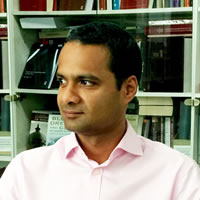
Andrew Mitchell is a Professor at the Faculty of Law, Monash University, and a member of the WTO Dispute Settlement Panelists Indicative List. He has extensive legal practice experience with Allens Arthur Robinson and consults for governments, international organizations, and the private sector. Mitchell has taught law in Australia, Canada, Indonesia, Singapore, and the US. He holds law degrees from the University of Melbourne, Harvard Law School, and a PhD from the University of Cambridge. His research focuses on international economic law, public international law, and digital trade governance, with a particular emphasis on the intersection of trade law and public health. Mitchell has secured six major grants, including an Australian Research Council Future Fellowship, and has authored over 170 books and articles. He serves as an editor for Edward Elgar’s International Economic Law Series and multiple journal editorial boards. Recent projects include 'Safeguarding Health in International Investment Agreements' (2022–2025) 'Maritime Cooperation for a Sustainable Indo-Pacific' (2021–2022) 'Global E-Commerce and Cottage Industries in India' (2020–2021) He has contributed to policy submissions on bilateral investment treaties and delivered lectures on data sovereignty and digital trade. His awards include editorial leadership roles at journals like the Journal of World Investment and Trade and Asia Pacific Law Review .
Professor Dan Meagher is a Chair in Law at Deakin University's Faculty of Business and Law, where he leads research in constitutional law and statutory interpretation. He serves as Director of Research at Deakin Law School and actively contributes to legal scholarship through publications, editorial work, and supervision of doctoral candidates. Doctor of Philosophy, University of New South Wales Master of Laws, Monash University Bachelor of Economics, Monash University Bachelor of Laws (LLB), Monash University His research focuses on constitutional law, statutory interpretation, and human rights protections. He explores the principle of legality, responsible government norms, and the interplay between common law and statutory frameworks, often advocating for enhanced rights protections through judicial interpretation. Professor Meagher's scholarly output highlights trends in Australian constitutionalism, including proportionality in secondary legislation, non-discrimination principles, and the evolution of common law rights. His work bridges doctrinal analysis with practical implications for legislative drafting and judicial review. Elected Fellow of the Australian Academy of Law Comments Editor for the Public Law Review Director of Research at Deakin Law School He supervises doctoral research on topics like human rights protection and legislative drafting models. His professional activities include co-editing major legal texts and contributing to debates on constitutional evolution and judicial interpretation.
Professor Marilyn Pittard is a leading academic in the Faculty of Law at Monash University, currently serving as Associate Dean Engagement. She has held numerous leadership roles including Interim Dean, LLM Director, and Associate Dean (Research), with a career spanning over two decades in academic administration and legal scholarship. Her research focuses on Labour Law, Employment Rights, and Human Rights, with significant contributions to understanding workplace relations, vulnerable workers, and the intersection of criminal records with employment access. She has secured grants from the Australian Research Council and other institutions for projects like The Other Side of Security and Living Down the Past . Recent publications highlight trends in employment law, including anti-slavery practices, redundancy frameworks, and digital-era workplace challenges. She chairs the Victorian Legal Admissions Board’s Academic Course Appraisal Committee and contributes to the Australian Labour Law Journal and Employment Law Bulletin .
Professor Peter Billings is a Professor at the School of Law, The University of Queensland, and a Fellow of the Higher Education Academy. His expertise spans Administrative Law, Immigration and Refugee Law, Social Welfare Law, and Human Rights Law. He has received numerous awards, including the Australian Award for University Teaching (2016) and the Vice Chancellor's Equity and Diversity Award (2011). His research focuses on crimmigration, refugee protection, and the corrosive effects of immigration detention laws. Professor Billings has published extensively on topics such as refugee law, preventive justice, and the intersection of criminal and immigration law. Education: Bachelor of Law and Doctor of Philosophy from the University of Southampton. Research Interests Immigration and Refugee Law Crimmigration (intersection of criminal and immigration law) Administrative Justice and Law Social Welfare Law Aboriginal and Torres Strait Islander Legal Issues Media Expertise Regular contributor to The Guardian and ABC Radio National, providing expert commentary on immigration detention, refugee policies, and human rights. Grants and Funding Building research capacity for quantitative analysis of Indigenous poverty (2011–2013) Critical evaluation of administrative rules (2011–2013) Aboriginal protection laws study (2008–2009) Supervision Currently supervising PhD projects on refugee employment integration, immigration detention governance, and international law on migrant smuggling. Key Contributions Authored Regulating Refugee Protection through Social Welfare (2023) and contributed to pivotal discussions on immigration detention's societal impacts. His work informs policy reforms and legal frameworks in Australia.
Tarunabh Khaitan is the Professor (Chair) of Public Law at LSE Law School and an Honorary Professorial Fellow at Melbourne Law School. He specializes in legal theory, constitutional studies, discrimination law, and comparative constitutional design. Educated at National Law School (Bangalore) and Oxford (as a Rhodes Scholar), he holds degrees including a DPhil from Exeter College. Previously, he held roles such as Vice Dean at Oxford Law Faculty and Australian Research Council Future Fellow at Melbourne Law School. His research focuses on discrimination law, constitutional design, and judicial accountability. His monograph A Theory of Discrimination Law (OUP 2015) won the 2019 Woodward Medal. He has advised on anti-discrimination legislation in India and contributed to UN anti-discrimination guides. Awards include the 2018 Letten Prize (€200k award) and Excellence in Engagement Award (2020). Key publications include works on constitutional resilience in South Asia, comparative electoral systems, and the role of political parties in constitutional theory. He advises global initiatives like the International Journal of Constitutional Law and the Equal Rights Trust. His Hindi podcast संविधान संवाद explores Indian constitutionalism.
Professor Will Bateman is a distinguished academic at the Australian National University (ANU) College of Law, where he serves as a Professor and recently completed his term as Associate Dean (Research) from 2021 to 2024. He is also a Chief Investigator for the ANU Grand Challenge project "Humanising Machine Intelligence" and a Fellow at the Gradient Institute, a leading ethical AI research organization based in Sydney. Professor Bateman's educational background is impressive, having earned a PhD and LLM (Hons) from the University of Cambridge and a BA/LLB (Hons) from the Australian National University. Prior to his academic career, he worked in appellate litigation, commercial disputes, and banking as a solicitor at Herbert Smith Freehills, and served as an associate to Justice Stephen Gageler AC of the High Court of Australia and Justice Steven Rares of the Federal Court of Australia. Professor Bateman's research spans two major interdisciplinary domains that sit at the intersection of law with finance and technology. His work on financial regulation focuses on the legal aspects of central banking, sovereign debt markets, digital currencies, and sustainable investing. He has provided expert evidence to the UK Parliament's House of Lords Inquiry into Quantitative Easing, and has collaborated with major financial institutions including the Federal Reserve Bank of New York and the Bank of England. His research on artificial intelligence examines regulatory frameworks for AI in the public sector, with collaborations including the Minderoo Foundation and the Gradient Institute. His recent publications demonstrate a remarkable breadth across legal theory, financial regulation, and AI governance. The articles reveal a consistent theme of examining how traditional legal frameworks adapt to new financial technologies and monetary policy challenges. His work bridges theoretical legal scholarship with practical policy implications, as evidenced by his numerous government consultations and collaborations with central banks worldwide. 2020 Yorke Prize by the University of Cambridge for his work on public finance and constitutionalism Top 10 all-time most downloaded SSRN paper on central banking ("Central Bank Money: Liability, Asset, or Equity of the Nation?") Professor Bateman actively supervises research students, currently mentoring Benjamin Ettinger who is pursuing a PhD on "Legal Method, Cartels and Public Monopolies: A View From the High Court 1908 - 1948." He has secured significant research funding, including projects funded by the Economic and Social Research Council (UK), the German Research Foundation (Deutsche Forschungsgemeinschaft), and The Minderoo Foundation. His "Rebuilding Macroeconomics Initiative: Legal and Economic Conceptions of Money" received £245,000, while the "FA Mann" project was funded with €620,000 (approximately A$1,012,500). He leads the "Humanising Machine Intelligence" project, an ambitious interdisciplinary initiative involving computer scientists, mathematicians, philosophers, sociologists, psychologists, and lawyers aimed at developing democratically legitimate machine intelligence. He also co-led a major project with the University of Western Australia to formulate model legal frameworks for AI regulation in the public sector, funded by The Minderoo Foundation.
Dr. Amelia Simpson holds the position of Honorary Associate Professor at the Australian National University (ANU), specializing in constitutional law with a focus on discrimination principles and federalism. She earned her BA Hons and LLB Hons from ANU, followed by an LLM and JSD from Columbia University. She is a practicing Barrister and Solicitor in the High Court of Australia. Her research critically examines constitutional frameworks, particularly regarding state residence discrimination under Section 117 and interstate free trade jurisprudence. Her work has been cited in landmark High Court and Federal Court rulings, solidifying her reputation as a leading scholar in public law. Amelia’s contributions include co-authoring Hanks Australian Constitutional Law: Materials and Commentary (2016) and contributing to the Oxford Handbook of Australian Constitutional Law (2018). Her research on social equality and functionalist approaches to non-discrimination has advanced scholarly discourse on constitutional values. Notably, her 2017 paper Social Equality in Australia critiques the historical neglect of equality principles in constitutional interpretation. Her publications span constitutional doctrine, class actions reform, and environmental policy, reflecting her interdisciplinary approach. She ranks among Australia’s top 20 most prolific legal scholars in high-impact journals (2000–2010). Her work bridges theoretical analysis with practical legal challenges, influencing both academia and judicial practice.
Professor Keita Takayama is a prominent academic in education studies at the University of South Australia’s UniSA Education Futures. His work focuses on global education policy, comparative education, and teacher education methodology. He actively engages with transnational policy processes, decolonial research frameworks, and critical analyses of international assessments like PISA. As editor of the Asia-Pacific Journal of Teacher Education (APJTE), he emphasizes rethinking teacher subjectivity and pedagogical practices. His research critiques the politics of knowledge production and advocates for methodological innovations like 'Asia as Method.' Recent work addresses contradictions in education export policies, linguistic imperialism in scholarship, and the role of education in resisting authoritarianism. Education Background: Doctorate in Education (focus on comparative policy studies) Advanced training in decolonial methodologies and policy analysis Research Interests: Professor Takayama’s work bridges global and local educational contexts. Key themes include: Policy mobilities & transnational education governance Reimagining comparative education through 'negative' comparative frameworks Ethics of academic publishing and knowledge dissemination Teacher education’s role in shaping democratic societies Labs/Teams: Leads the APJTE editorial collective and co-founded the iTKNe transnational knowledge exchange platform for teacher educators. Active in global academic networks addressing East Asian education stereotypes and postcolonial educational research.
Dr. Kerstin Steiner is an Associate Professor at the Law School, La Trobe University. She holds adjunct roles at the University of Melbourne's Asian Law Centre and Centre for Indonesian Law, Islam and Society. Her leadership roles include Director of Research (2021), Acting Head of Law School (2019), and mentorship in promotions programs. Education: PhD, Melbourne University LLM, Melbourne University LLB, University of Bielefeld, Germany Graduate Certificate in Higher Education, Monash University Research Interests: Dr. Steiner specializes in comparative legal studies focusing on Southeast Asia, particularly intersections of law with politics, economics, and society, with a strong emphasis on Islam's role in judicial systems. She has conducted groundbreaking work on legal pluralism, religious governance, and anti-corruption frameworks in Malaysia and the Philippines. Key Research Trends: Her recent work (2023-2025) highlights evolving legal challenges in Southeast Asia, including digital hate speech mitigation, Islamic financial systems, and constitutional reforms in pluralistic societies. Earlier research (2017-2020) centered on corruption dynamics (e.g., 1MDB scandal), Shariah court systems, and gender equity in legal frameworks. Awards: VC Cultural Quality Award (2024), Distinguished Scholar Award (PHISO, 2018), Multiple Research Excellence Awards (2017) Grants: $100k+ for international study tours; ARC Discovery Project (2016-2020) on Islam, Law, and the Philippine State Labs/Teams: La Trobe Asia Steering Committee, International Legal Studies Research Group (ILSRG), Working Group on Islamophobia
Professor Marinella Marmo is a leading academic in criminology, human rights, and gendered migration studies at Flinders University's College of Business, Government and Law . She serves as a Professor and contributes to institutions like the Centre for Social Impact and the Jeff Bleich Centre for Democracy and Disruptive Technologies . Education: PhD in Applied Social Science (University of Lancaster, UK), LLB (Honours) (Università di Salerno, Italy). Her research spans international criminal justice , transnational crime , modern slavery , and gendered border control , with work influencing national policies and documentaries. She has secured funding from the Australian Research Council and EU-Australian Government initiatives . Recent publications focus on state-corporate harm and migrant deportation regimes , reflecting her commitment to human rights centred criminology . Awards include the 2023 BGL Team Teaching Award and the 2018 ANZ Society of Criminology Excellence in Teaching Award . She supervises projects on modern slavery , gig economy exploitation , and state crime , aligning with UN Sustainable Development Goals like SDG 5 (Gender Equality) and SDG 8 (Decent Work).
Kate Ogg is Professor and Associate Dean (Higher Degree Research) at ANU Law School. Her interdisciplinary research examines refugee law, human rights litigation, and feminist legal theory through works including the monograph 'Protection from Refuge: From Refugee Rights to Migration Management'. Ogg's scholarship investigates how courts shape refugee journeys globally. She holds a BA/LLB (First Class Honours, University Medal) from Griffith University, MSc (Distinction) from Oxford, and PhD from ANU. Ogg provides expert testimony to the Australian Federal Parliament and contributes to international media discourse on refugee policy. Research Focus: Current ARC-funded projects examine community sponsorship for refugees and movement litigation. Key research streams include: COVID-19 border restrictions' impact on citizenship conceptualizations Feminist engagements with international refugee law Deliberative democratic approaches to human rights adjudication Constitutional struggles in displacement contexts Recent publications analyze pandemic border controls as internal displacement events and refugee law's response to democratic backsliding. Collaborative work advances methodological innovation through refugee-centered legal scholarship. Leadership: As Director of the Rewriting Jurisprudence project, Ogg collaborates with scholars and lawyers with displacement experiences to reimagine legal precedents. She co-leads the Law, Governance & Institutions cluster at ANU's Institute for Climate, Energy & Disaster Solutions.
Colin King is a Professor at Sydney Law School, University of Sydney. He holds a LLB and PhD from the University of Limerick, Ireland, and a PGCert in Higher Education from the University of Sussex. His research focuses on financial crime, including money laundering, proceeds of crime, deferred prosecution agreements, criminal evidence, and miscarriages of justice. He has authored numerous books and articles on these topics, such as Civil Recovery of Criminal Property (OUP, 2023) and Negotiated Justice: The Legitimacy of Civil Recovery and Deferred Prosecution Agreements (Palgrave, 2018). King also serves as Editor-in-Chief of Current Issues in Criminal Justice . His teaching includes courses on Advanced Evidence, Money Laundering and Proceeds of Crime, and Foundations of Law. Recent research highlights include examining cryptocurrency-related financial crimes, EU asset recovery developments, and challenges in implementing anti-money laundering regulations. King’s work bridges legal theory and practice, addressing transnational crime, regulatory compliance, and the ethical dimensions of legal frameworks. His contributions span criminal law reform, evidence-based policy analysis, and the intersection of technology with financial crime prevention.
Professor Kieran Tranter is Chair of Law, Technology, and Future at Queensland University of Technology (QUT), School of Law. He leads the Law, Technology and Humans journal and directs the Human Technology Law Centre. His research explores law’s intersection with technology, focusing on cultural narratives and future-oriented legal frameworks. Prior roles include Associate Professor at Griffith University and HDR Convenor. Key areas include law and technology in the Global South, First Nations justice, and automation’s societal impact. Education PhD (Griffith University) Research Interests Tranter’s work bridges law with cultural studies, science fiction, and socio-technical systems. He examines how technology shapes legal frameworks and vice versa, with a focus on: Automated vehicles and regulatory challenges Transport justice for Indigenous communities Legal semiotics in media and popular culture Awards Research Supervision Award (Griffith University, 2017) Group Teaching Citation (Griffith University, 2011) Academic Excellence Award (Griffith University, 2010) Advising & Grants Tranter supervises PhD candidates on topics like lethal autonomous weapons systems, AI governance, and First Nations transport equity. He advocates for decolonizing road safety policies and has advised on regulatory frameworks for automated vehicles. Labs/Teams Co-leads the Technologies of Justice stream at QUT’s Centre for Justice and coordinates the Datafication and Automation research stream.
Associate Professor Sunghoon Kim holds a position at the University of Sydney Business School's Discipline of Work and Organisational Studies. He previously taught at UNSW Business School, Cornell University, and Peking University. His PhD is from Cornell University, with MBA and BBA degrees from Seoul National University. His research focuses on strategic HRM, employment relations, and the impact of technological changes like AI on workplaces. He has edited major works including the Routledge Handbook of Human Resource Management in Asia and contributes to the APRU project on 21st-century work transformations. Kim serves as Associate Editor for journals like Human Resource Management and Asia Pacific Journal of Human Resources . His recent work addresses algorithmic management, employee well-being in AI contexts, and cross-border labor dynamics. He has advised students researching migrant worker choices and voice processes in organizations. Media engagements include commentary on workplace perks and work-life balance in South Korea. Teaching responsibilities include courses on performance management, strategic HRM, and international HR practices. His research highlights the intersection of technology, culture, and organizational sustainability.
Regina Fabry is a Lecturer in the Department of Philosophy at Macquarie University, Australia, affiliated with the School of Humanities Ethics and Agency Research Centre. Previously, she held positions at Ruhr University Bochum (Lecturer, 2018–2021) and Justus Liebig University Giessen (Postdoctoral Researcher, 2016–2018). Her research focuses on situated cognition, affectivity, and the socio-cultural influences on self-narration and grief, particularly in the context of emerging technologies like deathbots. She holds a PhD in Philosophy (summa cum laude) from Johannes Gutenberg University Mainz (2015), awarded the Barbara Wengeler Prize for her work on enculturated predictive processing. Fabry’s research is funded by grants including an ARC DECRA (2021–2024) and explores interdisciplinary themes in AI ethics, cognitive science, and literary studies. **Education**: PhD in Philosophy, Johannes Gutenberg University Mainz (2012–2015) MA in Comparative Literary Studies, Philosophy, and Theatre Studies, Johannes Gutenberg University Mainz (2007–2012) **Research Interests**: Combines empirical cognitive science with feminist theory to study narrative practices, grief, and AI ethics. Current projects include analyzing deathbots’ impact on grief dynamics and the socio-cultural situatedness of self-narration as tools of oppression or resistance. Her work bridges philosophy, psychology, and technology studies. **Articles Trends**: Recent publications address grief in digital contexts (deathbots), narrative ethics (e.g., gaslighting), and cognitive frameworks like predictive processing. Her work frequently intersects with technology’s role in shaping human experiences. **Awards**: Barbara Wengeler Prize 2016 for doctoral dissertation on enculturated cognition. **Teaching & Grants**: Teaches courses on AI ethics, including PHIL8400 (Rights, Responsibilities, and AI). Supervises postgraduate research in philosophy of mind and AI. Leads projects like “Living to tell, telling to live” (2021–present) and co-leads “A lone or lonely life?” (2025–2028) on autism and loneliness. **Labs/Teams**: Engaged in interdisciplinary collaborations on grief, narrative theory, and AI ethics, leveraging her background in philosophy, psychology, and literary studies.