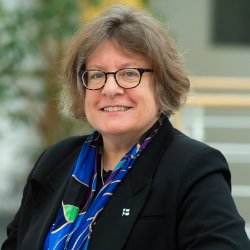
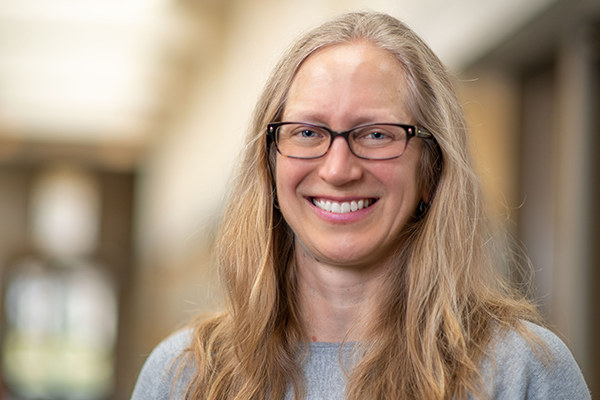
Dr. Mawuli Kouami Segnon is a researcher at the Chair of Empirical Economics, School of Business and Economics, University of Münster. His work focuses on econometric modeling, financial time series analysis, and volatility forecasting across various domains including cryptocurrencies, energy markets, and macroeconomic indicators. Research interests include: Development of advanced volatility models (GARCH, multifractal, regime-switching) Applications to financial markets, energy economics, and macroeconomic policy High-frequency data analysis and mixed-frequency forecasting Count data modeling with conditional heteroscedasticity Portfolio risk management using copula and multifractal approaches Recent publications demonstrate expertise in: Geopolitical risk impacts on stock volatility Comparative analysis of realized variance measures Inflation uncertainty modeling in G7 countries Electricity price volatility in Australian markets Bitcoin market forecasting Historical economic data analysis Current projects (since 2020) involve: Innovative economic/financial time series forecasting Financial market volatility modeling Applications of multifractal structures in econometrics
Dr. Kaushalya G. Amarasekare is an Associate Professor and Extension Specialist in Entomology at the Department of Agricultural Sciences and Engineering, College of Agriculture, Tennessee State University. Her research focuses on integrated pest management (IPM), biological control, and pesticide efficacy. She joined TSU in November 2015 and holds a Ph.D. in Entomology from the University of Florida, an M.S. from Oklahoma State University, and a B.S. (Honors) in Agriculture from the University of Peradeniya, Sri Lanka. Her research interests include pest-natural enemy interactions, effects of reduced-risk pesticides, and invasive pest management. She has authored numerous publications in journals like Journal of Economic Entomology and Biological Control , focusing on pesticide selectivity, insecticide residues, and biological control strategies in orchards. Her work often combines field and laboratory studies to assess ecological impacts of agricultural chemicals. Dr. Amarasekare has received grants totaling over $300,000 for projects like improving IPM practices for cucurbits and enhancing biological control in orchards. She is actively involved in professional societies such as the Entomological Society of America and the International Organization for Biological Control. Awards include the Outstanding Young Researcher Award (2019) and multiple ESA participation awards. Teaching responsibilities include AGSC 5900/7900 Applied Entomology (graduate) and AGSC 4900 Entomology (undergraduate). She leads Extension activities including farmer training, K-12 outreach, and stakeholder field visits. Her lab, the Fruit, Vegetable and Field Crop Entomology Lab, contributes to applied research and community education.
Francis Fukuyama is the Olivier Nomellini Senior Fellow at Stanford University's Freeman Spogli Institute for International Studies (FSI) and a professor (by courtesy) of Political Science. He serves as Director of the Ford Dorsey Master's in International Policy Program and is affiliated with FSI's Center on Democracy, Development, and the Rule of Law (CDDRL). Fukuyama holds honorary doctorates from institutions such as Connecticut College, Doshisha University, and Aarhus University. His research focuses on political order, democratization, and the challenges facing liberal democracies. He has authored influential works like The End of History and the Last Man (1992) and Liberalism and Its Discontents (2022). Education: B.A., Classics, Cornell University (1974) Ph.D., Political Science, Harvard University (1981) Research Interests: Fukuyama explores the evolution of political institutions, the decline of state capacity, and the rise of populist movements. His recent work addresses the erosion of liberal democracy and the role of nationalism in contemporary politics. He emphasizes the importance of bureaucratic autonomy and effective governance in sustaining democratic systems. Awards and Recognition: Recipient of the Johan Skytte Prize in Political Science (2015) Centennial Medal from Harvard University (2016) Fred Riggs Award for Lifetime Achievement in Public Administration (2024) Advising and Grants: Fukuyama has advised institutions like the Carnegie Endowment for International Peace and the Volcker Alliance. His grants include funding for research on global governance and state-building initiatives. Labs and Teams: He is part of the CDDRL at FSI, which focuses on democracy promotion and institutional development. His work often intersects with interdisciplinary teams studying political economy and international relations.
M. Steven Fish is a Professor of Political Science at the University of California, Berkeley, specializing in democracy and authoritarianism, religion and politics, and constitutional systems and national legislatures. He is a leading comparative political scientist with extensive research experience across Eurasia, East Europe, and Southeast Asia. His educational background includes a B.A. from Cornell University, an M.A. from Johns Hopkins University School of Advanced International Studies, and a Ph.D. in political science from Stanford University. Previously, he has taught at the University of Pennsylvania and universities in Russia, Poland, China, and Indonesia, including serving as a Senior Fulbright Fellow at Airlangga University in Indonesia and the European University at St. Petersburg, Russia. Professor Fish's research explores the relationship between democratic institutions and societal factors, with particular attention to national legislatures' role in sustaining democracy and the connection between religious cultures and political systems. His work demonstrates that strong legislatures are crucial for democratic consolidation, as evidenced by his co-authored 'The Handbook of National Legislatures: A Global Survey'. His publications span decades of scholarly work, with his most recent book 'Comeback: Routing Trumpism, Reclaiming the Nation, and Restoring Democracy's Edge' (2024) analyzing contemporary challenges to American democracy and proposing strategies for renewal. His influential 2011 book 'Are Muslims Distinctive? A Look at the Evidence' challenged prevailing assumptions about Islam's relationship with democracy. Distinguished Social Sciences Teaching Award of the College of Letters and Science at Berkeley Best Book Award of 2006 from the American Political Science Association's Comparative Democratization Section Professor Fish is an active public intellectual who frequently appears on BBC, CNN, and other major networks. His commentary has been published in The New York Times, The Washington Post, Los Angeles Times, and Foreign Policy. He has served as an expert consultant to U.S. federal agencies and international organizations including the European Commission for Democracy through Law, bridging academic research with practical policy applications. His teaching includes courses on comparative politics, Russian politics, democracy's global crisis, and foundations of political thought, reflecting his broad expertise across multiple subfields of political science.
Mark Metzler is the Giovanni and Amne Costigan Endowed Professor in History at the University of Washington, holding a joint appointment with the Department of History and the Jackson School of International Studies. He specializes in modern Japanese history and world economic history, with a focus on capitalism, political economy, and ecological perspectives. Recently relocated from the University of Texas at Austin, he is completing an economic history of the late 19th-century world. Education: Ph.D. in History from the University of California, Berkeley (1998). Research emphasizes global financial systems, Japan’s postwar economic miracle, and prewar imperialism. His recent work explores gold’s role in shaping modern economies. Current projects include a global economic history of the 1800s. Publications highlight interdisciplinary approaches to economic history, with major works analyzing Japan’s economic development and global financial frameworks. Advising new MA/PhD students for the 2025-2026 academic year.
Professor Paurav Shukla is the Professor of Marketing and Head of the Digital and Data Driven Marketing Department at the Southampton Business School, University of Southampton. His research focuses on luxury consumption, brand management, and cross-cultural consumer behavior, with a particular emphasis on emerging markets. He has held visiting professorships at institutions like Frankfurt School of Finance & Management and Aalto University. His work bridges academia and industry through corporate training, consulting, and advisory roles globally. Paurav is renowned for his contributions to luxury branding research, ranking in the top 2% globally in citations. He actively supervises PhD students in comparative consumer behavior and luxury marketing. Research Interests: Luxury consumption patterns and democratization Brand management strategies in global markets Self-identity and consumer behavior Cross-cultural marketing dynamics Emerging trends in digital economy and autonomous vehicles Awards: Stanford 2% Global Scientist Citation Rankings (2021) Best Track Chair (2021) Best Paper Award in International Marketing Track (2022) Teaching & Outreach: Teaches luxury marketing, brand management, and strategic marketing. Engages in executive training and consulting for organizations in Europe, Asia, and Africa. Current projects include studies on autonomous vehicles (via the UKRI TAS Hub) and health policy. Labs & Collaborations: Part of the India Centre for Inclusive Growth, Centre for Marketing Research, and C-BEAR (Behavioural Experimental Action and Research). Collaborates with industry partners on projects like the ECON study on convenience store regulation impacts.
Dr. Mahvish Shami is an Assistant Professor at the Department of International Development, London School of Economics and Political Science. She serves as Programme Co-Director of Development Management and holds visiting research affiliations with Johns Hopkins University and Oxford University. Her academic background includes a PhD from LSE, post-doctoral fellowship at Copenhagen University, and a Leverhulme Early Career Fellowship. Her research examines how unequal power relations—particularly clientelism—impact poverty outcomes. She investigates alternative solutions beyond redistributive policies, focusing on bargaining power dynamics that affect public goods provision, collective action under hierarchical structures, and interventions improving formal justice access for marginalized groups. Current projects analyze urban clientelism in Lahore slums using unique household data, contrasting rural-urban network variations. Publications demonstrate consistent focus on clientelism's intersection with development challenges, evolving from market exposure studies to sophisticated analyses of justice barriers and urban brokerage systems. Recent work (2022-2024) shows intensified examination of institutional constraints in justice access and urban poverty targeting. Awards: Leverhulme Early Career Fellowship
Camillia Cowling is an Associate Professor of Latin American History at the University of Warwick, based in the Faculty of Arts' Department of History. She specializes in slavery and abolition in Brazil and Cuba, with a focus on gendered dimensions of emancipation processes. Her research examines how enslaved and freed women influenced abolition through legal mechanisms and spatial politics. Cowling holds a Ph.D. from the University of Nottingham (2007) and has held prestigious fellowships including the Leverhulme Trust Early Career Fellowship (2009-2012). Her major work Conceiving Freedom (2013) analyzes gendered abolition dynamics in Havana and Rio de Janeiro, winning the Roberto Reis Prize. Ongoing research includes Bound Journeys, Freedom Places , exploring spatial politics of slavery in 19th-century Cuba with support from British Academy and Leverhulme grants. Cowling co-edited journal special issues on Mothering Slaves (2017/2020), advancing scholarship on maternal roles in slave societies. Teaching focuses on Latin America, including modules on Brazilian history, Atlantic slave societies, and global empire studies. She actively supervises PhDs on 19th-century Latin America, slavery, gender, and spatial mobilities. Notable supervisees include Dr. Liana-Beatrice Valerio (2020) and Dr. Nicolás Gómez Baeza (2024). Awards include the Frederick Douglass Prize nomination and media engagement through interviews like her 2015 Globo article discussing enslaved women's legal agency. Current projects emphasize archival research in Brazil, Cuba, and Spain, with a focus on spatial dimensions of enslavement and resistance.
Ana De La O Torres is an Associate Professor of Political Science at Yale University, affiliated with the MacMillan Center for International and Area Studies, the Institution of Social and Policy Studies, and the Jackson Institute for Global Affairs. Her research focuses on the political economy of poverty alleviation, clientelism, and public goods provision in Latin America. She earned her PhD in Political Science from MIT in 2007. Her work combines experimental and comparative approaches to study how anti-poverty programs, electoral dynamics, and bureaucratic accountability shape political outcomes. Notable contributions include analyzing conditional cash transfer programs, corruption information effects on voter behavior, and the impact of audits on public service delivery. Her research trends emphasize experimental methodologies in governance contexts, with recent focus on clientelism's impact on state capacity and anti-corruption strategies in Mexico. She teaches courses on political economy frameworks, quantitative methods, and Latin American political systems. Ana is actively engaged in interdisciplinary collaborations, contributing to policy discussions on equitable development strategies. Her affiliations bridge multiple academic units at Yale to advance global policy research.
Annelies Zoomers is a Professor of International Development Studies at Utrecht University's Faculty of Geosciences. Her research focuses on climate change, land governance, migration, and sustainable livelihoods. She co-founded the Netherlands Land Academy (LANDac) and the Shared Value Foundation, and served as Chair of WOTRO Science for Global Development (2019–2022). Her current projects include the EU-funded 'Welcoming Spaces' initiative, which explores integrating migrants into shrinking European regions, and 'Diamonds in the Delta,' addressing climate resilience in delta cities. Zoomers has extensive experience in policy咨询 for global organizations like the World Bank and ILO, and has authored over 200 publications. She is a member of the Dutch Advisory Council on International Affairs (AIV). Her work bridges academic research with practical solutions for inclusive development, emphasizing participatory approaches to land governance and migration policy.
Karin Moser is a historian, researcher, and lecturer specializing in film, broadcasting, and media history at the University of Vienna's Department of Economic and Social History. She holds visiting professorships at the University of Innsbruck and University of Hradec Králové. Her academic career includes a Dr. phil. (2017) and Mag. phil. (2001) from the University of Vienna, alongside professional experience in archives and film institutions. Her research focuses on 20th-century political and media history, public history, and consumer culture. Notable projects include the Comenius Award-winning 'Die Österreich-Box' DVD series and leadership in funded initiatives like 'The Radio Reports of the USIA for Austria' (2019-2022) and 'Film Sources on the History of Austrian Employee Representations' (2021-). Key publications: Analyzes film propaganda, Cold War stereotypes, and Austrian commercial cinema history Documentary work: Co-directed films like 'Die Macht der Bilder' (2014) and 'Rote Katz und bunte Vögel' (2015) Her academic contributions bridge archival research with public engagement, emphasizing visual historiography and media's role in shaping national identity.
Professor Bonnie Buchanan is the Director of the Sustainable and Explainable FinTech (SAEF) Center and a Professor of Finance at the University of Surrey's Surrey Business School (SBS). She previously served as Head of the Department of Finance and Accounting (2019–2023). Her affiliations include fellowships at the University's Center for Sustainability, the Center for AI, and the Centre for Digital Economy (CoDE). Professor Buchanan holds a BSc (Hons), MAppSc, and PhD. Her research focuses on FinTech, AI in financial services, securitization, CSR, and synthetic/alternative data. Notable projects include work on biodiversity in FinTech and regulatory frameworks for financial technologies. Recent grants include a 2020–2022 grant from the Liikesivistysrahasto in Finland (€200,000). She actively supervises PhD students in FinTech, AI, securitization, CSR, and law-related finance topics. Teaching roles include courses on FinTech (MANM493), Banking and Money (MAN3124), and historical financial crises. Her research aligns with UN Sustainable Development Goals, emphasizing environmental and social impacts. Key publications explore sustainability in private investing, creditor governance, and AI's role in UK financial services. Current initiatives include promoting biodiversity-friendly FinTech solutions and advising the Bank of England-FCA consortium (2025).
Gaël Georges Marcel Le Mens is a Full Professor at Pompeu Fabra University (UPF), holding a position in the Department of Economics and Business. He is also affiliated with the Barcelona School of Economics and serves as academic co-director of the Executive Master in Business Administration (EMBA) at the UPF Barcelona School of Management. His academic journey includes teaching roles at INSEAD, London Business School, ESADE, and the University of Lugano, alongside positions at the universities of Southern Denmark and New York. Education: Doctor in Business Administration, Stanford Graduate School of Business MSc in Management Science and Engineering, Stanford University Diploma in Engineering, Supélec Bachelor of Economics, University of Paris XI His research focuses on decision-making processes, information sampling, machine learning applications in semantics, and organizational behavior. Key themes include cognitive heuristics, social media impact on political expression, and the interplay between popularity and evaluation dynamics. He has explored how feedback mechanisms shape political communication and developed methodologies to compare human and machine conceptual judgments using models like BERT. His publications span journals such as PNAS , Psychological Review , and Industrial and Corporate Change , reflecting his interdisciplinary approach. Though no explicit awards are noted, his prolific output highlights sustained academic impact. He has advised multiple institutions on curriculum design and executive education, leveraging his cross-university teaching experience. Le Mens is affiliated with the Barcelona School of Management’s research teams and contributes to initiatives bridging artificial intelligence and social sciences. His work often addresses practical challenges in organizational decision-making and digital communication strategies.
Catherine Bolten is a Professor of Anthropology and Peace Studies at the University of Notre Dame's Keough School of Global Affairs, holding concurrent appointments in Africana Studies and Poverty Studies. Her primary affiliation is the Kroc Institute for International Peace Studies, where she also served as Director of Doctoral Studies (2018–2023). She is affiliated with multiple interdisciplinary initiatives including the Eck Institute for Global Health and the Initiative on Race and Resilience. Bolten holds a PhD in Anthropology from the University of Michigan (2008), an MPhil from the University of Cambridge (2000), and a BA from Williams College (1998). Her research focuses on Sierra Leone, examining themes such as youth agency, structural violence, food security, and climate change through long-term ethnographic engagement. She has conducted fieldwork on primate-human coexistence, Ebola crisis response, and post-conflict development since 2003. Her research interests bridge anthropology, peacebuilding, and environmental studies. Recent work explores climate change impacts in rural Sierra Leone, youth participation in peace processes, and the intersections of ecology and violence. She has authored three books and over 40 peer-reviewed articles, with ongoing projects funded by the NEH and ND Institute for Advanced Studies. Bolten has advised over 30 doctoral and master’s students in anthropology, peace studies, and global health. Her awards include the Undergraduate Mentoring Award (2013, 2022) and the UC Press Public Anthropology Prize. She serves on editorial boards for African Conflict and Peacebuilding Review and Studies in Comparative International Development , and has held leadership roles in professional organizations like the American Anthropological Association.
Michael C. Desch is the Packey J. Dee Professor of Political Science and the Brian and Jeannelle Brady Family Director of the Notre Dame International Security Center at the University of Notre Dame. He previously served as Chair of the Department of Political Science, founding Director of the Scowcroft Institute of International Affairs at Texas A&M University, and held roles in U.S. government agencies including the State Department and Congressional Research Service. Desch holds a B.A. (Honors) in Political Science from Marquette University (1982), an A.M. in International Relations (1984), and a Ph.D. in Political Science (1988) from the University of Chicago. His research focuses on international security, U.S. foreign policy, and civil-military relations, with notable works including Power and Military Effectiveness (2008) and Cult of the Irrelevant (2018). He critiques the disconnect between academic research and policy-making, emphasizing the need for relevance in social science. His articles address topics like U.S.-China relations, nuclear strategy, and the academic-policy divide. He has spoken at numerous conferences, including the American Political Science Association and the Atlantic Council, and has appeared on media outlets such as CNBC and Al Jazeera. Key Contributions: Over 100 scholarly articles, four authored books, and co-edited volumes on security studies and policy. Grants & Funding: Supported by institutions like the Carnegie Corporation and the Minerva Initiative. Labs/Teams: Leads the Notre Dame International Security Center, fostering interdisciplinary research on global security challenges.