Amy Pickeringمشاهده پروفایل
دانشیار
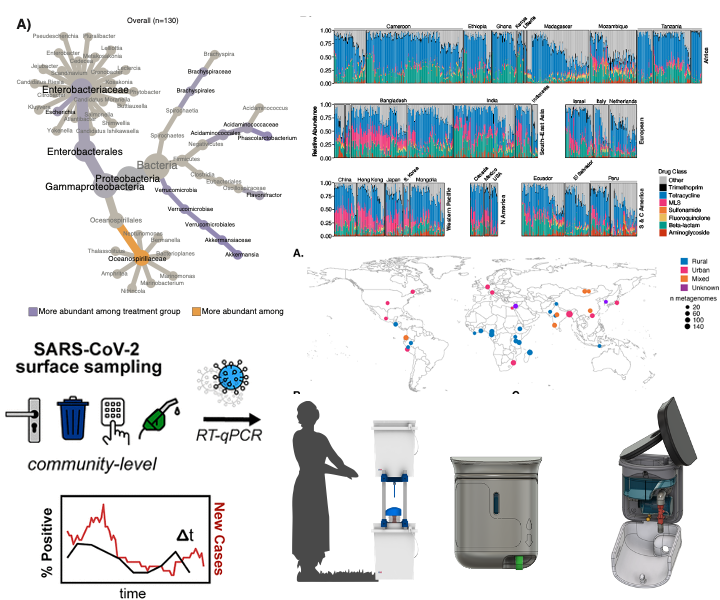
Amy Pickering is an Associate Professor at the University of California, Berkeley, jointly appointed in the Department of Civil and Environmental Engineering (College of Engineering) and the Blum Center for Developing Economies. She holds the Blum Center Distinguished Chair in Global Poverty and Practice and leads the Pickering Lab, which focuses on interdisciplinary research to improve health in low-income countries through engineering, epidemiology, and microbiology. Her educational background includes: Ph.D. in Interdisciplinary Program in Environment and Resources, Stanford University (2011) M.S. in Environmental Engineering, University of California, Berkeley (2004) B.S. in Biological and Environmental Engineering, Cornell University (2003) Dr. Pickering's research centers on disease transmission pathways, water and sanitation systems, public health surveillance, zoonotic diseases, and antimicrobial resistance in resource-limited settings. Her lab develops low-cost interventions like passive chlorination systems and frugal soap dispensers, emphasizing human-centered design to avoid burdening users. Current projects include environmental surveillance using soil and surface sampling, molecular tracking of antibiotic resistance across humans-animals-environment, and evaluating integrated WASH-nutrition interventions. Her approach combines epidemiology, genomics, and engineering to create scalable solutions for interrupting disease transmission in communities. Analysis of her 2025 publications reveals a dominant focus on antimicrobial resistance transmission dynamics using advanced genomic tools (e.g., CRISPR-Cas9 nanopore sequencing), with strong emphasis on environmental surveillance methods and cross-country comparative studies in Bangladesh, Kenya, Peru, and India. Key trends include investigating weather-climate impacts on pathogen transmission, household-level water contamination pathways, and integrated WASH-nutrition interventions to reduce antibiotic use. Her work consistently applies One Health frameworks to address complex disease transmission at human-animal-environment interfaces in low-resource settings. Scientific recognition includes: NSF CAREER Award CZ Biohub Investigator designation Rising Star in Environmental Research (2024) Dr. Pickering secured a $3.5 million NIH research grant in 2024 to advance environmental surveillance of antimicrobial resistance. Her lab actively recruits graduate students and postdocs, emphasizing field-based research in Africa and South Asia. She has published over 80 peer-reviewed articles and maintains active collaborations with institutions in Benin, Kenya, Tanzania, Mali, Mexico, Sri Lanka, Bangladesh, and India. Her advising philosophy prioritizes community co-creation of technologies and rigorous field evaluation of interventions. The Pickering Lab operates as a multidisciplinary team of engineers, microbiologists, and epidemiologists conducting field studies across multiple continents. Current initiatives include the CZ ID platform for pathogen detection, longitudinal sampling of enteric pathogens in pastoralist communities, and development of affordable water quality monitoring tools. The lab maintains strong partnerships with local institutions in study countries to ensure research relevance and sustainability.