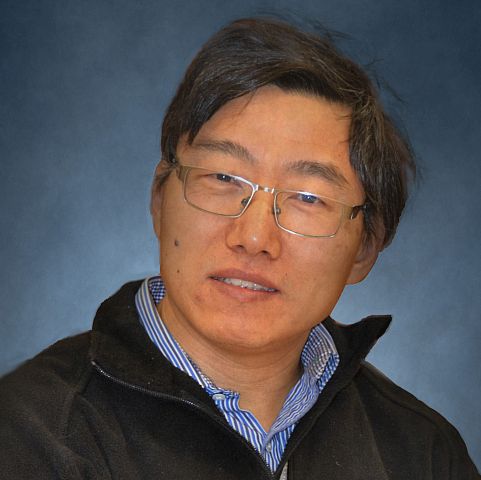
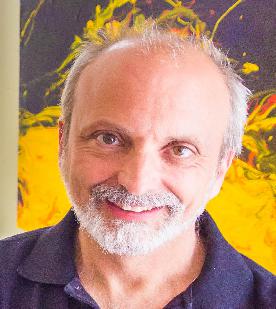
Qingguo Li is a Professor and Associate Head at the Department of Mechanical and Materials Engineering , Queen's University , and a member of the Ingenuity Labs Research Institute . He specializes in biomechanical system design, energy harvesting, wearable sensors, gait analysis, and load carriage systems. His research integrates robotics, biomedical engineering, and sensor technology to develop human-centric devices and mobility aids. Current Roles : Professor, Associate Head, Queen's University Research Institute : Ingenuity Labs Research Institute Lab : Bio-Mechatronics and Robotics Laboratory His work focuses on biomechanical energy harvesting , IMU-based motion analysis , and assistive device development . Key applications include stroke rehabilitation, gait monitoring, and wearable power generation systems. Articles span cable-driven robots , smart walkers , and 3D printing mechanisms , emphasizing human-robot interaction and dynamic modeling . The lab explores sensor calibration , adaptive control algorithms , and human movement optimization . Areas of impact include rehabilitation engineering , load carriage stability , wearable sensor accuracy , and assistive robotics . His team develops solutions for gait asymmetry detection , post-stroke mobility , and low-cost energy systems , leveraging machine learning and kinetic modeling .
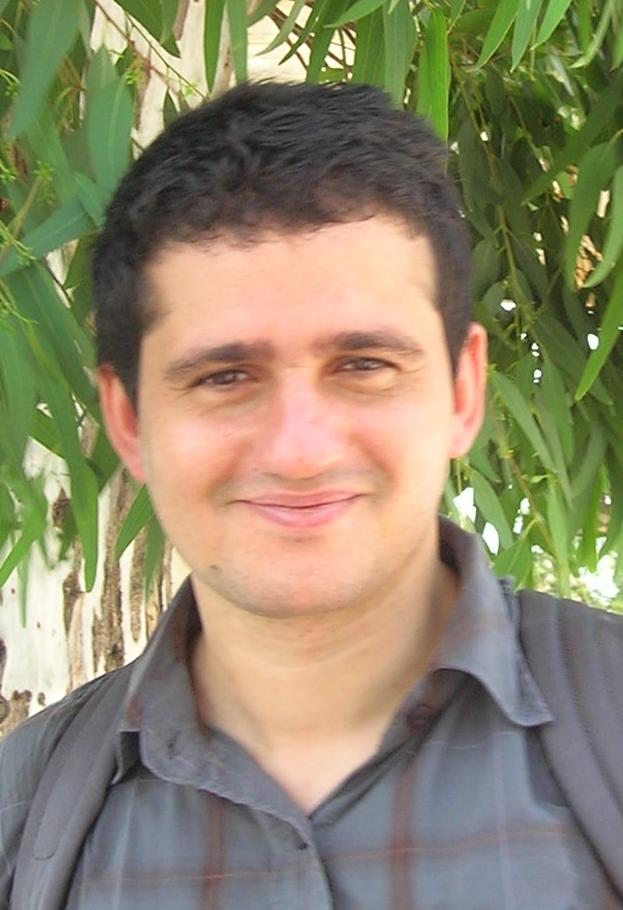
Ismail Ben Ayed is an Associate Professor at École de technologie supérieure (ETS) in Montreal, Canada, holding the ETS Research Chair on Artificial Intelligence in Medical Imaging. His research bridges computer vision, optimization, and medical image analysis to develop advanced algorithms for clinical applications, with particular focus on cardiac and neurological imaging. His research program centers on medical image segmentation using novel optimization techniques, graph-based methods, and deep learning models. He pioneers approaches for handling volumetric bias, shape compactness, and distribution matching in MRI and cardiac imaging, directly addressing clinical challenges in spine labeling, ventricle segmentation, and tumor detection. His work emphasizes mathematical rigor combined with practical medical relevance. Analysis of his 15 most recent publications (2014-2017) reveals dominant themes in medical image segmentation (80% of works), particularly for cardiac MRI (35%) and neurological applications (25%). Key methodological contributions include distributed optimization frameworks (20%), advanced graph cut techniques (30%), and deep learning architectures (25%), published consistently in top-tier venues including CVPR, MICCAI, and TPAMI. His scientific recognition includes: MICCAI travel award (2017) Outstanding Reviewer Award at CVPR (2015) GE innovation award (2010) He actively mentors researchers as evidenced by his recruitment of PhD students and postdocs, with research supported by the ETS Research Chair and multiple patents. His service includes chairing MICCAI 2017/2015 and IPTA 2017, plus continuous program committee roles at CVPR, ICCV, and MICCAI since 2011. Leading the ETS Research Chair on AI in Medical Imaging, he directs a collaborative team working on clinical translation of computer vision techniques. Current projects focus on cardiac motion analysis, brain tumor segmentation, and spine labeling systems with direct applications in radiology workflows.
Reed Essick is an Assistant Professor at the Canadian Institute for Theoretical Astrophysics (CITA), University of Toronto. His research focuses on experimental gravity, astrophysical signals, and nuclear physics, with particular emphasis on neutron stars, black holes, and gravitational waves. He develops advanced statistical methods like hierarchical Bayesian inference and nonparametric analysis for interpreting observational data from pulsars and gravitational wave detectors. Dr. Essick collaborates extensively with international observatories such as LIGO, Virgo, and KAGRA, contributing to cutting-edge projects like multimessenger astronomy and precision cosmology. His work bridges computational astrophysics with observational techniques, addressing fundamental questions about dense matter and strong-field gravity. Key contributions include studies on gravitational wave equation-of-state constraints, pulsar timing analysis, and the application of machine learning to detector data. His research leverages both ground-based interferometers and space-based observations to explore extreme astrophysical environments.
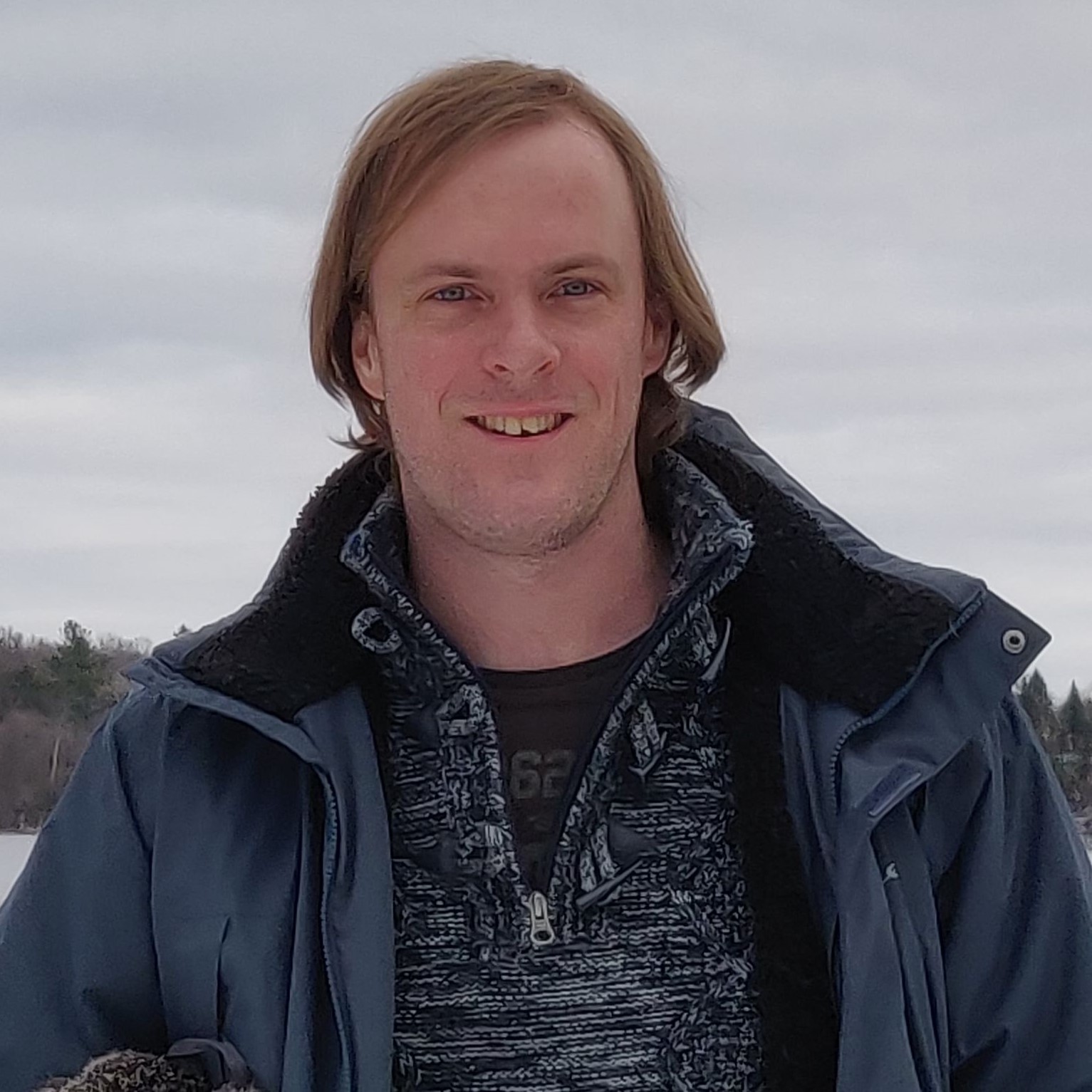
Simon Henry is an Associate Professor in the Department of Mathematics and Statistics at the University of Ottawa, Faculty of Science. His research focuses on category theory, higher category theory, topos theory, and their applications in non-commutative geometry and constructive mathematics. He earned his PhD under Alain Connes (2010–2014), studying the interplay between topos theory and operator algebras. Since 2015, his work has expanded into higher category theory, including strictification theorems and the Simpson conjecture. Active on MathOverflow, he contributes to categorical logic, homotopy type theory, and foundational mathematics. Research interests include categorical homotopy theory, model categories, and the Grothendieck homotopy hypothesis. His publications explore inductive model structures, locale theory, and constructive approaches to metric spaces. He supervises students in these areas and maintains an arXiv profile with over 20 papers. Key contributions include work on ∞-categories, topos-based non-commutative geometry, and categorical foundations for univalent foundations. He also explores connections between Feynman diagrams and category theory, reflecting his interdisciplinary approach to mathematical structures.
Chris Matzner is a Professor and Associate Graduate Chair at the University of Toronto's Department of Astronomy and Astrophysics, affiliated with the Dunlap Institute for Astronomy & Astrophysics. He earned his Ph.D. from UC Berkeley in 1999. His research focuses on astrophysical fluid dynamics, particularly star formation processes (protostellar disks, molecular clouds, energy feedback) and stellar explosions (supernovae, gamma-ray bursts), employing analytical, numerical, and observational approaches. His research encompasses: Dynamics of protostellar outflows and molecular cloud interactions Models for supernova shocks and gamma-ray burst mechanisms Fragmentation in star and planet formation Massive black hole accretion processes Evolution of giant molecular clouds Stellar feedback in galactic environments Analysis of his 15 most recent publications reveals strong emphasis on supernova dynamics (particularly Type Ia explosions), star formation mechanisms in clusters and molecular clouds, shock wave physics in astrophysical contexts, and the development of astronomical instrumentation. The works demonstrate consistent focus on explosive transients, fluid dynamics in cosmic environments, and observational constraints on theoretical models. As Associate Graduate Chair, he oversees academic programs and student development. His laboratory affiliations include the Dunlap Institute's computational astrophysics and instrumentation groups. Current work involves modeling star cluster-galaxy interactions, tidal disruption events, and developing next-generation UV/IR detectors.
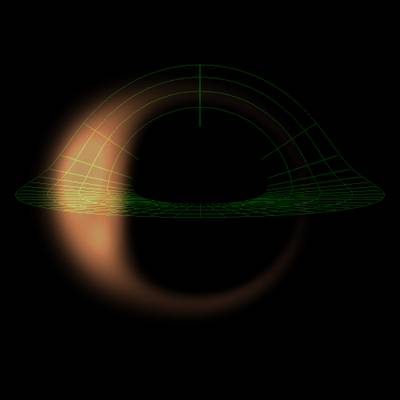
Avery E. Broderick is an Associate Professor in the Department of Physics & Astronomy at the University of Waterloo and an Associate Faculty Member at the Perimeter Institute for Theoretical Physics. His research focuses on theoretical astrophysics, particularly studying compact objects like black holes and testing general relativity through astronomical observations. He is a key member of the Event Horizon Telescope (EHT) collaboration, which produced the first direct images of black hole horizons in M87* and Sagittarius A*. Broderick’s work emphasizes relativistic astrophysical phenomena such as accretion flows, jet formation, and polarization signatures. He collaborates extensively with observational astronomers and computational physicists to model black hole environments using general relativistic magnetohydrodynamic simulations. His recent research includes analyzing EHT data to constrain black hole spin, test spacetime metrics, and study photon ring dynamics. He also explores next-generation EHT (ngEHT) capabilities for higher-resolution imaging and multi-wavelength studies. Broderick has delivered invited lectures globally, including at Harvard-Smithsonian CfA, MIT, and the Aspen Center for Physics, reflecting his leadership in the field. Broderick’s contributions span over 135 refereed publications and conference proceedings, with a focus on black hole astrophysics, VLBI techniques, and relativistic plasma physics. His work bridges theoretical predictions with observational data, advancing our understanding of extreme gravitational regimes in the universe.
Gregory R. Sivakoff serves as an Associate Professor in the Department of Physics at the University of Alberta, focusing on multi-wavelength observations of compact objects including white dwarfs, neutron stars, and black holes. His research specializes in X-ray binaries where neutron stars or black holes accrete material from donor stars. His work spans the entire electromagnetic spectrum beyond X-ray emissions, investigating accretion dynamics in binary systems. Dr. Sivakoff also maintains active commitments to Education and Public Outreach initiatives within the astronomical community. Contact details: email sivakoff@ualberta.ca , phone (780) 492-7992, and office CCIS 2-113 at the University of Alberta campus in Edmonton.
Jo Bovy is a Professor and Canada Research Chair in Galactic Astrophysics at the University of Toronto's Department of Astronomy and Astrophysics. He specializes in galactic dynamics, dark matter, and the structural evolution of the Milky Way, leveraging large-scale surveys like Gaia and APOGEE. His research focuses on using kinematic and chemical data to trace galactic formation processes and dark matter distribution. Bovy is the lead developer of the galpy software library for galactic dynamics and co-authored a forthcoming textbook Dynamics and Astrophysics of Galaxies (Princeton UP, 2026). He has held leadership roles in the APOGEE survey and its successor APOGEE-2, advancing infrared spectroscopic studies of the Milky Way's bulge and disk. His accolades include the Sloan Fellowship (2016), Vera Rubin Prize (2019), and Steacie Prize (2024). Bovy advocates for open-source scientific software, with extensive contributions to projects like astroNN and pynbody. Education: Ph.D. 2011, New York University. Research emphasizes data-driven approaches, including machine learning for stellar age estimation and probabilistic density modeling. Active in international collaborations such as Euclid and SDSS-V. Currently exploring the implications of dark matter self-interactions on stellar streams and refining measurements of Galactic fundamental parameters through acceleration-based methods. Key contributions include modeling Galactic vertical motion dynamics, analyzing GD-1 stream disruptions via N-body simulations, and developing frameworks for chemodynamical tagging of dissolved star clusters. His work bridges theoretical modeling with observational data, fostering interdisciplinary advancements in astrophysical data analysis. Awards: Price Prize (2010) Rutherford Memorial Medal (2021) CAP Herzberg Medal (2025) Grants/Advising: Leads major survey initiatives and mentors researchers in computational astrophysics. Current projects include Euclid's Early Release Observations and Gaia Data Analysis.
David Morrissey is a Research Scientist at TRIUMF and an Adjunct Professor at the University of Victoria's Department of Physics and Astronomy. His research focuses on particle physics beyond the Standard Model, including dark matter, baryogenesis, and electroweak symmetry breaking. He explores mechanisms for generating cosmic asymmetries and testing them through particle colliders and astrophysical observations. His affiliations include TRIUMF's Theory Group and ATLAS Group. He has taught advanced courses on particle physics at institutions like the University of British Columbia and the Perimeter Institute, covering topics such as Beyond the Standard Model physics, quantum electrodynamics, and dark matter. Key research themes include: Dark Matter detection strategies and theoretical models Collider signatures of new physics Electroweak baryogenesis mechanisms Cosmological implications of ultraviolet operators He collaborates on projects like the SHiP experiment and contributes to workshops on dark matter direct detection. His work bridges theoretical models with experimental validation through gravitational wave studies, neutrino detectors, and cosmic observations.
Lorne A. Nelson is a Professor of Physics at Bishop's University, where he joined as an Assistant Professor in 1988 and was promoted to full Professor in 1998. He has served as Chair of the Physics Department during two separate terms (1996-1998 & 1999-2001). His research focuses on the theoretical aspects of stellar evolution, particularly in binary systems containing compact objects such as white dwarfs, neutron stars, and black holes. Nelson received his Ph.D. from Queen's University in 1984. He subsequently held a postdoctoral fellowship at MIT's Center for Space Research, where he conducted pioneering work on brown dwarfs. From 1986-1988, he was a research fellow at CITA (Canadian Institute of Theoretical Astrophysics). Professor Nelson's research interests center on interacting binary stars, Type Ia supernovae, millisecond pulsars, and brown dwarfs. His work provides insights into the formation and evolution of binary systems, with applications to understanding dark matter, testing general relativity, and explaining exotic astronomical phenomena. He employs population synthesis and stellar evolution techniques to develop self-consistent models of binary evolution that can be tested against observational data from instruments like HST, Chandra, and Keck. Analysis of Nelson's publication record reveals a consistent focus on binary stellar evolution across four decades. His work demonstrates progression from foundational studies of brown dwarfs and very low-mass stars to sophisticated modeling of binary millisecond pulsars, cataclysmic variables, and Type Ia supernova progenitors. A recurring theme is the development of theoretical frameworks that connect stellar evolution with observable phenomena, particularly through population synthesis techniques that bridge theoretical predictions with observational constraints. Canada Research Chair in Astrophysics (2002) William & Nancy Turner (Chancellor's) Teaching Award (1996) Invited Contributor to Nature's News & Views (1995) Reinhardt Fellowship from CITA (1999) Invited Review Speaker at multiple international conferences Professor Nelson has advised numerous graduate students who have gone on to successful careers in academia and industry, including Kirk Buckley (NSERC PDF at Berkeley), Chris Burns (Assistant Professor at Swarthmore), and Drew MacCannell (PhD student at UCSD). His research has been supported by significant grants including the Canada Foundation for Innovation, NSERC, and the Ministère de la Recherche, de la Science et de la Technologie of Quebec. Nelson collaborates extensively with researchers at MIT, UCSB, Northwestern, and other institutions worldwide. Nelson leads the Bishop's University Interacting Binary Evolution Server, a valuable resource for the international astrophysics community that provides evolutionary tracks for low-mass interacting binaries. He also co-developed the Elix2 Beowulf cluster in collaboration with the Université de Sherbrooke, creating a high-performance computing environment for theoretical astrophysics research. His team produces detailed animations of binary evolution that serve both research and educational purposes.
Bryan M Gaensler is the Dean of the Science Division at the University of California, Santa Cruz (UCSC), and holds a professorship in the Department of Astronomy and Astrophysics. His career includes roles as Harvard University’s associate professor, Canada Research Chair at the University of Toronto, and director of the Dunlap Institute for Astronomy and Astrophysics. He specializes in cosmic magnetism, time-domain astrophysics, and interstellar gas dynamics. Education: Undergraduate/graduate degrees from The University of Sydney and CSIRO’s Australia Telescope National Facility. Postdoctoral work at MIT and Smithsonian Astrophysical Observatory. Research focuses on the Polarisation Sky Survey of the Universe's Magnetism (POSSUM), using ASKAP to study magnetic fields via Faraday rotation. He also studies Fast Radio Bursts (FRBs) as part of the CHIME/FRB team. His work bridges instrumentation (e.g., SKA prototypes) and theoretical astrophysics. Key awards include Australian Laureate Fellow, ARC Federation Fellow, and Scopus Young Researcher Award. He has authored over 80 publications and co-edited works on cosmic magnetism and astrophysics strategy. Labs/Teams: Leads the B-Force team, POSSUM collaboration, and CHIME/FRB group. Advocates for equity in science and public outreach through books like Extreme Cosmos and media engagements.
Professor Gary Schajer is a faculty member at the University of British Columbia , affiliated with the Faculty of Applied Science and the Department of Mechanical Engineering . He holds multiple professional designations including P.Eng., C.Eng., and fellowships with IMechE and ASME. Research Interests : Industrial Residual Stress Measurements Full-Field Optical Metrology (ESPI, DIC) X-Ray CT Log Scanning for wood quality assessment Scientific Awards : Lazan Award (2013) Most Outstanding Mech2 Professor (2005) Teaching Award for Excellence in Engineering and Geoscience Education (2005) Marquardt Wood Engineering Research Award (2004) Faculty Recognition Award (2004)
Rodrigo Fernandez Munoz is an Associate Professor in the Department of Physics at the University of Alberta. His research expertise lies in Theoretical & Computational Astrophysics and Transients & Compact Objects , focusing on understanding astrophysical phenomena through advanced modeling and analysis. He has held previous academic positions, including Postdoctoral Fellowships at the Institute for Advanced Study (2009-2013) and UC Berkeley (2013-2016), before joining the University of Alberta as an Assistant Professor in 2016, where he was promoted to his current rank in 2022. Education: BSc in Physics, Pontificia Universidad Católica (Chile), 1999-2003 PhD in Physics, University of Toronto (Canada), 2004-2009 Teaching: In Winter Term 2026, he teaches three courses: ASTRO 122 - Astronomy of Stars and Galaxies : Explores stellar evolution and cosmology, with campus observatory viewing experiences. PHYS 230 - Electricity and Magnetism : Covers electric and magnetic fields, Gauss' Law, and circuit theory, primarily for Engineering students. PHYS 281 - Electricity and Magnetism : A more advanced treatment including Maxwell's equations and electromagnetic waves, with corequisites in higher-level mathematics. Research: His work integrates computational methods with theoretical astrophysics to study compact objects like black holes and neutron stars, as well as transient astronomical events. A research portal is available at https://sites.ualberta.ca/~rafernan/ . Advising & Grants: No formal advisees or grant details are listed in the provided texts. His current teaching and research roles suggest active involvement in academic mentorship and potential funding activities, though specifics are not documented here.
Gordon Sarty is a Professor at the University of Saskatchewan, affiliated with the Department of Psychology. His work spans biomedical engineering, astrophysics, and space medicine. He leads the Space MRI Lab, focusing on developing low-mass MRI technologies for space and remote healthcare. Notable projects include the Gradient-Free MRI and lunar/Moon-based medical imaging systems. Education: PhD in Applied Mathematics (University of Saskatchewan), BSc in Mechanical Engineering (University of New Brunswick). Research interests include astrophysical systems (binary stars, compact objects), biomedical MRI innovations, and quantum materials in imaging. Collaborations include Kinwah Wu (University College London), Laszlo Kiss (Konkoly Observatory), and teams at the Canadian Space Agency. Key grants/funding: CSA contracts (e.g., Gateway MRI concept study), NSERC Discovery Grants, and community grants for indigenous healthcare initiatives. Over 50 publications across MRI technology, astronomy, and medical physics. Advises students through Biomedical Engineering and Physics programs. Notable advisees include Dr. Somaie Salajeghe and Dr. Vasily Vakorin. Current projects involve building MRI prototypes with Indigenous communities via partnerships like SIIT AME. Labs/Teams: Space MRI Lab (affiliated with quanTA Centre), Pelican MRI Inc. (spin-off company), and international collaborations in astrophysics.
Mingzhe Jiang is an Adjunct Assistant Professor at the University of Waterloo, focusing on remote sensing and machine learning applications in environmental science. His work emphasizes sea ice classification, SAR imagery analysis, and deep learning models for geospatial data. He is affiliated with the Adjunct Faculty group at the university. Research interests include developing advanced algorithms for sea ice dynamics, uncertainty quantification in climate models, and automated environmental monitoring systems. His contributions span Bayesian neural networks, graph convolutional networks, and semi-supervised learning frameworks for polar and maritime applications. Key publications (2016–2025) highlight innovations in SAR data processing, including hierarchical pipelines for sea ice segmentation, dual-polarized imagery analysis, and unsupervised clustering techniques. His work often integrates satellite data from platforms like RADARSAT-2 with machine learning to improve environmental parameter estimation. No scientific awards or grants are explicitly listed in the provided information. He has not reported advisees or laboratory affiliations in the text.