Aaron Tohuvavohu is a Research Fellow in the Division of Physics, Mathematics, and Astronomy at the California Institute of Technology. His work focuses on high-energy astrophysics, particularly gamma-ray bursts (GRBs) and multi-messenger astronomy. He is deeply involved in the Neil Gehrels Swift Observatory mission, specializing in real-time localization of transient events using the BAT-GUANO pipeline and collaborating with gravitational-wave detectors like LIGO/Virgo/KAGRA. His research emphasizes rapid-response observations of GRBs and gravitational-wave events, leveraging the Interplanetary Network (IPN) for precise localization. He has contributed to studies of short-hard GRBs associated with compact object mergers and long-duration GRBs linked to hypernovae. Notable projects include the CASTOR mission concept for UV photometry and detector characterization for next-generation astronomical instruments. Aaron's recent work includes analyzing Swift/XRT and UVOT observations of GRB afterglows, setting upper limits for electromagnetic counterparts to gravitational-wave triggers, and improving IPN triangulation algorithms. His publications reflect a systematic approach to transient astronomy, integrating data from multiple observatories for comprehensive event characterization.
Jay Strader is a Professor in the Department of Physics and Astronomy at Michigan State University, where he serves as Graduate Director for the astronomy PhD program and Associate Chair for astronomy. His research focuses on compact objects, particularly black holes and neutron stars in globular clusters, neutron star binaries in Fermi gamma-ray sources, and intermediate-mass black holes. He has received a Packard Fellowship for Science and Engineering and grants from NSF and NASA. His research group includes postdoc Ryan Urquhart, graduate students Thomas Do and Rebecca Kyer, and several undergraduates, with past students like Teresa Panurach (now director of NoVEL Consortium) and Samuel Swihart (NRC fellow at Naval Research Lab). Education: PhD in Astronomy, UC-Santa Cruz/Lick Observatory Awards: Packard Fellowship Collaborations: Member of Rubin Observatory's Stars, Milky Way, and Local Volume science collaboration since 2008 Previous Positions: Hubble Fellow and Menzel Fellow at Harvard-Smithsonian Center for Astrophysics (2007-2012) Program Initiatives: Co-founder of PAREDS program for early research opportunities at MSU His work has been supported by NSF and NASA grants, and he has contributed to studies on black holes in M22, hypervelocity globular clusters around M87, and transitional millisecond pulsars. His group collaborates with Laura Chomiuk and contributes to data catalogs like the M31 globular cluster velocity dispersion database.
Dr. Alvin J. K. Chua is an Assistant Professor at the National University of Singapore (NUS) under the NUS Presidential Young Professorship. He holds a joint appointment in the Department of Mathematics and a courtesy appointment in the Department of Statistics and Data Science. His research focuses on gravitational-wave astronomy , particularly extreme mass ratio inspirals (EMRIs) as key sources for the LISA mission. He develops computational and statistical methods for modeling GW sources and analyzing detector data, with recent work on machine learning and Bayesian inference techniques. His selected publications highlight advancements in modeling beyond-vacuum-GR effects in EMRIs non-local parameter degeneracies rapid relativistic waveform generation neural networks for GW inference statistical sampling on manifolds These works span gravitational-wave astrophysics , computational relativity , and applied statistics . Scientific recognition includes the NUS Presidential Young Professorship. He collaborates with the LISA Consortium and the North American Nanohertz Observatory for Gravitational Waves (NANOGrav).
Matias Zaldarriaga is the Richard Black Professor in the School of Natural Sciences at the Institute for Advanced Study (IAS), Princeton. His research focuses on theoretical cosmology, gravitational waves, and the Cosmic Microwave Background (CMB). He has held previous faculty positions at Harvard University (2003-2009) and New York University (2001-2002). Education: Ph.D. in Physics, Massachusetts Institute of Technology, 1998 Licenciado en Ciencias Físicas, Universidad de Buenos Aires, 1994 Zaldarriaga's work centers on decoding the early universe through CMB analysis and gravitational-wave astrophysics. He investigates inflation, large-scale structure formation, and black hole dynamics, leveraging advanced statistical methods to probe fundamental physics from cosmological data. His recent publications (2023-2025) demonstrate a strong focus on gravitational-wave data analysis, including novel algorithms for detecting binary black hole mergers, constraints on inflationary physics from large-scale surveys, and modeling supermassive black hole evolution. Key themes include higher-order waveform harmonics, pulsar timing arrays, and computational innovations for gravitational-wave astronomy. Awards and Honors: Gruber Cosmology Prize (2021) MacArthur Fellowship (2006) European Physical Society Gribov Medal (2005) Sloan Fellowship (2004) Helen B. Warner Prize, American Astronomical Society (2003) Packard Fellowship (2001) He collaborates extensively with international teams (e.g., LIGO-Virgo-KAGRA, DESI) and mentors researchers in cosmology and astrophysics. His group develops open-source tools for gravitational-wave inference and cosmological parameter estimation.
Kent Yagi is an Associate Professor in the Physics Department at the University of Virginia, specializing in theoretical astrophysics, gravity, and cosmology. His research focuses on using gravitational waves from compact objects like black holes and neutron stars to probe fundamental physics, including testing General Relativity in strong-field regimes and determining the equation of state of nuclear matter. Position: Associate Professor (2023-present), previously Assistant Professor (2017-2023) Education: Ph.D. in Physics from Kyoto University (2012) Prior positions: Postdoctoral Research Scholar at Princeton University (2015-2017), Postdoctoral Research Associate at Montana State University (2012-2015) Yagi's research centers on theoretical modeling of neutron stars and gravitational wave physics. He is particularly known for discovering the 'I-Love-Q' universal relations among neutron star observables that are insensitive to the equation of state. His work enables testing strong-field gravity and probing nuclear physics through gravitational wave observations. He also investigates binary pulsar systems as precision laboratories for testing gravitational theories beyond General Relativity. His research has significant implications for multi-messenger astronomy, connecting gravitational wave observations with electromagnetic counterparts to extract fundamental physics. The field has evolved rapidly since the first gravitational wave detection in 2015, and Yagi's theoretical predictions have helped shape how we interpret these observations to test gravity and nuclear physics in extreme conditions. NSF CAREER Award (2023) Sloan Research Fellowship (2019) IUPAP Young Scientist Prize (2019) Mead Honored Faculty (2018-2019) Yagi leads an active research group at UVA with multiple graduate and undergraduate students. His group collaborates with researchers across departments, including high energy physicists, nuclear physicists, astronomers, and researchers at the National Radio Astronomy Observatory. Current research directions include multi-band gravitational wave tests of general relativity, constraining nuclear matter parameters with GW170817, and developing parameterized post-Einsteinian gravitational waveform models for various modified gravity theories. The group has received multiple student research fellowships and awards, demonstrating strong mentorship and training of the next generation of physicists.
Ismail Ben Ayed is an Associate Professor at École de technologie supérieure (ETS) in Montreal, Canada, holding the ETS Research Chair on Artificial Intelligence in Medical Imaging. His research bridges computer vision, optimization, and medical image analysis to develop advanced algorithms for clinical applications, with particular focus on cardiac and neurological imaging. His research program centers on medical image segmentation using novel optimization techniques, graph-based methods, and deep learning models. He pioneers approaches for handling volumetric bias, shape compactness, and distribution matching in MRI and cardiac imaging, directly addressing clinical challenges in spine labeling, ventricle segmentation, and tumor detection. His work emphasizes mathematical rigor combined with practical medical relevance. Analysis of his 15 most recent publications (2014-2017) reveals dominant themes in medical image segmentation (80% of works), particularly for cardiac MRI (35%) and neurological applications (25%). Key methodological contributions include distributed optimization frameworks (20%), advanced graph cut techniques (30%), and deep learning architectures (25%), published consistently in top-tier venues including CVPR, MICCAI, and TPAMI. His scientific recognition includes: MICCAI travel award (2017) Outstanding Reviewer Award at CVPR (2015) GE innovation award (2010) He actively mentors researchers as evidenced by his recruitment of PhD students and postdocs, with research supported by the ETS Research Chair and multiple patents. His service includes chairing MICCAI 2017/2015 and IPTA 2017, plus continuous program committee roles at CVPR, ICCV, and MICCAI since 2011. Leading the ETS Research Chair on AI in Medical Imaging, he directs a collaborative team working on clinical translation of computer vision techniques. Current projects focus on cardiac motion analysis, brain tumor segmentation, and spine labeling systems with direct applications in radiology workflows.
Wenbin Lu is an Assistant Professor in the Department of Astronomy at the University of California Berkeley, where he conducts theoretical research on high-energy transient phenomena. He is also affiliated with the Theoretical Astrophysics Center at UC Berkeley. PhD in Astronomy, University of Texas at Austin (2018) Bachelor in Physics, Peking University (2013) Professor Lu specializes in extreme astrophysical events that serve as natural laboratories for studying physics under conditions of high energy density, strong gravity, and intense magnetic fields. His work integrates multiple physical domains including plasma physics, relativistic hydrodynamics, radiative transfer, and stellar dynamics. He maintains active collaborations with researchers worldwide and encourages student involvement in his projects. Analysis of his recent publications reveals a strong focus on tidal disruption events and fast radio bursts, with increasing emphasis on multi-messenger approaches and theoretical modeling of observational data from facilities like JWST, Chandra, and radio telescopes. His work demonstrates consistent theoretical innovation in explaining complex transient phenomena. Burke Fellow at Caltech (2018-2021) Lyman Spitzer Fellow at Princeton University (2021-2022) Professor Lu actively mentors students and postdocs, with many projects originating from discussions with junior researchers. He teaches courses in Radiation and Stars at UC Berkeley. His research is supported by multiple grants that enable computational modeling and observational collaborations across various wavelengths. His theoretical work often involves complex numerical simulations of astrophysical phenomena, particularly focusing on the hydrodynamic evolution of stellar debris in tidal disruption events and plasma processes in fast radio burst emission mechanisms.
Reed Essick is an Assistant Professor at the Canadian Institute for Theoretical Astrophysics (CITA), University of Toronto. His research focuses on experimental gravity, astrophysical signals, and nuclear physics, with particular emphasis on neutron stars, black holes, and gravitational waves. He develops advanced statistical methods like hierarchical Bayesian inference and nonparametric analysis for interpreting observational data from pulsars and gravitational wave detectors. Dr. Essick collaborates extensively with international observatories such as LIGO, Virgo, and KAGRA, contributing to cutting-edge projects like multimessenger astronomy and precision cosmology. His work bridges computational astrophysics with observational techniques, addressing fundamental questions about dense matter and strong-field gravity. Key contributions include studies on gravitational wave equation-of-state constraints, pulsar timing analysis, and the application of machine learning to detector data. His research leverages both ground-based interferometers and space-based observations to explore extreme astrophysical environments.
Sara Magliacane is an Assistant Professor at the University of Amsterdam , affiliated with the Amsterdam Machine Learning Lab (AMLab) and the Informatics Institute . She also holds a Research Scientist position at the MIT-IBM Watson AI Lab and has been an ELLIS Scholar since 2022. Education PhD in Artificial Intelligence (2017), VU Amsterdam MSc in Computer Engineering (2011), Politecnico di Milano BSc in Computer Engineering (2008), Università degli Studi di Trieste Research Focus : At the intersection of Causality and Machine Learning , her work addresses Causal Representation Learning from high-dimensional data (images, sequences) Causal Discovery in latent confounder scenarios Causality-inspired Reinforcement Learning for robustness and adaptability Neurosymbolic AI for theoretical guarantees Publication Trends : Her recent work explores Factored adaptation in non-stationary environments (NeurIPS 2022) Temporal causal identifiability (ICML 2022) Binary interaction-based causal discovery (UAI 2023) Safe exploration in visual RL (HSCC 2021) Structure learning lower bounds (NeurIPS 2020) Scientific Recognition : ELLIS Scholar (2022–present) Spotlight presentations at ICML 2022 and ICLR 2022 Advising & Collaborations : Currently supervising 6 PhD students at the University of Amsterdam and AUMC, with 12 alumni advisees. Collaborates with researchers at MIT-IBM Watson AI Lab, Simons Institute, and TUM.
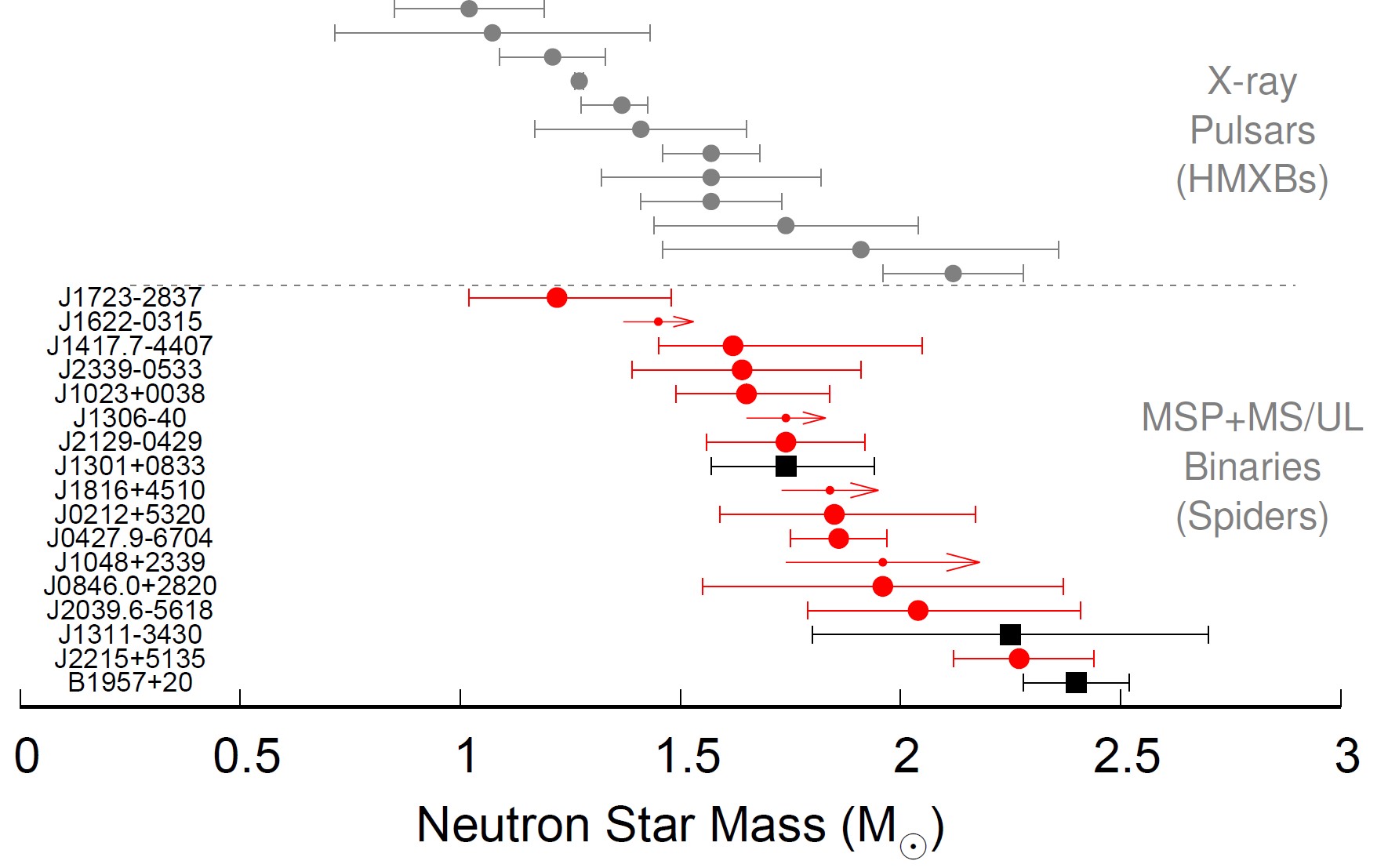
Manuel Linares Alegret is a Professor in the Department of Physics at the Norwegian University of Science and Technology (NTNU) in Trondheim, Norway, where he has been employed since September 2021. He also holds an Associate Professor position at the Polytechnic University of Catalonia (UPC) in Barcelona, Spain, since 2018. His research focuses on high-energy astrophysics with particular emphasis on neutron stars, black holes, white dwarfs, and compact objects in binary systems. Dr. Linares earned his Physics Degree from Universitat de Barcelona (1998-2004) followed by a PhD in Astronomy from Universiteit van Amsterdam (2004-2009). His subsequent career includes prestigious fellowships including Rubicon Fellow at MIT (2009-2012), IAC Fellow (2012-2017), and Marie Curie Fellow at UPC (2017-2018). His research interests primarily center on compact binary systems, particularly millisecond pulsars known as 'spiders' (including black widows and redbacks), neutron star physics, accretion flows, thermonuclear bursts, and the search for super-massive neutron stars. His work combines observational astronomy with theoretical modeling to understand extreme physics in these systems. He leads the LOVE-NEST project, which investigates compact binary millisecond pulsars to find the most massive neutron stars and understand the interaction between accretion flows, pulsar winds, and neutron star magnetospheres. An analysis of his recent publications reveals a strong focus on spider pulsar systems, with particular attention to mass measurements, orbital dynamics, irradiation effects, and the relationship between accretion and rotation-powered states. His work spans multiple observational wavelengths including optical, X-ray, and radio, often utilizing data from major telescopes and space observatories. ERC Consolidator Grant for LOVE-NEST project Marie Curie Fellow IAC Fellow Rubicon Fellow Dr. Linares has supervised numerous students at various levels, including PhD candidates, Master's students, and undergraduate research projects. He currently leads a substantial research team under the LOVE-NEST project, which has received 2M EUR in funding. His group includes multiple postdoctoral fellows and PhD candidates working on various aspects of compact object astrophysics. He teaches Observational Astrophysics (FY3215) at NTNU and has previously taught Quantum Physics and Physics I at UPC. He is the principal investigator of the LOVE-NEST (Looking for Super-Massive Neutron Stars) research group at NTNU, which focuses on compact binary millisecond pulsars. This team conducts research using multiple observational facilities worldwide and collaborates with international groups including those at the Instituto de Astrofísica de Canarias and the University of Manchester.
Emmanuel Fonseca is an Assistant Professor in the Department of Physics and Astronomy at West Virginia University (WVU), joining in Fall 2021. Previously, he was a postdoctoral researcher at McGill University (2016–2021) and completed his Ph.D. in Astronomy at the University of British Columbia (2016). His research focuses on radio astronomy, particularly pulsars and fast radio bursts (FRBs), leveraging facilities like CHIME, the Green Bank Telescope, and NANOGrav. He specializes in using pulsars as laboratories for testing fundamental physics and detecting gravitational waves via pulsar timing arrays. Education: Ph.D. in Astronomy, University of British Columbia (2016) M.Sc. in Astronomy, University of British Columbia (2012) B.Sc. in Physics and Astronomy, Pennsylvania State University (2010) Research Interests: Emmanuel’s work spans three key areas: Compact Objects: Investigating neutron stars and extreme environments using pulsar binaries and relativistic dynamics. CHIME Pulsar/FRB Science: Developing instrumentation and analyzing data from the Canadian Hydrogen Intensity Mapping Experiment to study FRBs and pulsars. Gravitational Waves: Contributing to NANOGrav’s efforts to detect nanohertz gravitational waves via millisecond pulsar timing arrays. Collaborations: He is a core member of NANOGrav and instrumental in maintaining CHIME’s pulsar and FRB backend systems. His work bridges hardware/software development with observational astronomy. Labs/Teams: Involved with the CHIME/FRB Collaboration and the NANOGrav Collaboration, advancing both observational infrastructure and theoretical astrophysics.
Chris Matzner is a Professor and Associate Graduate Chair at the University of Toronto's Department of Astronomy and Astrophysics, affiliated with the Dunlap Institute for Astronomy & Astrophysics. He earned his Ph.D. from UC Berkeley in 1999. His research focuses on astrophysical fluid dynamics, particularly star formation processes (protostellar disks, molecular clouds, energy feedback) and stellar explosions (supernovae, gamma-ray bursts), employing analytical, numerical, and observational approaches. His research encompasses: Dynamics of protostellar outflows and molecular cloud interactions Models for supernova shocks and gamma-ray burst mechanisms Fragmentation in star and planet formation Massive black hole accretion processes Evolution of giant molecular clouds Stellar feedback in galactic environments Analysis of his 15 most recent publications reveals strong emphasis on supernova dynamics (particularly Type Ia explosions), star formation mechanisms in clusters and molecular clouds, shock wave physics in astrophysical contexts, and the development of astronomical instrumentation. The works demonstrate consistent focus on explosive transients, fluid dynamics in cosmic environments, and observational constraints on theoretical models. As Associate Graduate Chair, he oversees academic programs and student development. His laboratory affiliations include the Dunlap Institute's computational astrophysics and instrumentation groups. Current work involves modeling star cluster-galaxy interactions, tidal disruption events, and developing next-generation UV/IR detectors.
Rana Adhikari is a Professor of Physics at the California Institute of Technology (Caltech). Holding a B.S. from the University of Florida (1998) and a Ph.D. from MIT (2004), he has been at Caltech since 2006, progressing from Assistant Professor to full Professor in 2012. His research focuses on advancing detector technologies for fundamental physics experiments in gravitational waves, dark matter, and near-field gravity studies. Education: B.S. in Physics, University of Florida (1998); Ph.D. in Physics, MIT (2004) Caltech Faculty: Assistant Professor (2006-12), Professor (2012-present) Adhikari's group specializes in precision measurements at the intersection of classical and quantum physics. Key research areas include: Mechanical oscillators and their thermodynamic limits Nonlinear optics for interferometric applications Quantum information constraints in classical sensors Adaptive optics using thermal actuation Cryogenic silicon interferometers for cosmological observations High-quality silicon opto-mechanical systems for LIGO applications Laser gyroscope technology for rotation sensing The group's work on gravitational wave detection has produced numerous publications in leading journals like Physical Review X , Physical Review D , and Optics Express . Their research often combines experimental physics with machine learning techniques for noise cancellation in laser interferometers. Adhikari's team also engages with undergraduate researchers through programs like the International LIGO SURF students, creating opportunities for young scientists in gravitational physics. His publications reveal a consistent focus on gravitational wave detector optimization, quantum metrology, and cosmological observations through advanced instrumentation.
Professor Christian Knigge serves as Professor of Astrophysics at the University of Southampton and is a core member of the Southampton Theory Astrophysics and Gravity (STAG) Research Centre within the Institute for Life Sciences. His research program investigates accretion phenomena across diverse cosmic scales, from stellar-mass compact objects to supermassive black holes. Knigge's primary research focuses on accretion phenomena and associated outflows, cataclysmic variables, close binaries, globular clusters, and active galactic nuclei. He examines the physical mechanisms driving accretion disk instabilities, outflow generation, and explosive events in binary systems, with particular emphasis on white dwarf and black hole accretors. His work integrates observational data with theoretical modeling to unravel the complex physics of these high-energy environments. Recent publications (2024-2025) reveal a strong emphasis on multi-wavelength observational campaigns, especially leveraging JWST capabilities, alongside theoretical code development. Key research threads include characterizing disk winds in active galactic nuclei, identifying quasi-periodic oscillations in white dwarf systems, classifying optical outbursts in cataclysmic variables, and developing computational tools like the SIROCCO radiative transfer code. These studies demonstrate his leadership in connecting observational signatures with fundamental accretion physics across different astrophysical regimes. Supervision: Currently guides six PhD students in Physics (Austen George William Wallis, Cordelia Brown, Brian Luff, Zackery Alexander Irving, Arianna Clarissa Albayati, Pornisara Nuchvanichakul) Grants: Leads STFC-funded projects including 'Line-Driven Disk Winds in Active Galactic Nuclei', 'C Knigge - Astrophysics at Southampton', and previously held a Leverhulme Trust Research Fellowship for 'The Universal Nature of Accreting Compact Objects' As an integral member of the STAG Research Centre, Knigge collaborates within a multidisciplinary team investigating gravity-dominated systems, contributing to Southampton's prominence in theoretical and observational astrophysics through both individual research initiatives and institutional consolidation grants.
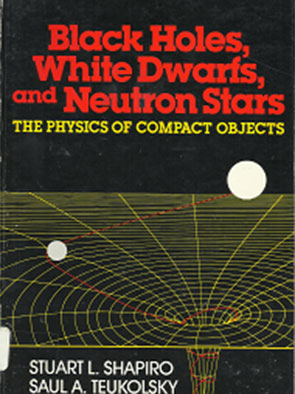
Stuart L. Shapiro is a Professor of Physics and Astronomy at the University of Illinois at Urbana-Champaign and a NCSA Senior Research Scientist. Previously, he held faculty positions at Cornell University from 1973 to 1995. He earned an A.B. in Astronomy from Harvard University (1969) and a Ph.D. in Astrophysical Sciences from Princeton University (1973). His research focuses on theoretical astrophysics and general relativity, including black holes, neutron stars, gravitational waves, and relativistic magnetohydrodynamics. Shapiro pioneered computational methods in numerical relativity, co-developing the BSSN formalism and advancing simulations of compact object mergers. He is renowned for coining terms like 'supramassive' and 'hypermassive' neutron stars and for exploring gravitational wave generation via LIGO/LISA. His work integrates supercomputing, analytical modeling, and visualization to address fundamental questions in astrophysics. Recipient of the Hans A. Bethe Prize (2017), he has authored a seminal textbook Black Holes, White Dwarfs and Neutron Stars (1983) and led a vibrant research group training undergraduates and graduate students. His research group’s simulations visualize phenomena such as black hole formation and neutron star mergers, bridging theory with observational astronomy.