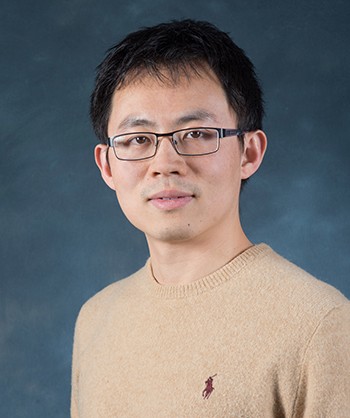
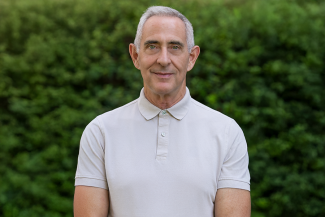
Edward Andò is a Principal Scientist and Lecturer at École Polytechnique Fédérale de Lausanne (EPFL) , with affiliations to the IMAGING group and the College of Engineering (ENAC) . His work bridges software development, experimental geomechanics, and educational initiatives in image analysis. Principal Scientist, IMAGING-GE (EPFL) Lecturer, Sciences et Génie Civil (SGC-ENS) Lecturer, Enseignement à la Défense (EDEE-ENS) Research Interests Andò specializes in 3D image analysis , with a focus on X-ray tomography , digital volume correlation (DVC) , and micromechanical modeling of granular materials. His work addresses geomechanical failure mechanisms, soil dynamics, and open-source software tools like SPAM for practical material analysis. Publication Trends His recent articles (2025–2023) emphasize X-ray tomography for studying granular deformation , rock failure , medical imaging , and soft particle compaction . Topics span geomechanics, computational modeling, and software development for experimental validation. Labs and Teams Andò contributes to the IMAGING group at EPFL, where he co-develops the SPAM (Software for Practical Analysis of Materials) . His teaching includes courses like Fundamentals of Image Analysis and Quantitative Imaging for Engineers , which integrate hands-on training with theoretical frameworks.
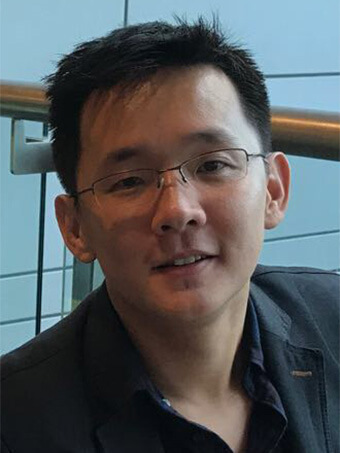
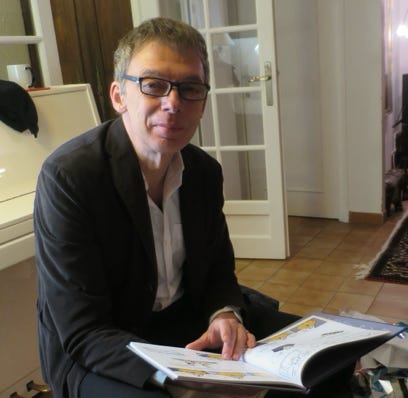
Bruce MacDowell Maggs is a Professor in the Department of Computer Science at Duke University and serves as Vice President of Research at Akamai Technologies. His career bridges academic research and industrial innovation in computer science, particularly in distributed systems and networking. Research Interests: His work spans computer networks , distributed systems , parallel algorithms , content delivery , and fault-tolerant computing . He has made significant contributions to network routing, load balancing, scalability of web applications, and energy efficiency in large-scale systems. His research often combines theoretical rigor with practical system design. The recent publications highlight a consistent focus on scalability , network performance , and security in internet-scale applications. Key themes include query caching , traffic modeling , resilient routing , and energy optimization , reflecting his deep involvement in the infrastructure of modern web services. No scientific awards are mentioned in the provided text. Advising and Teaching: He has advised numerous Ph.D. students, many of whom are now faculty or researchers at top institutions. His former students include Ramesh Sitaraman, Anja Feldmann, and Andrea Richa. He currently advises Anat Talmy at Duke. He has taught a wide range of courses at Duke, Carnegie Mellon, and MIT, including Computer Networks, Operating Systems, Algorithms, and Discrete Mathematics. Labs and Teams: While not explicitly named, his research is closely tied to systems and networking groups at Duke and his industrial work at Akamai, a leader in content delivery networks. His collaborations with Tom Leighton and others at Akamai suggest leadership in research teams developing foundational internet technologies.
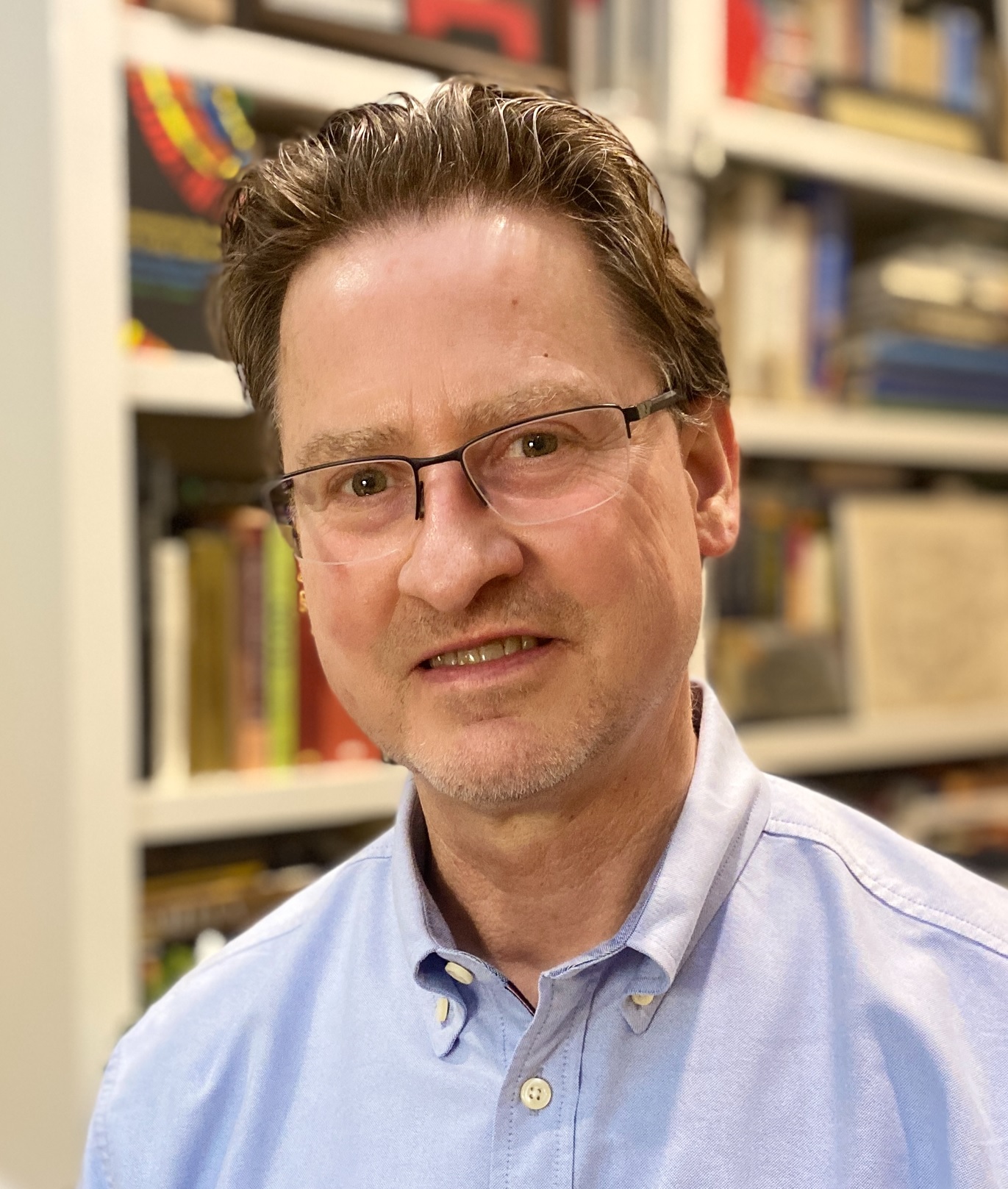
Qile Chen is an Associate Professor in the Department of Mathematics at Boston College . His research focuses on Algebraic Geometry , particularly in Logarithmic Geometry , Moduli Spaces , and Gromov-Witten Theory . He has made significant contributions to understanding A^1-connectedness , Stable Log Maps , and Virtual Cycles in geometric contexts. His publications include collaborations with leading mathematicians such as Dan Abramovich , Felix Janda , Yi Zhu , and Dawei Chen . Key topics span Logarithmic GLSM , Multi-scale Differentials , and Spin/Hyperelliptic Structures . Recent Articles : Punctured logarithmic maps (2025), Gorenstein contractions (2024), Campana rational connectedness (2024) Co-advised Student : Zijian Han (Ph.D. in progress at Boston College)
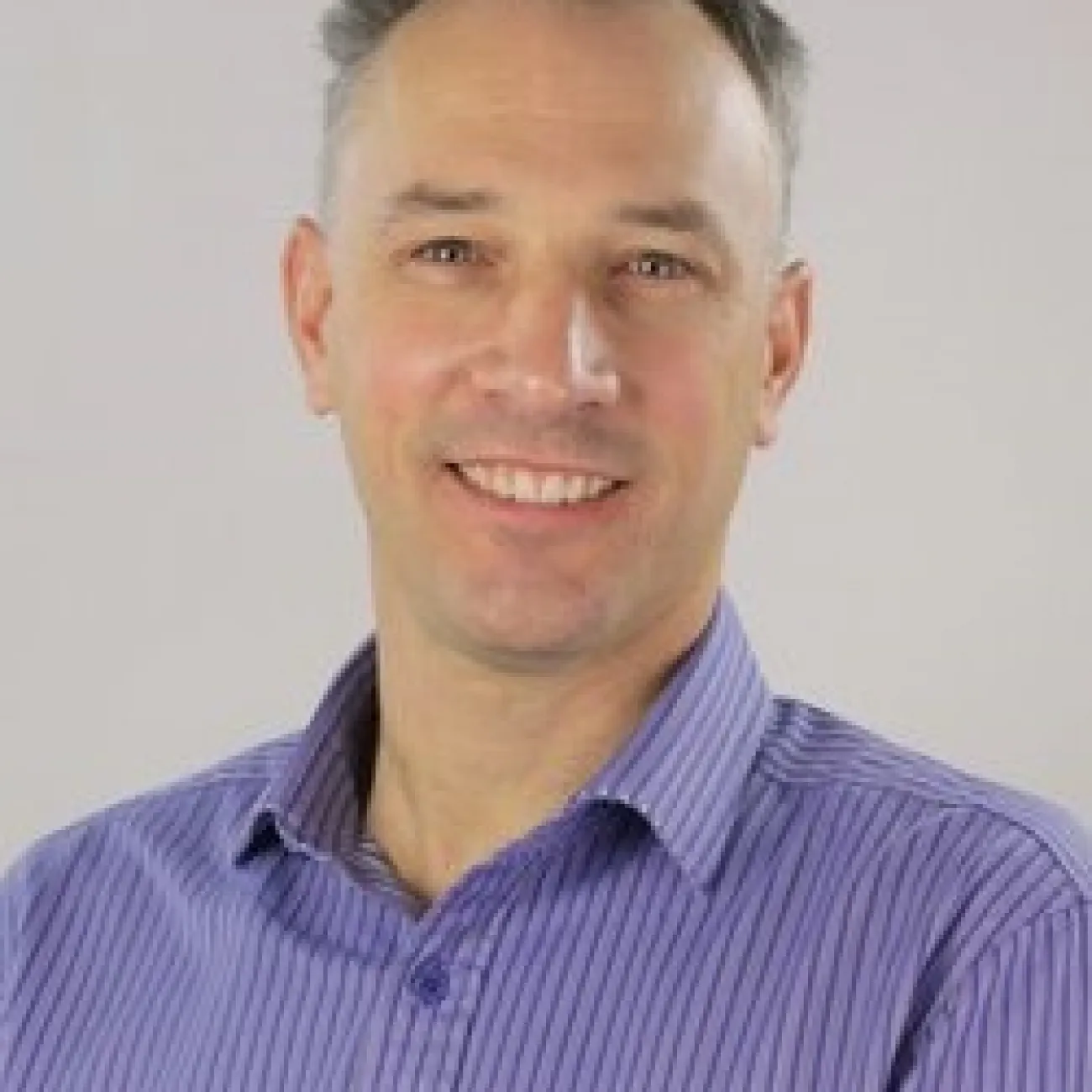
Dr. Alvin J. K. Chua is an Assistant Professor at the National University of Singapore (NUS) under the NUS Presidential Young Professorship. He holds a joint appointment in the Department of Mathematics and a courtesy appointment in the Department of Statistics and Data Science. His research focuses on gravitational-wave astronomy , particularly extreme mass ratio inspirals (EMRIs) as key sources for the LISA mission. He develops computational and statistical methods for modeling GW sources and analyzing detector data, with recent work on machine learning and Bayesian inference techniques. His selected publications highlight advancements in modeling beyond-vacuum-GR effects in EMRIs non-local parameter degeneracies rapid relativistic waveform generation neural networks for GW inference statistical sampling on manifolds These works span gravitational-wave astrophysics , computational relativity , and applied statistics . Scientific recognition includes the NUS Presidential Young Professorship. He collaborates with the LISA Consortium and the North American Nanohertz Observatory for Gravitational Waves (NANOGrav).
Kyojin Choo is a Tenure Track Assistant Professor at the Swiss Federal Institute of Technology Lausanne (EPFL) in the School of Engineering , affiliated with the Mixed-Signal Integrated Circuits Lab (MSIC-LAB). He also holds teaching roles in Microengineering and Electrical and Electronics Engineering at EPFL. B.S. and M.S. in Electrical Engineering from Seoul National University (2007, 2009) Ph.D. in Electrical Engineering from the University of Michigan (2018) His research focuses on charge-domain analog/mixed-signal circuits , low-power sensor interfaces , and compact ADCs for IoT, wearables, and millimeter-scale systems. He has pioneered charge-injection cell techniques for energy-efficient circuits in energy management, sensor front-ends, and communication. His work emphasizes reducing power consumption to nanowatt levels while enabling ultra-compact designs. His recent publications highlight advancements in compact SAR ADCs , low-power MEMS accelerometers , millimeter-scale imaging systems , and ultra-low-power timing generators . His research integrates charge-domain circuit design with sensor interface optimization , energy harvesting , and high-speed link architectures . He holds over 20 US patents and has taught courses in Microengineering and Electrical Engineering at EPFL. His group (MSIC-LAB) addresses challenges in battery-free sensor design, power-constrained system scaling, and commercialization of wearables with unconventional form factors.
Sergio Carrera serves as Senior Research Fellow and Head of the Justice and Home Affairs Unit at the Centre for European Policy Studies (CEPS), a prominent Brussels-based think tank. Additionally, he holds the position of Adjunct Professor at the Paris School of International Affairs (PSIA) in SciencesPo, France, where he contributes to academic teaching and research in international affairs. Dr. Carrera's academic background includes a Ph.D. on immigration and citizenship from Maastricht University (The Netherlands), an LL.M. in European, Comparative and International Law from the University of Maastricht, and a Law Degree from Universidad de Salamanca in Spain. His extensive educational foundation in European and international law underpins his expertise in EU justice and home affairs policy. His primary research interests focus on EU justice and home affairs (JHA) law and the Area of Freedom, Security and Justice policy, with particular emphasis on migration, asylum, citizenship, and Schengen policies. Dr. Carrera's expertise also extends to EU criminal justice law and police cooperation, examining their impacts on data protection, privacy, and the rights of the defense. His work consistently addresses the intersection between security measures and fundamental rights within the European context. Dr. Carrera has produced an extensive body of scholarly work, with over 190 published publications according to the available information. His recent research has particularly focused on EU-US data transfers, rule of law challenges in the context of migration management, global asylum governance, and the evolving landscape of EU security policy. His publications demonstrate a consistent concern with ensuring that security and migration policies uphold fundamental rights and the rule of law. Among his notable contributions are policy analyses on the European Green Deal's implications for climate policy, assessments of the EU's response to the Ukraine crisis, and examinations of the impact of the Trump administration on EU security policy. His research often bridges academic analysis with practical policy recommendations for EU institutions. Dr. Carrera leads and participates in numerous research projects addressing critical issues in EU policy. Current initiatives include "Reclaiming our past, rebuilding our future: new approaches to fighting antigypsyism" (2024-2026) and the "Study on Mapping Civil Dialogue Practices in the EU Institutions" (2024-2025). Previous significant projects include "Global Asylum Governance and European Union's Role" (ASILE, 2019-2023), "Pan-European Response to the ImpactS of COVID-19" (PERISCOPE, 2020-2023), and "IT tools and methods for managing migration FLOWS" (ITFLOWS, 2020-2023). His work has been commissioned by various EU institutions, including the European Parliament's Policy Department for Citizens' Rights and Constitutional Affairs, demonstrating the policy relevance and impact of his research. Dr. Carrera's expertise is frequently sought for task forces addressing timely issues such as EU-US data transfers, digital justice, and cross-border cooperation in criminal matters.
Professor John D. Cressler is a tenured faculty member at the Georgia Institute of Technology, holding a position within the School of Electrical and Computer Engineering in the College of Engineering. His research focuses on cutting-edge semiconductor technologies, particularly silicon-germanium heterojunction bipolar transistors (SiGe HBTs) for mixed-signal applications spanning RF, microwave, mm-wave, analog, and digital domains. His research interests center on atomic-scale bandgap engineering for next-generation semiconductor devices, with emphasis on SiGe HBT technology development, radiation-hardened circuits for space applications, cryogenic electronics, and device-circuit interactions. His team explores fundamental device theory, broadband noise analysis, profile optimization, 2-D/3-D simulation, compact modeling, and radiation effects. Current projects include Europa-surface mission electronics, D-band/sub-THz systems, and radiation-tolerant receiver designs. Analysis of his 15 most recent publications (2024-2025) reveals a dominant focus on radiation-hardened electronics for space applications (40% of works), millimeter-wave circuit design (30%), and SiGe HBT reliability optimization (30%). Key trends include Europa mission electronics development, D-band/sub-THz circuit innovation, and advanced radiation mitigation techniques using SiGe BiCMOS technology. Professor Cressler teaches multiple courses including ECE 3040 (Microelectronic Circuits), ECE 3450 (Semiconductor Devices), ECE 6444 (Silicon-Based Heterostructure Devices and Circuits), and the interdisciplinary IAC 2002 course on Science, Engineering and Religion. His research is supported by industrial collaborations and Georgia Tech facilities including the Georgia Electronic Design Center (GEDC), NanoTECH, and C-STAR.
Elyse Rosenbaum is the Melvin and Anne Louise Hassebrock Professor in Electrical and Computer Engineering at the University of Illinois at Urbana-Champaign. She also serves as the Acting Associate Dean for Research at the Grainger College of Engineering. She is the director of the NSF-supported Center for Advanced Electronics through Machine Learning (CAEML), a collaboration between the University of Illinois, North Carolina State University, and Penn State University. Education: Ph.D. in Electrical Engineering, University of California, Berkeley, 1992 M.S. in Electrical Engineering, Stanford University B.S. in Electrical Engineering, Cornell University (with distinction) Research Interests: Her research focuses on machine learning applications in electronics, ESD-robust high-speed I/O circuit design, compact modeling, behavioral modeling of circuits, and CDM-ESD protection for advanced packaging technologies. Scientific Awards: IEEE Fellow for contributions to electrostatic discharge reliability of integrated circuits Best Student Paper Award, IEDM Outstanding and Best Paper Awards, EOS/ESD Symposium Technical Excellence Award, SRC NSF CAREER Award IBM Faculty Award ESD Association’s Industry Pioneer Recognition Award Advising and Grants: She supervises graduate and undergraduate researchers, primarily focusing on those with strong academic records and relevant experience. Her work is supported by NSF and other prominent organizations. Labs and Teams: She leads the CAEML center, which aims to apply machine learning to optimize microelectronic circuits and systems, enhancing design automation and reliability.
Cécile Mailler is a Reader in Probability at the University of Bath, where she is a member of the probability group Prob-L@B. She has held significant research positions including an EPSRC postdoctoral fellowship (2018-2021) titled "Random trees: analysis and applications" and previously worked as a postdoc at Prob-L@B (2013-2016) as part of Peter Mörters' EPSRC project "Emergence of Condensation in Stochastic Networks". She earned her PhD under the supervision of Brigitte Chauvin and Danièle Gardy at the Laboratoire de Mathématiques de Versailles. Her research focuses on probability theory with emphasis on branching processes, random trees, reinforcement mechanisms, Pólya urns, stochastic approximation, random networks, and statistical physics. She has made significant contributions to understanding preferential attachment models, zero-range processes, and random Boolean trees. Her work bridges theoretical probability with applications in statistical physics and combinatorics. Analysis of her recent publications shows a strong focus on random tree structures, branching processes, and reinforcement learning algorithms, with applications spanning from network theory to statistical mechanics. Her research demonstrates sophisticated mathematical techniques applied to complex stochastic systems, particularly those with reinforcement mechanisms and memory effects. Associate Editor of the Applied Probability Trust (since October 2020) Associate Editor of Stochastic Processes and Their Applications (since March 2022) Author of a general introduction to Pólya urns for the LMS Newsletter (November 2020) Co-organizer of the "Random Walks: Applications and Interactions" conference at CIRM (January 2026) She actively supervises PhD students working on topics including the multi-city ants process, Pólya urns with growing initial composition, large deviations for the Monkey walk, and competing growth processes. She has secured research funding through EPSRC fellowships and has been involved in multiple collaborative projects with prominent researchers in probability theory. Mailler regularly teaches mini-courses on advanced probability topics at international summer schools and workshops, demonstrating her commitment to knowledge dissemination in the field.
Jacob Mackenzie is an Associate Professor at the University of Southampton's Faculty of Engineering and Physical Sciences , affiliated with the Optoelectronics Research Centre (ORC) and Zepler Institute. His work spans advanced laser physics and photonics, focusing on efficient solid-state systems via planar waveguide geometries and cryogenic cooling for power scaling. Research interests: Waveguide amplifiers, cryogenically cooled lasers, ultra-fast compact lasers Key applications: Materials processing, space-borne LIDAR, silicon photonics Research Themes include innovative gain media engineering, thermal management, and spectroscopic optimization. His group explores non-standard laser transitions to expand accessible wavelengths and power regimes in continuous-wave (CW) and pulsed configurations. Publications highlight advancements in resonant waveguide gratings, thermal performance metrics, high-repetition rate systems, and optical coating durability. These align with his leadership in high-power laser design and novel manufacturing techniques. Scientific Awards Royal Academy of Engineering Postdoctoral Fellow (2004) Senior Member of the Optical Society (OSA) PhD Supervision includes Isaac Brock, Georgia Mourkioti, and Sahar Alidousti. He also mentors postgraduate students through technical workshops and co-teaches Photonics II (ELEC3217) for undergraduates. External Roles encompass invited speaking (2020), journal reviewing (2021-2022), and chairing conferences like the 10TH EPS-QEOD EUROPHOTON CONFERENCE (2022).
Gianni Dal Maso is a Professor of Mathematical Analysis at the International School for Advanced Studies (SISSA) in Trieste, Italy. He has been a faculty member at SISSA since 1985, first as Associate Professor and then as Full Professor since 1987. He has held several leadership positions at SISSA including Head of the Sector of Functional Analysis and Applications (1993-1998, 2001-2010), Deputy Director (2010-2015), and Coordinator of the Mathematics Area (2016-2020). His educational background includes: 1973-1977: Undergraduate student in Mathematics at the University of Pisa and Scuola Normale Superiore 1977: Degree in Mathematics with honors at the University of Pisa (thesis: "Gamma-limits of set functions," advised by Ennio De Giorgi) 1977: "Diploma" in Mathematics from the Scuola Normale Superiore 1977-1981: Post-graduate Research Fellowship in Mathematics ("Perfezionamento") at the Scuola Normale Superiore Dal Maso's research focuses on the Calculus of Variations, with particular emphasis on semicontinuity and relaxation problems, Gamma-convergence, and more recently, free discontinuity problems and their applications to mechanics. His work bridges pure mathematical analysis with practical applications in material science, particularly in plasticity and fracture mechanics. He has developed mathematical frameworks for understanding crack propagation, material failure, and the behavior of solids under stress, contributing significantly to both theoretical foundations and practical modeling approaches in these areas. His extensive publication record shows a clear evolution from foundational work in Gamma-convergence (culminating in his influential book "An Introduction to Gamma-Convergence" in 1993) toward increasingly sophisticated models of material behavior, particularly in fracture mechanics and plasticity. Recent work demonstrates continued innovation in handling complex discontinuities, non-local effects, and multi-scale phenomena in material science applications. Among his notable scientific recognitions: 1982: Stampacchia Prize, awarded by the Scuola Normale Superiore 1990: Caccioppoli Prize, awarded by the Italian Mathematical Union 1996: Medaglia dei XL per la Matematica, awarded by the Accademia Nazionale delle Scienze detta dei XL 2003: Prize of the Minister for the Cultural Heritage for Mathematics and Mechanics, awarded by the Accademia Nazionale dei Lincei 2005: Prize Luigi and Wanda Amerio, awarded by the Istituto Lombardo Accademia di Scienze e Lettere Dal Maso has supervised 42 PhD students at SISSA, demonstrating a strong commitment to academic mentorship. His research has been significantly supported by multiple National Research Projects (PRIN) in Italy, and notably by an ERC Advanced Grant "Quasistatic and Dynamic Evolution Problems in Plasticity and Fracture" (QuaDynEvoPro) from 2012-2017, where he served as Principal Investigator. This major project focused on nonlinear evolution problems in plasticity and fracture, with three main research directions: plasticity with hardening and softening, quasistatic crack growth, and dynamic fracture mechanics. His scholarly activities extend to editorial service, with membership on the boards of numerous prestigious journals including Archive for Rational Mechanics and Analysis, SIAM Journal on Mathematical Analysis, and Journal of Convex Analysis. He has also been active in the mathematical community through membership in scientific committees and academies, including the Accademia Nazionale dei Lincei since 2014.
Kumar Vaibhav Srivastava is a Professor in the Department of Electrical Engineering at the Indian Institute of Technology Kanpur (IIT Kanpur). His research focuses on electromagnetic theory, meta-materials, and antenna design, with significant contributions to the field of computational electromagnetics and microwave engineering. Dr. Srivastava received his B.Tech from Kamla Nehru Institute of Technology, Sultanpur U.P. in 2002, followed by an M.Tech from IIT Kanpur in 2004. He completed his PhD at IIT Kanpur in 2008 with a thesis titled "Studies on Inhomogeneous Dielectric Resonators for Improved Mode Separation in MIC Environment using Efficient FDTD Algorithm and its Application to Band-pass Filter" under the supervision of Prof. Animesh Biswas. His research interests span a wide range of topics in electromagnetics, with particular expertise in Meta-Materials , Microwave Antennas , Microwave Absorbers , Microwave Cloaking , and the Finite-Difference Time-Domain (FD-TD) Technique . Dr. Srivastava's work has significant applications in wireless communications, radar systems, and electromagnetic compatibility. His innovative approaches to meta-material absorbers and antenna design have garnered attention in both academic and industrial circles. Dr. Srivastava's recent publications demonstrate a strong focus on advancing meta-material absorber technology and antenna design. His work shows consistent innovation in bandwidth enhancement techniques, polarization independence, and compact antenna designs for ultra-wideband applications. His research bridges theoretical electromagnetic principles with practical engineering solutions. Cadence Gold Medal-2005 for Best M.Tech. Thesis Best Teaching Assistantship Award (2005-06) Appreciation Letter from GE Global Research Centre Young Research Fellowship (Class of 1979) Best Paper Award at ATMS Conference (2013) IEI Young Engineer Award 2014 Dr. Srivastava has supervised numerous research projects and students in the field of electromagnetics and antenna design. His work with industry partners, including GE Global Research Centre, demonstrates his ability to translate theoretical research into practical applications. He maintains active collaborations with researchers both within IIT Kanpur and internationally. Based in the Advanced Centre for Electronic Systems (ACES) at IIT Kanpur, Dr. Srivastava works within a vibrant research ecosystem that supports cutting-edge work in electronic systems and electromagnetic applications. His laboratory focuses on computational electromagnetic simulations and experimental validation of novel meta-material structures and antenna designs.
Prof. Jorge Piekarewicz is a Professor of Physics at Florida State University (FSU), affiliated with the College of Arts and Sciences. He earned his Ph.D. in theoretical nuclear physics from the University of Pennsylvania in 1985, followed by postdoctoral research at Caltech and Indiana University. Since 1990, he has been a faculty member at FSU. Education: Ph.D. in Theoretical Nuclear Physics, University of Pennsylvania (1985) Postdoctoral Fellowships: California Institute of Technology and Indiana University Research Interests: His work focuses on extreme-density nuclear matter in neutron stars, bridging terrestrial experiments and astrophysical observations. Key areas include: Neutron star structure and equation of state Weak interaction probes (e.g., parity-violating electron scattering) Multi-messenger astronomy insights from neutron star mergers Covariant energy density functionals and symmetry energy constraints Articles Trends: Recent work emphasizes refining the nuclear equation of state using PREX-CREX experiments, gravitational wave data (e.g., GW170817), and Bayesian methods. Key themes include neutron skin thickness, crust-core interactions, and symmetry energy sensitivity. Service & Outreach: Nuclear Science Advisory Committee (2012–2015) FRIB Theory Alliance Director (2017–2021) INT National Advisory Committee Chair (2018–2020) OLLI Lecturer on stellar evolution and neutron stars Collaborations: Active involvement with CERN, FRIB, JLab, and the Facility for Rare Isotope Beams (FRIB). Research leverages facilities like the Relativistic Heavy Ion Collider and the National Superconducting Cyclotron Laboratory.
Timothy D Stark is a Professor in the Department of Civil and Environmental Engineering at the University of Illinois Urbana-Champaign, where he maintains an active research program focused on geotechnical engineering challenges related to infrastructure safety and environmental protection. His work bridges theoretical soil mechanics with practical applications in dam engineering, landfill design, and slope stability analysis. Stark's research centers on shear strength characterization of soils and geosynthetic materials, particularly examining geomembrane interfaces, landfill liner systems, and failure mechanisms in earth structures. His fingerprint analysis reveals dominant expertise in Shear Strength (100%), Geomembranes (98%), and Stability Analysis (63%), with significant contributions to Landslide Analysis (43%) and Landfill Engineering (35%). Current investigations address liquid effects on interface behavior, flow failure assessment in embankments, and advanced soil parameter determination through cone penetration testing. Recent publications demonstrate consistent innovation in predictive modeling for geotechnical failures, with 2024-2025 works focusing on landfill stability under liquid exposure, dam safety assessment methodologies, and three-dimensional strength characterization of compacted fills. These studies advance practical engineering solutions while contributing to fundamental understanding of soil-geosynthetic interaction mechanisms. Honors recognizing his scholarly impact include: ASCE Distinguished Member (2024) Norman Medal (2019) for seminal technical contributions to civil engineering Walter L. Huber Civil Engineering Research Prize (1999) While specific details about student advising and grant funding are not provided in the source material, his extensive publication record (268 research outputs) and fingerprint analysis indicate sustained leadership in advancing geotechnical engineering practice through rigorous experimental and analytical research.
Hubert Saleur is a Professor of Physics and Astronomy at the University of Southern California and holds a Director of Research position at the IPhT CEA Saclay in France. His work bridges hard condensed matter physics and high-energy physics , with interdisciplinary focus on low-dimensional quantum field theories and statistical mechanics . He has led DOE-funded projects on quantum quench dynamics and non-equilibrium transport in nanostructures, and his research involves advanced mathematical techniques including non-semisimple representation theory . Education: Ph.D. in Physics, University of Paris (1987) Research interests span non-perturbative effects , transport out of equilibrium , topological defects , and AdS/CFT correspondence . Recent work includes geometrical correlation functions in Potts models and quantum simulation of conformal field theories on analog quantum computers. His scientific awards include: Jean Ricard Prize, French Physical Society (2018-2019) ERC Advanced Grant (2015-2016) Silver Medal, CNRS (2011-2012) Humboldt Senior Scientist Award (2001-2008) Packard Foundation Fellowship (1991-2001) Doisteau-Blutel Prize, French Academy of Sciences (1987) As an advisor, Saleur has mentored 15+ students/postdocs now in permanent research or academic roles at institutions like CNRS Paris , Imperial College , and Quantinuum Munich . He co-organizes international conferences such as Quantum Theory and Symmetry XI and serves on editorial boards for Physics Open , SIGMA , and SciPost . Recent courses include Introduction to Topological Phases and Criticality and the Renormalization Group .