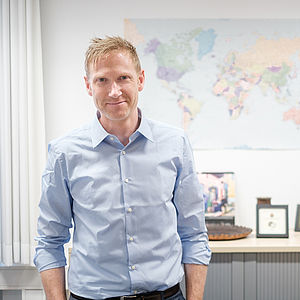
Professor Michael Grimm holds the Chair of Development Economics at the University of Passau and serves as the Director of the Passau International Centre for Advanced Interdisciplinary Studies (PICAIS). He is also Chairman of the Research Committee on Development Economics of the German Economic Association (Verein für Socialpolitik) and a Principal Investigator of the DFG Research Training Group 2720 'Digital Platform Ecosystems (DPE)' at the University of Passau. Previously, Professor Grimm was Professor of Development Economics at Erasmus University Rotterdam, Visiting Professor at the Paris School of Economics, and Consultant for the World Bank in Washington, D.C. His research focuses on the resources available to the poor, particularly examining small and medium enterprises in developing countries with limited access to capital and professional support. His work investigates how networks can be established to connect these firms with investors, banks, and government institutions to reduce information asymmetries and market segmentations. Professor Grimm is internationally recognized as an expert in development economics, having conducted numerous field studies examining the impacts of technological change in developing countries, with particular focus on Indonesia, Burkina Faso, and Tunisia. His recent publications demonstrate a strong research trajectory examining sustainable agriculture, digital health interventions, gender empowerment, and economic development across multiple continents. His work often employs rigorous experimental methods including randomized controlled trials and quasi-experimental designs to evaluate interventions aimed at reducing poverty and promoting sustainable development. Professor Grimm collaborates extensively with international researchers and institutions, including the World Bank, and has supervised numerous doctoral students who have gone on to make significant contributions in development economics and related fields. His leadership extends to directing major research initiatives like PICAIS, which brings together international scholars to address complex global challenges through interdisciplinary approaches.