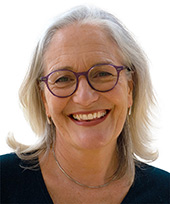
Dr. Hilary Cremin is the Head of the Faculty of Education at the University of Cambridge and holds the rank of Professor. Her work centers on peace education, conflict transformation, and innovative methodologies such as photo-voice, poetry, and autoethnography. She chairs the Cambridge Peace Education Research Group (CPERG), which promotes research and practice in peace education through seminars and online resources. Her research explores the intersection of education and peacebuilding, emphasizing ethical and embodied approaches to conflict resolution in schools and communities. Education : PhD in Education, University of Leicester PGCE, University of Oxford (Wolfson College) BA (Hons) in French and European Literature, University of Warwick Research Interests : Hilary’s work addresses global challenges in education and peacebuilding, including: Developing transrational approaches to peace education Reducing epistemic violence through reflexive methodologies Empowering youth through restorative justice and civic pedagogy Exploring embodiment and arts-based practices in educational research Awards : Fellow of the Royal Society of Arts Leadership and Service : In addition to her academic role, Hilary serves as Chair of the Degree Committee in the Faculty of Education and has extensive experience as a mediator and educational consultant. She has collaborated with schools, communities, and international organizations to advance conflict transformation and peacebuilding initiatives. Labs/Teams : Cambridge Peace Education Research Group (CPERG) — fostering global dialogue and practical resources for peace education researchers and practitioners.
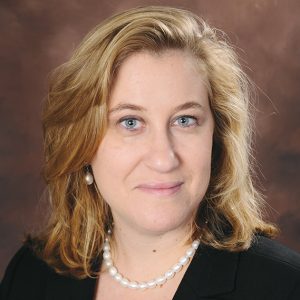
Rebecca A. Kobrin serves as the Russell and Bettina Knapp Associate Professor of American Jewish History at Columbia University, actively contributing to scholarship and pedagogy as of 2025. Her research bridges immigration history, urban studies, and Jewish diaspora studies, with leadership in the award-winning Historical NYC Project that digitally reconstructs New York City's demographic evolution from 1850 to 1940. Her academic credentials include: Ph.D. from the University of Pennsylvania (2002) M.S. Ed. from University of Pennsylvania, School of Education (2000) M.A. from University of Pennsylvania (1995) B.A. from Yale University (1994) Professor Kobrin's research interrogates the socioeconomic dimensions of East European Jewish migration through interdisciplinary lenses, examining financial networks, urban spatial dynamics, and transnational philanthropy. Her work reveals how immigrant communities navigated economic vulnerability while maintaining diasporic connections, particularly through landsmanshaftn (mutual aid societies) and cross-border capital flows. Digital humanities methodologies enhance her analysis of urban settlement patterns and demographic shifts. Her scholarly output demonstrates consistent focus on Jewish immigrant economic agency, with recurring themes of financial failure, gendered household economies, and diaspora responses to geopolitical upheavals like the 1905 Russian Revolution. Publications frequently analyze Yiddish press representations of Eastern European cities and transnational philanthropy during interwar crises. Major recognitions include: Jordan Schnitzer Prize (2012) for Jewish Bialystok and Its Diaspora Columbia University’s Lenfest Distinguished Faculty Award (2015) American Jewish Historical Society’s Wasserstein Prize (2013) Shoah Foundation Teaching Award (2012) National Jewish Book Awards Finalist (2010) Professor Kobrin’s mentorship earned Columbia’s Lenfest Award for graduate student guidance, supported by fellowships from the American Philosophical Society, ACLS, and Fulbright programs. Her current flagship initiative—the Historical NYC Project—secures multidisciplinary funding to visualize urban transformation through interactive cartography. As principal investigator, she directs collaborative research integrating historical archives with spatial analysis. The Historical NYC Project team unites historians, data scientists, and cartographers in creating an acclaimed digital platform mapping New York City’s demographic metamorphosis across 90 years, revealing how immigrant communities reshaped urban landscapes through settlement patterns and institutional development.
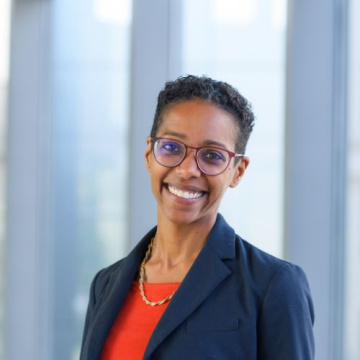
Mai Hassan is an Associate Professor of Political Science at the Massachusetts Institute of Technology (MIT), where she serves as faculty co-director of MIT-Africa. Her research focuses on comparative politics, with particular emphasis on bureaucracy, public administration, the state, contentious politics, state repression, and the politics of Africa and the Middle East and North Africa region. Her academic journey includes: PhD in Government from Harvard University Previous position as Associate Professor at the University of Michigan Professor Hassan's research examines topics that span across authoritarian regimes, bureaucracy and public administration, and contentious politics. Her first book, "Regime Threats and State Solutions: Bureaucratic Loyalty and Embeddedness in Kenya," was selected as a Best Book of 2020 by Foreign Affairs, won the American Political Science Association's 2021 Robert A Dahl Award, and received the African Studies Association 2021 Bethwell A. Ogot Award. Her work has been published in prestigious journals including the American Journal of Political Science, American Political Science Review, and the Journal of Politics. Professor Hassan has been particularly active in providing expert commentary on Sudanese politics, drawing on her personal connection to the country (her family immigrated from Sudan to the United States when she was young). She has written op-eds for Foreign Affairs, The New York Times, and The Washington Post, and has been featured in media outlets including The New Yorker, NPR, and Vox. Her scientific awards include: American Political Science Association's 2021 Robert A Dahl Award African Studies Association 2021 Bethwell A. Ogot Award Foreign Affairs' Best Book of 2020 designation for "Regime Threats and State Solutions" Professor Hassan is actively involved in mentoring graduate students and has recently become a mother to her daughter Nadeen. She serves as faculty co-director of MIT-Africa, where she helps facilitate opportunities for MIT students to engage with African institutions through internships and research projects. Her current work includes a new book on mobilization under autocracy, as well as ongoing research on bureaucracy and state-society relations in Africa.
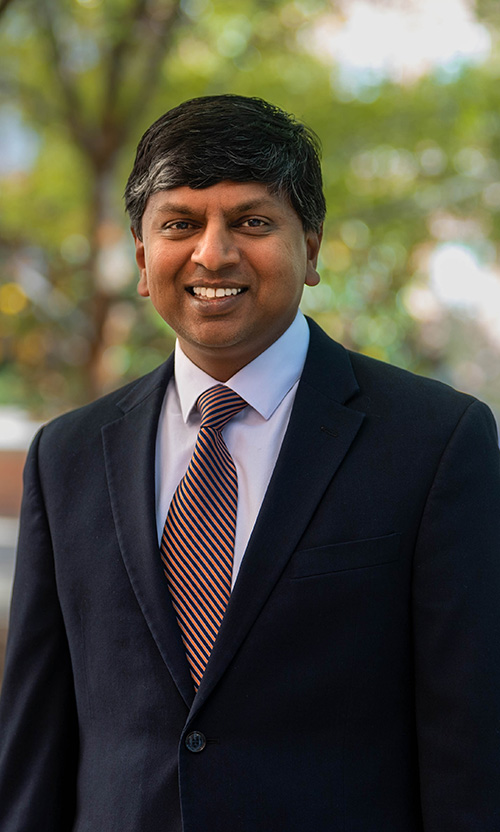
Professor Nick Paul is a marine scientist at the University of the Sunshine Coast (UniSC), leading applied research in seaweed and algae for sustainable product development. He holds a PhD and BSc (Hons) from UNSW and a Graduate Certificate in Tertiary Education Management from the University of Melbourne. His work focuses on seaweed aquaculture innovations, including waste-to-resource biotechnology, functional foods, and environmental remediation. He leads international projects funded by organizations like ACIAR, CSIRO, and Advance Queensland. Research interests include seaweed-based solutions for livestock health, wastewater treatment, and sustainable aquaculture expansion near the Great Barrier Reef. He has pioneered commercial land-based seaweed farming and developed intellectual property in this field. Awards include the 2015 UNAA World Environment Day Award for Sustainable Water Management and the 2015 Queensland Water Innovation Forum Best Paper. He serves on the Asian Fisheries Society Council and Fiji’s National Seaweed Taskforce. Key publications span seaweed cultivation methods, marine genomics, and socio-economic impacts of aquaculture in the Pacific. Grants total over A$3.7 million for projects like diversifying Pacific Island seaweed industries and improving Indonesian seaweed production.
Dr Bhishna Bajracharya is an Associate Professor of Urban Planning at Bond University's Faculty of Society & Design. He previously taught at Queensland University of Technology (QUT) for over 12 years and worked as a post-doctoral fellow at the Australian National University. His research focuses on urban sustainability, disaster resilience, and master-planned communities. Education: PhD in Urban Planning, University of Hawaii (200?) MURP in Urban Planning, University of Hawaii BArch in Architecture, Delhi University Research Interests: Smart cities and infrastructure Disaster management and community resilience Transit-oriented development Climate change adaptation Sustainable campus design Knowledge-based regional economies Recent Research Trends: His recent work emphasizes cross-border planning (e.g., Gold Coast Airport integration), megaproject governance, and innovative disaster management frameworks. He frequently collaborates with governments and NGOs to bridge research and policy gaps. Awards & Grants: Australian Research Council (ARC) Linkage Grant for community narratives in urban planning Emergency Queensland grant for disaster governance research Advising & Partnerships: Supervising PhD students in urban planning Collaborations with QUT's Creative Industries faculty Member of Bond University's Sustainability Committee Labs & Teams: Affiliated with the Centre for Comparative Construction Research at Bond University, focusing on global urban challenges.
Allan David serves as the John W. Brown Professor of Chemical Engineering and Associate Dean for Research at Auburn University's Samuel Ginn College of Engineering. His leadership extends across academic administration and cutting-edge nanomedicine research, with a focus on translating laboratory discoveries into clinical applications. His educational foundation includes: Ph.D. in Chemical Engineering, University of Maryland B.S. in Chemical Engineering, University of Maryland Dr. David's research program pioneers nanomedicine applications through the development of smart materials for cancer diagnostics and therapy. His work spans nanoparticle-based MRI contrast agents , ocular drug delivery systems , and vaccine delivery platforms , with particular emphasis on optimizing physicochemical properties for targeted biological interactions. Current projects address critical healthcare challenges including safer contrast agents for patients with kidney impairment and precision cancer targeting mechanisms. Analysis of his 15 most recent publications reveals a cohesive research trajectory centered on magnetic nanoparticles and biomimetic delivery systems . The work demonstrates increasing translational focus, evolving from fundamental nanoparticle characterization (2020-2021) to clinically relevant applications like ocular delivery and cancer theranostics (2022-2024), culminating in commercialization efforts through NanoXort, LLC. Dr. David has secured significant research funding including an $184,773 grant from the Alabama Department of Economic and Community Affairs (ADECA) for developing cardiovascular MRI agents. He leads collaborative efforts that bridge chemical engineering with biomedical innovation, notably co-founding NanoXort, LLC to commercialize safer MRI contrast agents addressing gadolinium toxicity concerns for renal-impaired patients. His laboratory operates at the intersection of chemical engineering and medicine, focusing on nanoparticle-cell interactions and targeted delivery systems. The research group maintains strong industry partnerships through the NanoXort startup, which has secured $1 million NSF funding to advance MRI contrast agent technology toward clinical implementation.
Dr. Catherine Verrier Piersol is Professor and Chair of the Department of Occupational Therapy at Thomas Jefferson University's Jefferson College of Rehabilitation Sciences, where she also directs Jefferson Elder Care. She holds a PhD from Virginia Commonwealth University, an MS from Boston University, and a BS from Tufts University. Her research focuses on neurocognitive disorders (especially dementia), caregiver support interventions, aging-in-place strategies, and translating evidence-based occupational therapy into real-world settings. Key themes include person-environment-occupation fit, functional capacity appraisal, and non-pharmacological dementia care. Recent publications emphasize practical implementations of dementia care models, technology-enabled aging solutions, and pandemic-era adaptations in long-term care. Methodologies feature randomized trials, mixed-methods designs, and economic evaluations. Awards and honors include: Fellow, National Academies of Practice (2024) Fellow, American Occupational Therapy Association (2015) Stephen Heater Award for Outstanding Achievement (2013) Jeanette Blair Writer’s Award (2013) Multiple service awards from state/national OT associations (1998–2011) She leads Jefferson Elder Care, developing programs to enhance occupational therapy for older adults. Certifications include National Board OT licensure and Pennsylvania/New Jersey practice credentials.
Daria Camilla Boffito is a Full Professor in the Department of Chemical Engineering at Polytechnique Montréal , holding the Tier-2 Canada Research Chair in Intensified Mechano-chemical Processes for Sustainable Biomass Conversion. Her research spans process intensification , catalysis , sonochemistry , photocatalysis , and metal extraction , with a focus on sustainability. Education: B.Sc. and Ph.D. in Industrial Chemistry from the University of Milan, M.Sc. in Industrial Chemistry and Management Current Research: Developing ultrasound-assisted extraction , CO2 conversion , and floating photocatalysts for wastewater treatment Collaborations: Works with Canadian and international companies on sustainable chemical processes Scientific Awards include the Canada Research Chair Tier-2 (2016-2021), NSERC Banting Postdoctoral Fellowship (2013-2016), and FRQNT PBEEE Postdoctoral Fellowship (2013-2016). Advising has seen 5 Ph.D. and 9 Master's students graduate. She leads the Engineering Process Intensification and Catalysis (EPIC) Laboratory and is a member of the Institut de génie biomédical .
Joséphine Gantois is an Assistant Professor in Human Dimensions of Biodiversity Conservation at the University of British Columbia, jointly appointed in the Institute for Resources, Environment and Sustainability (IRES) and the Food and Resource Economics Program within the Faculty of Land and Food Systems. Her work bridges economics, ecology, and data science to address ecological footprints in agricultural and natural landscapes. She holds a Ph.D. in Sustainable Development from Columbia University, an M.P.A. in International Development from the London School of Economics, and advanced degrees in economics and the sciences from École Polytechnique. Research Focus: Dr. Gantois investigates practical solutions for reconciling land use incentives with conservation goals, particularly in agricultural areas. Her research emphasizes causal inference methods, integrating remote sensing, machine learning, and qualitative tools like interviews. Key areas include biodiversity monitoring, policy impact assessment, and ecosystem function analysis. She has explored habitat restoration in Ontario grain farms during her postdoctoral work under Dr. Claire Kremen at UBC. Teaching & Engagement: She teaches in the Master of Food and Resource Economics (MFRE) program, focusing on interdisciplinary approaches to sustainability challenges. Her work highlights the intersection of human behavior, policy design, and ecological outcomes, aiming to inform actionable conservation strategies.
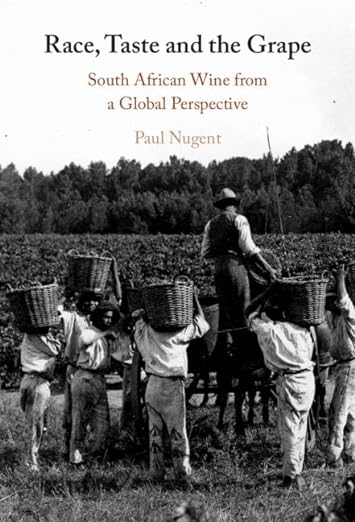
Professor Paul Nugent is a Professor of Comparative African History at the School of History, Classics and Archaeology at the University of Edinburgh, where he also serves as Research Director in History. His work bridges historical scholarship with contemporary policy concerns, particularly regarding African borderlands, wine history, and governance dynamics across the continent. Professor Nugent holds a BA Hons from the University of Cape Town, and MA and PhD from the School of Oriental and African Studies (SOAS) in London. His academic journey began with a temporary lectureship in Comparative Politics at Keele University before joining Edinburgh, where he was promoted to Reader in 2003 and Professor in 2005. Professor Nugent's research primarily focuses on the comparative history of African borderlands, with particular attention to West Africa. His work examines how border regions have shaped state formation, governance, and everyday life, challenging conventional notions of margins and centers. He has also conducted extensive research on the history of the South African wine industry, exploring connections between race, consumption, and economic development. His scholarship spans colonial and postcolonial history, with special attention to Ghana, where he has studied electoral politics and social contracts. Professor Nugent approaches these topics through interdisciplinary frameworks that connect historical analysis with contemporary policy challenges. His scholarly output demonstrates remarkable consistency in exploring the intersections between space, power, and identity in African contexts. Over the past decade, his work has increasingly focused on the governance implications of infrastructure development and border management across the continent, while maintaining his longstanding interest in Ghanaian politics and the cultural history of wine production. ERC Advanced Grant (€2.5 million over 5 years) for "African Governance and Space: Transport Corridors, Border Towns and Port Cities in Transition" (AFRIGOS) Leverhulme Research Fellowship for research on South African wine history British Academy ODA-Challenge grant (2024-2025) for "Living Heritage, Climate Change and Sustainability in South African Agriculture" Fellow of the Stellenbosch Institute of Advanced Study (STIAS) Member of the Institute for Advanced Study (IAS) in Princeton FRHistS (Fellow of the Royal Historical Society) Professor Nugent has supervised 34 successful PhD projects and currently mentors doctoral students including Francesco Longo and Kpanie Addy. His supervisory interests span wine and cultural heritage, African borderlands, regional integration, consumption studies (particularly alcohol), West African politics, and comparative imperial and colonial history. He has received significant research funding including a major ERC Advanced Grant and multiple British Academy grants, demonstrating the impact and relevance of his work to contemporary policy debates. His engagement extends beyond academia through advisory roles with the African Union Border Programme, ECOWAS, and the UNDP African Borderlands Centre. Professor Nugent founded and chairs the African Borderlands Research Network (ABORNE), which has evolved into a major international collaborative platform. He has also led significant research projects including the ERC-funded AFRIGOS project, which examined governance effects of large-scale infrastructure investments across Africa, and currently serves as PI for a British Academy project addressing climate action in the South African wine industry.
Glen Searle is an Associate Professor at the Faculty of Architecture, Design and Planning at The University of Sydney, specializing in urban planning and metropolitan governance. His academic career demonstrates a strong focus on strategic planning, infrastructure governance, and urban policy development, particularly within the Australian context. Professor Searle's research interests span urban planning, strategic planning, metropolitan governance, infrastructure governance, land use planning, urban sustainability, and city development. His work critically examines planning systems, governance structures, and policy implementation challenges in metropolitan areas, with particular attention to Sydney's urban development strategies and infrastructure projects. He has made significant contributions to understanding the complexities of metropolitan governance, the public interest in mega infrastructure planning, and the challenges of population growth management. Analysis of Professor Searle's recent publications reveals a consistent focus on governance frameworks for urban infrastructure, metropolitan strategic planning, and the intersection of planning policy with population dynamics. His work demonstrates a methodological diversity, employing systematic literature reviews, case studies, and network analysis to examine urban phenomena. A notable trend is his increasing focus on infrastructure governance, particularly how governance structures respond to crises and changing urban conditions. His research bridges theoretical planning concepts with practical policy applications, often drawing on Australian case studies while connecting to international planning discourse. Professor Searle has secured significant research funding, including the 2020 Infrastructure Governance Incubator grant from The Henry Halloran Trust and the 2019 Population Growth and Regional Connectivity research grant from the Australian Housing and Urban Research Institute. His collaborative approach is evident in his extensive co-authorship patterns across multiple institutions and disciplines. His scholarly contributions include numerous journal articles in leading planning and urban studies publications, book chapters, and edited volumes such as Global Planning Innovations for Urban Sustainability (2019). Professor Searle's work has appeared in high-impact journals including Urban Studies , Journal of Planning Literature , Urban Policy and Research , and Planning Theory and Practice .
Ankit Bhardwaj is an Adjunct Professor of Environmental Studies at New York University (NYU) and concurrently a PhD student in Sociology at NYU. His research focuses on the politics of expertise related to carbon emissions reduction, with particular attention to India's urban climate change policies and global South contexts. Previously, he worked at the Centre for Policy Research in New Delhi and contributed to the United Nations Environment Programme’s Emissions Gap Report (2019). Education: MSc in City Design and Social Science (London School of Economics, 2015); BASc in Civil Engineering (University of Toronto, 2014). Research interests include environmental politics, sociology of expertise, climate change mitigation in urban settings, energy infrastructure transitions, and social theory applied to global environmental challenges. His work emphasizes interdisciplinary approaches to understanding how bureaucratic systems, local communities, and global frameworks interact in addressing climate change. Recent publications analyze Indian city bureaucracies' climate responses, energy demand transitions in low-income households, and decarbonization strategies in 'smart cities.' He critiques policy frameworks that fail to reconcile multiple development, energy, and climate objectives. His writing extends to climate justice, racialization theory (e.g., WEB Du Bois), and urbanization dynamics in the Global South. Awards and grants not explicitly listed, but his contributions to major reports like the UNEP Emissions Gap Report highlight his impactful policy engagement. He actively tweets @ankitbhardy and collaborates on projects bridging academic research with actionable policy solutions.
Ning Ai is an Associate Professor at the University of Illinois Chicago (UIC), holding a joint appointment in the Department of Urban Planning and Policy and the Institute for Environmental Science and Policy. Her expertise lies in urban sustainability, material/waste management, and urban metabolism. She joined UIC in 2011 with a Ph.D. from Georgia Tech, an MIT Master's, and dual bachelor's degrees from Tsinghua University and Renmin University of China. Her research integrates life cycle perspectives and data-driven approaches to environmental planning, emphasizing sustainable transportation and waste management. Notable projects include studies on food recovery programs, electric vehicle battery recycling, and neighborhood-level traffic impact analysis in Chicago. She has served on the ACSP Committee on Diversity and led the Air & Waste Management Association’s Sustainability Division (2020-2022). Teaching spans courses like Environmental Planning and Policy, Urban Economics, and System Methods for Environmental Policy. Her work bridges academia and practice, collaborating with entities like the World Bank and Georgia’s Department of Natural Resources. She leads a team advancing eco-friendly product adoption through projects like PFAS-free food service initiatives. Publications focus on sustainable urban systems, waste management frameworks, and policy design. Her research addresses both broad sustainability challenges and localized solutions, emphasizing interdisciplinary collaboration and community engagement.
Jennifer Gibbs is a Professor and Graduate Director in the Department of Communication at the University of California, Santa Barbara. Her research focuses on collaboration in global teams, distributed work arrangements, and the impact of technologies like AI and digital media on organizational practices. She holds affiliated appointments in TMP and CITS. Education: Ph.D. (2002) in Organizational Communication from the University of Southern California; B.A. (1992) in Philosophy from Pomona College. Research interests include distributed work dynamics, global team management, remote work challenges, and technology's role in organizational transformation. Her work combines qualitative and quantitative methods, emphasizing real-world field studies to explore communication processes and technological impact. Recent studies address boundary management in remote work, well-being in virtual teams, and AI's role in legal and organizational contexts. Her articles highlight trends in global work dynamics, technological affordances, and equity perceptions among remote workers. Gibbs has served as Editor of Communication Research and on editorial boards of top-tier journals. She teaches Organizational Communication, Communication Technology, and Qualitative Research at both undergraduate and graduate levels. Her contributions bridge theory and practice, addressing critical issues like work-life balance in digital environments and the future of hybrid workplaces.
Professor Katy Gardner holds a position in the Department of Anthropology at the London School of Economics and Political Science (LSE). Her expertise focuses on globalisation, migration, and economic change in Bangladesh and its diasporic communities in the UK. She completed her training at Cambridge and LSE, previously working at Sussex University before joining LSE in 2013. Her research integrates anthropological methods with development studies, including long-term fieldwork in Bangladesh and UK-based transnational communities. Notable works include Global Migrants, Local Lives (1995), Age, Narrative and Migration (2002), and Discordant Development (2023), examining corporate impact on rural communities and transnational migration's gendered dimensions. Current projects explore couples’ counseling, marriage mediation, and precarity in Bangladesh. She co-edited a special journal volume on land and development in South Asia and led research on Bangladeshi children’s transnational experiences through arts-based methods. She actively supervises PhD candidates interested in anthropology, South Asia, and development studies.