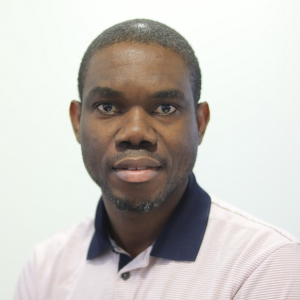
Dr. Uchenna Daniel Ani is a Lecturer in Cyber Security at the School of Computer Science and Mathematics, Keele University. He leads the MSc Cyber Security programme and chairs the School Taught Programme Ethics Committee. Previously, he was a Senior Research Fellow at the PETRAS National Centre of Excellence for IoT Systems Cybersecurity at University College London (UCL), focusing on cybersecurity in critical infrastructure systems. Dr. Ani holds a PhD in Industrial Control System Cybersecurity from Cranfield University, UK, and degrees from the University of Bedfordshire. His research emphasizes socio-technical security analysis, cybersecurity risk assessment, and the intersection of technical solutions with human and policy factors. Key projects include 'Analytical Lenses for Internet of Things Threats' and 'Modelling for Socio-Technical Security,' collaborating with transport and water infrastructure organizations. His research interests span ICS/IoT Cybersecurity, security modelling/simulations, human-factor security, and digital forensics. He actively contributes to cybersecurity policy and standards development, advising on IoT-enabled infrastructure resilience. Dr. Ani is a Fellow of the Higher Education Academy and member of IET/ACM. Teaching includes modules on Human Factors of Cyber Security, Cryptography, and Cloud Computing. He advocates STEM education through mentoring and public engagement, including roles as a STEM Ambassador and IET Young Professional Ambassador.
Aleksandra Kekkonen is a Senior Research Fellow at the Estonian Business School's Center for Management Studies, specializing in sustainable development and green transition. She holds a PhD in Economics from the Russian Academy of Sciences (2013) and has over 11 years of experience in human capital, labor market, and education system research at national/international levels. Current roles: Research Fellow (EBS), Project Lead in sustainability initiatives Prior institutions: Petrozavodsk State University (Senior Researcher, 2014–2019) Research focus: Circular economy, green economy innovation, sustainability policy, and labor market dynamics Teaching includes courses like 'Green Economy', 'Circular Economy', and 'Sustainability Crisis Management' Research Highlights: Her work bridges sustainability theory and practice, with recent studies on corporate green transition barriers, community-driven financial ecosystems, and multi-level stakeholder frameworks for regional transitions. Key publications include Social Inclusion and Community Participation in Driving Sustainable Financial Ecosystems (2025) and Operationalizing Doughnut Economics (2024). Awards: EBS Green Ambassador (2022), 'UMNIK' Youth Innovation Competition Winner (2015), and multiple research recognitions for labor market studies in Karelia. Projects: Leads initiatives such as the COST Action 'Transformations for Sustainable Futures' and an AI-driven green entrepreneurship course. Previously managed EU-funded projects like the Innovative Finance Inclusion initiative. Labs/Teams: Coordinates the Sustainable Circular Economy research group at EBS, focusing on transdisciplinary solutions for green innovation and stakeholder engagement.
Maria Roszkowska-Menkes serves as Professor at the Louvain School of Management (LSM), Université catholique de Louvain (UCLouvain), Belgium. She is actively affiliated with the Louvain Research Institute in Management and Organizations (LouRIM), conducting research at the intersection of corporate governance, sustainability reporting, and institutional theory. Her institutional base operates within the College of Deans at Place des Doyens 1, Louvain-la-Neuve, where she contributes to LSM's mission of advancing management scholarship through critical organizational analysis. Her research program centers on Corporate Social Responsibility (CSR) evolution, Environmental, Social, and Governance (ESG) disclosure mechanisms, and non-financial reporting frameworks. She investigates how cultural contexts and regulatory environments shape corporate sustainability practices, with particular expertise in German and Polish business ecosystems. Her work employs institutional theory to analyze decoupling phenomena in sustainability reporting, cross-cultural variations in ESG implementation, and the effectiveness of European non-financial reporting directives. Current projects examine institutional investor influences on disclosure quality and the translation of sustainability rhetoric into operational practices. Analysis of her recent publications reveals a methodological emphasis on comparative institutional analysis, with increasing focus on the implementation gaps between regulatory requirements and corporate practices. Her scholarship demonstrates consistent engagement with critical questions about greenwashing mechanisms, cultural contingencies in CSR adoption, and the political economy of sustainability reporting. The trajectory shows deepening exploration of how varieties of capitalism frameworks explain divergent corporate responses to global sustainability challenges. Maria Roszkowska-Menkes operates within the Louvain Research Institute in Management and Organizations (LouRIM), a multidisciplinary hub fostering research on contemporary organizational challenges. This institute provides the collaborative environment for her investigations into governance-sustainability linkages, supporting both theoretical development and policy-relevant scholarship through its network of European management scholars.
Anne Berit Emstad is a Professor of School Leadership at the Norwegian University of Science and Technology (NTNU), affiliated with the National Center for Mathematics in Education under the Faculty of Social and Educational Sciences. She is also closely connected to university schools in Trondheim. Her research focuses on school leadership, cultural schools, teacher education, and professional development, emphasizing collaboration between schools and universities. Her work spans national and international research projects, including contributions to the USPiTE project on university-school partnerships in teacher education. She has extensive experience in teacher education, principal training, and educational policy analysis. Notable publications include studies on leadership roles in school improvement, sustainable collaboration between cultural and compulsory schools, and the implementation of decentralized educational policies. Emstad’s research often involves school leaders in practical development efforts, blending theory and practice. She has authored books such as Lærende ledelse (Learning Leadership) and Samskapt kunnskap (Collaborative Knowledge), exploring professional learning communities and interdisciplinary educational strategies. Her articles frequently address themes like formative assessment, teacher agency, and the integration of entrepreneurial skills in teacher training programs. Her work highlights the importance of creating inclusive school cultures and leveraging data-driven approaches for continuous improvement. Emstad actively participates in conferences, contributes to educational policy discussions, and collaborates with international colleagues to advance leadership practices in education.
Michael E. Gertler is an Associate Professor in Sociology at the University of Saskatchewan, with affiliations as a Fellow in Community and Co-operative Development at the Canadian Centre for the Study of Co-operatives and an Associate Member in the School of Environment and Sustainability . He contributes to interdisciplinary research and teaches courses in rural sociology, environmental sociology, and the sociology of agriculture and food. Education: Bachelor of Environmental Studies (Hon. Urban and Regional Planning), University of Waterloo MSc in Renewable Resources, McGill University PhD in Development Sociology, Cornell University His research focuses on social, organizational, and institutional innovations supporting sustainable development across Canada, the USA, Costa Rica, Mongolia, and the Caribbean. Key themes include organic farming, grazing co-ops, privatization of community pastures, Crown Lands, and labor/knowledge politics in co-operatives. He collaborates with organizations like the National Farmers Union and Public Pastures–Public Interest. Recent publications emphasize comparative analyses of agrarian sustainability and co-operative dynamics, with a focus on global rural development and gendered food systems. He is actively involved in institutional committees for Regional and Urban Planning and the University of Saskatchewan's Communities and Sustainability Signature Area . Organizational Leadership: Member, Regional and Urban Planning Committee Co-founder, Public Pastures–Public Interest Board Member, National Farmers Union
Suchi Rajendran is an Assistant Professor with a joint appointment in the Department of Industrial and Systems Engineering and the Department of Marketing at the University of Missouri, Trulaske College of Business. She is also the Director of Undergraduate Studies in ISE and actively leads research in prescriptive analytics, operations research, and data-driven decision-making across healthcare, transportation, and business systems. Education: PhD in Industrial Engineering, Pennsylvania State University Her research focuses on applying advanced analytics to solve complex real-world problems. Key areas include optimizing healthcare delivery systems, supply chain and logistics (notably blood supply chains and port operations), marketing data analytics, and emerging transportation systems such as air taxis and electric vehicle infrastructure. She leverages predictive and prescriptive artificial intelligence to forecast demand and recommend optimal operational strategies. Her recent work, highlighted in university news up to 2025, demonstrates a strong trend toward interdisciplinary, AI-powered solutions in logistics, sustainability, and public service. She frequently collaborates with industry partners like Case New Holland and Schneider Electric, and has secured funding from agencies such as the Alaska Department of Transportation and the National Science Foundation. Scientific Awards and Recognitions: Richard Wallace Faculty Incentive Grant Bob Bloss Faculty Enhancement Grant Winemiller Excellence Award in Data Analytics NSF CHOT Scholar (Penn State) Service Enterprise Engineering Fellow DAAD-WISE Fellowship (Germany) Lean Six Sigma Black Belt Dr. Rajendran is actively involved in mentoring students, having advised honors-winning graduate and undergraduate researchers. She leads an NSF-funded Research Experiences for Undergraduates (REU) program that brings 10 students annually to Mizzou to work on AI-enabled operations engineering. Her grants support hands-on, interdisciplinary research that prepares the next generation of engineers and data scientists. She is affiliated with cutting-edge research initiatives involving simulation modeling, digital communication platforms, and AI integration in industrial systems. Her lab and team focus on developing practical, scalable solutions for logistics, healthcare, and sustainable transportation, often through collaborative, real-world projects with public and private stakeholders.
Shurui Zhou is an Assistant Professor at the University of Toronto , with primary appointment in the Department of Electrical & Computer Engineering and cross-appointments in the Department of Computer Science and the Department of Mechanical & Industrial Engineering . She is also affiliated with the Schwartz Reisman Institute and a member of the Data Sciences Institute . Zhou directs the FORCOLAB , focusing on enhancing collaboration in distributed software teams, especially in open-source and AI-enabled systems development. Her research integrates software engineering principles with human collaboration insights from organizational behavior, aiming to improve collaboration efficiency through tooling and interdisciplinary methods. Recent publications (2023-2025) explore LLM integration in software development , sustainability in scientific open-source communities , and collaborative challenges in computer-aided design . Education: PhD (2020) from Carnegie Mellon University's Software and Societal Systems Department , MSc from Peking University , BSc from Xi'an Jiaotong University Scientific Awards: Gordon Slemon Teaching of Design Award (2022) Grants: Collaborator on NSERC Alliance-Mitacs Accelerate Grant (2025) for LLM analysis in political data Her lab, FORCOLAB, develops tools like forks-insight.com to analyze GitHub forks and Redundant PR detection bots . Zhou organizes events like the Responsible LLM-Human Collaboration Hackathon (2024) and actively serves on conference committees including ICSE 2025 and ICSME 2024 .
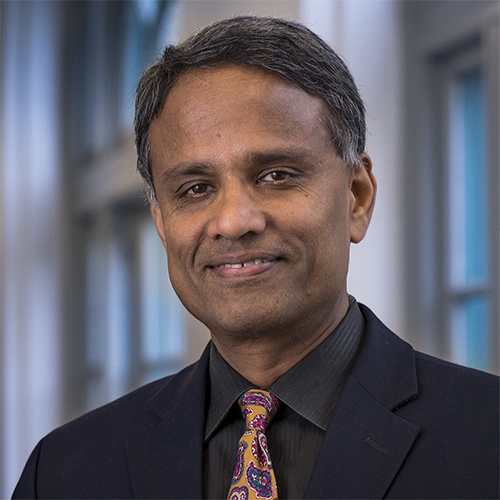
Ramayya Krishnan is the W. W. Cooper and Ruth F. Cooper Professor of Management Science and Information Systems at Carnegie Mellon University, jointly appointed in Heinz College and the Department of Engineering and Public Policy. He served as Dean of Heinz College from 2009 to 2025 and has been a faculty member since 1988. He is a leading expert in digital transformation, data analytics, and AI policy, with extensive collaborations in government and industry. His education includes: B.Tech. in Mechanical Engineering, Indian Institute of Technology Madras (1981) M.S. in Industrial Engineering and Operations Research, University of Texas at Austin (1983) Ph.D. in Management Science and Information Systems, University of Texas at Austin (1987) Krishnan's research focuses on the responsible use of AI, data-driven workforce development, risk management in information systems, and the intersection of technology and public policy. His work bridges operations research, information systems, and policy design, with a strong emphasis on real-world impact. He has pioneered academic programs and research centers that integrate analytics with societal challenges. His recent publications reflect a strong trend in AI measurement science, policy design for emerging technologies, and the ethical deployment of data analytics in public and private sectors. These works emphasize safety, fairness, transparency, and accountability in AI systems, aligning with national priorities and global challenges. His scientific awards and honors include: INFORMS Fellow AAAS Fellow Elected Member, National Academy of Public Administration Commissioner, Geotech Center of the Atlantic Council IIT Madras Distinguished Alumnus Award (2017) Y. Nayudamma Award (2015) GM Outstanding Distance Learning Faculty Award Martcia Wade Teaching Award Two-time recipient of Heinz College IT Teaching Award UPS George D. Smith Prize (awarded to Heinz College under his leadership) Appointed to the National AI Advisory Committee (NAIAC), 2022 Krishnan has been a serial academic entrepreneur, founding the Master of Information Systems and Management program and the Decision Analytics and Systems (DAS) undergraduate minor. He has founded four externally funded research centers, raising nearly $100 million, including the Block Center for Technology and Society. He advises policymakers at the highest levels, including the U.S. President, the Commonwealth of Pennsylvania, the U.S. Government Accountability Office, and international bodies like the Asian Development Bank and the World Economic Forum. His leadership in the CMU/NIST AI Measurement Science & Engineering Cooperative Research Center (AIMSEC) underscores his role in shaping national AI standards. He leads or is affiliated with several key labs and teams: Block Center for Technology and Society (Director) CMU/NIST AI Measurement Science & Engineering Cooperative Research Center (AIMSEC) (Lead Research Coordinator) NIST AI Innovation Lab (NAIIL) (Contributing Leader) Global Agenda Council on Data Driven Development, World Economic Forum (Former Member)
Elizabeth Leisy Stosich serves as Associate Professor and Associate Chair of the Division of Educational Leadership, Administration, and Policy at Fordham University's Graduate School of Education. Since joining the faculty in 2017, her research examines collaborative leadership practices that strengthen educational equity and student learning opportunities across district, school, and teacher levels, with particular focus on high-poverty urban contexts and ambitious academic standards implementation. Her educational background includes advanced degrees from Harvard University: Ed.D. in Education Policy, Leadership, and Instructional Practice Ed.M. in Education Policy and Management M.A. in Teaching and Multiple Subjects (University of San Francisco) B.A. in Spanish and Portuguese (UC Berkeley) Stosich's research centers on education policy, school/district leadership, teacher professional development, and research-practice partnerships. She investigates how leaders create coherence among complex policies like Common Core standards and accountability systems, emphasizing collaborative structures that enable educators to improve instructional practices. Her work consistently addresses equity challenges in resource-constrained urban schools through frameworks like the Internal Coherence Framework. Analysis of her 15 most recent publications reveals persistent themes: leadership practices that bridge policy expectations with classroom realities, the critical role of social networks in policy implementation, and strategies for building sustainable improvement capacity. Her scholarship demonstrates methodological diversity including social network analysis, design-based implementation research, and qualitative case studies, predominantly focused on urban educational settings where equity considerations drive leadership decisions. Her significant scholarly recognition includes: 2022 AERA Division A Emerging Scholar Award 2016 AERA Leadership for School Improvement SIG Dissertation of the Year Award Stosich teaches courses including Community of Inquiry, Implementation Research, Leading Instructional Improvement, and Urban Education. Prior to Fordham, she served as a research fellow at Stanford's Center for Opportunity Policy in Education and taught elementary school in Oakland. Her co-authored book "The Internal Coherence Framework" is widely adopted in leadership programs, reflecting her commitment to bridging research and practice through ongoing partnerships with school districts. Her current work extends through research-practice partnerships where she collaborates with districts to implement leadership frameworks that foster organizational coherence, strengthen instructional systems, and develop sustainable capacity for continuous improvement in diverse educational settings.
Hannah Riley Bowles is the Roy E. Larsen Senior Lecturer in Public Policy and Management at Harvard Kennedy School (HKS) , where she chairs the Management, Leadership, and Decision Sciences (MLD) Area and co-directs the Women and Public Policy Program (WAPPP) . She specializes in gender in negotiation, focusing on women's leadership advancement and the role of negotiation in educational and career progression. Education: DBA (Harvard Business School), MPP (HKS), BA (Smith College) Professional Engagements: Served on advisory boards (Consensus Building Institute), as expert witness (Equal Employment Opportunity Commission), and as speaker at institutions including MIT, NYU Abu Dhabi, and Bank of America. Her research explores gender dynamics in negotiation , particularly work-family conflict, leadership claiming strategies, and cross-boundary collaborations. Key themes include social penalties for female negotiators, status reinforcement mechanisms, and organizational norm redefinition. Recent publications address collaborative governance in cities, gendered leadership theories, and negotiation strategies for nontraditional career paths. Her work has been cited in Academy of Management Journal , Harvard Business Review , and Psychological Science . Scientific Awards: HKS Manuel Carballo Award for Excellence in Teaching (2003) She directs HKS executive programs Women and Power and Women Leading Change , targeting women in senior leadership across sectors. Her 25+ years of experience include early roles in governments of Argentina, Costa Rica, and Germany.
Dr. Anna Sidis is a Senior Lecturer at the University of Wollongong's School of Psychology within the Faculty of the Arts, Social Sciences and Humanities. With over 20 years of clinical experience as a Clinical Psychologist specializing in youth mental health, she holds dual appointments as both Senior Lecturer and Deputy Director of Postgraduate Psychology Programs (since January 2024). She serves as Chair of the Social Sciences Human Research Ethics Committee, demonstrating significant institutional leadership. Her educational background includes a Doctorate of Clinical Psychology (2001-2004) and Bachelor of Arts (Hons) from the University of Sydney. Her teaching portfolio spans undergraduate and postgraduate programs covering Family Therapy, Narrative Therapy, Psychosis assessment, Suicide Prevention, Grief counseling, and Critical Psychology. Dr. Sidis' research focuses on dialogical and community approaches to mental health care, with particular expertise in co-production methodologies, qualitative research, and critical psychology. Her work addresses critical areas including youth mental health, early psychosis intervention, suicide prevention, bereavement support (especially cancer-related grief), and service user involvement in care design. Analysis of her 22 publications reveals consistent emphasis on qualitative methodologies, therapist-client interaction dynamics, and innovative service delivery models like Open Dialogue. Her funded research includes projects examining barriers to mental health access for youth with co-morbid substance use, dialogical therapy implementation ('Always opening and never closing' grant), and community-based suicide prevention initiatives. She actively supervises five higher degree research students working on topics ranging from virtual reality exposure therapy to sports-based suicide prevention. Barriers to access and engagement of young people with co-morbid substance use (2022-2024) 'Always opening and never closing' dialogical therapy study (2022) Innovation and Evaluation Grant for youth mental health access (2022) Dr. Sidis maintains active clinical research networks through her role as Deputy Director of Postgraduate Programs and Ethics Committee leadership, while her 15 most recent publications demonstrate growing international impact with citations across multiple platforms including Wikipedia references and social media engagement.
Alexandre Asselineau is an Associate Professor and Head of the MSE Department at Burgundy School of Business . His work focuses on Entrepreneurship and Innovation through the lens of Strategic Management and Territorial Development . He actively explores Coopetition , Sustainable Strategic Management , and the Role of Silence in Organizations . Department: Management, Strategy and Entrepreneurship Disciplinary Team: Management / HR / Strategy Research Interests : Dr. Asselineau investigates territorial strategies for sustainable development, coopetition dynamics in rural contexts, and managerial silence as an underutilized tool. His work bridges strategic theory with field-based intervention research , particularly in SMEs and traditional industries. Recent publication trends (2022-2025) show focus on: - Territorial development through collaborative strategies - Coopetition in wine and cutlery sectors - Sustainability and social progress balance in SMEs - Managerial silence as a strategic resource Scientific Contributions : He has published extensively (104+ works) on topics including: - Responsible strategic management - Proximity-based innovation - Ecological transition strategies - Collective territorial strategies Professional Engagement : Active participant in academic conferences (AOM, EURAM, ISEOR) and contributor to The Conversation and Le Monde . Collaborates with researchers like Albert-Cromarias , Grolleau , and Ingham .
Dr. Udo Gottlieb is an Associate Professor at the Faculty of Business & Law , Queensland University of Technology (QUT). With a PhD in Management from the University of Queensland and extensive industry experience in international automotive consulting, he combines practical expertise with academic rigor in his teaching and research. Education: PhD (University of Queensland), GradCert (Academic Practice) (QUT), Dipl.Betriebswirt (Fachhochschule Rosenheim), BA(Hons)(Marketing) (University of Glamorgan) Teaching Interests: Business Development, International Marketing, Project Management, Strategic Marketing Research Interests span service delivery, innovative technologies in supplier/client interfaces, and virtual environments. Key areas include: Fraud Prevention: Examining marketing responses to third-party fraud impacts on brand reputation. Trade Show Effectiveness: Cross-cultural studies and visitor engagement strategies. Virtual Services: Digital capabilities for virtual trade shows and online communication. Virtual Courtesy: Addressing social acceptance of virtual queuing and digital etiquette. Publications include work on brand equity, chatbots, green consumption, and virtual marketing. While no specific scientific awards are listed, his research contributes to marketing theory and practice. Dr. Gottlieb actively supervises PhD Masters Honours students and collaborates across disciplines.
Colin Rhinesmith is an Associate Professor and Director of the Digital Equity Action Research (DEAR) Lab at the School of Information Sciences , University of Illinois Urbana-Champaign. He holds a PhD in Library and Information Science from the same university and uses he/they pronouns. Research Focus: Community informatics, digital equity, engaged scholarship, information policy, and infrastructure studies Key Themes: Advancing digital equity through community-government-philanthropy collaborations, participatory research, and policy innovation Awards: ASIS&T Outstanding Information Science Teacher Award (2021), Ernest A. Lynton Award Finalist (2019), Mara Dole Innovation Award (2017) Funding: U.S. Institute of Museum and Library Services, Benton Institute, Robert W. Deutsch Foundation, Comcast Corporation Professional Affiliations: Research Fellow, Quello Center (2022-Present) Senior Fellow, Benton Institute (2021-2022) Faculty Associate, Berkman Klein Center (2016-2018) Adjunct Research Fellow, New America's Open Technology Institute
David Strang is a Professor in the Department of Sociology at Cornell University's College of Arts and Sciences . His research focuses on innovation and diffusion in political, organizational, and scientific domains, with recent projects analyzing the evolution of research articles, social movements' influence on policy, and computational models of management practice adoption. Research Interests Political Sociology & Social Movements Organizations & Economic Sociology Models and Methods for Dynamic Processes Sociology of Science Email: ds20@cornell.edu His publications span sociological theory, computational modeling, and empirical studies of diffusion processes. Articles reflect trends in peer review analysis, management fashion cycles, and cross-cultural institutional adoption. Key collaborations include works with Kyle Siler and Robert J. David. David Strang's methodological expertise includes agent-based modeling and textual analysis. He has edited volumes like The Oxford Handbook of Management Ideas and authored books such as Learning by Example: Imitation and Innovation at a Global Bank . His work has appeared in Administrative Science Quarterly , American Journal of Sociology , and Sociological Theory .