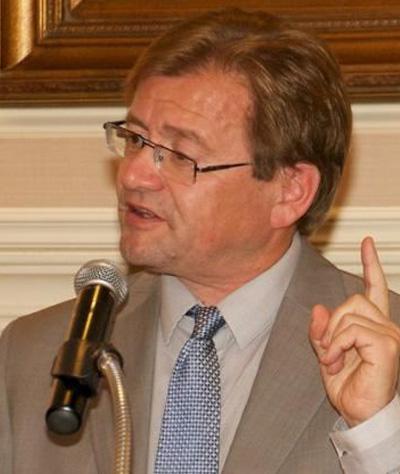
Prof. Dr. Olena Palko is a historian specializing in Eastern Europe, the Soviet Union, and Ukraine. She holds the SNSF Professorship at the University of Basel's Department of History, focusing on East European History. Her research emphasizes Soviet minority policies, cultural politics, and national identity formation in interwar Ukraine. She is a leading scholar with notable works including Making Ukraine Soviet (2021), awarded the 2023 Alexander Nove Prize. Her current SNF-funded project, Red Tower of Babel , examines Soviet minority experiments in Ukraine. Education: PhD from University of East Anglia (2017); Kandydat nauk from National Academy of Sciences of Ukraine (2013). Research Interests: Soviet nationality policy, minority history, Ukrainian twentieth-century history, transnational border dynamics. Her work bridges archival analysis with transnational perspectives, addressing contested borderlands between Poland and the USSR. Key publications include co-edited volumes like Making Ukraine (2022) and Ukraine's Many Faces (2023). She actively contributes to academic governance roles, including co-convening the BASEES Study Group for Minority History and serving on the Scientific Advisory Council of the Council of Europe's history observatory.
Anna Lukina is a Research Fellow in Law at the London School of Economics and Political Science and a PhD candidate at the University of Cambridge's Faculty of Law. Her research focuses on jurisprudence, legal history, and public law, with a specialization in Soviet legal systems, Nazi legal frameworks, and the philosophical underpinnings of 'evil law.' She holds a B.A. (Jurisprudence) and B.C.L. from the University of Oxford, and an LL.M. from Harvard Law School. Her doctoral work, Towards a Jurisprudence of Evil Law , examines the relationship between law and immorality in authoritarian regimes, funded by the Institute for Humane Studies, Modern Law Review, and Cambridge Law Journal. Key research areas include: Legal justifications for totalitarian regimes Resistance to morally corrupt legal systems Historical analysis of Soviet, Nazi, and antebellum U.S. legal structures Publications span legal-historical analyses of Soviet legal education, Schmittian dictatorship theory, and Kelsen's critiques of communist jurisprudence. She actively engages with legal theory through blogs like Legal Form and academic networks such as the Cambridge Legal Theory Discussion Group. Her work bridges theoretical jurisprudence and historical case studies, offering critical perspectives on law's role in enabling or resisting evil. Grants and fellowships support her exploration of legal systems' moral boundaries and their societal impacts.
Anupama Rao is Professor of History and MESAAS (Institute for Comparative Literature and Society) at Columbia University, with affiliations in Women's, Gender and Sexuality Studies and Human Rights. She is based at Barnard College, where she holds office hours and engages in interdisciplinary teaching and research. Her educational background includes a B.A. with honors from the University of Chicago and a Ph.D. from the Interdepartmental Program in Anthropology and History at the University of Michigan. Rao’s research spans South Asian history and anthropology , gender and sexuality studies , caste and race , social theory , comparative urbanism , and colonial genealogies of human rights . She is known for her groundbreaking work on anti-caste thought, particularly the political philosophy of B. R. Ambedkar, and for theorizing caste subalternity in modern India. Her scholarship critically examines the intersections of caste, gender, urban space, and political subjectivity. Her recent and ongoing publications reflect a deep engagement with global racisms, Cold War humanism, and justice futures. Key themes across her articles include Dalit aesthetics, subaltern urbanism, affirmative action, and the transnational dimensions of caste. Her work shows a consistent trend toward interdisciplinary, postcolonial, and decolonial frameworks that challenge Western-centric epistemologies. Fellow-in-Residence, National Humanities Center (2008–2009) Fellow, Center for Advanced Study in the Behavioral Sciences, Stanford (2010–2011) Fellow, REWORK, Humboldt University, Berlin (2014–2015) Global Humanities Institute Awardee, CHCI (2023) Rao has served as Senior Editor of Comparative Studies in South Asia, Africa, and the Middle East (2012–2021), President of the Society for the Advancement of the History of South Asia (SAHSA), and member of the South Asia Council of the Association for Asian Studies. She is Principal Investigator for the Mellon-funded Global Humanities Institute project Global Racisms, Cold War Humanism, and Just Futures (2022–2024) and co-directs Geographies of Injustice at Columbia’s Center for the Study of Social Difference. She has secured major research grants from the ACLS, NEH, SSRC, and Mellon Foundation. She advises and mentors graduate students, though specific names are not listed in the text. Rao directs the Institute for Comparative Literature and Society and convenes the Ambedkar Initiative, fostering interdisciplinary research and public engagement on caste, race, and justice. She leads and participates in multiple research collectives, including the Geographies of Injustice project and the Asian Spatialities initiative. She is deeply involved in institutional leadership through her roles at the Institute for Comparative Literature and Society and the Ambedkar Initiative, both of which serve as hubs for critical humanities research.
Yuhua Wang serves as the Ford Foundation Professor of Modern China Studies within Harvard University's Faculty of Arts and Sciences, Department of Government. His scholarly work establishes him as a leading authority on Chinese political development, state capacity, and historical institutional analysis across imperial and contemporary contexts. His academic foundation includes: B.A. from Peking University Ph.D. from the University of Michigan Professor Wang's research program integrates comparative politics with Chinese studies through core interests in bureaucracy , institutions , judiciary and public law , political economy & development , political geography , and state-society relations . He employs a methodological triad of historical , qualitative , and quantitative approaches to analyze China's political evolution. His work uniquely bridges macro-historical patterns with contemporary governance challenges, particularly examining how historical legacies shape modern state capacity and institutional resilience in authoritarian contexts. Analysis of his publication trajectory reveals consistent focus on state development mechanisms, with increasing sophistication in comparative historical methodology. Recent work demonstrates expanded geographic scope beyond China while maintaining analytical depth in imperial political economy. His research shows growing integration of cross-national datasets with deep historical case studies, reflecting broader trends in political science toward mixed-method designs for complex institutional analysis. His distinguished recognition includes: 2023 Lubbert Best Book Award in Comparative Politics from the American Political Science Association for The Rise and Fall of Imperial China Harvard College Professor appointment (2025) Professor Wang maintains active research leadership through extensive publication in premier journals including American Political Science Review and Comparative Political Studies , with significant contributions to theoretical frameworks like State-in-Society 2.0. His work generates substantial policy-relevant insights on corruption, judicial review, and urban governance in China. As a core faculty member in Harvard's Government Department, he contributes to the university's intellectual ecosystem through cross-disciplinary collaboration and participation in research initiatives focused on Asian political development, though specific lab affiliations are not documented in available sources.
London School of Economics and Political Science (LSE)United Kingdom
Tomila Lankina is a Professor of Politics and International Relations at the London School of Economics (LSE), specializing in democratization, popular protest, and Russian and Eastern European politics. She holds a DPhil from the University of Oxford and has held research appointments at institutions such as Stanford University and Humboldt University in Berlin. Her work examines historical legacies of social structure and their implications for democracy, inequality, and political regimes. Her groundbreaking book The Estate Origins of Democracy in Russia (Cambridge University Press, 2022) explores how pre-communist social stratification in Russia shapes contemporary political outcomes. The book has received major accolades, including the 2023 J. David Greenstone Prize and Davis Center Book Prize. Lankina’s research also addresses modern issues like Russian media manipulation, post-communist social resilience, and the impact of historical institutions on modern governance. Active in supporting Ukrainian scholars during Russia’s invasion of Ukraine, Lankina co-founded an LSE Taskforce to assist displaced students and researchers. She has been recognized for her excellence in PhD supervision by LSE and has published widely in top journals like the American Political Science Review and World Politics . Her interdisciplinary approach combines historical analysis with contemporary political dynamics, emphasizing the persistence of social hierarchies and their role in shaping autocracy and democracy. Current projects include a book on Russian dissent history and comparative studies of post-colonial and post-communist societies.
Dr. Galina Miazhevich is a Senior Lecturer at the School of Journalism, Media and Culture (JOMEC) at Cardiff University, UK. Previously, she served as a lecturer at the University of Leicester's School of Media, Communication and Sociology (2013-2017) and as the Gorbachev Media Research Fellow at the University of Oxford (2008-2012). Her academic career focuses on media representations in post-communist contexts, with particular expertise in Russian and Eastern European media landscapes. Dr. Miazhevich earned her PhD from the University of Manchester, where she subsequently worked for two years as a Research Associate on an AHRC-funded project examining representations of Islam as a security threat. Her educational background has informed her research trajectory, which bridges media studies, political communication, and cultural analysis of post-Soviet societies. Dr. Miazhevich's research spans several interconnected domains: media representations of Islam and multiculturalism in Europe; media and democracy in post-communist Europe; gender, media, and emergent forms of post-Soviet identity; feminism; Eurovision and popular culture; and diaspora, transnationalism, and media. Her work consistently examines how media shapes and is shaped by political transitions, identity formation, and social movements in post-Soviet contexts, with particular attention to marginalized voices and resistance practices. Analysis of Dr. Miazhevich's recent publications reveals a consistent focus on resistance, identity, and power dynamics in post-Soviet media environments. Her work increasingly examines gender and sexuality as political categories, particularly through the lens of feminist and LGBTQ+ resistance to authoritarian regimes. The Eurovision Song Contest serves as a recurring analytical framework for understanding cultural diplomacy and nation-branding strategies. More recently, her research has pivoted toward documenting anti-war resistance following Russia's invasion of Ukraine, examining how celebrities and media figures navigate political dissent under authoritarian conditions. Dr. Miazhevich has received several notable recognitions for her scholarly contributions: AHRC Leadership grant 'A Quiet Revolution: Discursive Representations of Non-heteronormative Sexuality in Russia' (2018-2020, £250,960) Visiting Fellowship at the Davis Centre for Russian and Eurasian Studies, Harvard University (Fall 2023) Fellow of the Higher Education Academy (FHEA) Associate Editor for the Oxford Encyclopedia of Race, Ethnicity, and Communication (2024) Dr. Miazhevich actively mentors the next generation of scholars, currently co-supervising PhD students Diyana Dobreva (with Professor Martin Innes) and John Tasker (with Professor Paul Bowman). She welcomes PhD proposals in areas including digital culture and resistance, media management and misinformation, media and democracy, representation of minority groups, post-communist identity politics, gender and feminism, Eurovision and popular culture, and geopolitics and nation-branding. Her grant portfolio demonstrates sustained success in securing competitive research funding, including leadership of an AHRC grant and participation in the Academy of Finland project FEMCORUS (2021-2025). Dr. Miazhevich is deeply engaged with academic communities, serving as co-convenor of the (Digital) Media and Culture group at the British Association for Slavic and East European Studies (BASEES) since 2016 and as a member of the Advisory Board of the European Communication Research and Education Association (ECREA) since 2021. Her work extends beyond academia through public engagement, including invited talks at prestigious institutions like Harvard University and participation in policy-relevant events at Chatham House addressing LGBTQ+ politics in Russia.
Dr. Olivia Cheung is a Lecturer in Politics at the Department of European & International Studies, King’s College London. She holds multiple affiliations including China Fellow at the Centre for Security, Diplomacy and Strategy (CSDS) at Vrije Universiteit Brussel, Affiliate of the Lau China Institute, and Michael Moran Associate Editor for Government and Opposition . Her academic background includes an MPhil and DPhil (PhD) in Politics from the University of Oxford, where she was a Swire Scholar and Rhodes Scholar. Prior to her current position, she served as a Research Fellow at SOAS China Institute and Teaching Fellow at the University of Warwick, directing the MA in International Politics and East Asia. Her research focuses on Chinese politics and foreign policy, Xi Jinping Thought, comparative political leadership, international orders, and authoritarianism. Key projects explore domestic-political intersections in China’s foreign strategy and its global rise. She has contributed to prominent journals like China Quarterly , Third World Quarterly , and Pacific Affairs , with her work featured in The Economist , New York Times , and BBC documentaries. Dr. Cheung co-authored The Political Thought of Xi Jinping (Oxford UP, 2024), a Financial Times-recognized title, and Factional-Ideological Conflicts in Chinese Politics (Amsterdam UP, 2023). She is also working on a forthcoming book on China’s global strategy. Her awards include the Swire and Rhodes scholarships, reflecting her academic excellence. She actively advises media and participates in strategic dialogues (Tracks 1.5/2), and her research on China’s international strategy is part of the Geoeconomics and Technology Initiative at King’s College London.
Balázs Trencsenyi is Professor in the Department of Historical Studies at Central European University (CEU) and serves as Director of the CEU Institute for Advanced Study in Budapest. He is also Co-Director of Pasts Inc., Center for Historical Studies, and a Member of the 'Democracy in History' Working Group at the CEU Democracy Institute. His academic leadership includes directing the Erasmus Mundus+ Program 'History in the Public Sphere' (2019–2023) and heading the History Department (2017–2020). His educational background includes a PhD in Comparative History from CEU (2004), an MA in Nationalism Studies from CEU (1998), and an MA in Philosophy from Eötvös Loránd University (1997). Trencsenyi is a leading scholar in the intellectual and political history of East Central Europe, with a focus on transnational and comparative approaches. His research examines political modernity, crisis discourses, nationalism, national characterology, anti-modernism, and the conceptual history of identity and temporality. He has directed major collaborative projects such as the ERC-funded 'Negotiating Modernity' and 'European Regions and Boundaries: A Conceptual History.' His influential publications include the multi-volume A History of Modern Political Thought in East Central Europe (Oxford University Press) and Intellectuals and the Crisis of Politics in the Interwar Period and Beyond (2025). His recent articles reflect sustained engagement with crisis discourses, authoritarian regime-building, transnational intellectual history, and the politics of memory in East Central Europe. Themes across his work include the fragility of democracy, the legacy of state socialism, and the interplay between nationalism and modernity. CEU Community Service Excellence Award (2023) Fellow of Wissenschaftskolleg zu Berlin (2020) Member of Academia Europaea (2011) ERC Starting Grant (2008–2013) Trencsenyi has supervised numerous doctoral students in political thought, nationalism, and intellectual history. He has led research clusters such as 'Crises of Democratization' under the CIVICA project and co-organizes the 'Invisible University for Ukraine' initiative. He is Editor of East Central Europe (Brill) and has served on editorial boards and peer-review panels for major academic institutions and journals. His teaching covers comparative history, political modernity, crisis discourses, and counter-cultural movements under socialism.
Lusophone University of Humanities and TechnologiesPortugal
Henrique Varajidás is a lecturer at Universidade Lusófona (Lusophone University), with a focus on political science and historical analysis of totalitarianism. He holds a Licenciatura in Political Science and International Relations, a PhD in the same field with specialization in security and defense, and a Master’s in Law focused on cross-cultural business practice. Licenciatura: Political Science and International Relations PhD: Political Science and International Relations (Security and Defense) Master: Law (Cross-Cultural Business Practice) His research primarily examines totalitarianism through comparative frameworks, analyzing regimes like Nazi Germany, Stalinist USSR, and Khmer Rouge Cambodia. Key themes include: Historiographical methodology in totalitarian studies Counterfactual analysis of political violence Racial sciences in early Nazi ideology Philosophical foundations of authoritarian power Foreign policy villainization techniques Ends vs means in totalitarian governance His publications reveal a strong focus on circular causality in regime analysis, Kantian moral philosophy, and technological implications in authoritarian systems. Awards and recognition are not explicitly mentioned in available sources. Varajidás has advised students on topics related to totalitarianism and regime analysis. His work appears in journals like Frontiers in Political Science and Práticas da História . He maintains contact via email at hen***@ulusofona.pt .
Katarzyna Wrońska is a Professor at the Institute of Pedagogy, Jagiellonian University in Kraków , where she also serves as an Erasmus+ Programme Coordinator . Her academic work spans pedagogical theory, educational philosophy, and historical analyses of learning systems. She teaches courses including History of Pedagogical Thought and Practice , Philosophy of Education , and Contemporary Pedagogical Trends , primarily for graduate students. Her research focuses on intersections between liberalism and education, historical pedagogical models (notably John Locke's theories), Christian humanism in curriculum development, and ethical dimensions of self-instruction. She examines autonomy in universities, competition dynamics in learning environments, and civility as an absent pedagogical discourse. The 15 most recent publications reveal trends in three domains: (1) Liberal Educational Philosophy (2012-2024), analyzing autonomy, competition, and state roles; (2) Historical Pedagogy (2011-2021), particularly Polish Enlightenment-era reforms; and (3) Educational Ethics (2005-2023), covering Christian values, civil society, and moral instruction during authoritarian regimes. She supervises doctoral and master's students in pedagogy, though specific advisees aren't named. Consultations for students occur weekly at Batorego Street 12, room 15, during academic year 2024/25, with appointments required via email.
J. Paul Goode is an Associate Professor and McMillan Chair in Russian Studies at the Institute of European, Russian and Eurasian Studies (EURUS) within Carleton University’s Faculty of Public and Global Affairs. His research focuses on nationalism, authoritarianism, and political identity in Russia and post-Soviet states. He holds degrees from the University of Oxford (PhD, MPhil), University of Wisconsin-Madison (MA), and University of Texas-Austin (BA). Professor Goode serves as Editor-in-Chief of Communist and Post-Communist Studies and Associate Editor of Nationalities Papers . He contributes to editorial roles at Russian Politics and Social Science Quarterly , and advises Nations and Nationalism . His professional memberships include the Program Committee and advisory board of the Association for the Study of Nationalities, and the Department Development Partnership Program of European University at St. Petersburg. Previous roles include founding Director of the Center for the Study of Nationalism and Coordinator for Russian and East European Studies at the University of Oklahoma, and Convenor of the Research Group on Nationalism, Populism, and Radicalism at the University of Bath. His research explores nationalism in authoritarian contexts, the interplay between state strategies and everyday patriotic practices, and political legitimation mechanisms. Recent projects investigate pandemic politics, AI’s impact on identity, and the evolution of Putin’s governance. He consistently analyses how regimes engineer nationalist narratives to sustain power, with a focus on Russia’s territorial and ideological boundaries. Goode’s work bridges theory and practice through interdisciplinary frameworks, emphasizing constructivist approaches to mass-level nationalism. His editorial leadership aims to democratize scholarly discourse on post-communist and authoritarian systems. He has pioneered studies on hybrid regimes and the challenges of conducting fieldwork in restricted environments. His contributions highlight the need for adaptive research strategies in politically volatile regions.
Vladislav Zubok is a Professor of International History at the London School of Economics (LSE), where he also leads the Russia International Affairs Programme at LSE IDEAS. His career spans teaching roles at institutions like Amherst College, Ohio University, Stanford University, University of Michigan, and Temple University (tenured in 2004). Born and educated in Moscow (Moscow State University BA, PhD from the Institute for the USA and Canada), his work focuses on Cold War history , Soviet Union , Stalinism , and Russian intellectual history in the 20th century. Research Interests : Zubok’s scholarship bridges political history and cultural analysis , particularly examining the USSR’s Cold War dynamics, the collapse of authoritarian regimes, and the role of intellectuals in post-Stalinist Russia. His publications reveal trends in ideological evolution , geopolitical miscalculations , and economic fragility of superpowers. Recent works like Collapse (2021) emphasize authoritarian state failure and democratic populism in the USSR’s final decade. Awards & Grants : Lionel Gelber Prize (for A Failed Empire ) Marshall Shulman Prize (for A Failed Empire ) Grants from MacArthur Foundation, Carnegie Corporation of New York, Yeltsin Foundation, and Russkii Mir Foundation Fellowships at Norwegian Nobel Institute, Woodrow Wilson Center, Collegium Budapest, Rockefeller Center (Bellagio), Hoover Institute
Glenn Tiffert is a Distinguished Research Fellow at Stanford University's Hoover Institution, specializing in modern Chinese history and contemporary US-China relations. He co-chairs Hoover's program on the US, China, and the World and leads Stanford's participation in the NSF SECURE program, a $67 million initiative authorized by the CHIPS and Science Act of 2022. Tiffert is a historian of modern China with expertise in the political and legal history of the People's Republic of China. His research focuses on the construction of China's court system and judiciary, the drafting of the 1954 PRC Constitution, and the suppressed genealogy of the rule of law in China. He has pioneered the integration of computational methods into Chinese historical studies and is currently completing the first archival study in any language of the takeover and reconstitution of a Chinese state organ (the courts) by the Chinese Communist Party. His recent publications reveal a strong trend toward analyzing China's global influence operations, research security challenges, and technological competition between the US and China. Tiffert's work increasingly addresses how authoritarian regimes exploit vulnerabilities in open knowledge ecosystems, particularly examining China's 'sharp power' projection and efforts to reshape global narratives. Co-chairs the Hoover project on China's Global Sharp Power Executive committee member of the Academic Security and Counter-Exploitation Program Participant in multiple Hoover research teams including Taiwan in the Indo-Pacific Region and Semiconductors security working group Testified before the U.S. Senate Select Committee on Intelligence on Chinese malign influence operations Tiffert collaborates extensively with government and civil society partners worldwide to document and build resilience against authoritarian interference with democratic institutions. His work spans academic research, policy development, and public education on the security and integrity of knowledge ecosystems, particularly academic, corporate, and government research.
Rev. Dr. hab. Waldemar Żurek, Professor at the John Paul II Catholic University of Lublin, serves at the Center of Ecclesiastical Archives, Libraries and Museums (ABMK) within the Faculty of Theology. His academic career spans decades of dedicated research and publication in church history, particularly focusing on Eastern European Catholicism and the Salesian Order. As an active scholar, he continues to contribute significantly to ecclesiastical documentation and historical research. Professor Żurek's research interests center on ecclesiastical archives, parish documentation, and the history of religious orders, with particular emphasis on the Salesian Order's activities in Poland and Eastern Europe. His work explores the intersection of religious life with historical events, particularly during challenging periods like the communist era in Poland. He has developed expertise in analyzing parish inventories, visitation records, and chronicles to reconstruct religious life and administration across different historical periods. His extensive publication record demonstrates a consistent focus on documenting church history through meticulous examination of primary sources. The most recent works reveal trends toward comprehensive chronicles of religious institutions, detailed parish records analysis, and biographical studies of clergy members. His research spans multiple disciplines including religious studies, historical documentation, and Eastern European studies, with particular attention to regions like Pinsk, Lutsk, and Volhynia that have complex religious histories across changing political borders. Scientific Awards: Gold Medal for Long Service Professor Żurek has supervised numerous diploma theses including master's work on topics such as 'Social activities of Bishop Adolf Piotr Szelążek.' His editorial work includes significant publications like 'Kult Matki Bożej Ostrobramskiej w historii narodu polskiego' (The Cult of Our Lady of the Gate of Dawn in the History of the Polish Nation) and 'Ojciec Profesor Henryk Damian Wojtyska 1933-2009. Pasjonista, historyk Kościoła i dydaktyk' (Father Professor Henryk Damian Wojtyska 1933-2009. Passionist, Church Historian and Educator). He serves on the Scientific Council of the biannual journal 'Archives, Libraries and Church Museums' and is a member of the Theological Society of Józef Bilczewski in Ukraine. His work with the Center of Ecclesiastical Archives, Libraries and Museums represents a significant contribution to preserving and analyzing religious heritage. Through his leadership and scholarship, Professor Żurek has helped establish important methodologies for working with ecclesiastical documentation and has fostered international collaboration in church historical studies, particularly between Polish and Ukrainian scholars.
Jacques deLisle is the Stephen A. Cozen Professor of Law and Professor of Political Science at the University of Pennsylvania. He serves as Director of the Center for the Study of Contemporary China, co-director of the Center for Asian Law, and director of the Asia Program at the Foreign Policy Research Institute. His expertise centers on contemporary Chinese law, politics, and U.S.-China relations, with a focus on legal reform, cross-strait relations, and Taiwan's international status. DeLisle’s research explores the interplay between law, governance, and international dynamics in China. His notable works analyze China’s engagement with international law, Taiwan’s diplomatic strategies, and the implications of U.S. policy toward the region. Recent publications include studies on China-India territorial disputes, political warfare tactics by authoritarian regimes, and the evolving role of the Chinese Communist Party. His work frequently addresses geopolitical issues such as the South China Sea disputes, the impact of the pandemic on U.S.-China relations, and the legal frameworks governing cross-strait interactions. DeLisle has advised on legal reform initiatives in China and frequently engages in policy discussions, including as an expert witness on Chinese law and a consultant for development programs.