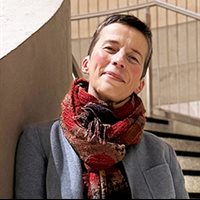
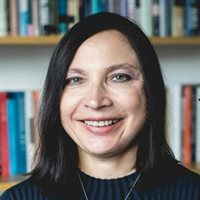
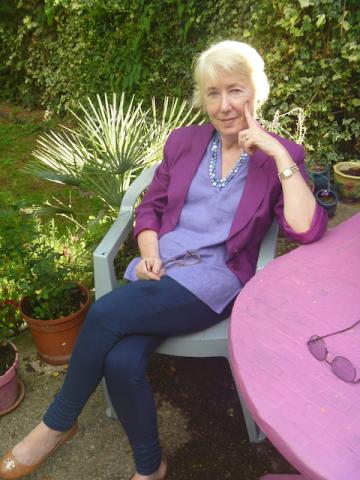
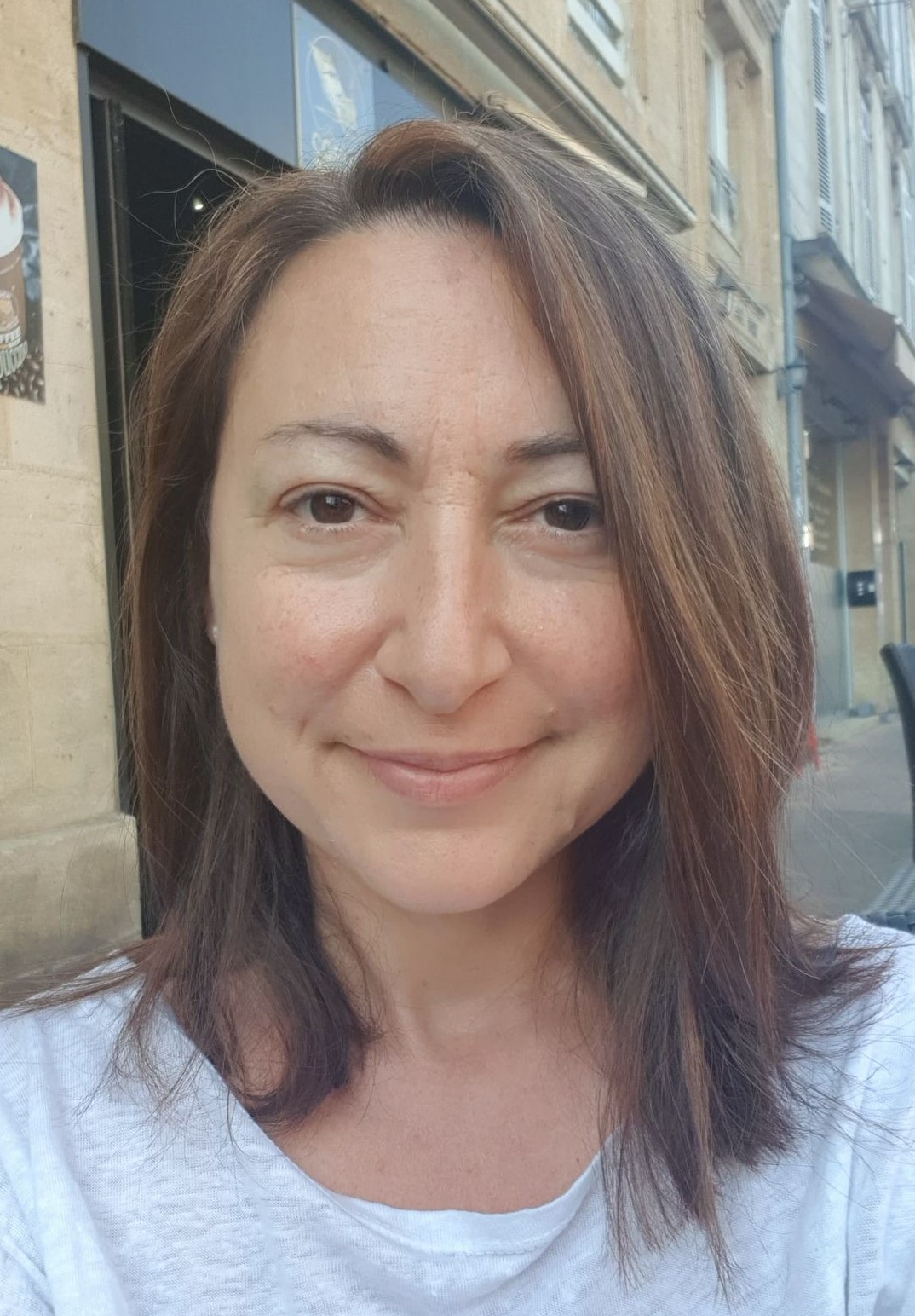
Abby Innes is an Associate Professor of Political Economy at the European Institute, London School of Economics , where she has been a faculty member since 1997. Her academic career includes a Visiting Fellowship at MIT (1995–1997) and a Jean Monet Fellowship at the European University Institute (2001–2002) . She has received multiple teaching awards , including the LSE Teaching Prize and European Institute Departmental Teaching Prize, and currently serves as the Teaching Chair of her institute. Research Interests : Dr. Innes specializes in the political economy of Central Europe , neoliberalism , and materialist utopias . Her work explores state capture , systemic transitions , and comparative capitalism , with a focus on the UK’s neoliberal transformation. Recent research addresses the political economy of the green transition and neoliberal institutional failures . British Academy Mid-Career Fellowship (2017-2018) LSE Teaching Prize (2002) LSE/ASRC Excellence in Education Award (2020) European Institute Departmental Teaching Prize (2011, 2013, 2015) Nominee for LSE Student-Led Teaching Excellence Awards (2014, 2020) Publications : Her 2023 book Late Soviet Britain: Why Materialist Utopias Fail argues that UK neoliberalism parallels Soviet economic dogma, leading to institutional rigidity , democratic erosion , and governance crises . She has published in journals such as The Review of International Political Economy and Comparative Politics , alongside frequent contributions to LSE Blogs and The London Review of Books .
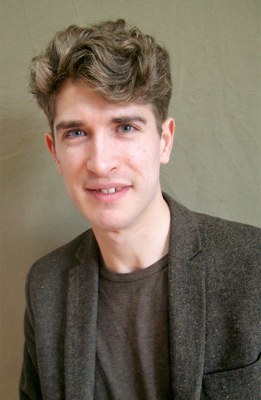
Dr. Victor Kempf is a postdoctoral researcher at the Institut für Philosophie , Humboldt-Universität zu Berlin, since March 2025. He completed his PhD at Goethe-Universität Frankfurt in 2017 and focuses on social and political philosophy from a critical theory perspective.
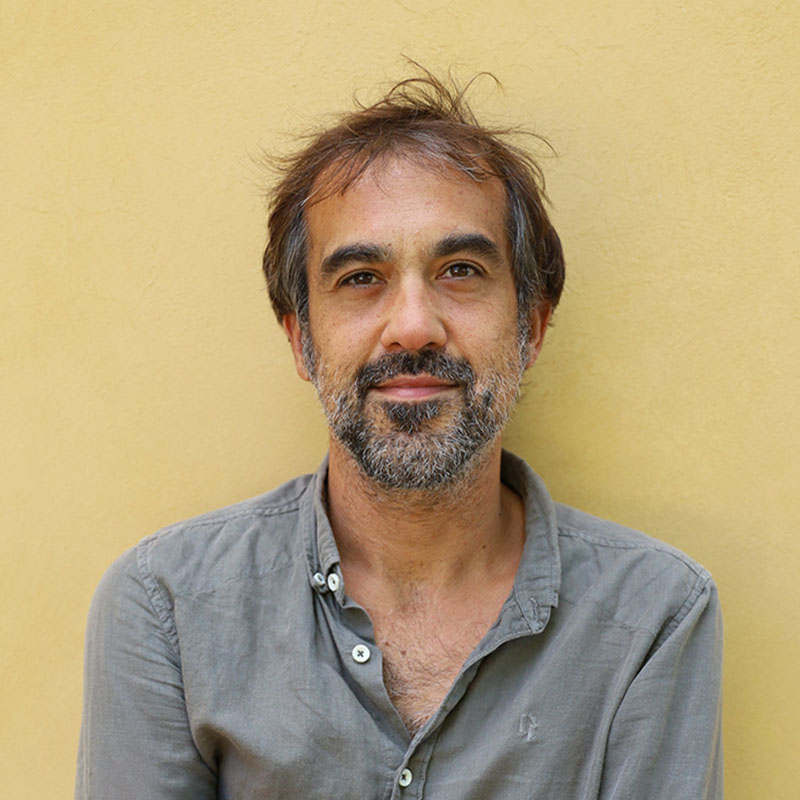
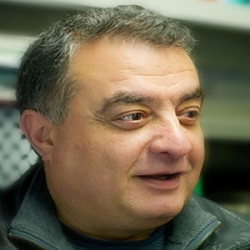
Elias Dinas is a Full-time Professor in the Department of Political and Social Sciences at the European University Institute (EUI). He holds the Swiss Chair in Federalism, Democracy, and International Governance. His research focuses on political socialization, authoritarian legacies, and research methodology. Dinas earned his PhD in Political Science from the EUI in 2010. His research interests include the impact of historical traumas on political attitudes, experimental methods, and the dynamics of norm change. He collaborates with institutions like the Graduate Institute in Geneva through seminars, conferences, and methodological workshops. Recent work explores topics such as ideology mapping via AI, the electoral effects of early voting experiences, and the interplay between migration crises and public policy. His research has been published in top journals like the American Political Science Review and highlighted in outlets like The New York Times. Received the Michael Wallerstein Award (2019) for his work on migration and hostility. Supervises 14 students researching memory politics, norm change, and intergroup relations. Leads projects on post-authoritarian ideologies, German political identity, and elite-driven norm erosion. His teaching and supervision emphasize causal inference, experimental design, and quantitative methods, reflecting his commitment to rigorous political analysis.
Dr. Mark B. Smith is an Associate Professor in Modern European History at the University of Cambridge’s Department of History. His research focuses on Soviet and European history, particularly the Soviet Union’s social structures, welfare policies, urban development, and cultural dynamics from Stalinism through late socialism. He teaches courses on welfare states, Soviet life, and 20th-century European violence. Key research areas include Soviet urban housing programs, welfare state evolution, and Cold War-era cultural exchanges. His publications analyze topics like Khrushchev’s housing reforms, post-Stalin urban welfare systems, and Soviet pension policies. Smith has co-edited special issues on European urban societies and authored books such as *The Russia Anxiety* (2019) and the forthcoming *Exit Stalin* (2026). He advises doctoral students on Soviet history, welfare states, and Cold War topics. His work bridges legal history, social policy analysis, and cultural studies, emphasizing how everyday life reflected broader ideological and structural changes in Soviet society.
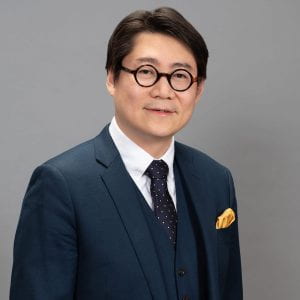
Yuhua Wang serves as the Ford Foundation Professor of Modern China Studies within Harvard University's Faculty of Arts and Sciences, Department of Government. His scholarly work establishes him as a leading authority on Chinese political development, state capacity, and historical institutional analysis across imperial and contemporary contexts. His academic foundation includes: B.A. from Peking University Ph.D. from the University of Michigan Professor Wang's research program integrates comparative politics with Chinese studies through core interests in bureaucracy , institutions , judiciary and public law , political economy & development , political geography , and state-society relations . He employs a methodological triad of historical , qualitative , and quantitative approaches to analyze China's political evolution. His work uniquely bridges macro-historical patterns with contemporary governance challenges, particularly examining how historical legacies shape modern state capacity and institutional resilience in authoritarian contexts. Analysis of his publication trajectory reveals consistent focus on state development mechanisms, with increasing sophistication in comparative historical methodology. Recent work demonstrates expanded geographic scope beyond China while maintaining analytical depth in imperial political economy. His research shows growing integration of cross-national datasets with deep historical case studies, reflecting broader trends in political science toward mixed-method designs for complex institutional analysis. His distinguished recognition includes: 2023 Lubbert Best Book Award in Comparative Politics from the American Political Science Association for The Rise and Fall of Imperial China Harvard College Professor appointment (2025) Professor Wang maintains active research leadership through extensive publication in premier journals including American Political Science Review and Comparative Political Studies , with significant contributions to theoretical frameworks like State-in-Society 2.0. His work generates substantial policy-relevant insights on corruption, judicial review, and urban governance in China. As a core faculty member in Harvard's Government Department, he contributes to the university's intellectual ecosystem through cross-disciplinary collaboration and participation in research initiatives focused on Asian political development, though specific lab affiliations are not documented in available sources.
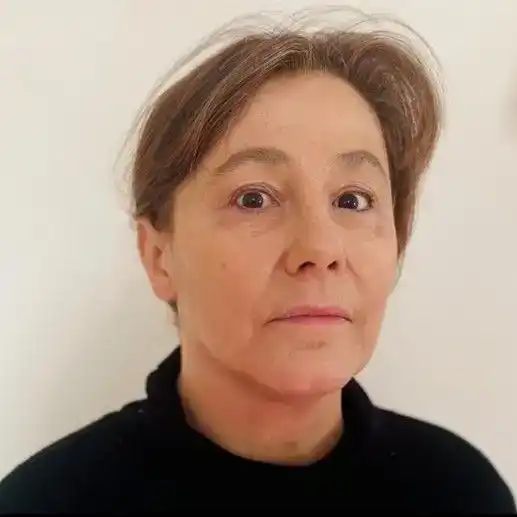
Tomila Lankina is a Professor of Politics and International Relations at the London School of Economics (LSE), specializing in democratization, popular protest, and Russian and Eastern European politics. She holds a DPhil from the University of Oxford and has held research appointments at institutions such as Stanford University and Humboldt University in Berlin. Her work examines historical legacies of social structure and their implications for democracy, inequality, and political regimes. Her groundbreaking book The Estate Origins of Democracy in Russia (Cambridge University Press, 2022) explores how pre-communist social stratification in Russia shapes contemporary political outcomes. The book has received major accolades, including the 2023 J. David Greenstone Prize and Davis Center Book Prize. Lankina’s research also addresses modern issues like Russian media manipulation, post-communist social resilience, and the impact of historical institutions on modern governance. Active in supporting Ukrainian scholars during Russia’s invasion of Ukraine, Lankina co-founded an LSE Taskforce to assist displaced students and researchers. She has been recognized for her excellence in PhD supervision by LSE and has published widely in top journals like the American Political Science Review and World Politics . Her interdisciplinary approach combines historical analysis with contemporary political dynamics, emphasizing the persistence of social hierarchies and their role in shaping autocracy and democracy. Current projects include a book on Russian dissent history and comparative studies of post-colonial and post-communist societies.
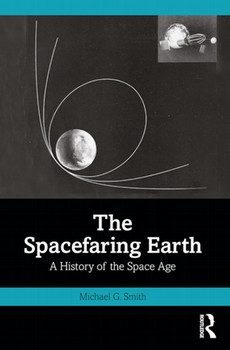
Michael G. Smith is a Professor of History at Purdue University's College of Liberal Arts, specializing in Russian History and Aerospace History. His office is located in BRNG 6170, where he holds office hours by appointment and before or after class. Dr. Smith teaches a diverse range of courses including History of Russia to 1861 (HIST 238), History of Russia from 1861 (HIST 239), History of Aviation (HIST 384), and History of the Space Age (HIST 387), along with numerous advanced seminars on Russian history, aerospace history, and global historical topics. Dr. Smith earned his Ph.D. from Georgetown University in 1991 and has established himself as a leading scholar in both Russian revolutionary history and aerospace history. His research demonstrates remarkable interdisciplinary breadth, connecting linguistic studies with political history in the Soviet context while simultaneously exploring the cultural dimensions of space exploration and aviation history. His scholarly output reveals two major research trajectories: deep investigations into the Russian Revolution with particular focus on language policy, nationalities issues, and revolutionary violence in Azerbaijan and the Caucasus region; and pioneering work on the history of aerospace, space exploration, and the cultural dimensions of the Space Age. These dual interests converge in his examination of how technological innovation intersects with political ideology and national identity formation. Dr. Smith has successfully mentored numerous undergraduate and graduate students whose research has resulted in publications in respected journals such as the Journal of Purdue Undergraduate Research, Quest: The History of Spaceflight Quarterly, and Astropolitics. His students have explored diverse topics including Purdue's aviation pioneers, NASA mission insignia, Shuttle-Mir program, and regional impacts of space programs. Working closely with the Purdue Archives, Dr. Smith has developed innovative archival-research seminars that have produced multiple student publications and special projects including Flight Paths: Purdue University's Aerospace Pioneers and Purdue Students Study Boilermaker Eugene Cernan's Remarkable Career. His commitment to connecting historical research with contemporary technological heritage has created unique opportunities for students to engage with primary sources related to aerospace history.
Emmanuelle Tourme-Jouannet is a Professor at Sciences Po Law School, where she leads research in critical international law theory and ecological justice. Affiliated with the Law School's Research Center, she directs the international research program "Justice and International law in a global world" and serves as co-editor-in-chief of the Journal of History of International Law. Her academic foundation includes: Master in International Law, Université Paris II (Panthéon-Assas) Master in Philosophy of Law, Université Paris II (Panthéon-Assas) Master in Political Philosophy, Université Paris IV (Sorbonne) PhD in Law, Université Paris II (1993) Professor Tourme-Jouannet's work fundamentally interrogates international law through decolonial lenses , examining colonial legacies, recognition theory, and ecological transformation. Her scholarship bridges legal history , philosophy , and human rights , with increasing focus on environmental justice since 2021. She pioneers frameworks for ecological international law while maintaining critical analysis of capitalism's relationship with global legal structures. Analysis of her 15 most recent publications reveals three dominant trajectories: (1) Decolonization through recognition theory (2019-2023), (2) Ecological reimagining of international law (2021-2024), and (3) Historical critiques of colonial international law (2011-2021). These strands converge in her argument for a reconstructed international society based on justice rather than power. Her scientific recognition includes: Université Paris II’s doctoral award Chancellerie des Universités de Paris’ Maurice Picard Prize Académie des sciences morales et politiques’ Dupin-Ainé Prize Professor Tourme-Jouannet has directed major academic programs including the Master in International Law at Paris I and the French-American double degree with Columbia/Cornell. She supervises doctoral candidates through Sciences Po's PhD program and leads the IREDIES-CERDIN research initiative. Her editorial leadership spans the European Journal of International Law and Harvard's Global Law and Policy Institute. Current research focuses on implementing ecological rights frameworks through the "Un droit sans conditions pour le vivant" project, positioning her at the forefront of international law's response to the planetary crisis.
Henrique Varajidás is a lecturer at Universidade Lusófona (Lusophone University), with a focus on political science and historical analysis of totalitarianism. He holds a Licenciatura in Political Science and International Relations, a PhD in the same field with specialization in security and defense, and a Master’s in Law focused on cross-cultural business practice. Licenciatura: Political Science and International Relations PhD: Political Science and International Relations (Security and Defense) Master: Law (Cross-Cultural Business Practice) His research primarily examines totalitarianism through comparative frameworks, analyzing regimes like Nazi Germany, Stalinist USSR, and Khmer Rouge Cambodia. Key themes include: Historiographical methodology in totalitarian studies Counterfactual analysis of political violence Racial sciences in early Nazi ideology Philosophical foundations of authoritarian power Foreign policy villainization techniques Ends vs means in totalitarian governance His publications reveal a strong focus on circular causality in regime analysis, Kantian moral philosophy, and technological implications in authoritarian systems. Awards and recognition are not explicitly mentioned in available sources. Varajidás has advised students on topics related to totalitarianism and regime analysis. His work appears in journals like Frontiers in Political Science and Práticas da História . He maintains contact via email at hen***@ulusofona.pt .
Katarzyna Wrońska is a Professor at the Institute of Pedagogy, Jagiellonian University in Kraków , where she also serves as an Erasmus+ Programme Coordinator . Her academic work spans pedagogical theory, educational philosophy, and historical analyses of learning systems. She teaches courses including History of Pedagogical Thought and Practice , Philosophy of Education , and Contemporary Pedagogical Trends , primarily for graduate students. Her research focuses on intersections between liberalism and education, historical pedagogical models (notably John Locke's theories), Christian humanism in curriculum development, and ethical dimensions of self-instruction. She examines autonomy in universities, competition dynamics in learning environments, and civility as an absent pedagogical discourse. The 15 most recent publications reveal trends in three domains: (1) Liberal Educational Philosophy (2012-2024), analyzing autonomy, competition, and state roles; (2) Historical Pedagogy (2011-2021), particularly Polish Enlightenment-era reforms; and (3) Educational Ethics (2005-2023), covering Christian values, civil society, and moral instruction during authoritarian regimes. She supervises doctoral and master's students in pedagogy, though specific advisees aren't named. Consultations for students occur weekly at Batorego Street 12, room 15, during academic year 2024/25, with appointments required via email.
Maziar Behrooz is an Associate Professor in the History Department at San Francisco State University (SFSU), where he has held academic positions since 1995. He specializes in the history of the Near East, modern Iran, and the Islamic world, with particular focus on political movements, international relations, and revolutionary dynamics. Behrooz holds a Ph.D. in Near Eastern Studies from UCLA (1993), alongside advanced degrees from SFSU and Saint Mary's College. His academic career includes visiting positions at Stanford University, UC Berkeley, and other institutions. His research interests encompass Iranian foreign policy, the Iranian Left's historical trajectory, Russo-Iranian relations, and the socio-political dimensions of the Islamic Revolution. He has authored seminal works such as Rebels with a Cause: The Failure of the Left in Iran (1999) and Iran at War: Interaction with the Modern World (2023). His scholarship critically examines themes like state formation, ideological fragmentation, and geopolitical conflicts. Behrooz frequently presents at international conferences (MESA, AIS) and reviews major works in peer-reviewed journals like International Journal of Middle East Studies . He is affiliated with professional organizations including the Middle East Studies Association and holds proficiency in English, Persian, and French. His academic contributions bridge historical analysis with contemporary political discourse, particularly regarding Iran's domestic and international challenges.
Klaus Schmidt is a Professor of Economics at Ludwig Maximilian University of Munich, holding the chair in the Department of Economics within the Faculty of Economics. His research focuses on theoretical and applied aspects of contract theory, game theory, and industrial organization, with significant contributions to understanding venture capital finance, privatization, and fairness in economic behavior. His educational background includes a Ph.D. in Economics from the University of Bonn (1991) with the dissertation "Commitment in Games with Asymmetric Information" and Habilitation (1994) with "Contracts, Competition, and the Theory of Reputation". Early academic support included scholarships from Studienstiftung des Deutschen Volkes (1982-87) and a German Academic Exchange Service grant (1988/89). Professor Schmidt's research centers on contract theory applications across diverse domains. His work on fairness and reciprocity (notably with Ernst Fehr) revolutionized behavioral contract theory, while contributions to venture capital finance and privatization established foundational frameworks for analyzing incomplete contracts in real-world settings. He employs rigorous game-theoretic modeling to address incentive problems in procurement, privatization, and organizational design. His publication record since 1991 reveals consistent focus on contract-theoretic problems, with increasing emphasis on behavioral aspects after 1999. Key thematic clusters include venture capital finance (2002-2003), fairness/reciprocity (1999-2000), and privatization/incomplete contracts (1995-1996), demonstrating evolution from pure theory to policy-relevant applications. Gossen Prize of the German Economic Association (2001) Commerzbank Prize of the Berlin-Brandenburg Academy of Sciences (2001) Teaching Prize of the Bavarian ministry of science (2000) Walter-Adolf-Jörn Prize (1993) German Academic Exchange Service Grant (1988/89) Studienstiftung des Deutschen Volkes Scholarship (1982-87) Professor Schmidt has secured major research funding including German Science Foundation grants for "Incomplete Contracts" (1999-present) and "Venture Capital Finance" (1998-present). His teaching excellence was recognized with Bavaria's highest teaching award (2000), and he maintains active collaboration with leading economists including Ernst Fehr and Monika Schnitzer. While specific student mentorship details aren't documented, his extensive publication record and seminar leadership indicate significant academic supervision.
Stephanie Cronin is a Researcher affiliated with the Faculty of Asian and Middle Eastern Studies at the University of Oxford. A historian specializing in modern Iranian and Middle Eastern history, she has held academic positions at SOAS, the University of Cambridge, and the University of Oxford, where she served as Lecturer in Iranian History until 2021. Her work emphasizes history from below, focusing on marginalized communities, social protest, and state-society relations.
Professor Myrto Tsakatika is a distinguished academic in the Department of Politics at the University of Glasgow's College of Social Sciences, where she has been employed since 2007. She holds the position of Professor in Political & International Studies and serves as Undergraduate Programme Director. Her office is located in the Adam Smith Building (R1311 Level 13), a prominent building housing the university's social sciences disciplines. Dr. Tsakatika earned her PhD from the University of Essex and previously taught at the Athens University of Economics. She has held prestigious visiting positions at the University of Trieste, the Juan March Foundation in Madrid, and the Centre Emile Durkheim at SciencesPo Bordeaux, establishing her as a scholar with significant international connections. Professor Tsakatika's research spans several interconnected domains within political science. Her primary focus lies in European Union politics and governance, particularly examining the democratic deficit, new governance modes, and evolving public attitudes toward European integration. More recently, she has developed expertise in radical left parties and populism, with special attention to Southern European cases including Greece, Portugal, Italy, and Spain. Her work often bridges comparative politics with European studies, analyzing how domestic political developments interact with broader European integration processes. She has made significant contributions to understanding SYRIZA's rise and governance in Greece as well as similar phenomena across Southern Europe. Analysis of Professor Tsakatika's recent publications reveals a consistent scholarly trajectory focused on the intersection of European integration, radical left politics, and populism in Southern Europe. Her work demonstrates increasing specialization in comparative analysis of radical left parties, particularly examining their organizational structures, electoral strategies, and governance challenges. The geographical focus remains firmly rooted in Southern Europe while maintaining connections to broader European political dynamics. Her publications appear in high-impact journals and prestigious academic presses, indicating recognition within the political science community. Professor Tsakatika has successfully supervised numerous PhD students whose research aligns with her expertise, including projects on populism's impact on foreign policy, EU peacebuilding, and the democratic deficit in the European Union. Her grant portfolio reflects sustained research activity, including projects funded by the Carnegie Trust, Caledonian Research Foundation, Royal Society of Edinburgh, and European Commission programs such as PADEMIA (2013-2016) and EUROSUD (2018-2024). These grants have supported comparative research on Southern European politics, European integration, and radical left parties. Within the academic community, Professor Tsakatika serves as Associate Editor for South European Society and Politics and as Editor for Politics Politics and International Relations. She teaches undergraduate courses on the Politics of the European Union (POLITIC4020) and postgraduate courses on Global Social Movements (POLITIC 5111), directly connecting her research expertise to her teaching responsibilities.
Alena Ledeneva is a Professor of Politics and Society at the School of Slavonic and East European Studies (SSEES) at University College London (UCL). She holds a PhD in Social and Political Theory from Cambridge University (1996) and has been at UCL since 1999. Her research focuses on informal governance systems, corruption, and networks in post-Soviet societies, particularly in Russia and Southeast Europe. She leads major EU-funded projects like ANTICORRP.eu and MARKETS, and founded the UCL FRINGE Centre and Global Informality Project. Education: PhD in Social and Political Theory, University of Cambridge (1996) MPhil, University of Cambridge (1992) BA, Novosibirsk State University (1986) Research interests include informal institutions, blat networks, systemic corruption (sistema), and cross-cultural informality. She has authored landmark books such as How Russia Really Works and Can Russia Modernize? , and edited the Global Encyclopedia of Informality series. Her work bridges political science, sociology, and organizational behavior. Key contributions include analyzing the 'dark and bright sides' of informal networks, modeling costs of informal practices in the Western Balkans, and critiquing global corruption paradigms. She advises on anti-corruption strategies and runs interdisciplinary research hubs. Labs/Teams: FRINGE Centre for Social and Cultural Complexity Global Informality Project (in-formality.com) Her art explores sociopolitical themes, displayed at alenaledeneva.com/art .