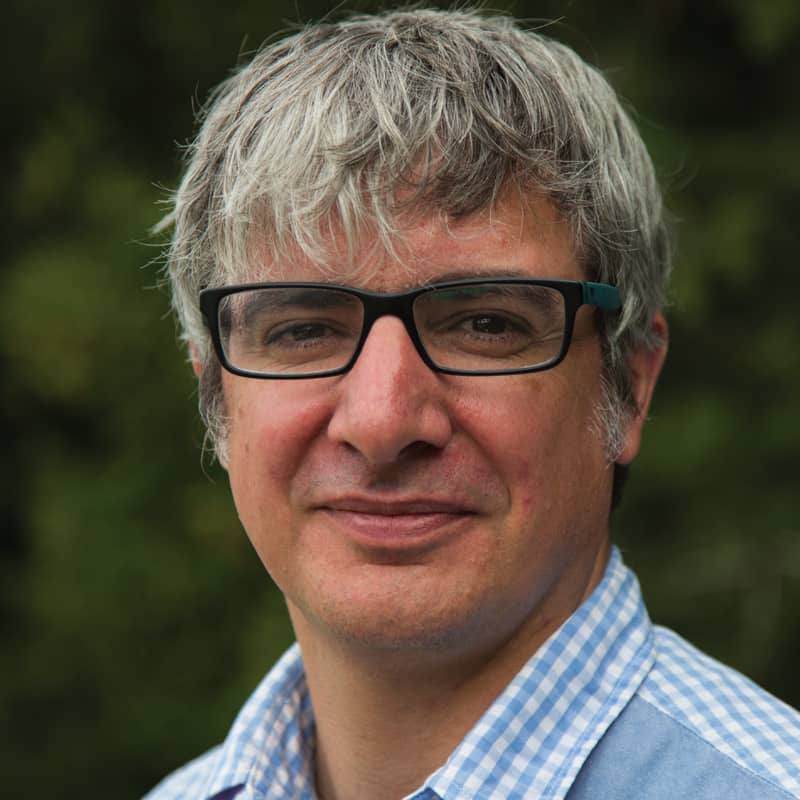
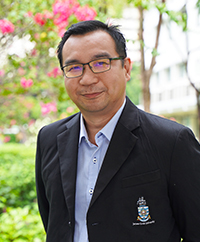
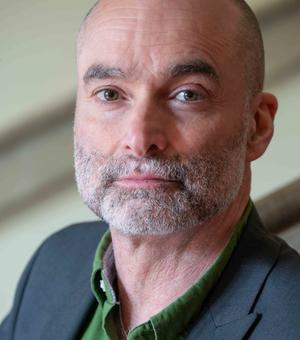
Dr. Gavin Morris is a Lecturer in Education at Charles Darwin University's College of Education, with over two decades of teaching experience in Australian schools. His academic qualifications include a PhD from Charles Darwin University (2019), Master of Education from University of Sydney (2016), and Bachelor of Education from James Cook University (2000). Morris specializes in Indigenous research methodologies, Health & Physical Education, and Sport Science. His qualitative work focuses on trauma healing, truth-telling, and decolonization practices in Aboriginal communities, particularly using Dadirri (deep listening) methodologies. Recent research explores digital platforms for cultural preservation and community resilience. As a registered postgraduate research supervisor, Morris contributes to undergraduate and postgraduate programs while maintaining active fieldwork in remote Northern Territory communities like Nauiyu at Daly River.
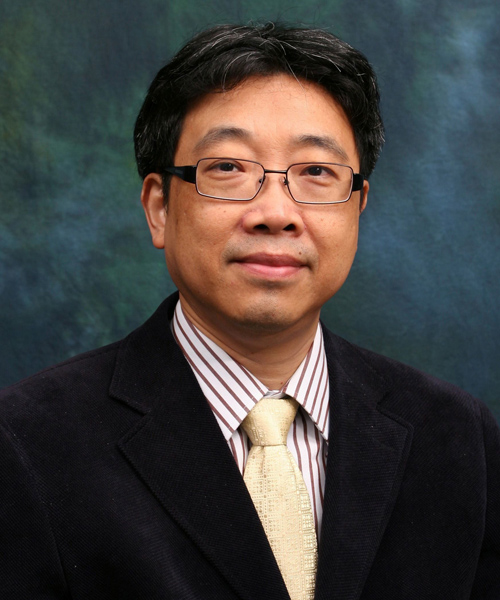
Cao Jiannong is currently a Chair Professor and Director of the University Research Facility in Big Data Analytics at Hong Kong Polytechnic University . He has held academic roles including Assistant Professor at City University of Hong Kong and University Lecturer at the University of Adelaide and James Cook University. His research spans Cloud and Edge Computing , Parallel and Distributed Systems , Big Data Analytics , and Wireless Sensing . Ph.D. in Computer Science, Washington State University (1990) MSc in Computer Science, Washington State University (1986) BSc in Computer Science, Nanjing University, China (1982) His work focuses on solving theoretical and practical challenges in distributed computing , mobile cloud systems , and wireless sensor networks . Recent projects include coupled network embedding models for heterogeneous networks and SDN architectures for vehicular communication. His research also pioneers WiFi-based non-invasive health monitoring and fault-tolerant sensor deployment for structural health applications. Dr. Cao's publications highlight advancements in network embedding , edge computing , and WSN optimization . Key papers address multi-user computation partitioning , energy-efficient SHM systems , and consensus protocols for mobile networks. These works have been cited over 15,000 times, with an h-index of 60. Ministry of Education (China) Natural Science Award (2018) Distinguished Member, ACM (2017) Fellow, IEEE (2014) Best Paper Awards at IEEE DSAA, SMARTCOMP, and WCNC Dr. Cao has advised multiple PhD students, including Linchuan Xu and Weigang Wu , whose research on WSN-based SHM and coupled network embedding has practical impact. His leadership includes directing Hong Kong Polytechnic University's Big Data Research Facility and serving on technical committees for IEEE INFOCOM and ACM/IEEE conferences.
Anu Ramaswami is the Sanjay Swani ’87 Professor of India Studies and Professor of Civil and Environmental Engineering at Princeton, directing the M.S. Chadha Center. She leads research on sustainable, equitable urban systems, integrating infrastructure, food, energy, and water policies. Her work employs nexus modeling to co-produce decarbonization pathways with global cities, emphasizing health, equity, and resilience co-benefits. Recent projects analyze fine-scale urban metabolism and heat vulnerability in India. Awards include the AAEES Science Award (2022) for interdisciplinary impact. She chairs the Urban Nexus Lab, advancing data-driven urban transitions.
Dr. Rachel Carmody is the Thomas D. Cabot Associate Professor of Human Evolutionary Biology at Harvard University, affiliated with the Faculty of Arts and Sciences. Her research focuses on energy metabolism, gut microbiome interactions, and their evolutionary implications. She leads the Nutritional & Microbial Ecology Lab, exploring how diet, genetics, and microbial communities influence human energy dynamics. Her work integrates evolutionary biology, physiology, and metagenomics to address questions about human uniqueness in digestion, maternal-offspring energy conflicts, and non-caloric dietary components. Office: Museum of Comparative Zoology 542; Email: carmody@fas.harvard.edu. Key research themes include gut microbiome-modulated obesity, placental hormone roles in pregnancy metabolism, and dietary digestibility frameworks. She also investigates evolutionary shifts in gut microbiota during human industrialization and animal domestication. Her lab employs mouse models, comparative studies, and multiomics approaches to dissect host-microbial interactions. Recent articles highlight microbiome effects on exercise-induced weight changes, antibiotic-induced obesity mechanisms, and cross-cultural dietary comparisons. While no awards are explicitly listed, her prolific publications reflect sustained impact in nutritional and evolutionary microbiology. No student advisees or grants are detailed in the provided text.
Krishnendu Ray is a Professor of Food Studies and Director of the Food Studies PhD Program at New York University's Steinhardt School of Culture, Education, and Human Development. He holds a Ph.D. in Sociology from SUNY Binghamton (2001) and a master’s in Political Science from Delhi University, India. Prior to NYU, he served as faculty and Acting Associate Dean for Curriculum Development at The Culinary Institute of America. Roles: Professor, Director of Food Studies PhD Program, Chair of the Department of Nutrition, Food Studies, and Public Health (per external sources). Research Focus: Immigrant culinary practices, globalization of food, ethnic restaurants, urban food cultures, and the sociocultural dimensions of taste. His work bridges sociology, anthropology, and public health, examining how food shapes identity, migration, and urban spaces. Notable publications include The Ethnic Restaurateur (2016) and The Migrant’s Table (2004). He co-edits special issues on topics like street vending and global cities, highlighting food’s role in cultural exchange and urban transformation. Recent articles (2020–2025) explore global Asias, resilient immigrant cooking, and the intersection of food studies with contemporary crises. His research frequently engages interdisciplinary methods, including ethnography and historical analysis.
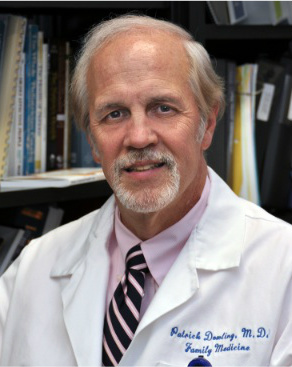
Patrick T. Dowling, M.D., M.P.H., is the Kaiser Permanente Endowed Professor of Community Medicine and Chair of the UCLA Department of Family Medicine. He holds dual degrees from the Medical College of Ohio (1974) and the University of Michigan School of Public Health. Dr. Dowling's career spans over four decades in family medicine, residency training, and health policy advocacy, with a focus on underserved populations. He has directed residency programs at Cook County Hospital, Brown University, and Harbor-UCLA Medical Center before leading UCLA's Family Medicine department since 1998. His research emphasizes health policy, chronic disease management, cross-cultural medicine, and integrating substance abuse treatment into primary care. He co-founded UCLA's IMG pathway program to train bilingual (English-Spanish) international medical graduates for underserved areas. Dr. Dowling has advised the National Health Service Corps and LA County Public Health Commission, and currently serves on Drew University's Board of Trustees. Publications highlight systemic barriers to healthcare access, physician practice location determinants, opioid epidemic responses, and community-based participatory research. His work bridges medical education innovation with socioeconomic health equity, reflecting lifelong commitment to universal healthcare access inspired by his early work with Cesar Chavez's United Farm Workers Clinics.
Professor Holly Thorpe is a Professor of Sociology in Te Huataki Waiora / School of Health at the University of Waikato, specializing in Sport and Human Movement. She serves as Associate Dean Research in the Division of Health PVC Office and is an internationally recognized sociologist of sport, physical culture and gender whose work has earned prestigious fellowships and awards including Fulbright, Leverhulme, and Royal Society honors. Her educational background includes a PhD from the University of Waikato and Papa Reo Level 1 certification from Te Wananga o Aotearoa, reflecting both academic excellence and cultural engagement with Māori language and knowledge systems. Professor Thorpe's research centers on equity and inclusion in sporting cultures, with particular attention to women's health and wellbeing, sport and gender, and the impact of social media on athletic experiences. She employs critical and feminist theoretical frameworks with expertise in qualitative methods to examine how sport, physical activity, and health intersect in rapidly changing social landscapes. Her work spans gender studies, feminist methodologies, sports science, sociology of health, and digital media studies within sporting contexts, with a strong commitment to community-engaged research. Her extensive publication record reveals consistent thematic focus on contemporary issues including menstruation in sport, digital technologies and athlete experiences, pandemic impacts on wellbeing, and the gendered dimensions of mega-sport events. Her work frequently employs intersectional analysis and collaborates across disciplines to address complex questions about embodiment, identity, and social change in sporting cultures, particularly as they relate to women and marginalized communities. Professor Thorpe's significant scholarly recognition includes: Royal Society Early Career Research Excellence Award for Social Sciences (2018) Fellow of the North American Society for the Sociology of Sport (2018) Royal Society James Cook Fellowship for a two-year project focused on women's wellbeing through and beyond pandemic (2021) She actively supervises students and has secured substantial research funding including the Te Punaha Matatini CORE Research Institute project 'Youth Wellbeing in Uncertain Times: The Voices of Rangatahi from Flood-Effected Tairāwhiti Gisborne' (2023-2025). Professor Thorpe collaborates extensively with international and national sports organizations including the International Olympic Committee, High Performance New Zealand, Sport New Zealand, Skateistan, and Voice in Sport to ensure her research has real-world impact on policy and practice. She serves as Series co-editor for 'New Femininities in Digital, Physical and Sporting Cultures' and maintains active media engagement through The Conversation and other outlets. Professor Thorpe leads several significant research initiatives including 'Reimagining Fields of Play' (2023) and co-organized the 'Gender, Health and Wellbeing Symposium' (2022), demonstrating her commitment to creating spaces for critical dialogue about sport, gender, and health while advancing culturally responsive methodologies that center Indigenous and diverse perspectives.
Hisham Zerriffi is an Associate Professor at the University of British Columbia (UBC) in the Department of Forest Resources Management, Faculty of Forestry. He also serves as Associate Dean for Equity, Diversity, and Inclusion. His research intersects technology, energy, and the environment, focusing on rural areas in the Global South. Affiliation: BioProducts Institute Affiliation: Clean Energy Research Centre Affiliation: Institute for Resources, Environment and Sustainability His research examines institutional factors in technology diffusion, household energy choices, and welfare impacts of energy use. Current projects include analyzing forest density's ecological impact, clean cooking transitions in India, and decentralized energy systems. Recent publications address just transitions, biomass energy economics, and policy misalignments in Indigenous communities. He has authored works on climate change mitigation via forest carbon credits and rural electrification strategies. Scientific Award: Ivan Head South/North Research Chair As a PhD supervisor, he has guided Natalie Payer on urban energy poverty in the U.S. He collaborates on interdisciplinary grants and leads the Energy Resources, Development and Environment Lab (ERDELab).
Dr. Tan Kim Lim is a Senior Lecturer at the James Cook University (Singapore Campus), specializing in organizational psychology and consumer behavior. He holds a PhD from Curtin University (2016–2019), an MBA from the University of Melbourne (2004–2006), and a Bachelor of Business from Monash University (1999–2002). His research focuses on the future of work, employee attitudes, technology adoption in hospitality/tourism, and consumer behavior analysis. He employs advanced methodologies like PLS-SEM and has published over 47 articles in top journals like the European Business Review and Asia Pacific Journal of Marketing and Logistics . Dr. Lim has held roles including Assistant Professor at BNU-HKBU United International College (2020–2022) and Post-doctoral researcher at the Human Capital Leadership Institute (2019–2021). He currently serves on editorial boards of the Journal of Responsible Tourism Management and Journal of Global Responsibilities , and is a member of the Singapore Human Resource Institute and Society of Industrial-Organizational Psychology. His applied research spans commissioned projects for governments and private entities, including studies on waste classification behavior, country music festivals, and AI adoption in social services. Awards include the JCUS Early Career Researcher Award (2023) and Emerald Literati Reviewer Award (2022). Dr. Lim also actively speaks at regional conferences on topics like AI in networking and post-pandemic workplace trends. His current research interests include STARA (Smart Technologies, AI, Robotics, Algorithms) impacts on work, meaningful work dynamics, and tourism behavior analysis. He supervises PhD students exploring AI in social services, indigenous tourism, and workplace technology adoption.
Dr. Daniel Carrión is an Assistant Professor of Epidemiology at the Yale School of Public Health, Department of Environmental Health Sciences. His work bridges climate science , energy transitions , and health equity , focusing on structural inequality’s role in exposure and health disparities. Education: PhD in Environmental Health Sciences (Columbia University, 2019); MPH in Environmental Health Sciences (New York Medical College, 2011); BA in Environmental Studies (Ithaca College, 2008). His research examines how home and neighborhood environments serve as intervention points for climate and health equity . Recent studies include modeling heat vulnerability in U.S. housing, geospatial analysis of lead water lines, and clean cooking interventions in Ghana. Articles span climate change , air pollution , and social determinants , with methodological focus on exposure science and case-crossover designs . Scientific honors include: Senior Fellow, Agents of Change in Environmental Justice (2022) Fellow, New York Academy of Medicine (2022) Senior Fellow, Environmental Leadership Program (2019) He contributes to community service as a member of the New York State Minority Health Council (2016–present) and the International Society for Environmental Epidemiology (2018–present). His work integrates satellite data , machine learning , and policy evaluation to address energy insecurity , racial segregation , and climate justice .
Matthew Cook is the inaugural Jonathan Cooper Chair of the History of Sexuality at the University of Oxford's Faculty of History and Mansfield College. Previously, he held a professorship and departmental leadership roles at Birkbeck, University of London. Specializing in queer and LGBT history, his work spans urban queer cultures, the AIDS crisis, and LGBTQ+ public heritage. Educated at Sheffield University (BA English Literature), Queen Mary, University of London (MA and PhD in History), he has advised on major heritage projects for institutions like the National Trust and Museum of London. His research emphasizes cross-period, transnational, and community-centered approaches to queer history. Education: Bachelor of Arts in English Literature, University of Sheffield Master of Arts in 'Literature, Culture, and Modernity', Queen Mary, University of London Doctor of Philosophy in History, Queen Mary, University of London Research Interests: Urban queer cultures, queer domesticity, LGBTQ+ public history, transnational comparisons, oral histories, and community-driven archival projects. He explores how queer lives intersect with urban spaces, legal frameworks, and cultural production across historical periods. Media & Outreach: Regular media contributor on LGBTQ+ history, appearing on radio and TV. Advised films, documentaries, and stage shows, including projects for Duckie nightclub and the Norwegian Queerdom initiative at the University of Bergen. Teaching & Supervision: Supervises DPhil students on topics ranging from LGBTQ+ education histories to trans identities in Edwardian England. Teaches undergraduate and graduate courses on queer theory, masculinities, and 20th-century youth culture. Labs & Collaborations: Active in the Centre for Women’s, Gender and Queer Histories at Oxford, focusing on emotions, subjectivity, and intersectional identities in modern history.
Henry Jäger is a Professor in Food Technology at the University of Natural Resources and Life Sciences, Vienna (BOKU) since 2014. Previously, he worked as a Project Manager at Nestlé (2012-2014) and Lecturer at TU Berlin (2012-2017), following his PhD/Postdoc at TU Berlin (2006-2012) and Diploma in Food Technology (2000-2006). His research focuses on electrotechnologies in food processing , particularly pulsed electric fields (PEF) and ohmic heating , for microbial inactivation, food preservation, and quality optimization. He explores applications in plant material processing , gluten-free baking , and novel food preservation methods . His work also addresses edible insect processing for allergenicity reduction and protein recovery. Recent publications (2025-2024) analyze synergies between PEF and ohmic heating, biofilm imitation systems for hygiene validation, and computational models for sterilization processes. These studies span food safety , sustainable processing , and functional food design . Henry Jäger actively contributes to scientific communities, serving on the EFFoST managing board , as scientific advisor for food conferences, and as reviewer for journals like Food Chemistry and Trends in Food Science & Technology . He has organized workshops on PEF applications and contributed to EU food technology initiatives.
Daniel J. Sheffield is an Associate Professor in the Department of Near Eastern Studies at Princeton University, serving as Director of Undergraduate Studies. He holds a Ph.D. in Iranian and Persian Studies from Harvard University (2012). Previously, he held positions at the University of Washington and as a Link-Cotsen Postdoctoral Fellow at Princeton's Society of Fellows. His research focuses on the religious, intellectual, and social history of the medieval and early modern Persian-speaking world, with specialties in exchanges between Safavid Iran and Mughal India, Zoroastrian communities, and the transmission of ideas from Late Antiquity to Early Modernity. His current work explores language, translation, and religious thought, exemplified by his manuscript Cosmopolitan Zarathustras and an upcoming project on translation and toleration in Safavid and Mughal contexts. Teaching includes undergraduate courses on Iranian history, graduate seminars on Persian historiography, and ancient Iranian language instruction. He organizes a Classical Persian reading group for students. His recent publications appear in major edited volumes on Zoroastrianism and philology. Award-winning educator and researcher, he is affiliated with the Behrman Faculty Fellows program. Beyond academia, he enjoys cooking, accordion playing, and family life with his young child.
Rachel B. Baker is an Associate Professor in the Policy, Organizations, Leadership, and Systems Division at the University of Pennsylvania's Graduate School of Education. Her research focuses on enhancing access and success in higher education for underserved groups, particularly in community colleges. She leads a National Science Foundation-funded study on cross-enrollment programs and collaborates on projects measuring curricular complexity and online education effectiveness. Key Affiliations: Wheelhouse Center for Community College Leadership, Editorial Boards of Research in Higher Education and Journal of Research on Educational Effectiveness Funding Sources: NSF, Institute of Education Sciences, Spencer Foundation, College Futures Foundation Her work addresses three core themes: policy impacts on student decisions, enrollment equity across race/socio-economic status, and interventions to improve self-regulatory skills via online data. Recent studies include analyzing cross-enrollment effects on transfer success and instructor professional development in online settings. Awards: 2019 NAEd/Spencer Postdoctoral Fellowship, 2016 IES Outstanding Fellow, Jack Kent Cooke Dissertation Fellowship Grants: NSF 5-year cross-enrollment study, IES training programs, Spencer Foundation initiatives Baker’s team develops metrics for curricular complexity and explores how course requirements influence student outcomes. She advocates replacing the 'pipeline' metaphor with 'pathway' to emphasize inclusive educational trajectories.
Aleksandra Cavoski is a Professor of Law at the Birmingham Law School, University of Birmingham, and serves as Director of Global Engagement for the College of Arts and Law. She is also affiliated with the Birmingham Institute for Sustainability and Climate Action and the Centre for Environmental Research and Justice, reflecting her strong commitment to interdisciplinary and sustainability-focused legal scholarship. Her research lies at the intersection of environmental law, EU law, and public international law, with a particular focus on the connections between law and science, policy, and language. She explores how legal frameworks are shaped by social, political, and scientific contexts, especially in areas such as environmental governance, climate action, and regulatory innovation. Environmental Law EU Law Law and Science Legal Translation New Approach Methodologies (NAMs) Circular Economy and Plastics Regulation Energy Transition and Critical Minerals Her recent publications and research projects highlight a consistent focus on regulatory innovation and sustainability, particularly in the use of NAMs for chemical safety, the legal challenges of promoting recycled plastics, and the geopolitics of critical minerals for clean energy. These works reflect a multidisciplinary trend integrating law with environmental science, public health, and policy analysis. Her scientific recognition includes being appointed as a Visiting Lecturer at the University of Bayreuth in 2018. This honor reflects her international standing in legal academia. She actively supervises PhD students on topics such as renewable energy policy, hydraulic fracturing, and legal translation. Her research is supported by major grants from the European Commission and the UK’s Engineering and Physical Science Research Council (EPSRC), including projects like RECREATE and PrecisionTox, which aim to transform regulatory science and sustainability law. She leads and co-leads major interdisciplinary initiatives such as the Health-centred Systems Approach towards Net-Zero (Heal-NZ) and the development of a circular economy for medical plastics, demonstrating her role in bridging law with science and public health.