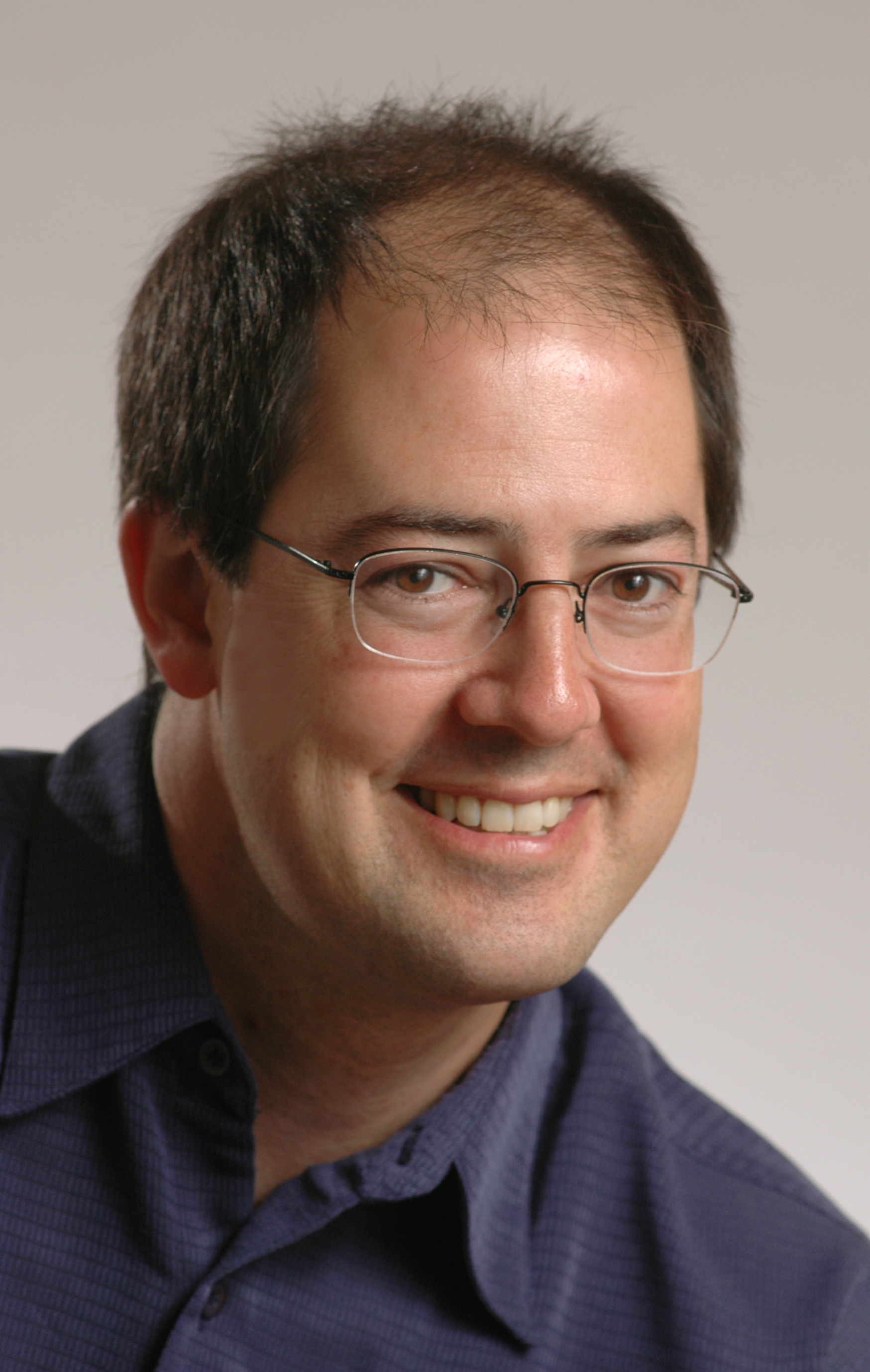
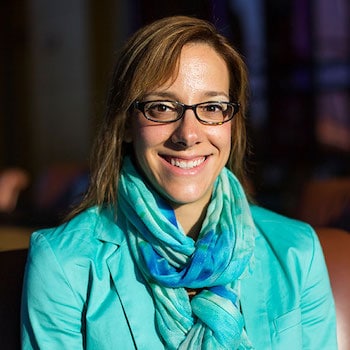
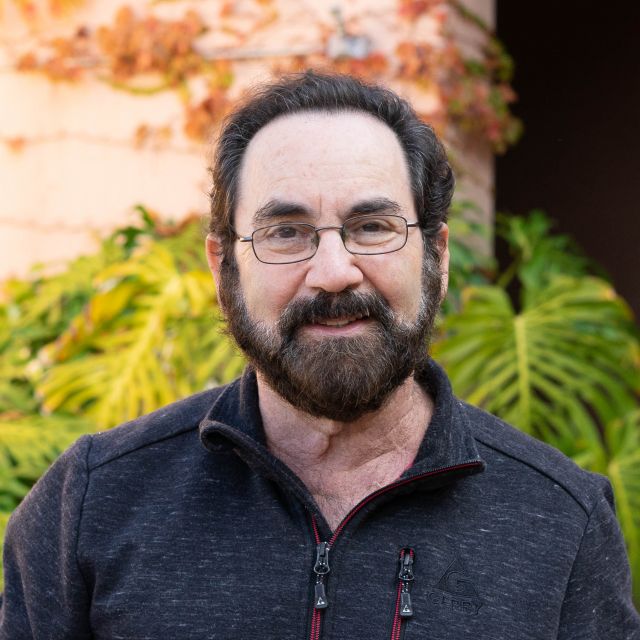
Avi Loeb , the Frank B. Baird Jr. Professor of Science at Harvard University, is a leading astrophysicist and former Chair of Harvard's Department of Astronomy (2011-2020). He directs the Institute for Theory and Computation (ITC) and the Galileo Project (2021-present), while holding the Sackler Senior Professorship at Tel Aviv University. His research spans cosmology, black holes, interstellar objects, and the search for extraterrestrial life. Education: PhD in Physics from Hebrew University of Jerusalem (1986) Former Positions: Member of the Institute for Advanced Study, Princeton (1988-1993) Loeb's research interests include: Gravitational wave detection and interstellar object analysis Simulation hypothesis and cosmic reality Technological signatures beyond the Standard Model His recent publications focus on 3I/ATLAS , gravitational SETI, and AI alignment in space exploration. Awards include being named among TIME's 25 Most Influential People in Space (2012), 14 Most Inspiring Israelis (2020), and ranking #3 in global astronomical impact (2024). He chairs the Breakthrough Starshot Initiative and advises the National Academies' Board on Physics and Astronomy.
Kristofer Pister is a Professor in the Department of Electrical Engineering and Computer Sciences at the University of California, Berkeley. He co-directs the Berkeley Sensor and Actuator Center (BSAC) and the Ubiquitous Swarm Lab. His career spans groundbreaking innovations in Micro/Nano Electro Mechanical Systems (MEMS), Control Systems, and Low-Power Circuits, with a focus on Smart Dust and synthetic insects. Education: Ph.D. and M.S. in EECS from UC Berkeley (1992, 1989); B.A. in Applied Physics from UC San Diego (1986). His research areas include MEMS , Control Systems , Robotics , and Integrated Circuits , with recent work on self-powered micro-sensors, crystal-free radios, and interplanetary swarm networks. Key awards include the ISA Albert F. Sperry Founder Award (2009) , Alexander Schwarzkopf Prize (2006) , and the NSF CAREER Award (1996) . He has authored numerous influential publications in wireless sensor networks and microrobotics. His lab, Ubiquitous Swarm Lab , explores distributed robotics and swarm intelligence. Pister emphasizes open collaboration in research, ethical conduct in academia, and efficient resource utilization for graduate students.
University of California, Los AngelesUnited States
Distinguished Professor David Jewitt is a prominent planetary scientist at UCLA's Department of Earth and Space Sciences within the College of Letters and Science. He has held this position since 2009 and also serves as a Professor in the Department of Physics and Astronomy since 2010, and as Director of the Institute for Planets and Exoplanets since 2011. Dr. Jewitt earned his B.Sc. in Astronomy from the University of London (1979), followed by M.S. (1980) and Ph.D. (1983) in Planetary Science from Caltech. Prior to UCLA, he served on the faculty at MIT (1983-1988) and the University of Hawaii (1988-2009), where he became a full Professor in 1993. His research focuses on primitive bodies of the Solar System, particularly comets which he considers remnants from planetary accretion processes. His work aims to understand solar system formation and evolution through studying these objects. Recent publications explore non-gravitational forces in planetary systems, interstellar interlopers, and the asteroid-comet continuum, reflecting his continued leadership in solar system small body research. Shaw Prize (2012) Kavli Prize (2012) Member of the National Academy of Sciences (2005) Exceptional Scientific Achievement Medal, NASA (1996) Professor Jewitt has mentored numerous students including Jane Luu (co-discoverer of the Kuiper Belt) and Chadwick Trujillo. As Director of the Institute for Planets and Exoplanets, he fosters interdisciplinary research connecting planetary science with exoplanet studies. His work continues to shape our understanding of the solar system's formation through analysis of its smallest constituents.
Max Planck Institute for Solar System ResearchGermany
Harald Krüger is a Research Scientist at the Max Planck Institute for Solar System Research (Göttingen), specializing in planetary science and space dust analysis. He leads and contributes to multiple space missions, including the DESTINY+ Dust Analyzer (DDA), the Rosetta COSIMA instrument, and the PHILAE Dust Impact Monitor (SESAME-DIM). His research focuses on cometary dynamics, interstellar dust interactions, and solar system formation processes. Krüger holds a PhD from the University of Göttingen and has held research roles at prestigious institutions like the Max Planck Institutes for Nuclear Physics and Astronomy (Heidelberg). He chairs ESA’s working group on comet 67P/Churyumov-Gerasimenko and participates in international astronomical societies. His work integrates advanced instrumentation design with observational data from spacecraft missions, contributing to our understanding of cosmic dust properties and their role in planetary systems. Key projects include analyzing interstellar dust via the DESTINY+ mission and studying Martian moons through the MMX mission. His publications emphasize instrument constraints, cometary dust trail detection, and spacecraft outgassing effects on measurements.
Susan T. Lepri is a Professor in the Department of Climate and Space Sciences and Engineering at the University of Michigan's College of Engineering, where she serves as Director of the Space Physics Research Laboratory. Her work focuses on heliospheric physics, utilizing spacecraft data from missions like ACE, WIND, and Solar Orbiter to investigate solar wind origins and coronal mass ejections. Her educational background includes: Ph.D. in Atmospheric and Space Sciences, University of Michigan M.S. in Atmospheric and Space Sciences, University of Michigan B.S. in Physics, Astronomy and Astrophysics, University of Michigan Lepri's research centers on tracing charged particles in the heliosphere using heavy ion measurements to study solar wind sources, coronal mass ejection physics, and particle acceleration mechanisms. She develops space-based ion mass spectrometers for missions including the European Space Agency's Solar Orbiter (Heavy Ion Sensor) and the Interstellar Mapping and Acceleration Probe. Her work integrates statistical analysis of solar wind composition with magnetohydrodynamic model validation to unravel plasma behavior in space environments. Analysis of her 15 most recent publications (2015-2017) reveals consistent focus on solar wind composition dynamics, particularly charge state evolution and elemental fractionation. Key themes include magnetic reconnection signatures in slow solar wind formation, anomalous composition in depleted interplanetary coronal mass ejections, and solar wind charge exchange contributions to X-ray backgrounds. Her instrumentation work bridges observational gaps in inner heliospheric measurements. Major recognitions include: 2018 Claudia Joan Alexander Trailblazer Award (University of Michigan) 2012-2013 Kenneth M. Reese Outstanding Research Scientist Award 2008 JGR-Space Physics Excellence in Refereeing Citation NASA Graduate Fellowship (2001-2003) Lepri actively mentors through outreach programs including K-12 initiatives with the Michigan Space Grant Consortium and Detroit Area Pre-College Engineering Program. She has coordinated Rochester Adams High School STEAM fairs and elementary science outreach while developing educational content like MConnex videos. Her research is supported by NASA grants enabling instrument development for Solar Orbiter and IMAP missions, with collaborations spanning international space agencies and academic institutions. As Director of the Space Physics Research Laboratory, she leads teams developing next-generation space instrumentation, particularly ion mass spectrometers for heliospheric exploration. Current projects include the Heavy Ion Sensor for Solar Orbiter (measuring inner heliospheric composition) and innovative sensors for IMAP, advancing capabilities to trace solar wind sources and particle acceleration mechanisms.
Dr. Jessica Sunshine is a Professor in the Department of Geology at the University of Maryland. Her research focuses on planetary materials and processes, particularly using spectroscopy and morphological analysis to study comets, asteroids, meteorites, and lunar geology. She is a principal investigator on NASA missions such as the Double Asteroid Redirection Test (DART) and the Lucy Mission, contributing to breakthroughs in planetary defense and asteroid composition analysis. Dr. Sunshine holds a Ph.D. from Brown University (1994). Her work integrates field-based and remote sensing techniques, including thermal infrared spectroscopy, to explore topics like the origins of spinel-rich deposits on the Moon, the composition of Trojan asteroids, and the dynamics of impact ejecta. She leads the Lunar Vulkan Imaging and Spectroscopy Explorer (Lunar-VISE) mission to study non-mare volcanic regions on the Moon. Her recent studies include analyzing the DART mission's impact on Dimorphos, revealing insights into asteroid deflection mechanics and surface material responses. She has also contributed to understanding the geological history of Ceres and the compositional diversity of Jupiter Trojans through the Lucy mission's data.
B. B. Cael is an interdisciplinary climate and ocean scientist affiliated with the Department of the Geophysical Sciences at the University of Chicago and the Climate Systems Engineering Initiative . His work integrates data analysis and theoretical models to investigate global-scale questions about Earth's carbon cycle and climate system. Cael's research interests span climate mitigation , climate sensitivity , climatic extremes , ocean biogeochemistry , plankton ecology , remote sensing , and paleoclimate . His publications focus on ocean carbon fluxes, climate feedbacks, and marine ecosystem dynamics, with recent work applying machine learning to oceanographic data. His academic journey includes a PhD from the MIT-WHOI Joint Program , a Simons Foundation Postdoctoral Fellowship at the University of Hawai’i at Manoa, and a Principal Scientist role at the UK's National Oceanography Centre. Current research at UChicago addresses both carbon dioxide removal and solar geoengineering strategies. Scientific Awards Simons Foundation Postdoctoral Research Fellow
Marina Galand is a Professor in Planetary Science at Imperial College London's Department of Physics within the Faculty of Natural Sciences. Her research focuses on energy deposition mechanisms in planetary atmospheres, auroral emissions, and plasma interactions with solar system bodies such as Earth, Jupiter's moon Ganymede, and comet 67P/Churyumov-Gerasimenko. She is deeply involved with international space missions including Cassini, Rosetta, and upcoming missions like JUICE (Jupiter Icy Moons Explorer) and Comet Interceptor. Her work analyzes plasma environments using data from instruments like the Rosetta Plasma Consortium and the upcoming JUICE RPWI. Key research areas include ionospheric modeling, diamagnetic cavity dynamics, and solar wind interactions with cometary atmospheres. She has pioneered studies of far-ultraviolet auroras on comets, demonstrating these phenomena occur beyond planetary bodies. Galand's contributions bridge observational data with theoretical models, advancing understanding of atmospheric evolution and energy transfer processes. She collaborates on mission designs for future exploration of icy moons and pristine comets, emphasizing instrumentation development for plasma and dust diagnostics.
Amy Bonsor is an Official Fellow and Director of Studies in Natural Sciences (Physical) at Queens' College, University of Cambridge. Her academic work focuses on the intersection of astronomy and planetary science, particularly examining the composition and evolution of planetary systems through the lens of white dwarf pollution. Dr. Bonsor's research primarily centers on understanding the composition of exoplanetary material by studying polluted white dwarfs. Her work combines observational astronomy with theoretical modeling to investigate planetary debris disks, tidal interactions, and the geochemical signatures of accreted planetary material. She has made significant contributions to understanding how white dwarfs can serve as cosmic laboratories for studying the bulk composition of exoplanetesimals, including their differentiation processes and volatile content. Her recent publications reveal a strong emphasis on the chemical analysis of planetary material through white dwarf spectroscopy, with particular attention to mineralogy, elemental abundances, and the implications for planetary formation and evolution. She has pioneered approaches combining machine learning with traditional astronomical techniques to categorize and interpret white dwarf spectral data at scale. As Director of Studies in Natural Sciences at Queens' College, Dr. Bonsor plays a key role in undergraduate education within the Physical Sciences track of Cambridge's renowned Natural Sciences Tripos. Her leadership position indicates her standing within the Cambridge academic community and her commitment to nurturing the next generation of scientists.
Jane Luu is a Professor II at the Centre for Planetary Habitability (UiO), specializing in comets, asteroids, and interstellar objects . Her research focuses on dynamic processes in small Solar System bodies, including fragmentation, disintegration, and dust behavior. She collaborates with international teams using facilities like the Nordic Optical Telescope (NOT) and WIYN Telescopes. Email: jane.luu@geo.uio.no Address: Sem Sælands vei 13, Svein Rosseland's house, 0371 Oslo Her work includes studies on comet outbursts (e.g., 12P/Pons-Brooks), disintegration mechanisms (C/2019 J2), and interstellar interlopers like 2I/Borisov and ’Oumuamua, where she proposed fractal dust aggregate models. Recent publications examine episodic activity in asteroids (6478 Gault) and discus-shaped comets (C/2014 B1).
Dr. Yeong E. Kim is Professor of Physics at Purdue University, where he has maintained continuous faculty appointment since 1967. He currently serves as Director of the Center for Sensing Science and Technology (CSST) since 2001 and leads the Purdue Nuclear and Many-Body Theory Group. His academic career spans over five decades with significant contributions to theoretical physics. Undergraduate studies at Seoul National University (1954-1955) B.S. from Lincoln Memorial University (1959) Ph.D. from University of California, Berkeley (1963) Dr. Kim's research spans theoretical nuclear physics with extensions into condensed matter physics, atomic/molecular/optical physics, nuclear astrophysics, and quantum statistical mechanics. His most distinctive work focuses on theoretical frameworks for low-energy nuclear reactions in condensed matter environments, particularly examining how quantum effects in metal hydrides might enable nuclear reactions at substantially lower energies than conventional nuclear physics predicts. His research bridges fundamental quantum theory with potential applications in clean energy technologies and sensing science. Analysis of Dr. Kim's publication record reveals a consistent trajectory exploring quantum statistical mechanics applications to nuclear phenomena. His work demonstrates increasing focus on Bose-Einstein condensation mechanisms applied to nuclear fusion in metal hydride systems, with particular attention to micro/nano-scale phenomena. This research direction represents an unconventional approach to nuclear reaction theory that has generated both interest and debate within the physics community. Fellow of the American Physical Society (elected 1977) Senior U.S. Scientist Award from Alexander von Humboldt Foundation (1977) Dr. Kim has supervised 10 Ph.D. students throughout his career and authored or co-authored over 200 refereed scientific publications. As Director of CSST, he has successfully translated research into commercial applications, guiding the creation of six startup companies (Griffin Analytical, Prosolia, Quadraspec, 2K, PathoChip, and QE) based on technologies developed by CSST researchers. His leadership extends to numerous advisory roles for government agencies and international conferences in nuclear physics, including chairing the first Gordon Research Conference on Few Body Problems in Physics (1977) and serving on multiple international advisory committees for Asia-Pacific conferences on Few-Body Problems. Dr. Kim leads the Purdue Nuclear and Many-Body Theory Group, established in 1967, and directs the Center for Sensing Science and Technology. His research group has maintained consistent productivity for decades, with recent work focusing on theoretical interpretations of anomalous nuclear phenomena in condensed matter systems. The CSST under his direction has become a significant hub for translating fundamental physics research into practical sensing technologies with commercial applications.
Dr. Luke Barnard is an Associate Professor in the Department of Meteorology at the University of Reading, specializing in solar physics and space weather. His research focuses on solar wind dynamics, coronal mass ejections (CMEs), and their interactions with planetary environments. He contributes to models like HUXt for solar wind prediction and collaborates on space missions such as STEREO, Parker Solar Probe, and Tianwen-1. His work involves data assimilation techniques, ensemble modeling, and reconstruction of historical solar activity. Dr. Barnard's studies bridge observational data with theoretical models to advance understanding of heliospheric phenomena and their geophysical impacts. Key Affiliations: Department of Meteorology, University of Reading. Research Themes: Solar wind modeling, CME propagation, space weather forecasting, geomagnetic effects, and long-term solar variability. Collaborations: Extensive international collaborations, including with NASA, ESA, and institutions such as BepiColombo and MAVEN missions. His recent work emphasizes probabilistic solar wind forecasting, CME interaction with comets and planets, and historical reconstructions of solar activity. He has published over 79 peer-reviewed articles, with a focus on solar-heliospheric dynamics and space weather mitigation strategies.
Professor Christopher Scott is a Professor in Space & Atmospheric Physics at the University of Reading's Department of Meteorology, serving as Laboratory Manager. His research focuses on space weather, solar-terrestrial interactions, auroral physics, ionospheric dynamics, and long-term atmospheric changes. He leads projects like the Dr Carbon Atmospheric Observatory and the citizen science initiative Solar Stormwatch (www.solarstormwatch.com). His work integrates observations from spacecraft (e.g., STEREO, BepiColombo) and ground-based systems to study solar wind impacts, CME propagation, and ionospheric responses. Key contributions include advancing CME forecasting models, analyzing comet-solar wind interactions, and quantifying long-term ionospheric changes. He supervises postdoctoral researchers Luke Barnard and Kim Tucker-Hood, and collaborates on global initiatives like the Solar Stormwatch project. His research spans disciplines including geophysics, astrophysics, and planetary science, with over 100 peer-reviewed publications since 1994.
University of California , Santa Barbara (UCSB)United States
Philip Lubin is a Full Professor in the Department of Physics at the University of California, Santa Barbara. His research spans experimental cosmology, directed energy applications, and planetary defense, with a focus on millimeter-wave studies of the early universe and photonic propulsion systems. He leads the Experimental Cosmology Group and has contributed to groundbreaking work on the Cosmic Microwave Background (CMB) via the Planck mission. Affiliations: University of California, Santa Barbara; NASA Starlight Program; Breakthrough Starshot Initiative Professor Lubin's research interests include: Planetary Defense: Terminal interdiction methods using kinetic penetrators Directed Energy Systems: Applications for relativistic spacecraft propulsion and deep space exploration CMB Studies: Polarization analysis and cosmological parameter determination His recent publications emphasize: Advanced planetary defense simulations Interstellar communication challenges CMB legacy data analysis Directed energy propulsion architectures Scientific Accolades: 2006 Gruber Prize in Cosmology (COBE team) 2018 Gruber Prize in Cosmology (Planck team) Professor Lubin actively mentors students in experimental physics and cosmology while leading the DeepSpace.ucsb.edu initiative for space exploration technologies.
Jon Friedrich is a Professor of Chemistry at Fordham University's Department of Chemistry. His research focuses on Analytical Chemistry and Planetary Science , with a specialization in meteorite composition, asteroid geology, and advanced imaging techniques like X-ray tomography. His work examines chondrites, carbonaceous chondrites, and ordinary chondrites to understand their formation, metamorphism, and impact histories. Key projects include studies of Bennu asteroid samples, Jupiter Family Comet meteorites, and shock-induced deformation in extraterrestrial materials. Research interests emphasize morphological and compositional analysis of meteorites , including chondrule formation, elemental distribution, and structural characterization using 3D petrography. He has pioneered techniques to non-destructively analyze meteorite porosity and internal structures via microtomography, contributing to curation standards for extraterrestrial samples. Publications highlight investigations into chondrite classification (H/L/LL types), shock effects on asteroid parent bodies, and compositional trends in carbonaceous chondrites. His work bridges analytical chemistry with planetary science, informing models of early solar system dynamics and asteroid evolution. Lab facilities include the JMH 540 laboratory at Fordham University, where advanced imaging and geochemical analysis tools are employed. Collaborations involve international space agencies and meteorite curation institutions, reflecting the global impact of his research.