Dr. Saree Alnaghy is an Honorary Associate Professor at the University of Wollongong's Faculty of Engineering and Information Sciences, affiliated with the Centre for Medical Radiation Physics. She holds a Bachelor of Medical and Radiation Physics (Honours) and a PhD in Physics from the University of Wollongong (2009–2017). Her research focuses on advanced medical imaging and radiation therapy technologies, including photon counting detectors, dosimetry systems, and robotic motion phantoms for quality assurance. Key research areas include: Development of novel X-ray detectors for radiotherapy guidance High-resolution dosimetry techniques using silicon and polymer-based systems Integration of real-time imaging in radiation therapy Robotic systems for motion management in oncology Her work has been supported by grants such as 'Sharper Targeting, Brighter Future' (2024) and 'Bringing Colour to Radiotherapy' (2021–2025). She currently supervises PhD and MRes students on projects involving photon counting CT scanners and radiotherapy imaging. Alnaghy also serves as a Radiation Oncology Medical Physics Registrar at the Nelune Comprehensive Cancer Centre.
Golshan Golriz is an Assistant Professor of Sociology at Queen’s University, Canada. She holds a BA in Women and Gender Studies from York University, an MA from the Women and Gender Studies Institute at the University of Toronto, and a PhD in Sociology from McGill University. Her work focuses on structural inequalities affecting Queer and Trans Black Indigenous and People of Colour (QTBIPOC), combining feminist and social scientific methods with intersectional frameworks. Current research includes LGBTQ religious activism, identity-centric social movements, and cancel culture’s relationship with structural inequality. Education: BA: York University (Women and Gender Studies + Sexualities Studies certificate) MA: University of Toronto (Women and Gender Studies Institute) PhD: McGill University (Sociology) Research Interests: Structural inequalities & QTBIPOC communities Queer/Trans Muslim marginalization Racism, capitalism, and Middle Eastern sexuality representations Social movements and comparative historical methods Current Projects: Co-edited volume on LGBTQ religious activism Comparative study of identity-centric movements Critical analysis of cancel culture mechanisms Lab/Team: Research emphasizes interdisciplinary collaboration, integrating qualitative methods with activism-focused research.
Christophe Viavattene is an Associate Professor of Environmental Sustainability at Middlesex University , specializing in flood risk management and urban resilience. He has spent 17 years at the Flood Hazard Research Centre , leading interdisciplinary research across economic and physical sciences in water and flood risk. Research Focus: Flood vulnerability (coastal, urban, fluvial), GIS tools (INDRA model), Multi-Coloured Manual (MCM) methodology, mental health impacts of flooding, groundwater flood risk in arid regions, and air quality risk assessment. Teaching: Programme Leader for the MSc Sustainability and Environmental Management , teaching problem-based sustainability, GIS, and environmental monitoring. Key Collaborations: EU FP7 RISC-KIT, EU CONHAZ, Environment Agency UK projects. Recent Publications: Bayesian flood models, coastal hotspots analysis, and groundwater flood damage methodologies. His work bridges academic research with practical applications, including flood storage compensation frameworks and vulnerability indicator libraries.
Richard Garner is a lecturer at Macquarie University's School of Mathematical and Physical Sciences, Faculty of Science and Engineering. He specializes in teaching mathematics to engineering and computing students in units like MATH2055 and MATH1007, focusing on problem-solving and real-world applications. His teaching philosophy emphasizes authentic mathematical experiences, blending abstract concepts with practical examples, such as connecting multivariable calculus to AI technologies. School: School of Mathematical and Physical Sciences University: Macquarie University Teaching Areas: Mathematics for engineering and computing, convolution, multivariable calculus Richard won a Student Nominated Award in the 2023 Vice Chancellor’s Learning and Teaching Awards, reflecting his commitment to student-centered education. He prioritizes clarity in course design, using visual tools and accessible materials to enhance learning, and fosters a supportive environment where students feel comfortable asking questions. Key Teaching Strategies Organized iLearn layouts following Macquarie University's standards Multiple formats for lecture materials (diagrams, color-coded slides) Weekly task clarity and real-world problem framing Live worked examples and transparent success criteria His research spans category theory, computational effects, and homotopy theory, with publications on topics like comodels, monoidal bicategories, and enriched categories. Richard's work bridges abstract mathematics with applications in computer science and logic. Scientific Awards 2023 Vice Chancellor’s Learning and Teaching Award (Student Nominated) Students praise his ability to make complex concepts intuitive, his enthusiasm for mathematics, and his dedication to explaining the 'why' behind the subject. His teaching design, including time-sensitive banners and structured weekly content, has been highlighted as exemplary.
Cécile Mailler is a Reader in Probability at the University of Bath, where she is a member of the probability group Prob-L@B. She has held significant research positions including an EPSRC postdoctoral fellowship (2018-2021) titled "Random trees: analysis and applications" and previously worked as a postdoc at Prob-L@B (2013-2016) as part of Peter Mörters' EPSRC project "Emergence of Condensation in Stochastic Networks". She earned her PhD under the supervision of Brigitte Chauvin and Danièle Gardy at the Laboratoire de Mathématiques de Versailles. Her research focuses on probability theory with emphasis on branching processes, random trees, reinforcement mechanisms, Pólya urns, stochastic approximation, random networks, and statistical physics. She has made significant contributions to understanding preferential attachment models, zero-range processes, and random Boolean trees. Her work bridges theoretical probability with applications in statistical physics and combinatorics. Analysis of her recent publications shows a strong focus on random tree structures, branching processes, and reinforcement learning algorithms, with applications spanning from network theory to statistical mechanics. Her research demonstrates sophisticated mathematical techniques applied to complex stochastic systems, particularly those with reinforcement mechanisms and memory effects. Associate Editor of the Applied Probability Trust (since October 2020) Associate Editor of Stochastic Processes and Their Applications (since March 2022) Author of a general introduction to Pólya urns for the LMS Newsletter (November 2020) Co-organizer of the "Random Walks: Applications and Interactions" conference at CIRM (January 2026) She actively supervises PhD students working on topics including the multi-city ants process, Pólya urns with growing initial composition, large deviations for the Monkey walk, and competing growth processes. She has secured research funding through EPSRC fellowships and has been involved in multiple collaborative projects with prominent researchers in probability theory. Mailler regularly teaches mini-courses on advanced probability topics at international summer schools and workshops, demonstrating her commitment to knowledge dissemination in the field.
Jonathan Roberts is a researcher at Bangor University, UK, with a focus on data visualization, visual analytics, and educational technology. His work bridges computer science and creative design, particularly in data art exhibitions and authentic learning. Key research areas: Data Visualization, Visual Analytics, Educational Technology, Digital Art Recent publications explore generative AI in visualization design, multiple-view patterns for time series data, and frameworks for creative learning. His collaborations span institutions like QUT, University of Manchester, and University of Cambridge. Notable awards include VAST 2012 Honorable Mention and VAST 2010 Analytic Process Recognition. He contributes to visualization pedagogy and has co-authored works on haptic interfaces, immersive analytics, and coastal data modeling.
John Breslin is a Personal Professor in Electronic Engineering at the College of Science and Engineering, University of Galway, serving as Director of the TechInnovate and AgInnovate programmes. Associated with two Taighde Éireann – Research Ireland Centres, he is a Principal Investigator at Insight Centre for Data Analytics (specializing in data analytics) and a Funded Investigator at VistaMilk (Agri-Technology), while also leading the EDIH Data2Sustain project. With an h-index of 50, over 12,000 citations, and 300+ peer-reviewed publications including seminal books on the Social Semantic Web, he ranks among Ireland's most influential researchers in digital technologies. Breslin's research fundamentally bridges Semantic Web technologies, AI-driven data analytics, and practical innovation. His co-creation of the SIOC framework—implemented across 65,000+ websites by entities like Yahoo and Boeing—demonstrates real-world impact in social data interoperability. Current work leverages blockchain and federated learning for sustainable Agri-Technology through VistaMilk, while his TechInnovate programmes translate academic research into commercial ventures across healthcare, smart manufacturing, and energy systems. Analysis of his 15 most recent publications reveals dominant themes in AI-enhanced security (35% of works), blockchain applications for sustainability (27%), and multimodal AI for healthcare (20%). His team pioneers privacy-preserving techniques for IoT and medical devices, neurosymbolic visual reasoning frameworks, and federated learning architectures addressing data heterogeneity—directly supporting his roles in national research infrastructures like Insight and VistaMilk. John has received several prestigious awards: IIA Net Visionary Award (twice) ITAG Outstanding Contribution to the ICT Sector Award Galway Chamber President’s Award Best Irish-Published Book Award (2020 for Old Ireland in Colour) Multiple Best Paper Awards He leads major research initiatives funded by Taighde Éireann – Research Ireland: Insight Centre for Data Analytics (as Principal Investigator) VistaMilk SFI Research Centre (as Funded Investigator) EDIH Data2Sustain (as Principal Investigator) His entrepreneurial programs TechInnovate and AgInnovate have mentored 200+ startups, securing €50M+ in follow-on funding. Breslin co-founded PorterShed (Galway City Innovation District) and serves on Scale Ireland's Steering Group, creating Ireland's most active regional innovation ecosystem outside Dublin. He maintains active industry partnerships with Vodafone, Boeing, and agricultural cooperatives through VistaMilk's testbed facilities.
Bojan Tamburic is a Senior Lecturer in Environmental Engineering at the University of New South Wales (UNSW) Sydney, where he is affiliated with the School of Engineering and the Department of Civil and Environmental Engineering. He holds the prestigious position of Australian Research Council Mid-Career Industry Fellow (IM230100222) and serves as the lead Chief Investigator of the Nuisance and Harmful Algae Science-Practice Partnership (NHASP). Dr. Tamburic earned his academic credentials from Imperial College London, including a PhD in Chemical Engineering (2009-2012), an MSc in Sustainable Energy Futures (2008), and an MSci in Physics (2003-2007). Prior to joining UNSW, he was a Chancellor's Postdoctoral Research Fellow at the University of Technology Sydney. His research focuses primarily on dual aspects of algal science: the management of harmful algal blooms ('bad algae') in waterbodies to preserve water quality and aquatic habitats, and the cultivation of beneficial algae ('good algae') for producing valuable bioproducts such as biofuels, animal feed, and sustainable chemicals. His work spans environmental engineering, water treatment processes, and algal biotechnology applications. Analysis of Tamburic's recent publications reveals a strong trend toward practical applications of algal science in water management. His research spans environmental monitoring using remote sensing, microplastic analysis in urban water systems, odour and taste management in drinking water, and innovative approaches to algal biomass harvesting and utilization. His work consistently bridges fundamental algal physiology with practical engineering solutions for water quality challenges. Australian Research Council Mid-Career Industry Fellow (IM230100222) for the project 'Large scale urban stormwater reuse: safe, clear and odourless water supply' (2023-2026) Dr. Tamburic leads significant research initiatives including the Nuisance and Harmful Algae Science-Practice Partnership (NHASP), focusing on translating scientific understanding of algal phenomena into practical management solutions. His grant portfolio demonstrates strong industry and government engagement, particularly in the area of sustainable water management. He teaches courses including DESN1000 Engineering Design and Innovation and CVEN9886 Environmental Microbial Processes at UNSW.
Dr. Omar Rifaie Graham is a Lecturer (Assistant Professor) in Chemistry at Queen Mary University of London's School of Physical and Chemical Sciences, joining in September 2023. He leads a research group focused on polymer-based artificial cells to study physicochemical parameters underlying biological phenomena and develop technologies at the Living/Non-Living Interface. Previously, he held postdoctoral positions at Imperial College London and the University of Fribourg, Switzerland. Education: Licenciado in Pharmacy (BSc+MSc), Universidad Complutense de Madrid, Spain (2008–2014) PhD in Chemistry, Adolphe Merkle Institute – University of Fribourg, Switzerland (2014–2018) Research Interests: Development of artificial cells using polymer nanocontainers, stimuli-responsive materials (light, hydromechanical stress), and applications in biotechnology, therapy, and diagnostics. His work includes creating polymersomes with novel functionalities for drug delivery, diagnostics, and synthetic biology. Key Achievements: ACS PMSE Future Faculty Award (2023) Swiss Nanoscience Institute 'Best paper in nanoscience' (2021) Best PhD thesis in Experimental Sciences, University of Fribourg (2019) Co-founded a diagnostics company spun from his PhD research (1M+ USD funding) Grants & Collaborations: Royal Society Grant: £29,907 (2025–2026) National Institute for Health Research Grant: £315,942 (2020–2025) RSC Grant for 'Mimicking colour perception with artificial cells' (2024) Lab/Team: Directs a research group at Queen Mary's Department of Chemistry, collaborating with institutions like Imperial College London and the University of Fribourg. Active in synthetic biology, nanomedicine, and biomimetic materials.
Prof. Anna Franklin is a Professor of Visual Perception and Cognition at the University of Sussex's School of Psychology. She leads the Sussex Colour Group and Sussex Baby Lab , focusing on human color perception, development, and neural representation. Her research combines cognitive psychology, developmental science, and neuroscience to explore how color perception develops, influences aesthetics, and relates to conditions like autism. Key projects include ERC-funded initiatives studying environmental impact on color perception and developing the ColourSpot diagnostic app for childhood color vision deficiency. She also serves as Deputy Director of Research and Knowledge Exchange for the School of Psychology. Education includes a BA from the University of Nottingham and a PhD from the University of Surrey, followed by a postdoctoral fellowship. Her work spans 107+ publications, emphasizing interdisciplinary methods like hyperspectral imaging and fMRI. Collaborations include industry partnerships with ETTA LOVES and COSATTO to apply infant visual preference research in product design. Research grants include European Research Council awards (Starting Grant 2012-2017, Consolidator Grant 2018-2025) and a Proof of Concept grant for ColourSpot . Her labs investigate cross-cultural color categorization, infant aesthetics, and neural correlates of color processing. Future work focuses on calibrating visual systems to environmental statistics and improving early childhood color vision screening.
Susanne Marschall is a Professor of Media Studies (focus: audiovisual media, film and television) at the University of Tübingen , where she also serves as Director of the Center for Media Literacy and editor of the open journal "Colour Turn" . Her research bridges historical hermeneutics, media culture, and interdisciplinary studies of color and visual perception, with a strong empirical focus on film, television, and photography. Doctoral supervision across diverse topics (AI interaction, AR for environmental issues, Bollywood representations, health communication) Founded Tübingen Research Center for Animation and Emerging Media (2013) Interdisciplinary collaborations with neuroscience, cultural studies, and educational initiatives Recent publications explore cinematic color theory, animation aesthetics, and transcultural narratives. Her practical projects (e.g., Lotte Reiniger - Tanz der Schatten documentary, AR applications for social issues) demonstrate her commitment to connecting academic research with media practice. Awards include the 2003 Senate Teaching Prize and 2012 "Professor of the Year" (UNICUM BERUF).
Andrea Rocco is an Associate Professor in Physics and Mathematical Biology and Head of the Quantum Sciences Research Group at the University of Surrey. He holds affiliations with the School of Mathematics and Physics and the Centre for Mathematical and Computational Biology. Rocco earned his PhD in Physics from the University of North Texas (1998) and held postdoctoral positions at the University of Barcelona, University of Rome La Sapienza, CWI (Netherlands), and the University of Oxford. His research bridges theoretical physics (quantum mechanics, open systems, decoherence) and biological physics (stochastic dynamics in living systems, gene networks). Educations: BSc in Physics, University of Pisa (1994) PhD in Physics, University of North Texas (1998) Research Interests: His work explores quantum-classical transitions, quantum thermodynamics, and noise-induced phenomena in biological systems. Recent grants include a US$3M award for studying time and life. He is a Fellow of the Royal Society of Biology and the Higher Education Academy. Awards: Member of the Institute of Physics (MInstP) Fellow of the Higher Education Academy (FHEA) Fellow of the Royal Society of Biology (FRSB) Advising & Grants: Rocco leads the Quantum Sciences Group and has supervised postdoctoral researchers like Thomas Guff. His grants include major funding for interdisciplinary quantum-biological research. Labs/Teams: Head of the Quantum Sciences Research Group at Surrey, integrating theoretical physics and computational biology.
Professor Yasmin Hussain holds the position of Professor in Racism Ethnicity Studies at the School of Sociology and Social Policy, University of Leeds, where she has been affiliated since 1999 after initial work on disability and ethnicity projects. Her academic background includes: Doctorate from the University of Bradford examining British South Asian women's identity through literature and film. Her research spans critical intersections of racism, ethnicity, gender, migration, terrorism, Islamophobia, and higher education. Key projects include analysis of the 2001 urban riots, the 2005 London bombings' societal impact (with Professor Paul Bagguley), and the ESRC-funded 'Northern Exposure' study on Brexit's effects on ethnic minority communities in Northern towns. Current work focuses on systemic racial disparities through investigations of the awarding gap for students of colour and staff experiences within universities. Professor Hussain teaches specialized modules in her research domains and supervises undergraduate, Master's, and doctoral candidates. Her active PhD supervisees include Rehab Alotaibi, Ayesha Siddika, Iman, Federico Awi, R. Hariyani, and Susanti. Her research has secured funding from the Joseph Rowntree Foundation and Economic and Social Research Council (ESRC), reflecting significant contributions to understanding race, gender, and social justice in contemporary British society.
Dr. Esther Chadwick is a Lecturer in Art History at the Courtauld Institute of Art, University of London. Her research focuses on eighteenth-century British art within global contexts , particularly its connections to transatlantic enslavement and cross-cultural encounters . She has held prestigious fellowships at institutions including the Paul Mellon Centre and the Center for Advanced Study in the Visual Arts. Education : University of Cambridge (BA), Yale University (PhD, 2016) Chadwick’s work interrogates the political agency of art during revolutions , the materiality of printed images , and the visual culture of colonialism . Her 2024 monograph, The Radical Print: Art and Politics in Late Eighteenth-Century Britain , explores how printmaking shaped artistic criticality and won the 2025 IFPDA Foundation Book Award. She has co-curated major exhibitions such as Entangled Pasts, 1768-now (Royal Academy, 2024) and William Blake’s Universe (Fitzwilliam Museum, 2024), and her recent publications analyze topics like Haitian postrevolutionary aesthetics and Indigenous London . A committed educator, she teaches courses on portraiture , radical art , and the global print . Scientific Awards : IFPDA Foundation Book Award (2025) Paul Mellon Centre Fellowship (London) Huntington Library Fellowship (California) Lewis Walpole Library Fellowship (Connecticut) CASVA Fellowship (Washington D.C.) Chadwick supervises PhD students including Damiët Schneeweisz (history of portrait miniatures in the Atlantic) and Claire Ó Nualláin (antiquarianism in eighteenth-century Ireland). Her curatorial projects and writings emphasize decolonizing art history and recontextualizing imperial legacies .
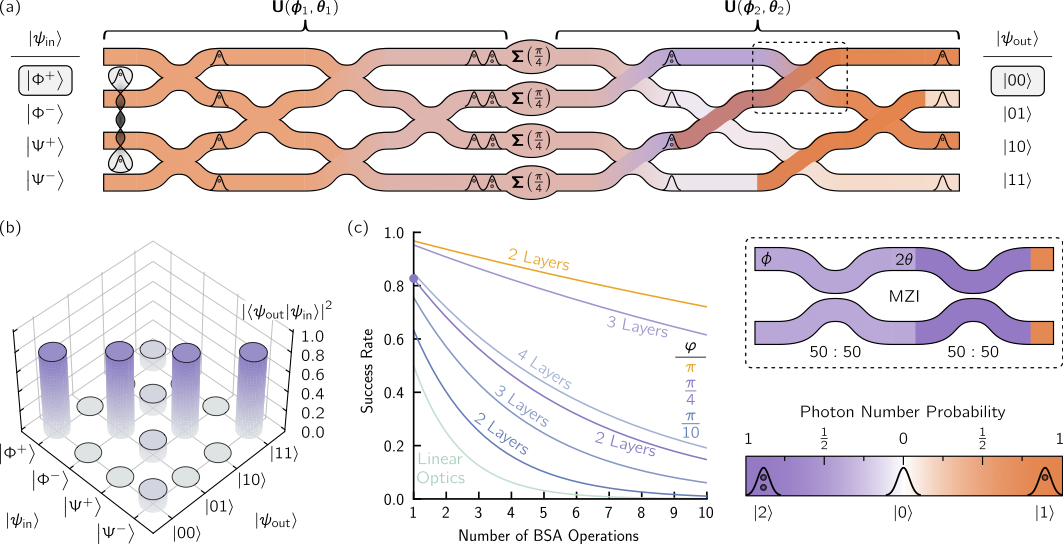
Bhavin J. Shastri is an Assistant Professor in the Department of Physics, Engineering Physics and Astronomy at Queen's University in Canada. His research explores the physics of light for computing , pushing frontiers in information and signal processing through photonic computing and quantum/neuromorphic photonics . He is affiliated with the Centre for Nanophotonics and NUCLEUS , a pan-Canadian photonic computing program funded by NSERC CREATE, bridging artificial intelligence and quantum information . Canada Research Chair & Principal Investigator Faculty Affiliate at Vector Institute (2020-) Editorial Board Member of JPhys Photonics (2019-) Member of IEEE Photonics Society Technical Affairs Council (2019-) Visiting Researcher Scholar at Princeton University (2018-) Shastri Lab members have access to world-class shared facilities, including the Centre for Nanophotonics (CFI-Innovation Fund), Nanofabrication Kingston , the Centre for Advanced Computing , and the Digital Research Alliance of Canada . The lab takes an interdisciplinary approach combining nanophotonics with complex systems on emerging substrates. His research focuses on silicon photonics , nanophonic processors , and photonic integrated circuits with applications to deep learning , nonlinear programming , and quantum information science . His articles show consistent exploration of quantum photonic neural networks , photonic memory systems , and optical signal processing for machine learning and quantum technologies . 2020 IUPAP Young Scientist Prize in Optics 2014 Banting Postdoctoral Fellowship 2012 D. W. Ambridge Prize 2011 IEEE Photonics Society Graduate Student Fellowship 2011 NSERC Postdoctoral Fellowship Multiple Best Student Paper Awards Shastri's lab supervises Ph.D. candidates and postdoctoral fellows working on quantum photonics , neuromorphic computing , and photonic AI systems . His recent work includes photonic tensor cores for scientific computing , quantum photonic neural networks , and all-optical memory systems. Shastri Lab designs programmable nanophotonic processors with potential to outperform microelectronic processors in energy efficiency and computational speeds by seven and four orders of magnitude respectively. Their work spans from device design to system-level implementations in optical computing for machine learning and quantum information processing .