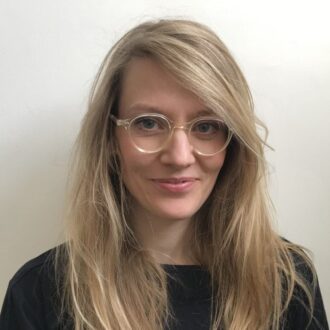
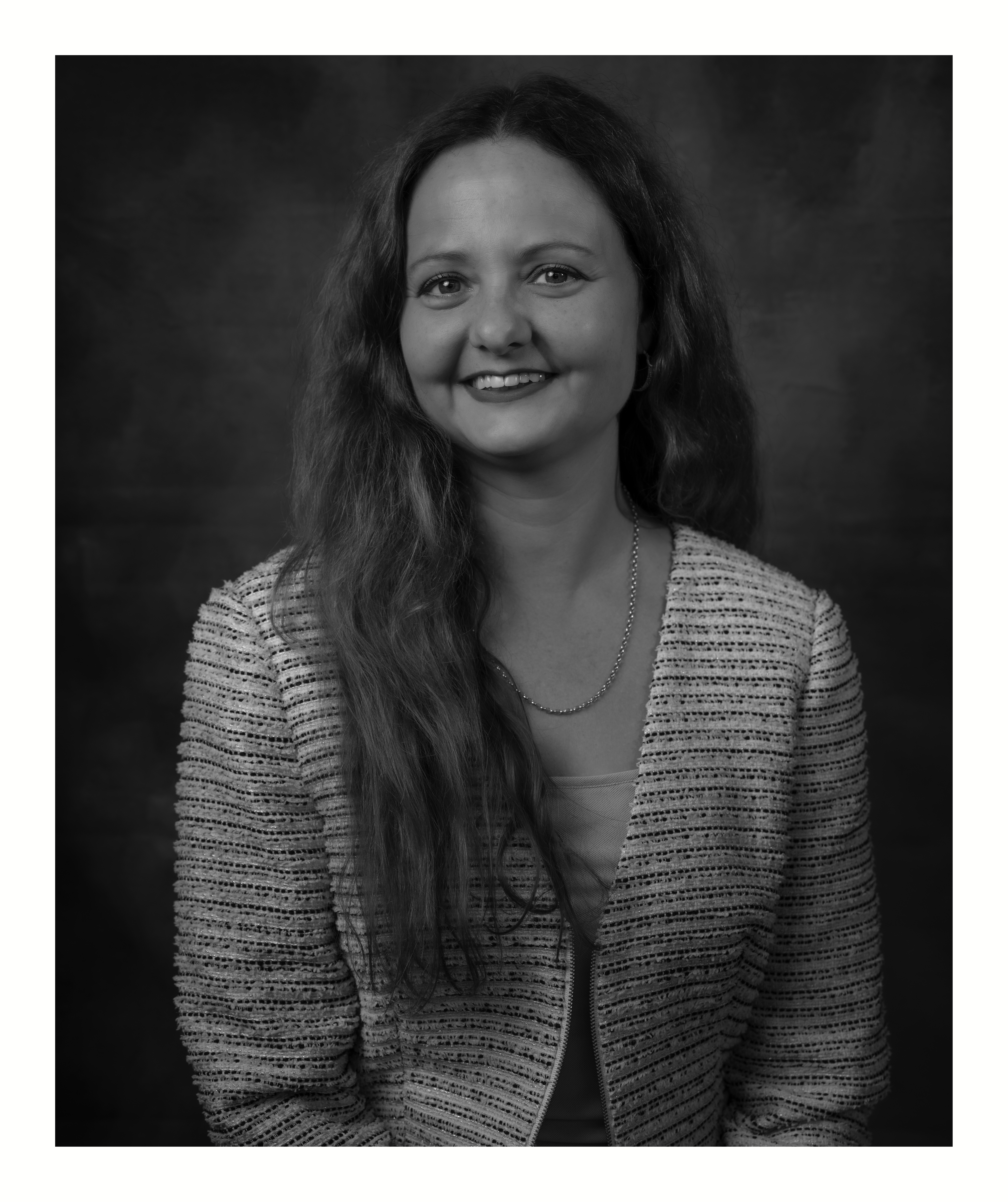
Dr. Saree Alnaghy is an Honorary Associate Professor at the University of Wollongong's Faculty of Engineering and Information Sciences, affiliated with the Centre for Medical Radiation Physics. She holds a Bachelor of Medical and Radiation Physics (Honours) and a PhD in Physics from the University of Wollongong (2009–2017). Her research focuses on advanced medical imaging and radiation therapy technologies, including photon counting detectors, dosimetry systems, and robotic motion phantoms for quality assurance. Key research areas include: Development of novel X-ray detectors for radiotherapy guidance High-resolution dosimetry techniques using silicon and polymer-based systems Integration of real-time imaging in radiation therapy Robotic systems for motion management in oncology Her work has been supported by grants such as 'Sharper Targeting, Brighter Future' (2024) and 'Bringing Colour to Radiotherapy' (2021–2025). She currently supervises PhD and MRes students on projects involving photon counting CT scanners and radiotherapy imaging. Alnaghy also serves as a Radiation Oncology Medical Physics Registrar at the Nelune Comprehensive Cancer Centre.
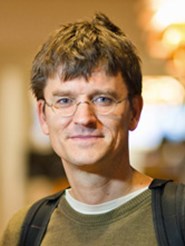
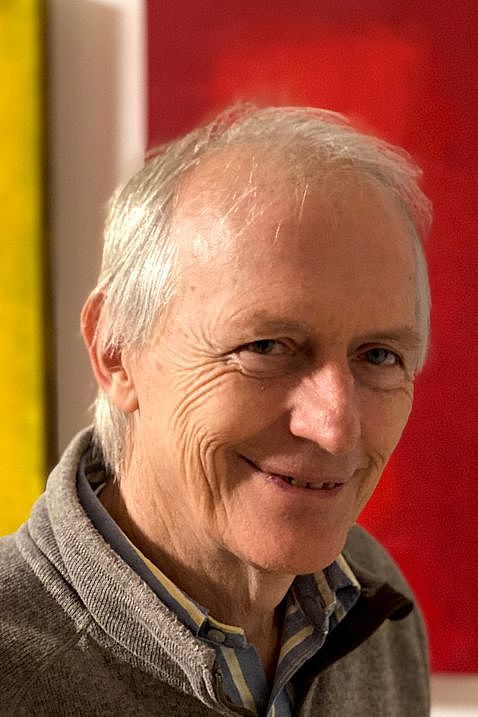
John Breslin is a Personal Professor in Electronic Engineering at the College of Science and Engineering, University of Galway, serving as Director of the TechInnovate and AgInnovate programmes. Associated with two Taighde Éireann – Research Ireland Centres, he is a Principal Investigator at Insight Centre for Data Analytics (specializing in data analytics) and a Funded Investigator at VistaMilk (Agri-Technology), while also leading the EDIH Data2Sustain project. With an h-index of 50, over 12,000 citations, and 300+ peer-reviewed publications including seminal books on the Social Semantic Web, he ranks among Ireland's most influential researchers in digital technologies. Breslin's research fundamentally bridges Semantic Web technologies, AI-driven data analytics, and practical innovation. His co-creation of the SIOC framework—implemented across 65,000+ websites by entities like Yahoo and Boeing—demonstrates real-world impact in social data interoperability. Current work leverages blockchain and federated learning for sustainable Agri-Technology through VistaMilk, while his TechInnovate programmes translate academic research into commercial ventures across healthcare, smart manufacturing, and energy systems. Analysis of his 15 most recent publications reveals dominant themes in AI-enhanced security (35% of works), blockchain applications for sustainability (27%), and multimodal AI for healthcare (20%). His team pioneers privacy-preserving techniques for IoT and medical devices, neurosymbolic visual reasoning frameworks, and federated learning architectures addressing data heterogeneity—directly supporting his roles in national research infrastructures like Insight and VistaMilk. John has received several prestigious awards: IIA Net Visionary Award (twice) ITAG Outstanding Contribution to the ICT Sector Award Galway Chamber President’s Award Best Irish-Published Book Award (2020 for Old Ireland in Colour) Multiple Best Paper Awards He leads major research initiatives funded by Taighde Éireann – Research Ireland: Insight Centre for Data Analytics (as Principal Investigator) VistaMilk SFI Research Centre (as Funded Investigator) EDIH Data2Sustain (as Principal Investigator) His entrepreneurial programs TechInnovate and AgInnovate have mentored 200+ startups, securing €50M+ in follow-on funding. Breslin co-founded PorterShed (Galway City Innovation District) and serves on Scale Ireland's Steering Group, creating Ireland's most active regional innovation ecosystem outside Dublin. He maintains active industry partnerships with Vodafone, Boeing, and agricultural cooperatives through VistaMilk's testbed facilities.
Prof. Anna Franklin is a Professor of Visual Perception and Cognition at the University of Sussex's School of Psychology. She leads the Sussex Colour Group and Sussex Baby Lab , focusing on human color perception, development, and neural representation. Her research combines cognitive psychology, developmental science, and neuroscience to explore how color perception develops, influences aesthetics, and relates to conditions like autism. Key projects include ERC-funded initiatives studying environmental impact on color perception and developing the ColourSpot diagnostic app for childhood color vision deficiency. She also serves as Deputy Director of Research and Knowledge Exchange for the School of Psychology. Education includes a BA from the University of Nottingham and a PhD from the University of Surrey, followed by a postdoctoral fellowship. Her work spans 107+ publications, emphasizing interdisciplinary methods like hyperspectral imaging and fMRI. Collaborations include industry partnerships with ETTA LOVES and COSATTO to apply infant visual preference research in product design. Research grants include European Research Council awards (Starting Grant 2012-2017, Consolidator Grant 2018-2025) and a Proof of Concept grant for ColourSpot . Her labs investigate cross-cultural color categorization, infant aesthetics, and neural correlates of color processing. Future work focuses on calibrating visual systems to environmental statistics and improving early childhood color vision screening.
Dr. Esther Chadwick is a Lecturer in Art History at the Courtauld Institute of Art, University of London. Her research focuses on eighteenth-century British art within global contexts , particularly its connections to transatlantic enslavement and cross-cultural encounters . She has held prestigious fellowships at institutions including the Paul Mellon Centre and the Center for Advanced Study in the Visual Arts. Education : University of Cambridge (BA), Yale University (PhD, 2016) Chadwick’s work interrogates the political agency of art during revolutions , the materiality of printed images , and the visual culture of colonialism . Her 2024 monograph, The Radical Print: Art and Politics in Late Eighteenth-Century Britain , explores how printmaking shaped artistic criticality and won the 2025 IFPDA Foundation Book Award. She has co-curated major exhibitions such as Entangled Pasts, 1768-now (Royal Academy, 2024) and William Blake’s Universe (Fitzwilliam Museum, 2024), and her recent publications analyze topics like Haitian postrevolutionary aesthetics and Indigenous London . A committed educator, she teaches courses on portraiture , radical art , and the global print . Scientific Awards : IFPDA Foundation Book Award (2025) Paul Mellon Centre Fellowship (London) Huntington Library Fellowship (California) Lewis Walpole Library Fellowship (Connecticut) CASVA Fellowship (Washington D.C.) Chadwick supervises PhD students including Damiët Schneeweisz (history of portrait miniatures in the Atlantic) and Claire Ó Nualláin (antiquarianism in eighteenth-century Ireland). Her curatorial projects and writings emphasize decolonizing art history and recontextualizing imperial legacies .
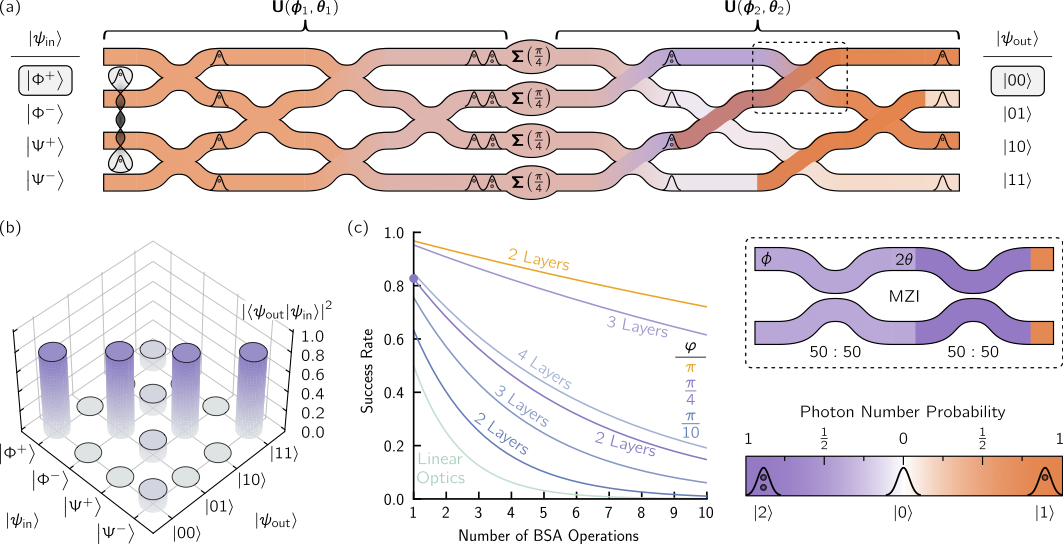
Bhavin J. Shastri is an Assistant Professor in the Department of Physics, Engineering Physics and Astronomy at Queen's University in Canada. His research explores the physics of light for computing , pushing frontiers in information and signal processing through photonic computing and quantum/neuromorphic photonics . He is affiliated with the Centre for Nanophotonics and NUCLEUS , a pan-Canadian photonic computing program funded by NSERC CREATE, bridging artificial intelligence and quantum information . Canada Research Chair & Principal Investigator Faculty Affiliate at Vector Institute (2020-) Editorial Board Member of JPhys Photonics (2019-) Member of IEEE Photonics Society Technical Affairs Council (2019-) Visiting Researcher Scholar at Princeton University (2018-) Shastri Lab members have access to world-class shared facilities, including the Centre for Nanophotonics (CFI-Innovation Fund), Nanofabrication Kingston , the Centre for Advanced Computing , and the Digital Research Alliance of Canada . The lab takes an interdisciplinary approach combining nanophotonics with complex systems on emerging substrates. His research focuses on silicon photonics , nanophonic processors , and photonic integrated circuits with applications to deep learning , nonlinear programming , and quantum information science . His articles show consistent exploration of quantum photonic neural networks , photonic memory systems , and optical signal processing for machine learning and quantum technologies . 2020 IUPAP Young Scientist Prize in Optics 2014 Banting Postdoctoral Fellowship 2012 D. W. Ambridge Prize 2011 IEEE Photonics Society Graduate Student Fellowship 2011 NSERC Postdoctoral Fellowship Multiple Best Student Paper Awards Shastri's lab supervises Ph.D. candidates and postdoctoral fellows working on quantum photonics , neuromorphic computing , and photonic AI systems . His recent work includes photonic tensor cores for scientific computing , quantum photonic neural networks , and all-optical memory systems. Shastri Lab designs programmable nanophotonic processors with potential to outperform microelectronic processors in energy efficiency and computational speeds by seven and four orders of magnitude respectively. Their work spans from device design to system-level implementations in optical computing for machine learning and quantum information processing .
Pär Sundström is a Professor in the Department of Historical, Philosophical and Religious Studies at Umeå University, Sweden, where he serves as head of the philosophy subject. He teaches courses for teacher candidates and students in philosophy and cognitive science programs from his office in Humanisthuset, HUM.J.111, Umeå. His research centers on philosophy of mind, exploring consciousness, perception (particularly color and secondary qualities), concepts and their acquisition, and cognitive development. Sundström argues sensory qualities are not constituents of consciousness, investigates cognition-perception interdependence, and critically assesses physicalist explanations of consciousness through works like 'Colour and consciousness' (2007) and 'How physicalists can—And cannot—Explain...' (2018). Analysis of his 2018-2022 publications reveals sustained engagement with transparency of experience, representationalism, and mind-body problem debates. His work consistently challenges established views like the phenomenal concept strategy while examining conceptual empiricism and sensory concept acquisition across diverse philosophical frameworks. Sundström secured research funding for 'How are we able to think about things?' (2020-2022) and 'Thought and experience: An investigation into concept empiricism' (2007-2010). He actively mentors students in philosophy and cognitive science, contributing to Umeå University's academic community through teaching and research leadership.
Carinna Parraman is a Professor of Colour, Design, and Print, and Director of the Centre for Print Research (CFPR) at the University of the West of England (UWE Bristol). She leads a cross-disciplinary team focused on cutting-edge research in printing, fabrication, and material science. Her work bridges art, science, and technology, with a focus on colour printing, 2.5D printing, and photomechanical methods. Education: PhD (2009, UWE Bristol), MA Printmaking (1993–1995, Camberwell School of Art), BA Fine-Art Printmaking & Art History (1986–1989, Winchester School of Art). Research Interests include RGB pigment printing, structural colour, and the application of printing technologies to cultural heritage preservation. She has secured £11.5M in external grants, leading projects like the £7.7M E3 fund exploring future fabrication methods and the EU-funded Appearance Printing (ApPEARS) initiative. Her recent work includes the Cabinet of Curiosities touring exhibition, artist residency programs, and collaborations with global industry partners. She chairs the IMPACT Printmaking Conference and contributes to journals like Printmaking Today . Current supervisory roles include 9 PhD researchers. Awards and roles include AHRC Peer Review College member, Chair of the Colour Group Great Britain, and Research Ethics Committee membership. Her publications span over 128 works, emphasizing colour science, material innovation, and multidisciplinary print applications.
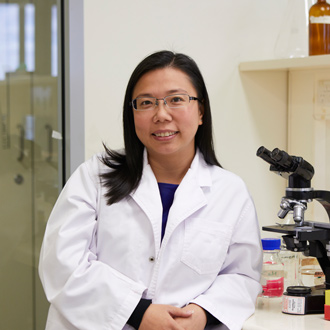
Professor Xiaowei Wang is a leading academic at the Baker Heart and Diabetes Institute , where she heads the Molecular Imaging and Nanotherapeutics laboratory and co-leads the Heart Attack Program and Centre for Cardiometabolic mRNA Therapy . She holds adjunct and honorary academic appointments at the University of Melbourne, La Trobe University, Monash University, Swinburne University, and Torrens University. Professor Wang earned her PhD from Monash University and is a Fellow of the Australian Academy of Health Sciences (FAHA), Cardiac Society of Australia and New Zealand (FCSANZ), and European Society of Cardiology (FESC). Her research integrates physics, chemistry, biology, and biotechnology to develop clinical-ready diagnostic and therapeutic solutions for cardiovascular disease. Her work focuses on preclinical molecular imaging using advanced technologies like MRI, PET, and photoacoustic imaging to enable early diagnosis and real-time monitoring of treatments. She pioneers mRNA therapeutics and vaccines delivered via micro- and nano-particles to prevent heart attacks, strokes, and inflammation with minimal side effects. Key trends in her publications highlight targeted drug delivery , thrombosis prevention , Nanotherapeutics , and translational cardiovascular research . Her studies often explore the intersection of molecular imaging , biomedical engineering , and clinical applications . Scientific awards and recognitions: National Heart Foundation Future Leader Fellowship Level 2 Baker Institute Sir Laurence Muir Prize World Molecular Imaging Society Mid Career Award Inaugural Fellow of the Australian Society of Molecular Imaging National Heart Foundation Paul Korner Innovation Award Inaugural Women of Colour in STEM Award AVBS Achievement and Career Development Award 40 Under 40 Most Influential Asian-Australian Award Finalist Professor Wang is also deeply committed to equity and mentorship, chairing the Baker Institute’s Mentoring Committee and serving on leadership teams for the Women in Molecular Imaging Network and the Gender Equity and Diversity Committee. She has received over 27 national and international travel grants, 18 research prizes, and 14 Young Investigator Awards, underscoring her impact in the field.
Madeleine Kelly is a Senior Lecturer and Undergraduate Curriculum Coordinator at Sydney College of the Arts (University of Sydney), specializing in painting and interdisciplinary art practices. Her work bridges art and science, exploring themes like human-nature intersections, biosemiotics, and avian communication. She holds a PhD in Fine Art from Griffith University (2013) and a BVA (H1) and BEd. Research focuses include expanded painting techniques, color theory, and the interplay between art and ecological systems. Notable exhibitions include The National 4 (2024, AGNSW), Primavera (2005, MCA Sydney), and solo shows at QAGOMA. Her curatorial projects include Birds and Language (Wollongong Art Gallery, 2021) and At Home with Painting (SCA Gallery, 2024). Awards include the 2018 Sunshine Coast Art Prize and residencies in Germany, Cyprus, and South Korea. Her work interrogates materiality, myth, and ecological urgency through sympoietic frameworks, emphasizing collaboration between human and non-human elements.
Prof. Dr. Karl R. Gegenfurtner is a full Professor for General Psychology at the Department of Psychology, Faculty of Psychology and Sports Science, Justus-Liebig-University Giessen. He has held this position since 2001 and leads a prominent research group on visual perception. His work bridges low-level sensory processing with higher cognitive functions and motor control. Education: Psychology Student at the University of Regensburg, Diploma in Psychology, 1986 Ph.D. in Experimental Psychology, New York University, 1990 Postdoc at Howard Hughes Medical Institute and Center for Neural Science, NYU, 1990–1993 Research Scientist at Max Planck Institute for Biological Cybernetics, Tübingen, 1993–2000 Habilitation in Medical Psychology and Behavioral Neurobiology, 1998 Professor for Biological Psychology, Otto-von-Guericke University Magdeburg, 2000–2001 His research focuses on the neural and cognitive mechanisms of visual perception, particularly color vision, object recognition, eye movements, and sensorimotor integration. He investigates how humans perceive complex scenes and objects in natural environments, how these are represented in the brain, and how visual information guides motor actions. His recent work explores topics such as color categorization in neural networks, lightness perception, dynamic size recalibration, and the role of eye movements in perceptual decisions. The 15 most recent articles reflect a strong trend toward understanding perception in real-world contexts, integrating computational modeling, psychophysics, and neuroscientific methods. Key themes include color and shape perception, attention, eye movement control, and the interplay between perception and action. Scientific Awards: Member, German National Academy of Sciences Leopoldina (2015) Wilhelm Wundt Medal, German Society for Psychology (2016) Palmer Lecture, Colour Group (UK) (2019) Turrell Lecture Berlin (2019) Russell Devalois Memorial Lecture, UC Berkeley (2024) ICVS Verriest Medal (2024) Pineapple Science Award (2024) Prof. Gegenfurtner has supervised numerous research projects and training networks, including the DFG Collaborative Research Center TRR 135 on 'Cardinal mechanisms of perception' and the International Research Training Group BrainAct. He has received major funding, including an ERC Advanced Grant (2020) for 'Color 3.0'. He has served on editorial boards of top journals such as Journal of Vision , Vision Research , and Psychological Review , and was President of the Vision Science Society (2012–2013). He is actively involved in academic service, including the Alexander von Humboldt Foundation’s fellowship selection committee. He leads the Visual Perception research group at Giessen, which investigates cortical mechanisms of vision, perception of natural scenes, and the integration of sensory and motor information. The lab employs psychophysical experiments, eye tracking, computational modeling, and neuroimaging to study perception in ecologically valid settings.
Dr Vien Cheung is an Associate Professor at the University of Leeds' School of Design, part of the Faculty of Arts, Humanities and Cultures. Her research focuses on colour science, imaging, and textile technology, with specializations in areas like colour in EDI, cultural heritage, and material design. She holds a Gold Medal (2023) from the Society of Dyers and Colourists (SDC) for contributions to colour research and education. Dr Cheung’s expertise includes Colour and Philosophical Studies, Imaging and Vision Science, and Textile/Materials Science. She has explored topics such as colour perception, textile manufacturing innovation, and the cultural significance of colours in historical art. Her work bridges art, science, and technology, addressing both theoretical and applied challenges. Education: BSc (Hon) Textile Chemistry, MSc Colour Imaging, PhD in Colour and Imaging Science. Professional Memberships: International Colour Association (AIC), Society of Dyers and Colourists (SDC), and others. Her research outputs span colour harmony, digital anthropometry in textiles, and instructional design for language learning. She advocates for inclusive design practices and has contributed to the University of Leeds’ World Changemakers series on impactful research. Awards: SDC Gold Medal (2023), Fellowship of the SDC (FSDC), and Chartered Colourist (CCol) certification.
Jenny Bosten is an Associate Professor in Psychology at the School of Psychology, University of Sussex . Her research focuses on visual perception, particularly color vision and individual differences, using neuroimaging (fMRI, EEG) and psychophysics. ERC-funded project COLOURCODE (2020-2025) on cortical color representation Studied genetics of visual trait variation and anomalous trichromacy Collaborated with institutions including UC San Diego and University of Cambridge Her work explores how color perception is shaped by natural scene statistics and genetic factors. Publications address cortical encoding mechanisms, visual enhancement technologies, and ecological approaches to perception. Current teaching includes advanced neuroscience courses and supervision of MSc research projects. Professional roles include membership in the International Colour Vision Society and former Secretary of the Colour Group (Great Britain).
Michal Mackiewicz is a Professor of Computer Vision at the School of Computing Sciences, University of East Anglia. His research spans colour science, physics-based vision, environmental monitoring, medical imaging, and machine learning. He is actively involved in projects like EVERYFISH (Horizon Europe), SMARTFISH (Horizon 2020), and JellyMonitor. He teaches Computer Vision modules and serves as Postgraduate Research Director and BMVA executive committee member. Key Research Areas: Colour and physics-based vision, environmental monitoring, medical imaging, machine learning Projects: EVERYFISH, SMARTFISH, JellyMonitor, Antarctic Krill Analysis Recent publications focus on UAV imaging, sonar analysis, and semi-supervised learning for marine and medical applications. He leads the Colour & Imaging Lab and supervises PhD opportunities such as the ARIES DTP studentship on marine litter detection.
John Sheppard is a Lecturer in the Department of Computing and Mathematics at South East Technological University. His research focuses on digital forensics , AI applications in cybersecurity , and network intrusion detection . His expertise spans forensic methodologies and the ethical implications of generative AI in investigations. Research interests include: AI-driven forensic analysis techniques Resource-constrained security systems Multimedia evidence processing Recent publications (2023-2024) demonstrate a strong emphasis on AI-enhanced cybersecurity solutions and innovative forensic geolocation methods . Work explores limitations and opportunities in applying large language models to digital investigations.
Dr. Sven Burger is a leading Researcher at the Zuse Institute Berlin (ZIB) within the Modeling and Simulation of Complex Processes department. His work focuses on Nanophotonics , Quantum Technologies , and Optical Resonance Computation , particularly in photonic crystals, plasmonic systems, and quantum light sources. Key projects: NanoLab GRIPS 2024 , MATH+ TES QT , MATH+ PaA-1 (perovskite solar cells), Colour Impression of Solar Cells Collaborations: MATH+ , BIFOLD , Research Campus MODAL His research spans Bayesian optimization for quantum systems, quasinormal mode expansions , chiral plasmonics , and terawatt-scale photovoltaics . Recent work emphasizes RPExpand software for resonance analysis and AAA algorithm applications in photonic design. He contributes to quantum key distribution via plug&play single-photon sources, hot carrier dynamics in plasmonic nanocrystals, and high-efficiency light extraction for deep-UV LEDs. His computational methods address non-Hermitian systems , exceptional points , and self-interference nanoparticle tracking .