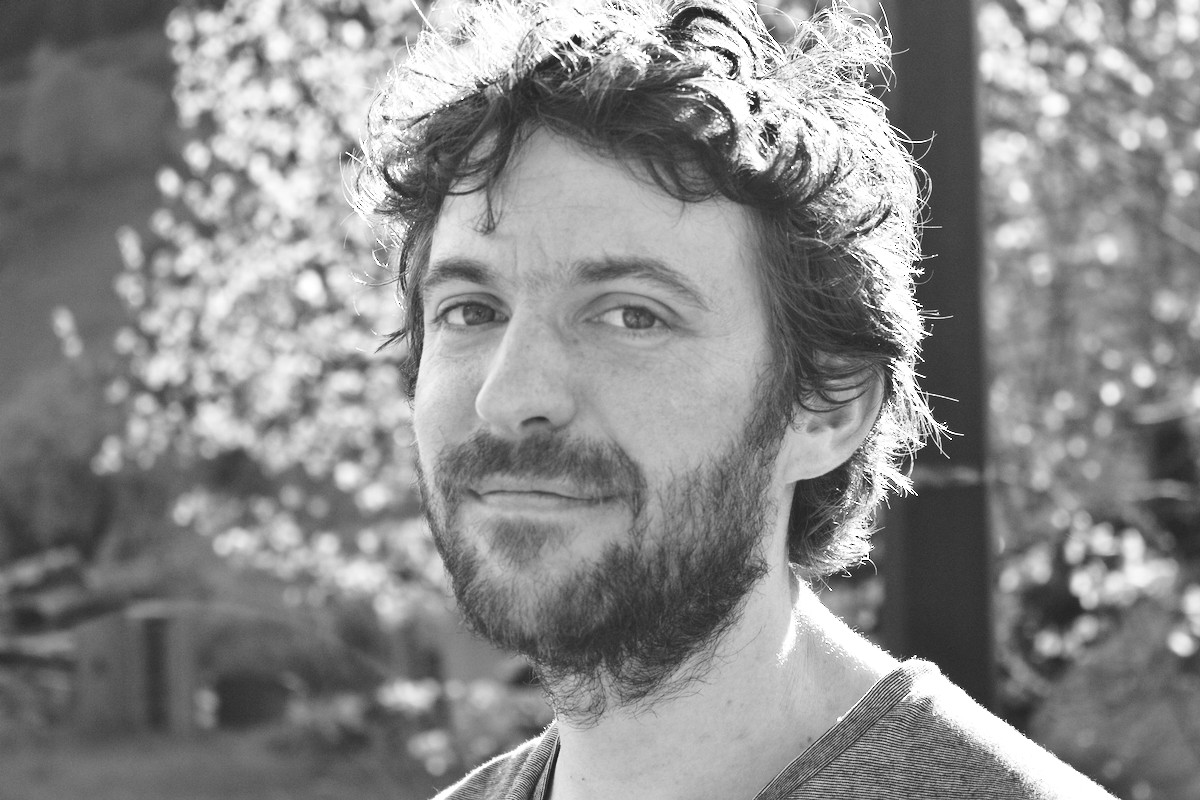
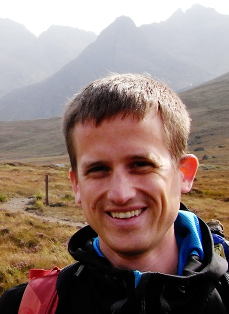
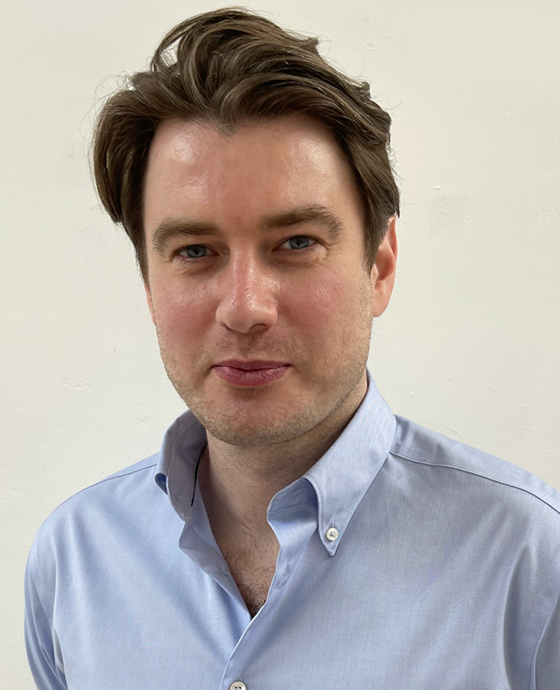
Andrew Stockman is the Steers Professor of Investigative Eye Research at the UCL Institute of Ophthalmology and an Honorary Consultant at Moorfields Eye Hospital since 2004. His career spans 17 years at UCSD and over 20 years at UCL, where he leads the Visual Neuroscience and Function theme and directs the Colour & Vision Research Laboratories. PhD, University of Cambridge (1984) MA, University of Oxford (1984) BA, University of Oxford (1979) His research focuses on visual psychophysics, including color vision, rod vision, visual adaptation, and clinical vision. Notable contributions include the Stockman & Sharpe cone fundamentals adopted by CIE standards, flicker interaction studies, and clinical research linking molecular genetics to visual dysfunction. Recent publications (2024-2017) span color science, visual adaptation, and clinical applications. Key themes include individual variability in cone spectral sensitivities, temporal vision dynamics, and genotype-phenotype correlations in optic neuropathies. Fellow, Optical Society of America NATO/SERC Postdoctoral Fellowship Stockman has supervised numerous PhD and MSc students while teaching courses like "Advanced Visual Neuroscience" and "Visual Neuroscience" at UCL. His lab maintains the CVRL database, a critical resource for vision scientists.
Prof. Adrian Evans serves as Deputy Head of Department in the Department of Electronic & Electrical Engineering at the University of Bath, where he leads research within the Electronics Materials, Circuits & Systems Research Unit (EMaCS) and The Foundry: Centre for Digital, Manufacturing & Design. His academic profile demonstrates active engagement in doctoral supervision and cutting-edge research across multiple domains of image processing and biometrics. His primary research focuses on biometrics—particularly 3D face recognition techniques resilient to facial expressions—and advanced colour/multispectral image processing. He has pioneered methods for colour edge detection, nonlinear filtering, and scale-space sieve-based segmentation. His motion estimation work specializes in analyzing non-rigid bodies like clouds and glaciers, while his nonlinear image processing research centers on mathematical morphological sieves and granulometric texture analysis. Recent publication trends (2021-2025) reveal a strategic shift toward computer vision applications in transportation (multi-camera vehicle tracking systems) and healthcare (non-contact cardiorespiratory monitoring). His work increasingly integrates radar technology with computer vision for vital sign detection while maintaining foundational contributions to mathematical morphology and image enhancement techniques. No major scientific awards are documented in the provided materials. His supervisory record includes 11 doctoral students, with current openness to new PhD candidates. Research funding spans UK government and industry collaborations including EPSRC projects like High Speed 4K Video Transmission (2016-2018) and multiple KTP partnerships with Seiche Measurements Limited and Navtech Radar Limited. He operates within Bath's EMaCS research unit and The Foundry center, leveraging these interdisciplinary environments for digital manufacturing and design innovation. His work directly supports UN Sustainable Development Goals through applications in smart transportation systems and healthcare technology development.
Alice POREBSKI is an active Associate Professor (Maître de Conférences) at Université du Littoral Côte d'Opale, where she is affiliated with LISIC (Laboratoire d'Informatique Signal et Image de la Côte d'Opale). Her research focuses on computer vision and image processing with particular emphasis on texture analysis and classification techniques across color and hyperspectral imaging domains. Dr. POREBSKI's research interests center on feature selection methodologies for texture classification, with extensive work on Local Binary Patterns (LBP), histogram analysis, and multi-color space approaches. Her recent work has evolved toward environmental applications, particularly the detection and classification of marine plastic debris using hyperspectral imaging systems mounted on aquatic drones. She has developed specialized CNN architectures optimized for spectral-spatial feature extraction in environmental monitoring contexts. Her research bridges fundamental computer vision techniques with practical environmental applications, demonstrating how texture analysis methods can address real-world pollution challenges. Her publication record shows a clear progression from foundational texture analysis techniques to applied environmental monitoring systems. Early work focused on optimizing LBP parameters and multi-color space analysis for standard texture classification tasks. More recently, her research has centered on hyperspectral imaging for marine pollution detection, with significant contributions to benchmark datasets and compact feature representation methods specifically designed for drone-based remote sensing applications. This evolution demonstrates both technical depth in image processing and strategic application to pressing environmental issues. Dr. POREBSKI has made substantial contributions to the development of feature selection methodologies that enable efficient texture classification while reducing computational complexity. Her work on clustering-based sequential selection approaches and novel LBP variants has advanced the field of texture analysis, particularly for high-dimensional data like hyperspectral imagery. Through collaborations with researchers including Nicolas Vandenbroucke and Adam El Bergui, she has developed complete systems from theoretical foundations to practical implementations for environmental monitoring.
Dr. Jenny Bosten is a Research Fellow in Neuroscience at Gonville and Caius College, affiliated with the Department of Psychology at the University of Cambridge. Her academic work bridges psychological and neuroscientific approaches to understanding visual perception. Her research interests focus on the neural mechanisms underlying color vision and visual processing. As a member of Cambridge's neuroscience community, she contributes to the vibrant research environment in sensory neuroscience and psychophysics. Her work appears to emphasize experimental approaches to understanding how humans perceive and interpret visual information. Dr. Bosten collaborates with Professor John Mollon, a leading expert in visual neuroscience, suggesting her research has significant connections to fundamental questions in vision science. While specific details of her projects are not provided in the available text, her position within Cambridge's Department of Psychology indicates active engagement in both theoretical and experimental neuroscience research.
Ana Maria Garcia Nolasco da Silva is an Adjunct Professor in the Department of Arts at the School of Education, Polytechnic Institute of Lisbon. Holding a Ph.D. in Aesthetics and Philosophy of Art from the University of Lisbon, she specializes in the cultural intersections between Africa and Portugal within art, design, and craftsmanship contexts. Her academic credentials include: Ph.D. in Aesthetics and Philosophy of Art, Faculty of Letters, University of Lisbon Master's in Aesthetics and Philosophy of Art, Faculty of Letters, University of Lisbon Bachelor's in Plastic Arts - Painting, Faculty of Fine Arts, University of Lisbon Her research centers on African-Portuguese cultural synergies with emphasis on Lusophone Macaronesian islands (Azores, Madeira, Cape Verde, São Tomé and Príncipe) and migration-driven cultural constellations in continental Portugal. She investigates how artisanal traditions, political gestures, and feminist perspectives manifest in contemporary artistic practices, particularly through collaborative projects and biennials in Lusophone Africa. Her work bridges visual anthropology, postcolonial theory, and sensory studies to examine haptic visuality and hybrid identities. Analysis of her 15 most recent publications reveals dominant trends in decolonial art practices, with recurring focus on São Tomé and Príncipe's cultural events, Catarina Branco's artisanal reinterpretations, and René Tavares' performance works. Her scholarship consistently explores how migration reshapes creative expression across the Lusophone Atlantic, emphasizing community-based art and feminist interventions in postcolonial contexts. No scientific awards were documented in the source material. While specific student supervision isn't listed, her academic leadership includes chairing the 2017 "Rhizomes" International Conference and co-editing conference proceedings. Her research is supported by institutional affiliations rather than externally documented grants, with active participation in international conferences across Portugal, Spain, Argentina, and Germany. She engages with collaborative networks through conference organization and cross-institutional projects, though dedicated labs or permanent research teams aren't specified in available materials.
Jennifer Dionne is an Associate Professor of Materials Science and Engineering at Stanford University . She leads a multidisciplinary research group focused on controlling light-matter interactions at the nanoscale. Current faculty member Research spans nanophotonics, plasmonics, and biophotonics Research interests include: Biophotonics for label-free molecular-to-cellular disease detection Active nanophotonics with electro-optic tunability Plasmonics-enabled sustainable chemical catalysis Extreme energy-shifting nanoparticles (upconversion/scintillation) Quantum computing applications through light control Publication trends demonstrate expertise in plasmonic materials, surface plasmon polaritons, and metal-insulator-metal structures. Her work develops innovative nanophotonic devices for biomedical and energy applications while advancing fundamental understanding of light-matter interactions. Labs & teams : The Dionne Group comprises materials scientists, chemists, physicists, synthetic biologists, and engineers from multiple engineering disciplines collaborating toward a shared vision of transformative light-based technologies.
Dr. Bilgi Görkem Yazgaç is a Research Assistant at Istanbul Technical University, Department of Electrical-Electronics. His research focuses on Circuits and Systems Theory, Artificial Intelligence, and Audio and Speech Processing, with a strong emphasis on Embedded Systems and Fractional-Order Calculus applications. PhD in Electronic Engineering (2017), Istanbul Technical University Master's in Electronics Engineering (2014), Istanbul Technical University Licence in Electronics Engineering (2009), Istanbul Technical University His work spans interdisciplinary areas such as agricultural monitoring, where he developed embedded systems for pest detection and wheat seed classification, and signal processing for speech and environmental sound analysis using Fractional-Order Calculus. He has contributed to 8 research outputs, including conference proceedings and journal articles, with an h-index of 4 and over 40 citations. Key research fields: Embedded Systems, Fractional-Order Calculus, Agricultural Monitoring, Speech Processing, Artificial Intelligence, Circuits Theory
Dr. John Jakeman is the Head of Quality and Validations for the Faculty of Health and Life Sciences at Oxford Brookes University. He specializes in exercise physiology , strength and conditioning , and athletic training , with a focus on optimizing performance and recovery in athletes. Research Areas: High Intensity Interval Training (HIIT) Exercise-Induced Muscle Damage (EIMD) Recovery Color Vision Deficiency in Sport Supervision: He has supervised postgraduate research students on topics including sports coaching, gender perceptions in sport, and training methodology. Professional Memberships: BASES Accredited Sport and Exercise Scientist UKSCA Accredited Strength and Conditioning Coach Associate of the Higher Education Academy (HEA)
Romain Vergne is an Associate Professor at the University of Grenoble Alpes, France, and a researcher affiliated with the Maverick team (Inria, LJK) since 2012. Previously, he conducted postdoctoral research at Justus Liebig University Giessen (Germany). His research focuses on the phenomenological links between shapes, light, and material perception, aiming to develop perceptually plausible computer graphics tools. Key interests include shape depiction, visual perception, texture synthesis, and appearance control via his GPU-centric node-based system Gratin for 2D/3D data manipulation. Best Paper Awards: AFIG 2018, Expressive 2018, AFIG 2015 Honorable Mentions: NPAR 2011, I3D 2010 Recent publications explore Gabor noise optimization, motion-coherent stylization, and non-photorealistic rendering frameworks. He also contributes to eco-feedback visualization systems and cartographic style extensions.
Johannes Meng is a Researcher and PhD Student at the Computer Graphics Group, Karlsruhe Institute of Technology (KIT) , Germany. He has been affiliated with KIT since 2012, following internships at Disney Research Zürich (2012, 2013) and Weta Digital (2013). Education : Diploma in Computer Science (KIT, 2012) Key Research Areas : Rendering algorithms, light transport modeling, granular material simulation, color science His research focuses on physically based rendering techniques, including sampling schemes, multi-scale material modeling, and spectral color representation. Meng has contributed to publications in Computer Graphics Forum and ACM Transactions on Graphics , often collaborating with experts in rendering and simulation fields. Meng's work demonstrates expertise in both algorithmic improvements and practical implementation of rendering systems. He has participated in teaching roles (exercises and seminars) in computer graphics and photorealistic rendering at KIT since 2012.
Paul Linton is a NOMIS Foundation Fellow at the Italian Academy for Advanced Studies and an Affiliate of the Visual Inference Lab at Columbia University's Zuckerman Mind Brain Behavior Institute. His work bridges visual perception , cognitive neuroscience , and philosophy of mind , focusing on challenging traditional inferential models of vision through novel illusions and theoretical frameworks. Focus Areas : 3D vision, depth perception, perceptual-cognitive distinction, visual illusions. Research Highlights : Linton proposes that 3D visual shape reflects uncorrected retinal disparities rather than environmental geometry, linking this to cognitive inferences about scale. He developed five groundbreaking illusions (e.g., Linton Stereo Illusion, Linton Scale Illusion) to demonstrate that visual experience is simpler than previously thought, with cognitive processes driving apparent depth and size constancy. Publications span topics like stereopsis , monocular depth cues , and the physiology of V1 . His 2025 preprint on five illusions and 2023 Phil. Trans. R. Soc. B article are pivotal. Awards include the NOMIS Fellowship and Presidential Scholar at Columbia. Collaborations include Niko Kriegeskorte’s lab and the MIT Consciousness Club. He organizes events like the Royal Society’s New Approaches to 3D Vision and contributes to debates on computational consciousness and metacognitive science.
Jonathan Cohen is Professor of Marine Science and Undergraduate Coordinator in the College of Earth, Ocean & Environment at the University of Delaware . Based at the School of Marine Science & Policy in Lewes, Delaware, he leads research that bridges neurobiology, visual ecology, and polar biology while coordinating academic programs for marine science majors. Education Postdoctoral Fellow, Harbor Branch Oceanographic Institution (2005–2006) Ph.D., Biology, Duke University (2004) B.S., magna cum laude, Biology & Environmental Science, Dickinson College (1999) Research Interests Prof. Cohen’s interdisciplinary program centers on how marine animals perceive and respond to light . His laboratory combines comparative physiology, neurobiology, and field ecology to investigate: Visual systems of crustaceans and fish across ontogeny Behavioral and physiological adaptations to extreme Arctic light regimes Interactions between light fields, zooplankton migrations, and estuarine transport processes Ecological impacts of microplastics mediated through sensory disruption Recent work leverages autonomous vehicles, high-resolution optical sensors, and next-generation biophysical models to quantify how environmental change alters marine sensory landscapes. Publication Trends Between 2020 and 2025, Prof. Cohen has authored or co-authored more than 20 papers that collectively chart a trajectory from organismal sensory biology to large-scale physical-biological coupling. The corpus reveals three dominant themes: (1) Polar-night marine optics and bioluminescence as ecological drivers; (2) Estuarine transport and retention of buoyant particles including microplastics; and (3) Visual ecology and sensory physiology of larval and adult crustaceans. These studies integrate laboratory microcosm experiments, high-latitude field campaigns, and numerical modeling to provide a mechanistic understanding of how light governs organismal behavior and ecosystem processes. Scientific Awards & Honors No specific awards are listed in the provided materials; however, sustained NSF and collaborative funding is evident from the publication record. Advising & Grants As the Marine Science Undergraduate Coordinator , Prof. Cohen mentors a large cohort of majors, oversees curriculum development, and supervises senior theses and research projects. Graduate students and postdocs routinely participate in his externally funded projects, though individual names are not disclosed in the supplied text. Laboratories & Field Assets Research is conducted within the Cannon Laboratory Complex in Lewes, DE, providing access to running seawater systems, optics labs, and microscopy suites. Field programs utilize UD’s coastal vessels, autonomous surface vehicles, and partnerships at Arctic stations such as Ny-Ålesund, Svalbard.
Dr. Daniel Hanley is an Assistant Professor in the Biology Department at George Mason University . His research focuses on visual perception, cognition, and decision-making in wild birds , particularly examining how natural selection shapes avian eggshell coloration and species interactions. Education: PhD in Biological Sciences, University of Windsor (2007–2011) MSc in Animal Behavior, Bucknell University (2004–2006) BSc in Animal Science (cum laude), Cornell University (2002–2004) His work involves quantifying natural color diversity and has been published in journals like Nature Ecology & Evolution and Proceedings of the Royal Society . Articles highlight his studies on brood parasitism, egg mimicry, and pigment thermoregulation , with findings frequently covered by media outlets such as the BBC , Science magazine , and Discover Magazine . Scientific Recognition: Awarded Elective Membership at the American Ornithological Society (2020) for significant contributions to ornithology.
Dr. Vineetha is an Associate Professor at Monash University's School of Engineering, leading the Intelligent Lighting Laboratory . Her research focuses on Solid State Lighting , Color Science , and Circadian Lighting , with industry-driven applications for energy-efficient human-centric lighting systems. Key Projects : Smart Edge Computing Vision Solution using AI (2025-2028) Shaping Global Human Light Behaviour (2023-2025) Enhancing Rosmarinic Acid Production via LEDs (2020-2022) Circadian System Impact Assessment (2020-2024) Light Quality Research (2015-2018) Teaching Innovations : Flipped classrooms Interactive teaching via audience response systems Virtual reality lab training (SLED Project) Scientific Recognition : Best Paper Award (2023) Her work contributes to UN Sustainable Development Goals including Clean Energy , Good Health , and Industry Innovation . She serves as Course Coordinator for Electrical and Computer Systems Engineering, emphasizing rigorous course management improvements.
Maureen Stabio is an Associate Professor in the Department of Cell and Developmental Biology at the University of Colorado Anschutz Medical Campus. She serves as Vice Director of the Modern Human Anatomy Program and specializes in retinal structure-function relationships, neuroanatomy education, and neurodegenerative disease research. PhD in Anatomy and Neurobiology from Boston University School of Medicine (2007) Postdoctoral training in retinal neuroscience at Brown University's Berson Lab Her research focuses on intrinsically photosensitive retinal ganglion cells (ipRGCs) , particularly M4/M5 subtypes involved in conscious vision. She investigates their role in diseases like Familial Dysautonomia (FD) and develops 3D neuroanatomy teaching tools to improve clinical education. Recent publications address retinal topography, FD-related degeneration, and educational neuroscience frameworks. Scientific contributions span: Retinal ganglion cell diversity and circuitry Neuroanatomical visualization techniques Mouse models of neurodegeneration Educational technology assessment She leads the CU Plastinated Organ Library and conducts NSF-funded research on FD retinal degeneration with Montana State University's Lefcort Lab.