Klaudija Carović-Stanko is an Assistant Professor at the Department of Plant Biodiversity, Faculty of Agriculture, University of Zagreb. Her work focuses on seed science , genetic diversity assessment , and conservation of plant genetic resources , particularly in medicinal and aromatic plants and common bean landraces . Research Highlights: Advanced DNA marker techniques, GWAS for mineral content, multispectral imaging for stress detection, and biostimulant applications in crops. Projects: Coordinator of EU-funded initiatives like Centre of Excellence CroP-BioDiv and Croatian Science Foundation grants on bean genetics and plant stress responses. Editorial Roles: Section Editor for Agriculturae Conspectus Scientificus and Special Issue Editor for Plants on DNA markers in plant science. Academic Background: PhD (2009), MSc (2003) in Plant Sciences from University of Zagreb. Extensive international training in molecular genetics, plant phenotyping, and conservation techniques.
Filip Varga is a Postdoctoral Researcher at the Faculty of Agriculture, University of Zagreb , specializing in plant biodiversity and molecular genetics. He previously served as an assistant at the same institution from 2015 to 2021. PhD in Biology (2014), University of Zagreb, Faculty of Science MSc in Experimental Biology (2014), University of Zagreb BSc in Biology (2011), University of Zagreb His research focuses on DNA marker techniques , molecular phylogenetics , herbarium collections , and ethnobotany . He integrates GIS tools and bioinformatics to study genetic diversity, particularly in Dalmatian pyrethrum and medicinal plants. Filip employs advanced technologies like computer vision for seed analysis and next-generation sequencing for biodiversity conservation. The most recent publications highlight his expertise in chromatographic analysis of pyrethrins , ethnobotanical studies in Dalmatia , and innovative agricultural data methods . His work aligns with projects funded by the European Structural and Investment Funds and the Croatian Science Foundation . Key projects include: CroP-BioDiv: Coordinator (2018–2023) Genome-wide microsatellite identification: Partner (2020–2022) Twinning Open Data Operational: Partner (2019–2022) Genetic basis of insecticidal potential in Dalmatian pyrethrum: Coordinator (2017–2021) Filip is a member of the CroP-BioDiv center, the National Program for Conservation of Plant Genetic Resources , and the Croatian Botanical Society .
Blas Salvador Dominguez is an Assistant Professor at the University of Cádiz, affiliated with the Department of Automation, Electronics, Architecture and Computer Networks Engineering and the TEP940 Applied Robotics research group. His work focuses on Robotics, Microfluidics, and Biomedical Devices, particularly in applications such as neonatal monitoring and wearable health sensors. PhD in Microfluidic Radiopharmaceutical Systems (University of Seville, 2019) Research interests include Smart Insoles , Anthropomorphic Prostheses , and Microfluidic Reactors . Recent publications highlight advancements in deep learning for weld inspection , edge-cloud neonatal monitoring , and PDMS-based sensors . Collaborations with the Institute of Electron Microscopy and Materials (IMEYMAT) underscore his interdisciplinary approach. Scientific awards are not explicitly listed, but his work has been supported by projects in Production Technologies and Applied Robotics . He has contributed to 15+ publications spanning wearable sensors, radiopharmaceutical synthesis, and PCB-MEMS integration.
Sang Hong is an Associate Professor in the Charles E. Schmidt College of Science at Florida Atlantic University, Boca Raton, specializing in visual perception research. His work bridges cognitive science and neuroscience to investigate how sensory inputs shape perceptual experiences and cognitive behaviors. Ph.D. from University of Chicago Dr. Hong's research focuses on neural mechanisms of color vision, motion perception, and visual awareness, with particular emphasis on facial expression processing and binocular rivalry phenomena. Using psychophysics and fMRI methodologies, he examines how color representation occurs in the lateral geniculate nucleus (LGN), how color and motion interact, and how emotional expressions are processed under conditions of visual suppression. His work reveals fundamental principles of sensory integration and perceptual organization. Analysis of his 2013-2021 publications shows consistent exploration of visual awareness mechanisms, with increasing attention to multisensory integration (audio-visual interactions) and individual differences in perception. Key trends include investigations of sex differences in emotional processing, neural correlates of color-motion interactions, and clinical applications examining visual context processing in bipolar disorder and schizophrenia. His research demonstrates how low-level perceptual phenomena inform higher cognitive functions. Dr. Hong actively contributes to scholarly discourse as an ad hoc reviewer for major journals including Journal of Vision, Vision Research, and Frontiers in Psychology. His service supports rigorous evaluation of research in visual neuroscience and cognitive psychology. His laboratory employs advanced techniques including continuous flash suppression, binocular rivalry paradigms, and fMRI to probe the neural basis of visual awareness. Current projects investigate how feature binding occurs during perceptual organization and how emotional content modulates sensory processing under conditions of limited awareness.
Academician Professor Sven Lončarić serves as a Full Professor in the Department of Electronic Systems and Information Processing at the Faculty of Electrical Engineering and Computing, University of Zagreb. With his office located in room D-119 and contactable via phone at 6129-891, he maintains an active presence in both teaching and research activities within the institution. His work bridges theoretical computer science with practical applications across multiple domains. Professor Lončarić's research spans computer vision, image processing, and deep learning with significant contributions to medical imaging, particularly in retinal analysis using optical coherence tomography. His work in color constancy and illumination estimation has advanced techniques for handling multi-illuminant scenes, while his research in ultrasound image analysis has practical applications in non-destructive testing. He also explores computer security aspects of machine learning models, particularly in backdoor detection and removal. His recent publications demonstrate a strong trend toward applying deep learning techniques to solve complex problems in medical imaging, retail automation, and industrial applications. The concentration of work in retinal imaging and color constancy shows his commitment to advancing computer vision fundamentals while simultaneously addressing practical challenges in healthcare and industry. His research increasingly incorporates anomaly detection methods and robust security practices for machine learning systems. Professor Lončarić actively contributes to the academic community through organizing events like the Croatian Computer Vision Workshop and the First Croatian Symposium on Artificial Intelligence, providing platforms for knowledge exchange in his fields of expertise. His work on astronomical data processing demonstrates the versatility of his methodological approaches across diverse scientific domains. Within the Department of Electronic Systems and Information Processing, he participates in the Center of Excellence for Computer Vision, contributing to the institution's research profile in artificial intelligence and computer vision. His work on medical imaging applications connects the faculty with healthcare institutions, facilitating interdisciplinary collaborations that translate technical advances into medical practice.
Aditya Suneel Sole is an Associate Professor in the Department of Computer Science at the Norwegian University of Science and Technology (NTNU) , Faculty of Information Technology and Electrical Engineering. He serves as a Research Coordinator Project Manager Associate Director of CIE Division 1 Conference Chair Deputy Scientific Coordinator for the MSCA Doctoral Network Aditya holds a Master of Science in Digital Colour Imaging and a PhD in Computer Science . His research focuses on Material Appearance Measurement , 3D Imaging , and Color Science , particularly in Spectral and Geometric Analysis 3D Printing Reflectance Modeling Surface Property Reconstruction Gonio-spectrophotometry Research Grant Coordination His recent publications (2022-2025) emphasize 3D Object Quality Metrics White Core Thickness in Color Reproduction BRDF Estimation Accelerated Aging of Printed Materials Multi-layer Halftoning Entropy Evaluation in Mesh Simplification with applications in Cultural Heritage, Advanced Manufacturing, and Remote Sensing. He teaches IDATG1004/IDATA1004/IDATT1004 - Team-Based Collaboration and actively participates in outreach activities, including presentations at MANER Network Colour Leeds London Imaging Meeting Euspen Conferences
Deborah Orel-Bixler serves as Professor of Clinical Optometry and Vision Science at the University of California, Berkeley's School of Optometry, where she holds dual leadership roles as Chief of the Infant Toddler Clinic and Chief of the SVACH Clinic. Her clinical responsibilities focus on specialized vision care for pediatric and multi-disabled populations within the university's academic medical framework. Her educational credentials include a Doctor of Optometry (OD) and Doctor of Philosophy (PhD), with doctoral research completed at UC Berkeley in 1989. The dissertation, titled Subjective and Visual Evoked Potential measures of acuity in normal and amblyopic adults and children , established her foundational work in visual assessment methodologies. Dr. Orel-Bixler's research program centers on pediatric vision science with three interconnected pillars: developing vision assessment protocols for infants with severe disabilities, validating acuity testing methods for preschool populations, and investigating neural mechanisms in strabismus. Her work bridges clinical optometry and neuroscience, particularly through visual evoked potential (VEP) studies, to address critical gaps in early vision impairment detection. This trajectory reflects a consistent commitment to translating laboratory findings into practical screening tools for vulnerable pediatric groups. Analysis of her publication history reveals sustained focus on optimizing vision screening for preschoolers, demonstrated by leadership in the multi-institutional Vision in Preschoolers (VIP) Study Group. Her research established evidence-based standards for HOTV and Lea symbols testing while pioneering electronic acuity assessment methods. The longitudinal nature of her work—from infantile esotropia neurophysiology (1990s) to preschool screening validation (2000s)—shows methodological evolution toward population-level impact while maintaining clinical relevance. Her professional recognition includes: Fellow of the American Academy of Optometry (FAAO) Dr. Orel-Bixler has directed major clinical initiatives including the Infant Toddler Clinic and SVACH Clinic, indicating significant administrative responsibilities alongside research leadership in the VIP Study Group. While specific grant histories aren't detailed in source materials, her 15+ peer-reviewed publications in journals like Optometry and Vision Science and Investigative Ophthalmology & Visual Science demonstrate sustained research productivity. She has also developed applied resources including the Vision Tests for Infants video/booklet series and contributed foundational chapters to Rudolph's Pediatrics . Her clinical leadership positions at UC Berkeley indicate active involvement in training through direct supervision in specialized clinics, though formal mentoring roles aren't explicitly documented. The integration of her research on multi-disabled infant assessment with clinical SVACH Clinic operations demonstrates a cohesive approach to addressing complex vision care needs within academic medicine.
James Kundart is a Professor at the College of Optometry, Pacific University , where he teaches courses such as Evidence-Based Optometry, Visual Perception, and Nutritional Optometry. He holds a PhD in Vision Science (2023) and an OD (1999) from Pacific University, alongside a BS/BA from Pennsylvania State University (1993). Dr. Kundart specializes in aniseikonia , double vision , and visual perception , with a focus on ocular, neurological, and systemic diseases, particularly Ehlers-Danlos syndrome. His research spans binocular vision , stereopsis , pediatric ocular disease , and interprofessional healthcare . He has contributed to studies on Enchroma filters for color vision impairment, prism adaptation , and digital eye strain . Scientific Awards : Fellow of the American Academy of Optometry (FAAO) Academic Fellow of the College of Optometrists in Vision Development (FCOVD-A) Clinical Faculty of the Year (3 times) Chair of Amigos Eye Care Board of Directors (10 years) Dr. Kundart co-authored chapters in Visual Development, Diagnosis, and Treatment of the Pediatric Patient (2019) and runs the 3D Performance service in Beaverton, Oregon.
Yiqiu Dong is an Associate Professor in the Department of Applied Mathematics and Computer Science at the Technical University of Denmark (DTU), where they have been employed since 2010. Currently, they are working on the ERC-project "High-Definition Tomography" and teach courses including Optimization and Data Fitting, Computational Science in Imaging, and Discrete Inverse Problems. Dr. Dong received their Ph.D. in Computational Mathematics from Peking University in 2007 through a joint program with The Chinese University of Hong Kong. Their academic journey includes postdoctoral research at Karl-Franzens University of Graz in Austria and a scientific researcher position at Helmholtz Zentrum Muenchen in Germany. Dr. Dong's research focuses on mathematical imaging, inverse problems, and variational methods. Their work spans multiple areas including image restoration, tomographic reconstruction, and optimization methods for solving complex imaging problems. They have developed innovative approaches for handling various types of image noise including multiplicative noise, impulse noise, and Cauchy noise. Analysis of Dr. Dong's publication record reveals a strong focus on image restoration techniques using variational methods and total variation regularization. Their work demonstrates progression from basic noise removal techniques to more sophisticated multi-scale and vectorial approaches for color image processing. Recent publications show increasing focus on tomographic reconstruction and medical imaging applications. Dr. Dong has collaborated extensively with researchers across Europe and Asia, including institutions such as Helmholtz Zentrum Muenchen, Karl-Franzens University of Graz, The Chinese University of Hong Kong, and Peking University. Their work on the ERC-project "High-Definition Tomography" represents a significant research initiative in their field. Teaching responsibilities include advanced courses in optimization, computational imaging, and inverse problems, reflecting their expertise in mathematical methods for image processing and analysis.
Dr. Sung Mun Lee is an Associate Professor at Khalifa University's Department of Biomedical Engineering. His work focuses on strategic design of drug delivery systems, development of novel biomaterials for nanomedicine, and targeting reactive oxygen species (ROS) in inflammatory diseases. Education: Ph.D. from Texas A&M University M.Sc. from Seoul National University B.S. from Korea University Research interests span ROS scavenging for diabetes and atherosclerosis, siRNA delivery to Kupffer cells in acute liver failure, nanoparticle engineering for protein protection, and targeted therapies for macrophages. His recent publications highlight interdisciplinary work in cancer therapy, oxidative stress diagnostics, organ-on-a-chip modeling, and bioprinting of functional tissues. Current projects include: Zein nanoparticles for oral therapeutic protein delivery Monocyte-based ROS scavenging systems for atherosclerosis Polyketal microparticles for siRNA delivery in acute liver failure Conductive MXene-gold bioinks for skeletal muscle engineering Dr. Lee teaches Biomedical Engineering Fundamentals (BMED351) and Biotransport Phenomena (BMED331) , and leads research groups at the Healthcare Engineering Innovation Group and Center for Biotechnology Research.
Dr. Steffen Katzner is an associate faculty member in the Faculty of Biology at Ludwig Maximilian University of Munich, affiliated with the Department of Biology II and the Division of Neurobiology. He co-leads the Vision Circuits research group with Laura Busse, focusing on neural mechanisms underlying visually guided behavior in mice. His research integrates optogenetics with extracellular electrophysiology to analyze how behavioral relevance modulates cortical and sub-cortical neural activity. Key themes include sensory processing, locomotion effects on cognition, and cortical dynamics during attention. Recent publications highlight trends in mouse visual neuroscience , sensory-motor integration , and computational models of behavior . Articles explore corticothalamic feedback, V1 microcircuits, and prior knowledge in neural processing. Responsibilities include research group leadership and collaborative studies with Gregory Born, Laura Busse, and others. Contact: steffen.katzner@lmu.de
Michelangelo Ceci is a full professor at the Department of Computer Science, University of Bari, Italy. His academic career spans over two decades with significant contributions to data mining and machine learning research. He has established himself as a leading figure in the European data mining community through his extensive publication record and leadership roles in major conferences. Dr. Ceci's primary research interests focus on data mining and machine learning, with particular emphasis on multi-relational data mining, text mining, spatial data mining, spatio-temporal data mining, and semi-supervised/transductive learning. His work bridges theoretical foundations with practical applications across diverse domains including social network analysis, financial technology, healthcare informatics, and environmental monitoring. His research demonstrates a consistent trajectory toward increasingly complex data structures and more sophisticated modeling techniques. The most recent publications reveal several key trends: a growing focus on explainable AI systems, increased application of graph-based methods for spatio-temporal data, expansion into biomedical applications particularly in microbiome analysis, and development of robust methods for anomaly detection in cryptocurrency and social networks. His work increasingly integrates multiple data sources and perspectives through multi-view learning approaches. Dr. Ceci has served on the program committees of major international conferences including IEEE ICDM, IJCAI, ECMLPKDD, SIAM SDM, ECAI, ISMIS, PAKDD, DEXA, and ACM SAC. He has held editorial positions with journals such as IJSNM, IJDATS, and Journal on Advances in Intelligent Systems, and has been actively involved in organizing conference tracks and workshops. His research has been supported through significant projects including serving as national coordinator of FP7612944 MAESTRA and coordinator of a research unit in the PONREC project Vi-POC. He has participated in numerous national (PRIN-COFIN 2001, 2009) and international research projects (IST-1999-20882: COLLATE). Dr. Ceci has also contributed to the academic community through mentoring PhD students and early-career researchers, though specific names of advisees are not documented in the available information.
Dr. Godwin Ovenseri-Ogbomo is a Senior Lecturer in Optometry at the Department of Optometry, University of the Highlands and Islands, actively contributing to the School of Health and Wellbeing. His work spans optometric education, public health, and clinical practice in Africa.
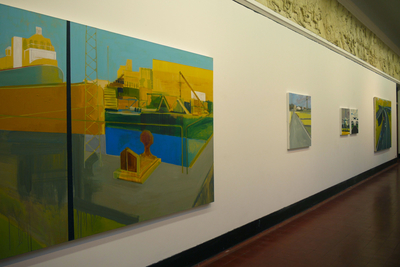
Marianne Greated is a faculty researcher at The Glasgow School of Art, School of Fine Art, Department of Painting & Printmaking. Her academic practice bridges landscape painting, environmental art, and innovative pedagogical frameworks with a focus on compassionate assessment practices. She holds a PhD evidenced by her 2014 exhibition presenting doctoral research outputs. PhD in Fine Art (completed prior to 2014) Her research centers on landscape as both subject and pedagogical tool, examining industrial environments, Scottish art history, and interdisciplinary connections between visual art and sound studies. Recent work emphasizes compassionate feedback systems to reduce inequity in art education, developed through the QAA Collaborative Enhancement Project. Her scholarship reveals consistent engagement with environmental sustainability, historical analysis of women artists, and sensory perception in artistic practice. Greated's publication trajectory shows increasing focus on educational frameworks since 2020, while maintaining strong connections to landscape painting and Scottish art history. Her collaborative projects with institutions like UAL demonstrate commitment to systemic change in art education assessment practices. Through initiatives like the Practising Landscape seminar series and international symposia, Greated fosters collaborative knowledge exchange across academic and artistic communities. Her work with the QAA project establishes frameworks for compassionate assessment that prioritize student belonging while maintaining academic rigor. Active in both studio practice and academic research, Greated maintains dual engagement with creative production (exhibited internationally across China, India, Belarus, and UK venues) and scholarly contributions to art education discourse. Her current projects indicate continued development of compassionate pedagogy models and deeper exploration of landscape representation.
Silvio Montresor is a Teacher-researcher at the Institute of Acoustics within Le Mans Université, actively contributing to acoustics and optical metrology research since at least 2018. His work bridges theoretical acoustics with practical engineering applications, particularly in structural health monitoring and digital holography. His research focuses on speckle noise reduction in digital holography , acoustic emission monitoring of structural damage , and ultrasonic characterization of composite materials . Key contributions include developing deep learning algorithms for phase image denoising and novel methods for damage localization in reinforced concrete using acoustic emissions. His work spans civil engineering, materials science, and biomedical applications. Analysis of his publication trends reveals consistent focus on computational imaging techniques (2018-2024), with increasing integration of machine learning since 2021. His research demonstrates strong interdisciplinary connections between acoustics , optics , and structural engineering , particularly in non-destructive testing methodologies. As a core member of the Institute of Acoustics, Montresor contributes to transversal research axes including Metamaterials , Non-linear Acoustics , and NDET (Non-Destructive Evaluation Technologies). His work supports the lab's mission in Materials Acoustics , Elastic Waves in Complex Media , and Physics of Musical Instruments , utilizing advanced facilities for laser ultrasonics and electroacoustic sensor development.