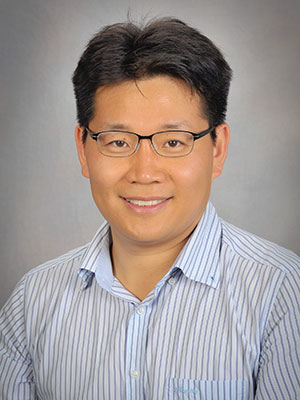
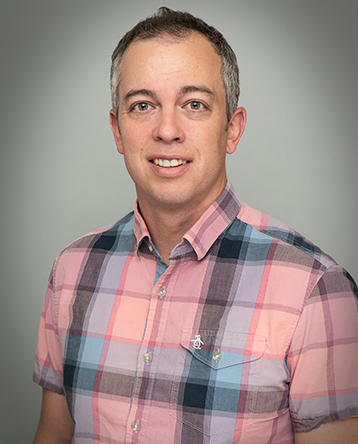
Michele Rucci is a researcher leading the Active Perception Laboratory, focusing on integrating experimental and theoretical approaches to investigate visual perception and its relationship with motor behavior. His work explores computational mechanisms of vision, particularly the role of eye movements in spatial encoding, and their implications for visual impairments. He develops advanced systems for gaze-tracking, visual display technologies, and brain-inspired robotics. Research interests include the interplay between sensory processing and motor control, oculomotor strategies in visual tasks, and the application of findings to biomedical engineering and machine vision systems. His studies have revealed precise oculomotor control mechanisms and their impact on visual acuity, as well as novel insights into foveal anatomy and retinal processing. Current projects involve high-resolution eye-tracking technologies, the dynamics of visual sensitivity across the fovea, and the cognitive influences on fixational eye movements. The laboratory actively recruits pre- and post-doctoral researchers to contribute to these interdisciplinary efforts.
ChaBum Lee is an Associate Professor and Morris E. Foster Faculty Fellow in Mechanical Engineering at Texas A&M University. His research advances metrology and inspection for semiconductor manufacturing and precision systems. Research focuses on interferometry, 3D imaging, machine tool metrology, robotic machining, and optical spectroscopy. Key innovations include diffraction-based via inspection, autonomous wafer defect detection, and non-contact surface profiling. Recent publications emphasize semiconductor metrology advancements, including through-silicon via characterization, wafer edge inspection, and machine learning-driven quality control. Articles demonstrate integration of optics, sensors, and AI for manufacturing applications. Awards include: ASME Blackall Machine Tool Award (2020) Institute of Physics Emerging Leader (2021) ASPE Best Researcher (2017) Leads the Precision Metrology and Instrumentation Group (PMIG), collaborating with semiconductor industry partners including Samsung and Honeywell. Teaches courses in precision engineering and instrumentation.
Lynn D. Greenspan is an Associate Professor of Optometry at Drexel University's College of Nursing and Health Professions. She holds academic roles as Course Instructor for Optical Principals and Ophthalmic Applications (OPOA) I and II, Course Coordinator for Optics of the Eye Lab, and Lab Instructor for Ocular Motility VOR and Eye Movement Lab, Radiometry and Photometry Lab. Education: PhD from Salus University, OD from SUNY College of Optometry, Residency in Low Vision & Rehabilitative Optometry at Northport VAMC, BS from SUNY Albany Her clinical specialty is Neuro-Visual Rehabilitation for Acquired and Traumatic Brain Injury, serving as Director of the Bryn Mawr Rehabilitation Hospital Vision Clinic in Malvern, PA. Research focuses on post-concussion syndrome, visual system indicators in neurological trauma, and diagnostic/therapeutic mechanisms for concussion assessment. Key research areas include eye movement disorders, electrophysiology, color vision dysfunction, and near triad abnormalities (accommodation, convergence, pupil function). She has presented at major conferences like ARVO and the American Academy of Optometry, with publications in the Journal of the American Optometric Association and evidence-based clinical guidelines. Professional Certifications: Fellow of the American Academy of Optometry, Residency-Trained in Rehabilitative Optometry, NIH Research Compliance Training Grants and collaborations involve Temple University's Professional Grant Development program. Future work aims to develop evidence-based diagnostic tools for concussion using visual system metrics. Labs/Teams: Leads the Bryn Mawr Rehabilitation Hospital Vision Clinic, integrating optometric care into multidisciplinary brain injury rehabilitation teams.
Gábor Princz is a Lecturer and Researcher at the Institute of Industrial Engineering and Management at the University of Applied Sciences Wiener Neustadt. He holds a B.Eng. (2018) and M.Eng. (2020) in Naval Architecture from Kiel University of Applied Sciences, and is currently pursuing a Dr.techn. at TU Vienna starting July 2024. His research focuses on industrial applications of advanced technologies including: Condition monitoring and predictive maintenance systems Machine learning for manufacturing optimization Industrial automation using computer vision AI-driven production planning and control Data analytics for SME manufacturing His recent publications demonstrate strong focus on applying convolutional neural networks and unsupervised learning techniques to solve industrial challenges like quality inspection, anomaly detection, and production line optimization, particularly for small-to-medium enterprises. Research Projects: IntelliProPS (2023-2026): Developing AI-enhanced planning systems for volatile production environments DigiProTrain (2023-2025): Creating Industry 4.0 training programs using learning factories Care about Care (2021-2023): Remote assistance technology for long-term care applications
Assoc. Prof. Goran Fruk serves as an Associate Professor at the University of Zagreb School of Agriculture , leading the Department of Pomology. With a PhD in Agricultural Science (2014), he specializes in postharvest physiology and sustainable fruit production. Education: PhD (2014), dipl. ing. agr. (2008) Key Roles: Coordinator of EU-funded projects, bilateral research collaborations His research focuses on postharvest treatments to prevent chilling injuries, optimize fruit quality, and implement edible coatings . Recent work explores digital technologies like RGB imaging and biosensors for nutrient deficiency detection and quality assessment. Project leadership includes LIFE+ SU.SA.FRUIT for sustainable production and multiple EU programs. He has developed curricula for fruit physiology and storage technologies . Publications emphasize traditional apple cultivars , patulin contamination , and climate change impacts on fruit quality.
Rafał Mantiuk is a Professor of Graphics and Displays at the Department of Computer Science and Technology , University of Cambridge, UK. He leads the Rainbow Research Group and works on visual perception, display algorithms, and computational imaging. His academic journey includes a PhD (summa cum laude) from Max-Planck-Institut (2006) and an MSc from Technical University of Szczecin (2003). His research spans applied visual perception , high dynamic range imaging , display algorithms , and machine learning for image synthesis . Recent work focuses on ColorVideoVDP (HDR video metrics), AR-DAVID (AR display artifacts), and elaTCSF (flicker modeling). His methodologies combine psychophysics with computational models to enhance display technologies. His awards include: SIGGRAPH Test-of-Time Award (2023) ICME Grand Challenge Second Place (2025) CIC Best Paper Awards (2022, 2020) Human Vision and Electronic Imaging Best Paper (2020) Heinz Billing Award (2006) Key grants: ERC Consolidator Grant (2017) for EyeCode, MSCA RealVision (2018), and EPSRC funding (2017, 2011). He supervises projects involving novel display technologies like HDR multi-focal stereo displays and 10-bit LCD systems.
Dr. Jonathon White is an Adjunct Professor in the Department of Engineering Physics at McMaster University. His career spans multiple disciplines including optical physics, material science, and biomedical engineering. Active in research since the 1990s, his work focuses on: Single-molecule fluorescence spectroscopy Photophysics of conjugated polymers Graphene and 2D material characterization Circadian rhythm lighting systems Recent publications highlight: Development of circadian-effective lighting for dementia patients Advances in photoluminescence enhancement Novel optical measurement techniques Applications of LED technology His research has appeared in journals such as: ACS Applied Nano Materials Optics Express Alzheimer's and Dementia Carbon
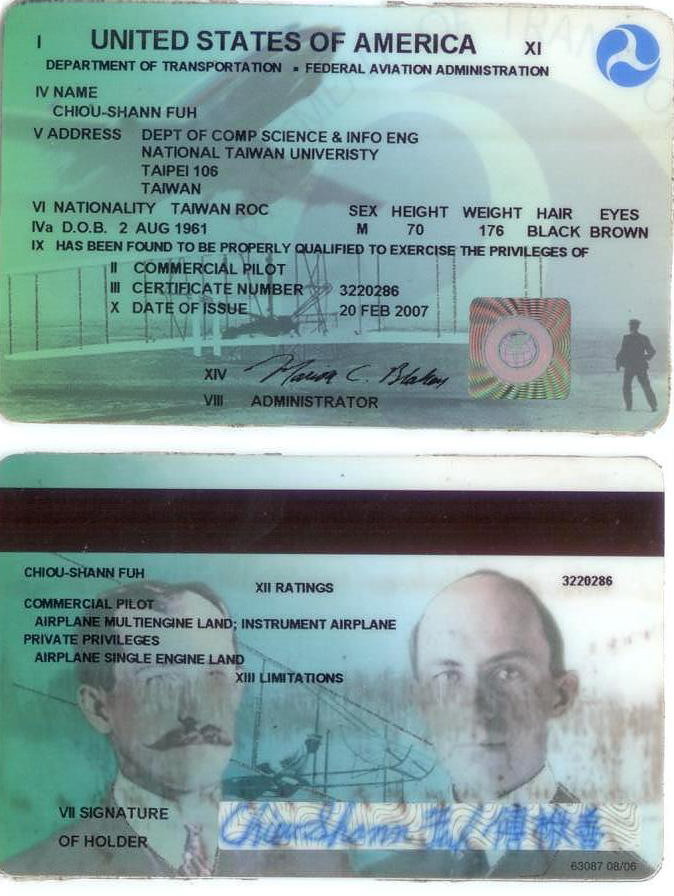
Chiou-Shann Fuh is a Full-Time Professor at the Department of Computer Science and Information Engineering, National Taiwan University. His research focuses on Computer Vision , Digital Image Processing , and applications in digital camera technologies, industrial automation, and optical systems. Education: B.S. (1983), M.S. (1985), Ph.D. (1992) in Computer Science Editorial Roles: Associate Editor for IJPRAI (2021–present) and JRTIP (2021–present) Hobbies: Commercial/private pilot licenses, flight instructor certifications, and ultralight aviation His laboratory, the Digital Camera and Computer Vision Laboratory , specializes in ISP/OIS systems, color calibration, and defect inspection technologies. Office hours are held every Tuesday from 10:00–12:00 in Room 327.
James J Clark is a Professor at McGill University's Centre for Intelligent Machines (CIM). His research focuses on advancing machine vision, neural networks, and deep learning applications in areas such as visual attention modeling, 3D environments, and edge computing. He specializes in developing efficient neural network architectures and optimization techniques for real-world systems. Key research interests include computer vision, machine learning, and their intersections with fields like image processing and natural language processing. Recent work emphasizes model compression, knowledge distillation, and hardware-aware neural architecture search for resource-constrained devices. His publications span topics such as gaze field modeling in 3D environments, dataset pruning for transformers, and adversarial correction in domain adaptation. Notable contributions include frameworks for efficient BERT inference on multi-core processors and methods for visual attention prediction in retail scenarios. No scientific awards or student advisees are explicitly listed. His research is anchored in the CIM, reflecting a strong focus on interdisciplinary machine intelligence applications.
Dr. LOVAS Tamás is an Associate Professor and Head of the Department of Photogrammetry and Geoinformatics at the Faculty of Civil Engineering, Budapest University of Technology and Economics (BME). He also serves as a Representative and Coordinator for the Specialization in Construction Information Technology Engineering (MSc) within the Faculty Council. His expertise spans geoinformatics, civil engineering, and transportation systems, with a focus on laser scanning, point cloud integration, and smart infrastructure solutions. Education: While formal education details are not explicitly provided, his academic role and publications suggest a strong background in civil engineering and geomatics. His courses include topics like Intelligent Transport Systems (BMEEOFTMF61), ITS GIS (BMEEOFTMF62), and Laser Scanning (BMEEOFTDT81). Research Interests: Dr. Lovász’s work centers on leveraging geospatial technologies for infrastructure analysis, including urban land cover classification , automated road surface segmentation , and scan-to-BIM workflows . He pioneers applications in transportation safety, autonomous vehicle HD mapping, and disaster risk assessment using RPAS and LiDAR. His team develops AI-driven strategies for point cloud data and digital twins, enhancing infrastructure monitoring and urban planning. Key Achievements: He has been awarded the Magyar Felvételi információ #építő250 ösztöndíj and contributed to projects like the ZalaZONE automotive proving ground’s HD mapping workflow. His research bridges academic innovation with practical engineering solutions, such as optimizing electric vehicle charging station placement and assessing rockfall hazards in volcanic regions. Grants & Advising: His work includes funded projects on laser scanning for bridge load testing and steel section inspection. While specific grant details are not listed, his publications reflect sustained engagement with industry-relevant research. He advises on complex construction IT projects and guides students through MSc specializations in construction information technology. Labs & Teams: His department collaborates with the Vásárhelyi Pál Doctoral School of Civil Engineering and Earth Sciences , focusing on geomatics, geotechnical engineering, and infrastructure systems. His team integrates cutting-edge technologies like LiDAR, photogrammetry, and AI to advance civil engineering practices.
Zhi David Chen is a Professor of Electrical Engineering at the University of Kentucky's Stanley and Karen Pigman College of Engineering, where he has held continuous faculty appointments since 1999 and currently serves as Associate Director of the Center for Nanoscale Science & Engineering. His career includes progression from Assistant Professor (1999-2004) to Associate Professor (2004-2009) before achieving full Professorship, with prior industry experience at Bell Laboratories. Education: Ph.D. in Electrical Engineering, University of Illinois at Urbana-Champaign (1999) M.S. in Electrical Engineering, University of Electronic Science & Technology (China) (1987) B.S. in Electrical Engineering, University of Electronic Science & Technology (China) (1984) Dr. Chen's research spans nano-scale materials growth, nano-device fabrication, MOS transistor development, gate dielectrics, and advanced sensors, with dominant focus on perovskite photovoltaics. His work addresses critical challenges in solar cell efficiency, environmental stability, and scalable manufacturing, pioneering innovations in lead-free alternatives, surface passivation, and ambient-air processing techniques. He explores novel nanomaterial architectures for next-generation semiconductor and optoelectronic applications. Analysis of his 2020-2024 publications reveals intense concentration on perovskite solar cell optimization (13 of 15 articles), featuring breakthroughs in tin-lead alloys, hysteresis reduction, and underwater module stability. Emerging themes include neuromorphic optoelectronic synapses for vision systems and terahertz communication technologies, demonstrating interdisciplinary expansion while maintaining core expertise in nanoscale device physics. Scientific Awards: No scientific awards were documented in the provided materials. Advising and Grants: While specific student names and grant details were absent from source materials, his sustained publication output and leadership role at the Nanoscale Science & Engineering Center indicate active research supervision and external funding. Labs and Teams: As Associate Director of the Center for Nanoscale Science & Engineering, Dr. Chen leads cross-disciplinary teams developing advanced semiconductor materials and devices, with particular emphasis on perovskite photovoltaics and nano-sensor technologies through collaborations with national laboratories and industry partners.
Russell C. Hardie is a full-time Professor at the University of Dayton , holding positions in the Department of Electrical and Computer Engineering with joint appointments in Electro-Optics and Photonics and Bioengineering . His academic journey began with a B.S. in Engineering Science from Loyola College (1988), followed by M.S. and Ph.D. in Electrical Engineering from the University of Delaware (1990, 1992). Prior to joining the University of Dayton in 1993, he served as a Senior Scientist at Earth Satellite Corporation (now MDA Federal). Research Interests : Digital signal/image processing, medical imaging, super-resolution techniques, hyperspectral/infrared imaging, pattern recognition Key Awards : 2006 Alumni Award in Teaching (University of Dayton) 1998 Rudolf Kingslake Medal (SPIE) 1999 School of Engineering Excellence in Teaching 2002 IEEE Professor of the Year 1997 Epsilon Delta Tau Engineering Professor of the Year Recent Work : Focuses on machine learning applications for medical imaging (lung segmentation, nodule detection), atmospheric turbulence mitigation, and hyperspectral data analysis. His 15 most recent publications span topics from zero-shot chest X-ray analysis to methane plume detection and turbulence-corrected imaging systems. Contact: rhardie1@udayton.edu
Ernad Bešlagić is an Assistant Professor at the Department of Automation and Metrology, Faculty of Mechanical Engineering, University of Zenica (UNZE BA). He holds a Dr. Sc. degree in Polytechnics from the Faculty of Mechanical Engineering in Mostar, awarded in 2021. His academic journey includes a Master's in Metrology (2013) and a Bachelor's in Mechanical Engineering (2002), both from UNZE BA. He has been a faculty member since 2008, transitioning from roles like Senior Assistant to his current position since 2022. Bešlagić’s research focuses on additive manufacturing precision, wind energy systems, and metrology. He has contributed to projects involving 3D printing accuracy, wind tunnel testing for Darrieus turbines, and fatigue analysis of mechanical components. As a co-author of university textbooks and peer-reviewed papers, his work bridges theoretical concepts with practical engineering solutions. He also leads the Citizens' Association 'Education for the new age - STEAM education,' promoting interdisciplinary learning. His professional activities include mentoring students across mechanical engineering disciplines and contributing to national/international conferences. He has collaborated on hardware/software development for wind turbine prototyping and metrology systems, emphasizing real-world applications of engineering principles.
Dr. Alexander Wong is a Professor in the Department of Systems Design Engineering at the University of Waterloo, cross-appointed in other departments. His research focuses on advancing artificial intelligence (AI), machine learning, and computer vision with applications in healthcare, biomedical engineering, and robotics. Key areas include medical imaging technologies like OCT+ERG systems for neurovascular analysis, AI-driven diagnostics (e.g., prostate cancer segmentation), and radar-based monitoring for aging wellness. He leads interdisciplinary projects in health informatics, synthetic data generation, and AI ethics. His work integrates hardware-software systems for real-world challenges, such as non-invasive retinal imaging and in-home gait analysis. Notable contributions include the Cancer-Net framework for cancer detection, the NutritionVerse dataset for dietary monitoring, and the COVID-Net for pandemic response. His research also addresses public health issues like HIV/HCV co-infection and mental health impacts on healthcare utilization in marginalized populations. Dr. Wong's innovations span from foundational AI algorithms to clinical and industrial applications, emphasizing cross-disciplinary collaboration to bridge theoretical advancements with practical solutions.
Jonathan Malen is a Professor in the Department of Mechanical Engineering at Carnegie Mellon University’s College of Engineering. His research spans nanoscale thermal transport, energy materials, and additive manufacturing, with significant contributions to thermal management in electronics and thermoelectric energy conversion. Malen earned a Ph.D. in Mechanical Engineering from UC Berkeley (2009), an M.S. in Nuclear Engineering from MIT (2003), and a B.S. in Mechanical Engineering from the University of Michigan (2000). He joined CMU in 2009 and has since led groundbreaking experimental work in thermal science. His research interests include thermal transport in advanced materials such as ultrawide bandgap semiconductors (GaN, Ga₂O₃), organic-inorganic hybrids (superatomic crystals, perovskites), and high-thermal-conductivity polymers. The Malen Laboratory uses ultrafast laser spectroscopy, microfabrication, and thermal imaging to study heat transfer in electronics, additive manufacturing, and cryopreservation. Key applications include thermoelectric waste heat recovery, thermal management in microprocessors, and process monitoring in metal 3D printing. Malen’s recent publications reveal a strong focus on thermal conductivity in polymers and composites, melt pool dynamics in additive manufacturing, and phonon transport in nanostructured materials. His work increasingly integrates machine learning for process modeling and defect prediction in metal printing. There is a clear interdisciplinary trend combining materials science, mechanical engineering, and data-driven modeling. Benjamin Richard Teare Teaching Award (2019) David P. Casasent Outstanding Research Award (2016) ASME Bergles-Rohsenhow Young Investigator Award in Heat Transfer Army Research Office Young Investigator Award (2014) National Science Foundation CAREER Award (2012) Air Force Office of Scientific Research Young Investigator Award (2010) Malen has advised numerous PhD students, many of whom now work in industry (e.g., Intel, Northrop Grumman, Apple) or academia. His research is supported by the NSF, DoD, ARO, AFOSR, and NIH. He collaborates with Alan McGaughey (CMU), Dmitri Talapin (University of Chicago), and X. Roy (Columbia), among others. He is also involved with CMU’s Data Storage Systems Center, NextManufacturing Center, and Wilton E. Scott Institute for Energy Innovation. The Malen Laboratory operates at the intersection of experimental thermal science and advanced manufacturing, focusing on both fundamental understanding and technological applications. The team includes postdocs and PhD students working on topics such as in-situ thermal imaging, deep learning for defect prediction, and thermoelectric cooling. The lab is known for developing innovative measurement techniques like two-color thermal imaging and frequency-domain thermoreflectance.