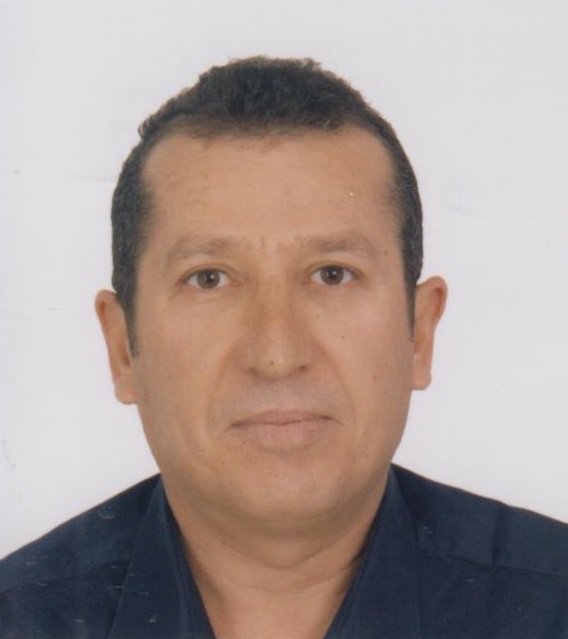
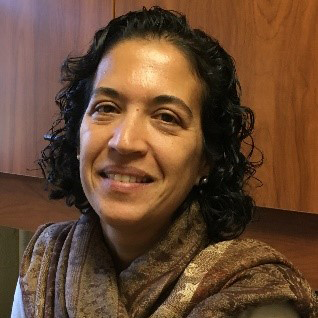
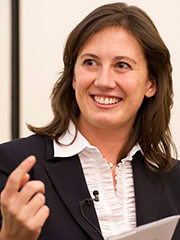
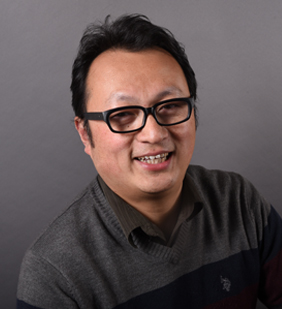
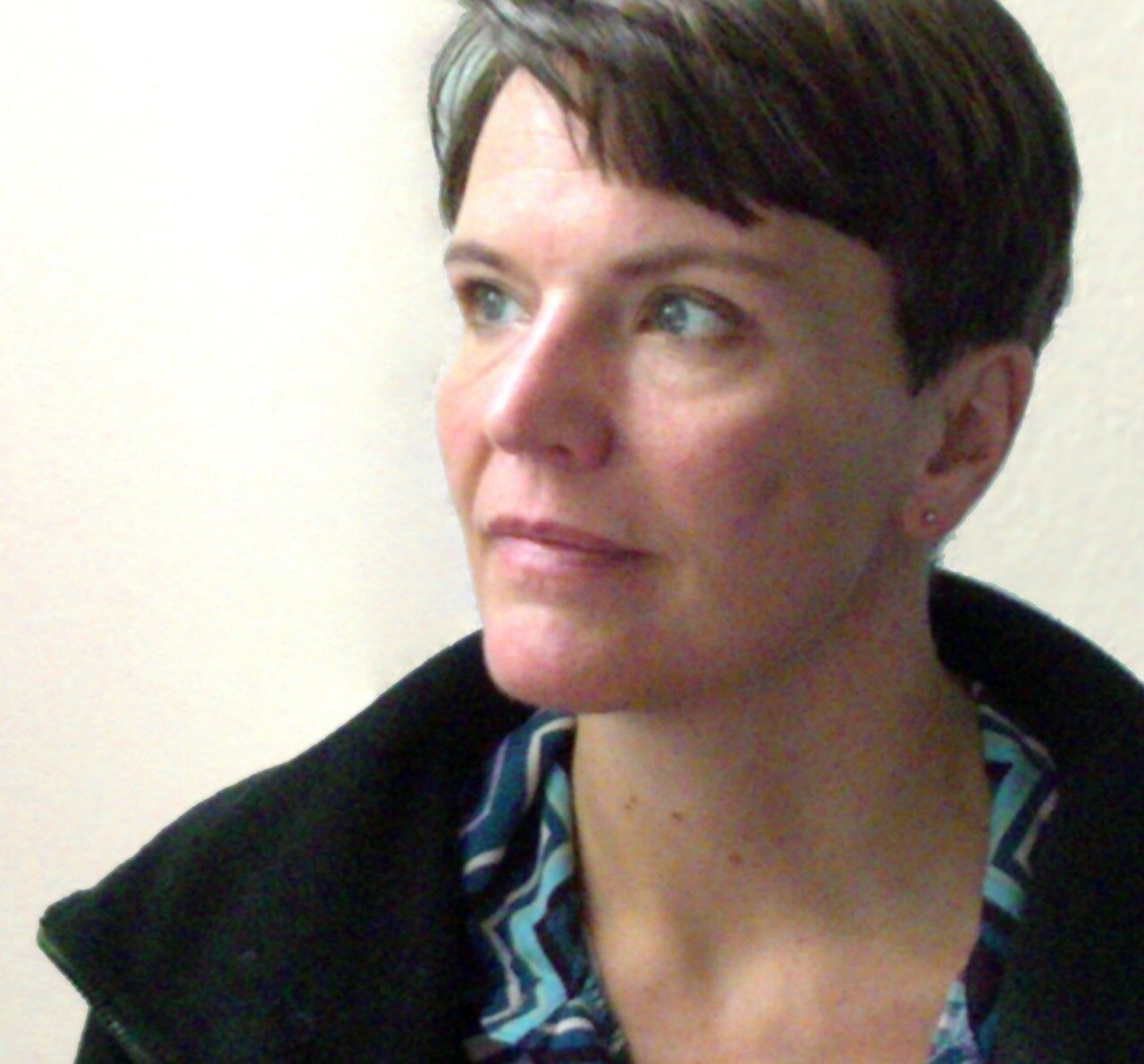
Represa Pérez, César is a faculty member at the University of Burgos , affiliated with the School of Engineering . He has contributed extensively to computer science, parallel computing, and embedded systems through research articles, educational materials, and conference presentations. Education: Doctorate in Parallel & Hybrid Programming (2002). Research Areas: Parallel computing (MPI/CUDA), 3D virtual labs, sensor technology, Android applications, and embedded systems design. Key Collaborations: Co-authored works with José María Cámara Nebreda, Pedro L. Sánchez Ortega, and others on technical education and hardware-software integration. Recent Trends: Focus on smartphone-driven sensors, additive manufacturing monitoring, and educational tools for engineering students.
Hüseyin Özdemir is an Assistant Professor at Gaziantep University's Naci Topcuoğlu Vocational School, Textile, Clothing, Shoes and Leather Department. With a PhD in Textile Engineering (2014) and Master's (2008) from Erciyes and Kahramanmaraş Sütçü İmam Universities, he bridges textile technology with fashion innovation. Doctorate: Textile Engineering (2014), Erciyes University Master's: Textile Engineering (2008), Kahramanmaraş Sütçü İmam University Licence: Textile Engineering (1996), Ege University His research spans Textile Engineering , Sustainable Fashion , and Composite Materials . Recent work focuses on smart textiles , eco-friendly dyeing , and 3D preform composites , often integrating cultural heritage with modern technology. Key article trends include nanotechnology in textile composites, digital printing innovation, and sustainable practices. He has contributed to journals like Polymers , Sustainability , and Textile Reinforced Composites . 2024: TÜBİTAK Publication Encouragement Award 2021: Four TÜBİTAK Publication Encouragement Awards 2017: Science Encouragement Award from İKSAD As Deputy Head of Department (2023–present) and former Head (2016–2018), he oversees curriculum development and institutional partnerships. Supervised three Master's theses on 3D printing, Down syndrome apparel, and natural dyeing. Taught 142 associate-level courses and 28 undergraduate courses on textile chemistry, printing, and color theory.
Ingvild Torsen is an Associate Professor in the Department of Philosophy at the University of Oslo. Her work bridges Heideggerian phenomenology, philosophical aesthetics, and feminist philosophy. Education: PhD from Boston University, cand. philol. from University of Oslo Previous Positions: Assistant Professor at Florida International University, Visiting Assistant Professor at Marquette University Research interests focus on Heidegger and Kant's aesthetics, modernism as a philosophical-artistic problematic, and feminist engagements with continental philosophy. She regularly teaches courses on continental philosophy, philosophical aesthetics, and feminist philosophy at both MA and BA levels. Her publications span Heidegger's interpretation of art and existence (2014-2024), Hegel's aesthetics in relation to modern painting, and the persistence of the body in sculpture. Keywords across her work include Heidegger, Hegel, phenomenology, modernism, and embodied art practices.
Susana Milla-Lewis is a Professor specializing in Turfgrass Breeding & Genetics at North Carolina State University, based in Williams Hall (Room 4114). Her work focuses on developing sustainable turfgrass cultivars requiring reduced inputs while maintaining performance under biotic and environmental stresses. Contact: susana_milla-lewis@ncsu.edu . Her research integrates conventional breeding with advanced genomic technologies. Key interests include germplasm characterization, breeding for cold tolerance in warm-season grasses, heat/drought tolerance in tall fescue, pest resistance, mutation breeding, and high-throughput phenotyping. She utilizes QTL mapping, GWAS, molecular markers, and tissue culture techniques to link phenotypic traits to DNA polymorphisms for turfgrass improvement. 2025 publications reveal strong emphasis on drought/shade tolerance across multiple species (bermudagrass, zoysiagrass, St. Augustinegrass), with significant use of multi-omics integration, UAV-based phenomics, and genetic mapping to identify candidate genes and resistance mechanisms. Recent work includes seven new cultivar registrations demonstrating practical outcomes of her breeding program. No scientific awards were mentioned in source materials. While lacking formal extension appointment, her program actively engages sod growers, seed companies, and industry stakeholders through outreach. She teaches CS (HS) 211 – Plant Genetics and leads breeding initiatives targeting reduced-input turfgrass solutions. The NC State Turfgrass Breeding & Genetics program under her direction develops cultivars for stress tolerance while generating genomic resources. Current activities span mutation breeding, exotic germplasm utilization, and phenomics-driven trait selection to enhance industry sustainability across warm-season grasses.
Victor Reshetnyak is a Professor and Head of the Theoretical Physics Department at Taras Shevchenko National University of Kyiv's Physics Faculty. With a career spanning over four decades at the university, he has held positions from Junior Research Fellow to his current leadership role since 2017. His educational qualifications: MSc. with Honours (1980), Taras Shevchenko National University of Kyiv PhD. (1985), same institution, thesis on liquid crystal optical properties Doctor of Science (1994), thesis on orientational ordering in liquid crystals Associate Professor (1998) and Professor (2002) diplomas from the Ukrainian Ministry Reshetnyak's research focuses on liquid crystals , plasmonics , and ferroelectric nanomaterials . He investigates light-induced phenomena, flexoelectric effects, and domain morphologies. His work bridges fundamental theoretical physics with applications in photonics and optoelectronics, particularly in tunable optical devices and nanostructured materials. Analysis of his recent publications (2021-2022) shows a concentration on liquid crystal-based photonics and nanoscale ferroelectricity . Key themes include plasmon-polariton interactions, electrically tunable lenses, and symmetry breaking in ferroelectric nanocylinders. These studies often target applications in optical filtering, sensing, and display technologies. As department head, Reshetnyak oversees academic programs and research. His international collaborations (with the UK, USA, and Italy) and high-impact publications suggest significant research funding. While specific grants aren't detailed, his work appears supported by national and international sources. His laboratory conducts experimental and theoretical research on soft matter systems, especially liquid crystals and ferroelectric nanoparticles, aiming to develop novel photonic materials and devices.
Zan Strabac is a Professor at the Department of Sociology and Political Science, Norwegian University of Science and Technology (NTNU). His research focuses on migration studies, ethnic relations, and social integration, with a particular emphasis on public attitudes towards immigrants, welfare chauvinism, and intergroup dynamics. His recent work includes comparative analyses of anti-immigrant and anti-Muslim attitudes across Europe, labor migration systems in the Gulf, and educational integration of immigrant populations. Publications span journals like International Migration , Journal of European Social Policy , and Migrant and Ethnic Relations . Strabac teaches courses in applied statistical data analysis and quantitative methods. He supervises PhD students using advanced analytical techniques beyond linear or logistic regression. No scientific awards or specific grants are mentioned in the provided text.
Prof. Dr. Erika Garutti is Head of the Detector Development Group at the Institute of Experimental Physics, University of Hamburg, within the Faculty of Mathematics, Informatics and Natural Sciences. She leads research in cutting-edge detector technologies and coordinates projects including CMS, MADMAX, CALICE, and medical imaging applications. Her group maintains strong collaborations with DESY, CERN, and the Excellence Cluster Quantum Universe. Her research focuses on: Developing radiation-hard silicon sensors for high-energy physics experiments Designing fast timing detectors (LGAD) and SiPM characterization Axion dark matter detection through dielectric haloscopes Applying particle physics technologies to medical imaging (Time-of-Flight PET) Particle flow calorimetry for future colliders Recent publications (2025) demonstrate strong emphasis on: Dark matter detection methodologies (MADMAX prototype results) Jet substructure analysis and exotic particle searches at LHC Quark-gluon plasma signatures in heavy ion collisions Advanced SiPM characterization and detector calibration techniques She leads a large research team including: 6 postdoctoral researchers and scientific staff 8 PhD students and 3 Master's students Technical and administrative support team The group operates specialized labs for silicon detector development and test beam integration at DESY.
Shouryya Ray serves as Assistant Professor of Mathematics at the Faculty of Science and Technology, University of the Faroe Islands. He earned his PhD summa cum laude from TU Dresden in October 2022 and held a Walter Benjamin Postdoctoral Fellowship from the German Research Foundation (DFG) at the University of Southern Denmark from March 2023 to August 2024. His academic qualifications include: PhD in Physics, TU Dresden (2017-2022), awarded October 2022 Ray's research centers on quantum field theory with emphasis on interacting scale-invariant systems beyond the Ginzburg-Landau paradigm. He investigates Asymptotically Safe Quantum Gravity and its phenomenological consequences at observable energies, alongside symmetry-preserving renormalization group flows. His work bridges condensed matter physics and high-energy theory through unified descriptions of quantum phenomena across energy scales. Analysis of his 2023-2025 publications reveals consistent focus on quantum critical phenomena in fermionic systems, symmetry breaking mechanisms (SO(2), SO(3), SU(3)), and quantum gravity implications. Key methodologies include epsilon expansions, functional renormalization group techniques, and cross-disciplinary applications from condensed matter to particle physics. His scientific recognition includes: Walter Benjamin Postdoctoral Fellowship (DFG, 2023-2024) No formal advising relationships or external grants beyond his fellowship are documented in available sources. His research operates within theoretical frameworks without dedicated laboratory facilities, emphasizing collaborative theoretical work with institutions including TU Dresden, University of Southern Denmark, and international co-authors in quantum field theory.
Pavel Zemcik serves as a Visiting Professor in the Computational Engineering department at the School of Engineering Sciences, Lappeenranta University of Technology (LUT). His academic work spans multiple domains within computer science with a strong emphasis on visual computing technologies. Dr. Zemcik's research interests encompass a broad spectrum of visual computing disciplines, including computer graphics, computer vision, machine vision, and image processing. His work particularly focuses on light field rendering techniques, 3D display technologies, and advanced wavelet transform applications. He has made significant contributions to GPU acceleration methods for real-time visual processing and has explored applications in both industrial settings and medical imaging. Analysis of his recent publication trends reveals a concentrated research trajectory in light field technologies and 3D display systems over the past five years. His work demonstrates increasing sophistication in handling visual quality metrics, focus management, and compression techniques specifically tailored for 3D displays. The research shows strong interdisciplinary connections between computer graphics, signal processing, and human perception studies. His scholarly output demonstrates consistent productivity across multiple high-impact venues in computer graphics and computer vision. While specific grant information isn't detailed in the available materials, his publication pattern suggests sustained research funding supporting his work in visual computing technologies.
Vassilis Kontogiorgos is an Associate Professor in the Department of Food, Nutrition and Health (Food Chemistry) at the University of British Columbia's Faculty of Land and Food Systems. His research focuses on the physical chemistry of food macromolecules, particularly polysaccharide-based colloidal systems. Post Graduate Certificate in Higher Education Practice (2009), University of Huddersfield, UK PhD in Food Science (2007), University of Guelph, Canada MSc in Food Science (2004), Aristotle University of Thessaloniki, Greece BSc (Hons) in Food Science (2001), Aristotle University of Thessaloniki, Greece His work explores polysaccharide isolation, characterization, and interfacial arrangement to stabilize dispersions, with applications in food-body interactions and responsive colloidal systems for targeted bioactive delivery. Research spans food chemistry, polymer physics, and nutritional science. Recent publications emphasize pectin chemistry , hydrocolloid functionality , plant protein behavior , and bioactive delivery systems . Themes include food processing optimization, sustainable packaging, and structural characterization of polysaccharides. Contact: vkontogi@mail.ubc.ca
Dr. Ashley Wood is a Senior Lecturer and Director of Learning and Teaching at the School of Optometry and Vision Sciences, Cardiff University. An experienced optometrist and Cardiff graduate, Dr. Wood has been with the institution since 2012, contributing significantly to both research and teaching in the field of vision sciences. Dr. Wood's educational background includes a BSc in Optometry & Vision Science (2003-2006) and a PhD in "Retinal structure and function in Age-related Maculopathy" (2007-2011), both from Cardiff University. Professional credentials include Fellowship of the Higher Education Academy (FHEA), Accreditation for Eye Health Examination Wales (EHEW), and registration as an Optometrist with the General Optical Council (GOC: 01-32560). Research interests focus primarily on age-related macular degeneration (AMD), the leading cause of vision loss in the EU/UK. Dr. Wood employs objective assessment methods including Optical Coherence Tomography (OCT), ocular electrophysiology, and retinal imaging densitometry. Current work involves using a prototype long wavelength OCT device that enables visualization of the choroid, a layer of blood vessels beneath the retina not visible with standard OCT devices. This technology also allows retinal imaging under dark-adapted conditions, facilitating studies of physiological and pathological changes in the dark-adapted eye. Dr. Wood has secured significant research funding including a Macular Society PhD Studentship (£99,858), AltRegen Ltd. Clinical Trial (£1.2M), and multiple studentships from the College of Optometrists and Abbeyfield Research Foundation. Current research projects focus on improving AMD detection and monitoring to ultimately support better treatments and prevent vision loss. Scientific contributions include numerous publications on AMD detection, OCT imaging, and electrophysiological assessment. Key awards and recognitions include multiple CUROP Summer Studentships, Abbeyfield Research Foundation PhD Studentship, and ISCEV Travel Award. Teaching responsibilities are extensive, including leadership of the Investigative Optometry and Case Studies module (OP3206) and Abnormal Ocular Conditions module (OP3104). Dr. Wood also delivers color vision lectures, supports clinical sessions, and supervises research projects. International teaching experience includes collaboration with HU University of Applied Sciences in Utrecht, Netherlands for the "Eye Care and Diabetes; the Bigger Picture" summer school. Administrative roles include serving as Director of Learning and Teaching, Exams Liaison Officer, and chairing the Student-Staff Panel. Dr. Wood currently supervises multiple postgraduate students working on AMD-related research projects.
Johanna M. Lukate is a research group leader at the Max Planck Institute for the Study of Multicultural Societies in Göttingen, Germany, where she leads the Minerva Fast Track Research Group "Migration, Identity and Blackness in Europe" established in June 2023. Her work bridges social psychology, migration studies, and critical race theory with a focus on African and Black diasporas in Europe. Dr. Lukate obtained her Ph.D. in Psychology from the University of Cambridge under a full PhD scholarship from Deutsche Studienstiftung. She was also the recipient of the Fox International Fellowship (2017-18) at Yale University in the United States. Her research centers on social identity and social categorization processes, migration, embodiment and belonging, with particular attention to hair politics and racialization experiences among African migrants in Germany. Dr. Lukate's work examines how Black identity is constructed and performed in European contexts, challenging monolithic understandings of race and migration. Through ethnographic and interview-based methodologies, she explores the complex intersections of race, gender, and national identity among Black communities in Europe. Dr. Lukate's scholarly output reveals a consistent focus on identity formation among Black populations in Europe, with particular attention to hair as a site of political and cultural significance. Her publications span social psychology journals and interdisciplinary collections, demonstrating her ability to bridge academic disciplines and engage with broader public conversations about race and identity in contemporary Europe. Full PhD scholarship from Deutsche Studienstiftung Fox International Fellowship (2017-18) at Yale University Dr. Lukate is actively mentoring emerging scholars in her research group and has secured funding for her Minerva Fast Track project. She co-edited the volume "Towards a Social Psychology of Precarity" and is the author of the forthcoming book "(Dis)entangled: Why black hair can't be just hair" (2025). Her research has been supported by prestigious fellowships and has led to impactful public engagement, including her TEDx Talk on "The Psychology of Black Hair." As leader of the Minerva Fast Track Research Group "Migration, Identity and Blackness in Europe," Dr. Lukate oversees a dynamic team investigating the complex interplay between migration experiences, identity formation, and racialization processes among African diaspora communities in Europe. Her "Being and Becoming Black" project examines self-(re)presentation, embodiment, and the hidden diversity of African migrants and refugees in German cities.
Bulent Tosun is the Marilyn and John Elmore Endowed Professor of Mathematics at the University of Alabama, where he has been a faculty member since August 2016. He serves as Undergraduate Advisor for the Math Accelerated Master's Program and maintains an active research program in geometric topology. His educational background includes a PhD in Mathematics from the Georgia Institute of Technology (2012) under advisor John B. Etnyre, preceded by postdoctoral positions as a CRM postdoc in Montreal (2012-2013) and Whyburn Instructor at the University of Virginia (2013-2016). His research has been enriched by visiting positions at the Max Planck Institute for Mathematics in Bonn (2014) and the Mathematical Sciences Research Institute in Berkeley (2010). Tosun's research focuses on the geometry and topology of low-dimensional manifolds, with specialization in symplectic and contact topology, Heegaard-Floer homology, and notions of convexity in symplectic and complex geometry. His recent work explores connections between symplectic topology and manifold invariants, with applications to 3- and 4-manifold theory. Analysis of his publication trends reveals deep engagement with Legendrian knot theory, rational homology ball fillings, and the development of new techniques in contact handle calculus. His scientific achievements have been recognized through prestigious awards including an NSF CAREER Award (DMS 2144363), NSF Standard Award (DMS 2105525), and a Simons Fellowship (1013653). In 2023, he was awarded both the Simons Fellowship and recognition as an NSF Career awardee. Tosun maintains significant research funding and actively mentors students through the Math Accelerated Master's Program. He has organized numerous major conferences including the SEC Geometry-Topology Workshop series and co-organized an NSF-CBMS conference on Legendrian links at Georgia Tech. His research activities are supported by multiple collaborative grants focusing on low-dimensional topology and symplectic geometry. As a leader in his field, Tosun co-organizes the Symplectic Zoominars—a virtual seminar series connecting researchers from CRM-Montreal, IAS-Princeton, Tel Aviv, and Paris—and spent the 2023-2024 academic year as a Member at the Institute for Advanced Study in Princeton.
Wenhua Shi serves as Associate Professor in the Art Department at the University of Massachusetts Boston, where he teaches courses including Intro to Video, Sight and Sound, Time and Motion, and Digital Studio. His practice spans film, video, animation, sound art, and interactive installations, with works exhibited internationally at venues including the International Film Festival Rotterdam, European Media Art Festival, Venice Biennale, and Shenzhen-Hong Kong Bi-City Biennale. His educational background includes an MFA from the University of California, Berkeley (2009) and dual BFA/BA degrees from the University of Colorado, Boulder. His research focuses on poetic approaches to moving image making and conceptual depth in time-based media, exploring themes of temporal perception, sensory experience, and cultural memory through experimental techniques in video, sound, and interactive technologies. Shi's creative output reveals consistent exploration of time perception and sensory embodiment across diverse media formats. His work demonstrates technical mastery in video mapping, generative algorithms, and site-specific installations, often incorporating audience participation and cultural symbolism. The recurring themes of fragmentation, cyclical time, and environmental interaction reflect his conceptual depth in contemporary art practice. Scientific Awards: Mass Cultural Council (2024) New York Foundation for the Arts (2015) New York State Council on the Arts LEF Foundation (2021) Juror’s Award from the Black Maria Film and Video Festival Shi has secured significant research funding including grants from Mass Cultural Council (2024), New York Foundation for the Arts (2015), New York State Council on the Arts, and LEF Foundation (2021). He serves as jury member for prestigious events including the Ann Arbor Film Festival (2024) and National Endowment for the Arts (2017-2021). As founder and curator of RPM Festival (2013-Present), he leads collaborative projects including Revolution Per Minutes: Sound Art China and co-curated exhibitions with artists like Zoe Strauss and Sergio De La Torre. His studio practice integrates teaching, curation, and experimental production across moving image, sound, and interactive media.
Marion Tränkle is an active lecturer at the ArtScience Interfaculty of the Royal Academy of Art, The Hague (KABK), where she coaches students and develops courses on systems thinking and rule-based performance systems. She also serves as a Coach and Industrial Liaison at Eindhoven University of Technology's Department of Industrial Design since 2014, working with Professor Harm van Essen on 'social interactions with shared systems.' Her educational background spans multiple disciplines: PhD from Brunel University London (2012), MSc in Media Technology from Leiden University (2005), BA in Contemporary Dance from Amsterdam School of the Arts (2001), and an Engineer Diploma in Architecture from Technical University Berlin (1993). She has also completed specialized training in Software Engineering (2017/18) and Stage Lighting (2016). Tränkle's research interests center on the intersection of performance art, systems thinking, and technology. She creates work that deliberately negotiates 'the constructive tension between the carefully constructed and generative processes, between risk and responsibility, and between autonomous performance and human intervention.' Her practice integrates computational processes with live-performance, often using electronics, EEG data, and interactive systems to create immersive stage scenarios. She explores how simple rules can generate complex emergent behaviors, drawing from complexity science and computing principles. Her recent creative works demonstrate a consistent exploration of brain-computer interfaces, interactive light systems, and collaborative performance structures. Projects like (un)focussed and BLINK...and sync use EEG data to create real-time visual and auditory experiences, while ON TRACK and TAROT investigate mechanical systems and embodied symbolism through performance. 2nd Prize in the competition for short dance films on Internet 'webdans' (2001) Netherlands Foundation for Visual Arts, Design and Architecture Research/Travel Grant (2010) e-MobiLArt participant, funded EU CULTURE 2007 Programme (2008-09) Brunel University Doctoral Research Scholarship/fee waiver (2007-10) Tränkle actively collaborates with artists, designers, and engineers through collectives like NOW (with Ivo Bol and Roos van Berkel) and previously In Serial. She is a member of the BAU Committee for Amsterdam's independent performance scene. Her teaching philosophy emphasizes that 'making, learning, and teaching are reciprocal processes that flourish best in collaborative, and project-based environments,' which she implements through workshops, seminars, and interdisciplinary courses across multiple institutions in the Netherlands, Germany, and Canada.