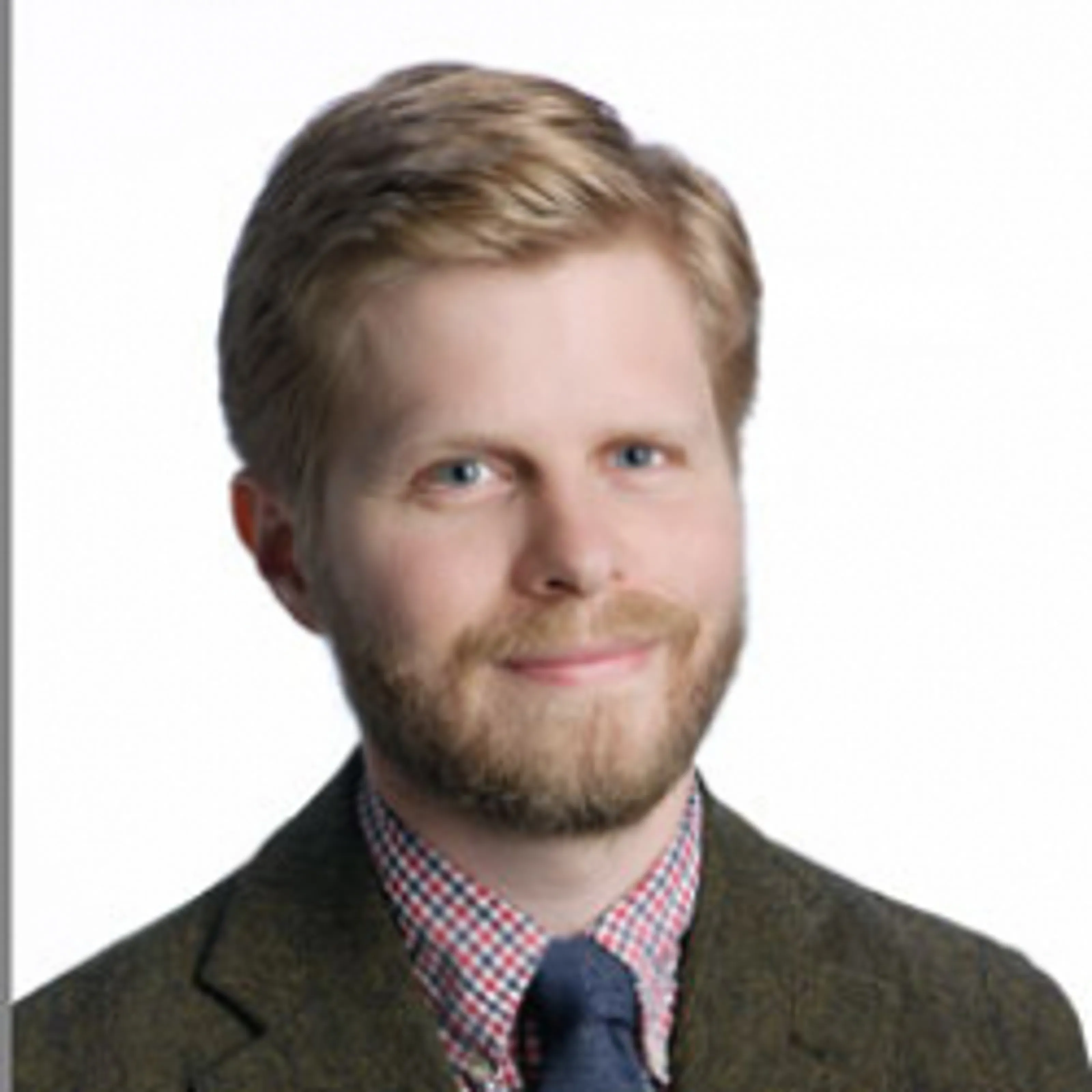
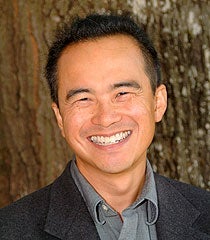
Saara Pyykkö is a Visiting Professor at the Department of Architecture, School of Arts, Design and Architecture, Aalto University. She is currently a doctoral student with a research focus on color in architectural and urban environments. Her work bridges color theory, urban design, and educational methodologies. Her research interests include: Color in architectural and urban environments Chromatic experience and perception Color walk methodology Wood color in contemporary architecture Online education in design Color policy in urban planning Her recent publications explore color zoning in Helsinki's Koivusaari neighborhood, cross-European wood color trends, and digital adaptations of design courses. She has received recognition for her work, including the 2018 Student Paper Awards First Prize and a 2022 Honourable Mention. Scientific awards: Student Paper Awards, First Prize (2018) Honourable Mention (2022)
Jean-François Lozier is an Assistant Professor at the University of Ottawa’s Department of History, specializing in Franco-Indigenous relations during the 17th and 18th centuries. He explores conflicts, diplomacy, missions, migrations, identity formation, material culture, and commemoration practices. His work bridges historical research with public history, particularly through curatorial projects at the Canadian Museum of History. Ph.D. in History, University of Toronto (2012) M.A. in History, University of Ottawa (2004) B.A. in History, University of Ottawa (2002) His research focuses on the intersections of Indigenous and European societies in early North America, emphasizing material culture, colonial legal frameworks, and cultural memory. He has contributed to journals like Revue d’histoire de l’Amérique française and Recherches amérindiennes au Québec , with a forthcoming monograph on St. Lawrence mission villages. Recent publications highlight his expertise in Franco-Indigenous military alliances, settlement dynamics, and transatlantic cultural exchanges. He integrates digital humanities methodologies and anthropological perspectives to analyze historical narratives and material practices. Lozier teaches courses on New France, Canadian history, and public heritage engagement, including a digital humanities course focused on historical games ( Histories and Perceptions of History in Canada , Heritage Hack ).
Colin Clifford is a Professor at the School of Psychology, University of New South Wales. His laboratory investigates vision, contextual effects on perception, and the neural basis of visual awareness. His academic credentials include a PhD from University College London (1994–1996), an MSc from Sussex University (1991–1992), and an MA from Pembroke College, Cambridge (1985–1989). Clifford's research explores visual perception, neural coding, gaze processing, and sensory adaptation. His work emphasizes how context modulates perception and how visual awareness links to underlying neural mechanisms, spanning topics like face perception, motion processing, and geometric illusions. His publications reveal a focus on gaze perception, facial processing, motion adaptation, and perceptual illusions. Trends include neural and behavioral studies of visual biases, contextual modulation, and ecological aspects of vision. Scientific Awards: Future Fellowship (2011–2015) for research on parallel and generative binding in human visual cortex Grants & Advising: National Health and Medical Research Council Project Grant (2012–2014): Functional anisotropies in orientation and motion processing Australian Research Council Discovery Grant (2012–2014): Gaze perception and adaptation He leads a vision research laboratory investigating neural and perceptual aspects of visual processing.
Dr. Sarah Zylinski is a Lecturer in Marine Biology at Bangor University's School of Ocean Sciences. She holds a PhD in Visual Ecology and Camouflage Design from the University of Sussex (2009) and an MSc in Historical Biogeography from Imperial College London (2005). Her research focuses on marine visual ecology, particularly cephalopod behavior and camouflage mechanisms. Research Interests: Dr. Zylinski investigates interactions between light and marine animals, studying coloration patterns, visual perception, and adaptive behaviors in cephalopods. Her work combines novel imaging techniques with insights from psychology, physics, and machine vision to understand: Cryptic body patterns and camouflage strategies Visual signaling in sexual and threat displays Visual perception across shallow benthic and mesopelagic species Evolutionary adaptations in marine vision systems Publication Trends: Her 11 publications (2009-2021) primarily explore cephalopod vision and camouflage, demonstrating consistent focus on cuttlefish visual perception, adaptive coloration, and camouflage mechanisms across diverse marine environments. Recent work emphasizes 3D visual processing and shadow responses. Teaching & Supervision: Dr. Zylinski teaches biological modules and supervises PhD students at the School of Ocean Sciences.
Frederick Kingdom is a Senior Scientist at the McGill Vision Research unit within the Research Institute of the McGill University Health Centre (RI-MUHC), Montreal General Hospital site. He holds the academic rank of Professor in the Department of Ophthalmology and Visual Sciences at McGill University 's Faculty of Medicine and Health Sciences. His research focuses on bridging local feature detection (edges, bars, surface markings) with intermediate visual processing that forms contours, textures, and surfaces. Key domains include spatial vision , color vision , stereopsis , binocular vision , and transparency perception , combining psychophysical methods with natural scene image analysis and mathematical modeling . Recent publications explore stereoscopic depth adaptation , color-enhanced edge classification , co-circularity in texture , and binocular contrast adaptation . His work appears in journals like Vision Research and PLoS Computational Biology . Kingdom's lab maintains the Palamedes Toolbox for psychophysical data analysis. He investigates perceptual mechanisms in contexts ranging from 2D visual illusions to 3D environmental interpretation , with ongoing projects examining visual biases (e.g., falling objects) and contextual modulation in neural coding.
Daphne C. Watkins is a University Diversity and Social Transformation Professor in the School of Social Work at the University of Michigan. She serves as the founding director of the Gender and Health Research (GendHR) Lab, the Certificate Program in Mixed Methods Research, and the award-winning Young Black Men, Masculinities, and Mental Health (YBMen) Project. Professor Watkins teaches graduate-level courses on research methods, social equity and equality, and community-based interventions, and serves on committees focused on improving men's health equity both domestically and globally. Professor Watkins' educational background includes: 2025 EMBA in Leadership & Organizational Behavior from Quantic School of Business and Technology 2006 PhD in Health Education & Behavior from Texas A&M University 2002 BA in Anthropology & French from University of North Carolina, Wilmington Her research centers on strategies for success among historically marginalized groups, with three primary focus areas: behavioral interventions for historically underrepresented groups, mixed methods approaches to research in context, and social impact leadership and organizational development. Professor Watkins is particularly committed to developing efficient tools and systems that activate positive, strengths-based outcomes for those most in need. Her work emphasizes maximizing human potential, elevating social experiences, and providing equitable impact in communities and organizations through cutting-edge, use-inspired research. Professor Watkins' recent scholarly work demonstrates a strong focus on mental health interventions for men of color, particularly Black men and boys, with emphasis on culturally sensitive approaches. Her publications reveal significant attention to digital health interventions, health equity, structural determinants of health, and methodological innovation in mixed methods research. She has made substantial contributions to understanding how to design effective mental health programs that resonate with men's diverse experiences and identities. Among her notable recognitions: 2024 Pynn-Silvermann Lifetime Achievement Award 2024 Most Promising New Textbook Award 2024 Letha A. Chadiha Collegiate Professor appointment 2024 Research Grant from the National Heart, Lung, and Blood Institute Professor Watkins has secured significant research funding, including a recent grant from the National Heart, Lung, and Blood Institute. She mentors numerous students and early-career researchers through her labs and projects. Her YBMen Project has received particular attention for its innovative approach to providing mental health education and social support for young Black men through technology. She is also deeply involved in developing the next generation of researchers through the Certificate Program in Mixed Methods Research. Professor Watkins directs several important research initiatives including the Gender and Health Research (GendHR) Lab, which focuses on gender-specific health issues, and the award-winning Young Black Men, Masculinities, and Mental Health (YBMen) Project. The YBMen Project leverages technology to provide mental health education and social support for young Black men through a 5-12 week social media-based program that uses "gender-specific, age-appropriate, and culturally sensitive prompts from popular culture" to facilitate discussion about mental health, manhood, and social support. This project has been adapted for use in Australian and Canadian contexts.
Dilce Tanriverdi is a researcher at the University of Groningen's Faculty of Medical Sciences, affiliated with the Perceptual and Cognitive Neuroscience (PCN) department. Her work focuses on visual perception, psychophysics, and ocular motor dynamics, particularly in relation to conditions like preperimetric glaucoma. University: University of Groningen (UMCG) School: Faculty of Medical Sciences Department: Perceptual and Cognitive Neuroscience (PCN) Academic Rank: Researcher Tanriverdi's research explores how visual crowding, eye movements, and contextual motion affect perception. She develops rapid assessment tools for peripheral vision and investigates the interplay between motor actions and visual prediction mechanisms. Her studies often integrate psychophysics with advanced eye-tracking methodologies. Recent publications address spatial-temporal properties of visual crowding (2025), glaucoma-related perceptual changes (2024), and the influence of smooth pursuit eye movements on contrast sensitivity (2021). Her work spans neuroscience, psychology, and clinical vision science. She has collaborated with institutions like University Hospital Magdeburg, participating in external research activities (2023) related to ophthalmological studies.
Dr. Catherine Sheard serves as a Research Fellow at the University of Aberdeen's School of Biological Sciences, where she leads interdisciplinary research in evolutionary biology and accepts PhD candidates in Biological and Environmental Sciences. Her work bridges biological, linguistic, and anthropological frameworks to investigate behavioral innovations in avian and mammalian evolution across spatial-temporal scales. Her academic foundation includes: DPhil in Zoology (2016) from the University of Oxford BS in Mathematics, Ecology & Evolutionary Biology (2012) from Yale University Sheard's research centers on how behavioral innovations drive trait distributions in evolutionary processes, with particular focus on avian nest architecture, morphological adaptations, and cross-species comparisons. She employs phylogenetic comparative methods to analyze macroevolutionary patterns, frequently collaborating with linguists to apply biological frameworks to human cultural evolution. Her experimental approaches integrate field observations with global trait databases to examine climate-driven adaptations. Analysis of her 15 most recent publications reveals dominant themes in avian evolution: nest-related trait diversification (e.g., material selection, enclosed nest evolution), morphological responses to climate (wing bone thermoregulation, plumage coloration), and macroecological patterns in sexual dimorphism. Key methodological trends include large-scale phylogenetic analyses, cross-taxonomic comparisons, and integration of behavioral ecology with macroevolutionary theory. Sheard actively supervises doctoral research and holds significant leadership positions including Senior Editor of Global Ecology and Biogeography and Deputy Chair of the British Ecological Society's Macroecology Special Interest Group. Her collaborative network spans 30+ institutions globally, as evidenced by multi-author publications in high-impact journals. She contributes to major scientific infrastructure through projects like Avonet (global bird trait database) and Kinbank (kinship terminology database), demonstrating commitment to open science and interdisciplinary resource development. Her advisory roles in the British Ecological Society's Equality and Diversity Advisory Group and American Society of Naturalists' Diversity Committee highlight engagement with scientific community development.
Dr Sara C. Klohn is a Reader and Lecturer in Graphic Design at Loughborough University's School of Design and Creative Arts, where she leads the BA Graphic Communication & Illustration and BA Graphic Design programmes. Prior to joining Loughborough in 2022, she spent ten years as an adjunct professor at the Federal University of Rio Grande do Sul (UFRGS), Brazil, teaching and researching Graphic Design at undergraduate and postgraduate levels. Her educational background includes: PhD in Typography and Graphic Communication (University of Reading, UK) MSc in Design (Federal University of Rio Grande do Sul, Brazil) Research interests focus on: Graphic Design pedagogy and curriculum development Typography in educational and health communication materials Design for children’s literacy and early learning Information design and the role of pictograms in signage and packaging Sustainable design practices, particularly eco-design for product disassembly Her publications reflect a focus on design’s intersection with education and sustainability. Recent work includes frameworks for analyzing color usage in pandemic-related informational maps, studies on pictogram effectiveness in product packaging, and pedagogical approaches to graphic design education. Dr Klohn has not been explicitly mentioned to have received scientific awards in the provided information. In her academic leadership roles, she emphasizes curriculum innovation and student-centered design education. She collaborates with the Graphic Design research group at Loughborough University, focusing on projects that bridge design theory with practical educational and sustainability challenges.
Jiannbin Shiao is a Professor and Department Head of Sociology at the University of Oregon's College of Arts and Sciences. He holds a B.A. in Women's Studies from Brown University (1991) and a Ph.D. in Sociology from UC Berkeley (1998). His mixed-methods research addresses race/ethnicity, interracial intimacy, transracial adoption, and diversity policy. Research rethinks racial classification systems and social segregation through demographic analysis. Recent work investigates educational commitment in Asian American mobility and Hispanic/Latinx heterogeneity in social modeling. Publications include books on philanthropic diversity and Korean adoptee identity. No awards, students, or lab affiliations noted.
Monika Roznere is an Assistant Professor at Binghamton University’s School of Computing. She holds a PhD in Computer Science from Dartmouth College (2024) and a BS in Computer Science with a minor in Graphic Design from Binghamton University. Her research focuses on marine robotics, particularly improving low-cost robotic systems' perception in challenging underwater environments. Key areas include image enhancement, sensor fusion, 3D reconstruction, and environmental monitoring. Education: PhD, Computer Science (Dartmouth College, 2024); BS, Computer Science (Binghamton University) Her research interests span marine robotics, robotic vision, underwater exploration, and interdisciplinary projects. Notable contributions include work on multi-view photometric stereo for non-stationary underwater robots and sensor fusion techniques using echosounders. Awards include the Best Demo Award at ACM HotMobile (2020) and Best Paper Award at ICRA Underwater Perception Workshop (2019). Her publications address topics like underwater camera calibration, robotic path planning, and heterogeneous robot systems for environmental monitoring. She has advised projects in limnology and collaborated with researchers in lake ecology, advancing applications in autonomous surface vehicles (ASVs) and underwater robotics.
Henrik Bulskov is an Associate Professor in the Department of People and Technology (Programming, Logic and Intelligent Systems) at Roskilde University. He holds an MSc and PhD. His work focuses on natural logic systems, database querying, and ontology-based information retrieval. He has contributed to projects such as SEAFACTS (digital maritime history platform) and NorDigHealth (regional digital health solutions). Education: MSc and PhD (specific disciplines not explicitly stated) Research interests include formal logic systems integration with databases, machine learning applications in bioinformatics, and semantic summarization through ontologies. Recent work explores query optimization in natural logic knowledge bases and disparity analysis in neural networks. His publications highlight advancements in computational logic for knowledge management and biomedical text analysis. Bulskov has participated in international conferences and contributed to media discussions on big data applications. Advising: No explicit student advisees listed Grants: Principal/Co-investigator in multiple projects including SIABO (2007–2012) and Duuoo Analysis (2021) Labs/Teams: Involved in interdisciplinary teams focusing on bioinformatics, health tech, and digital humanities through collaborative projects.
Fernando Echarri Iribarren is an Associate Professor at the Faculty of Sciences of the University of Navarra since 2004, and a Collaborating Professor since 2018. He holds a PhD in Environmental Education (2009) and a Biology degree from the University of Navarra (1989). His research focuses on Meaningful Life Experiences (MLE) in environmental and artistic education contexts, emphasizing museum-based learning and palliative care through art. He has conducted stays at Stockholm University and South Methodist University (Dallas, USA), and led the Educational Area of the University of Navarra Museum since 2014. His teaching portfolio includes courses on Ecology, Environmental Impact Assessment, Applied Botany, and Biodiversity in undergraduate and graduate programs. Key research projects include the AME (Art, Museums, and Education) project as Co-PI, and the climate adaptation study "Prepared for the Climate" (2019-2023). He co-leads the VOICES research group (since 2017) focused on innovation in education and society, producing peer-reviewed articles in journals like Environmental Education Research . His work spans 35 scientific publications, 25 books/chapters, and 23 conference presentations (6 international). Notable initiatives include the QuidArte program for pandemic-era wellbeing, and the Kids’ Museum project for early childhood education. He has reviewed manuscripts for indexed journals and contributed to social inclusion programs via the Ilundáin Foundation (1997-2014).
Linda Ward is a Lecturer in Filmmaking at Plymouth University's School of Art, Design and Architecture (Faculty of Arts, Humanities and Business). She is also a practicing artist filmmaker and doctoral researcher exploring iconography, perception, memory, and maternal themes through experimental film. Her work bridges academic and industry contexts, with a focus on 360-film, essay film, and intersections between film and architecture. Education: Pursuing a practice-based PhD in Filmmaking at Plymouth University. Research interests include experimental film forms, film and water studies, and the application of legacy lenses with digital technology. Her award-winning films have screened at festivals such as the London Short Film Festival and Kerala Short Film Festival. Teaching: Leads modules like FILM613 Beyond Film (collaborating with industry professionals) and FILM512 Cinematic Crafts. Previously taught FILM403 Film Drama and FILM511 Filmmaker. Supports MA Film and interdisciplinary modules like History/Theory/Critical Context with architecture students. Industry Engagement: Board Director of Screen Devon, Royal Television Society committee member, and organizer of the BA Filmmaking Producers Conference connecting students with industry leaders like Working Title Films and Channel 4. Contributions: Co-developed the Plymouth Best Practice Code of Filmmaking during the pandemic, facilitated industry workshops via Royal Television Society partnerships, and pioneered Zoom-based long-form drama during lockdown.
Benjamin D. Young serves as Associate Professor in the Department of Philosophy and member of the Institute for Neuroscience at the University of Nevada, Reno, where he also directs graduate studies. His interdisciplinary work bridges philosophy of mind, cognitive science, and neuroscience with a distinctive focus on olfactory perception. His educational background includes: Ph.D. in Philosophy, City University of New York, The Graduate Center (2011) Young's research explores non-conceptual content , qualitative consciousness without awareness , and the philosophical foundations of smell . He investigates how olfactory perception challenges traditional models of sensory experience, emphasizing embodied cognition and perceptual objecthood across disciplines. His work reveals deep connections between neural mechanisms and philosophical questions about selfhood. Recent publications demonstrate escalating integration of empirical neuroscience with philosophical analysis, particularly regarding unconscious olfactory processing and self-perception. The trajectory shows increasing theoretical sophistication in modeling smell's unique phenomenology while maintaining rigorous engagement with cognitive science. His scientific recognition includes: Kreitman Post-Doctoral Fellowship As Director of Graduate Studies, Young shapes philosophy education through courses like NeuroEthics and Philosophy of Cognitive Science. His editorial leadership in major Routledge volumes indicates significant scholarly influence, though specific grant details remain unreported in available materials. Within the Institute for Neuroscience, Young collaborates across disciplines to advance understanding of consciousness through the critical lens of olfaction, contributing to Nevada's growing reputation in consciousness studies.