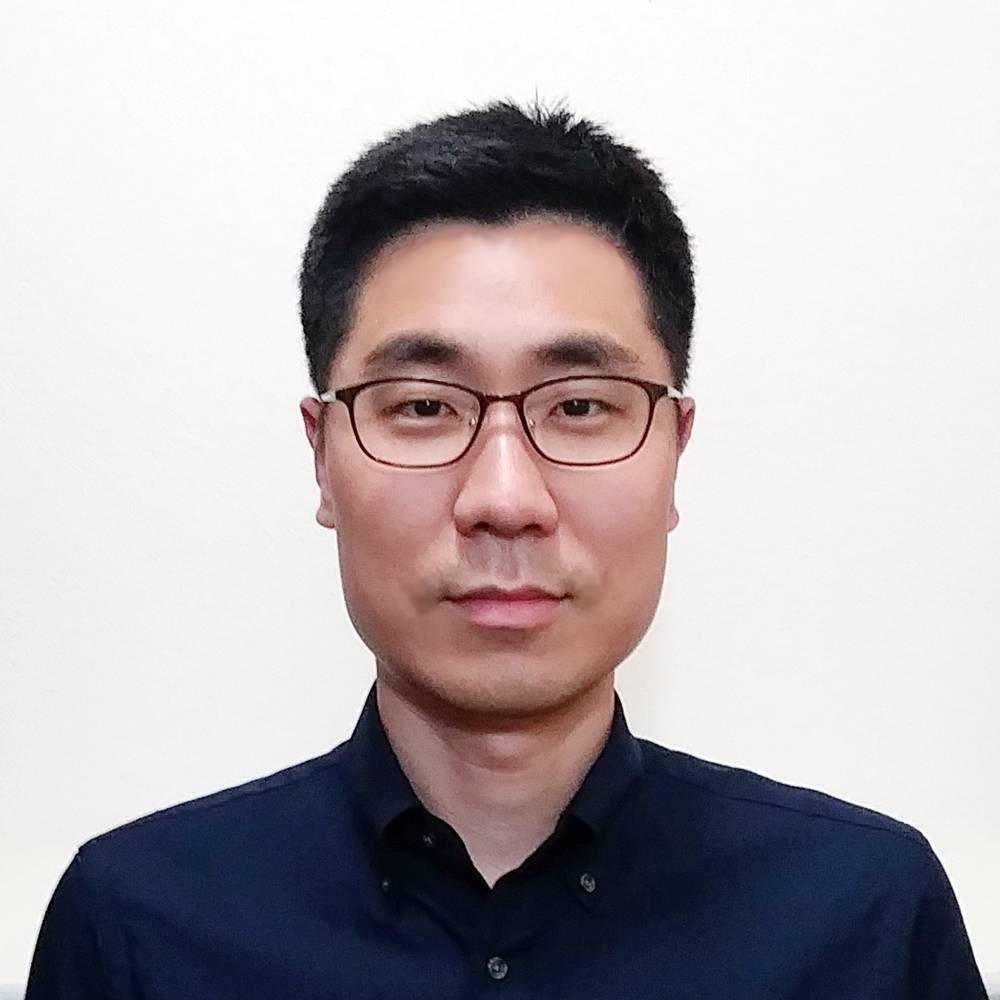
Assoc Prof Ng Teng Yong is an Associate Professor at the School of Mechanical & Aerospace Engineering (NTU), specializing in numerical modeling and simulation. With a background as Research Manager at A*STAR Institute of High Performance Computing, his work spans materials science, nanotechnology, and aerospace engineering. Current focus on graphene-based desalination membranes Expertise in molecular dynamics simulations Investigates nanoscale fluid mechanics and structural dynamics Recent publications highlight advancements in energy-efficient electrodialysis, smart robotics, and nonlinear vibration analysis. His interdisciplinary approach integrates computational methods with experimental validation in additive manufacturing and soft material mechanics.
Zackary Johnson , the Juli Plant Grainger Associate Professor of Biological Oceanography and Marine Biotechnology at Duke University, leads interdisciplinary research at the intersection of marine microbiology and biogeochemical innovation. Affiliated with the Nicholas School of the Environment and based at the Duke Marine Laboratory , his work spans microbial ecology, algal biotechnology, and climate mitigation strategies. Education: Ph.D. in Marine Science (Duke University, 2004), B.S. in Biology (MIT, 1994) Research Interests focus on marine microbial communities, particularly the model phytoplankton Prochlorococcus , algal cultivation for sustainable bioproducts, and the ecological impacts of ocean acidification. His lab investigates microbial interactions across diverse environments—from coastal estuaries to open-ocean gyres—and develops technologies for carbon-negative aquaculture systems. Publications highlight expertise in microbial biogeography, algal biofuels, and climate-resilient marine food webs. Recent work explores drone-based ocean color sensing, Gulf Stream eddy microbiomes, and the role of Labyrinthulomycetes protists in carbon export. Scientific Awards: Juli Plant Grainger Associate Professorship DOE and NSF-funded projects Grants include high-profile initiatives like the Marine Algae Industrialization Consortium (MAGIC) and REU Site program for coastal research training. His lab maintains a dedicated research site for studying microbial dynamics and sustainable algal cultivation.
Professor Ross Cameron is a faculty member at the School of Architecture and Landscape, University of Sheffield, specializing in Environmental Horticulture . His research focuses on the intersection of urban green infrastructure, climate change adaptation, and human well-being through plant selection. PhD in Horticulture BSc in Biological Sciences Research interests include: Green infrastructure for climate mitigation (city cooling, flood tolerance) Plant-ecosystem interactions (thermal insulation, biodiversity enhancement) Sustainable resource use (water, soil amendments, energy) Human-plant relationships (well-being, therapeutic landscapes) Recent publications highlight trends in: Phylogenetic approaches to urban tree survival Thermal regulation via green walls and roofs Floral color psychology and mental health Mediterranean species adaptation to urban stress Microbial implications in green infrastructure Scientific awards include: National Horticultural Fellowship (2011) DEFRA LINK project with top rating (9/10) Teaching excellence awards He leads research on plant-people dynamics, advises UK policymakers, and supervises PhD projects in urban ecosystem services. His work bridges applied horticulture with interdisciplinary collaborations across ecology, architecture, and public health.
Birgir Norddahl is a Professor at the Department of Green Technology within the Faculty of Engineering , University of Southern Denmark (SDU). His research focuses on membrane technologies for sustainable processes in food and waste valorization, including biogas upgrading, anthocyanin extraction, and ammonia recovery from manure. Key projects: Probiofa (sustainable bioactives), GRoW (green reverse osmosis), ReUseWaste (nutrient recovery). Active in membrane-based solutions for biofuels, juices, and waste-to-resource systems. Research Interests revolve around membrane fouling, process intensification, and circular economy applications. His work integrates chemical engineering principles with environmental sustainability. Article Trends highlight advancements in: Anthocyanin recovery from berry pomace using enzymatic and membrane techniques. Biogas upgrading via membrane separation and microbial processes. Ammonia recovery from agricultural waste using membrane contactors. Process modeling for cost-effective waste valorization. Teaching includes courses on chemical process design and energy systems. He has supervised projects like TEK-ReUseWaste and XD-CPD1. Labs & Teams collaborate on membrane distillation, ultrafiltration, and biorefinery systems, notably with the Membrane Filtration Forum in Food Processing and the BIOREK® concept.
Christine Campagne is a full professor at ENSAIT since 2010, affiliated with the Multifunctional Textiles and Processes Group. Her research activities focus on advanced textile functionalization and polymer surface modification techniques, with significant contributions to sustainable textile technologies and smart materials development. Professor Campagne's research interests span multiple cutting-edge areas of textile science. Her primary focus involves physical surface treatments using atmospheric plasma technology for textile functionalization, chemical surface treatments to impart antibacterial, hydrophilic, and hydrophobic properties to textiles, and 3D printing applications for textile innovation. She also specializes in surface nanostructuration for self-cleaning textiles, physico-chemical characterization of polymer surfaces, and processing of polymer nanocomposites including conductive and antibacterial multifilaments. Her work extends to the characterization and study of climatic ageing of textile materials, ensuring durability in various environmental conditions. Analysis of Professor Campagne's recent publications reveals a strong trend toward sustainable and multifunctional textile development. Her work increasingly focuses on bio-based solutions (like milk casein for antimicrobial textiles), eco-friendly processing techniques (plasma treatments replacing chemical mordants), and multi-functional applications where single textile systems provide multiple benefits (UV protection, water detection, chemical hazard protection). The research demonstrates growing integration of nanotechnology with traditional textile processes and increasing emphasis on circular economy principles in textile development. Professor Campagne serves as Principal Investigator or co-PI on several significant research projects including Autonotex, MA(T)TISSE, Phototex, Autotherme, Duratex, and MONI2TEX. Her teaching portfolio encompasses advanced topics in polymer science including physico-chemical properties of polymers , polymer functionalization , ageing mechanisms of polymers , biopolymers , and surface characterization of textile materials , reflecting her comprehensive expertise across both fundamental and applied aspects of textile science.
Anubhav Pratap Singh is an Associate Professor in the Department of Food, Nutrition and Health at the University of British Columbia’s Faculty of Land and Food Systems. He holds the Endowed Professorship in Food & Beverage Innovation and leads academic planning for the UBC Food and Beverage Innovation Centre. Education: PhD in Food Science (McGill University, 2015), Banting Postdoctoral Fellow (University of Toronto, 2017), BTech/MTech in Chemical Engineering (IIT Kharagpur, 2011) Research Interests: His work focuses on advancing food safety and nutrition through novel processing technologies, including thermal methods (agitation processing, HTST/UHT) and non-thermal methods (pulsed light, high-pressure processing). He also develops technologies for food fortification with micronutrients and models gastrointestinal interactions to improve nutrient bioavailability. Article Trends: Recent publications highlight innovations in food fortification (iron/zinc delivery systems), sustainable processing (microwave-vacuum dehydration, cold plasma), and interdisciplinary applications of nanotechnology and biopharmaceutical engineering. Scientific Awards: Young Entrepreneur Award (2009) Gold Medal, Charles Stumbo Paper Competition (2014) Banting Fellow (2016) Green College Leading Scholar (2017) Collaborations & Labs: He collaborates with BC-based plant-based food companies, berry growers, and nanotechnology firms. His research is conducted at the UBC Food Process Engineering Laboratory.
Professor Jianzhen Ou is a faculty member at the School of Engineering, RMIT University, Australia. His research focuses on advanced materials, nanotechnology, and their applications in electronics, environmental monitoring, and biomedical engineering. Key areas include 2D materials for gas sensors, optoelectronic devices, and sustainable waste-to-materials conversion. Research interests encompass materials engineering, nanotechnology, and interdisciplinary fields like condensed matter physics. His work bridges fundamental material science with practical applications in sensors, energy systems, and environmental solutions. Recent studies highlight innovations in gas sensor arrays, neuromorphic devices, and sustainable nanomaterial synthesis. He actively supervises research projects on topics like upcycling waste into high-value materials and optoelectronic sensor development. Collaborations involve cross-disciplinary teams and industry partnerships to advance technological solutions.
Dr. Sameer Rahatekar is a Senior Lecturer in Sustainable Polymers and Composites at Cranfield University, working within the School of Aerospace, Transport and Manufacturing and the Composites and Advanced Materials Centre. His research focuses on the development of sustainable materials derived from natural polymers including cellulose, alginate, and chitin/chitosan for engineering and biomedical applications. Dr. Rahatekar earned his PhD from the University of Cambridge where he worked on nano-composites modelling and manufacturing. He subsequently worked as a postdoctoral researcher at the National Institute of Standards and Technology (NIST) in the USA, focusing on manufacturing natural polymer-based fibers using ionic liquids. He also served as a lecturer at the Advanced Composite Centre for Innovation and Science (ACCIS) at the University of Bristol. His research encompasses several key areas: Development of environmentally benign methods for spinning high-performance cellulose, chitin, and chitosan fibers Creation of biodegradable foams from natural polymers for packaging and biomedical applications Manufacturing toughened glass/carbon fiber composites using nanoparticles and rubber as toughening agents Development of unique roll-on coating processes for nanoparticle-reinforced composites with improved properties Dr. Rahatekar's publication record demonstrates expertise across multiple domains including sustainable materials, polymer science, nanotechnology, and composite manufacturing. His recent work has particularly focused on utilizing waste biomass and developing environmentally friendly textile alternatives with mechanical properties comparable to traditional materials like wool, polyester, and nylon. He has secured funding from multiple prestigious sources including: EPSRC Innovate UK The Royal Academy of Engineering BBSRC/BBNet Newton-Bhabha Funds The British Council Industrial partners including Haydale Ltd, Meggitt Aerospace, and Hexla Ltd His research aligns with United Nations Sustainable Development Goals 9 (industry, innovation and infrastructure), 12 (responsible consumption and production), and 14 (life below water), focusing on sustainable manufacturing approaches with reduced carbon footprint and transportation costs.
Dr. Youngmin Lee is an Associate Professor in the Department of Chemical Engineering at New Mexico Tech. His research focuses on functional polymeric materials, conjugated polymers, additive manufacturing, and depolymerization for recycling. He leads the Research Group for Functional Polymers, which emphasizes linking chemical structures to macroscopic properties for applications in recyclable electronics, sustainable materials, and photovoltaics. His work includes developing thermoreversible networks for recyclable epoxies, photothermal nanoparticles for material depolymerization, and block copolymers for enhanced photovoltaic performance. Primary affiliations: New Mexico Tech, Department of Chemical Engineering Research highlights: Sustainable thermosets, dynamic covalent adhesives, conjugated polymer photovoltaics DOE BES renewal grant recipient: Focus on additive manufacturing and polymer recycling Research interests include: recyclable materials , photothermal-responsive polymers , and block copolymer self-assembly . The group’s 'Research Plane' framework integrates synthesis and characterization to bridge molecular design and macroscopic functionality. Notable contributions include patents on nanoporous filtration membranes and presentations on thermal stability in photovoltaic materials. His publication record spans over 40 peer-reviewed articles in journals like Nature Communications and Macromolecules .
Dr. Jane Wood is a Lecturer in Fashion Technology at the University of Manchester, specializing in biomaterials, industrial sustainability, and smart garment systems. She holds a PhD in Applied Microbiology, an MSc in Apparel Product Development, and a BSc in Textile Chemistry from the University of Leeds. Her interdisciplinary research addresses environmental challenges in the global textiles sector, with a focus on microbial cellulose production, color pollution remediation, and sustainable design. She is co-lead of the Sustainable Textiles and Apparel Research (STAR) group, fostering collaborative research among PhD and master’s students. Dr. Wood’s academic leadership includes curriculum development, such as the BSc (Hons) Fashion Product Innovation program, and industry partnerships with organizations like the British Textile Machinery Association. She is a STEM Ambassador, advocating for STEM inclusion and science communication through media appearances and public engagement. Her accolades include the Senior Fellowship of the Higher Education Academy (SFHEA), Fellowships from the Textile Institute and Society of Dyers and Colourists, and the gold award for the Textiles 2030 initiative. She actively contributes to policy panels, editorial boards, and research assessments like Horizon Europe. Key Roles: Academic Leadership, Curriculum Design, Public Engagement Research Groups: STAR Group, Textiles and Life Conference Series Industry Collaborations: Ford, Volkswagen, Disney, Marks & Spencer Her research articles span topics like microbial cellulose, smart textiles, and sustainable practices, with a focus on bridging academic and industrial needs. She mentors early-career researchers and chairs international academic events, emphasizing interdisciplinary innovation and environmental stewardship. Awards & Fellowships: Textiles 2030 Gold Award (2021) Senior Fellowship of HEA (2021) Fellow of Textile Institute (2017) Grants & Projects: Innovate UK-KTP Project on PFAS Filtration Smart Sensor Integration in Sportswear (KTP Project) Labs & Teams: Co-leads STAR Group, collaborates with industry partners on textile innovation.
Alexxiss Jackson serves as an Adjunct Professor in the Department of Art and Visual Culture at Spelman College since 2019, while maintaining an active career as a director of photography with over 13 years of industry experience. Her research and professional focus spans cinematography techniques, visual storytelling, and intersectional perspectives on women of color in film. Key interests include: Cinematography and lens filtration Digital media production Representation in visual culture Gender dynamics in film industries Cross-cultural film festival circuits Creative pedagogy in arts education Her work has received international acclaim through 20+ awards at film festivals worldwide, with notable recognition including a feature on Amy Poehler's Smart Girls platform. She actively contributes to academic discourse through conference presentations like her 2018 TERMINUS Festival seminar "Cinematography: Crafting a Look with Lenses and Filters" and frequent panel discussions on diversity in filmmaking. Professional accolades include: 20+ international film festival awards across six continents Featured speaker at TERMINUS Conference + Festival (2018) Regular contributor to film industry podcasts and radio interviews As an educator, she teaches AVC 335: Advanced Sight & Sound and mentors students in bridging academic theory with professional film practice, emphasizing inclusive representation in visual media.
Professor Cheng Xing is a distinguished faculty member at the Department of Materials Science and Engineering within the College of Engineering at Southern University of Science and Technology (SUSTech). Since 2013 , he has served as a Professor and previously held a Director position at the Analytical Testing Center until 2020 , after which he became the Director of the Laboratory and Equipment Management Department . His academic journey includes a PhD in Electrical Engineering from the University of Michigan (2005), an MS in Geochemistry from Stanford University (1999), and a BS in Geochemistry from the University of Science and Technology of China (1997) Research Interests: Micro/Nanofabrication Techniques Nano-Optics and Photonic Devices Organic Semiconductor Materials Bio-MEMS and Digital Microfluidics Integrated Macroelectronics Publication Trends reflect expertise in Nanoimprint Lithography , High-Performance Semiconductor Devices , and Advanced Bio-MEMS Systems , with recent work focusing on Metasurface Applications , Flexible Electronics , and Cost-Effective Nanofabrication . His 15 Most Recent Articles (2023-2002) span Materials Science , Nanotechnology , and Optical Engineering . Scientific Recognition: 2011: NSF CAREER Award 2011: DARPA Young Faculty Award 2013: Shenzhen Peacock Project B 2014: Shenzhen Government Special Allowance 2018: Shenzhen Pengcheng Scholar Administrative Roles include leadership positions at SUSTech's Analytical Testing Center (2013-2020) and Director of Laboratory and Equipment Management Department (2020-present). His work bridges Academic Research and Industrial Application , with grants supporting innovations in Nanostructured Materials and Smart Sensing Systems .
José Cerrato is an Assistant Professor in the Department of Civil Engineering at the University of New Mexico (UNM) . He leads the E-H 2 O Research Group , focusing on biogeochemical processes at the water-energy nexus affecting metal and radionuclide cycles in the environment. His work integrates spectroscopy, microscopy, aqueous chemistry, and molecular biology tools. Education: PhD in Civil Engineering, Virginia Tech (2010) MS in Environmental Engineering, Virginia Tech (2005) BS in Civil Engineering, National Autonomous University of Honduras (2001) Research interests include: Mine Waste Legacy : Collaborative work with Native American communities studying uranium mine waste biogeochemistry for risk assessment Sustainable Water Treatment : Energy-efficient technologies using nano-particulate metal-oxides Wildfire Impact : Post-storm water quality effects from wildfire ash transport Hydraulic Fracturing : Wellbore integrity studies Uranium Mining : Aquifer restoration strategies post-mining Publication trends show expertise in uranium biogeochemistry, metal transport mechanisms, and water treatment technologies . Over 15 recent articles demonstrate interdisciplinary approaches combining environmental engineering, geochemistry, and materials science . Scientific awards include: NSF CAREER Award (2017) UNM School of Engineering Junior Faculty Research Award (2017) New Mexico EPSCoR Mentoring Award (2017) Oak Ridge Associated Universities Ralph E. Powe Award (2015) UNM Faculty of Color Research Award (2016) Advising and grants highlight mentorship of 10+ graduate students and major funding from: National Science Foundation New Mexico EPSCoR Oak Ridge Associated Universities UNM internal grants Laboratory facilities at UNM include: Advanced Transmission Electron Microscopy (0.19 nm resolution) State-of-the-art X-ray Photoelectron Spectroscopy for surface analysis High-precision X-ray Diffraction for mineral identification Inductively Coupled Plasma spectrometry for trace element analysis Environmental Scanning Electron Microscopy for uncoated sample analysis
Ilya Shapirovskiy is an Assistant Professor in the Department of Mathematical Sciences at New Mexico State University's College of Arts & Sciences. His academic position is listed as Tenure Track Faculty within the university's mathematics department structure. Shapirovskiy's research focuses on advanced topics in mathematical logic, particularly modal logic and its applications. His work spans Kripke frame theory, decidability problems, local tabularity conditions, and connections between modal logic and graph theory. His publications demonstrate expertise in both theoretical foundations and computational aspects of logic systems. Analysis of his recent publications (2016-2025) reveals a consistent research trajectory centered on frame constructions, decidability conditions, and completeness results for various modal logics. His work frequently addresses the finite model property, local tabularity criteria, and relationships between logical systems and mathematical structures like well-orders and graph colorings. The publications appear in leading logic venues including Advances in Modal Logic, Journal of Symbolic Logic, and Studia Logica. Shapirovskiy maintains active scholarly engagement through presentations at major logic conferences including the Association for Symbolic Logic Annual Meeting, Logic Colloquium, and Advances in Modal Logic workshops. His recent talks address topics such as expressibility in distance logics, decidability of modal logics of non-k-colorable graphs, and locally finite polymodal logics.
Jia Wang is an Associate Professor in the Department of Physics at Umeå University, Sweden. Their research focuses on low-dimensional semiconductor materials, including organic, inorganic, and hybrid systems, with applications in energy conversion, optoelectronics, and biomedicine. They specialize in luminescent nanomaterials such as quantum dots and carbon nanodots, particularly exploring sustainable synthesis methods using biomass-derived precursors. Key research themes include developing carbon dots for biomedical applications (e.g., neurite outgrowth promotion), optoelectronic devices (e.g., LEDs with high color purity), and energy-efficient materials. Their work emphasizes environmental sustainability, leveraging green chemistry principles and renewable resources. Publications highlight innovations in nanomaterials engineering, including ligand engineering for perovskite quantum dots and the development of metal-free TADF emitters for light-emitting electrochemical cells. Collaborations span materials science, chemistry, and biomedical engineering. Teaching includes master-level courses on solar cells, reflecting expertise in energy conversion technologies. Research is conducted via the OPEG (Organic and Perovskite Electronics Group) section at Umeå, with ongoing projects on novel materials for next-generation optoelectronic devices.