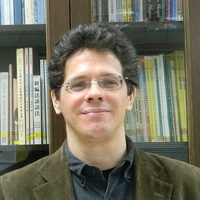
Charlotte Kroløkke is a Professor at the Department of Culture and Language, University of Southern Denmark, with 116 research outputs and 60+ media contributions. Her work bridges Cultural Politics , Reproductive Technologies , and Transnational Kinship . Key projects: Endocrine Economies (2022–2026), Ice Age (fertility preservation ethics), and KinTra (transnational relatedness) Recent publications examine PFAS exposure impacts in the Danish Commonwealth, surrogacy regulation in the Netherlands, and space exploration ethics. Research Trends : Focus on technopolitical intersections, including cryopreservation (sperm/egg banking), endocrine disruptor discourse, and speculative imaginaries in science. Scientific Awards : Velux Grant (2021) Research Fellow (2020) Research Associate (2017) Visiting Senior Scholar (2015) KRAKA Prize (2011) Teaching : Co-teaches courses in cultural theory/history and cultural analysis (2023–2025) with colleagues like L. Skewes and A.N. Bang.
Zhanna Popova is a Research Fellow at Central European University, affiliated with the Department of Historical Studies and Department of Gender Studies. She contributes to the ZARAH project on women's labor activism (ERC Advanced Grant), with prior work at the International Institute of Social History (Amsterdam) on Russian/Soviet penal practices (NWO-funded). Undergraduate: History, Moscow State University (2011) MA: Social Sciences, École normale supérieure (2013) PhD: History, University of Amsterdam (2019) Her research bridges social history, labor history, and penal studies, focusing on Russia/Eastern Europe and transnational labor dynamics. Recent work examines gendered experiences in carceral labor and labor inspector roles in interwar Poland. Her publications address coerced labor systems, exiles, and forced migrations from imperial Russia to the Soviet era. Key themes include state violence, labor governance, and the intersection of gender and power. Her work is supported by prestigious grants, including the ERC Advanced Grant for the ZARAH project and NWO funding during her PhD.
Llorenç Picornell Gelabert is a Ramón y Cajal Researcher at the University of the Balearic Islands (UIB) within the Department of Historical Sciences and Theory of the Arts. He is affiliated with the ArqueoUIB research group and has conducted extensive fieldwork in Equatorial Guinea (Fang people), Ghana, and Mediterranean islands including Sicily, Corsica, and Crete. PhD in Prehistoric Archaeology (University of Barcelona, 2012) Postdoctoral training at UMR7209 CNRS-Paris, University of Nottingham His research focuses on ethnoarchaeology of fuel, anthracology, and human-environment interactions in Mediterranean prehistory. Key methodologies include quantitative ecoanatomy, dendro-anthracology, and anthraco-typology. Recent publications address topics like Aleppo pine woodland dynamics, fuel management strategies, and socioecological interpretations of charcoal analysis. The 15 most recent articles demonstrate expertise in Mediterranean prehistoric landscapes (6 papers), human-tree relationships (4), and methodological innovations (5). Scientific contributions: Ramón y Cajal Researcher (2020-) FPU Grant recipient (Spanish Government) Teaching portfolio includes courses on Ethnoarchaeology, Prehistoric Island Communities, and Applied Biotechnology. Supervised final degree projects and practical placements across History, Primary Education, and Cultural Heritage programs since 2016.
Professor Ineke Maas serves as Associate Professor in the Department of Sociology at Utrecht University and holds a professorship at Vrije Universiteit Amsterdam since 2012, where she chairs research on 'Long term trends in social openness and exclusion.' Her scholarly work focuses on social mobility, inequality, and integration within the Institutions for Open Societies (IOS) framework. She has been instrumental in the Interuniversity Centre for Social Science Theory and Methodology (ICS) and has published extensively on historical and contemporary social stratification across European contexts. Professor Maas earned her PhD in Sociology from Utrecht University in 1990 with her dissertation 'Participating in Cultural Activities: Substitution and Learning-effects.' She completed her MA in Sociology with distinction from Utrecht University in 1986 and undertook postgraduate training at the Interuniversity Centre for Social Science Theory and Methodology. She also holds Senior Qualifications in both University Teaching and Research from Utrecht University (2006). PhD Sociology, Utrecht University (1990) MA Sociology (with distinction), Utrecht University (1986) Postgraduate Courses 'Researcher in the Social Sciences', ICS Utrecht (1989) Senior Qualification University Teaching, Utrecht University (2006) Senior Qualification Research, Utrecht University (2006) Professor Maas's research program examines trends and country differences in intergenerational mobility, career mobility, and marital mobility, with significant contributions to understanding immigrant integration, educational inequality, and gender inequality. Her work employs historical and comparative perspectives to analyze social mobility patterns across different European countries during industrialization and modernization periods. She is internationally recognized for developing the HISCO (Historical International Standard Classification of Occupations) and HISCLASS (Historical Social Class Scheme) frameworks with Marco H.D. van Leeuwen. Her recent publications (2022-2024) reveal a sophisticated methodological approach combining historical data with contemporary analysis, increasingly incorporating intersectional perspectives examining how education, gender, age, and migration background interact to shape social outcomes. Her work frequently utilizes advanced techniques including multilevel modeling, gene-environment interaction analysis, and historical comparative methods to investigate educational inequality, social mobility, and benefit receipt patterns. Professor Maas has supervised numerous PhD students and research projects focused on social stratification. She has been actively involved in major research initiatives including the Historical Sample of the Netherlands and the Historical International Social Mobility Analyses. Her collaborative work spans multiple European institutions and has received support from various research councils and foundations. She maintains strong affiliations with the Research Center ICS Utrecht (Interuniversity Centre for Social Science Theory and Methodology) and contributes to the Dutch Sociological Association. Her scholarly influence extends through editorial board memberships on prominent sociology journals and regular presentations at international conferences on social stratification and mobility.
Sophie Crawford-Brown is an Assistant Professor in the Department of Art History at Rice University. She also serves as Director of the Ancient Mediterranean Civilizations Program and holds a courtesy faculty appointment in Modern and Classical Languages, Literatures and Cultures. Research Focus: Art and archaeology of Republican and Early Imperial Italy Key Themes: Colonization processes, cross-cultural interaction, transition from Republic to Empire Her recent work explores temple architecture and sacred landscapes in central Italy (3rd century BCE–1st century CE), with a monograph under contract at Cambridge University Press. She investigates how architectural terracottas (pre-marble Italic temple decorations) reflect colonial-indigenous dynamics and communal identity formation under Roman expansion. Trends in Publications : Ecocritical analysis of Roman landscape representations Augustan art and botanical symbolism Network approaches to terracotta production Cultural hybridity in Italic-Roman material culture Technical studies of Campana reliefs Field reports from Cosa excavations Scientific Awards & Grants : Rome Prize (2016-2018) from Kress Foundation John R. Coleman Fellowship (2016-2017) Teaching Fellowship at University of Tübingen (2016) Salvatori Research Grant (2014) Contact Information : Office: 122 Herring Hall, Rice University Phone: 713-348-3796 Email: scb@rice.edu
Eva Namusoke serves as an Associate Research Fellow at the Institute of Commonwealth Studies, University of London, holding this position from September 2017 through July 2026. Her academic work centers on historical narratives of the British Commonwealth with concentrated focus on Uganda and broader African contexts. Her primary research domains include: Imperial and postcolonial history Colonies and colonization processes Patterns of emigration and immigration East African historical studies Dr Namusoke's scholarship critically examines colonial legacies and decolonization trajectories, particularly investigating socio-political transformations in Uganda. Her work engages with historical memory, national identity formation, and Commonwealth dynamics, contributing to contemporary academic discourses on postcolonial societies. She maintains an active research profile through the Institute of Commonwealth Studies, where she participates in scholarly initiatives examining Africa's imperial past and its enduring consequences.
Dr Balasubramanyam Chandramohan is a Senior Research Fellow at the Institute of Commonwealth Studies, School of Advanced Study, University of London. His research focuses on transnational education dynamics within the Commonwealth, interdisciplinary pedagogy, and globalization's impact on higher education. Research Themes: Transnational Education, Commonwealth Values, Interdisciplinary Learning, Globalization & Development Key Expertise: Quality assurance in transnational education, BRICS university models, OER adaptation, and Commonwealth commemorative conferences Publications highlight his work on educational frameworks across Africa, India, and the UK. He actively contributes to debates on private financing in higher education and pedagogical innovations. His collaborations include engagements with institutions in Cameroon, India, and the UK, emphasizing student experiences and institutional partnerships.
Mr Michael Ohajuru is a Senior Research Fellow at the Institute of Commonwealth Studies, specializing in Independent Art and Cultural Historian roles. His research focuses on Black British history, particularly the presence of Black people in Renaissance Europe and the life of John Blanke, a Black trumpeter in the courts of Henry VII and VIII. He co-convenes the 'What's Happening in Black British History' workshop series and contributes to projects like www.blackbritishhistory.co.uk. Research Keywords: Colonies & Colonization, Cultural memory, Early Modern, Medieval History, History of art Regions: Africa, Caribbean, England, Europe, Ireland, Scotland, United Kingdom, Wales
Professor Theresa Burg is a faculty member in the Department of Biological Sciences at the University of Lethbridge , Canada, and is also affiliated with the Environmental Science Program . She holds a PhD in Zoology from the University of Cambridge and has extensive expertise in molecular ecology and evolutionary biology, with a focus on birds. Education: BSc in Biology, University of British Columbia (UBC) MSc in Biology, University of British Columbia (UBC) PhD in Zoology, University of Cambridge Research Interests: Professor Burg employs molecular markers to investigate evolutionary and ecological dynamics in natural populations, particularly focusing on how physical (e.g., glaciers) and non-physical (e.g., foraging patterns) barriers shape population structure. Her research spans hybridization , speciation , phylogeography , and conservation genetics of vertebrates, with a strong emphasis on avian systems. She examines post-glacial recolonization, the role of refugia, and the genetic consequences of migratory behavior. Recent Research Trends: Her recent publications (2023–2025) reflect a strong focus on conservation genetics and population genomics of seabirds and songbirds. Key themes include cryptic speciation, genetic structure across migratory ranges, forensic identification of bycatch species, and the genetic impact of habitat fragmentation. Methodologically, her work integrates RADseq , microsatellite data, and ancient DNA techniques to address ecological and evolutionary questions. Scientific Contributions & Funding: Professor Burg has been consistently funded by major Canadian and international agencies, including: Natural Sciences and Engineering Research Council (NSERC) – for studies on high-latitude bird evolution and lab infrastructure Alberta Ingenuity Fund – for forest bird evolution research Canadian Foundation for Innovation (CFI) – for molecular ecology lab infrastructure Alberta Government Small Equipment Grant She has also held a Chateaubriand Postdoctoral Fellowship from the French Embassy for seabird population differentiation studies. Labs & Research Group: Professor Burg leads the Molecular Evolutionary Ecology Laboratory at the University of Lethbridge, equipped with high-throughput DNA sequencing capabilities. Her lab focuses on population-level genetic analyses and supports both graduate and undergraduate research in avian ecology and conservation.
Dr. Jens Temmen is an Assistant Professor at the Department of American Studies, Heinrich-Heine-University Düsseldorf. His research intersects US Imperialism, Indigenous Studies, and Critical Outer Space Studies, with a focus on discourses of sovereignty and territoriality in 19th-century legal texts and contemporary Mars colonization narratives. PhD in American Studies, University of Potsdam. Co-editor of Across Currents: Connections between Atlantic and (Trans)Pacific Studies (Routledge, 2018). Co-editor of a Special Forum on 'American Territorialities' in the Journal for Transnational American Studies . His postdoctoral work applies ecocritical and posthumanist frameworks to analyze Mars colonization in US literature. He was awarded a DAAD-funded visiting scholarship at the University of Hawai‘i at Mānoa (2016) and received a PhD fellowship through the Research Training Group minorcosmopolitanisms at the University of Potsdam. Key scientific awards include a DAAD visiting scholar grant and a Research Training Group minorcosmopolitanisms fellowship. His work bridges Transnational American Studies, Indigenous life writing, and planetary colonialism narratives.
Dr. Iryna Byelinska serves as Associate Professor and Senior Researcher at the Department of Fundamental Medicine within the Educational and Scientific Center “Institute of Biology and Medicine” at Taras Shevchenko National University of Kyiv. Her work bridges hematology, oncology, and nanomaterials research through in vivo and in vitro studies of kinase inhibitors and fullerene-based compounds. Doctor of Biological Sciences (2017), specialty 03.00.11 – Cytology, Cell Biology, Histology Candidate of Biological Sciences / PhD in Biology (2003), specialization in cytology and histology Master’s degree in biology (1996), Taras Shevchenko State University of Kiev Specialized training in Acute Leukemia Diagnosis (2021) at National Research Center for Radiation Medicine Research focuses on: Anticancer compound development – Targeted inhibition of VEGF-R, EGF-R, and Syk kinases using maleimide/pyrrole derivatives Fullerene-based nanocomplexes – Evaluating C60 and C60-Cis-Pt for anti-inflammatory, antitumor, and hematopoietic protective effects Myelodysplastic syndrome – Investigating megakaryocyte functional states and platelet membrane ATPase activity Drug toxicity profiling – Chronic/acute exposure impacts on erythropoiesis, thrombopoiesis, and organ-specific inflammation Scientific contributions include: Patent #121321 for pyrrole-based anticancer agents Three major grants from Ukraine’s Ministry of Education and Science (2011-2021) Collaborations with National Cancer Institute of Ukraine and National Research Center for Radiation Medicine Current projects involve: Carbon dot applications for burn treatment BMP4/VDR pathway modulation in leukemia differentiation Multi-kinase inhibitor toxicity profiling
Ben Vining is an Associate Professor in the Department of Anthropology and core faculty in the Environmental Dynamics program at the University of Arkansas. His research integrates archaeological approaches with paleoclimatology and geospatial modeling to understand long-term human-environmental relationships. He leads a multi-institutional project examining agroecological dynamics in Chicama Valley, Peru, supported by NSF and NASA-ROSES grants. PhD in Anthropology from Boston University Focus on Andean regions with additional research in Mediterranean, Near East, and Asia Specializes in GIS, remote sensing, agent-based models, and paleoclimatic proxy analysis His recent publications demonstrate strong focus on El Niño Southern Oscillation impacts, Andean ecological refugia, and socio-environmental modeling. Key methodologies include satellite imagery analysis (ASTER, Sentinel 2), sediment core studies, and computational simulations of preindustrial societies. Professional affiliations include Society for American Archaeology, Institute for Andean Studies, and Register of Professional Archaeologists. Courses taught range from undergraduate Introduction to Archaeology to graduate seminars in Environmental Change and Landscape Archaeology.
Dr. Frank Muyard serves as Associate Professor & Head of the Taipei Center at the Ecole française d'Extrême-Orient (French School of Asian Studies). His academic work bridges multiple disciplines with a strong focus on Taiwan's political, social, and archaeological landscape. As both a researcher and institutional leader, he has established himself as a significant figure in Taiwan studies and East Asian archaeology. Dr. Muyard's research interests span Taiwan Studies, Sociology, Archaeology, Comparative Politics, and Modern Chinese History, with particular emphasis on national identity formation, democratization processes, and the intersection of archaeology with indigenous communities. His interdisciplinary approach connects historical analysis with contemporary political developments, especially regarding Taiwan's evolving relationship with China and the development of a distinct Taiwanese identity among younger generations. His work frequently examines how archaeological narratives interact with national identity politics, particularly concerning Austronesian origins and the role of indigenous peoples in shaping Taiwan's historical consciousness. His publication record reveals a consistent focus on Taiwan's political evolution since the 1980s, with increasing attention to archaeological perspectives in recent years. While his earlier work centered on electoral politics, national identity shifts, and cross-strait relations, his more recent scholarship explores Taiwan's place within East Asian archaeological frameworks and the complex relationship between archaeology and indigenous communities. This evolution reflects both personal academic development and broader scholarly trends in interdisciplinary approaches to Taiwan studies. Dr. Muyard has been actively engaged in academic discourse through presentations at numerous international conferences, addressing topics ranging from Taiwan's maritime landscapes to the democratic rise of Taiwanese national identity. His institutional affiliations with both the Ecole française d'Extrême-Orient and National Central University in Taiwan demonstrate his bridging role between French academic traditions and Taiwan's scholarly community.
Richard Banégas is a Full Professor at the Center for International Studies (CERI) at Sciences Po, where he specializes in the political dynamics of West Africa and the African Great Lakes region. His academic career spans over two decades, with significant contributions to understanding citizenship, political violence, social mobilizations, and conflict processes in Africa. Professor Banégas holds an MA from Sciences Po Bordeaux (1991), a PhD from Sciences Po Paris (1998), and the habilitation to supervise doctoral research (HDR) from the University of Paris 1 Panthéon-Sorbonne (2006). He previously served as head of the African studies Master's program at University of Paris 1 Panthéon-Sorbonne for approximately 15 years and currently codirects the Joint African Studies Program with Columbia University. His research focuses on citizenship, political violence, mobilizations, crises and conflicts, with particular attention to West Africa and Central Africa. Professor Banégas has pioneered studies on the political implications of identification systems in Africa, examining how bureaucratic documentation shapes citizenship practices and political subjectivities. His work challenges simplistic narratives about biometric technologies, demonstrating how they interact with existing documentary practices rather than replacing them. Professor Banégas is actively engaged with multiple scholarly communities and institutions. He is a member of the International African Institute (London), president of the Association des chercheurs de Politique africaine (ACPA), and directs the Les Afriques book series at Karthala Publishers. He also serves on the editorial board of the journal Politique africaine and acts as a permanent consultant on Africa for the French Ministry of Foreign Affairs' Policy Planning Unit. His extensive publication record includes numerous journal articles and several influential books, with recent works focusing on identification systems and citizenship in Côte d'Ivoire. Professor Banégas has supervised numerous doctoral students and collaborates widely with scholars across Africa, Europe, and North America.
Kimberly M. Davis, PhD, MSc, is an Associate Professor in the Department of Molecular Microbiology and Immunology at Johns Hopkins Bloomberg School of Public Health. Her research focuses on understanding bacterial population heterogeneity during infection to develop more effective antimicrobial strategies. She leads the Davis Lab, which investigates how individual bacteria within populations change during host infection and how these changes impact antibiotic susceptibility. Her work bridges molecular microbiology, immunology, and infectious disease research with significant implications for therapeutic development. PhD in Cell and Molecular Biology, University of Pennsylvania, 2011 MSc in Molecular Cellular and Developmental Biology, University of Michigan, Ann Arbor, 2006 BSc in Cell and Molecular Biology (minor in Mathematics), University of Michigan, Ann Arbor, 2005 Dr. Davis's research centers on bacterial phenotypic heterogeneity during infection, particularly how subpopulations of bacteria respond differently to host immune pressures. Her lab studies Yersinia pseudotuberculosis and Staphylococcus aureus infection models to understand how bacteria form heterogeneous populations within host tissues. Key interests include host-pathogen interactions, the impact of nitric oxide on bacterial growth, antibiotic tolerance mechanisms, and how host phagocytes shape bacterial population dynamics. Her innovative approaches combine fluorescent transcriptional reporters, immunofluorescence microscopy, and single-cell analysis to visualize and characterize bacterial subpopulations during infection. Dr. Davis's recent publications reveal a strong focus on bacterial heterogeneity and antibiotic tolerance mechanisms. Her work demonstrates how host-derived stresses like nitric oxide create bacterial subpopulations with reduced antibiotic susceptibility. She has developed novel molecular tools to detect slow-growing bacterial subsets and antibiotic exposure within host tissues. Her research shows that bacteria responding to host immune factors often exhibit slowed growth rates, explaining their increased tolerance to antimicrobial treatments. Current work expands these findings to multiple bacterial pathogens and antibiotic classes, with implications for developing more effective treatment strategies that account for bacterial population heterogeneity. NIAID Career Transition Award (2017) Fisher Center Discovery Program grant, Johns Hopkins School of Medicine (2018) Faculty Innovation Fund Award, Johns Hopkins Bloomberg School of Public Health (2018) Willowcroft Foundation grant (2021) Finalist for Burroughs Wellcome Fund Investigators in the Pathogenesis of Infectious Disease (PATH) program (2022) Dr. Davis actively mentors multiple graduate students and postdoctoral fellows in her lab. Current trainees include PhD students in Molecular Microbiology and Immunology (MMI) and an ScM student. Her lab has successfully trained several students who have gone on to PhD programs and professional positions. Her research is supported by multiple grants including the NIAID Career Transition Award and foundation grants, focusing on bacterial heterogeneity, host-pathogen interactions, and antibiotic tolerance mechanisms. She collaborates with researchers across Johns Hopkins and other institutions to advance understanding of bacterial infection dynamics. The Davis Lab employs a multidisciplinary approach combining molecular microbiology, immunology, and imaging techniques to study bacterial population dynamics during infection. The lab maintains active collaborations with other research groups at Johns Hopkins, particularly in developing novel imaging approaches and infection models. Current projects focus on creating tools to detect bacterial growth differences, studying antibiotic susceptibility in heterogeneous populations, examining virulence factor expression heterogeneity, and developing single-cell approaches to characterize bacterial subpopulations within host tissues.