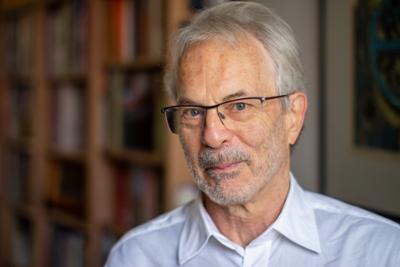
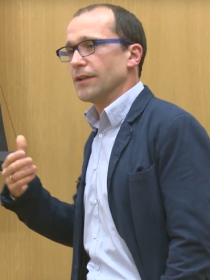
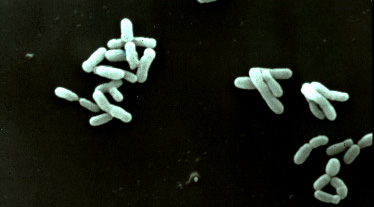
Stephan Sander-Faes is an Associate Professor at the University of Bergen's Department of Archaeology, History, Cultural Studies and Religion. He holds a Ph.D. from the University of Graz (2011) and a Habilitation in Early Modern and Modern History from the University of Zurich (2018). Before joining UiB in 2020, he taught for ten years at other institutions. His research focuses on Central European history, particularly the Habsburg Empire, Venetian Stato da mar, and economic history. He has published extensively on topics such as fiscal policies, urban dynamics, and legal practices in early modern Europe. Education: Ph.D., University of Graz, 2011 Habilitation, University of Zurich, 2018 Research Interests: Habsburg Studies Venetian Republic and its territories Economic and legal history Urban and social dynamics in early modern Europe Recent Research Trends: His publications analyze fiscal crises, state formation, and legal practices within Habsburg and Venetian contexts, with a focus on Bohemia, Dalmatia, and Adriatic trade networks. Recent work explores the interplay between Enlightenment ideals and bureaucratic reform in 18th-century Austria. Labs/Teams: Engaged with interdisciplinary projects on early modern state-building and transregional networks, collaborating with institutions such as the German Historical Institute London and the Austrian Academy of Sciences.
Dr. Borna Izadpanah is a Lecturer in Typography & Graphic Communication at the University of Reading. His research focuses on the history of printing and type design, particularly in Persian and Urdu languages using the Arabic script. He emphasizes decolonizing curricula and promoting inclusivity through interdisciplinary collaborations and open access initiatives. Education: PhD in Typography (2021), University of Reading MA in Typeface Design (2015), University of Reading MA in Graphic Design (2010), London College of Communication BA in Graphic Design (2006), Soore University Research Interests: Decolonizing typography, preservation of endangered archival materials, digital humanities, and the historical development of Arabic-script typography. His work bridges print history, art history, and Islamic studies, using non-European language sources. Articles Trends: Recent publications explore Urdu typography’s colonial influences, Persian printing in Qajar Iran, and the global history of Arabic-script type design. His research highlights underrepresented communities and historical gaps in type design practices. Awards: Type Directors Club Awards (2024, 2023, 2017) Granshan Typeface Design Competition (2015–2017) Advising & Grants: Supervises doctoral research in Persian and Asian typography, with a focus on underrepresented communities. Collaborates on projects like the Typodiversity exhibition and workshops on non-Latin type design. Labs/Teams: Involved in the Type Design intensive (TDi) program and co-leads courses at the British Library. Active in the Royal Asiatic Society and Google Fonts collaborations.
Dr. Cesare Andrea Papazzoni serves as Associate Professor at the Department of Chemical and Geological Sciences, University of Modena and Reggio Emilia. His expertise spans vertebrate paleontology , biostratigraphy , and paleoenvironmental reconstructions with a focus on foraminifera and carbonate systems . Teaching responsibilities include courses on Paleontology and Evolution of Vertebrates (Master's in Science Teaching and Communication) and Applied Biostratigraphy (Geosciences program), where students engage in fossil identification, gamma-ray stratigraphy, and paleoclimatic analysis. Research interests center on climate change impacts on marine calcifiers during Paleogene thermal events (EECO, MECO). His work examines resilient coral reef ecosystems , nummulitid foraminifera , and shallow-water carbonate factories through integrated biostratigraphic, isotopic, and sedimentological methods. Recent studies include iron ooid genesis in Eocene basins and taxonomic revisions of historical fossil collections. Publications (2021–2025) reveal expertise in benthic community dynamics during MECO , taphonomic analysis of vertebrate fossils , and biostratigraphic correlation between SBZ and CN zones . Collaborative work spans ichthyosaur morphology , coral diversification patterns , and microfacies analysis of Paleogene successions. Current projects integrate multidisciplinary approaches to sedimentary systems affected by tectonic-climatic coupling.
Avraham Doron is an Associate Professor at the General History Department, Bar-Ilan University . Specializing in Modern History , his research focuses on German political philosophy, nationalism, colonialism, and Jewish identity formation. Key research areas include: German political thought (18th-20th centuries) Racial theory and its historical applications Colonialism's impact on Jewish communities Religious nationalism in European contexts Recent publications analyze: 2025 article on German colonization in China; 2024 work on Prussian Conservative nationalism; 2023-2022 studies of colonial 'Othering' and racial identity; 2019-2021 research on German religious movements' national influence. Scientific achievements include: ISF Research Grants (2022-2025, 2017-2020) Yigal Alon Fellowship (2009-2012) Oxford University Fellowship (2016) Excellent Teacher Award (2012-2013) His scholarship bridges German history, Jewish studies, and colonial discourse analysis, with particular emphasis on the intersection of religion, race, and national identity formation.
Professor Henning Melber serves as a Senior Research Fellow at the Institute of Commonwealth Studies, University of London, with a fellowship term running from July 2015 to July 2026. His academic work bridges the Nordic Africa Institute in Uppsala, Sweden, where he is based, and the University of London's research ecosystem. Holding a PhD in Political Sciences and Habilitation in Development Studies, Melber has established himself as a leading scholar on African politics, particularly focusing on Southern Africa, Namibia, and German-Namibian historical relations. His research interests span Civil Rights, Colonies & Colonization, Emigration & Immigration, Communities, Classes, Races, Globalization & Development, History, Human Rights, International Relations, and Politics. Melber's scholarly focus centers on the history of racism, liberation movements as governments, Namibian politics, and the complex legacies of German colonialism in Africa. His recent work demonstrates particular expertise in the German-Namibian genocide reconciliation process and post-colonial memory politics. Analysis of Melber's 15 most recent publications reveals a consistent focus on decolonial perspectives, with particular attention to Namibian history and politics, German colonial legacies, liberation movements in governance, and critical development studies. His scholarship increasingly examines the intersection of historical justice, memory politics, and contemporary political challenges in Southern Africa, with notable contributions to understanding the evolving relationship between Germany and Namibia regarding colonial genocide recognition and reparations. Melber maintains an active research profile with publications spanning journal articles, book chapters, and monographs, demonstrating his position at the forefront of critical African studies and post-colonial scholarship. His work often bridges historical analysis with contemporary political challenges, particularly regarding how historical legacies shape current governance and international relations in Africa.
Christoph Witzenrath is a Professor for Premodern Slavery and Strong Asymmetrical Dependencies at the University of Bonn's Bonn Center for Dependency and Slavery Studies (BCDSS). His research spans Eurasian history, focusing on nomadic-settled relations, slave trade, and state-dependent group dynamics. Education: Ph.D. in History, King’s College, University of London (1999–2005) M.A. in History and Political Science, University of Freiburg, Humboldt University, and Free University Berlin (1991–1998) Witzenrath's work interrogates the structural gaps between premodern states and dependent populations, comparing Eurasian systems to community-oriented African models. His transdisciplinary approach integrates legal, cultural, and political frameworks, emphasizing liberation narratives and asymmetrical dependencies. Key article themes include Muscovite-Ottoman interactions, Siberian expansion, and transcultural legitimacy. His award-winning monograph Cossacks and the Russian Empire (2009) explores frontier governance and rebellion dynamics. Scientific Awards & Funding: DFG Priority Program funding (2017–2020) King’s College London research studentship (1998–2001) Leverhulme Early Career Fellowship (2007–2009) Shklar Fellowship at Harvard (2010) He has supervised 40 national/international lectures and mentored researchers like Turkana Allahverdiyeva and Stanislav Mohylnyi. As founding member of the Transottomanica project (2017–2020), he advanced mobility studies across Eurasia.
Hajin Jun is the James B. Palais Assistant Professor of Korean History with a joint appointment in the Department of History and the Jackson School of International Studies at the University of Washington. She specializes in the history of modern Korea, the Japanese empire, and Christianity in East Asia. Her educational background includes: Ph.D. in History from Stanford University B.A. in History and Political Science from the University of Michigan Professor Jun's research centers on modern Korean history, with a focus on the social and cultural dynamics during the Japanese colonial period. She investigates how religious rituals, particularly Protestant marriage, funerary, and ancestral rites, became contested spaces where Korean cultural nationalists, Protestant leaders, and Japanese colonial authorities vied for influence. Her work illuminates the complex interplay between religion, culture, and power in shaping modern Korean identity. Her recent scholarship examines religious difference in colonial Korea, demonstrating how ritual reform was intertwined with broader struggles over national identity and colonial governance through analysis of marriage, funerary, and ancestral rites. Professor Jun advises graduate students in modern Korean history, guiding them through key historiographical debates on Korean nationalism, Japanese colonization, decolonization, and the division of Korea. Students develop expertise through required coursework (HSTAS 581) and directed readings, with Korean-language proficiency mandatory for primary specialization.
Stefanos Gimatzidis is a Lecturer at the Institute for Classical Archaeology, University of Vienna (since 2015), and a Senior Researcher at the Austrian Academy of Sciences (OeAI) since 2017. He holds a Magister Artium from Aristotle University of Thessaloniki (1997) and a Doctorate from the Free University of Berlin (2007). Previously, he served as Epimelites at Greece’s Ministry of Culture (2005–2011). His research focuses on Mediterranean archaeology during the Early Iron Age and Archaic periods, with special emphasis on colonization dynamics, burial practices, and socio-economic networks. Key research projects include studies on death and burial practices between the Aegean and Balkans, early Greek colonization in Macedonia and Italy, and the distribution of Early Iron Age Greek pottery across the Mediterranean. He leads FWF-funded projects at the Austrian Academy of Sciences and collaborates on interdisciplinary initiatives combining archaeological and radiocarbon dating methods. His work addresses broader themes such as colonialism, material culture exchange, and the reception of antiquity in modern narratives. Gimatzidis frequently publishes on Aegean ceramic analysis, radiometric chronology, and the socioeconomic ties reflected through pottery production and trade. His research bridges theoretical archaeology with empirical case studies, emphasizing transregional connectivity and cultural interaction. Notable contributions include studies on Sidon’s Protogeometric and Geometric pottery, the colonization of Mende in the Northern Aegean, and the critique of archaeological economy. His interdisciplinary approach combines neutron activation analysis, radiocarbon dating, and traditional archaeological methods to reconstruct ancient Mediterranean networks and chronologies.
Dr. Jeremia Pelgrom is an Assistant Professor in Ancient History at the University of Groningen's Faculty of Arts. His research focuses on Roman Republican colonialism, rural history, and Hellenistic Italy. He directs projects such as the Landscapes of Early Roman Colonization (NWO-funded) and co-leads the Settler Colonial Paradigms network (SECOPS), exploring the long-term structures of Western colonialism. Pelgrom has held roles including Director of Ancient Studies at the Royal Netherlands Institute in Rome (2012–2018) and co-directed the Mapping the Via Appia project. His work integrates archaeology, history, and comparative studies to analyze colonial strategies and their modern legacies. Education: PhD in Ancient History (Leiden University, 2012) with a thesis on Roman colonial landscapes. Key projects include comparative analyses of classical and Hellenistic colonization, funded by NWO and collaborative initiatives. He also engages in interdisciplinary research on settler colonialism's historical roots and legal frameworks, notably through the Renaissance of Roman Colonization study. Research Interests: Roman imperialism, colonialism in antiquity, rural settlement patterns, and the reception of classical models in modern colonial discourse. Pelgrom's work bridges ancient and modern contexts, examining how ancient colonial paradigms influenced later colonial practices. His fieldwork includes surveys in southern Italy and the Via Appia corridor. Publications Highlight: Recent studies (2023–2024) focus on Daunian population centers, Roman colonial landscapes, and comparative colonial strategies. His work often employs GIS and legacy data analysis to reconstruct ancient settlement dynamics. Pelgrom collaborates with international teams on projects like the Ancient Colonization comparative platform (www.ancientcolonisation.nl). Grants & Leadership: Secured NWO grants for LERC and MaVA projects. Serves as co-director of SECOPS and contributes to the Colonialism as a Structure theme group at Groningen. His research emphasizes methodological innovation in archaeology and interdisciplinary dialogue. Labs/Teams: Active in the Crasis ancient colonialism network and collaborates with the Royal Netherlands Institute in Rome. Projects like Santa Prisca involve re-examining legacy excavation data to uncover new insights into Roman urban and religious landscapes.
Professor Irene Schneider is a distinguished scholar of Arabic and Islamic Studies at the University of Göttingen, currently on sabbatical as a Distinguished Fellow at the Max Weber Institute/University of Erfurt since October 2024. She leads the ERC Advanced Grant project '(De)Colonizing Sharia?' focused on tracing transformation, change and continuity in Islamic Law in the Middle East and North Africa during the 19th and 20th centuries. Her research spans Islamic law (particularly family, criminal, and public law), gender studies with emphasis on gender constructions in law, legal history, and contemporary Muslim societies in Morocco, Egypt, Palestine, Iran, and Afghanistan. She has made significant contributions to understanding the relationship between international law and national legislation in Palestine, as detailed in her influential book 'Debating the Law, Creating Gender: Sharia and Lawmaking in Palestine, 2012-2018.' Professor Schneider's scholarly work demonstrates a remarkable historical depth, examining issues from Islam's formative period to contemporary contexts. Her publications span multiple languages including German, English, French, and Farsi, reflecting her interdisciplinary approach that combines historical analysis with contemporary legal and social issues. Her recent research particularly focuses on conceptual history, civil society development, and the translation of global legal concepts into local Islamic contexts. Among her notable achievements is the establishment of the 'Islamic Law' specialization in the Master's program at Göttingen in 2011, which allows students to gain intensive insight into Islamic legal language while simultaneously taking modules from the Faculty of Law. She has also established the research and teaching focus 'Palestine and the Middle East Conflict' in 2014. ERC Advanced Grant recipient (2024) Deputy Chair of the German Working Group on the Middle East (DAVO) since 2022 Director of SAI II since 2021 Former Chair of Gender Studies Working Group at University of Göttingen (2010-2013) Professor Schneider has supervised numerous academic projects and collaborations, including work with Judge Somoud al-Damiri on Palestinian women's legal status, and has been instrumental in fostering academic dialogue between German and Palestinian institutions. Her research methodology uniquely combines socio-legal analysis with detailed linguistic examination of legal terminology evolution, particularly examining how terms like 'moussab' (equality) transform during legal discourse.
Farren Yero is an Assistant Professor in the History Department at Lehigh University's College of Arts and Sciences, where she specializes in the history of health, medicine, and gender with a focus on Latin America and the Caribbean. Her interdisciplinary scholarship bridges medical history, gender studies, and Atlantic world history, examining how race, gender, and power have shaped health experiences and medical practices in the early modern period. Dr. Yero received her Ph.D. in History and Gender, Sexuality and Feminist Studies from Duke University in 2020, an M.A. in History from Duke University in 2016, an M.A. in Latin American Studies from Tulane University in 2013, and a B.A. in Anthropology from the University of Florida in 2010. Her academic journey began with archaeological work at the Kingsley Plantation in Jacksonville, Florida, which shaped her interest in Atlantic history and the transatlantic slave trade. Yero's research focuses on health disparities, care practices, and disease experiences in the early modern Atlantic world, with particular attention to smallpox vaccination history. Her current book project, Atlantic Antidote: Race, Gender, and the Birth of the First Vaccine , explores racial and gendered intersections of labor, childrearing, and disease prevention in the Spanish Americas. She is also developing a history of the Caribbean's earliest smallpox epidemic (1519) through the life of America's first "patient zero." Her work consistently examines how marginalized communities navigated health challenges within colonial contexts. Her publications reveal a strong emphasis on vaccine history, gender and medicalization, Afro-Caribbean religious practices during epidemics, and the intersections of race, citizenship, and public health. Yero's scholarship demonstrates how medical history provides critical insights into broader social structures, particularly regarding race, gender, and power dynamics in colonial societies. Nineteenth Century Studies Dissertation Award from the Latin American Studies Association (LASA) Richmond Brown Dissertation prize, Honorable Mention, from the Latin American and Caribbean Section of the Southern Historical Association Dr. Yero has received significant research support from the National Endowment for the Humanities, American Council of Learned Societies, Fulbright-Hays program, Andrew W. Mellon Foundation, John Carter Brown Library, Newberry Library, Institute of Advanced Studies in the Humanities at the University of Edinburgh, and Omohundro Institute of Early American History and Culture. She previously held postdoctoral positions at Binghamton University, College of William and Mary, University of Edinburgh, and Duke University. At Lehigh, she teaches courses on health and society in Latin America, gender and medicine, pandemics, and digital/public history methods.
Jonathan Klassen is an Associate Professor in the Department of Molecular and Cell Biology / Microbiology at the University of Connecticut . His research focuses on microbial community ecology, particularly using the fungus-growing ant symbiosis as a model system to study the evolution of microbial interaction networks. He couples genomics and chemical biology to understand molecular mechanisms in symbiosis and explore drug discovery opportunities. PhD : Microbiology and Biotechnology, University of Alberta Postdoctoral Study : Bacteriology, University of Wisconsin-Madison His work spans microbial ecology, symbiosis, secondary metabolite discovery, and comparative genomics. Recent publications highlight studies on microbial exclusion dynamics in ant symbiosis, ITS2 metabarcode biases, and chemical defense mechanisms in insect-associated microbes. Scientific Awards : “Highly Accessed” article in BMC Genomics (2012) Contact : Email: jonathan.klassen@uconn.edu Phone: 860-486-6890 Lab: @klassenlab
Aaron Schneider is an Assistant Professor at the Department of English and Writing Studies within the Faculty of Arts & Humanities at Western University. With nearly two decades of teaching experience, he specializes in writing and communication, offering courses across graduate and undergraduate levels. Teaching Focus: Oral communication, professional/science writing, and creative writing. Research Areas: Experimental prose, hybrid forms, literary publishing, and regional history. Affiliations: Publisher of The Temz Review , 845 Press, and Occasus . His research explores creative writing through experimental prose and hybrid forms, with a strong emphasis on regionalism and the intersection of colonization, writing, and power in Southwestern Ontario. Recent projects include a climate change-focused novel and a queer counter-history of Colonel Talbot. Publications include the novel The Supply Chain (2023), the short fiction collection What We Think We Know (2021), and the novella Grass-Fed (2018). Current manuscripts in progress address climate change, queer history, and experimental forms. Aaron supervises creative writing theses across genres like literary fiction, creative nonfiction, poetry, science fiction, and fantasy. He also contributes to literary publishing through micropublishing initiatives and oral communication training.
Montserrat Cachero Vinuesa is a Full Professor in the Department of Economics, Quantitative Methods and Economic History at Pablo de Olavide University in Spain. She specializes in Economic History and Institutions, with a particular focus on applying network analysis to historical research. Her work bridges the fields of economic history, early modern studies, and digital humanities. Her research interests center on the application of network theory to historical contexts, particularly examining merchant networks in the Atlantic world during the early modern period. She investigates how social and economic networks facilitated trade, colonization, and cultural exchange between Europe and the Americas. Her work spans multiple dimensions including gender dynamics in commerce, book trade networks, risk management in pre-industrial trade, and the institutional frameworks that enabled transatlantic economic integration. Her scholarly output demonstrates a consistent trajectory of applying network analysis to historical questions, with increasing methodological sophistication over time. Recent work has focused on gender dimensions of commercial networks, particularly women's roles in the book trade, alongside continued exploration of Basque merchant networks, Atlantic trade routes, and colonial economic structures. Her research combines traditional archival methods with innovative network visualization and analysis techniques. Dr. Cachero Vinuesa is the creator of RedLab, an academic space dedicated to the application of network analysis to historical research. This initiative reflects her commitment to methodological innovation and interdisciplinary collaboration. She is actively involved in doctoral education through the History and Humanistic Studies program at her institution, with emphasis on European, American, and geographical approaches to historical research.
Sharon R. Long is the William C. Steere, Jr. - Pfizer Inc. Professor of Biological Sciences and Professor of Biochemistry (by courtesy) at Stanford University . She joined the Stanford faculty in 1982 after completing her B.S. at Caltech (1973) and Ph.D. at Yale (1979) in Cell and Developmental Biology. Key affiliations: Bio-X Member, Sarafan ChEM-H Faculty Fellow Administrative roles: Dean of Stanford School of Humanities and Sciences (2001-2007) Her research focuses on the biochemistry, genetics, and cell biology of plant-bacterial symbiosis , particularly the molecular mechanisms of Sinorhizobium meliloti interactions with Medicago species. Current work includes: Genome-wide analysis of symbiosis gene regulation Exopolysaccharide production mechanisms Transcriptional responses to oxidative stress High-throughput screening for bacterial regulators Her 178 publications (including 162 journal articles and 16 conference proceedings) demonstrate expertise in: Bacterial-plant signaling pathways Gene expression regulation Exopolysaccharide function Symbiotic nitrogen fixation Signal transduction mechanisms Transcription factor analysis Honors include: MacArthur Foundation Fellowship (1992-1997) Member, National Academy of Sciences (1993-) Lifetime Research Award, International Society for Plant-Microbe Interactions (2017) Multiple fellowships (American Academy of Arts and Sciences, American Philosophical Society, etc.) She has served on: President's Committee for the National Medal of Science (2011-2016) Trustee, California Academy of Sciences (2009-2017) Director, Annual Reviews, Incorporated (1994-present) Her lab maintains active collaborations with National Institutes of Health and continues to train the next generation of scientists through various graduate and postdoctoral programs at Stanford.