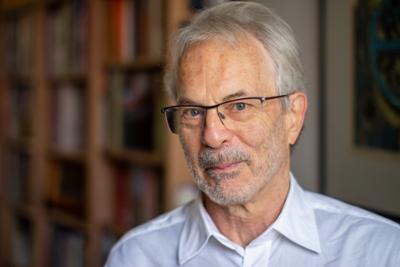
Henning Melber
پژوهشگر ارشد · Civil Rights
School of Advanced Study, University of Londonمعرفی
Professor Henning Melber serves as a Senior Research Fellow at the Institute of Commonwealth Studies, University of London, with a fellowship term running from July 2015 to July 2026. His academic work bridges the Nordic Africa Institute in Uppsala, Sweden, where he is based, and the University of London's research ecosystem. Holding a PhD in Political Sciences and Habilitation in Development Studies, Melber has established himself as a leading scholar on African politics, particularly focusing on Southern Africa, Namibia, and German-Namibian historical relations.
His research interests span Civil Rights, Colonies & Colonization, Emigration & Immigration, Communities, Classes, Races, Globalization & Development, History, Human Rights, International Relations, and Politics. Melber's scholarly focus centers on the history of racism, liberation movements as governments, Namibian politics, and the complex legacies of German colonialism in Africa. His recent work demonstrates particular expertise in the German-Namibian genocide reconciliation process and post-colonial memory politics.
Analysis of Melber's 15 most recent publications reveals a consistent focus on decolonial perspectives, with particular attention to Namibian history and politics, German colonial legacies, liberation movements in governance, and critical development studies. His scholarship increasingly examines the intersection of historical justice, memory politics, and contemporary political challenges in Southern Africa, with notable contributions to understanding the evolving relationship between Germany and Namibia regarding colonial genocide recognition and reparations.
Melber maintains an active research profile with publications spanning journal articles, book chapters, and monographs, demonstrating his position at the forefront of critical African studies and post-colonial scholarship. His work often bridges historical analysis with contemporary political challenges, particularly regarding how historical legacies shape current governance and international relations in Africa.