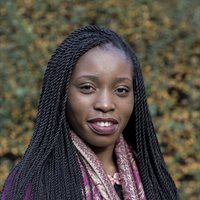
Dr. Imaobong Umoren is an Associate Professor of International History at the London School of Economics (LSE), specializing in race, gender, and political thought in the Caribbean, Britain, and the US. Her research focuses on the intersections of colonialism, imperialism, and activism in the 19th and 20th centuries. She is currently on maternity leave (2025-2026) and has been a Leverhulme Research Fellow (2020/21). Her acclaimed book Race Women Internationalists (2018) won the 2019 Women’s History Network Book Prize and explores Afro-Caribbean and African American women’s roles in global freedom struggles. Her recent work includes Empire Without End (2025), which reinterprets the British Empire’s enduring legacy in the Caribbean, and a political biography of Dominica’s former Prime Minister, Eugenia Charles. Umoren teaches courses such as HY246: The Global Caribbean and coordinates MSc dissertations. She has contributed to media projects like BBC Radio 3’s Essays and appeared on Fake or Fortune . Umoren’s awards include the British Library Eccles Centre/Hay Festival Writer’s Award (2020-2021) and Leverhulme Fellowship. Her research emphasizes systemic racism, decolonization, and the global impact of Caribbean histories.
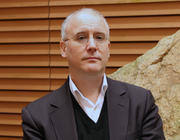
David Armitage is the Lloyd C. Blankfein Professor of History at Harvard University, where he serves as Chair of the Committee on Degrees in Social Studies and teaches intellectual history and international history. He also holds affiliations with the Harvard Department of Government, Harvard Law School, and is an Honorary Professor at the University of Sydney and Queen's University Belfast. Previously, he chaired Harvard's Department of History (2012-14, 2015-16) and taught at Columbia University for eleven years before joining Harvard in 2004. Armitage was born in Britain and educated at the University of Cambridge and Princeton University. His academic journey includes: Undergraduate studies at University of Cambridge PhD at Princeton University Teaching position at Columbia University (1993-2004) Professorship at Harvard University (2004-present) Honorary positions at University of Sydney, Queen's University Belfast, and St Catharine's College, Cambridge Professor Armitage specializes in intellectual history, international history, and global history, with particular expertise in the history of political thought, empires, and international law. His scholarly approach emphasizes the longue durée perspective, seeking to understand historical phenomena across extended time periods rather than narrow chronological frames. He has been a leading voice in advocating for historians to engage with "big history" that spans centuries, arguing that contemporary challenges like climate change and economic inequality require historical understanding that transcends the short-term thinking prevalent in modern politics and policy. His extensive publication record demonstrates consistent engagement with foundational texts and concepts in political theory, declarations of independence, civil wars, and oceanic history. Armitage's work shows a clear trajectory toward increasingly global and interdisciplinary approaches, connecting intellectual history with legal, political, and environmental frameworks. His scholarship bridges early modern and contemporary history, examining how historical concepts continue to shape modern international relations and political thought. Armitage's significant contributions to historical scholarship have been recognized with prestigious awards: Caird Medal from the National Maritime Museum (2006) for "conspicuously important work ... of a nature that involves communicating with the public" Walter Channing Cabot Fellow from Harvard (2008) for "achievements and scholarly eminence in the fields of literature, history or art" LittD from Cambridge University (2015), the university's highest degree, for "distinction by some original contribution to the advancement of science or of learning" As an advisor and mentor, Armitage has guided numerous graduate students through doctoral programs at Harvard and previously at Columbia. His scholarly leadership extends to co-editing two major book series with Cambridge University Press ( Ideas in Context and Cambridge Oceanic Histories ), serving on the Steering Committee of the Center for Early Modern Political Thought at the Folger Shakespeare Library, and contributing to various academic organizations. His work has attracted significant research funding supporting his global historical investigations. Professor Armitage is deeply involved in collaborative scholarly initiatives, particularly through his work with the Harvard Academy for International and Area Studies, where he serves as a Senior Scholar. His research often involves interdisciplinary teams examining oceanic histories, international law, and global political thought. He has been instrumental in developing the "Cambridge Oceanic Histories" series, which brings together scholars from multiple disciplines to explore the historical significance of oceans as connective spaces rather than barriers.
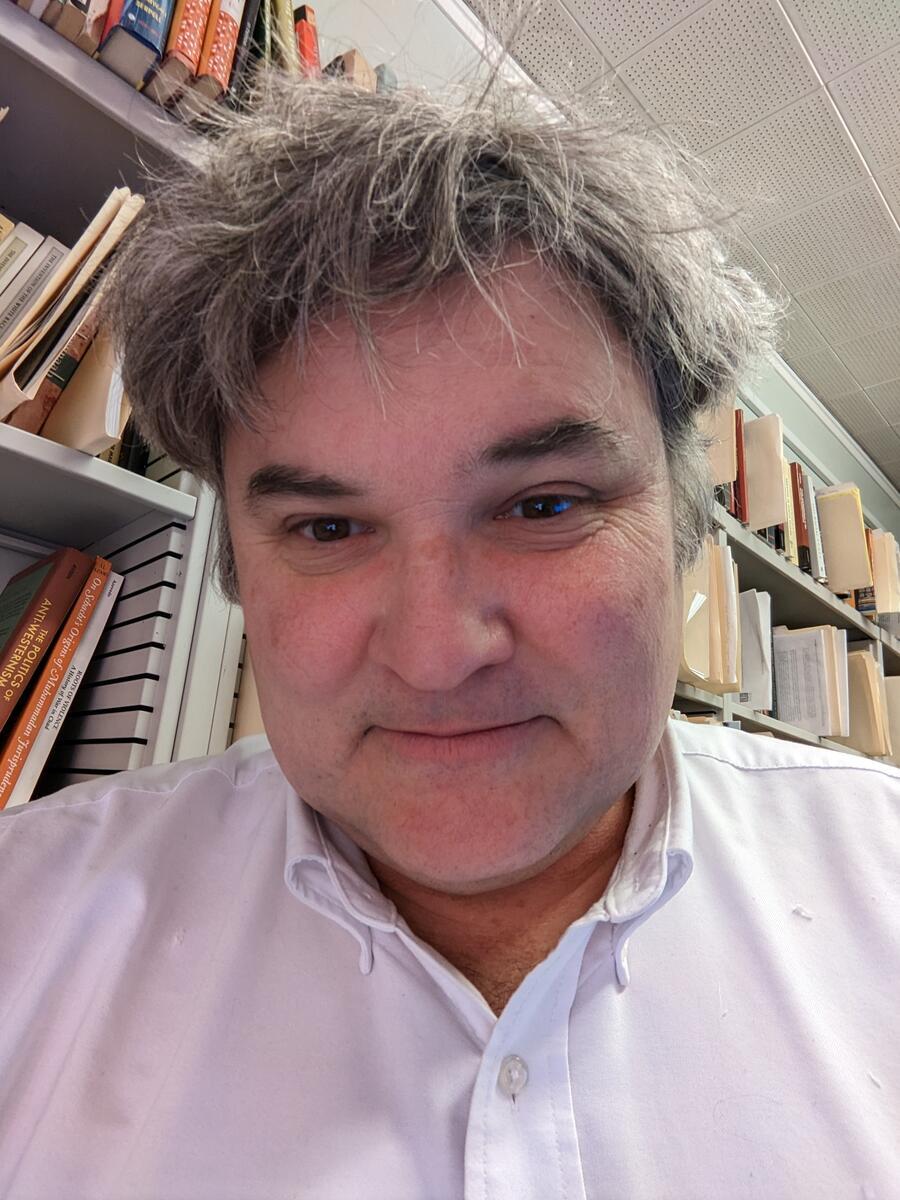
Bruce S. Hall is an Associate Professor at the University of California, Berkeley specializing in the intellectual and social history of West Africa's Sahel region. His research focuses on Muslim intellectual culture, slavery, race, and economic history in Mali, Niger, and Mauritania, with particular attention to Timbuktu and the Niger Bend through Arabic manuscript analysis. Education: PhD, University of Illinois at Urbana-Champaign, 2005 MA, Queen's University (Canada), 1995 BA, University of Toronto, 1994 Research Interests: Hall's work centers on the intersection of Muslim intellectual culture and social structures in pre-colonial and colonial West Africa. He examines how Arabic manuscripts document racial ideologies, slavery systems, and commercial networks, particularly through Timbuktu's 19th-century correspondence. His research reveals how Islamic legal frameworks interacted with social hierarchies and colonial disruptions in circum-Saharan societies. Publications Trends: Hall's scholarly output (2010-2020) consistently analyzes Arabic manuscripts to reconstruct West African intellectual history. Dominant themes include slavery emancipation processes, Islamic legal interpretations of commerce, race conceptualizations across Muslim societies, and Timbuktu's role as a scholarly hub. His work demonstrates increasing engagement with film studies and vernacular media while maintaining core focus on manuscript-based historiography. Scientific Awards: Martin A. Klein Prize (2012) for A History of Race in Muslim West Africa, 1600-1960 Conover-Porter Award (2016) for contribution to Arabic Literature of Africa. Volume 5 Advising and Projects: Hall serves as general editor of the West African Arabic Manuscript Database (WAAMD), a major bibliographic initiative cataloging Arabic materials across West Africa. While specific student advisees aren't listed, his leadership in WAAMD demonstrates extensive collaborative project management involving international scholars and library professionals focused on manuscript preservation and accessibility. Labs and Teams: Hall directs the WAAMD project team housed at UC Berkeley Library, coordinating researchers who catalog and analyze Arabic manuscripts from Mauritania, Mali, and Niger. This digital humanities initiative creates critical infrastructure for West African manuscript studies while training specialists in Arabic paleography and historical methodology.
Dr Elly Robson Dezateux is a Postdoctoral Research Fellow in Legacies of Colonialism at Christ Church, University of Oxford. Previously, she held a Junior Research Fellowship at Jesus College, Cambridge (2018–present), serving as secretary for the Legacies of Slavery Inquiry (2019–2022) and an Affiliated Lecturer in the Faculty of History. She taught at Birkbeck and the University of Cambridge's Institute of Continuing Education before joining Oxford. Her research focuses on early modern Britain and the Atlantic world, emphasizing environmental history, colonialism, and public history. Current projects explore transnational networks and 'small places' in the British Empire. She is Managing Editor of History Workshop and an editor for History Workshop Journal , promoting interdisciplinary dialogue between academia and public audiences. As a Research Associate at the Centre for History and Economics (Cambridge) and Honorary Research Fellow at Birkbeck, she bridges historical scholarship with contemporary issues. Her work has been supported by grants from the AHRC, Wolfson Foundation, Royal Historical Society, and Huntington Library. Key publications include Violent Waters: Environmental Politics in Early Modern England (forthcoming 2025) and articles on fen plantation dynamics, colonial governance, and environmental policy. She holds a BA, MPhil, and PhD from the University of Cambridge, specializing in political thought and intellectual history.
Tamika Nunley serves as Research Professor of History at Duke University within the Arts & Sciences division, holding the prestigious William & Sue Gross Professorship. Her scholarly work centers on the intersection of slavery, gender, and early American history, with particular expertise in African American women's experiences during the 19th century. Her research interests focus on the history of slavery , African American women's and gender history , the early Republic , and the American Civil War . Through meticulous examination of nineteenth-century newspapers, government documents, letters, abolitionist records, legislation, and memoirs, she reconstructs how Black women navigated oppressive systems to develop conceptions of liberty, self-respect, and power. Her work reveals enslaved and free Black women as active agents in shaping Washington D.C.'s history and broader nineteenth-century transformations. Analysis of her publications shows consistent focus on gendered experiences within legal frameworks , Black intellectual traditions , and resistance strategies across her monographs and journal articles. Her scholarship bridges legal history, gender studies, and African American intellectual history through examination of freedom suits, clemency petitions, and literary production. Her scientific recognition includes: 2021 Letitia Woods Brown Book Prize for best book in African American women's history 2021 Pauli Murray Book Prize for best book in Black intellectual history 2021 Mary Kelley Prize for best book in women, gender, or sexuality in the Early American Republic 2023 Cary and Ann Maguire Chair in Ethics and American History from the Library of Congress Nunley's scholarly impact extends through editorial service on Civil War History , The Journal of Southern History , and The Journal of the Civil War Era , alongside committee work for major historical associations. Her research has received substantial support from the Andrew Mellon Foundation, Woodrow Wilson Foundation, American Association of University Women, and Bright Institute Fellowship program. As a lifetime member of the Association of Black Women Historians, she actively contributes to academic communities focused on African American women's historical experiences and intellectual traditions.
Cristina Dondi serves as a Full Professor in the Department of Modern Literature and Culture at Sapienza University of Rome's Faculty of Arts and Philosophy. Her academic work centers on the history of the book with specialized expertise in incunabula (15th-century printed books), early book trade networks, and digital humanities methodologies. She teaches the "History of the Book" course for Global Humanities students, delivering lectures in person at Rome's Faculty of Arts and Philosophy during the 2024-2025 academic year. Her research spans material evidence of early printed books, Venetian printing practices, Dante's textual circulation, and library transformations during religious secularization. She pioneers digital approaches through projects like 15cBOOKTRADE and CERL, developing visualization tools for historical book movement data and collaborative digital infrastructures. Her work bridges traditional book history with computational analysis, emphasizing how physical artifacts reveal cultural and commercial networks. Analysis of her 2021-2023 publications shows consistent integration of digital tools with historical scholarship, particularly regarding Italian incunabula circulation and MEI database applications. She frequently examines Venetian commercial practices, Dante's reception, and collaborative digital resource creation, demonstrating how visual analytics transforms understanding of pre-modern book economies. Scientific Awards: No specific awards were documented in the provided sources. Professor Dondi leads significant research initiatives including the 15cBOOKTRADE project and Consortium of European Research Libraries (CERL) collaborations, which involve multi-institutional teams developing digital ecosystems for book historical research. These projects generate scholarly publications, digital tools, and educational resources while securing substantial research funding for infrastructure development and international conferences. She actively shapes the CERL digital ecosystem and 15cBOOKTRADE project framework, fostering interdisciplinary collaboration between historians, librarians, and computer scientists. Her current work focuses on expanding Material Evidence in Incunabula (MEI) applications and creating open-access platforms for analyzing early print culture across European collections.
Professor Caroline Rae at Cardiff University is a leading scholar in 20th-century French music , with a focus on composers like Debussy, Messiaen, Jolivet, and Boulez. She also specializes in the musical writings of Alejo Carpentier and Franco-Latin American cultural interactions . Her research combines archival studies, performance practice, and pianism. Education : DPhil (Oxford), MA (Oxon), Dipl. Mus (Hanover), ARCM Her research projects include monographs on André Jolivet and Debussy’s Préludes , supported by the British Academy and AHRC . Recent publications span books on Carpentier, Debussy, and Stravinsky’s reception in France. As Co-Director of CFMR , she has organized international symposia with institutions like the Institut Français and Paul Sacher Foundation . Scientific awards include the Chevalier de l'Ordre des Arts et des Lettres (2018), Cardiff University Research Fellowship (2018-2019), and a French Government Scholarship (1982-1983). She has served on juries for the BBC Young Musician Competition and Wales International Piano Competition . As a pianist , she studied under Dame Fanny Waterman , Yvonne Loriod-Messiaen , and Karl-Heinz Kämmerling , and performs lecture-recitals linking her research. She has advised orchestras like the Philharmonia Orchestra and BBC National Orchestra of Wales on festival programming.
Dr. Joanna Cohen is an Associate Professor in American History at Queen Mary University of London's School of History. She specializes in 19th-century U.S. history, focusing on consumption, citizenship, capitalism, and material culture. Her work explores how commercial practices shaped civic identity and emotional responses to loss during the Civil War era. Education: BA (Cambridge), MA (Northwestern University), PhD (University of Pennsylvania). Research Interests: Consumer culture and citizenship Visual/material culture in 19th-century America Capitalism's intersections with race/gender Emotional history of economic trauma Awards: 2014 Grier Prize for best article Huntington Library Fellowship Newberry Library Fellowship Supervision: Guides doctoral research on 19th-century American capitalism, consumption, and visual culture. Public Engagement: BBC Radio contributor, podcast appearances, and frequent conference speaker at events like the Freethinking Festival.
Rebecca Herman is an Associate Professor in the History Department at the University of California, Berkeley. As a historian of the Americas, her research spans environmental politics, US military basing in Latin America during World War II, and transnational environmental organizing in decolonizing contexts. Current research: Antarctic governance and sovereignty in international borderless zones Secondary research: Latin American engagement with sustainable development and global environmentalism in the 1980s-90s Her work examines tensions between national sovereignty and global governance, particularly through case studies involving Argentina, Chile, and Panama. She is writing a book analyzing competing visions for Antarctica's future resource management in the context of decolonization. 50% of her recent publications focus on Latin American environmental politics, including a 2024 Environmental History article on Greenpeace's Buenos Aires office and a 2024 chapter exploring colonial legacies in Antarctic governance. Other works analyze US-Latin America relations during World War II and Cold War-era global governance frameworks. National Endowment for the Humanities Fellowship American Society for Environmental History Fellowship Hellman Fellows Program Fellowship Society for Historians of American Foreign Relations Bernath Scholarly Article Prize Honorable Mention Benenson Award in the Arts Lewis Hine Documentary Fellowship She received her PhD in History (2014) and MA in History (2010) from UC Berkeley, following a BA in Literature & History and Spanish from Duke University (2008). Prior to academia, she worked in Argentina, Bolivia, Brazil, and Boston on documentary and translation projects. Her research has been supported by fellowships from Social Science Research Council, Smithsonian Institution, and Council on Library and Information Resources.
Jonathan Schroeder is a Lecturer in the Department of Literary Arts and Studies at the Rhode Island School of Design (RISD). Trained as an Americanist at the University of Chicago, his research and teaching focus on histories of race, colonialism, emotion, and the movement of Enlightenment knowledge systems to the Americas. He combines literary scholarship with interdisciplinary approaches in affect theory, historical epistemology, and environmental humanities. Education: AB, Dartmouth College MA, Brown University PhD, University of Chicago Schroeder's work bridges literary history with the materialist turn, examining how frameworks of knowledge justified colonial hierarchies and shaped modern subjectivity. His research also explores the intersections of democracy, tyranny, and kinship through the biographical lens of the Jacobs family. Scientific Awards: Anisfield-Wolf Book Award for Nonfiction (2025) National Endowment for the Humanities Fellowship American Antiquarian Society Fellowship John Carter Brown Library Fellowship Huntington Library Fellowship Library Company of Philadelphia Fellowship Schroeder’s publications and grants reflect a commitment to uncovering marginalized narratives, particularly in African American literature and transnational migration studies. He currently serves as a fellow at the Radcliffe Institute for Advanced Study.
Ana Paulina Lee is an Assistant Professor of Writing and Digital Humanities in the Comparative Literature, English, and Creative Writing Department at the American University of Paris. She joined AUP in 2025 after teaching Latin American literature and culture at Columbia University for eight years and serving as a Mellon Postdoctoral Fellow at Tulane University. Her interdisciplinary scholarship bridges literature, history, law, and urban studies with particular focus on marginalized narratives in the Americas. Ph.D. from University of Southern California M.A. from New York University B.A. from Binghamton University Professor Lee's research examines how stories—archival, fictional, oral—shape legal imagination, social life, and urban experience in the Americas. She specializes in the intersections of magic, law, and literature in Latin America, with particular focus on Asian and African diasporas in Brazil. Her work traces how narrative functions as both historical record and catalyst for social transformation, exploring themes of slavery, emancipation, colonial legacies, and urban memory. She approaches these topics through interdisciplinary lenses combining literary analysis with histories of labor, migration, and performance. Lee's recent publications reveal a consistent focus on marginalized narratives and their impact on social structures. Her scholarship connects legal history with cultural production, showing how magical thinking and narrative practices shape urban spaces and social relations. Works like 'Urban Sorcery, Segregation, and Spectacle in Twentieth-Century Rio de Janeiro' and 'Black Magic City' demonstrate her innovative approach to understanding the relationship between occult logics and legal frameworks in Brazilian contexts. Her research on diasporic communities, particularly Chinese and Japanese experiences in Latin America, contributes significantly to transnational and comparative race studies. David B. Larson Fellowship in Health and Spirituality, Kluge Center, United States Library of Congress (2025-2026) National Endowment for the Humanities Fellowship (2025) Social Sciences Research Council, Inaugural Recipient of Interdisciplinary Projects in the Social Sciences (2020-2023) Institute for Ideas and Imagination Fellowship, Columbia University in Paris, France (2021-2022) Provost's Tsunoda Senior Fellowship, Visiting Scholar, Waseda University, Tokyo, Japan (2019) Heyman Center Fellow, The Heyman Center for the Humanities, Columbia University (2017-2018) Fulbright, Lisbon, Portugal (2013-2014) Professor Lee's scholarly activities have been generously supported by major research grants from the National Endowment for the Humanities, the Social Sciences Research Council, and the Library of Congress. Her work demonstrates a commitment to interdisciplinary approaches that bridge humanities and social sciences, particularly through projects examining intersections of race, migration, and cultural production in the Americas. Her publication 'Socially Engaged Oral History Pedagogy Amid the COVID-19 Pandemic' indicates a strong commitment to innovative teaching methods and community-based research. While specific details about current advisees aren't provided, her research program suggests engagement with graduate students interested in diaspora studies, urban history, and literary-cultural analysis. Though not explicitly mentioned in the available information, Professor Lee's research on urban spaces, magic, and law in Brazil likely involves collaborative work with scholars across disciplines. Her participation in centers like the Institute for Ideas and Imagination at Columbia University suggests engagement with interdisciplinary research communities focused on global cultural production and social transformation. Her work contributes to ongoing conversations about how narrative practices shape legal frameworks and social structures in the Americas, particularly regarding racial formation and diasporic experiences.
Dr. Paul McGarr is a Lecturer in Intelligence Studies at King’s College London (since 2023), part of the Department of War Studies within the Faculty of Social Science & Public Policy. He holds an MA in International History from Royal Holloway, University of London, and a PhD from Royal Holloway (2008). Prior to joining King’s, he served as Lecturer and Associate Professor in US Foreign Policy at the University of Nottingham (2011–2023), where he also held an AHRC Postdoctoral Fellowship (2009–2011). He is a Fellow of the Royal Historical Society and Royal Asiatic Society. His research focuses on security and intelligence outside the Anglosphere, clandestine diplomacy, and covert propaganda. Notable projects include a British Academy-funded study (2017–2019) analyzing emotions in British-India security relations and research fellowships at institutions like the Library of Congress and British Library. Dr. McGarr teaches modules on intelligence in war studies, diplomacy, and peace/war contexts. He supervises PhDs in intelligence agencies outside the Anglosphere, covert action, and disinformation. His authored/co-authored books include Spies in South Asia (2024), The Cold War in South Asia (2013), and India at 70 (2019). Recent articles explore topics like Soviet disinformation in India and the Sino-Indian War’s colonial cartographic roots. He contributes to the King’s Centre for the Study of Intelligence, a hub for interdisciplinary intelligence research.
Arash Khazeni is Professor of History, Chair of the History Department, and Coordinator of Middle Eastern Studies at Pomona College, where he has been a faculty member since 2010. He holds a Ph.D. in History from Yale University and specializes in the imperial, environmental, and borderland histories of the modern Middle East, South Asia, and the Indian Ocean. Ph.D., Yale University M.A., Yale University B.A., University of Wisconsin, Madison His research explores the margins of empires and the interconnected histories of the Indo-Persian world, blending environmental history with world-historical perspectives. He investigates how societies on the periphery—such as tribal communities and pastoralists—interacted with imperial structures and shaped transregional exchanges. His approach is influenced by E.P. Thompson’s 'history from below' and engages with postcolonial and Marxist frameworks. His publications reveal a consistent focus on global trade, cultural mobility, and human-environment interactions, particularly in arid and frontier zones. Themes such as the turquoise trade, equestrian pastoralism, and Indo-Persian travel writing demonstrate his interdisciplinary reach across economic, cultural, and environmental history. Recipient of the Middle East Studies Association Houshang Pourshariati Book Award Balzan Keddie Fellowship, UCLA Huntington Library, Andrew W. Mellon Foundation Short Term Research Fellowship Khazeni advises on interdisciplinary scholarship and has co-edited thematic volumes on trade in the Persianate world. His academic leadership includes directing the Middle Eastern Studies program and teaching courses on Gunpowder Empires, Environmental Histories, and the Indian Ocean World. He has no known active grants listed, but his fellowships reflect sustained research support. He is deeply involved in shaping curricula that connect global regions and historical methodologies. His work is associated with intellectual communities focused on world history and environmental humanities, though no formal lab or research team is mentioned.
Dr. David Frazer Lewis is an Associate Professor of Architectural History and Cultural Heritage at the Department for Continuing Education , University of Oxford. He is also a Fellow of Kellogg College and Director of Studies for Architectural History. Previously, he served as an Assistant Professor at the Notre Dame School of Architecture and held postdoctoral positions at the Yale Center for British Art. Education : DPhil (Oxford), MPhil (Cambridge), BAH (Stanford) His research centers on modern British and American architecture (1880-1940), sacred architecture , and the Gothic Revival . Recent works include a book on AWN Pugin, studies on Gothic Revival in the US, and analyses of 20th-century British architects like Giles Gilbert Scott. His publications explore intersections of historic conservation , eclectic design , and architectural theory . Current supervision areas include Edwardian ocean liner interiors and Philip Webb's architecture . He has professional experience in historic conservation with architecture firms in San Francisco and London.
Dr. Rathna Ramanathan is a leading academic and practitioner in intercultural communication and alternative publishing. Currently serving as Provost of Central Saint Martins and UAL Executive Dean for Global Affairs , she has previously held deanships at Central Saint Martins and the Royal College of Art. Based in London but originally from Chennai, India, her work bridges South Asian and global design practices. University of Reading - PhD in Typography and Graphic Communication Central Saint Martins - MA in Communication Design University of Madras - BA Fine Art Her research focuses on intercultural communication and alternative publishing in the Global South, examining how marginalized voices can be amplified through design. She explores the tension between tangible/intangible heritages and contemporary design, and investigates how form, media, and content interact in addressing social/political issues. Recent publications highlight her design research trends in decolonial publishing, critical typography, and intercultural book design. As a design educator , she emphasizes listening, cross-cultural learning, and sustainable practices. Her supervision includes postgraduate research students working on topics like female printers in India, exhibition design, and architectural lettering. Key scientific collaborations include major projects with Tara Books (international design awards), British Council-funded initiatives (Crafting Futures, Going Global Partnership), and the Murty Classical Library of India (Harvard University Press partnership). She consults on Indic typeface design with Adobe and Monotype. Her design lab at Central Saint Martins (M9Design) works with international networks of editors, translators, and type designers. Current team projects focus on digital/print transitions, bilingual typography, and preserving endangered typographic practices through innovative publishing formats.