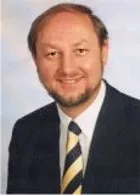
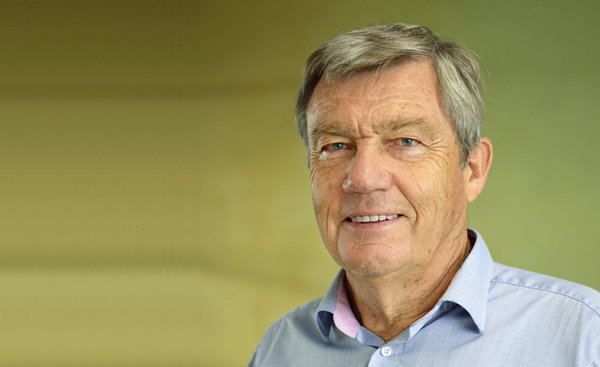
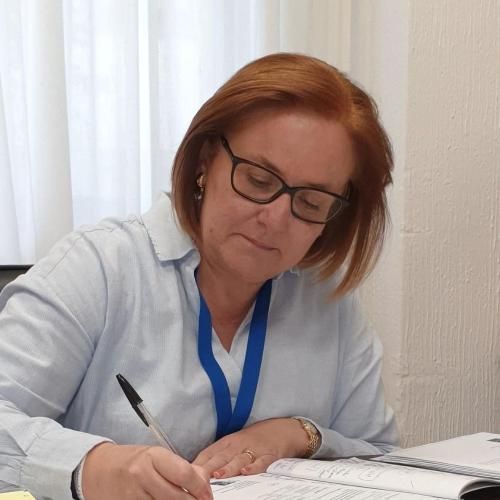
Prof. Dr. Johann Plank holds the Chair of Construction Chemistry at the Technical University of Munich, specializing in inorganic and organic binder systems for construction materials. His research spans cement chemistry, polymer admixtures, and sustainable construction technologies. Research focuses on: Chemical admixtures for concrete and mortar Superplasticizers and polycarboxylate ethers Decarbonization of cement production Carbon capture and storage in construction Nanochemistry applications in building materials Current investigations include: Low-carbon 'green' binders Colloidal chemistry of cementitious systems Interface phenomena in construction materials Nanocomposite development
Richard Campbell is a Senior Lecturer in Physical Pharmacy at the University of Manchester's Faculty of Medicine, Biology & Health. He holds an honorary professorship in Chemistry at Eötvös Loránd University (Hungary) and serves as UK Delegate for the European Neutron Scattering Association. His research focuses on interfacial phenomena using advanced techniques like neutron reflectometry, with applications in drug delivery systems and formulation science. He leads teaching initiatives in pharmacy calculations and co-directs an international BSc program with China Pharmaceutical University. Research interests include soft matter interactions at fluid interfaces, nanoparticle systems, and surfactant behavior under dynamic conditions. His work contributes to UN Sustainable Development Goals through advancements in health and environmental sciences. Campbell supervises postgraduate researchers and directs the Pharmaceutical Industry Advanced Training MSc program. He actively participates in international neutron beam time review panels and professional societies.
Stephen Robert Euston is a Professor at Heriot-Watt University, affiliated with the School of Engineering & Physical Sciences and the Institute of Biological Chemistry, Biophysics and Bioengineering. His research focuses on food proteins' functional properties, combining computational modeling with experimental approaches. He holds a BSc and PhD from the University of Leeds and has held positions at institutions including the New Zealand Dairy Research Institute and Copenhagen University. Research interests span protein adsorption at fluid interfaces, denaturation, aggregation, and gelation. Current projects include molecular basis of fat replacement, bile salt surface chemistry, and functional properties of date seed proteins. His work aligns with UN Sustainable Development Goals related to sustainable food systems. Recent publications explore flavonoid-protein interactions, rapeseed protein emulsifiers, and vegan cheese fat replacement. He manages advanced equipment like the Bohlin Rheometer and Confocal Microscope. Euston contributes to editorial boards of journals like EFB Bioeconomy and Frontiers in Sustainable Food Systems .
Carlos Avendano is a Senior Lecturer in Chemical Engineering at the University of Manchester's School of Chemical Engineering and Analytical Science. His research focuses on computational modeling of materials at different time and length scales using molecular simulation techniques. Key areas include self-assembly of complex molecules, colloidal materials, liquid crystals, and transport properties prediction through machine learning. Research spans molecular dynamics, statistical mechanics, and coarse-grained modeling with applications to phase behavior and interfacial phenomena. Recent work integrates machine learning with traditional physics-based approaches for fluid property prediction. Collaborates internationally with institutions including Cornell University, Imperial College London, and University of Guanajuato. Manages the SAFTg Force Field project and studies nonconventional liquid crystals. Teaches computational modeling courses and leads research on anisotropic colloidal particle assembly and transport property analysis via nonequilibrium molecular dynamics.
Amir Eskanlou is a Postdoctoral Scholar at Stanford University , affiliated with the Department of Earth & Planetary Sciences . His work bridges mineral processing and computational materials science , focusing on AI-driven reagent design and sustainable recovery of critical minerals like copper, phosphate, and rare earth elements. Education : Ph.D. in Energy and Mineral Engineering (2024) and Ph.D. Minor in Computational Materials Science at Penn State; M.S. in Mineral Processing from West Virginia University and Tarbiat Modares University; B.S. in Mineral Engineering from Bahonar University. Amir’s research applies quantum mechanical computations and AI to model mineral-water-reagent interfaces, enabling selective extraction from primary and secondary resources. He also explores AI-driven optimization of mineral processing operations under uncertainty , enhancing efficiency in complex environments. His recent publications emphasize flotation technology (e.g., fluorapatite recovery, bubble dynamics), AI applications in mineral kinetics, and critical minerals sustainability . Trends span computational surface chemistry , multiscale modeling , and environmental remediation of mining waste . Scientific Awards : Henry DeWitt Smith Graduate Award, SME (2020) Lewis E. and Elizabeth W. Young Award, SME (2022) Raja V. and Geetha V. Ramani Graduate Student Award, SME (2023) Charles B. Manula Memorial Scholarship, Penn State (2022, 2023) Fuel Science Award, Penn State (2023) Amir collaborates with Jef Caers at Stanford and is a member of the American Institute of Chemical Engineers (2025–present) and Society for Mining, Metallurgy, and Exploration (2018–2025). His projects include AI-Driven Discovery of Reagents for Critical Minerals Extraction and Phosphate Recovery in Morocco.
Jarrod Schiffbauer is a Visiting Assistant Professor of Physics at Colorado Mesa University. He holds a PhD in Theoretical/Applied Physics from West Virginia University, an MS in Theoretical Physics from Ohio University, and a BS in Physics from Ohio University. His research focuses on non-linear, non-equilibrium physics in micro-nano fluidic systems, with applications in solar-thermal energy, desalination, and biomedicine. He emphasizes collaborative research involving students in active projects, such as theoretical simulations of molecule transport in DNA and nanoscale heat transfer modeling for solar desalination systems. His educational background includes teaching at Ohio University and postdoctoral research at the University of Notre Dame and Technion – Israel Institute of Technology. His work bridges theory and experimental characterization of functionalized surfaces to control nanoscale transport phenomena. Recent projects include studying plasmonic bubble dynamics and photothermal energy conversion. Key research areas include micro-nano fluidics, electrokinetic instability, and functionalized nanomaterials. He has published extensively on topics like overlimiting currents in ion-selective membranes and nanoscale heat transfer mechanisms. Schiffbauer’s philosophy integrates research into classroom teaching to foster student engagement in scientific inquiry.
Prof. Markus Antonietti is a Full Professor at the University of Potsdam and Director of the Colloid Chemistry Department at the Max Planck Institute for Colloids and Interfaces. His research focuses on mesostructured materials, sustainable chemistry, and bioinspired polymers. He holds leadership roles in multiple academic and industrial collaborations, including over 200 completed doctoral theses and 90 patents. Education: 1985: Doctorate (summa cum laude) in Physical Chemistry, University of Mainz 1990: Habilitation, University of Mainz 1991: Full Professor, Philipps University Marburg Research Interests: Artificial Photosynthesis Carbon Nitride-Based Photocatalysts Green Materials and Metal-Free Catalysis Chemistry of Energy and Raw Material Transition Awards (selected): Liebig Medal (2016) ERC Synergy Grant (2021) Bundesverdienstkreuz 1. Klasse (2018) Honorary Doctorates from Universities of Stockholm and Clarkson Grants & Labs: Leader of Research Field D3 in UniCat Co-founder of multiple industrial partnerships Labs/Teams: Max Planck Colloid Chemistry Group and University of Potsdam collaborations.
Prof. Helmuth Möhwald (1946–2018) was a leading scientist in colloid and interface science, serving as a Director at the Max Planck Institute for Colloids and Interfaces. He held professorships at TU Munich, University of Mainz, and multiple honorary roles in Germany and China. His research focused on molecular interfaces, nanocapsules, and self-healing coatings, with over 1,000 publications and 60,000 citations. Affiliations : Max Planck Institute (1993–2014), TU Munich (1981–1987), University of Mainz (1987–1993). Education : Diploma (1971), PhD (1974) from University of Göttingen; Habilitation (1975–1978) at University of Ulm. Research : Pioneered studies on lipid monolayers, polyelectrolyte multilayers, and responsive materials. Notable contributions include drug delivery systems, self-repairing coatings, and plasmonic nanochemistry. Awards : Overbeak Medal (2007), Wolfgang-Ostwald Award (2009), IACIS Lifetime Achievement Award (2018). Advising : Mentor to >50 students who became professors globally. Collaborated on grants focused on functional interfaces and nanomaterials. Labs/Teams : Led the Interfaces Department at MPI, collaborated internationally on projects like nanocontainer engineering and biomimetic surfaces.
Professor Matilde Casas Parada is a faculty member at the University of Santiago de Compostela, affiliated with the Department of Physical Chemistry within the Faculty of Pharmacy and the Materials Institute (iMATUS). She holds the academic rank of Professor and currently serves as Secretary of the Faculty of Pharmacy. Her research focuses on the physical chemistry of surfaces, biointerfaces, and colloidal systems relevant to pharmaceutical applications. Education: She earned her doctorate from the University of Santiago de Compostela in 1990 with the thesis Action of silicic acid on monolayers of lipids and lipidoproteins . Research Interests: Her work explores molecular mechanisms of drug-membrane interactions, including silicosis etiology, surfactant aggregation, and drug delivery systems using Langmuir monolayers and Brewster angle microscopy (BAM). Recent studies emphasize nanostructured copolymers for drug release and biointerface physicochemistry in therapeutic contexts. Awards: None explicitly listed in the provided text. Advising/Grants: No listed advisees or grant details provided. She coordinates the BIOINTERFAR research group since 2020, focusing on biointerfaces for localized drug delivery. Labs/Teams: Active member of the BIOINTERFAR group, investigating drug delivery systems and membrane interactions at air/water interfaces.
Dr. Tatiana Gambaryan-Roisman is an Adjunct Professor (Apl. Prof.) at Technische Universität Darmstadt, where she leads the research group Interfacial Transport and Complex Wetting . She holds a D.Sc. in Mechanical Engineering from Technion and completed her habilitation in Heat Transfer at TU Darmstadt. Her research explores interfacial phenomena, including droplet dynamics, evaporation/condensation, and heat transfer enhancement using nanostructured surfaces. Her work integrates experimental and computational methods to study: Drop impact on heated/deformable substrates Marangoni convection in thin films Wetting of porous and textured materials Nanoparticle assembly and battery interface engineering Recent publications focus on droplet coalescence, evaporation kinetics, and lithium-ion battery interfaces, demonstrating consistent innovation in thermal-fluid sciences. She coordinates EU projects like nanoPaInt and has led the Emmy Noether Research Group. Awards include: Ralf-Dahrendorf Prize for European Research (2019) Emmy Noether Grant (2002–2009) Minerva Fellowship (1998–2000) She serves on editorial boards for Experimental Thermal and Fluid Science and Current Opinion in Colloid & Interface Science , and organizes international conferences like Droplets 2021.
John Denis Sherwood is a Visiting Professor at the Department of Applied Mathematics and Theoretical Physics (DAMTP), University of Cambridge, since 2011. Previously, he served as a Research Associate at DAMTP (2009–2011), and held roles such as Scientific Advisor at Schlumberger Cambridge Research (1986–2009) and Scientist at Unilever Research Port Sunlight (1979–1982). He holds a BA in Mathematics (1975), Part III Mathematics (1976), and a PhD in Electroviscous Effects (1975) from the University of Cambridge. His research focuses on applying mathematics to industrial problems involving fluid dynamics, chemical engineering, and complex systems. Key areas include electrohydrodynamics, low Reynolds number hydrodynamics, and multiphase flow in porous media. His work often addresses challenges in electrokinetic phenomena and interfacial transport. Publications span theoretical and applied studies in electrochemistry, non-Newtonian fluids, and interfacial phenomena. His research has been published in journals like Proceedings of the Royal Society A and Journal of Colloid and Interface Science . No scientific awards are explicitly listed, though his contributions to industrial and academic research are significant. He has collaborated on projects involving Schlumberger and Unilever, reflecting his industry-academia bridge role. His personal homepage is accessible via DAMTP .
Michael Everest, Ph.D., is a Professor of Chemistry at Westmont College. His research focuses on physical chemistry, particularly the application of lasers and spectroscopic techniques such as cavity ring-down spectroscopy. He holds a doctorate from Stanford University and previously taught at George Fox University before joining Westmont in 2011. Education: Bachelor's degree from Wheaton College Doctorate in Chemistry from Stanford University Research interests include molecular spectroscopy, surface chemistry, and the development of analytical methods for studying materials. His work spans topics like polymer structure analysis, environmental toxicity of plants, and the adsorption behaviors of biomolecules. Publications highlight advancements in spectroscopic instrumentation and applications in material science, toxicology, and chemical education. Recent articles emphasize cavity ring-down techniques and their utility in studying complex chemical systems. Awards include the 2016 Outstanding Teaching Award from Westmont’s Division of Natural and Behavioral Sciences. His grants include funding from the American Chemical Society’s Petroleum Research Fund. Advising and grants reflect a commitment to both research innovation and pedagogical excellence. He collaborates on projects involving functionalized materials and environmental chemistry. His lab focuses on advancing optical and surface analytical methods.
Umit Ozgur is a faculty member at Virginia Commonwealth University's College of Engineering with expertise in semiconductor device physics and nanomaterials. His research focuses on advanced optoelectronic devices, heterostructure engineering, and nanoscale fabrication techniques. Specializes in wide bandgap semiconductors (ZnO, Ga2O3, HgCdTe) Key areas: graphene field-effect transistors , MEMS/NEMS reliability , and composition-tunable nanoalloys Recent work explores epsilon-near-zero materials , plasmonic integration , and high-precision silicon etching His publications (2023–2025) demonstrate strong emphasis on infrared photodetection , hot-electron transport , and nanoscale device optimization for next-gen electronics. Current projects likely involve hybrid 2D material systems and novel semiconductor synthesis methods.
Dr. MANUEL ARTURO LOPEZ QUINTELA is a Full Professor of Physical Chemistry at the University of Santiago de Compostela (USC, Spain), affiliated with the Department of Physical Chemistry and the Faculty of Chemistry. He holds positions at the Materials Institute (iMATUS) and is part of the Strategic Grouping in Materials (AEMAT), leading the NanoMag research group on Magnetism and Nanotechnology. His academic journey includes a PhD from USC (1980) under Dr. Julio Casado Linarejos, focusing on the kinetic study of carcinogenic N-nitrosocompounds formation. Prof. Lopez Quintela has held visiting roles at institutions such as the Max Planck Institute for Biophysical Chemistry (Göttingen, Germany), UCLA’s Center for Magnetic Recording Research (USA), and Japanese institutions like Yokohama National University and the Research Center for Materials Science (Nagoya). He is a co-founder and Principal Scientific Advisor of NANOGAP (2006), specializing in nanomaterials and metal clusters, and co-founded Arjuna Therapeutics (2019) to explore therapeutic applications of metal clusters in oncology. His research focuses on synthesizing ligand-free metal nanomaterials via soft chemical methods, with applications in catalysis, electrocatalysis, photocatalysis, and drug development. He has authored over 350 publications (h-index 62), holds 30 international patents, and co-edits the Journal of Colloid and Interface Science (Elsevier, IF 9.5). Awards include the Solvay Chemistry Prize and the Burdinola Prize. Awards: Solvay Chemistry Prize, Burdinola Prize Companies: NANOGAP, Arjuna Therapeutics Editorial Role: Co-editor, Journal of Colloid and Interface Science
Zhi-Feng Huang is a Professor in the Department of Physics at Wayne State University, affiliated with the College of Liberal Arts and Sciences. His research focuses on theoretical and computational condensed matter physics, with emphasis on multi-scale modeling of complex systems, active matter, and nanomaterials. Key areas include phase field crystal modeling of defects in 2D materials, dynamics of inversion domains, and non-equilibrium phenomena in soft matter. Education: B.Sc. and Ph.D. in Physics from Tsinghua University, China. Research interests span: - Theoretical modeling of solid/soft material dynamics - Active matter systems and biological physics - Computational analysis of crystal growth and defect dynamics - Multi-scale material evolution and topology-driven phenomena Notable contributions include studies on graphene heterostructures, grain boundary dynamics in 2D materials, and active smectics. His work bridges mesoscale physics with nanoscale phenomena, leveraging advanced computational techniques. Awards: Fellow of the American Physical Society (2024), WSU Career Development Chair (2014), NSF CAREER Award (2009) Teaching: Courses include Advanced Condensed Matter Physics (Soft Matter), Quantum Mechanics I, and Biomedical Physics Labs/Teams: Leads a research group focused on computational condensed matter physics and active matter dynamics