معرفی
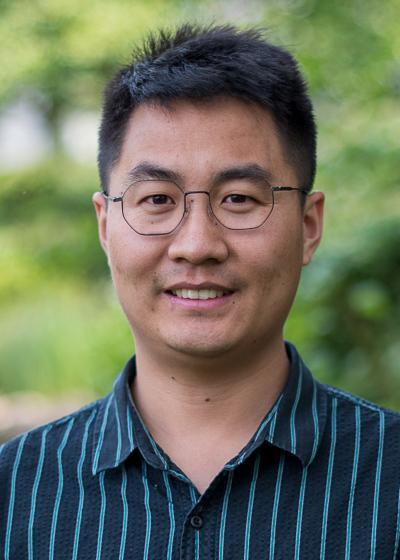
Amir Eskanlou is a Postdoctoral Scholar at Stanford University, affiliated with the Department of Earth & Planetary Sciences. His work bridges mineral processing and computational materials science, focusing on AI-driven reagent design and sustainable recovery of critical minerals like copper, phosphate, and rare earth elements.
- Education: Ph.D. in Energy and Mineral Engineering (2024) and Ph.D. Minor in Computational Materials Science at Penn State; M.S. in Mineral Processing from West Virginia University and Tarbiat Modares University; B.S. in Mineral Engineering from Bahonar University.
Amir’s research applies quantum mechanical computations and AI to model mineral-water-reagent interfaces, enabling selective extraction from primary and secondary resources. He also explores AI-driven optimization of mineral processing operations under uncertainty, enhancing efficiency in complex environments.
His recent publications emphasize flotation technology (e.g., fluorapatite recovery, bubble dynamics), AI applications in mineral kinetics, and critical minerals sustainability. Trends span computational surface chemistry, multiscale modeling, and environmental remediation of mining waste.
Scientific Awards:
- Henry DeWitt Smith Graduate Award, SME (2020)
- Lewis E. and Elizabeth W. Young Award, SME (2022)
- Raja V. and Geetha V. Ramani Graduate Student Award, SME (2023)
- Charles B. Manula Memorial Scholarship, Penn State (2022, 2023)
- Fuel Science Award, Penn State (2023)
Amir collaborates with Jef Caers at Stanford and is a member of the American Institute of Chemical Engineers (2025–present) and Society for Mining, Metallurgy, and Exploration (2018–2025). His projects include AI-Driven Discovery of Reagents for Critical Minerals Extraction and Phosphate Recovery in Morocco.