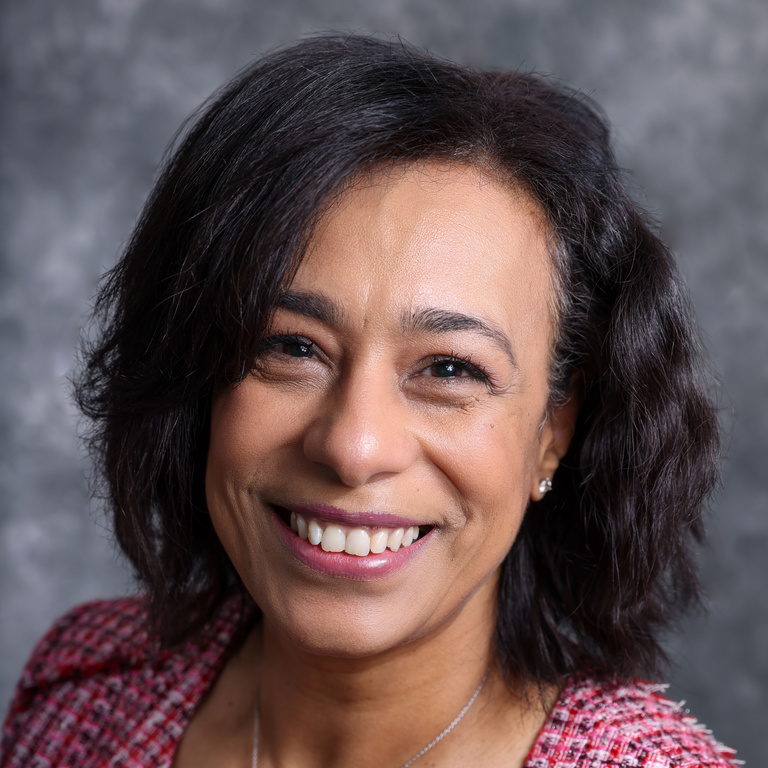
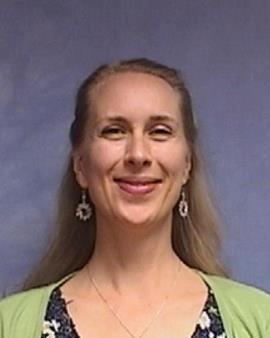
John Jones is an Associate Professor at The Ohio State University specializing in Digital Media Studies, with a focus on rhetoric, professional/technical communication, and digital literacies. His academic journey includes a PhD in English from the University of Texas – Austin and an MA from the University of Tennessee – Chattanooga. Previously, he served as an associate professor at West Virginia University and a visiting assistant professor at the University of Texas at Dallas. Research explores intersections of writing, computational processes, and digital culture Expertise spans digital media studies, visual rhetoric, and networked communication His work investigates the impact of wearable technologies, algorithmic systems, and network structures on knowledge creation and communication practices. Current projects examine computational ethics in digital writing and the role of digital networks in shaping rhetorical strategies. Analysis of John Jones’s publications reveals consistent engagement with: Digital media and computational rhetoric Networked communication frameworks Wearable technology implications Medical usability challenges Visual data representation Collective intelligence dynamics
Amany Farag is a tenured Associate Professor at the University of Iowa College of Nursing and Co-Director of the VA Quality Scholars Program (Iowa City site). Her work bridges nursing science, human factors engineering, and data science to address critical patient safety challenges, with a specific focus on medication administration practices across healthcare settings. Education: Postdoctoral Scholar, Case Western Reserve University, Frances Payne Bolton School of Nursing PhD, Case Western Reserve University, Frances Payne Bolton School of Nursing MSN, University of Alexandria, Alexandria Egypt BSN, University of Alexandria, Alexandria Egypt Dr. Farag's research centers on reactive and proactive approaches to patient safety , with dual emphasis on medication error reporting systems and nurse fatigue prevention. Her work integrates human factors engineering and machine learning to develop novel interventions. Key themes include understanding how social and system factors influence nurses' error reporting behaviors, examining fatigue as a precursor to errors, and developing self-management strategies for nurse wellness. Recent projects explore intershift recovery, sleep hygiene using consumer technology, and the impact of shift work on cognitive performance. Publication trends reveal a strong focus on interdisciplinary safety science , with consistent output in nursing, human factors, and healthcare quality journals. Her work increasingly incorporates AI methodologies while maintaining clinical relevance to frontline nursing practice. Scientific Recognition: Mary Hanna Memorial Journalism Award (Journal of Peri-Anesthesia Nursing, 2016) Author of the Year (Journal of Emergency Medicine, 2018) Junior Investigator Award (Midwest Nursing Research Society, 2018) Rogers Endowed Lectureship Award (Mississippi Medical Center, 2018) Dr. Farag secures significant funding from national agencies including the National Council of State Boards of Nursing (NCSBN), NIOSH-funded Healthier Workforce Center of the Midwest, CDC-funded Injury Prevention Research Center, and University of Iowa Institute for Clinical and Translational Science. Her collaborative approach spans nursing, data science, ergonomics, and public health teams. As Co-Director of the VA Quality Scholars Program, she mentors future healthcare quality leaders while advancing her research on medication safety systems and nurse fatigue mitigation strategies through interdisciplinary partnerships.
Oscar Amundsen is a Professor of Organization Studies at the Department of Education and Lifelong Learning within the Faculty of Social and Educational Sciences at NTNU. His research focuses on organizational change, employee-driven innovation (EDI), leadership, and organizational culture. He teaches in Master’s programs in 'Learning in Work Life and Society' and 'Management and Organisation', as well as the PhD program in Educational Science. His research emphasizes practical application of academic knowledge to improve organizations across public, private, and voluntary sectors. Key themes include fostering innovation through cultural transformation, leadership practices, and employee engagement. His recent book How to Become a Dream Organization (2025) outlines strategies for leaders to cultivate innovative and attractive workplaces. Amundsen has led research groups such as COOL (Conditions for Learning and Innovation in Higher Education and Work), COIN (Collaboration and Innovation), and LAS (Learning in Work Life and Society). His work bridges theory and practice, with publications in journals like International Journal of Learning and Change and Journal of Knowledge Management . He has authored multiple books on organizational change, innovation management, and leadership, many translated into Danish and Swedish. His outreach activities include media contributions (articles in Aftenposten , Adresseavisen , etc.), podcasts, and collaborative projects with organizations. He emphasizes translating academic insights into actionable strategies for real-world organizational challenges.
Robert S. Laramee is a Professor at the University of Nottingham (previously at Swansea University), specializing in visualization research. His work focuses on data visualization, scientific visualization, and computational fluid dynamics. He has authored over 170 publications in top journals like IEEE Transactions on Visualization and Computer Graphics, Computer Graphics Forum, and IEEE Computer Graphics and Applications. Research Interests: His research spans information visualization, flow visualization, visual literacy, and educational aspects of visualization. He emphasizes practical applications in fields like healthcare, digital humanities, and computational science. Recent Trends: Recent work includes studies on treemap literacy, educational frameworks for visualization, and interactive systems for clinical data. He has also contributed to visualization resources and surveys, aiming to bridge academic and industry needs. Grants & Collaborations: Collaborations include projects on visualization for smart cities, protein-lipid interactions, and quantum chromodynamics data analysis. No specific grant details are provided in the text. Labs & Teams: Affiliated with visualization research groups at Nottingham and Swansea, though specific lab names are not mentioned.
Dr. Anke Wonneberger is an Associate Professor at the University of Amsterdam's Faculty of Social and Behavioural Sciences, within the Communication, Organizations and Society department. She specializes in environmental communication, media studies, and climate change discourse. Her research explores how media frames environmental issues, public perceptions of sustainability, and the role of social movements and litigation in shaping policy. She is reachable at A.Wonneberger@uva.nl and active on LinkedIn , Google Scholar , and ResearchGate . Her work bridges communication theory and practice, analyzing media coverage of climate change, agricultural biotechnology, and energy policies. Recent studies include examining polarization around biomass debates in the Netherlands and the sociotechnical imaginaries of gene editing. She also investigates innovative methods like virtual reality to enhance public engagement with environmental challenges. Key themes in her research include the interplay between economic and environmental priorities, the role of litigation in climate responsibility, and cross-platform discourse dynamics. Her publications span over two decades, demonstrating sustained focus on environmental communication and its societal impacts. No scientific awards or grants are explicitly listed in the provided materials. Her teaching and academic contributions reflect her commitment to advancing communication science in environmental and social contexts.
Patrick T. Brandt is a Professor of Political Science, Public Policy, and Political Economy at the University of Texas at Dallas , affiliated with the School of Economic, Political and Policy Sciences . His work integrates advanced statistical methods with political science, focusing on time series analysis, machine learning, and Bayesian modeling to study political dynamics. His research spans international relations , political economy , terrorist targeting , and conflict forecasting . He specializes in developing novel models for event count time series, including the Bayesian Poisson Vector Autoregression and MS-BVAR packages for R. His NSF-funded projects focus on event data generation and real-time conflict forecasting. Recent publications emphasize domain-specific language models (ConfliBERT variants), graph neural networks for conflict prediction, and machine translation challenges in political text analysis. He maintains the OpenEvent Data Repository and develops software like MSBVAR and PESTS for academic use. Scientific Awards : Robert H. Durr Award for Best Methodology Paper, Midwest Political Science Association (2006)
Jared F. Edgerton is an Assistant Professor at the University of Texas at Dallas, affiliated with the School of Economic, Political and Policy Sciences. His research focuses on how social relations and networks influence conflict dynamics, employing methodologies from network science and machine learning. He holds a Ph.D. (2021) and M.A. (2018) in Political Science from The Ohio State University. Key research interests include terrorism, international security, civil war, and data-driven approaches to conflict analysis. His work spans topics like media effects on violence (e.g., Rwanda's radio impact), extremist recruitment networks (Islamic State), and elite polarization in crises like the COVID-19 pandemic. Methodologically, he combines experimental designs, bipartite network analysis, and geospatial techniques. Notable contributions include analyzing genocide participation in Rwanda, resilience in cooperative state networks, and the socio-technical dimensions of conflict mobilization. His interdisciplinary approach bridges political science, computer science, and security studies. While no scientific awards are explicitly listed, his prolific output reflects sustained scholarly impact. Edgerton has advised no listed students but has engaged in quasi-experimental policy evaluations (e.g., prisoner recidivism programs) and applied geospatial analysis to post-conflict land safety in Cambodia. His research portfolio demonstrates a commitment to both theoretical innovation and real-world conflict mitigation strategies.
Dr. Doaa Shohaieb is a Teaching Fellow in Marketing at Aston Business School (Aston University), part of the College of Business and Social Sciences. She specializes in Marketing Psychology, Marketing Strategies, and Tourism Marketing. Her research bridges marketing, tourism, and business history, with a focus on crisis management in tourism sectors. She holds a PhD in Management from the University of York (2018) and a PG Cert in Higher Education (2022). Education: PhD in Management (Marketing), University of York, 2018 PG Cert in Higher Education, University of Portsmouth, 2022 Postgraduate Studies in Management, Menoufia University, 2007 BSc (Hons) in Management, Menoufia University, 2006 Research Interests: Dr. Shohaieb’s work explores consumer behavior, marketing strategies in crises, and the integration of AI in education. Her recent studies include corporate governance, ESG initiatives, and online learning challenges for mature students. She co-founded the Nations of York Collective to promote community cohesion and actively organizes the global Marketing Research Camp at Aston University. Awards: Fellowship in the Higher Education Association (FHEA), 2022 Advising & Grants: External examiner at Coventry University, London Metropolitan University, and the University of Hertfordshire. She has secured research funding and presented at international conferences. Labs/Teams: Organizes the Marketing Research Camp, a global academic platform, and co-founded the Nations of York Collective.
Hannie A. Gijlers is an Associate Professor at the Digital Society Institute, affiliated with the Department of Instructional Technology in the Faculty of Behavioral, Management and Social Sciences at the University of Twente. Her work bridges technology and education, focusing on innovative learning environments and collaborative processes. Academic Rank: Associate Professor Institution: University of Twente Research Institute: Digital Society Institute Department: Instructional Technology Her research interests center on computer-supported collaborative learning (CSCL) , technology-enhanced STEM education , inquiry-based learning , and the role of emotions and feedback in learning. She investigates how digital tools and agent-facilitated environments support students and teachers in collaborative settings, often through cross-cultural comparisons. Her work integrates physiological and gaze-based data to understand implicit learner emotions, pushing the boundaries of learning analytics. The recent publications (2021–2024) reveal a strong focus on teacher guidance models , gamified STEM apps , clinical reasoning in medical education , and climate change literacy . These works span disciplines including educational psychology, computer science, and environmental education, indicating interdisciplinary collaboration. Keywords across these articles include collaborative learning, emotion detection, technology integration, and cross-cultural studies, reflecting a consistent research trajectory in digital pedagogy and learner support. While no specific awards are listed in the provided text, her sustained publication record in high-impact venues and leadership in collaborative research projects suggest recognition within the academic community. Hannie Gijlers actively supervises research, as evidenced by co-authored works with junior researchers and contributions to practitioner research models. Her involvement in datasets and conference presentations indicates ongoing grant-funded or institutionally supported research activities. She has contributed to both theoretical frameworks (e.g., four-phase mentorship model) and applied tools (e.g., Science Chaser app), demonstrating a balance between scholarship and practical innovation. She is part of a vibrant research network at the University of Twente, collaborating with scholars like T.H.S. Eysink, A.W. Lazonder, and N. Janssen. Her team explores agent-facilitated learning, gamification in STEM, and teacher development, often in international collaborations (e.g., Dutch-Finnish studies). These efforts are supported by digital infrastructure and interdisciplinary datasets, positioning her at the forefront of digital society research in education.
Dr. Lucia D'Ambruoso is a Senior Lecturer at the Institute of Applied Health Sciences, School of Medicine, Medical Sciences and Nutrition, University of Aberdeen. She is based at the Aberdeen Centre for Health Data Science and leads international research on health systems, participatory methods, and verbal autopsy. She holds honorary and visiting positions at the University of the Witwatersrand (South Africa), Umeå University (Sweden), and Stellenbosch University, and serves on multiple international research and policy committees. PhD in Public Health, University of Aberdeen (2011) MSc in Public Health and Health Services Research, University of Aberdeen (2003) BSc (Hons) in Pharmacology, University of Aberdeen (1997) Her research focuses on health policy and systems, social determinants of health, and participatory action research, especially in sub-Saharan Africa and South Asia. She uses qualitative and mixed methods to understand how health systems can be made more equitable and responsive through community engagement, inter-sectoral action, and innovative data systems like verbal autopsy. Her recent publications demonstrate a strong focus on community-led health research, digital health platforms for emergency care, school-based mental health, and mortality data systems. She leads major NIHR and GCRF-funded programmes in South Africa and Rwanda, aiming to strengthen primary care and injury response systems through participatory methods. Scientific Awards: University of Aberdeen Interdisciplinary Research Award (2024) University of Aberdeen Outstanding Research Award (2024) Fellow, Stellenbosch Institute of Advanced Study (2025) Fellow, Royal Society for Public Health (2021) Fellow, Higher Education Academy (2017) Dr. D'Ambruoso teaches across global health, health policy, and research methods at both undergraduate and postgraduate levels. She supervises PhD students and is Deputy Director of the Centre for Global Development at the University of Aberdeen. She is actively involved in community engagement through NHS Grampian and serves on the editorial board of Global Health Action and the Steering Committee of the Politics of Health Group. Her research is supported by NIHR, MRC, Wellcome Trust, and international philanthropies. She leads the Verbal Autopsy with Participatory Action Research (VAPAR) initiative, which connects communities, researchers, and policymakers to generate actionable evidence on health equity. Her team works closely with the Agincourt HDSS in South Africa and has developed innovative tools for community health worker training and data collection.
Rhys Jones is a Professor of Human Geography and former Head of Department in the Department of Geography and Earth Sciences at Aberystwyth University. He is a leading scholar in political geography, with a focus on Welsh nationalism, state territoriality, devolution, and behavioral insights in public policy. He is a Fellow of the Learned Society of Wales (FLSW) and the Academy of Social Sciences (FAcSS), and serves on the Board of Natural Resources Wales, demonstrating significant academic and public impact. His research interests center on the interplay between identity, place, and governance. Key themes include the spatial dimensions of Welsh nationalism, the peopled character of the state, devolution in the UK, and the ethical and practical applications of behavioral science in policymaking. His work often engages with issues of spatial justice, territorial cohesion, and regional movements within the European Union. The recent publications and projects reflect a strong trend toward interdisciplinary, policy-relevant research. His work spans books, peer-reviewed articles, commissioned reports, and digital media outputs, with a focus on heritage tourism, linguistic vitality, and cross-border dynamics between Wales and Ireland. He frequently collaborates with researchers across institutions and nations, particularly through EU-funded programs like Horizon 2020 and INTERREG. His scientific recognitions include: Fellow of the Learned Society of Wales (FLSW) Fellow of the Academy of Social Sciences (FAcSS) Gwobr Adnodd Cyfrwng Cymraeg (Welsh Language Resource Award, 2020) Rhys Jones has secured substantial research funding from the ESRC, AHRC, Leverhulme Trust, Horizon 2020, INTERREG, and the Welsh Government. He leads or contributes to multiple active projects, including those on territorial cohesion in the EU, regional movements, and heritage tourism. He also plays a key role in knowledge exchange, public engagement, and media outreach, particularly on issues related to Welsh identity, language, and governance. He is actively involved in organizing exhibitions, film launches, and public talks, often in collaboration with cultural and academic partners in Wales and Ireland. He is involved in several research networks and teams, including the WISERD Civil Society project and the Centre for Welsh Politics and Society. His work contributes to UN Sustainable Development Goals, particularly those related to reduced inequalities, sustainable cities, and strong institutions.
Stephani L. Wrabel is a Senior Policy Researcher at the RAND Corporation and Professor of Policy Analysis at the RAND School of Public Policy. She conducts influential research on education policy, social and emotional learning, and defense-funded youth programs, with her work shaping both federal and state policies. Institution: RAND Corporation School: RAND School of Public Policy Position: Professor of Policy Analysis Email: Stephani_Wrabel@rand.org Education: Ph.D. in Urban Education Policy, University of Southern California M.Ed., University of Florida B.A., Boston University Her research focuses on improving educational outcomes for students and military-connected populations through rigorous evaluation and policy analysis. She specializes in standards-based accountability, educational equity, program evaluation, and social and emotional learning. Her work often centers on vulnerable youth, including those in the National Guard Youth ChalleNGe and JROTC programs, and she has led major federal evaluations, including for the U.S. Department of Education’s Center to Improve SEL and School Safety. Analysis of her recent publications shows a consistent focus on youth development, military-civilian integration, educational equity, and evidence-based policy. Her research spans program evaluation, technical assistance frameworks, and longitudinal impact studies, with a strong emphasis on practical, policy-relevant findings. She frequently publishes both comprehensive reports and executive summaries to reach diverse stakeholders. Scientific Awards: No awards listed in the provided text. Wrabel leads major research initiatives and serves as principal investigator on defense-funded education studies. Her work involves collaboration with federal agencies, education departments, and military organizations. She has developed practical tools for program evaluation, particularly for Marine and Family Division programs, supporting effective resource use and program improvement. Her leadership in large-scale evaluations demonstrates significant grant and project management experience. She is actively involved in research teams focused on education reform and military youth programs. Her work with the Center to Improve Social and Emotional Learning and School Safety involved a multi-year technical assistance network, indicating leadership in collaborative, interdisciplinary teams.
Francisco Laranjo is a Portuguese graphic designer, researcher, and educator with a PhD in Design Methods and Criticism from the University of the Arts London. He holds an MA in Visual Communication from the Royal College of Art and a BA from ESAD – Escola Superior de Artes e Design. Currently serving as Assistant Professor at Lusófona University, he also works as an Associate Lecturer at Central Saint Martins and Co-director of the Shared Institute. PhD in Design Methods and Criticism MA in Visual Communication BA in Communication Design His work bridges graphic design with critical theory, focusing on design pedagogy, ethical implications of data-driven design, and the role of critique in professional practice. Publications span design criticism in Design Observer , Eye Magazine , and academic journals, while his teaching has reached institutions across 8 countries including CalArts, Sandberg Institute, and Zürich University of the Arts. Recent publications demonstrate a trajectory toward critical design theory, post-pandemic design adaptation, and curatorial practices. Key themes include the intersection of design and politics , digital-physical hybridity , and pedagogical innovation in graphic design education. As Editor of Modes of Criticism and co-director of Shared Institute, Laranjo fosters critical discourse through curatorial projects like the 2022 'Designers Troublemakers' exhibition and the upcoming 2025 'Graphic Collection – 50 years of design in Portugal' at the Polytechnic University of Porto.
Professor Matthew Simpson is a leading figure in applied mathematics at the School of Mathematical Sciences, Faculty of Science, Queensland University of Technology (QUT). He holds the position of Professor of Applied Mathematics and is an Australian Research Council (ARC) Future Fellow, reflecting his sustained research excellence. His work bridges mathematical theory and biological applications, particularly in cell migration, tissue invasion, and multiscale modeling. BE (Environmental) Honours 1, University of Newcastle (1995–1998) PhD (with Distinction), Environmental Engineering, University of Western Australia (2000–2003) Research Fellow, Department of Mathematics and Statistics, University of Melbourne (2003–2006) ARC Postdoctoral Fellow, University of Melbourne (2006–2009) Lecturer (2010–2011) and Senior Lecturer (2011–2013), QUT Associate Professor (2013–2014), QUT Professor and ARC Future Fellow (2014–present), QUT Matthew Simpson’s research focuses on mathematical and computational modeling of biological systems , particularly collective cell motion, diffusion processes, and reaction-diffusion dynamics. His interests span multiscale modeling , random walk processes , cell biology , and numerical and computational mathematics . He develops and analyzes models to understand phenomena such as wound healing, cancer progression, and tissue engineering. His recent publications (2023–2025) demonstrate a strong trend toward integrating data-driven modeling , likelihood-based inference , and equation learning with traditional mechanistic models. These works emphasize parameter identifiability , uncertainty quantification , and prediction robustness in biological contexts. Themes include sharp-fronted wave propagation, mechanical cell interactions, tumor spheroid formation, and generalized diffusivity in food drying, showcasing the breadth and depth of his modeling expertise. Among his key accolades are: J.H. Michell Medal (2012) – Awarded by ANZIAM for distinguished research by an early-career applied mathematician in Australia and New Zealand. ARC Future Fellowship (2013–2017) – For the project 'New data-driven mathematical models of collective cell motion' (FT130100148). Professor Simpson has also played significant editorial and leadership roles, including: Executive Associate Editor, Journal of Engineering Mathematics Academic Editor, PLoS ONE Editorial Board Member, ANZIAM Journal Co-chair of the 2015 ANZIAM meeting He has supervised PhD students on topics such as moving boundary problems, first-passage times, stochastic simulations, and curvature-dependent growth in biological systems. His research projects have been funded by competitive Australian grants (ARC DP and FT schemes), including studies on 3D cell migration, ghrelin’s role in cell invasion, and epithelial-to-mesenchymal transition in cancer and wound healing. He is actively involved in developing computational tools for biological modeling and promoting best practices in scientific publishing.
Stephanie Hallam is an Associate Professor at Whitworth University's Library Department, joining the faculty in 2024. She holds an MLIS from the University of Washington, an M.Ed. in School Counseling from Gonzaga University, and a BA in Psychology (with a Theater Arts minor) from Dordt University. Her research focuses on library science, information literacy, open educational resources (OER), and children's literature. Notable work includes fostering collaborations between academic and high school librarians, integrating government documents into pedagogy, and optimizing library collection management strategies. Her publications emphasize collaborative educational initiatives, open pedagogy, and librarians' roles in academic transitions. Presentations include sessions at the Texas Library Association, American Library Association, and LOEX conferences, addressing topics like silo-breaking partnerships and OER training. Her work includes projects such as the 'I Heart OER Month' training program and collection deselection methodologies. While no awards are listed, her contributions to library practice and education are evident through her active publication and presentation record.